E-Vision Intelligence Report
May 2023
EV Leasing Volumes Poised to Surge as Tax Rule Makes It Cheaper to Lease than Buy
Key Findings
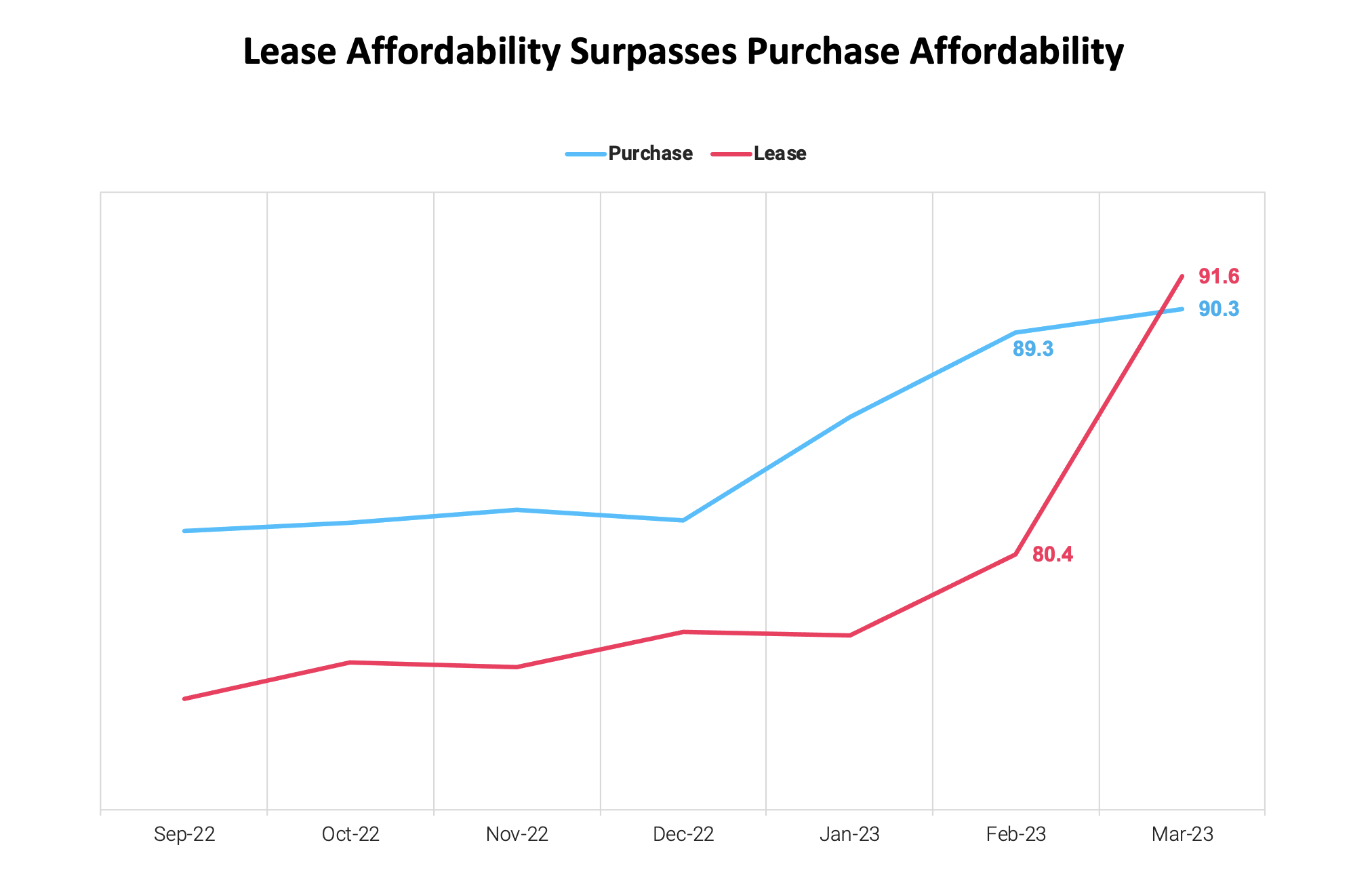
- Lease Affordability Surpasses Purchase Affordability: Thanks to Section 45W of the Inflation Reduction Act, all leased electric vehicles (EVs) are eligible for a $7,500 federal credit, while those same vehicles, if purchased, must meet detailed vehicle-specific requirements to qualify for the credit. This is making it cheaper to lease a new EV than to buy one relative to comparable ICE vehicles.
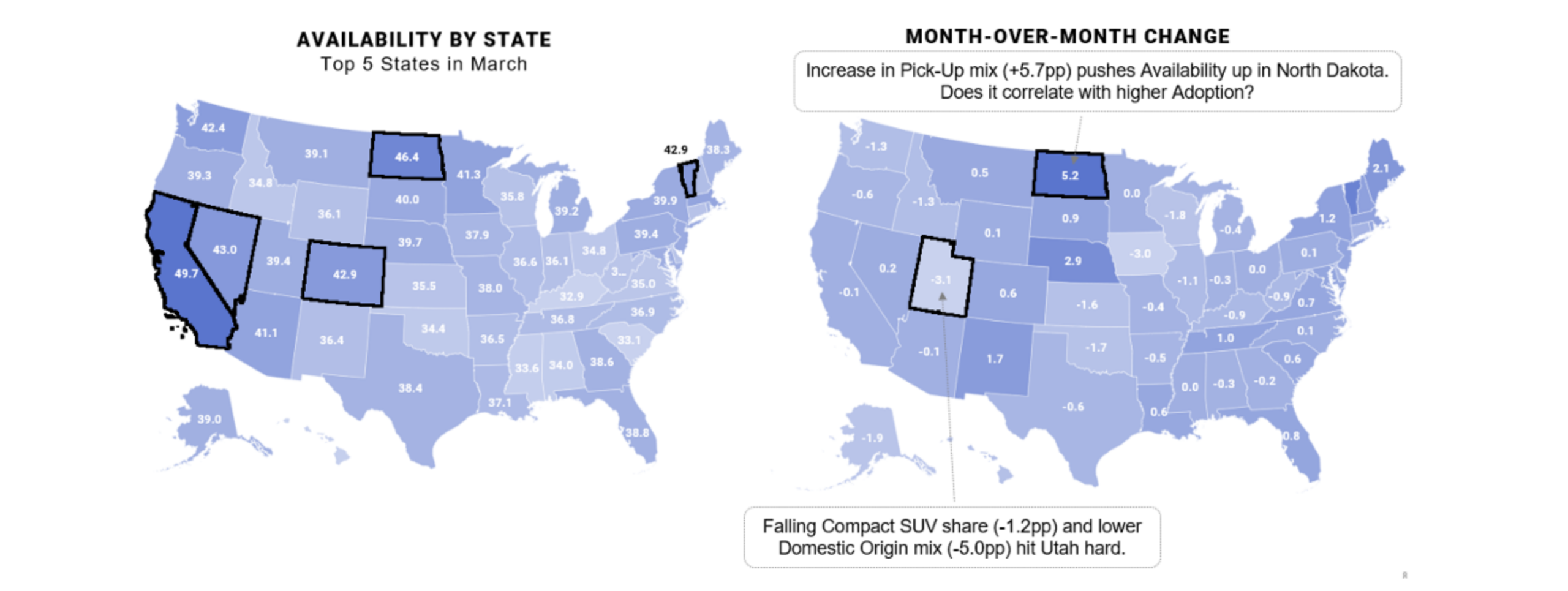
- EV Availability Rises in New Markets as Manufacturers Focus on SUVs and Pick-ups: Manufacturers have systematically shifted production away from smaller, economy segment EVs and toward SUVs and pick-up trucks, which is driving a surge in EV availability in places like North Dakota, Nebraska and New Mexico.
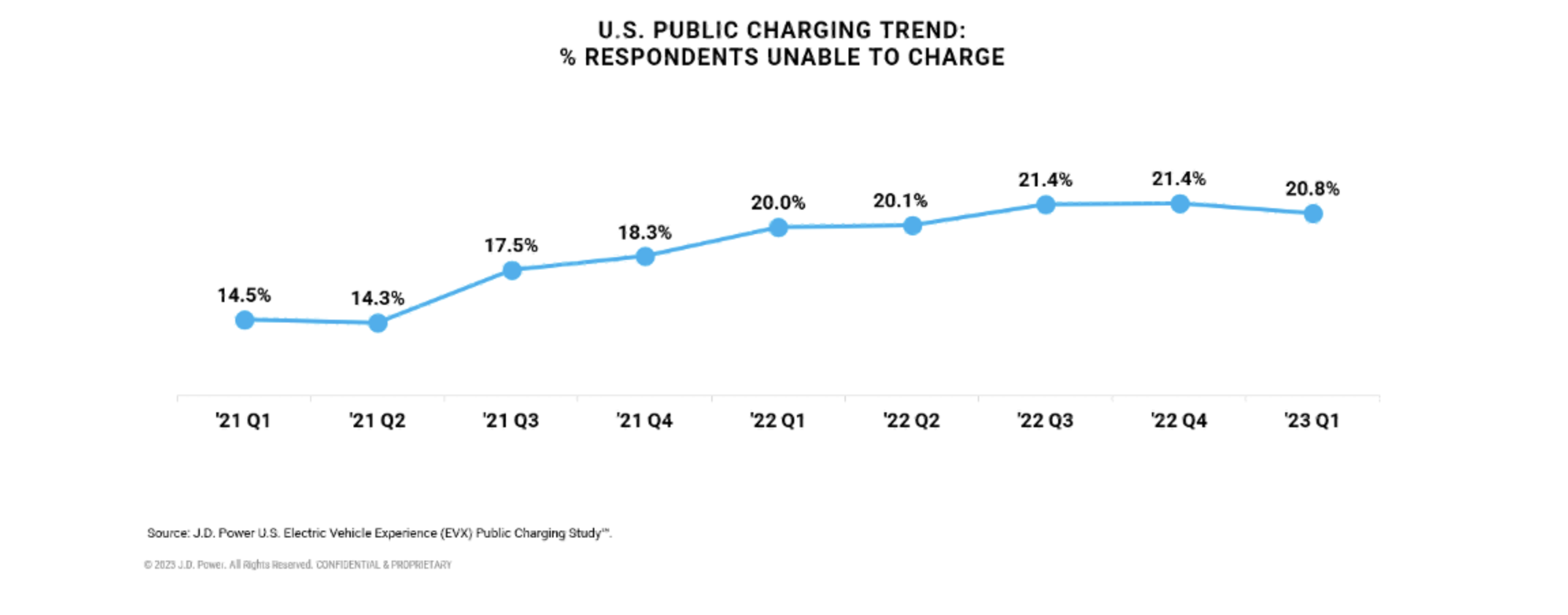
- Public Charging Infrastructure Improves, But Still Has Long Way to Go: The reliability of public charging infrastructure has improved slightly for the first time in two years, but 20.8% of consumers still say they show up at a public charger that does not work. Similarly, overall customer satisfaction with Level 2 public charging—which represents 71% of all EV charging in America—continues to decline.
Executive Summary
Coming soon to a dealership near you: lease specials on the latest EVs. Due to the incentive pass-through option via Section 45W of the Inflation Reduction Act (IRA), it’s now cheaper, on average, to lease a new EV than to buy one when comparing total cost of ownership to comparable ICE vehicles. According to new data from JD Power, the phenomenon is likely to create ripple effects throughout the auto industry, affecting everything from vehicle pricing strategy to residual values on used EVs.
This E-Vision Intelligence Report dives into key data points trending in each monthly EV Index update, along with other data points gathered from JD Power studies and pulse surveys, to spotlight emerging trends and important shifts in EV consumer sentiment.
A Tax Loophole So Big, You Could Drive an EV Through It
As part of a sweeping federal effort to spur the development of clean energy technology, manufacturing and innovation, the IRA introduced a $7,500 tax credit on certain EVs. While the intent of the legislation was to improve the affordability of EVs and bring manufacturing to the U.S., it has further had the consequence of making EV leases more attractive than purchases, in many cases. While all leased vehicles are eligible for the credit, purchased vehicles are subject to several detailed eligibility requirements, which can complicate the EV purchase process.
Among the tax credit eligibility rules on newly purchased EVs, are requirements for critical battery minerals and components. The requirements have significantly reduced the number of vehicles that qualify for the full credit, creating downward pressure on the affordability of EVs. When EVs are leased, however, none of these restrictions apply because the vehicles are technically classified as commercial. This makes the lessor eligible for the $7,500 credit, giving them the option to pass that credit along to customers.
Accordingly, lease affordability has surpassed purchase affordability in the JD Power EV Index, suggesting that EV lease volumes will surge during the next several months.
Lease Affordability Surpasses Purchase Affordability
Focus on Full-Size Pick-Ups and SUVs Redraws EV Availability Map
Another significant trend influencing the EV marketplace is a pivot by manufacturers away from less-desirable compacts to full-sized pick-ups and SUVs. In April, for example, General Motors announced the discontinuation of the Chevrolet Bolt and Bolt EUV to make room for production of its Silverado EV and GMC Sierra EV full-size pickups.
The phenomenon will help to increase the number of consumers who will have a viable EV alternative to their current ICE vehicles in parts of the country that have experienced low levels of EV adoption. This month, for example, North Dakota, Nebraska and New Mexico saw the largest increases in EV availability. Whether or not that increased availability will translate to increased adoption, however, is another question. Despite the uptick in availability, North Dakota currently has the lowest EV adoption rate in the country and, according to JD Power data, currently has just 142 public charging points statewide. That compares with a total of 137,000 nationally.
Pick-Up and SUV Growth Spurs EV Availability in North Dakota, Nebraska and New Mexico
Public Charging Still a Pain Point
It’s not just North Dakota where public charging remains a barrier to adoption for prospective EV buyers. New data reported in the first quarter of the JD Power 2023 U.S. Electric Vehicle Experience (EVX) Public Charging Study shows that public charging station reliability has improved for the first time in two years. That improvement is not exactly cause for celebration, though. Through the end of Q1 2023, 20.8% of EV drivers using public charging stations experienced charging failures or equipment malfunctions that left them unable to charge their vehicles.
What’s more, overall customer satisfaction with Level 2 charging, which accounts for 71% of all public charging, has declined 11 points during the first quarter of 2023. Customer satisfaction with faster, Level 3 charging has improved, but far fewer customers currently have access to these charging points.
Public Charging Station Reliability Improves for First Time in Two Years
Methodology
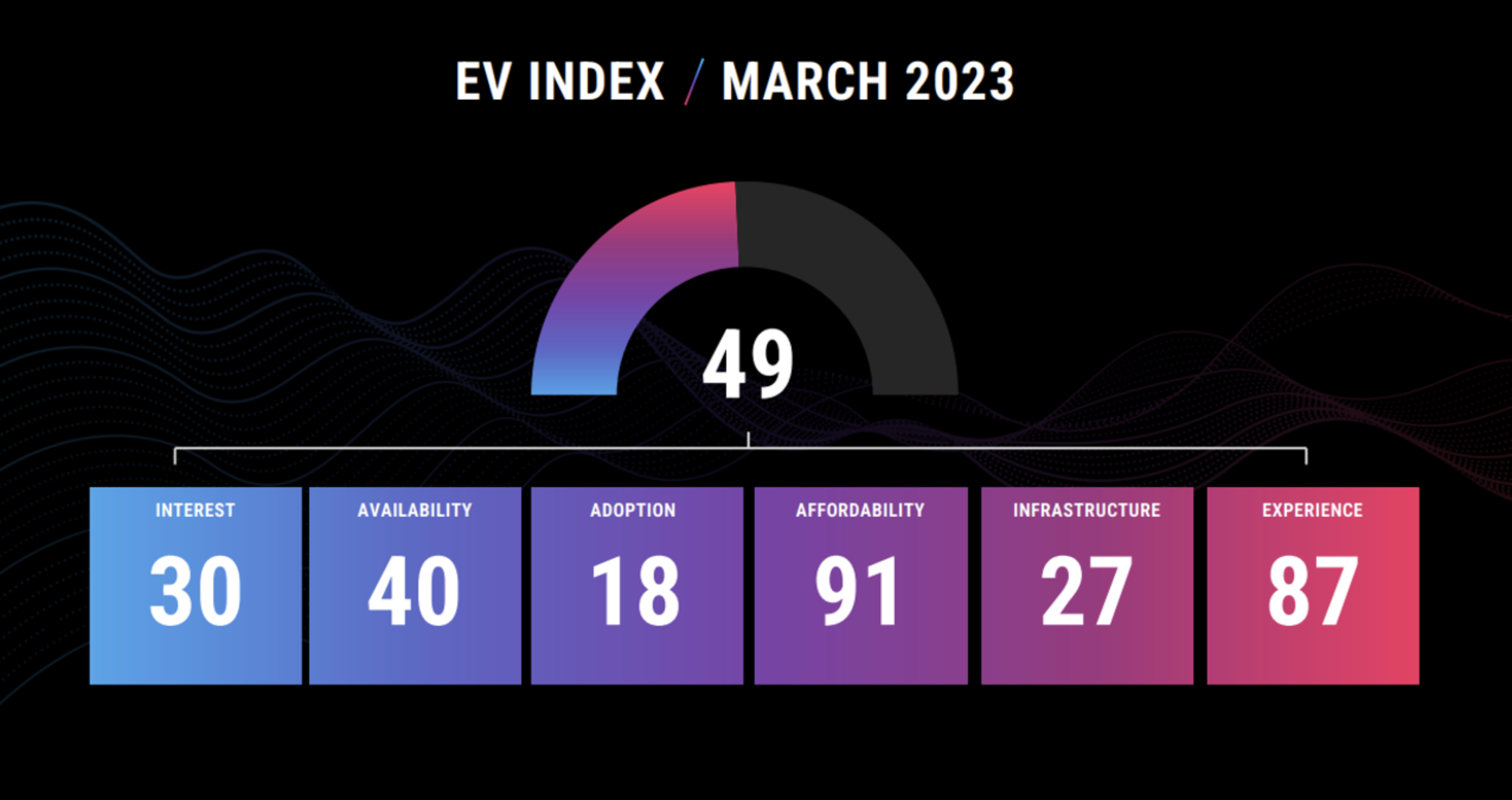
This JD Power E-Vision Intelligence Report is based on data and insights from the JD Power EV Index and the JD Power 2023 U.S. Electric Vehicle Experience (EVX) Public Charging Study. The JD Power EV Index is an analytics tool to benchmark the growing EV market in the United States. It tracks millions of data points aggregated into six categories—interest, availability, adoption, affordability, infrastructure and experience—to evaluate the progress to parity of EVs with ICE vehicles in the U.S. Each month, JD Power’s electric vehicle practice will analyze these data points, and others to spotlight emerging trends and important shifts in consumer sentiment that are helping to define the fast-moving EV marketplace.
Find out More
This report was authored by Elizabeth Krear, vice president, electric vehicle practice; Brent Gruber, executive director, electric vehicle practice; Stewart Stropp, executive director, electric vehicle practice; Kristen Richter, senior manager, electric vehicle practice; and Karlo Vukobratovic, analyst, electric vehicle practice, JD Power. The JD Power E-Vision initiative is a company-wide program focused on maximizing JD Power industry-leading EV data, analytics, insights and solutions. Please contact us at the numbers below to connect with the authors or to learn more about the underlying research.
Media Contacts
Shane Smith; East Coast; 424-903-3665; [email protected]
Geno Effler, JD Power; West Coast; 714-621-6224; [email protected]