
Domestic brands may dominate the full-size truck market in America, but Toyota offers a strong competitor in the boldly styled Tundra. Boasting impressive capability and a powerful hybrid drivetrain, the Tundra delivers a spacious, comfortable cabin and extreme off-road capability in the TRD Pro. The Tundra may not match the Chevrolet Silverado 1500 or the Ford F-150 in hauling and towing specs, but the full-size Toyota truck still has a lot to offer.
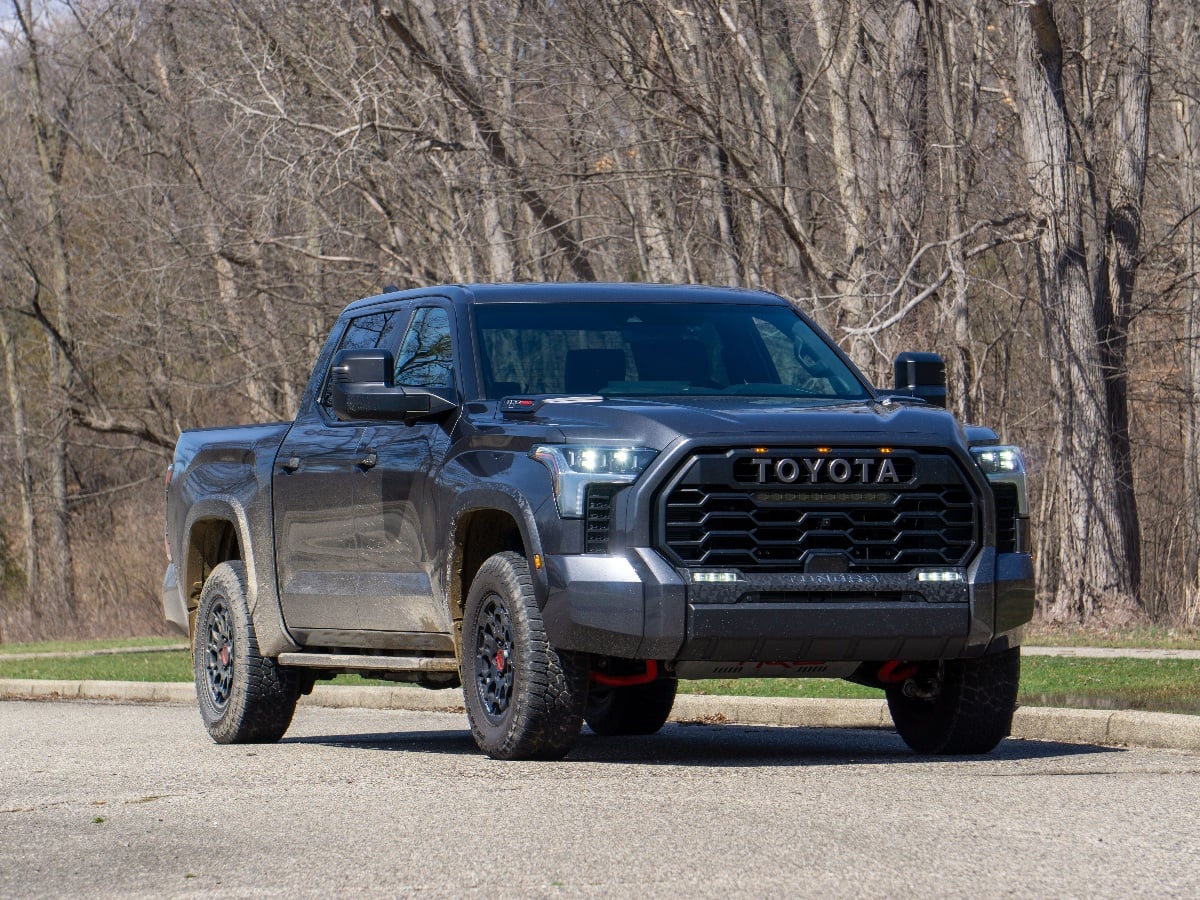
Photo: Perry Stern
The Toyota Tundra has not changed much since the current generation arrived in 2022, but the 2026 model does get some minor updates. Higher trim levels get new leather seat trim, and the unique ISO Dynamic performance seats are now available on the TRD Pro. All trims now include a trailer hitch receiver, and Wave Maker is a new color available for the TRD Pro. a trailer hitch receiver, and Wave Maker is a new color available for the TRD Pro.
The 2026 Toyota Tundra is available in 10 trims: SR, SR5, Limited, Limited i-Force Max, Platinum, 1794 Edition, Platinum i-Force Max, 1794 Edition i-Force Max, TRD Pro, and Capstone. The Tundra is not available in a regular cab; the SR and SR5 are available as extended cabs (Double Cab). All other trims come standard with a crew cab. Base prices range from about $44,000 to $83,000, including the destination charge.
For this 2026 Tundra review, Toyota provided a test vehicle equipped with TRD Pro trim and the following significant options:
The test vehicle's manufacturer suggested retail price (MSRP) was $82,488, including the $2,195 destination charge to ship the pickup truck from the San Antonio, Texas, assembly plant to a local dealership. The price does not reflect any current rebates, incentives, or price adjustments since Toyota manufactured the test vehicle.
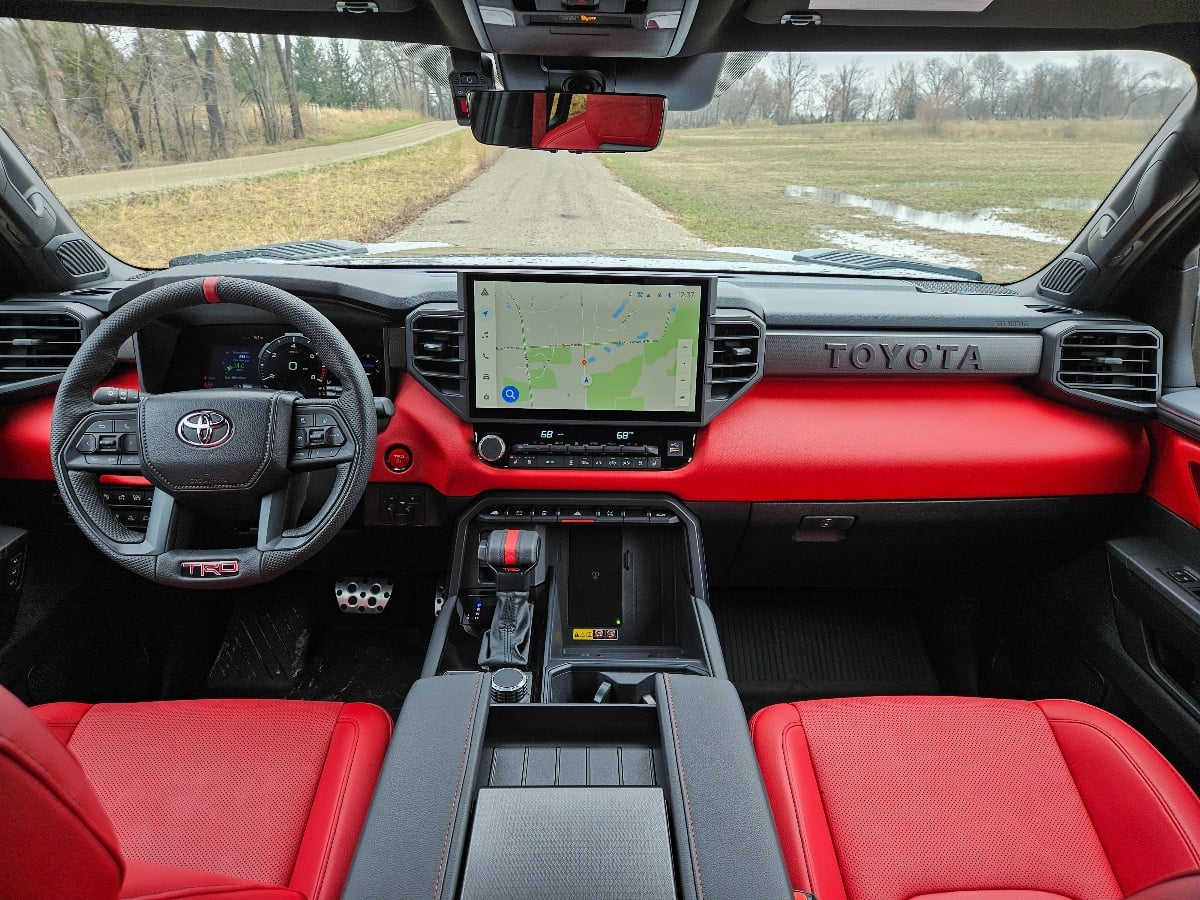
Photo: Perry Stern
With its massive grille, bold fenders, and stylish LED headlights, the Toyota Tundra stands out from the crowd. But the TRD Pro takes a more aggressive look that hints at its off-road capability. Up front, a unique grille with integrated fog lights and a light bar stands out, while the TRD skid plate and 18-inch BBS forged-aluminum wheels wearing Falken Wildpeak all-terrain tires add to the overall rugged image.
A look inside reveals that the bold styling carries over into the cabin, with a blend of premium and rugged decor. My test truck took this one step further with the available Cockpit Red interior trim, which covers the seats, doors, and dashboard in a rich, luxurious red. The TRD steering wheel, red TRD start button, sport aluminum pedals, and rugged floor mats are nice additions. The large infotainment screen and digital gauge cluster add a healthy dose of technology to the Tundra, and the separate climate controls and physical volume knob are welcome additions.
The large front seats feature a stylish pattern and are quite comfortable, with plush padding, thick bolsters, and an integrated headrest. One of the new features for 2026 is the innovative ISO Dynamic front seats, which use an air-over-oil shock absorber system that not only looks cool but also helps keep the front seats stable for a more comfortable ride when tackling rugged terrain at speed.
Toyota makes good use of the spacious cabin, with ample storage around the front seats. A cubby at the front of the center console holds smaller items and includes a wireless smartphone charger, while large cupholders are convenient for the driver and passenger. A small tray sits on top of the center armrest, and beneath it is a large storage bin.
Rear seat passengers will appreciate the ample legroom and headroom, and the seats receive the same stylish treatment as those up front. Although there is a small center hump, there is still plenty of space for all three seating positions. If cargo is the priority, seat bottoms can fold up to provide additional storage underneath, but only in the non-hybrid versions. The battery for the Tundra hybrid system resides in this space.
The Tundra may not offer tailgate innovation like the Chevrolet Multi-Flex tailgate, but its power-operated opening and closing make loading cargo easier. Tiedowns built into the bed and a versatile track system help keep cargo secure, and owners can use the integrated slots to create dividers for better cargo management. A 120-volt/400-watt power outlet in the bed adds to the truck's versatility.
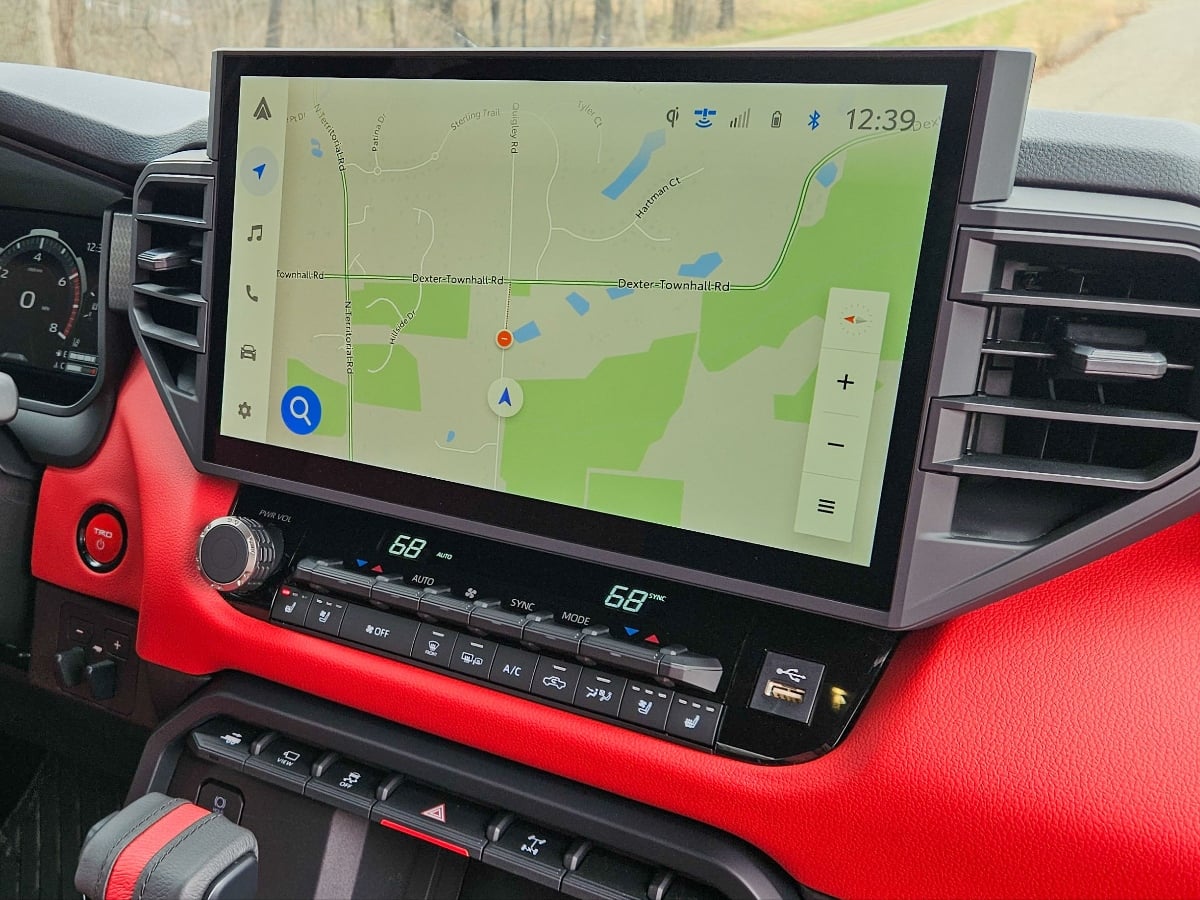
Photo: Perry Stern
The base level Tundras come standard with an 8-inch touchscreen display and the Toyota Audio Multimedia infotainment system, along with an analog gauge cluster featuring a 4.2-inch vehicle information screen. Standard features of the system include:
Higher trims feature a 14-inch touchscreen display, a 12.3-inch digital gauge cluster, and a 10-inch head-up display. A 12-speaker JBL premium audio system is also available.
The large 14-inch touchscreen display is standard on the TRD Pro, and I found the interface clear and easy to navigate. I would have liked a Home page that could display multiple features at once, but at least it offers shortcuts on the left for quick access to navigation, media, communications, and vehicle settings.
With an active Drive Connect subscription (one year is complimentary), the Tundra features a cloud-based navigation system and the brand's Intelligent Assistant, a natural voice interface. I just said "Hey, Toyota" to activate the system, and it was very helpful for providing directions to the closest coffee shop, changing the audio selection, and making a hands-free phone call.
While the native system works well, I prefer Android Auto's more familiar features. Connecting my Samsung Galaxy S23+ was quick and easy, and Android Auto launched automatically whenever I started the Tundra.
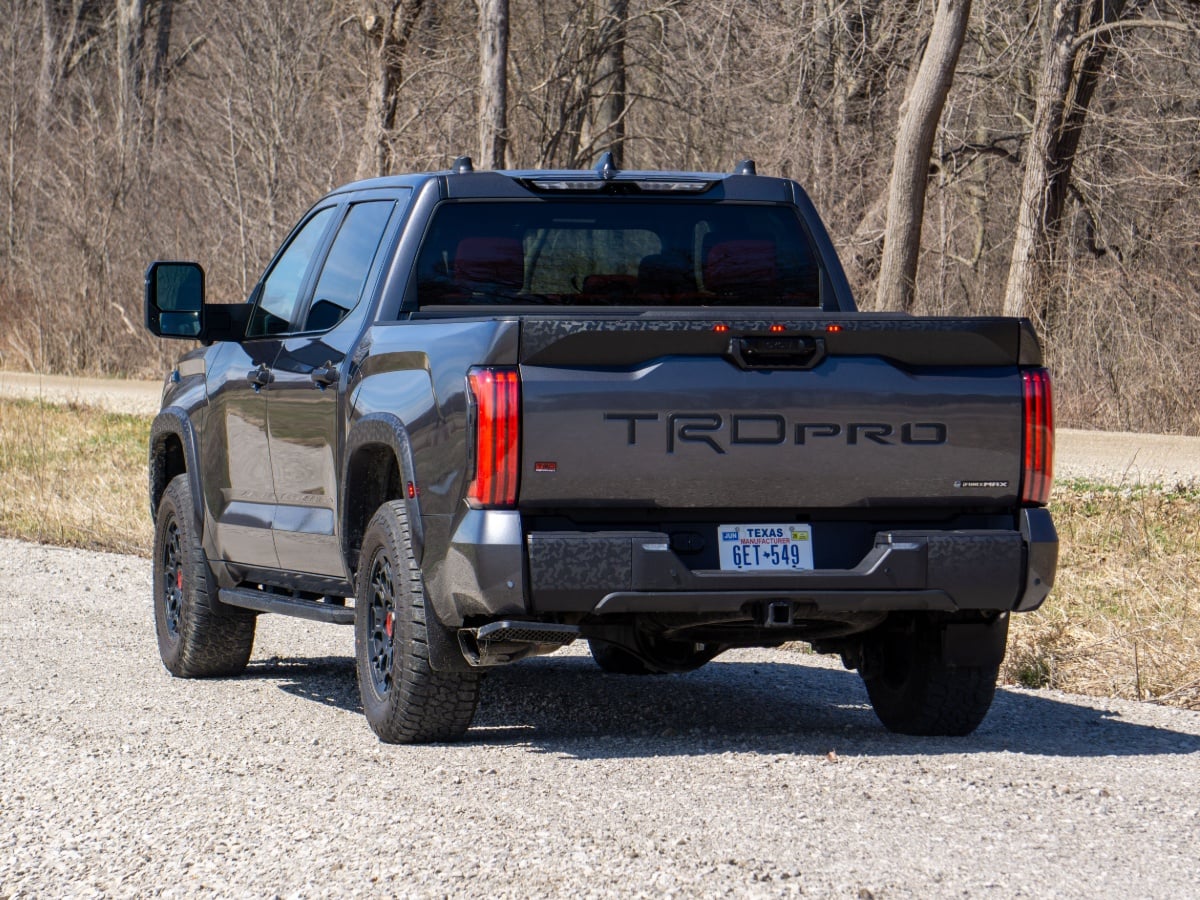
Photo: Perry Stern
My Toyota Tundra TRD Pro came standard with the truck's most powerful engine option, the i-Force Max twin-turbocharged 3.4-liter V6 hybrid, which produces 437 horsepower and 583 pound-feet of torque. A 10-speed automatic is the only transmission option, and the TRD Pro comes standard with four-wheel drive (4WD).
I expected the hybrid Tundra to be more fuel efficient, but the Environmental Protection Agency (EPA) reports the Tundra TRD Pro’s estimated combined fuel economy at 19 mpg, the same as the non-hybrid Tundra. During my drive loop, which combined city and highway driving with some dirt roads, the trip computer showed an even more disappointing 16.3 mpg. The Tundra cannot match the Ford F-150 PowerBoost hybrid 4WD, which gets an estimated 23 mpg.
It may not be very fuel efficient, but the hybrid system delivers excellent performance. The big truck is surprisingly quick, with strong acceleration from a stop and enough power to push you back in the seat when you stab the throttle at highway speeds. While there is no V8 under the hood, the rumbling exhaust note is still a pleasing addition to the driving experience.
The TRD Pro is the truck you buy when you have plans for off-road adventures, so I was pleasantly surprised by how well the Tundra performs when it is not off-roading. Whether cruising through town or on the freeway, the Tundra delivers a comfortable, solid ride, and the cabin remains relatively quiet even at highway speeds. The suspension, designed to handle off-road conditions, also handles the rough pavement common on Michigan's freeways.
However, the Tundra TRD Pro really stands out when the route leaves the pavement behind. Many of the roads around Dexter, Michigan, are unpaved, and after a harsh winter, most were in disrepair, with large potholes and washboard surfaces that could shake a filling loose if you drove too fast. That is, unless you have a TRD Pro.
The 4WD system and all-terrain tires delivered excellent traction and stability on rough, often muddy surfaces, but, more importantly, the ride was impressively smooth. With its off-road suspension and ISO Dynamic seats, I was able to tackle these rough surfaces at close to 60 mph without issue, and all my fillings are still intact.
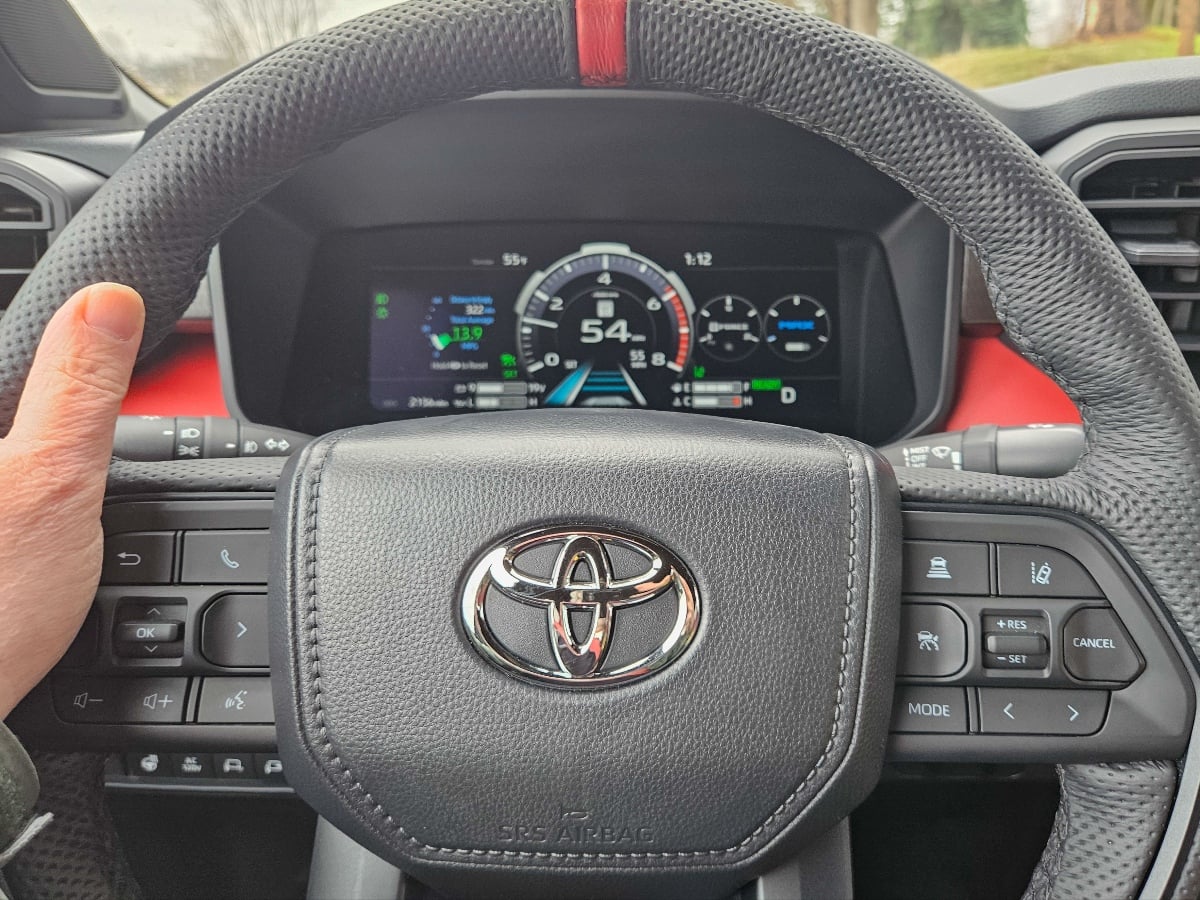
Photo: Perry Stern
All 2026 Toyota Tundra pickups come standard with the Toyota Safety Sense 2.5 (TSS 2.5) suite of advanced driver assistance systems (ADAS). The TSS 2.5 suite includes:
Higher trims, including the TRD Pro, also receive:
Driving the Tundra from the Detroit airport back home on Interstate 94, I took advantage of the adaptive cruise control with lane centering and found the system works quite well. With the speed set at 70 mph, the big truck stayed in its lane with minimal steering input and smoothly slowed to match the speed of a slower vehicle ahead of me. Once the vehicle moved out of the way, the Tundra quickly resumed the set speed. The system is not hands-free, and it will provide visual and audible alerts if you try to drive without keeping at least one hand on the wheel.
The rear cross-traffic warning system kept me aware of vehicles approaching from my blind spot when backing out of my driveway, which was especially useful with such a large vehicle. Multiple camera views also helped when maneuvering tight spaces or trying to park between the lines.
Toyota can also claim that the Tundra is among the safest full-size trucks on the market, as it is the only one to earn a “Top Safety Pick” rating from the Insurance Institute for Highway Safety (IIHS). The Tundra received the top rating of Good in the small- and moderate-overlap front and side crashworthiness tests. The National Highway Traffic Safety Administration (NHTSA) also gave the Tundra high marks, awarding it a maximum five-star overall safety rating.
According to the JD Power 2026 Initial Quality Study (IQS), the Ford F-150 ranks highest in the Large Light Duty Pickup segment, with the Chevrolet Silverado 1500 and Toyota Tundra ranked second and third, respectively.
According to the JD Power 2025 Automotive Performance, Execution and Layout (APEAL) Study, the GMC Hummer EV ranks highest in the Large Light Duty Pickup segment.
Other 2026 Tundra competitors include the GMC Sierra 1500, Ram 1500, and Rivian R1T.
According to verified owners, the Tundra earns an award as the highest-ranked model in its segment in the 2026 ALG Residual Value Awards.
It may not be competitive with perennial top-selling trucks like the Chevrolet Silverado 1500, Ford F-150, and Ram 1500. Still, the Toyota Tundra is an impressive offering among full-size pickups, especially in the TRD Pro trim. Its hybrid powertrain delivers ample power, and the TRD Pro delivers excellent driving dynamics, whether on pavement or the roughest terrain. Add in its bold styling and spacious, upscale cabin, and the Toyota Tundra is not one to be missed.
Perry Stern has worked in the automotive industry for over 30 years and has always been a car enthusiast. Driving nearly every new car on the market, Perry has written for multiple publications in addition to his work for jdpower.com. Living in southeast Michigan, Perry remains passionate about cars, especially his 2006 Mazda MX-5 Miata.


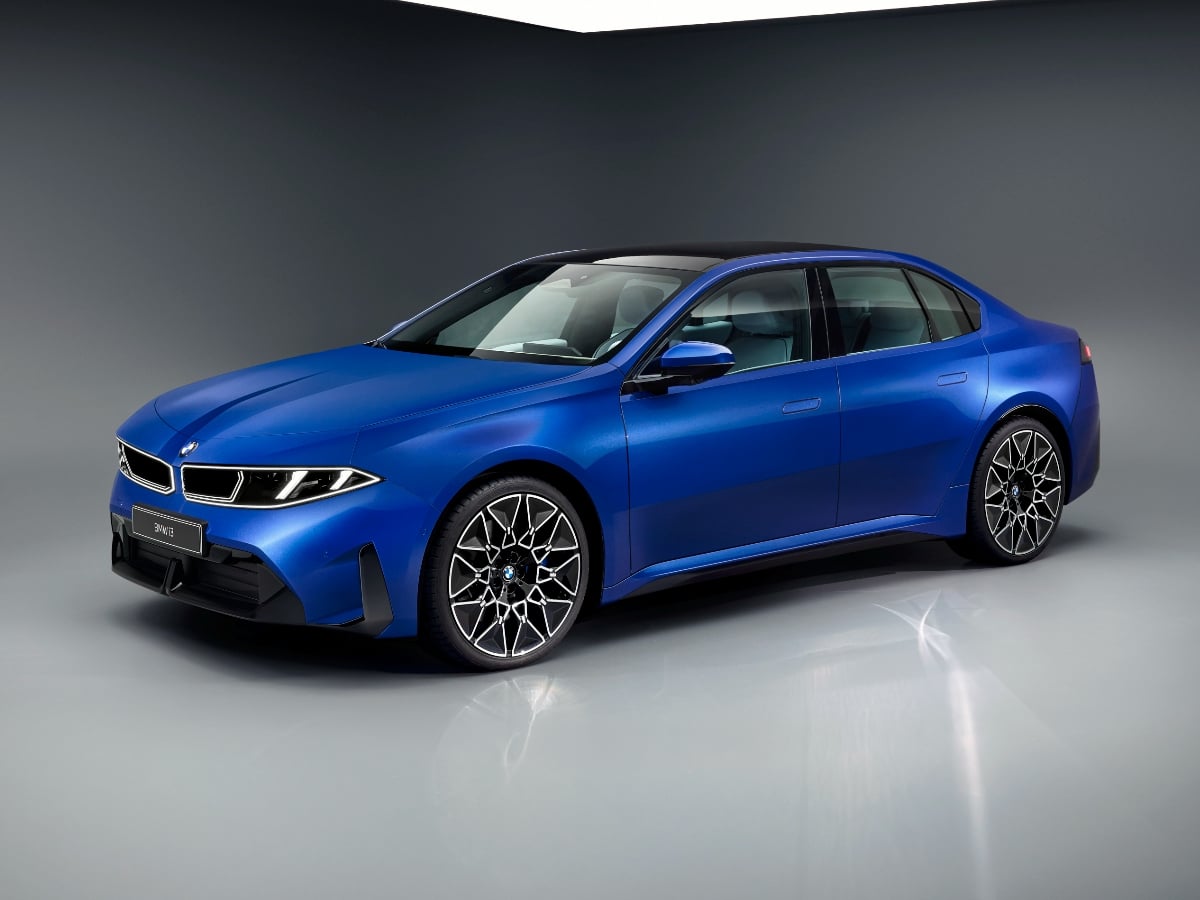
The new 2027 BMW i3 boasts an estimated range of up to 440 miles, 400-kilowatt DC fast charging capability, bidirectional charging to a home or the grid, and next-generation technology.
Read the Full Article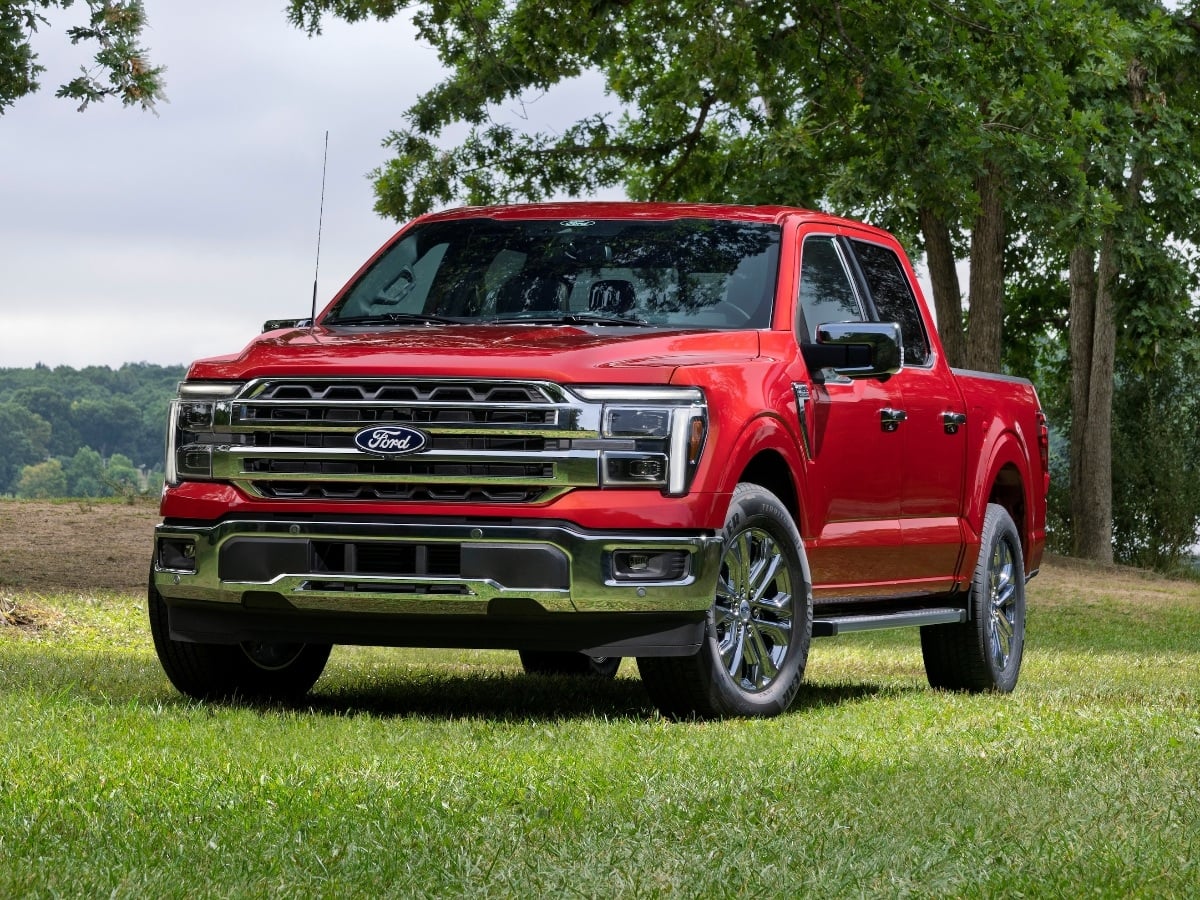
Facing renewed competition in the full-size, light duty pickup truck segment, the 2027 Ford F-150 receives subtle styling updates, a new standard engine, broader availability of its 5.0-liter V8, and ...See More
Read the Full Article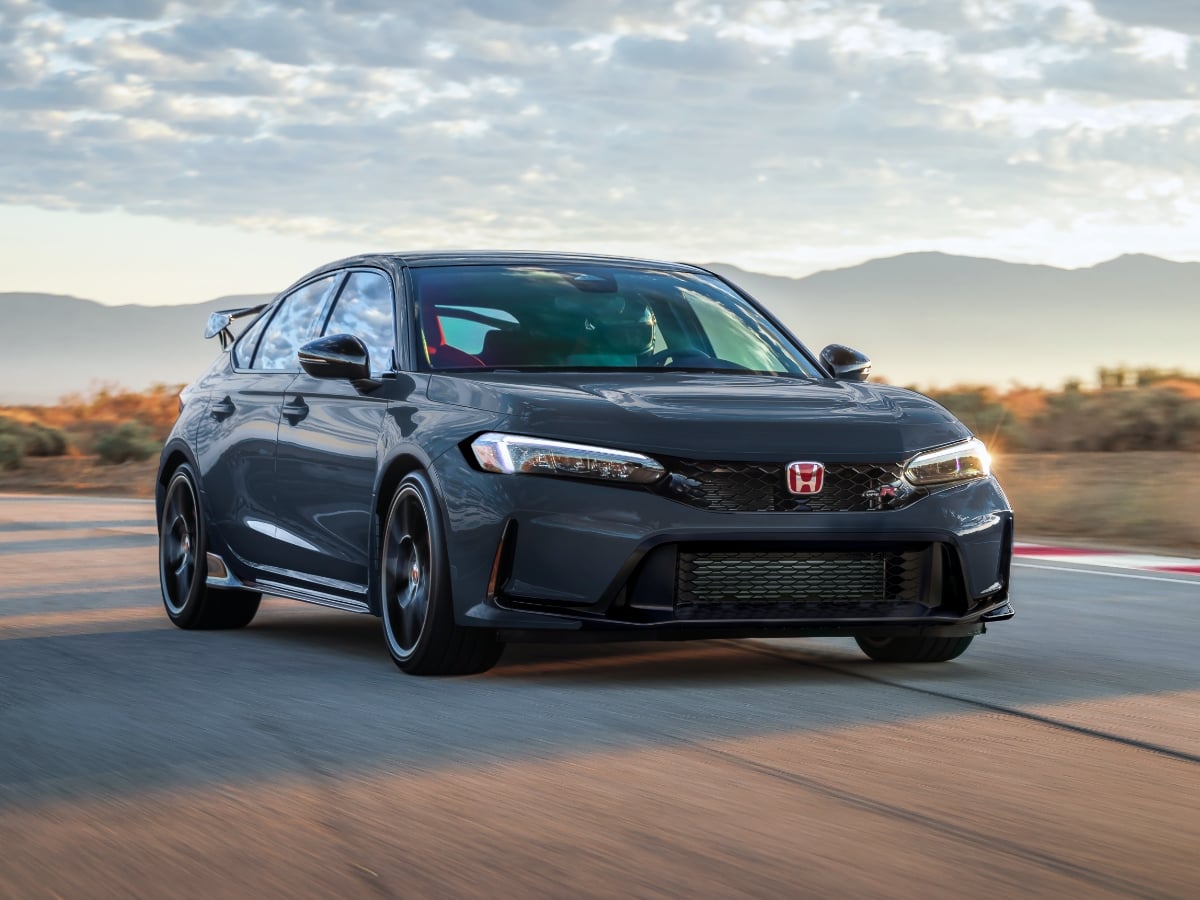
The 2027 Civic Type R goes on sale in October 2026, and it starts at $49,990, including the $1,295 destination charge.
Read the Full Article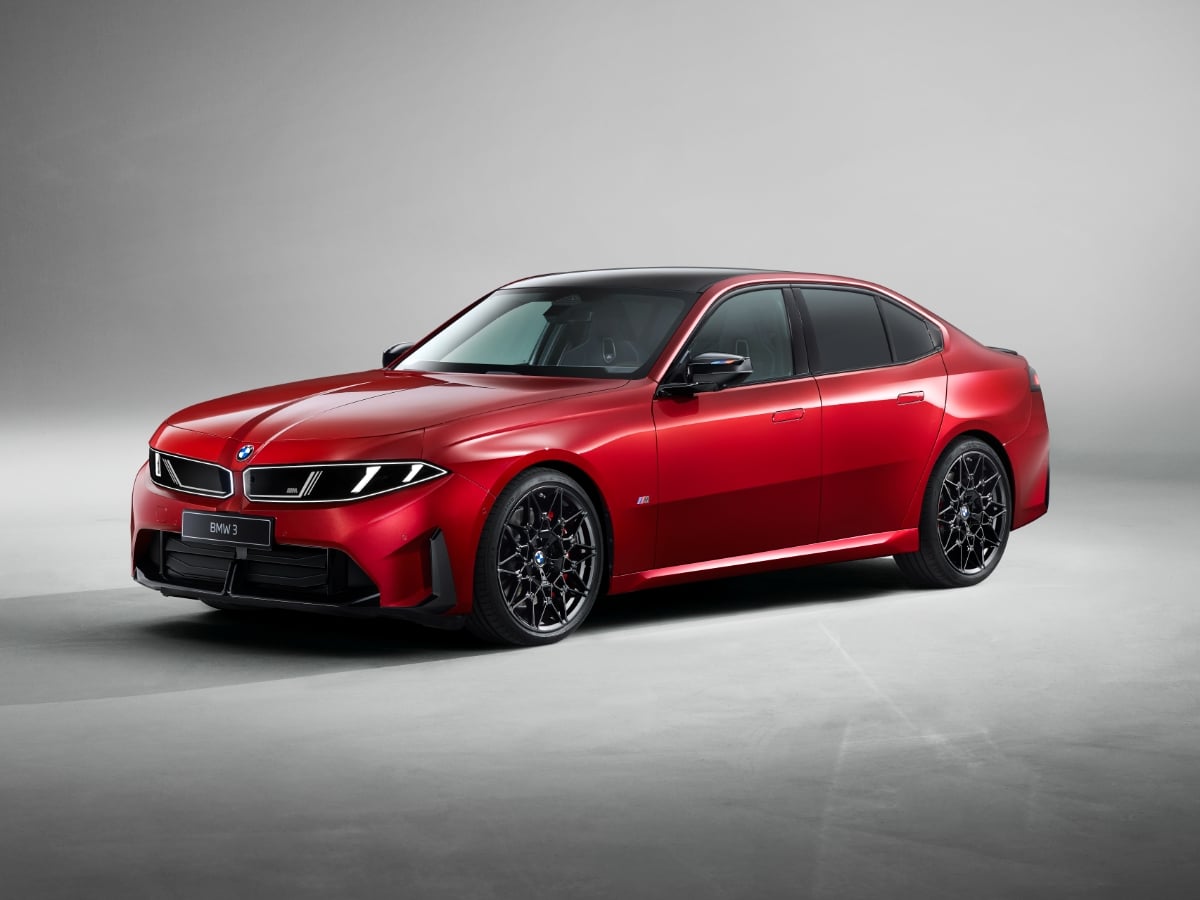
Part of BMW’s Neue Klasse (new class) rollout of redesigned models, the 2027 BMW 3 Series is all-new and goes on sale in the first quarter of 2027.
Read the Full Article