
The Ford Explorer already stood out from the three-row SUV pack with its distinctive, high-performance ST variant. That is great, but what SUV buyers seem to want right now are off-road variants that look tougher and, ideally, are more capable off the beaten path. Enter the 2026 Ford Explorer Tremor, which adds legitimate off-road capability. How much, and does it affect the Explorer’s family-hauler mission? Let’s find out.
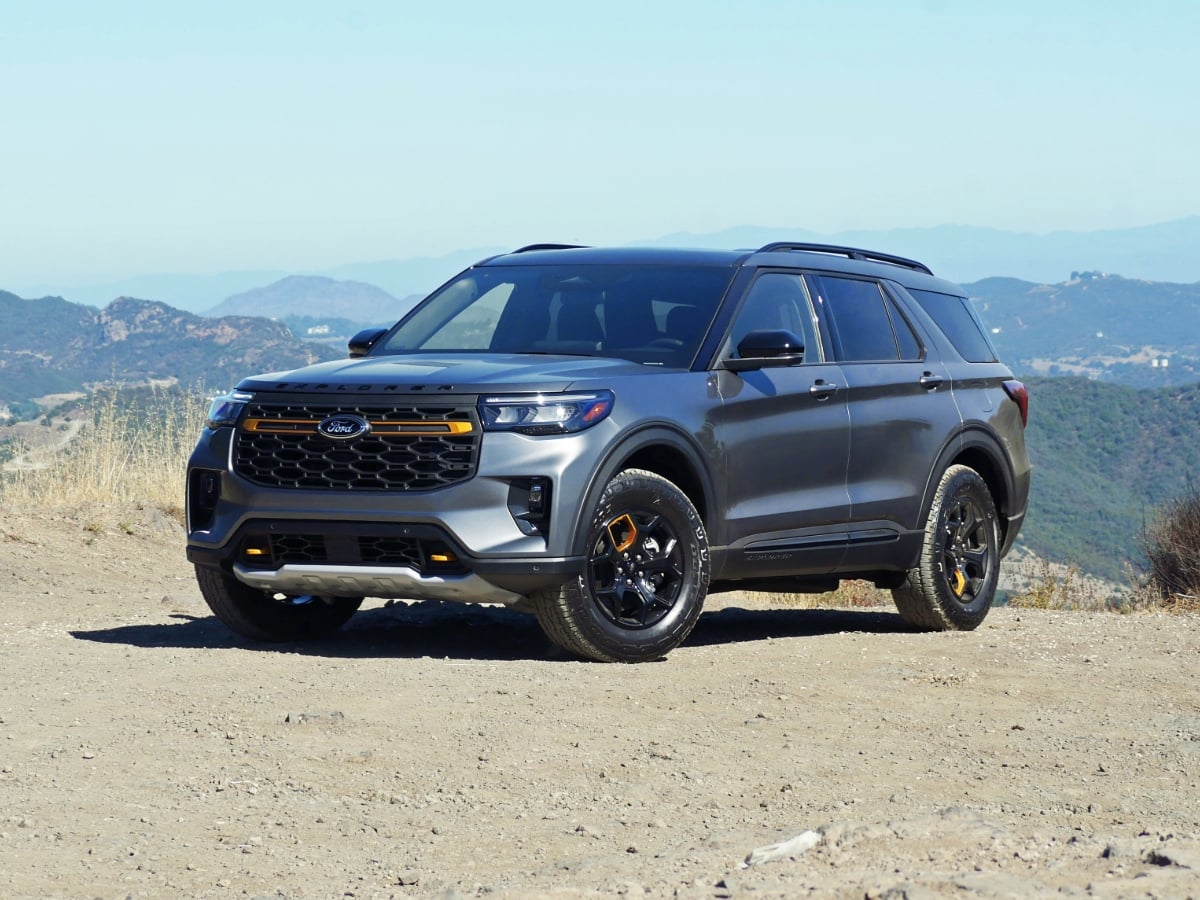
Photo: James Riswick
Although there is also a new base trim for 2026, the Tremor is the main addition. It adds an off-road-tuned suspension, 1.1 inches of additional ground clearance, a limited slip differential, underbody protection, black 18-inch wheels, all-terrain tires, special styling that includes bronze-like accents and auxiliary grille lights, all-weather floor mats, suede-like upholstery, and a choice between the Explorer’s standard four-cylinder engine and the ST’s twin-turbocharged V6.
The Tremor joins a lineup that now includes the new base trim level (Active 100A), Active (200A), ST-Line, ST, and Platinum. All trims have three rows, with seating capacity of six or seven depending on the second-row configuration. Base prices range from about $41,000 to about $57,000, including the destination charge.
For this 2026 Explorer review, Ford provided a test vehicle equipped with Tremor trim and the Tremor Ultimate package. It includes:
The test vehicle’s manufacturer suggested retail price (MSRP) was $64,510, including the $1,795 destination charge to ship the SUV from the Chicago, IL, assembly plant to a local dealership. The price does not reflect any current rebates, incentives, or price adjustments since Ford manufactured the test vehicle.
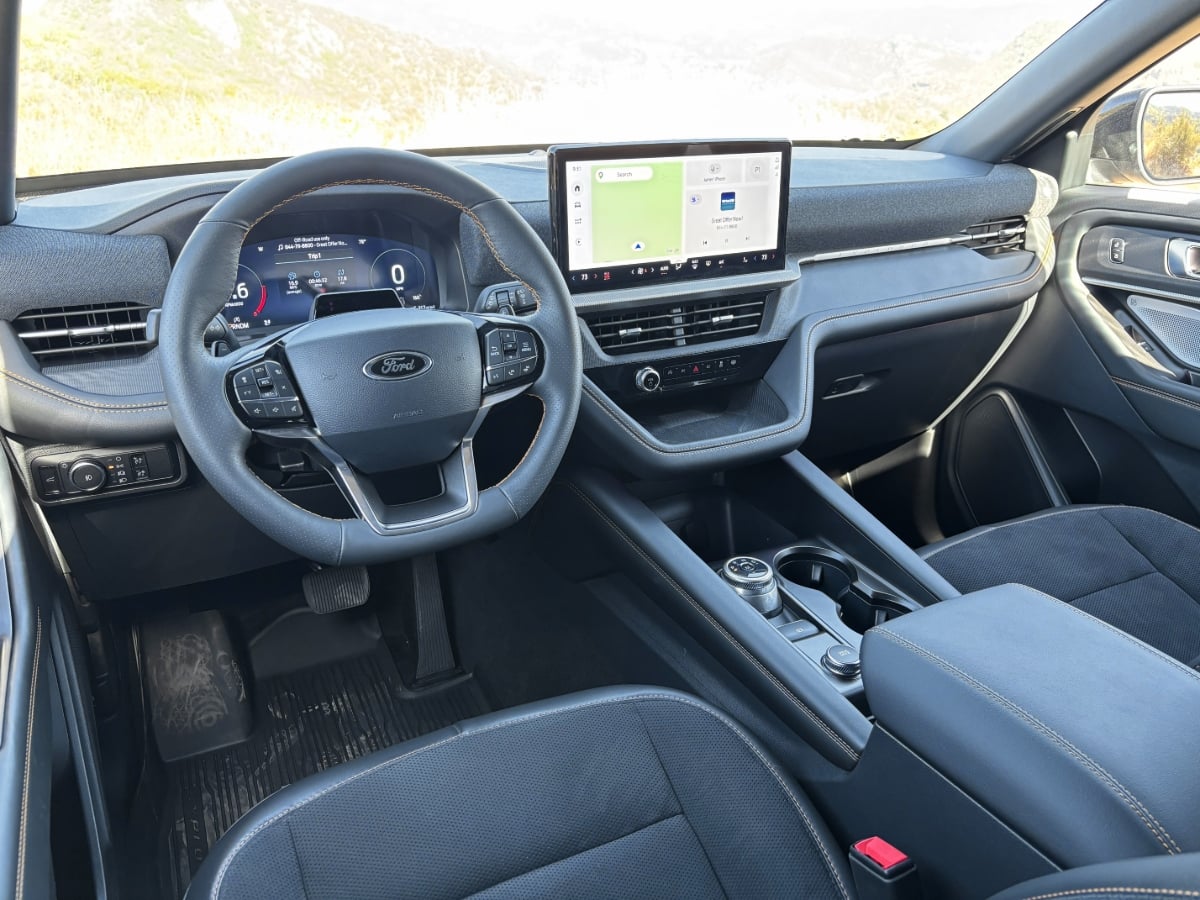
Photo: James Riswick
The Explorer Tremor certainly looks the part, with its unique grille, skid plates, and all-terrain tires, adding a degree of toughness that is typically missing from the Explorer. However, with its gray paint, black wheels, and extra grille lights, my test vehicle looked like an unmarked police car.
Inside, the bronze-like “Electric Spice” stitching and Tremor emblems are not enough to spruce up an interior that is plain at best and ugly at worst. The large tray that juts out from the dashboard may be a handy place to put your phone or sunglasses, but it looks like a protruding lip or a toll booth change catcher. A friend described the center of the dashboard as looking like a “robot Muppet.”
This is ultimately a shame because the materials used to put it all together are quite nice. There is padded simulated leather on the dashboard, doors, and center console. The gray cloth across the dashboard and the textured plastic trim below it have a rich feel. The buttons and switches are also quality pieces, and everything seems well put together.
Interior storage is also quite good. In addition to the protruding lip of the dashboard bin, there is an even deeper bin below it with USB ports. Both can be used for phone storage, but the Explorer no longer offers wireless smartphone charging. The cupholders were sufficient for my extra-large mugs and metal water bottles; the door bins were big enough for the latter, too. The storage under the armrest was deep, though typical for the segment.
The second row has a pair of tiny cupholders that pop out of the center console and rest on the floor, not great. There are also holders on each door, but they are square and a bit small. The third-row storage also looks like an afterthought and is not as functional as what you would get in rival three-row SUVs.
The seat massage function of my test vehicle’s “Multi-Contour” seat upgrade worked very well during a three-plus-hour road trip from the northwestern reaches of Los Angeles County down to San Diego. I found the lower backrest oddly pinchy, however, and it took me longer than usual to get comfortable. There is no shortage of adjustment range for tall drivers.
The captain’s chairs in the second row are excellent. They are set high off the floor and recline comfortably; my passengers liked them a lot. My son’s forward-facing car seat also went in easily, but parents and kids alike should note that side window shades are not available.
The third row is one of the Explorer’s weakest features. It is low, flat, and hard, so even if the gap between it and the second row is OK, or you slide the captain’s chairs forward, it is still uncomfortable. I am 6-foot-3, and while I can fit with reasonable comfort in the third rows of a Hyundai Palisade, Honda Pilot, Kia Telluride, and, among others, I think larger kids and teenagers would object to riding in the Explorer’s third row.
Cargo space behind the third row also is not great … on paper. With an official dimension of 16.3 cubic feet, it offers considerably less storage than the competitors mentioned above. However, that figure is misleading. I am almost certain it was measured with the removable floor panel in place. The latter provides a flat floor when the third row is lowered. Take the panel out, and the floor drops by several inches, which dramatically expands the space, and as a result, the amount of luggage that can fit inside gets much closer to those same competitors.
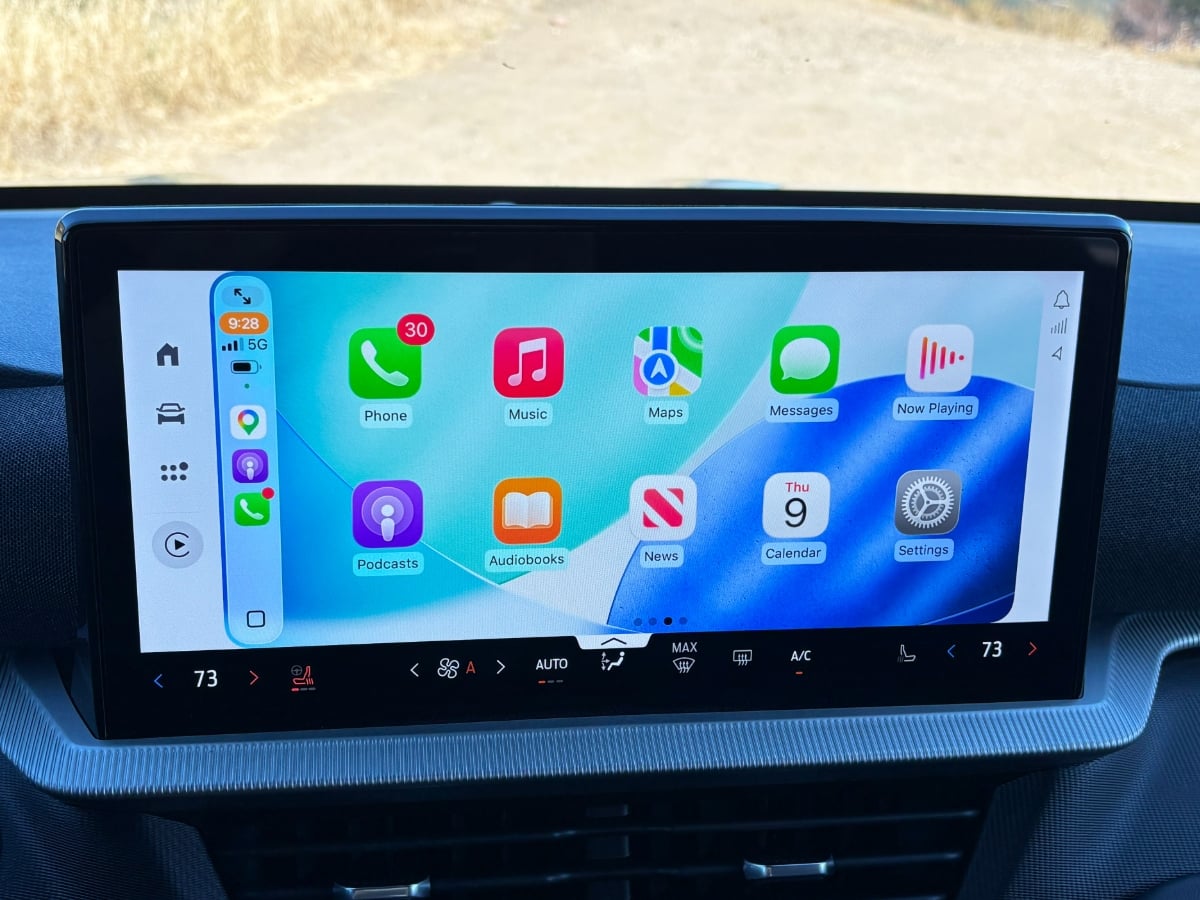
Photo: James Riswick
Dubbed the Ford Digital Experience, the Explorer’s infotainment system features a standard 13.2-inch, landscape-oriented touchscreen. A 12.3-inch digital instrument panel is also standard, but a head-up display is not available.
Standard features include:
My Tremor test vehicle’s Ultimate package added a 14-speaker B&O premium sound system, replacing the Tremor’s standard 10-speaker B&O system. I cannot say I was terribly impressed, but the audio also had to contend with the roar of the all-terrain tires (more on that later).
I am also not a fan of the Explorer’s climate controls being integrated into the bottom of the touchscreen, but that is the extent of my issues with what is otherwise one of my favorite infotainment systems. The screen itself is just the right size, the menu layout makes sense, the graphics are crystal clear, and the responses are excellent. The integration of Google Maps into the system is not only great for familiarity, but it is also more advanced than Apple CarPlay/Android Auto.
All told, this system seems like it could easily be an offering available at an extra cost or found on an upper trim level. The fact that it is standard equipment makes it even more impressive.
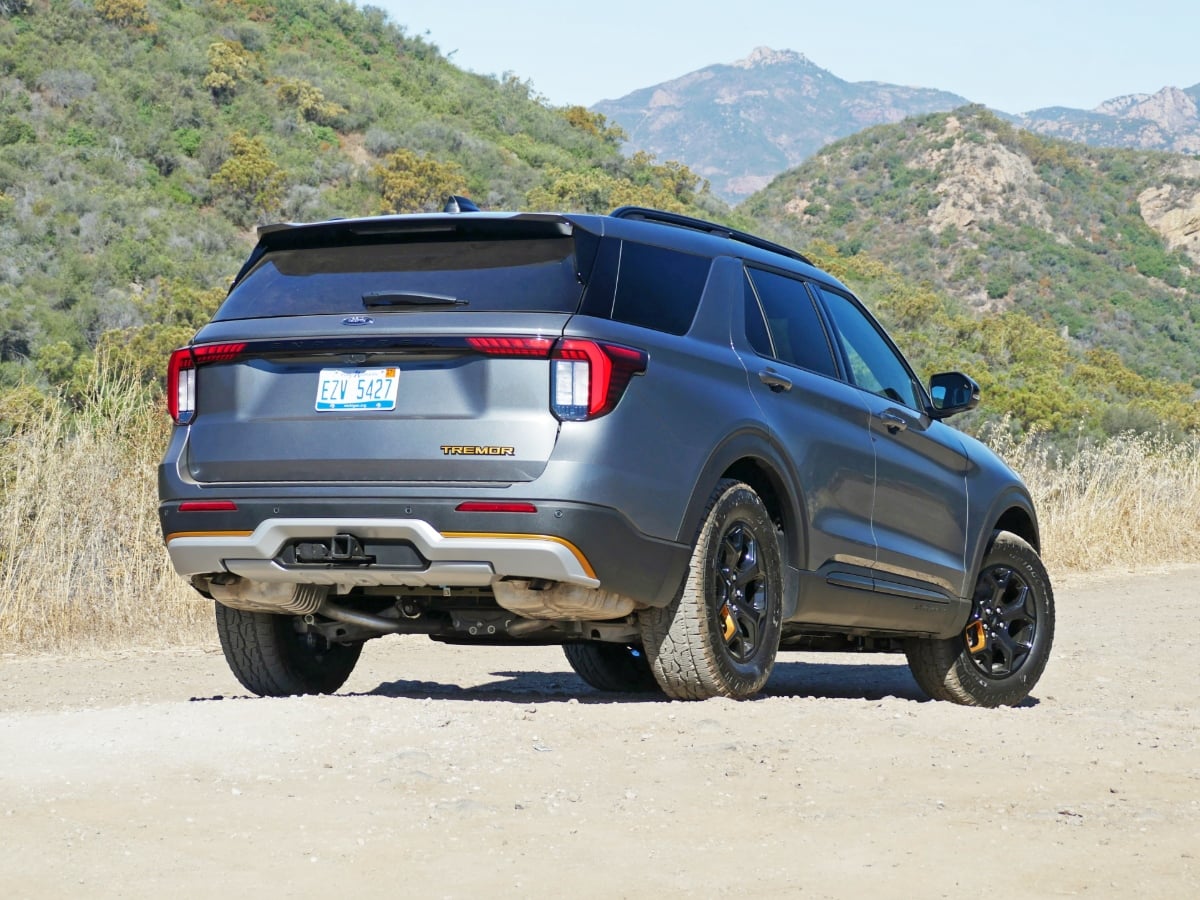
Photo: James Riswick
The Explorer’s base engine, standard on the Tremor, is a turbocharged 2.3-liter four-cylinder that delivers a stout 300 horsepower and 310 pound-feet of torque. I have tested this engine before and found it punchy and more than capable of getting the Explorer moving with authority. It returns an EPA-estimated 24 mpg combined with rear-wheel drive (RWD) and 23 mpg with four-wheel drive (4WD) in most trims, and drops to 21 mpg in the Tremor.
My test vehicle’s Ultimate package adds a twin-turbo 3.0-liter V6 producing 385 hp and 415 pound-feet of torque. Its fuel economy is 21 mpg combined with RWD, 20 mpg with 4WD in other trims, and 19 mpg in the Tremor. That is just one mpg less than the far less powerful Honda Pilot TrailSport and Kia Telluride X-Pro.
I achieved 22.4 mpg on my 370-mile road trip, beating the EPA’s 22 mpg highway rating, and matched the EPA’s 17 mpg city rating around town.
Efficiency is not why you opt for the V6—it is performance. This is a terrific engine that is incredibly smooth, accelerates effortlessly, and even sounds pretty good doing it. Its prodigious passing power was especially appreciated on the highway.
The engine also made a difference off-road. The first obstacle on my go-to trail was an extra-steep hill with ruts that, on this day, was even tougher because the dirt was far looser than I have previously experienced. It was a tough challenge, but with all that power and a seemingly smart 4WD system, and the Torsen limited slip differential, directing it to the tires that needed it most, the Explorer got up with minimal wheel slippage and drama.
The grippy all-terrain tires certainly helped, too, and provided plenty of confidence when driving over sharp rocks. The Tremor’s ground clearance also seemed to make a difference in approach angle and in handling a particular obstacle that scraped the bottoms of past vehicles I have tested. I also really like Ford’s forward-facing camera, which provides a clear view of what’s ahead off-road.
That said, this is still a big vehicle, and its 8.7 inches of ground clearance is not that much given its long wheelbase. I was concerned that the deeper ruts on the trail’s tougher stretches could cause damage or leave me stuck. The smaller Ford Bronco Sport and the higher, even more capable Toyota 4Runner TRD Off-Road managed it, but I also think their owners are more likely to tackle such terrain.
In other words, the Tremor does not turn the Explorer into a three-row Bronco. It does, however, offer more off-road capability than I have found typical for three-row family SUVs.
I must say, however, that you need to be pretty certain you will be routinely using that off-road capability to justify the Tremor’s significant on-road drawbacks. More specifically, those related to the all-terrain tires. Their hard rubber does not soften sharp impacts like all-seasons do, and the tire roar on the highway was constant and tiresome. It is more civilized than a 4Runner TRD Off-Road, but it is also a much less pleasant Explorer to drive.
The tires thankfully do not detract from the Explorer’s excellent steering, which remains impressively responsive and precise, especially for a three-row family hauler. Body motions were also well controlled around tighter corners, despite the raised, off-road suspension.
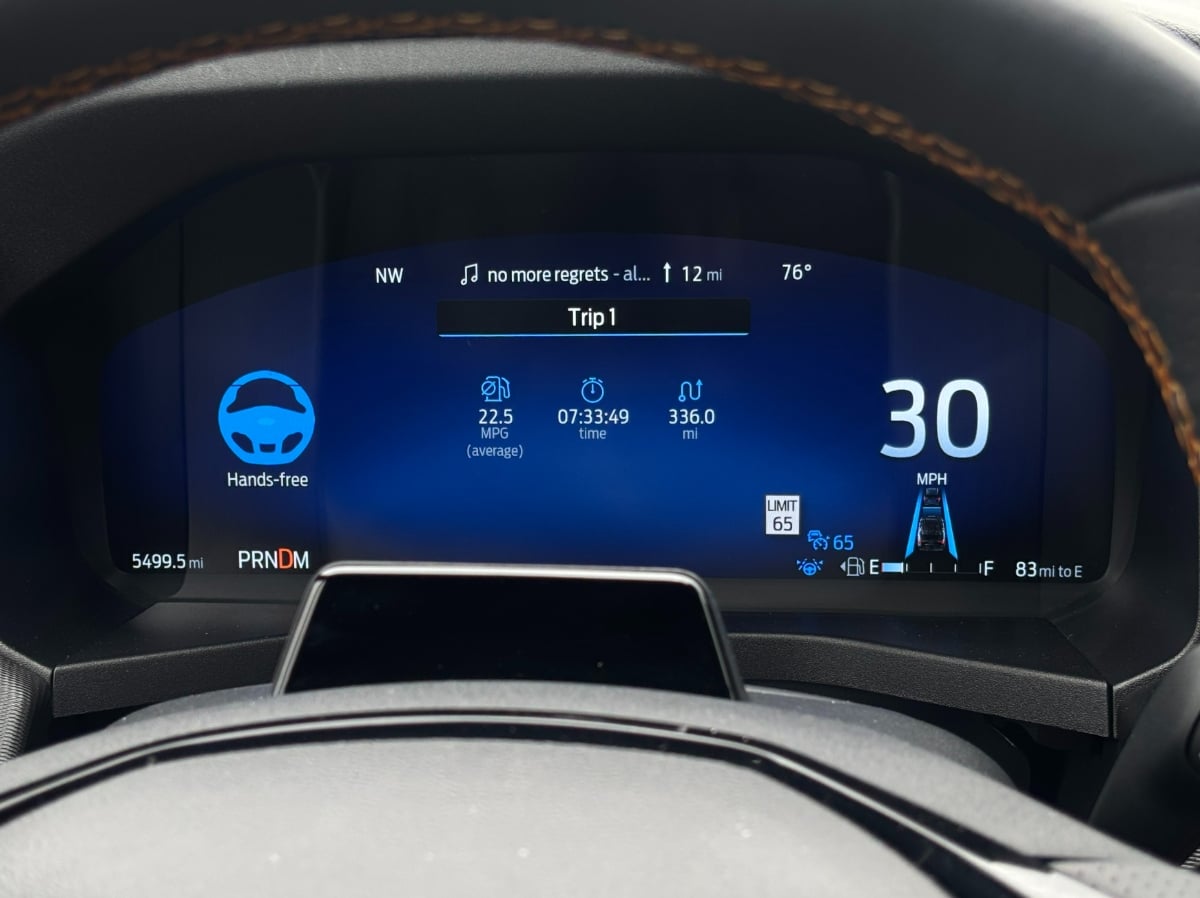
Photo: James Riswick
The Explorer comes standard with the Ford Co-Pilot360 Assist+ suite of advanced driver assistance systems (ADAS), which is upgraded to Assist 2.0 across all trims except the Active. There is minimal difference between them.
Standard in the base Co-Pilot360 Assist+ suite:
The Tremor’s Co-Pilot360 Assist 2.0 upgrades add:
As I have found in other Fords, the Explorer’s ADAS are exceptional. Not only are there a ton of them included as standard equipment, but they work extremely well. They do the job they are intended to do, protect you and the car itself, without excessively beeping or interfering to the point that you render them moot by shutting them off. Being able to customize the sensitivity and warning type of certain systems also helps.
My test vehicle also came equipped with the BlueCruise hands-free highway driving assist system. In the Tremor, the hardware is either a stand-alone option or included in the Ultimate package. Either way, it includes a 90-day trial subscription. Owners can then cancel, subscribe month-to-month (turn it on when they anticipate needing it), or pay a one-time purchase price.
Because I found Ford’s standard ACC and lane centering assist systems to be so good, I probably would not pay extra money for BlueCruise. Keeping a light hand on the steering wheel is not that onerous. That said, BlueCruise works as advertised. The car did most of the driving for me on my road trip to San Diego, including in chaotic, high-speed situations. Simply put, I trust it.
Regarding safety ratings, the National Highway Traffic Safety Administration (NHTSA) gave the 2026 Explorer five out of five stars for overall safety. The Insurance Institute for Highway Safety (IIHS) also named it a “Top Safety Pick” for the 2026 calendar year.
According to the JD Power 2026 Initial Quality Study (IQS), the Subaru Ascent ranks highest in the Upper Midsize SUV segment, with the Ford Explorer and Kia Sorento ranked second and third, respectively.
According to the JD Power 2026 Automotive Performance, Execution and Layout (APEAL) Study, the Hyundai Palisade ranks highest in the Upper Midsize SUV segment, with the Nissan Pathfinder and Dodge Durango ranked second and third, respectively.
Other 2026 Explorer competitors include the GMC Acadia, Honda Pilot, and Toyota 4Runner.
The Tremor looks cool and improves the Explorer’s off-road capability, but it makes the ride louder and less comfortable. For most family SUV buyers, I would recommend a different trim level, especially one that offers the 3.0-liter V6. It is a terrific engine which carries a modest fuel economy penalty. It makes the Explorer’s otherwise excellent overall driving experience even better.
James Riswick has been testing and reviewing cars since 2007, serving as an editor at Edmunds and Autoblog. In addition to jdpower.com, he has also contributed to Autotrader, Autoguide Magazine, Auto Express, Capital One Auto Navigator, Car and Driver, and Hagerty. He resides in Southern California and owns a 1998 BMW Z3, a 2013 Mercedes-Benz E350 Wagon, and a 2025 Cadillac Optiq.


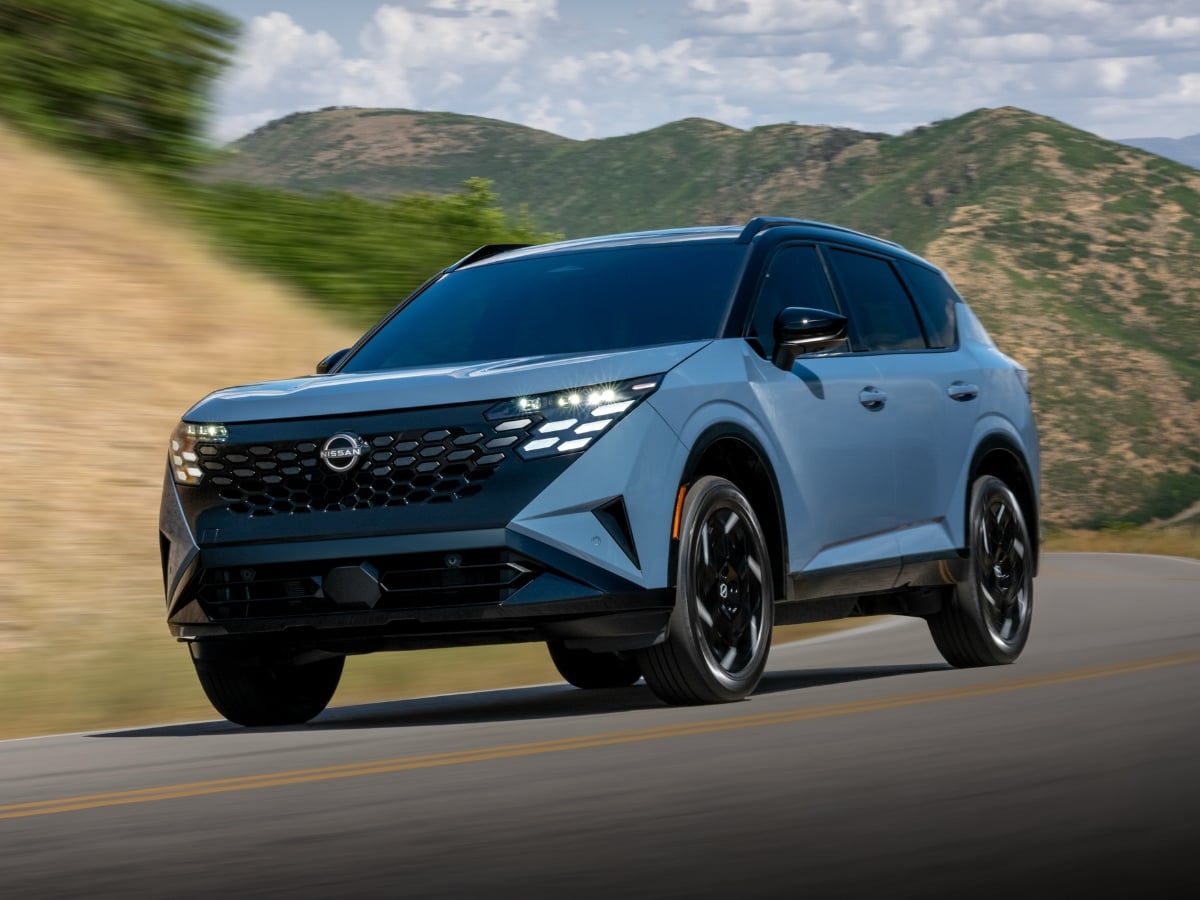
Nissan is about to introduce an innovative new SUV. The 2027 Nissan Rogue Hybrid has a gasoline engine, but it does not power the wheels. Instead, electric motors at each axle provide propulsion, ...See More
Read the Full Article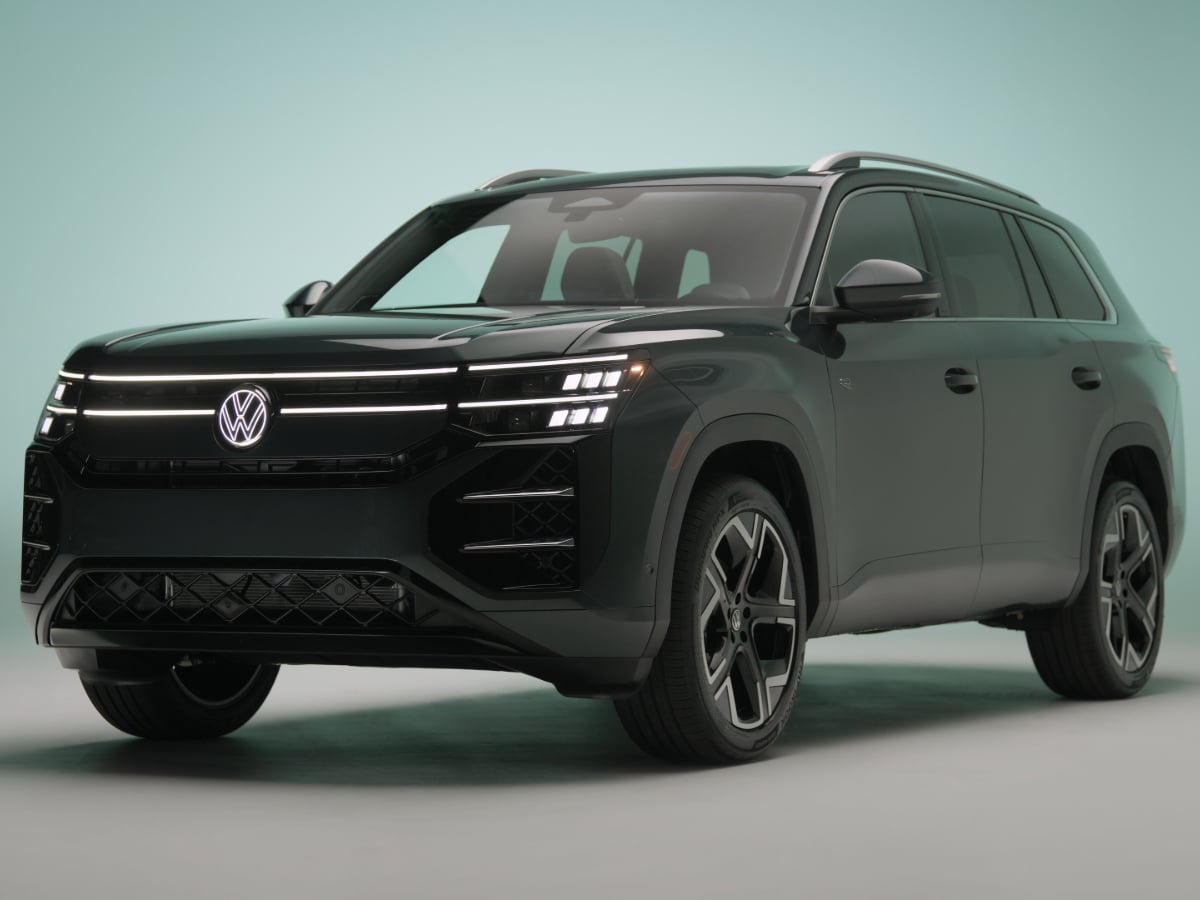
Adding European flair to the otherwise vanilla midsize three-row family SUV market, the redesigned 2027 Volkswagen Atlas debuts with a sharper exterior, an upgraded cabin, more power, and new ...See More
Read the Full Article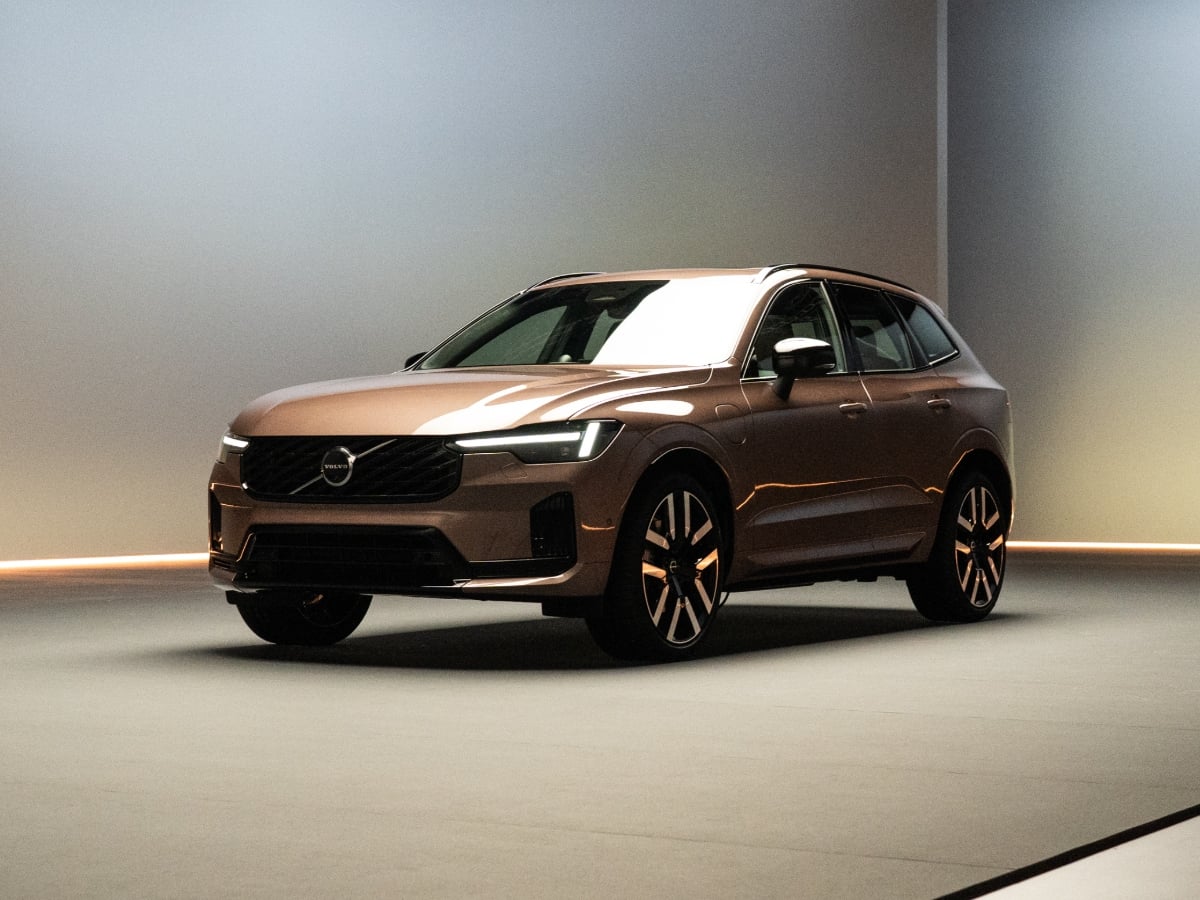
Though the styling stays largely the same, a massive boost in electric range for the plug-in hybrid (PHEV), plus a refined design, helps the 2028 Volvo XC60 stay current and desirable.
Read the Full Article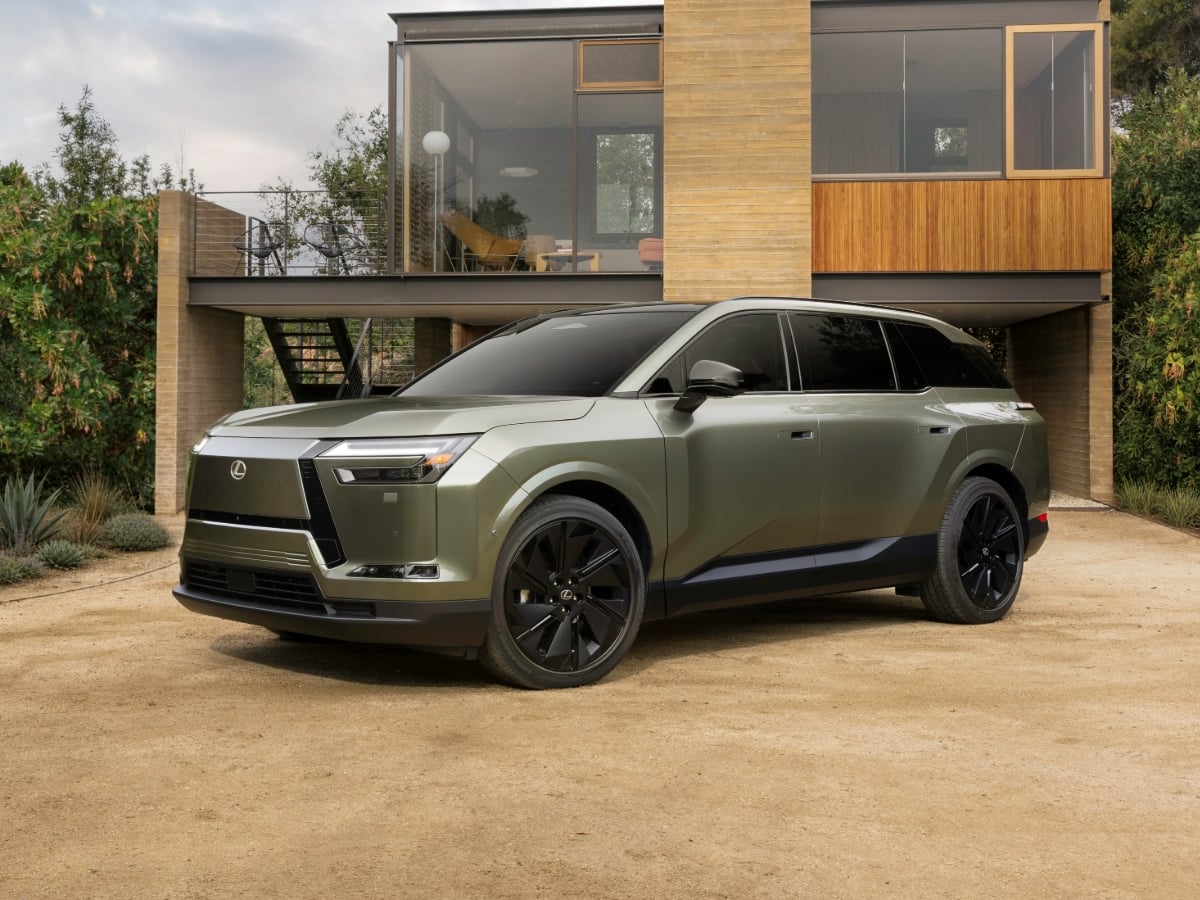
With the 2027 Lexus TZ, Toyota Motor’s luxury division introduces its first three-row all-electric SUV, featuring a lounge-inspired interior, an enhanced all-wheel drive (AWD) system, and up to 300 ...See More
Read the Full Article