
New off-road vehicles come along with the frequency of pigeons gorging on a dropped popcorn bag, but few competitors in the segment have the stature and reputation of the Toyota 4Runner. It's a model that can hold its head up high in the company of SUVs like the Jeep Wrangler and Ford Bronco, renowned for their all-terrain capabilities. For the 2025 model year, Toyota introduces an all-new, sixth-generation 4Runner and pulls out the stops to make it even more competitive in the white-hot cauldron of today's off-road segment.
Adding the first-ever Trailhunter and Platinum trim levels, the Toyota 4Runner now offers customers nine distinct versions. All ride on Toyota’s rugged TNGA-F global platform that also supports the Land Cruiser, Sequoia, Tacoma, and Tundra, with significant changes for 2025, including the availability of a three-row, seven-passenger 4Runner. For 2025, Toyota enhances the 4Runner’s safety and infotainment, and the hot sauce on the tamale comes in the form of two new engines/drivetrains.

Photo: Jack R. Nerad
The 2025 Toyota 4Runner will be available in nine trims: SR5, TRD Sport, TRD Sport Premium, TRD Off-Road, TRD Off-Road Premium, Limited, Platinum, TRD Pro, and Trailhunter. The luxury-oriented Platinum and the overlanding Trailhunter join the lineup for the first time in 2025.
Toyota offers 4Runner buyers the choice of rear-wheel drive (2WD), part-time four-wheel drive (4WD), or full-time 4WD, plus two engines/drivetrains. The I-Force Max hybrid powertrain is available on the upper trims, while the base engine is a turbocharged 2.4-liter four-cylinder.
Prices range from $40,770 for the 2WD SR5 trim to $66,900 for the TRD Pro I-Force Max hybrid.
Toyota invited me to a media drive event at Vogt Ranch near Chula Vista, CA, to experience the new 2025 4Runner on- and off-road. I tested the SUV on the roads east of San Diego and over a series of off-road courses in that area arranged by Toyota. While the event afforded me the opportunity to test several variants, the bulk of my drive time came in the TRD Off-Road Premium equipped with the I-Force Max hybrid powertrain. Toyota equipped the test vehicle with two options:
My primary test vehicle’s price was $60,515, including the $1,450 destination charge.

Photo: Jack R. Nerad
Available only as a four-door, the Toyota 4Runner offers a winning combination of ruggedness and comfort. The SR5 and Limited trims offer seven-passenger seating, but most 2025 4Runners seat five and deliver more-than-ample cargo space.
Built on a rugged body-on-frame platform, the 4Runner still offers substantial creature comforts, particularly in the more expensive trims such as my test vehicle. You can control many vehicle functions via big, robust, and easy-to-understand knobs with associated readouts on the instrument panel or, in the case of climate controls, right next to the knobs. Happily, frequently used items like exterior mirror controls and seat adjustments were conventional and immediately usable.
My test vehicle included a heated leather-trimmed steering wheel and exceptionally supportive eight-way power-adjustable SofTex (synthetic leather) heated and ventilated front seats. Most 4Runners, including the featured test vehicle, offer a 60/40 split-folding second-row bench seat, and some have a 50/50 split-folding third row.
With an overall length of almost 195 inches, the 2025 4Runner is about four inches longer than the previous generation, with passenger and cargo space benefits. Five-passenger 4Runners boast 48.4 cubic feet of luggage space behind the second row and 90.2 cubic feet with the second row folded. Three-row versions offer 12.1 cubic feet behind the third row, 44.8 cubic feet with the third row folded, and 84.4 cubic feet with both rows folded. All trims feature a standard power-operated rear window (a 4Runner staple), and upper trims offer a hands-free power liftgate.
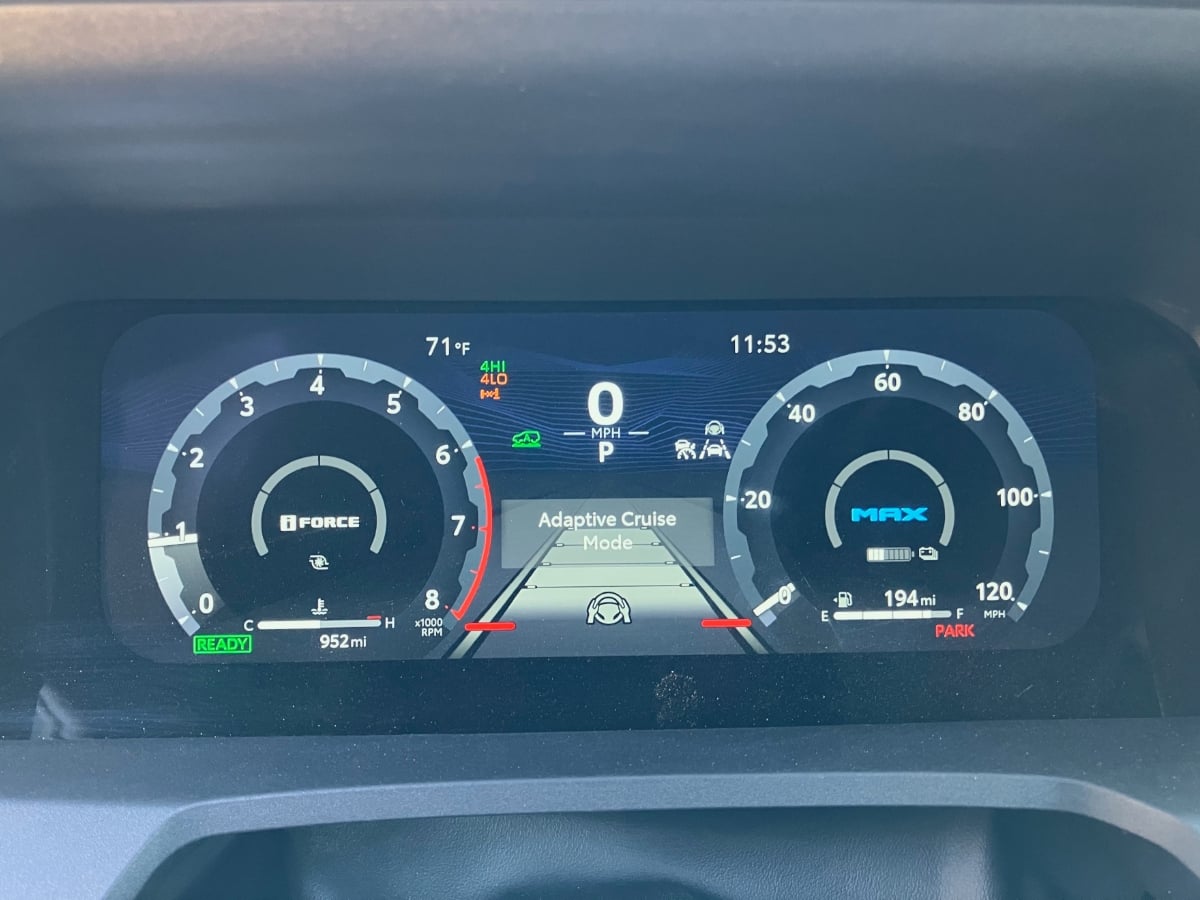
Photo: Jack R. Nerad
Every 2025 4Runner comes with the Toyota Audio Multimedia infotainment system, including wireless Apple CarPlay and Android Auto, and a three-month SiriusXM satellite radio trial. The SR5, TRD Sport, and TRD Off-Road offer an 8-inch touchscreen, while the higher trims provide a 14-inch display. Though lacking unique features, the 4Runner’s infotainment system is straightforward and relatively easy to operate.
The base system includes eight-speaker audio, while the up-level 14-inch system features a 14-speaker JBL premium sound system. The latter includes an externally coupled subwoofer and a JBL Flex portable speaker that can run for up to six hours, paired with other speakers, and submerged in up to three feet of water, which is especially handy for those who can think of a reason to do that. I didn’t have the opportunity to try that function, but I found the sound quality full and on-tone, unlike my singalong efforts.
Toyota locates a USB-C data and charging port on the right side of the infotainment display; dual USB-C charging ports are in the front row and available for the rear passengers. The 12.3-inch digital gauge cluster standard on all I-Force Max-equipped 4Runners offers the option to select gauges, but its readouts for functions like the electronic locking differential are tiny and difficult to read, especially when wearing sunglasses.
Toyota equips the 2025 4Runner with a highly robust list of standard advanced driver assistance systems (ADAS). Its standard Toyota Safety Sense 3.0 ADAS suite includes forward-collision warning with pedestrian detection, lane-departure warning, lane-keeping assistance, lane-centering assistance, and adaptive cruise control.
While those systems are increasingly prevalent, the 4Runner also adds traffic-sign recognition and Proactive Driving Assist, which uses the vehicle's camera and radar to provide gentle braking and/or steering to support driving tasks such as distance between vehicles, pedestrians, or bicyclists.
In addition to the electronic safety and driving aids, the 2025 4Runner features a Multi-Terrain Monitor camera system that can project trail obstacles onto the 14-inch digital infotainment display. Driving the off-road test loops, I found this invaluable in enabling me to "see over" the crest of a grade or spot a potential trail hazard that otherwise would have been out of my sight line. In total, those systems I could test safely performed as advertised. Some, like the Proactive Driving Assist, I could do without.
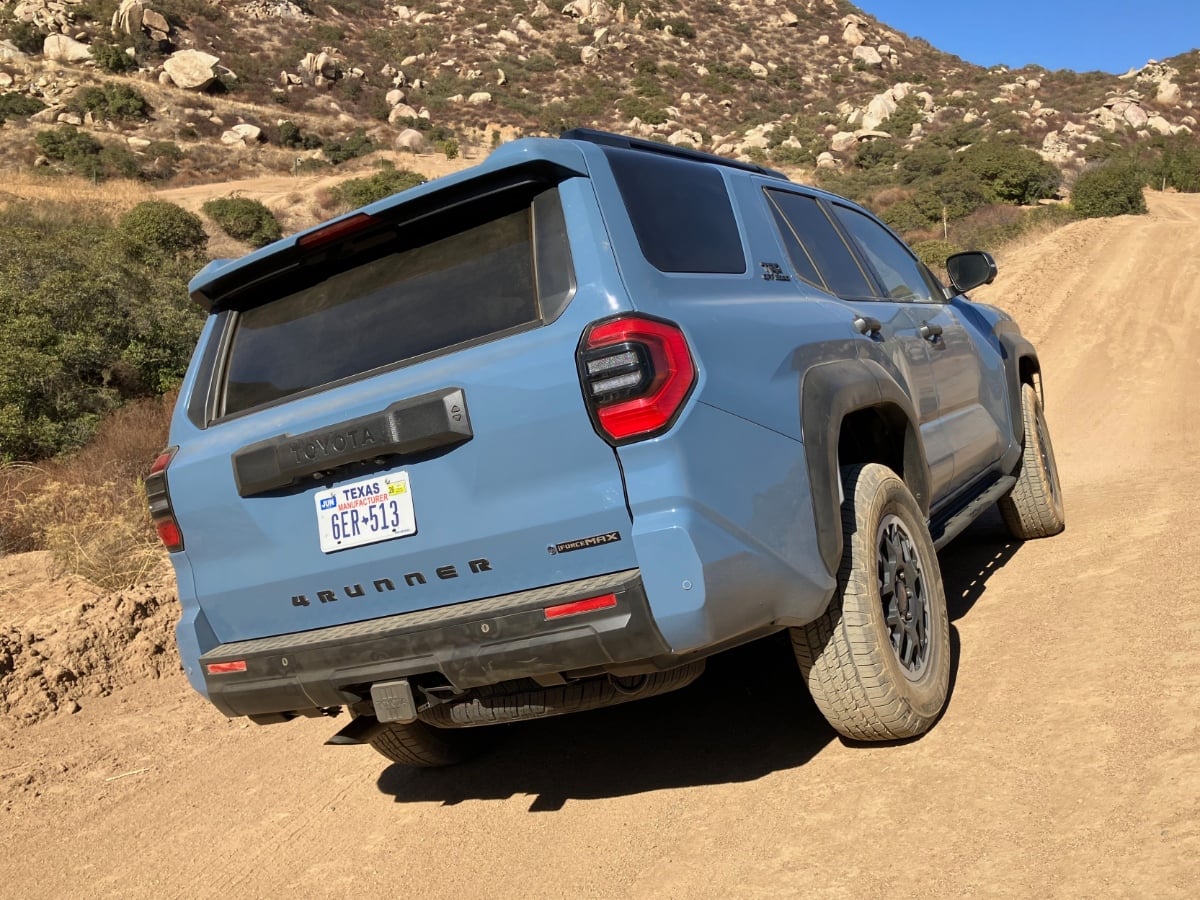
Photo: Jack R. Nerad
After climbing into the driver's seat of the 2025 4Runner, I was immediately at home. I adjusted the synthetic leather driver's seat without drama and surveyed a dashboard and control array that was immediately familiar and understandable—no learning curve required. Yes, getting into the seat requires a bit more effort than slipping into a sedan because of the high overall ground clearance and height of the vehicle, but that shouldn't deter anyone from making that effort—or from buying the running boards or rub rails that will make that climb easier.
The TRD Off-Road Premium I-Force Max test vehicle—an alluring shade of medium blue—featured the more potent of the two drivetrain choices, the I-Force Max hybrid. It utilizes an electric motor in the driveline to supplement a turbocharged 2.4-liter four-cylinder engine. Its 326 horsepower and 465 pound-feet of torque meshed with the eight-speed automatic transmission to deliver near-turbine-like power.
The electronically activated two-speed transfer case and standard Drive Mode Select system enable quick, sure mode selection. Changing modes adjusts power delivery, suspension settings, and steering, though, in most instances, putting it in "Auto" seemed just fine.
On a potpourri of freeways, city streets, and curving mountain two-lanes, the new 4Runner proved to be a satisfying ride. With its 33-inch all-terrain tires on off-road-ready 18-inch TRD alloy wheels, it wasn't set up for a gymkhana, but handling was reasonably sharp with little body lean. The brakes were more than up to the task, firm yet easily modulated.
On the trail, the 4Runner got that much better. With the help of the locking center differential and its selectable modes, the test vehicle climbed daunting grades, crossed boulder fields, and traversed undulating terrain without breaking a sweat. In on-pavement driving, the 4Runner Off-Road Premium I-Force Max registered 20 mpg.
The new sixth-generation Toyota 4Runner is a praiseworthy successor to the much-praised previous version. It isn't a revolutionary vehicle but, instead, a very intelligently evolved version of one that has become beloved all over the world.
The changes wrought on the 4Runner for 2025 make sense. It is larger, offering more interior and cargo space while retaining a handy footprint. It uses a boxed frame with a separate body that maintains its familiar four-door configuration but adds an optional third row. It revives favorite touches like the power-operated rear windscreen and tailors the suspension and shocks to match the individual needs of each trim level.
The new 4Runner features much-enhanced ADAS and a much-improved infotainment system with a touchscreen as big as 14 inches. Customers can dial up the comfort and luxury they prefer based on a raft of good choices.
This deep understanding of the customers' needs is one of the key factors that helps the Toyota 4Runner stand out amidst a rising sea of off-road-oriented SUVs and crossovers. No, this new 4Runner isn't a revolution, but it is a very solid offering worthy of consideration by suburban families and serious dirt dogs alike.
Jack R. Nerad has reviewed cars, trucks, vans, and SUVs for over three decades. He also managed the editorial efforts of MotorTrend, JD Power, and Kelley Blue Book. Jack currently hosts the Sports Byline Network program "America on the Road," available on Apple Podcasts, iHeart Radio, Spotify, Audacy, Amazon Music, and other outlets.


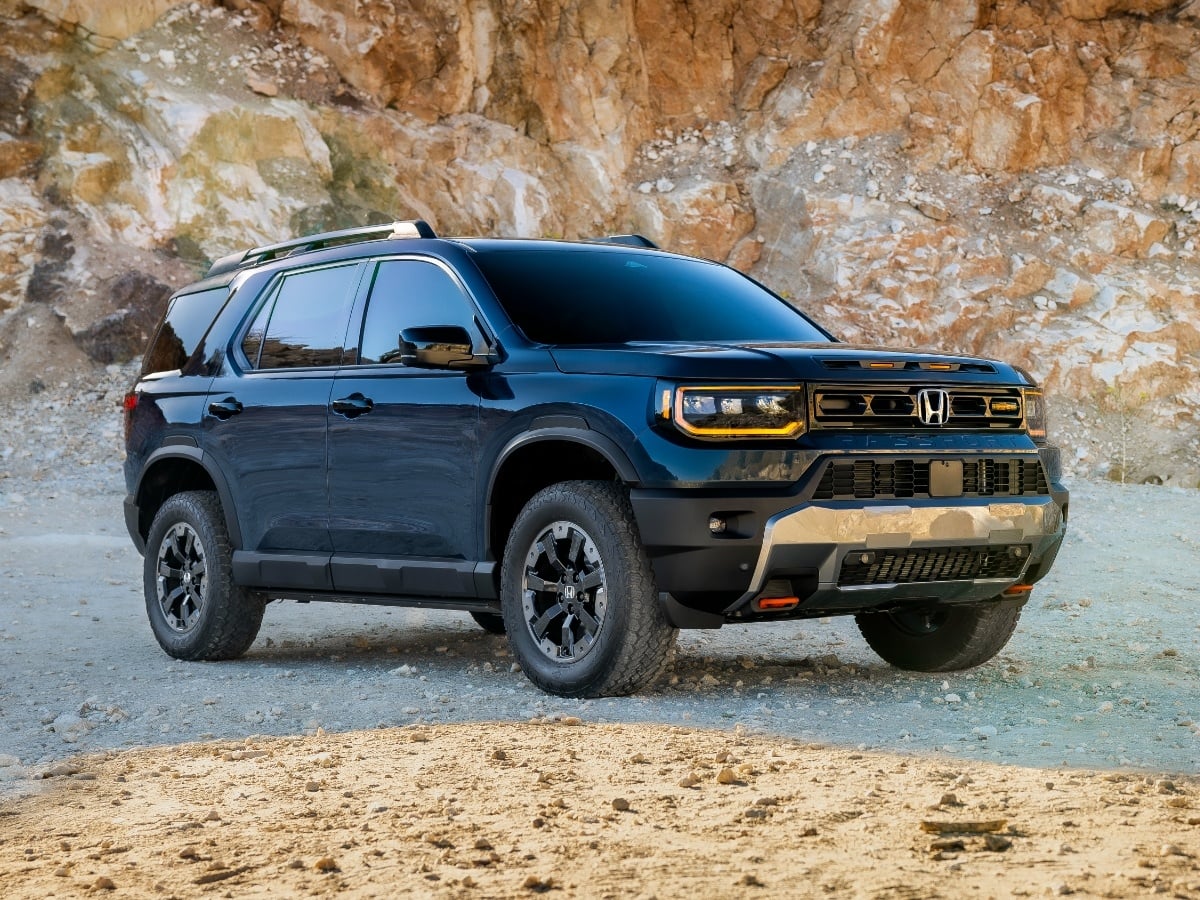
Updates to the 2027 Honda Passport TrailSport include a reworked suspension, improved steering, subtle styling enhancements, and added standard equipment.
Read the Full Article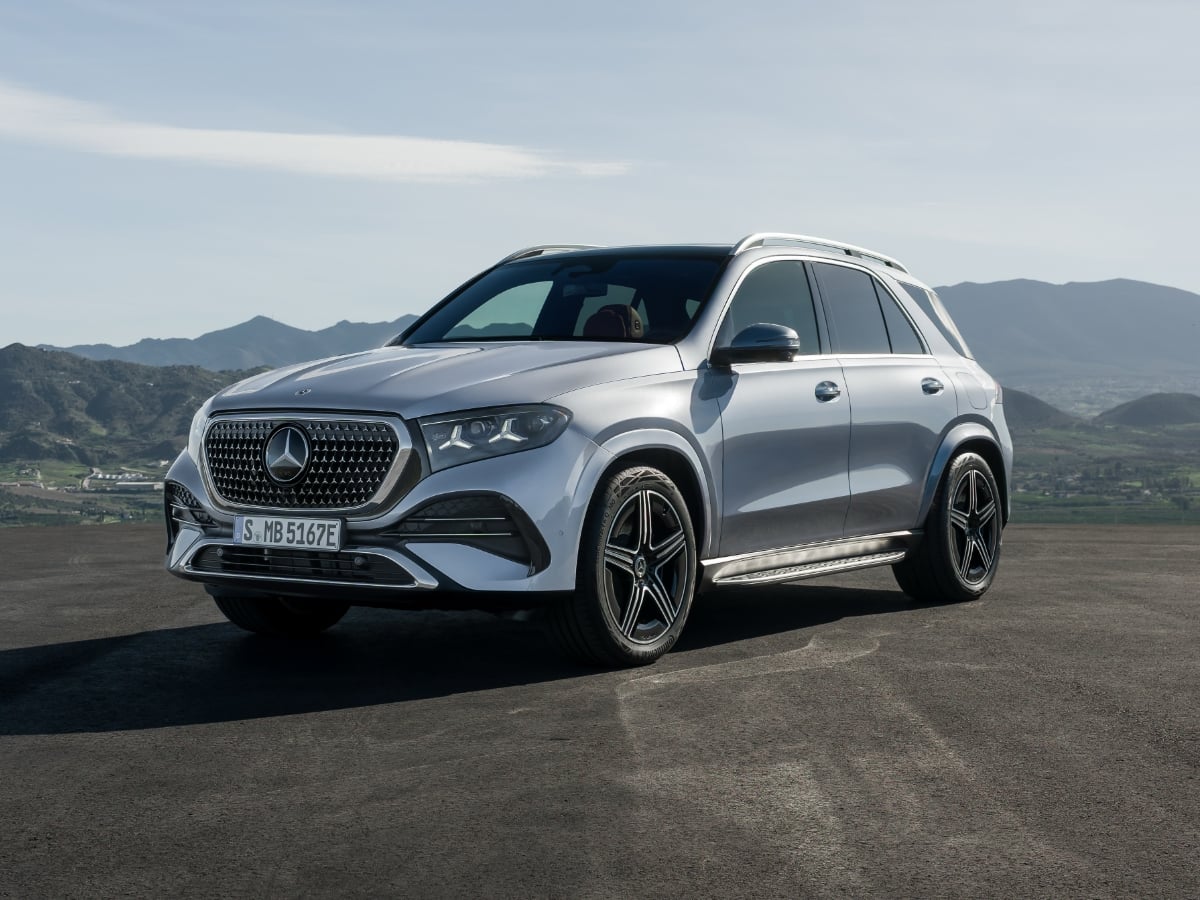
The midsize 2027 Mercedes GLE remains available in original and spicy Coupe recipes, now with standard 4Matic all-wheel drive (AWD), MBUX Superscreen technology, and a panoramic glass sunroof for ...See More
Read the Full Article
Nissan is about to introduce an innovative new SUV. The 2027 Nissan Rogue Hybrid has a gasoline engine, but it does not power the wheels. Instead, electric motors at each axle provide propulsion, ...See More
Read the Full Article
Adding European flair to the otherwise vanilla midsize three-row family SUV market, the redesigned 2027 Volkswagen Atlas debuts with a sharper exterior, an upgraded cabin, more power, and new ...See More
Read the Full Article