
Accidents over the years have occurred due to drivers failing to see a vehicle approaching from their blind side. The Blind-Spot Collision Warning introduced to vehicles fixed this problem. Fatality and collision rates have been reduced due to this technology. This article will discuss everything you need to know about the Blind Collision Warning system.

The Blind-Spot Collision Warning (BCW) system is one of the numerous cutting-edge safety features available in vehicles. The technology checks for any cars in your blind areas while driving along the road using sensors in your vehicle's rear bumper. Whenever a car is in your blind area after being triggered, a little icon will display on your side mirror. You will be alerted when you change lanes by a buzzer sound and an icon blinking. A speed of 30 km/h activates this system. The system is crucial for your safety as distracted driving becomes more prevalent.
The Blind-Spot Collision Warning is essential to your car's safety. It excels when you have switched lanes in congested, bumper-to-bumper traffic or when navigating busy roads. Special features are available with the Blind-Spot Collision Warning.
The Blind-Spot Collision Warning tracks nearby cars using a variety of sensors in the rear bumper. These sensors will detect vehicles moving in your blind areas and closely following you in adjacent lanes as you go forward on the road. These sensors warn the driver of oncoming cars when backing out of a parking place or driveway in reverse gear.
When a moving vehicle is identified in the blind spot region, the Blind-Spot Assist system will employ active alerts to warn the driver if the driver tries to change lanes or keep backing up. The driver receives active signals from amber-lit indicators on the side rearview mirrors that alert them to approaching cars. This active alert may involve the steering wheel vibrating, the mirror indicators blinking, or an audible warning tone, depending on the vehicle you are driving.
You can modify intelligent driver safety features like Blind-Spot Assist or switch them on and off for various driving situations. The controls are either in the "Settings" category on the center console touchscreen menu or at the left side of the steering wheel, where you can manually turn it on or off.
Blind-spot collision warning technologies are either pre-installed and included with your vehicle, or you install them yourself. There are also blind-spot monitor systems that can detect when a trailer has been hooked to the car. Also, these blind spot monitors use ultrasonic waves, cameras, and other devices in addition to radars to provide a better and more accurate image of your present driving environment.
Recently, a brand-new technology called "Blind-Spot Collision-Avoidance Assist" has been created to function in combination with blind-spot monitors. Together with the Blind-Spot Collision Warning, the Blind-Spot Collision-Avoidance Assist functions effectively. The Blind-Spot Collision-Avoidance Assist system applies the brakes to the opposite wheel to stop the vehicle from changing lanes if the driver activates the lane-change signal while the Blind-Spot Collision Warning's lighted audio and visual warnings are on. By doing this, the technology prevents collisions and potentially dangerous accidents. Together with the Blind-Spot Collision Warning, the Blind-Spot Collision-Avoidance Assist functions effectively. You should be aware that the Blind-Spot Collision-Avoidance Assist must also be turned on before usage.
Despite the size and length of your vehicle, driver-assisted technologies like Blind-Spot Collision Warning and Blind-Spot Collision-Avoidance Assist can safeguard the person operating the vehicle and others.
The efficient technology known as "Blind-Spot Collision Warning" scans and warns drivers of approaching cars in their vehicle's blind spots. When employing this technology, you must follow a few safety measures. These safety measures are:
One of a vehicle's many cutting-edge safety technologies is the Blind-Spot Collision Warning (BCW) system. The system uses sensors in your vehicle's rear bumper to detect any cars in your blind spots as you drive along the road. Blind-Spot Collision Warning is crucial to your car's safety in a society where distracted driving is rising.
However, remember that safe driver-assisted technology never replaces safe driving habits when operating the safety system. Before using the Blind-Spot Collision Warning or any other advanced driver assistance system, read your owner's manual to uncover essential facts, such as how to operate the system and what sort of alerts or warnings may display.



The new 2027 BMW i3 boasts an estimated range of up to 440 miles, 400-kilowatt DC fast charging capability, bidirectional charging to a home or the grid, and next-generation technology.
Read the Full Article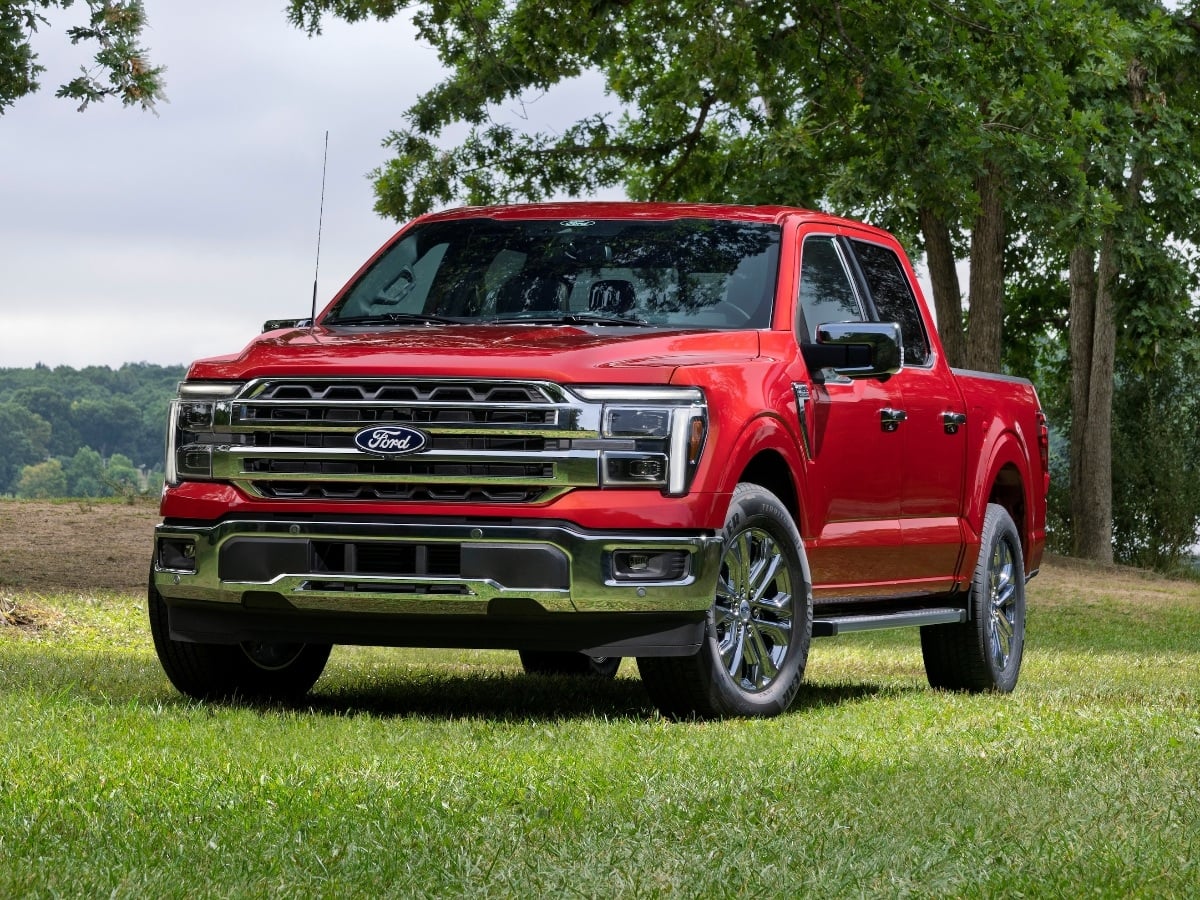
Facing renewed competition in the full-size, light duty pickup truck segment, the 2027 Ford F-150 receives subtle styling updates, a new standard engine, broader availability of its 5.0-liter V8, and ...See More
Read the Full Article
The 2027 Civic Type R goes on sale in October 2026, and it starts at $49,990, including the $1,295 destination charge.
Read the Full Article
Part of BMW’s Neue Klasse (new class) rollout of redesigned models, the 2027 BMW 3 Series is all-new and goes on sale in the first quarter of 2027.
Read the Full Article