
The 2026 Audi S5 is the performance-tuned version of the A5, a compact luxury car with a Sportback design featuring a liftgate and a large, expandable cargo area. Built for driving enthusiasts, the 2026 S5 is terrific fun yet extremely practical, making it a good daily driver and a pleasurable weekend escape pod. However, when fully equipped, the S5’s technology is distracting.
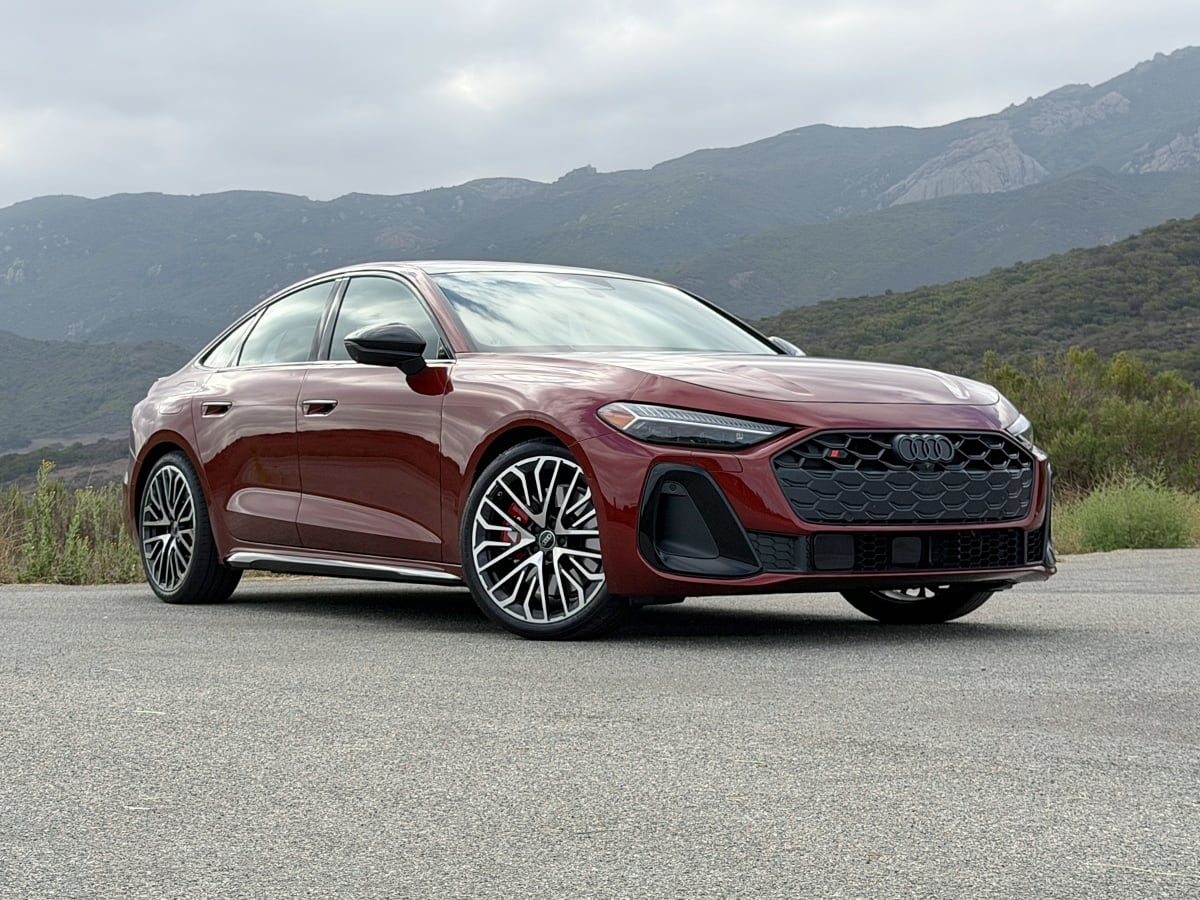
Photo: Christian Wardlaw
For the 2026 model year, Audi has taken steps to improve the car’s technology, with some success, based on the following evaluation.
Here is what is new for the 2026 Audi S5:
The 2026 Audi S5 is available only as a five-door Sportback equipped with Premium, Premium Plus, or Prestige trim packages. The base price ranges from $64,595 to $72,195, including the destination charge.
For this 2026 S5 review, Audi provided a test vehicle equipped with Prestige trim and the following options:
The test vehicle’s manufacturer suggested retail price (MSRP) was $74,690, including the $1,295 destination charge to ship the car from the Neckarsulm, Germany, assembly plant to a local dealership. The price does not reflect any current rebates, incentives, or price adjustments since Audi manufactured the test vehicle.
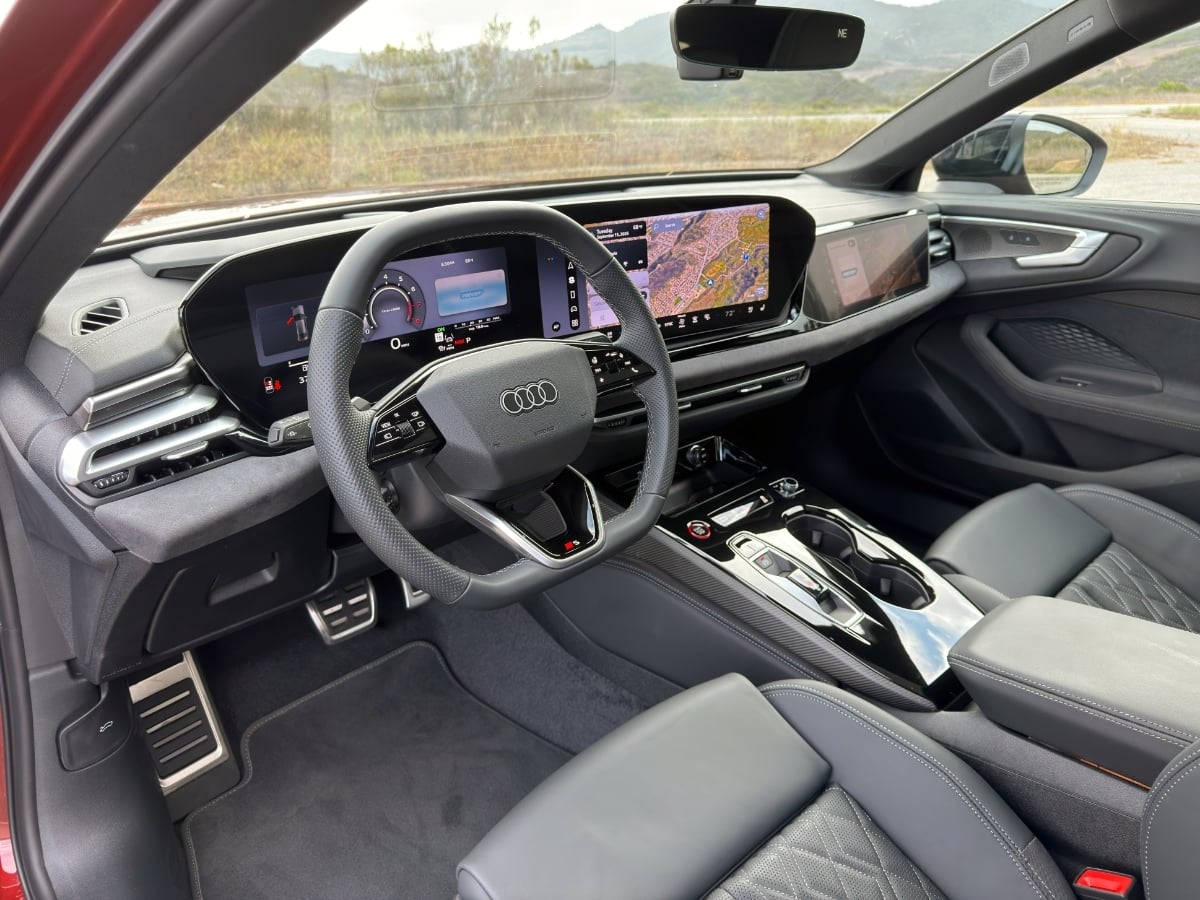
Photo: Christian Wardlaw
As you might expect from a car like the Audi S5, it sits low to the ground, making entry and exit a little harder than with an SUV. This performance model’s stiffly bolstered sport seats do not help, but they are supportive and hold you in place when you drive spiritedly.
Heating is standard for the front seats and steering wheel, and the S5 Prestige includes ventilation and massage. The Prestige trim also equips the car with tautly stretched, artfully patterned Nappa premium leather that looks terrific. Unfortunately, many of the cabin’s surface materials fail to impress, especially in a car priced close to $75,000.
Once you are settled in, the S5 Prestige presents three screens that comprise nearly the entire dashboard. They include an 11.9-inch digital driver display, a 14.5-inch center touchscreen, and a 10.9-inch touchscreen for the front-seat passenger.
Some controls not on these displays are touch-sensing, which is not ideal. Touch-sensing controls add distraction, especially when you accidentally activate one or it does not respond. For example, in the test car, the power mirror adjusters worked only intermittently, and always required the driver to look down at the door panel to find and use them.
Audi has relented a bit for the 2026 model year, returning thumb-operated scroll wheels to the steering wheel to make it easier to adjust vehicle settings. They replace touch controls for this function. More of this, please.
Most rear seat passengers will be happy with their accommodations, though only the tallest riders are likely to feel scrunched. The bottom cushion is angled to provide good leg support, and the backrest position is comfortable. Audi equips the S5 with a triple-zone automatic climate control system, and the Prestige features heated rear seats.
At the rear, the S5’s liftback opens tall to provide access to a 22.6-cubic-foot cargo area. It accommodates up to four full-size suitcases laid flat and stacked, with some room remaining for soft luggage. A 40/20/40 split-folding rear seat adds utility, folding down to expand cargo space to 37.5 cubic feet. The car’s low lift-over height makes loading heavy items easier.
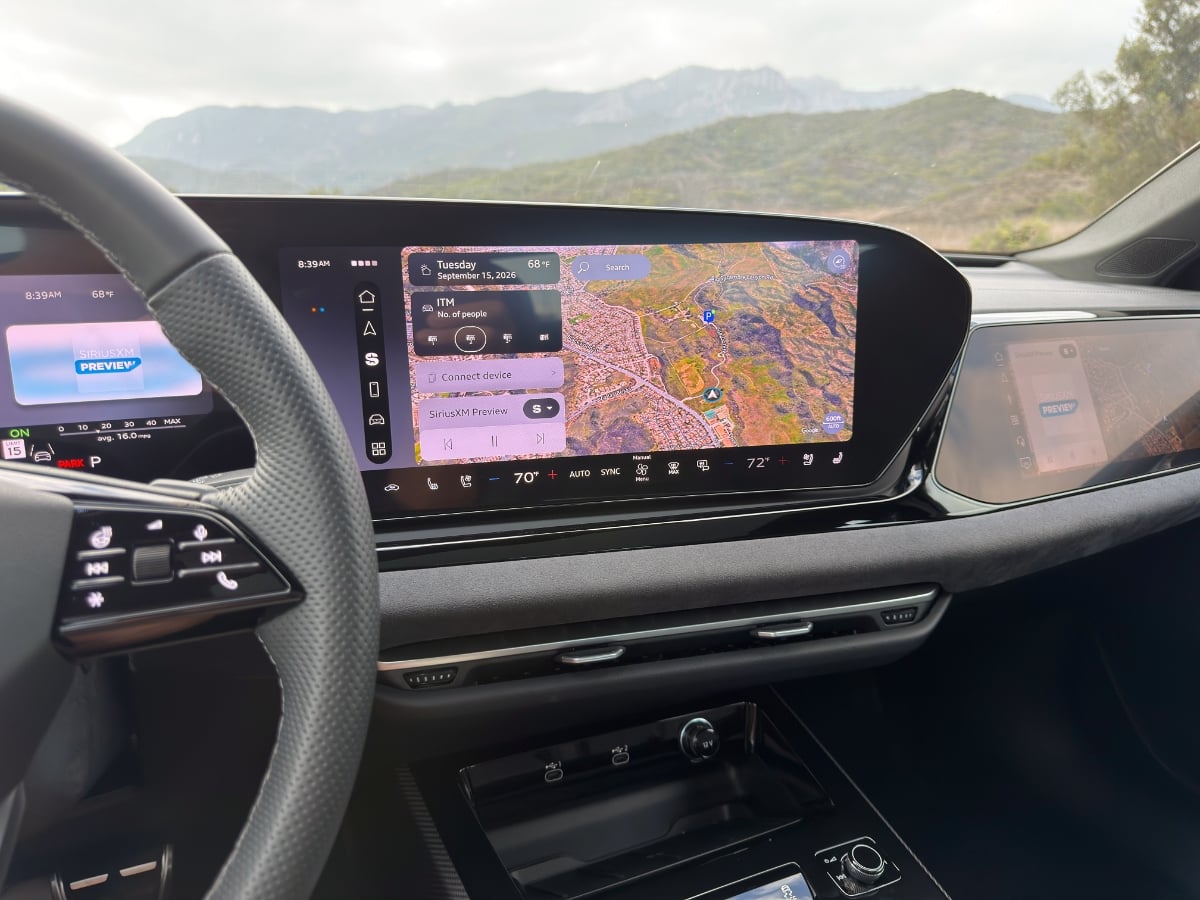
Photo: Christian Wardlaw
Audi equips every 2026 S5 with a 14.5-inch touchscreen running its latest MMI infotainment system. Standard features include:
The S5 Prestige also features an excellent Bang & Olufsen 3D sound system with front head restraint speakers and a head-up display with impressive graphics.
The new MMI simplifies and standardizes the user experience across the S5’s three-screen Audi Digital Stage and the myAudi smartphone app. This is good. It also reduces on-screen clutter, adds new content and thematic options for the digital driver display, and generally makes the technology easier to use.
Audi has also expanded the digital voice assistant’s capabilities for 2026, giving it access to the digital owner’s manual and letting you control some of the car’s safety features with spoken commands.
Audi says it can also recognize owner behaviors and automatically adopt them as routines, but I think this is a bad idea. Why? When I tested the technology’s conversational abilities, that is, how quickly and accurately it could respond to increasingly difficult commands, it kept doing things I did not want it to.
Things started on a sour note. “Where is the nearest Starbucks?” I asked. What I got was an explanation from the assistant about how to program a destination.
Switching gears, I asked, “Where is the closest Chipotle?” The assistant found one and automatically programmed a route there. Nope. Not what I wanted to do. For example, if I were on a road trip, I would want directions to a location ahead, not one in the opposite direction. Give me a list and tell me where they are, please.
There was a lot of this automatic route programming nonsense. Granted, when you ask for the “closest” example of something, the technology will interpret you literally. In most other vehicles, though, you get a list of options, sometimes with helpful directional arrows telling you whether a more distant destination would be more convenient since you are heading that way already. Then, the assistant lets you pick the right one or confirms that you want navigation instructions.
The most frustrating situation arose after I thought I had canceled an automatically programmed route to a local restaurant and told the digital assistant I needed to go to a hospital instead. I assumed it would automatically calculate a route to the medical facility. However, it did not take long to realize the car was still guiding me to the restaurant first.
At some point, I asked a question, and the digital assistant responded, “According to ChatGPT…” Audi might think that is a confidence booster, but it tells me I cannot trust the response and need to fact-check it myself.
It did not take long for me to tire of all of this. Instead, most of the time, I ran wireless Apple CarPlay and streamed music to the impressive Bang & Olufsen audio system.
As an aside, the S5 Prestige’s front passenger screen is easy to use. My wife liked it, and she usually detests them. Still, aside from the one time she streamed a Hawaii live-cam feed via YouTube to add some vacation ambiance, she did not use it again.
For the record, the driver cannot see what is showing on that side of the car. Also, Audi says you can pair headphones and video game controllers to the front passenger screen.

Photo: Christian Wardlaw
Audi equips the S5 with a turbocharged 3.0-liter V6 engine that produces 362 horsepower and 406 pound-feet of torque. A seven-speed dual-clutch automatic transmission delivers the power to all four wheels through Audi’s Quattro all-wheel-drive system, and Audi claims the S5 will accelerate to 60 mph in 4.3 seconds.
Performance enhancements include a sport suspension, sport rear differential, upsized brakes with red calipers, and 19-inch wheels wrapped in summer performance tires. The S5 Prestige includes a sport adaptive suspension, while the test car’s Black Optic package bolted on larger 20-inch wheels.
For the 2026 model year, Audi adds Dynamic Plus to the S5’s Drive Select menu of driving modes, which allows a driver to slide the car’s rear end in what the company says is a controlled manner. The Prestige also adds new Drive Select Assistant tech that automatically chooses the right mode for a given situation and driving style.
I did not want to try Dynamic Plus on public roads because I value my driver’s license and a clean, accident-free record with my insurance company. I did not knowingly use Drive Select Assistant, though I will admit I did not check whether it was active before I took the S5 for a thrilling ride on a mountain road. That new technology may have contributed to my deep satisfaction with how the S5 drove.
One thing I know for sure: the S5 Prestige’s adaptive suspension was a factor in my driving enjoyment. It reduces, without eliminating, body motion, which is preferable because suppressing it would feel unnatural and numb critical communication cues about what the car is doing. That is not the case with the S5 Prestige, and while driving the undulating Mulholland Highway across the Santa Monica Mountains, I had a huge grin on my face.
Power, grip, and braking capacity all seem limitless on a public road in the S5. Thanks to all three, it is easy to conserve velocity in this car, and the sport differential helps you securely squirt the Audi out of sharp corners before other cars are ready. Beyond that, the S5’s dynamic behavior is consistent and predictable, making it easy to trust.
Unfortunately, the speed-sensing, progressive steering is not quite as satisfying and feels a little too light, even in Dynamic mode. It is quick and accurate, though.
That is how the Audi S5 behaves when you have got nowhere in particular to be. During the daily commute, the car exhibits a firm ride in its Balanced driving mode. Enthusiasts actively choosing a sport sedan will expect that. Other people might not, especially with the Prestige trim’s adaptive suspension. What surprised me most was the amount of road noise in the cabin. There was nothing luxurious about that.
Despite its larger brakes, they proved easy to modulate in traffic, and I had no trouble bringing the S5 to smooth, clean stops. The automatic engine start/stop system was not quite as refined and consistently delayed restarting after I lifted my foot off the brake pedal. Audi gives you a way to turn this feature off, so you are not stuck with it if fuel economy is not high on your priority list.
As far as fuel economy goes, the Audi S5’s official Environmental Protection Agency (EPA) rating is 23 mpg in combined driving. On my relatively flat fuel economy test route, a 50:50 mix of city and highway, the test car returned 22.5 mpg in Balanced mode. On the mountainous evaluation loop, the S5 averaged 21.6 mpg, with Dynamic mode selected for the twisty sections.

Photo: Christian Wardlaw
Audi equips the 2026 S5 with the following standard safety features:
With the Prestige trim package, the S5 also has
Adaptive Cruise Assist is standard on the S5 Prestige, combining the adaptive cruise control and lane centering assistance systems to create a hands-on, Level 2 semi-autonomous driving aid. It works well, and the hands-on detection steering wheel eliminates the need for drivers to add occasional steering inputs to signal they are still alert, paying attention, and ready to take control if necessary.
However, from time to time, a driver wants to overrule what the technology is doing. In those situations, the S5’s steering feels leaden, disconnected, and unnatural, and it also seems to resist inputs. When you are successful at overriding the automated steering, the hand-off to the driver does not seem as smooth and refined as expected.
I experienced something impressive with Adaptive Cruise Assist. On a rural two-lane highway, the system identified an upcoming stop sign at an intersection, began slowing the S5 well before arrival, and brought the car to a halt. I have not observed that capability in other test cars at this location.
When using just the lane keeping assistance, it will sharply and decisively correct the S5’s line if it determines it is necessary. When it is, you are grateful for how it behaves. When it is not, you are irritated.
I was often irritated because the lane keeping system could not distinguish between current painted lane lines and scars left by old, removed markings from past construction projects. Occasionally, the Audi would suddenly veer for no apparent reason until I figured out what was causing it. After that, I began anticipating it, but the technology makes this mistake inconsistently, and not knowing how it might react added stress to the driving. Ultimately, I turned off the lane keeping assistance system.
As of this writing, the National Highway Traffic Safety Administration (NHTSA) and the Insurance Institute for Highway Safety (IIHS) have not published safety ratings for the 2026 Audi S5. The A5 on which Audi bases the S5 has an IIHS score, but that car’s different powertrain means the rating does not automatically apply to the S5.
According to the JD Power 2026 Initial Quality Study (IQS), the Cadillac CT4 ranks highest in the Compact Premium Car segment, with the Genesis G70 and BMW 4 Series ranked second and third, respectively.
According to the JD Power 2026 Automotive Performance, Execution and Layout (APEAL) Study, the Mercedes-Benz C-Class ranks highest in the Compact Premium Car segment.
Other Year Model competitors include the BMW 3 Series, Cadillac CT5, and Lexus IS.
There is a lot to like about the 2026 Audi S5. Only a BMW M440i Gran Coupe can match its blend of performance and practicality, and I am sure many people would prefer the Audi’s more conservative styling. Both cars are also loaded with technology that can surprise, delight, and frustrate an owner.
Not only that, but this combination of passenger room, cargo space, and thrilling driving dynamics is not available elsewhere right now. You would need to trade the nifty Sportback design for a traditional trunk and give up the S5’s utility, or choose a crossover SUV and accept duller dynamics.
I am glad Audi is trying to sort out the S5’s technology. As is true with so many vehicles, it is the least appealing thing about the car.
Christian Wardlaw is a veteran automotive journalist with 30 years of experience in the field and has held automotive editorial leadership positions at Edmunds, JD Power, and The New York Daily News. Today, Chris owns a content agency called Speedy Daddy Media, and in addition to jdpower.com, his work appears on Capital One Auto Navigator, CarGurus, and Edmunds.


Toyota redesigned the RAV4 for the 2026 model year, switching to an all-hybrid lineup ranging from an affordable entry level LE trim to rugged Woodland and performance-oriented GR Sport variants.
Read the Full Article
The redesigned 2027 Volkswagen Atlas Cross Sport is a mid-size, five-passenger crossover SUV that is based on the seven-seat Atlas model. It has a sportier look than its family-friendly sibling, ...See More
Read the Full Article
Genesis is adding its first hybrid powertrain to its portfolio, and the 2028 Genesis GV80 luxury SUV will be one of the first models in the lineup to get this powerful, efficient drivetrain.
Read the Full Article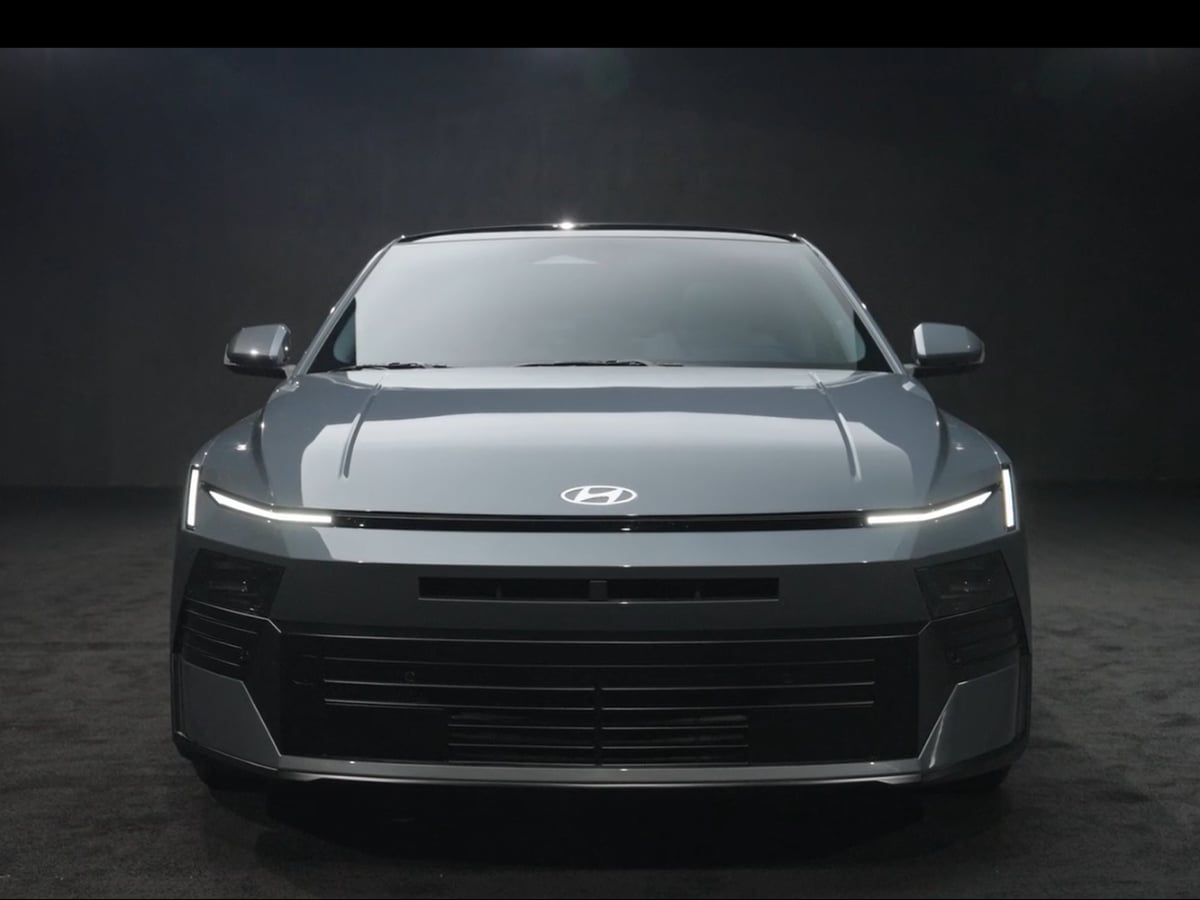
With a completely new design inside and out, the 2028 Hyundai Elantra Hybrid features advanced technology, a more spacious cabin, and improved performance from its updated hybrid powertrain.
Read the Full Article