
BMW may not have invented the sport sedan, but the European car company brought the concept to America in the late 1960s. That original BMW 2002 preceded the first-generation 3 Series, which arrived for the 1977 model year. The rest, as they say, is history.
In the nearly 50 years since that first 3 Series rolled onto U.S. shores, the model has served as a benchmark among cars that are both practical and fun to drive. Today, the seventh-generation 3 Series is nearing the end of its lifespan, set for replacement by an upcoming redesign inspired by the Vision Neue Klasse concept vehicle.

Photo: Christian Wardlaw
JD Power last published a seventh-gen 3 Series review in 2020, one year after the redesigned 2019 model went on sale. That test car was the more powerful M340i, which went on sale in 2020, and our reviewer confirmed that it remained a joyful driver’s car, first and foremost.
Since then, BMW has made numerous changes to the 3 Series. A plug-in hybrid (PHEV) called the 330e arrived in 2021. A substantial refresh came in 2022, highlighted by the new BMW Curved Display infotainment technology. Now, the 2025 BMW 3 Series receives another refresh and technology update. All along the way, BMW has made minor changes to colors, wheels, trim, upholstery, lighting, equipment, and packaging to ensure the 3 Series remains up to date.
The 2025 3 Series lineup includes the 330i, M340i, and M3, and base prices range from $47,125 to $77,875, including the destination charge. They’re all four-door sedans, and any 3 Series with “xDrive” in its name includes BMW’s xDrive all-wheel-drive (AWD) system. The others have rear-wheel drive (RWD).
For this 2025 3 Series review, BMW provided a 330i test vehicle equipped with RWD, M Sport trim, and the following significant options:
The test vehicle's manufacturer's suggested retail price (MSRP) was $57,200, including the $1,175 destination charge to ship the car to your local dealership from the San Luis Potosi, Mexico, assembly plant.

Photo: Christian Wardlaw
BMW has made several changes to the 2025 3 Series, some of which are evident and some of which are not. For example, the 330i model’s turbocharged 2.0-liter four-cylinder engine gains a 48-volt mild-hybrid system for 2025, and the M340i receives a new turbocharged 3.0-liter inline six-cylinder engine with 48-volt technology and more power and torque than before. The M3 Competition also boasts more motive force than before, and BMW has discontinued the 330e PHEV version for 2025.
Minor design and detail modifications accompany the 2025 3 Series, including new wheel designs. The tested 330i model is also available in new Arctic Race Blue, Vegas Red, Frozen Pure Grey, and Frozen Portimao Blue paint colors. Inside, new interior trim and steering wheel designs debut, and the dashboard receives subtle changes related to the air vents and ambient lighting.
Though the current BMW Curved Display digital instrumentation and touchscreen infotainment system has been standard in the 3 Series since 2022, the tech gets an upgrade for 2025 from Operating System 8.0 to Operating System 8.5 (also known as iDrive 8.0 and iDrive 8.5). The new technology includes BMW’s QuickSelect user interface, which offers easier reference to data and quicker access to deeper menus and settings.
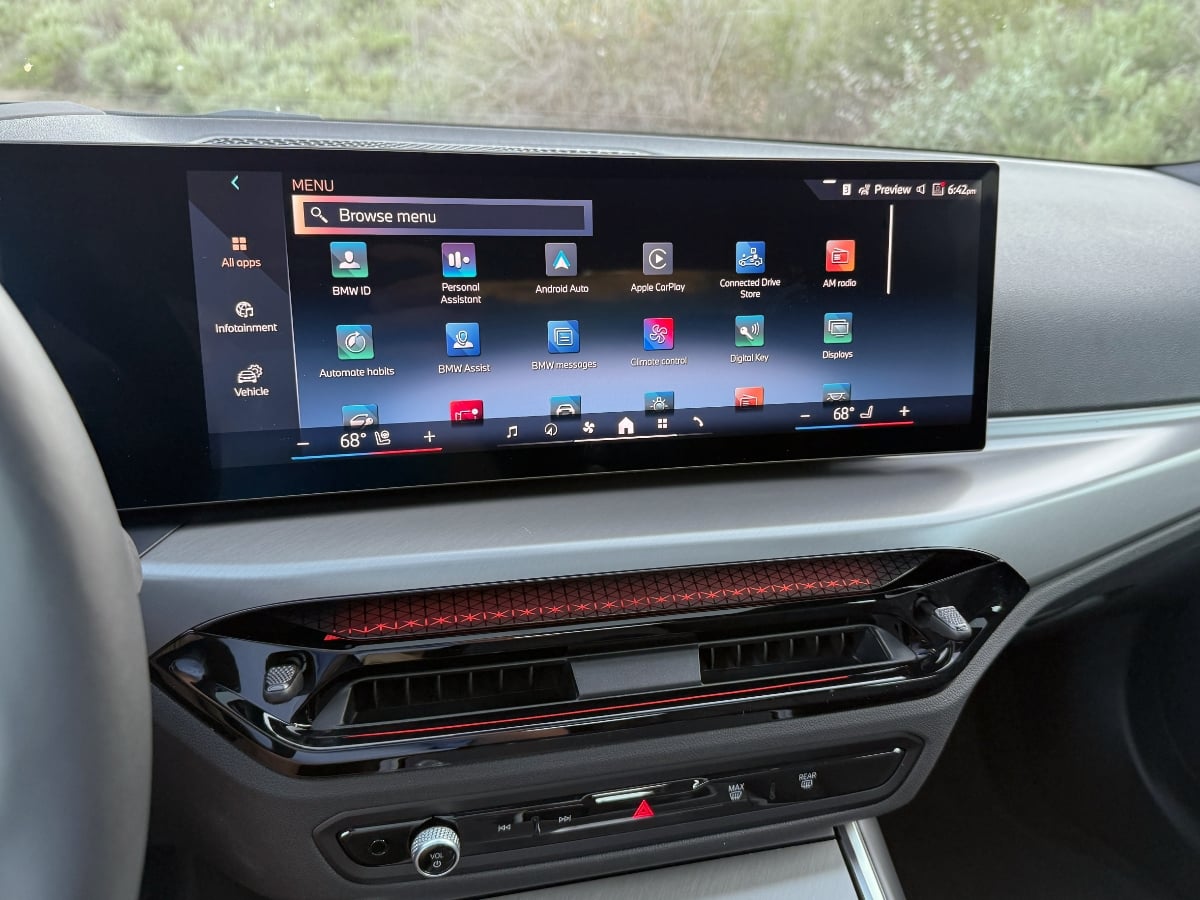
Photo: Christian Wardlaw
Expressed as a single screen gently curved toward the driver, the BMW Curved Display houses a 12.3-inch digital instrumentation panel and a 14.9-inch touchscreen infotainment interface with embedded climate controls.
I find iDrive 8.5 to be far more agreeable than iDrive 8.0. The previous system was graphically pleasing, but finding information was a challenge. The new iDrive 8.5 makes life easier, and while it remains hard to recall and find infrequently used features and settings, I find the QuickSelect technology helpful.
Wireless Apple CarPlay and Android Auto smartphone integration is standard, and I had no trouble pairing my iPhone 16 and streaming music via Pandora and Apple Music. SiriusXM 360L satellite radio is also standard, and the optional Harman Kardon speakers sounded terrific.
Every 2025 3 Series includes several connected services plans, and the car’s native cloud-based navigation system is easy to use. That’s due in part to the BMW Intelligent Assistant technology. Simply say, “Hey, BMW,” and the assistant responds to let you know it is ready for use. Then you can speak conversational commands to complete tasks.
I use a standard set of commands in every test vehicle, and the 3 Series quickly and promptly responded to most of them. In a change from other BMWs equipped with iDrive 8.5, when I urgently requested directions to a hospital, the assistant did not provide two destinations in Mexico, an issue I’ve observed in several test cars. However, instead of that error followed by my local hospitals, this instance of the tech provided a list of doctors’ offices with hospitals thrown in for good measure.
Thanks to the test car’s optional Parking Assistance and Driving Assistance Professional packages, it had all the available safety features and advanced driver assistance systems (ADAS). Multiple camera views and parking sensors made squeezing the 3 Series into tight spaces easy, and I found the hands-free Extended Traffic Jam Assistant (ETJA) technology to be refined, accurate, and capable.
When driving the 3 Series, an Assisted Driving mode pairs the adaptive cruise control with lane-centering assistance, but you must keep your hands on the steering wheel.
With Assisted Driving active, if the 3 Series consistently drops below 40 mph, the tech will prompt the driver to use Assisted Driving Plus. That’s the same thing as the ETJA hands-free driving system. Assisted Driving Plus works only on limited-access highways at speeds under 40 mph. If traffic thins out and the 3 Series accelerates past 40 mph, the technology will prompt the driver to return their hands to the steering wheel.
Generally, this technology works well and will even change lanes if you signal that intention and there isn’t another vehicle in the adjacent lane. However, occasionally, it can leave sizable gaps ahead of the 3 Series and brake to maintain a safe following distance when other motorists are not expecting it. That can cause aggravation in the people following the 3 Series.

Photo: Christian Wardlaw
You might predict that a luxury sport sedan with only 255 horsepower under the hood would feel sluggish, but that’s not the case with the 2025 BMW 330i. With RWD, the 330i accelerates to 60 mph in 5.6 seconds, according to BMW. With xDrive AWD, the acceleration time is 5.4 seconds. That’s not fast, but it sure is quick.
Several things contribute to that performance:
All these factors contribute to the 330i’s liveliness, but the broad powerband offering peak torque or horsepower across most of the engine’s rev range is the primary reason this car’s engine seems so responsive.
In addition, the engine gains a 48-volt mild-hybrid system for 2025, and while the power ratings remain the same as before, fuel economy improves. The 2024 330i with RWD earned Environmental Protection Agency (EPA) fuel-economy ratings of 25 mpg city, 34 mpg highway, and 29 mpg combined. For 2025, the new 48-volt system boosts the gas mileage to 28/35/31 mpg.
The 330i M Sport test car returned 28.1 mpg on the evaluation loop during my evaluation. In its defense, I drove the car enthusiastically and used the Sport and Sport Plus driving modes when flinging it across the Santa Monica Mountains. Later in my week behind the wheel, I took a 300-mile highway trip, and the 330i returned 37 mpg, beating the EPA estimate.
So, the 330i M Sport is speedy and efficient. But is it fun to drive, as you would expect of a BMW 3 Series? Absolutely.
However, when you add the M Sport package to the 330i, you get a sport-tuned suspension, larger 19-inch wheels equipped with staggered-width tires, and variable sport steering. The steering is pleasing, but the ride is undeniably firm and communicative. You will feel every detail of the road surface, so if that’s not high on your list of priorities, you might want to stick with the standard 330i Sport trim package.
My test car had Bridgestone Turanza tires, P225/40R19 in front and P255/35R19 in back. During my testing on the winding Mulholland Highway near Malibu, California, the tires howled a little in curves and lacked outright grip in corners. Too often, the 330i’s nose pushed wide or the rear end felt loose, negatively impacting my confidence in the car near its handling limits.
That said, the 2025 BMW 330i M Sport is every bit as enjoyable to drive as you expect. The brakes, which can feel too grabby in the city and in traffic, are perfect when driving with enthusiasm. The steering can feel slightly light, but it is responsive, crisp, and accurate. And though the test car did not have the optional M-tuned adaptive suspension, it expertly controlled unwanted body motions on undulating pavement.
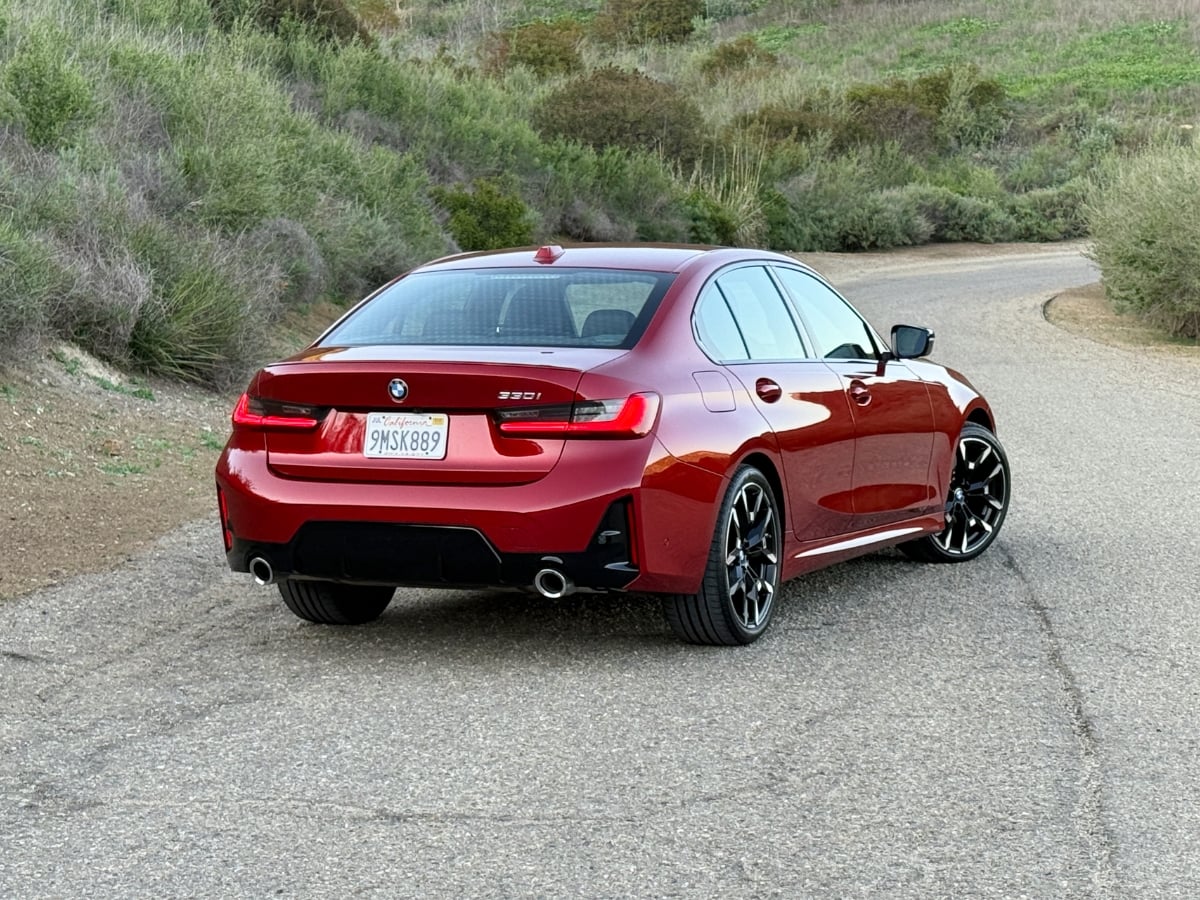
Photo: Christian Wardlaw
If you’re looking for a true sport sedan emphasizing performance over luxury, the 2025 BMW 3 Series should be high on your consideration list.
Having spent quality time in both the M340i and M3 in the past, I worried that the 330i would prove underwhelming. It’s not as fast as its siblings, and I didn’t like the Bridgestone tires much, but otherwise, nothing about the 330i M Sport disappointed me, especially considering its price. It is practical when it needs to be and a thrill ride when you want it to be.
Still, if the BMW isn’t what you seek in this type of car, there are alternatives. German rivals to the 3 Series include the Audi A4 and Mercedes-Benz C-Class, while the Genesis G70 and Lexus IS hail from Asia. Made in the U.S.A., the Cadillac CT4 and CT5 are also enjoyable sport sedans, if lacking in refinement.
Christian Wardlaw is a veteran automotive journalist with 30 years of experience in the field and has held automotive editorial leadership positions at Edmunds, JD Power, and The New York Daily News. Today, Chris owns a content agency called Speedy Daddy Media, and in addition to JDPower.com, his work appears on Capital One Auto Navigator, CarGurus, and Edmunds.


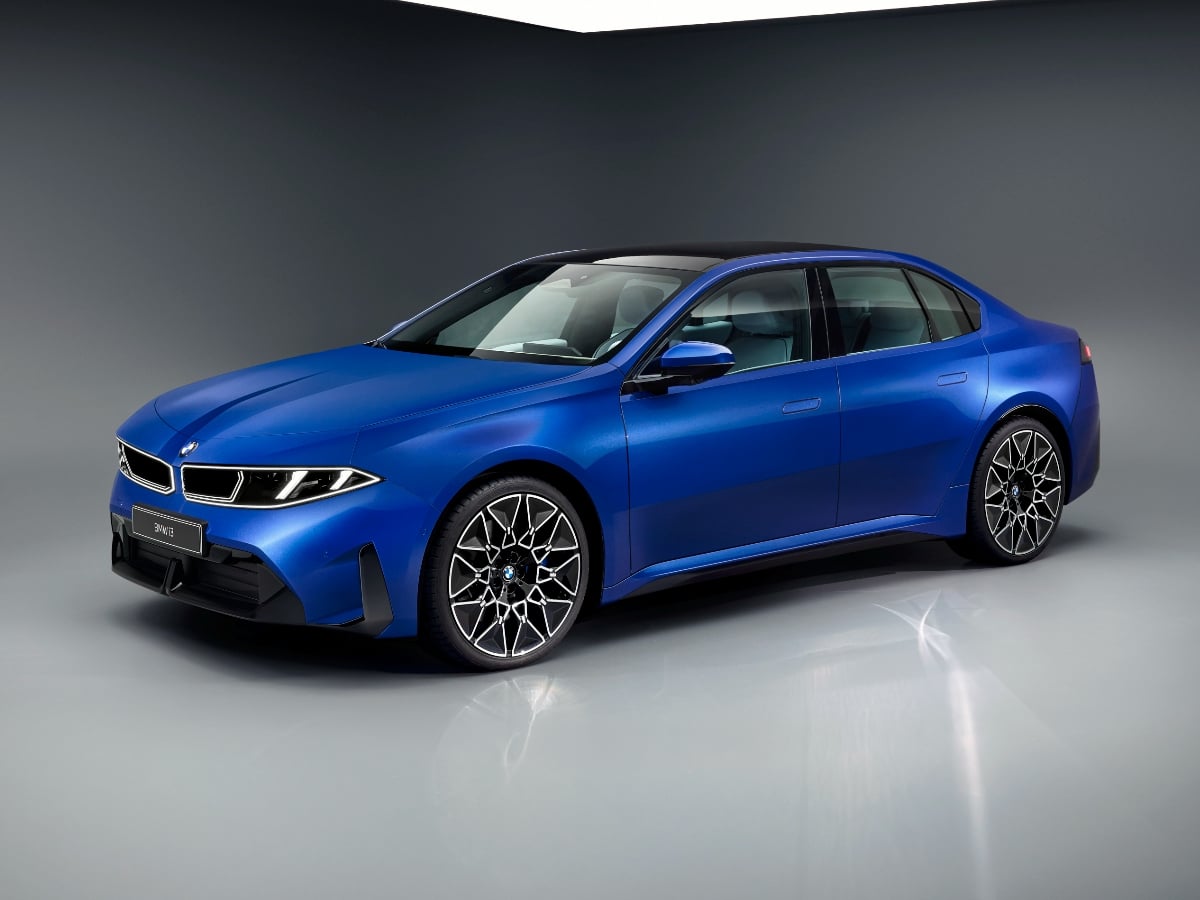
The new 2027 BMW i3 boasts an estimated range of up to 440 miles, 400-kilowatt DC fast charging capability, bidirectional charging to a home or the grid, and next-generation technology.
Read the Full Article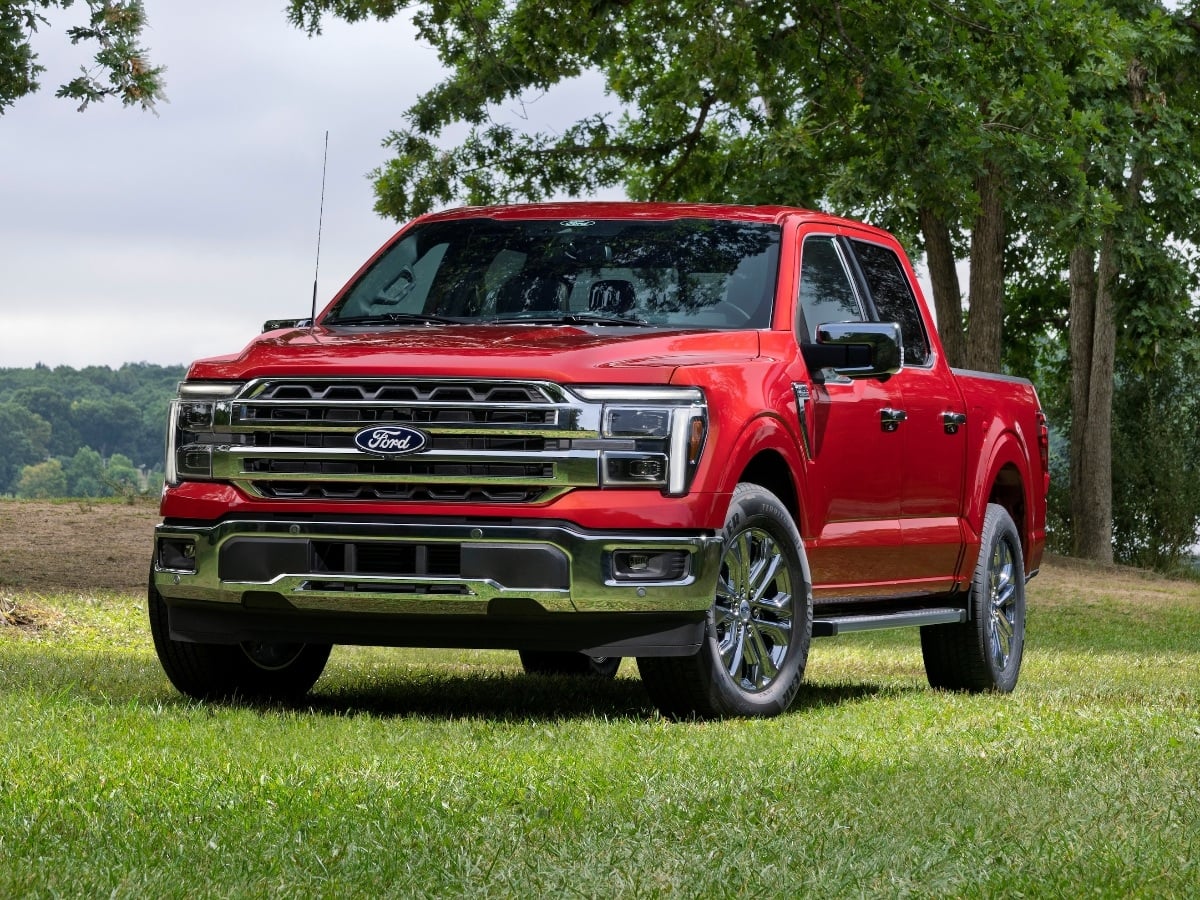
Facing renewed competition in the full-size, light duty pickup truck segment, the 2027 Ford F-150 receives subtle styling updates, a new standard engine, broader availability of its 5.0-liter V8, and ...See More
Read the Full Article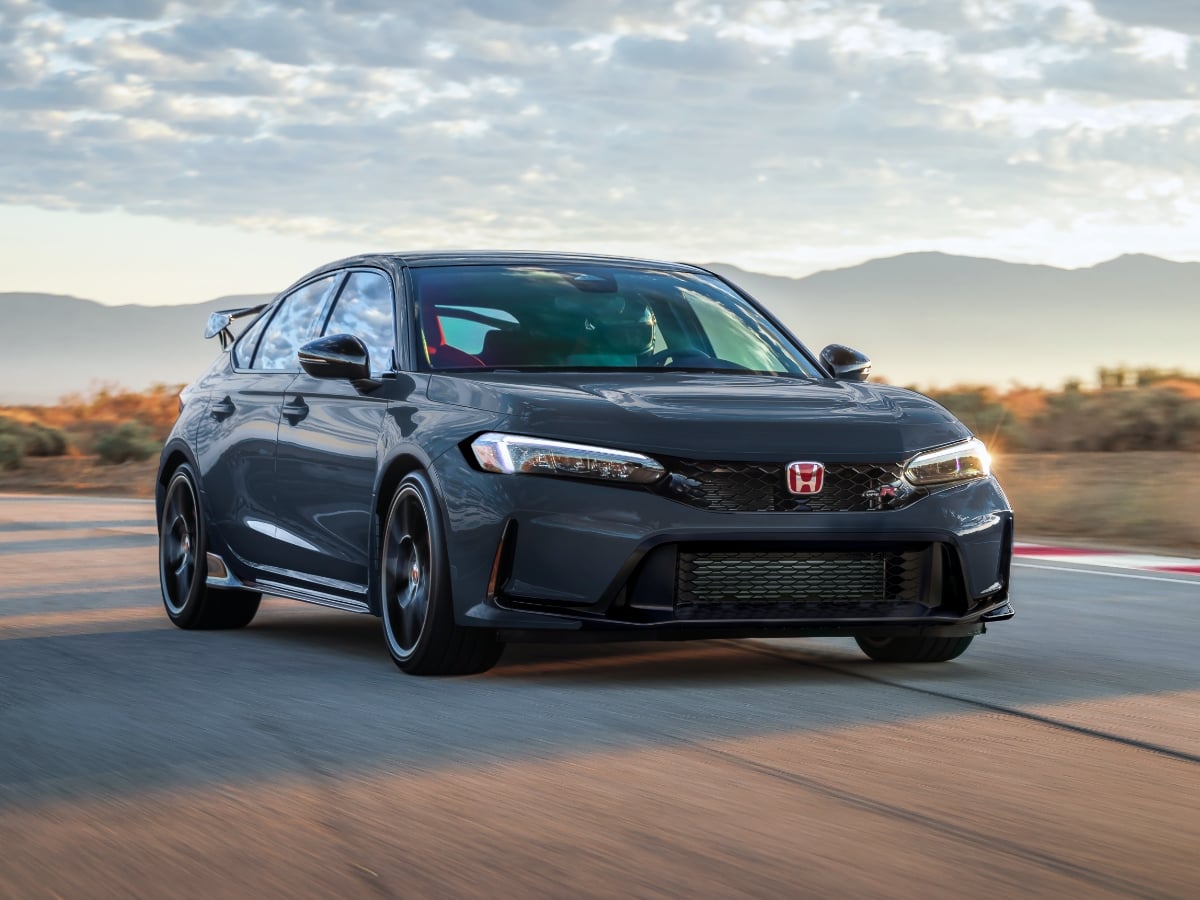
The 2027 Civic Type R goes on sale in October 2026, and it starts at $49,990, including the $1,295 destination charge.
Read the Full Article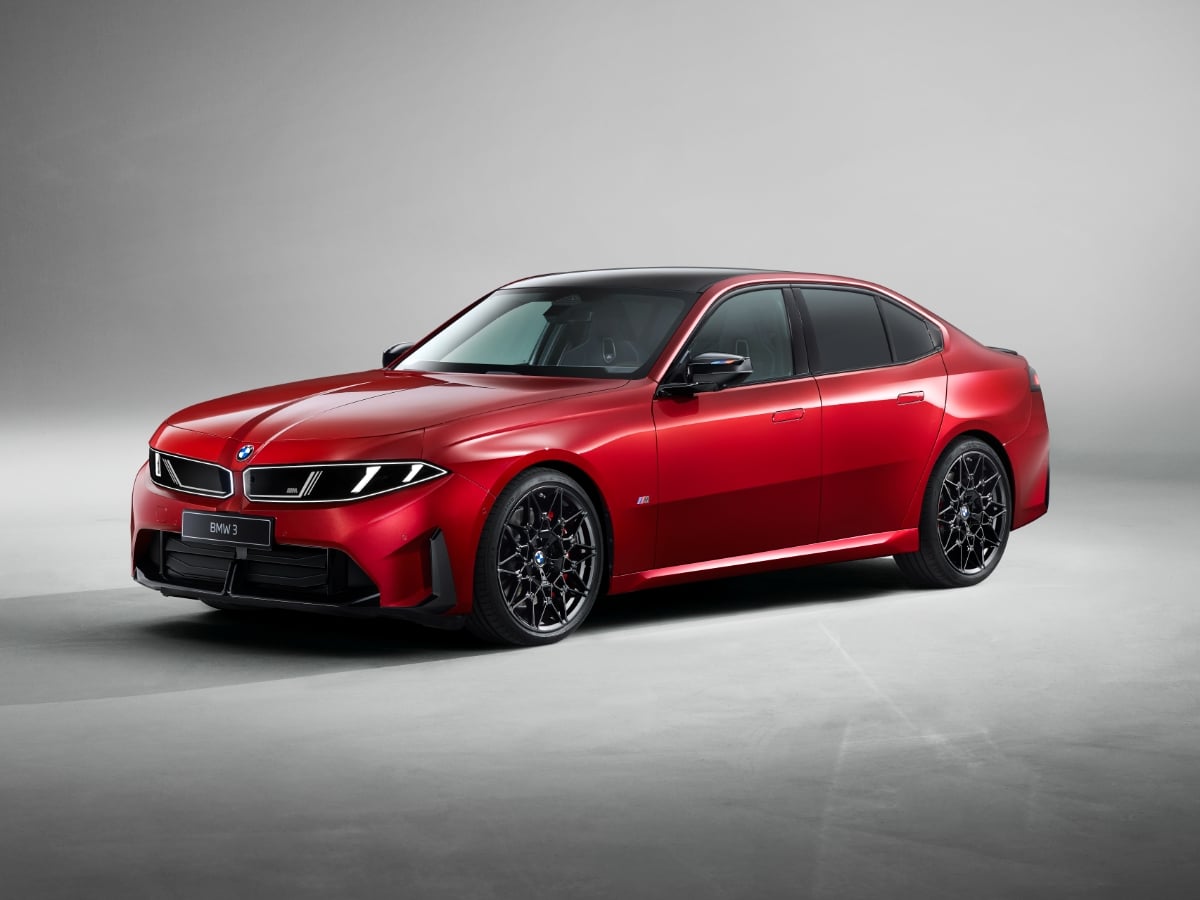
Part of BMW’s Neue Klasse (new class) rollout of redesigned models, the 2027 BMW 3 Series is all-new and goes on sale in the first quarter of 2027.
Read the Full Article