
Mazda vehicles are typically more enjoyable to drive than their competitors, and usually offer more sophisticated design and refined materials to create a premium look and feel. The 2025 Mazda CX-30 is emblematic of that approach, a small crossover SUV with lively driving dynamics, an upscale look and feel, and plenty of daily driver practicality at an accessible price.

Photo: Christian Wardlaw
Since JD Power last published a CX-30 review, Mazda has made numerous changes to the model:
The 2026 Mazda CX-30 lineup receives a few tweaks, too. That larger infotainment display with touchscreen functionality trickles down to some of the more affordable versions of the crossover, and new Aire Edition models with blacked-out exterior trim and badges and a white over gray interior treatment make a debut. Suspension and braking system upgrades aim to improve the 2026 CX-30's ride and handling. Various trim levels also add more standard equipment in 2026.
The new Aire Edition will replace the subject of this review, which is the 2025 CX-30 2.5 Carbon Turbo. This is the most affordable turbocharged CX-30, available exclusively in Zircon Sand with a Terracotta over Black interior treatment. The rest of the lineup includes 2.5 S (standard engine) and 2.5 Turbo models in base, Select Sport, Preferred, Carbon Edition, Premium, and Premium Plus trim levels. Prices range from $26,990 to $38,645, including the $1,495 destination charge.
For this 2025 CX-30 review, Mazda provided a test vehicle equipped with the 2.5 Carbon Turbo trim and the following options:
The test vehicle's manufacturer suggested retail price (MSRP) was $34,945, including the destination charge to ship the small crossover SUV from the Salamanca, Mexico, assembly plant to a dealership. The price does not reflect any current rebates or incentives, or price adjustments since Mazda manufactured the test vehicle.
.JPG)
Photo: Christian Wardlaw
The stubby looking Mazda CX-30 is what would happen if you lifted a Mazda 3 Hatchback for extra ground clearance and modified the styling for a more rugged appearance. That cladding might look excessive, but it has a purpose, which is to protect the CX-30 from dings and scratches..
Open any door, and a snug-fitting cabin awaits. Polished metallic detailing, gloss black trim, and a light gray headliner keep the atmosphere light and upscale, and the test model's Terracotta color accents offer rich contrast. The suede dashboard trim is a nice touch.
Drivers face a partially digital gauge cluster that is a model of clarity, and the CX-30 features a traditional transmission shifter and climate controls that are separate from the infotainment system. On the center console, the infotainment knob and main menu buttons are reasonably easy to get used to, and Mazda provides a stereo volume knob in this location. Navigating the Mazda Connect infotainment system is relatively intuitive, and the display boasts appealing, modern graphics.
Because the CX-30 sits reasonably high off the ground, entry and exit are easier than with the Mazda 3. The front seats are comfortable, with power adjustment for the driver's seat and heated front cushions in the test vehicle. I noticed that the dual-zone automatic climate control system struggles to cool the interior on a hot day, a trait common to most Mazdas.
Adults will find the CX-30's back seat to be a tight fit, and parents of children who ride in rear-facing child safety seats will want to install it before buying this Mazda to ensure that it fits. There simply is not much room here. However, the seat itself is supportive, and the test vehicle had rear air conditioning vents to help improve comfort levels.
Storage space is reasonable throughout the cabin. Mazda missed an opportunity to add small trays in each door armrest. Otherwise, the available small item stash space is decent, and both the bin underneath the sliding center armrest and the glove compartment offer compartmentalization for improved organization.
Lift the rear hatch, and you find 20.2 cubic feet of cargo room. The load floor is flat, and if you squeeze them in, you can place full-size suitcases side-by-side with a second level stacked on top of them, for a total of four. Underfloor storage is limited, but you can fold the 60/40 split rear seats to create up to 45.2 cubic feet of cargo space.
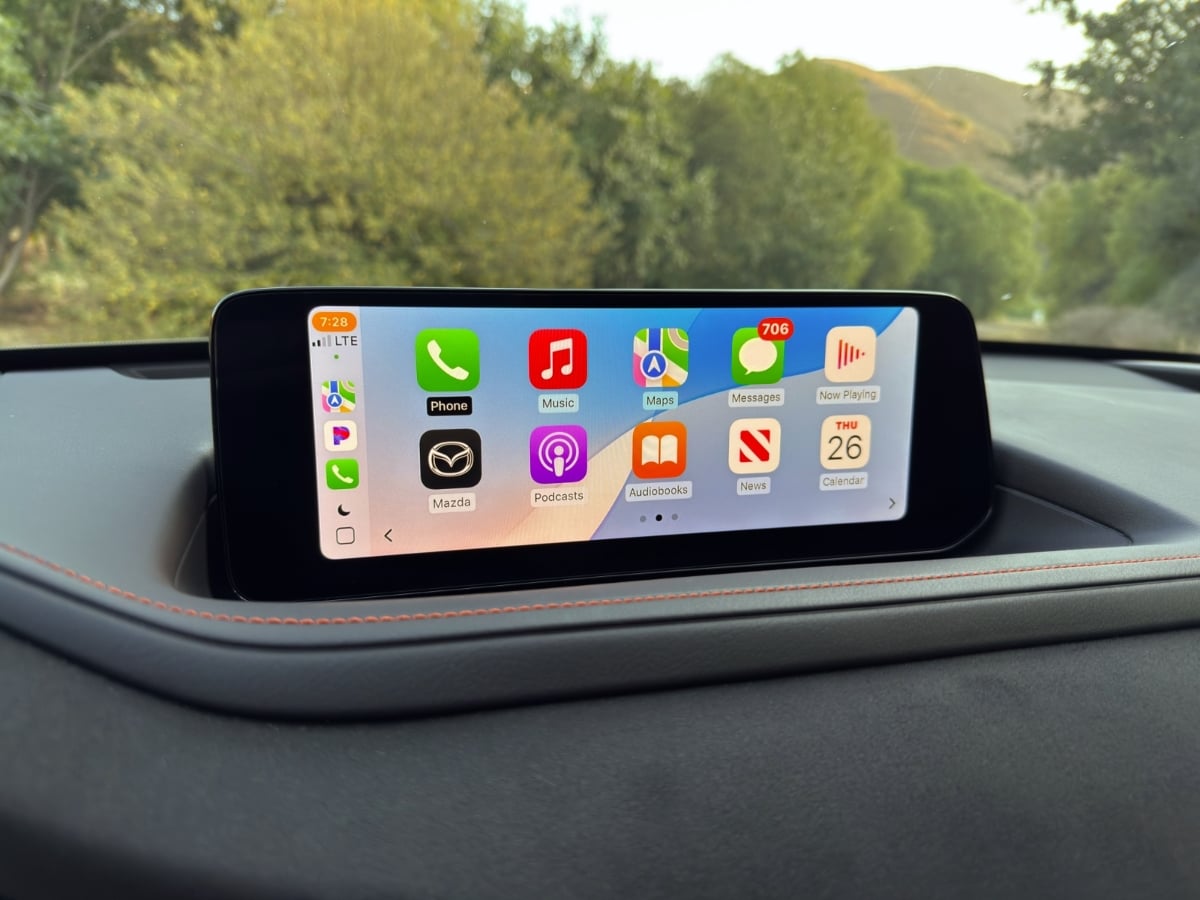
Photo: Christian Wardlaw
Every 2025 CX-30 comes standard with a Mazda Connect infotainment system. Models equipped with the standard engine have an 8.8-inch display nestled into the top of the dashboard. With the turbocharged engine, the display measures 10.25 inches and features touchscreen operation for the smartphone integration technology.
Mazda Connect includes:
As you move up the trim level ladder, Mazda Connect adds features such as Alexa Built-in, HD Radio, SiriusXM satellite radio, a navigation system, a Bose premium sound system, and wireless smartphone charging.
People new to Mazda Connect will require an acclimation period as they get used to using the controls on the CX-30's center console. However, with time, you can easily operate the system without looking down. My test vehicle had the larger display with touchscreen functionality for the wireless Apple CarPlay and Android Auto, which is an improvement over the previous static-screen functionality. However, the display is somewhat distant, making it a reach.
The native voice-recognition technology fails to meet expectations. It does not recognize conversational commands, like Siri, Google, and Alexa can. Instead, you must follow prompts on the display to succeed. However, even then, the voice recognition technology can struggle to understand complexities. Given its limitations, it is not beneficial, so you will want to use the new-for-2025 Alexa Built-in technology instead.
While Alexa works better, I mainly used Siri via the wireless Apple CarPlay connectivity, which operated exactly as I expected to find destinations, take and receive calls, respond to text messages, and more. Additionally, I had no trouble streaming music from Pandora and Apple Music. A 12-speaker Bose premium sound system is available for the CX-30, but the test car had an eight-speaker stereo instead. It was decent, without being remarkable.
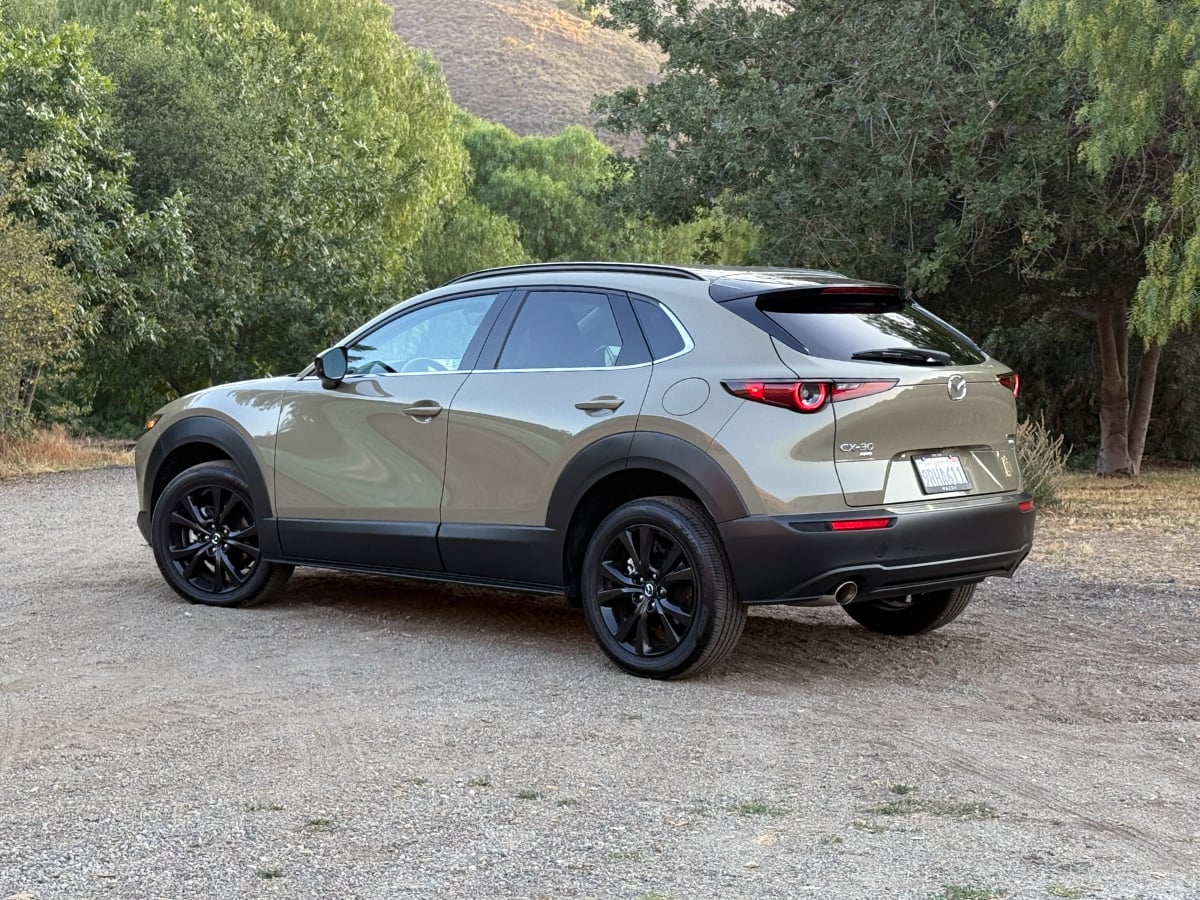
Photo: Christian Wardlaw
Mazda sells the 2025 CX-30 in 2.5 S and 2.5 Turbo model series. Models with the 2.5 S designation have a 2.5-liter four-cylinder engine producing 191 horsepower and 186 pound-feet of torque. The 2.5 Turbo models use a turbocharged 2.5-liter four-cylinder engine generating 227 hp and 310 pound-feet on regular gas. If you pump premium fuel into the tank, those outputs rise to 250 hp and 320 pound-feet.
Both engines pair with a six-speed automatic transmission and a standard AWD system. According to the Environmental Protection Agency (EPA), the 2025 Mazda CX-30 2.5 S should return 29 mpg in combined driving, while the CX-30 2.5 Turbo should average 25 mpg. On my Southern California evaluation loop, the test vehicle averaged 22.8 mpg. Considering the CX-30 has a 12.7-gallon fuel tank, that means you will have to stop for gas every 275 miles or so.
I really like the CX-30's turbocharged engine, but it is thirsty if you regularly use its power. Also, while the engine sounds terrific when revving, it can feel less energetic than its horsepower and torque measurements might suggest. However, I think that sensation is deceptive, because the CX-30 2.5 Turbo is undeniably quick.
Still, if outright speed is not a priority, I recommend choosing a more affordable CX-30 equipped with the base engine. It makes good power for an SUV of this size, the automatic transmission is geared to take the best advantage of it, and it is more fuel efficient. You can save significant money by skipping the turbo.

Photo: Christian Wardlaw
Compared to a Mazda 3 Hatchback, the CX-30 sits higher off the ground, offering more clearance when snow falls and reducing concern about crunching an air dam or banging a door on a curb when parking in the city. Forward visibility is excellent, the side mirrors are huge, and the tidy dimensions make it nimble and maneuverable in an urban setting. However, the CX-30 is not very good at taking speed humps without slowing down, and speed bumps produce more shake and shudder through the vehicle's structure than one would like.
On the highway, the CX-30 is quieter inside than expected, particularly for a small SUV. Additionally, the turbocharged engine effortlessly climbed a local mountain grade. However, this test vehicle suffered from an unusual resonance and vibration that I have not noticed in other models on the same stretches of freeway.
Mountain driving revealed the CX-30 is not quite as enjoyable as a Mazda 3 Hatchback. It suffers more body lean in curves, and the P215/55R18 Bridgestone Turanza all-season tires feel squishy as they lose adhesion. Still, perhaps in part due to the SUV's standard G Vectoring Control Plus technology, the CX-30 feels utterly predictable and secure when threading down a canyon road. And the steering is nothing short of perfection.
The brakes held up well, too, but I did experience an odd warning while driving the CX-30 with enthusiasm. At some point, the SUV's i-Activsense collection of advanced driver assistance systems (ADAS) became partially disabled. The cause was not clear, and after turning the Mazda off, letting it rest, and restarting the engine, the warning vanished.

Photo: Christian Wardlaw
Mazda takes safety seriously, so even the most affordable CX-30 has a comprehensive ADAS collection called i-Activsense. It equips the SUV with:
Some versions of the 2025 CX-30 add a traffic sign recognition system and adaptive headlights that illuminate around curves and corners. However, only the most expensive version, the CX-30 2.5 Turbo Premium Plus, installs these upgrades:
My 2.5 Carbon Turbo test vehicle did not have these more sophisticated safety features. But, aside from the parking sensors, I did not miss them. For example, it was refreshing to back a vehicle out of my angled driveway without worrying that the brakes would suddenly, unexpectedly engage. Rear automatic braking technology often does that when I leave the house.
No matter where I drove the CX-30, the lane departure warning and lane keeping assistance systems performed accurately in a sophisticated, refined manner. The adaptive cruise control was less satisfying, mainly because it reactively rather than proactively slows the SUV after you enter a curve. When starting the climb up Ventura County's Conejo Grade, the adaptive cruise got so flustered with its braking and acceleration that I had to turn it off before I caused a road rage incident with my fellow motorists.
The CX-30's official crash-test ratings are impressive. The National Highway Traffic Safety Administration (NHTSA) gives it an overall rating of five out of five stars. At the same time, the Insurance Institute for Highway Safety (IIHS) calls the 2025 CX-30 a “Top Safety Pick+.” If you are shopping for a vehicle for a teen driver, this Mazda should be at or near the top of your list.
According to the JD Power 2025 Initial Quality Study (IQS), the Buick Encore GX ranks highest in the Small SUV segment. The Kia Soul ranks second, and the Chevrolet Trailblazer and the Ford Bronco Sport rank third (in a tie).
According to the JD Power 2025 Automotive Performance, Execution and Layout (APEAL) Study, the Mini Countryman ranks highest in the Small SUV segment. The Hyundai Kona and the Buick Envista are the next highest-ranked models.
Other 2025 CX-30 competitors include the Honda HR-V, Nissan Kicks, and Subaru Crosstrek.
It is easy to set low expectations for an entry level crossover SUV like the Mazda CX-30. After all, historically, small, affordable vehicles have been rudimentary in design, quality, features, and driving dynamics. Nothing could be further from reality when it comes to this Mazda. Powerful, smooth, refined, and sophisticated, the CX-30 is class-leading in many ways and can legitimately compete with entry luxury models.
Christian Wardlaw is a veteran automotive journalist with 30 years of experience in the field and has held automotive editorial leadership positions at Edmunds, JD Power, and The New York Daily News. Today, Chris owns a content agency called Speedy Daddy Media, and in addition to JDPower.com, his work appears on Capital One Auto Navigator, CarGurus, and Edmunds.


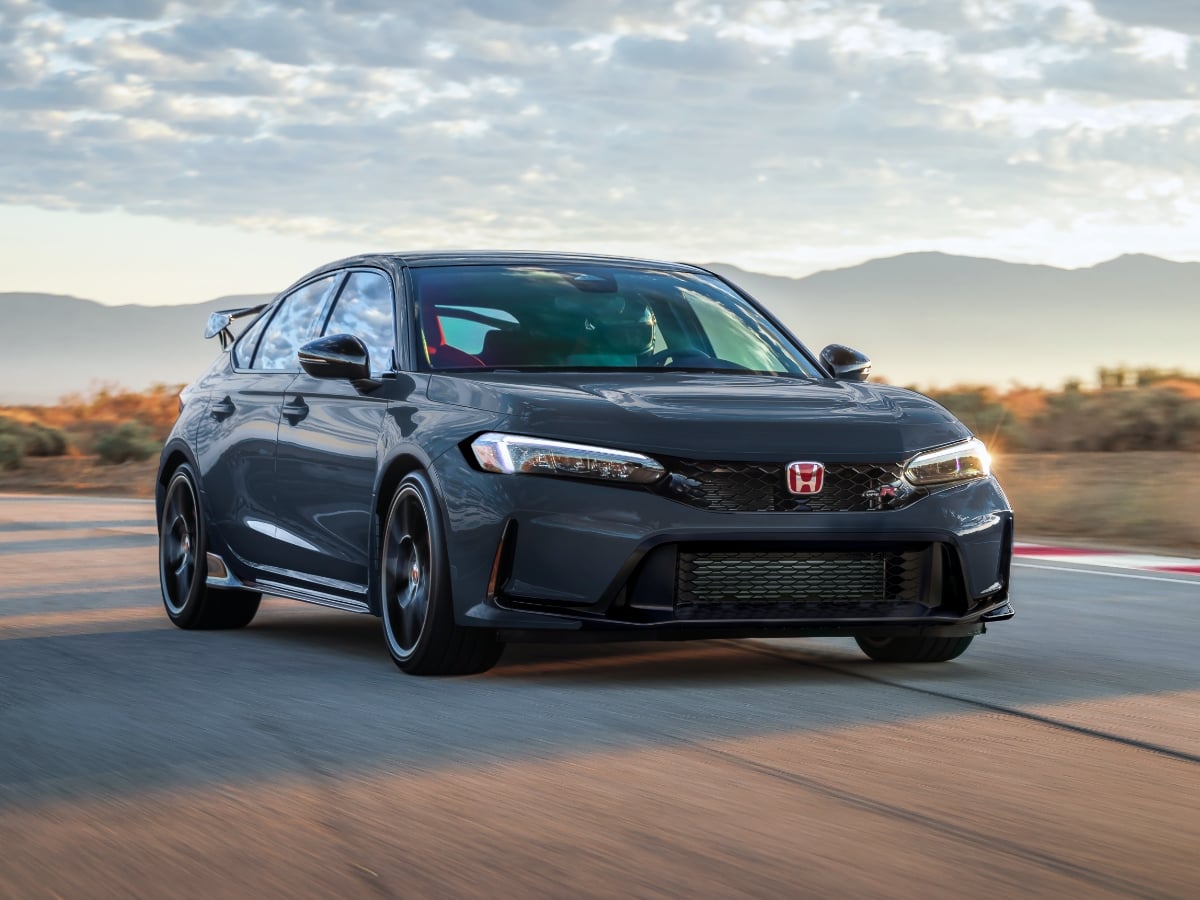
The 2027 Civic Type R goes on sale in October 2026, and it starts at $49,990, including the $1,295 destination charge.
Read the Full Article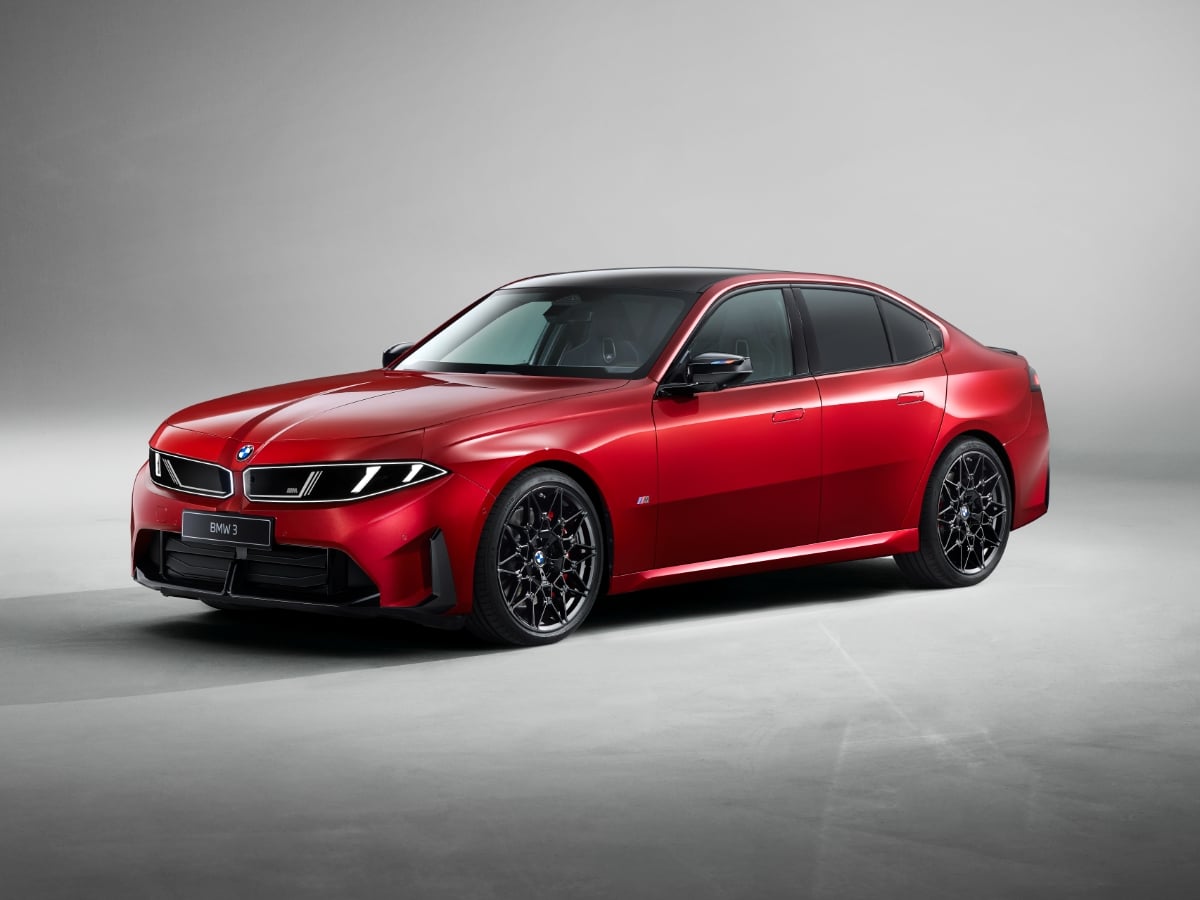
Part of BMW’s Neue Klasse (new class) rollout of redesigned models, the 2027 BMW 3 Series is all-new and goes on sale in the first quarter of 2027.
Read the Full Article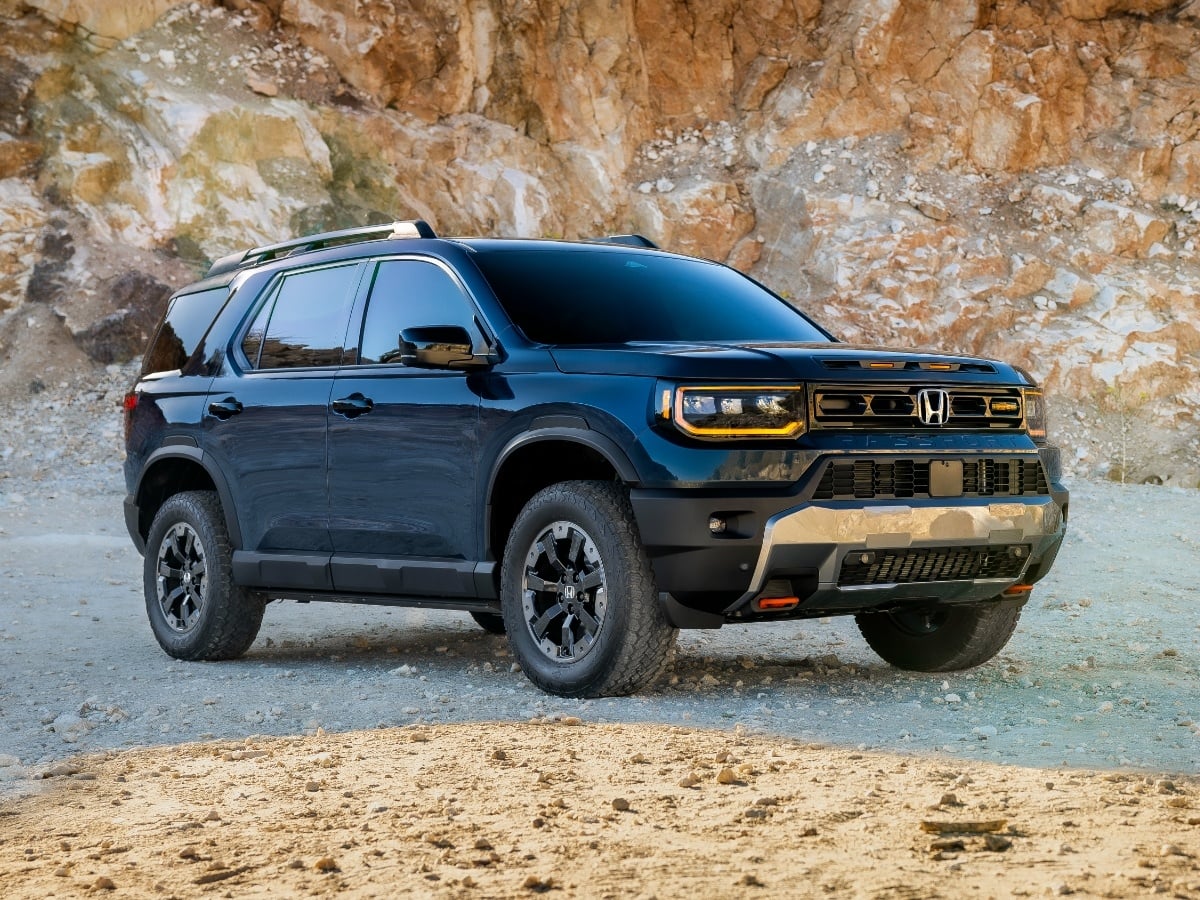
Updates to the 2027 Honda Passport TrailSport include a reworked suspension, improved steering, subtle styling enhancements, and added standard equipment.
Read the Full Article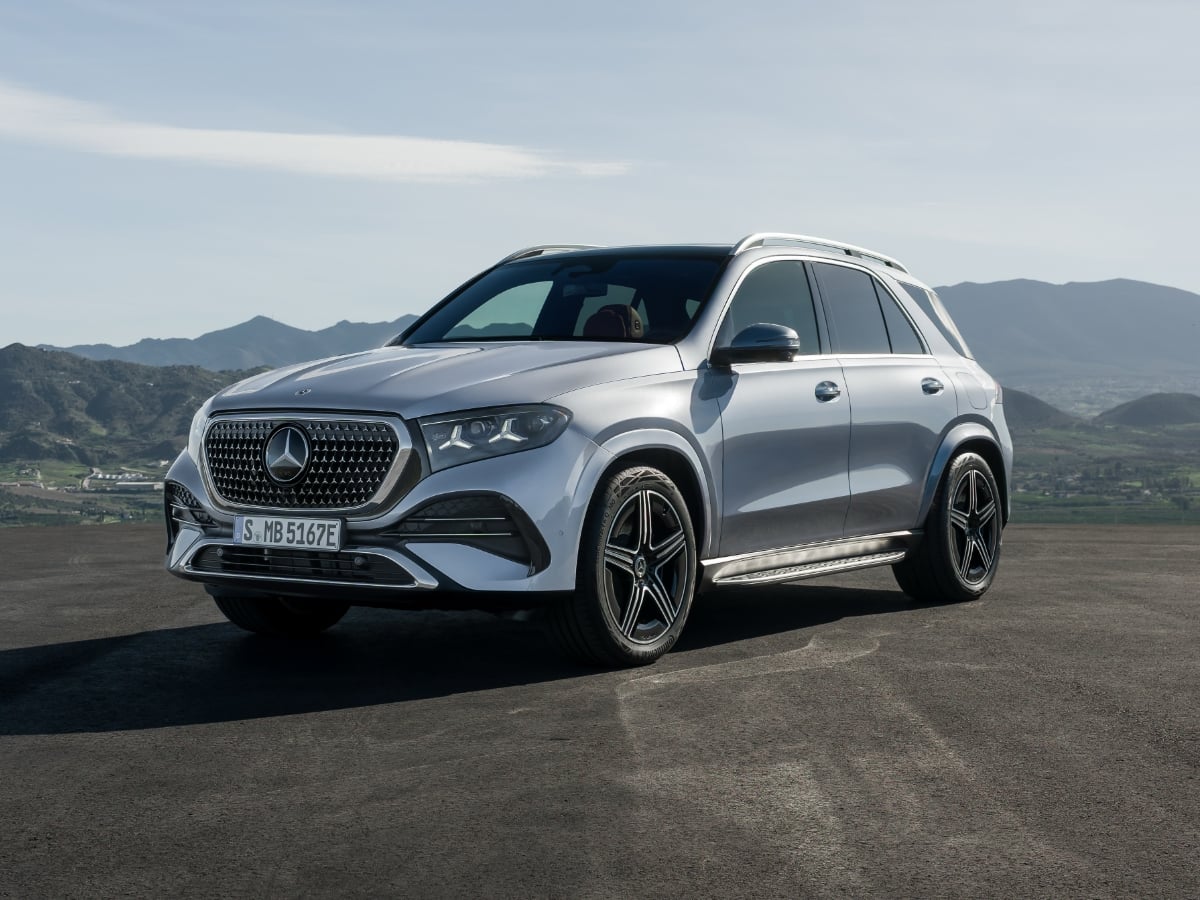
The midsize 2027 Mercedes GLE remains available in original and spicy Coupe recipes, now with standard 4Matic all-wheel drive (AWD), MBUX Superscreen technology, and a panoramic glass sunroof for ...See More
Read the Full Article