See answers to common EV questions, tax incentives, charging maps & more.
Explore EV
23 - 24
29 - 30
187 - 227
6 speed, Automatic w/OD
Intercooled Turbo Regular Unleaded I-4, Regular Unleaded I-4
All Wheel Drive
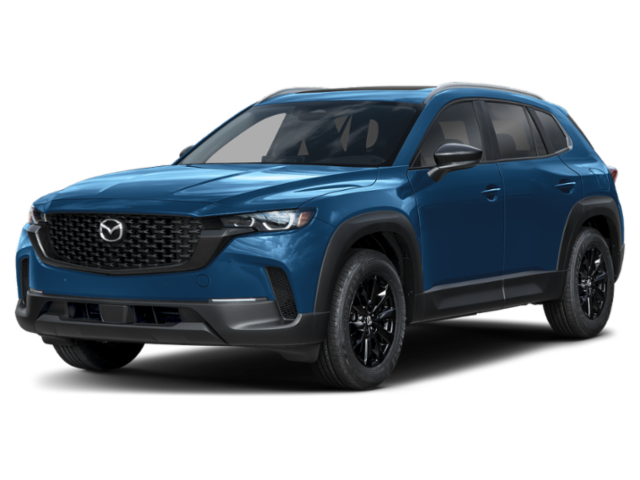
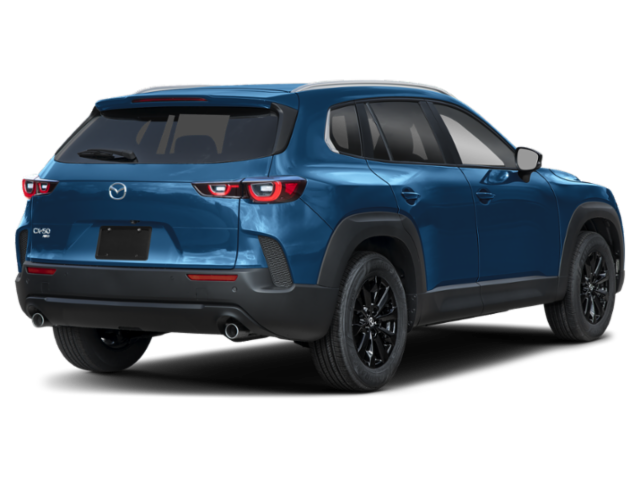
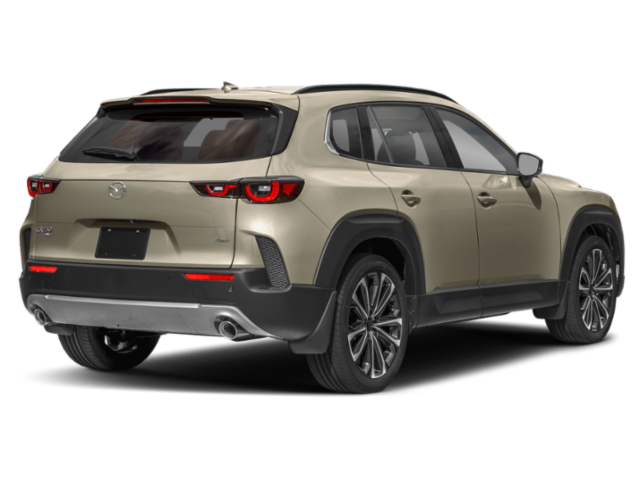
If you love to drive and feel the road through the steering wheel, if you secretly lament needing to own something other than a sport sedan or a fun, little two-seater, well, the 2026 Mazda CX-50 should be at the top of your prospective test drive list. I have driven every compact SUV extensively, and nothing even comes close to the CX-50’s driver engagement and fun. There are tradeoffs, however.
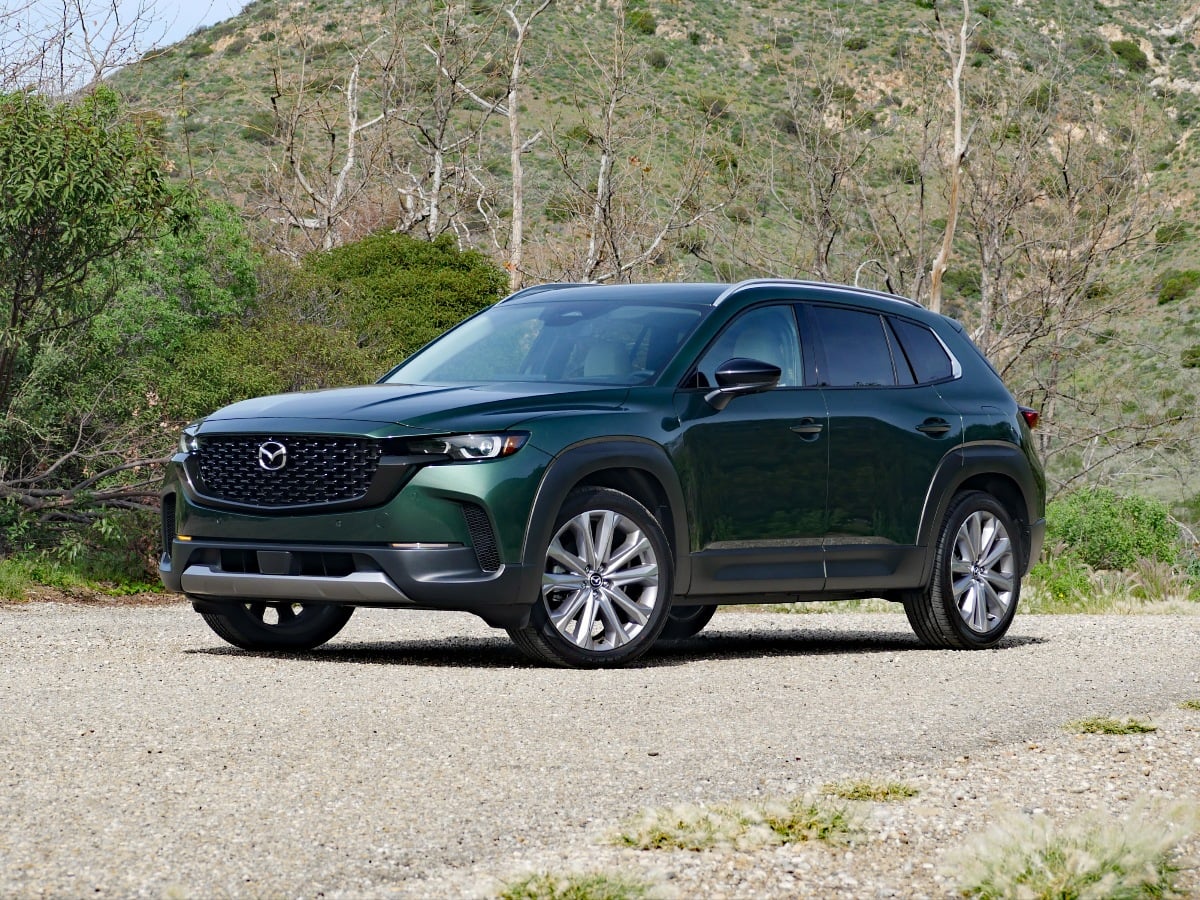
Photo: James Riswick
That said, the level of fun depends on what is under the hood. There are three powertrains available, each with a different model name: 2.5 S, Hybrid, and 2.5 Turbo. There are also different trim levels (Select, Preferred, Meridian Edition, Premium, Premium Plus), but not every trim/powertrain combination is offered. Prices range from $31,395 to $44,395.
For this 2026 CX-50 review, Mazda provided a test vehicle equipped with 2.5 Turbo Premium Plus trim and only two inexpensive options:
The test vehicle’s manufacturer suggested retail price (MSRP) was $44,820, including the $1,495 destination charge to ship the crossover SUV from the Mazda-Toyota Manufacturing plant in Alabama to a local dealership. The price does not reflect any current rebates, incentives, or price adjustments since Mazda manufactured the test vehicle.
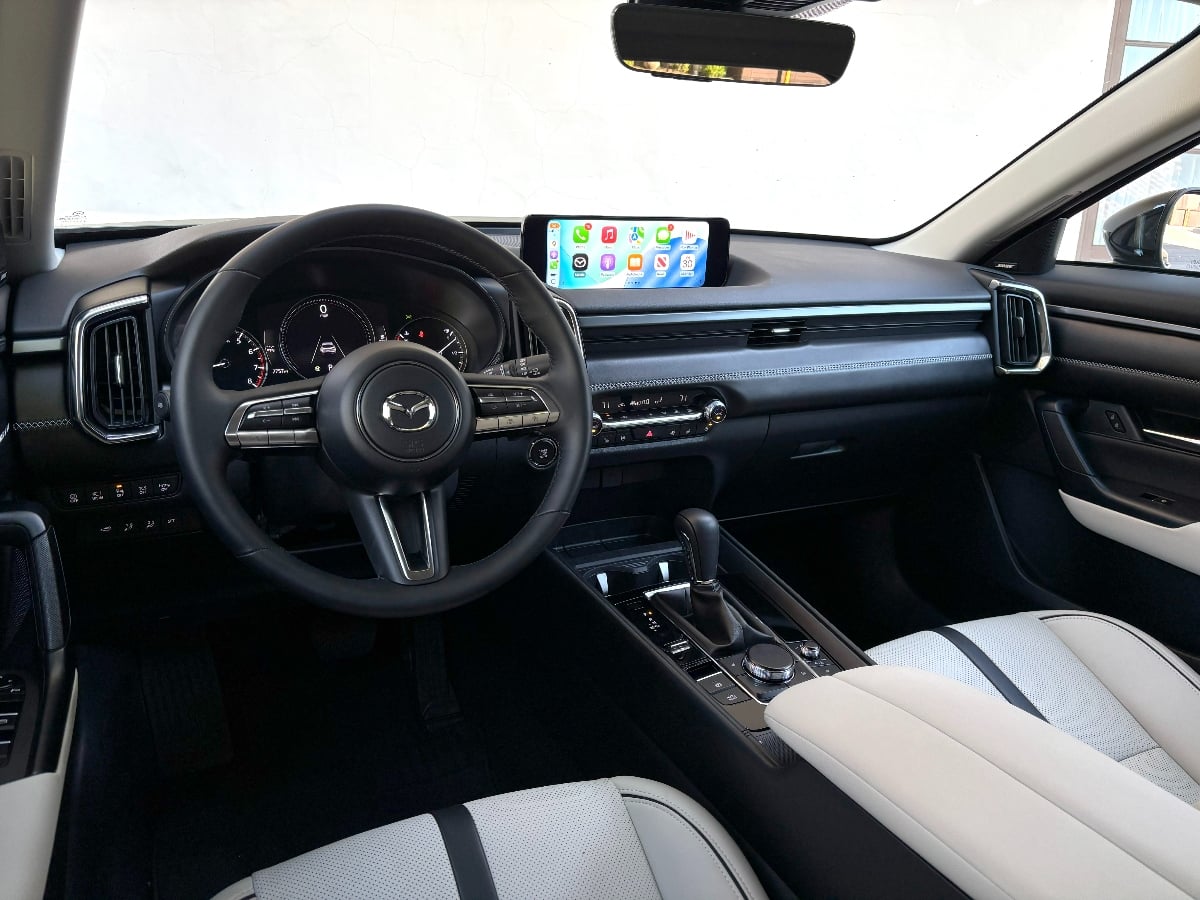
Photo: James Riswick
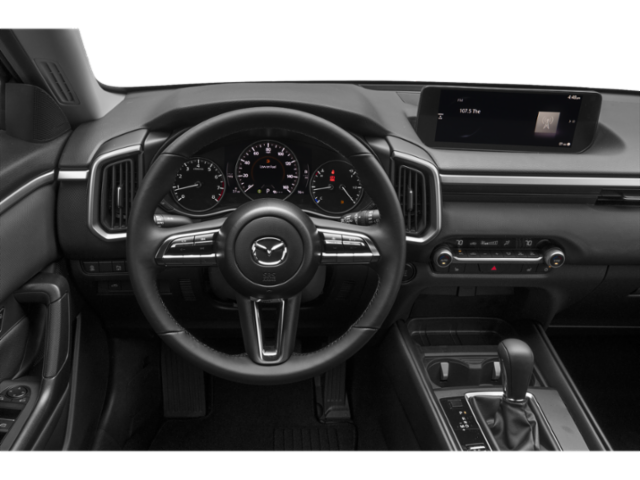
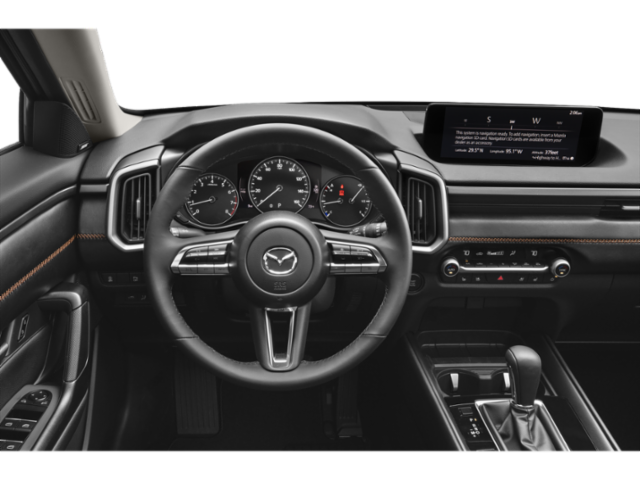
The CX-50’s doors sound pretty tinny when you open and close them, and many of the interior plastics are just OK. The thin, leather-wrapped steering wheel feels sensational in your hands, and all the switchgear clicks and turns with satisfying precision. Upper trims also feature padded simulated leather on the dashboard and doors, with distinctive X-patterned cross-stitching.
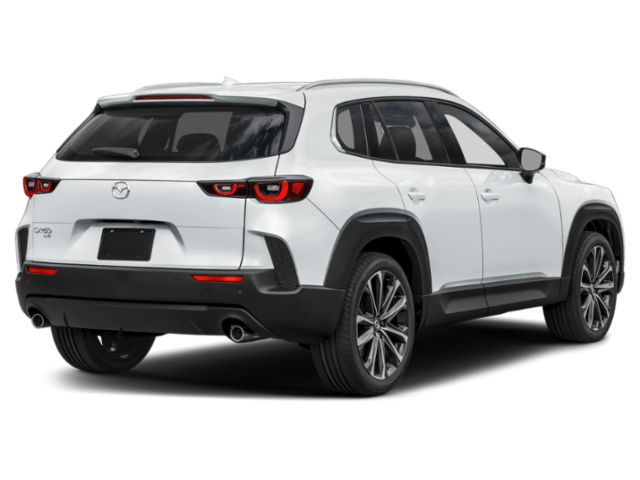
There is also a new white interior option for 2026. It is simulated leather in the Preferred, but real leather in the Premium and Premium Plus. However, I would probably steer clear of it, because as great as my brand new test car looked, my experience with white leather suggests that it is likely to look pretty rough after a few years or even months (beware of blue jeans).
The driver’s seat is pretty firm and protrudes upward at the base of the seatback. But as the miles piled on, I stopped noticing and found the driver’s seat to be very supportive. At 6-foot-3, I would prefer it if it slid further rearward as I did not have quite enough legroom, or at least tilted up further in the front.
Of course, moving the driver’s seat even further back would reduce the already scarce legroom in the back seat. Indeed, the CX-50 has one of the tightest back seats in the compact SUV segment. My head was touching the ceiling with my test car’s panoramic sunroof, a rarity despite my height, and I had to slide the passenger seat well forward to make room for my son’s feet in his forward-facing car seat. Rear-facing seats also fit better in rival vehicles.
Cargo space is also smaller than most in the segment, significantly so compared with the Hyundai Tucson, Kia Sportage, and Toyota RAV4. That said, the CX-50 still managed to fit all six of my standard suitcases which consist of three roll-aboards, two medium check-in bags, and one duffel bag. I still had room left over for a 38-quart cooler and two extra duffel bags. So, it can fit a lot. Yet the others fit a bit more, with easier loading and better rear visibility.
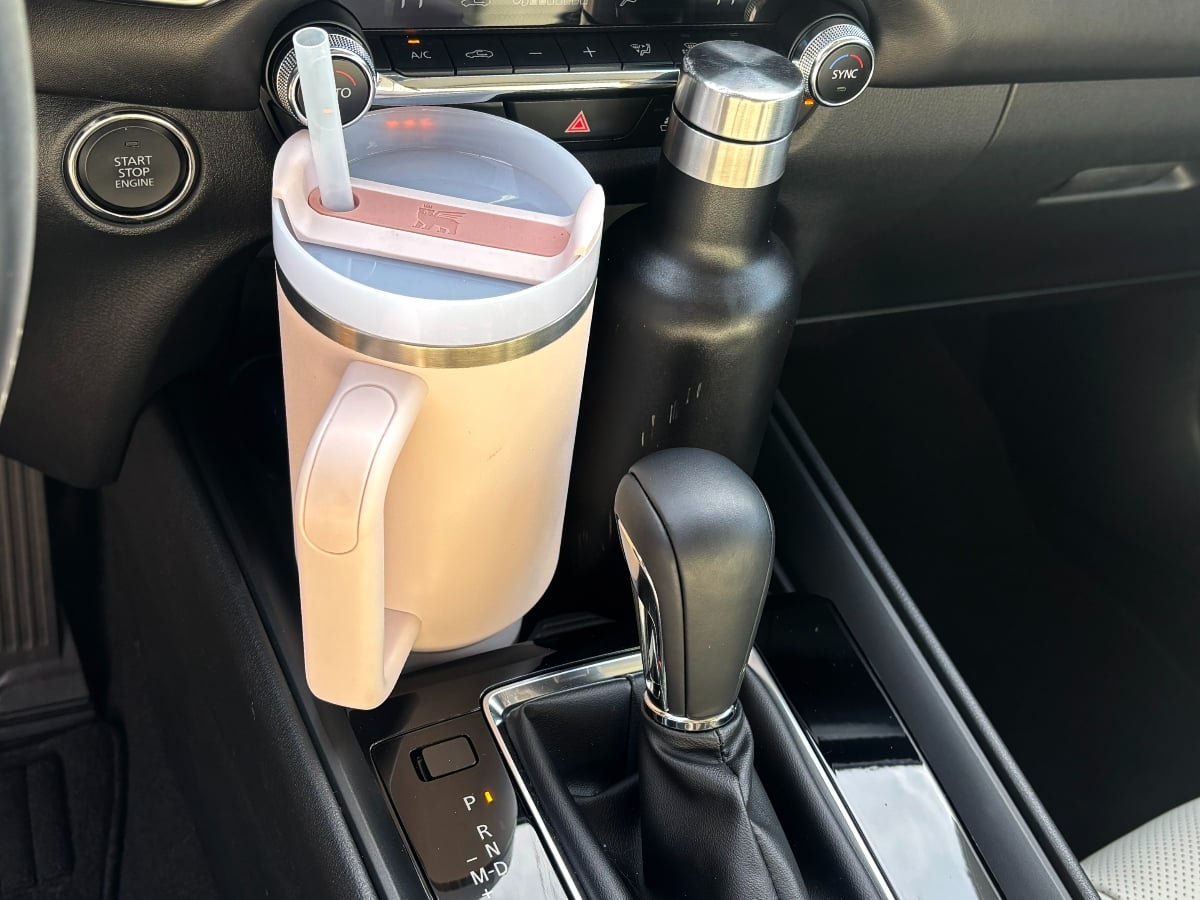
Photo: James Riswick
Small item storage is not great by 2026 standards. The cupholders barely fit my wine-bottle-sized metal water bottle and a 40-ounce jumbo cup, and they were so close to the climate controls that they were tough to place. A small forward bin is just big enough for a small sunglasses case, but the shifter and cupholders block access. The standard wireless smartphone charging pad sits under the lip of the armrest cover, a good spot, and it did not roast my phone.
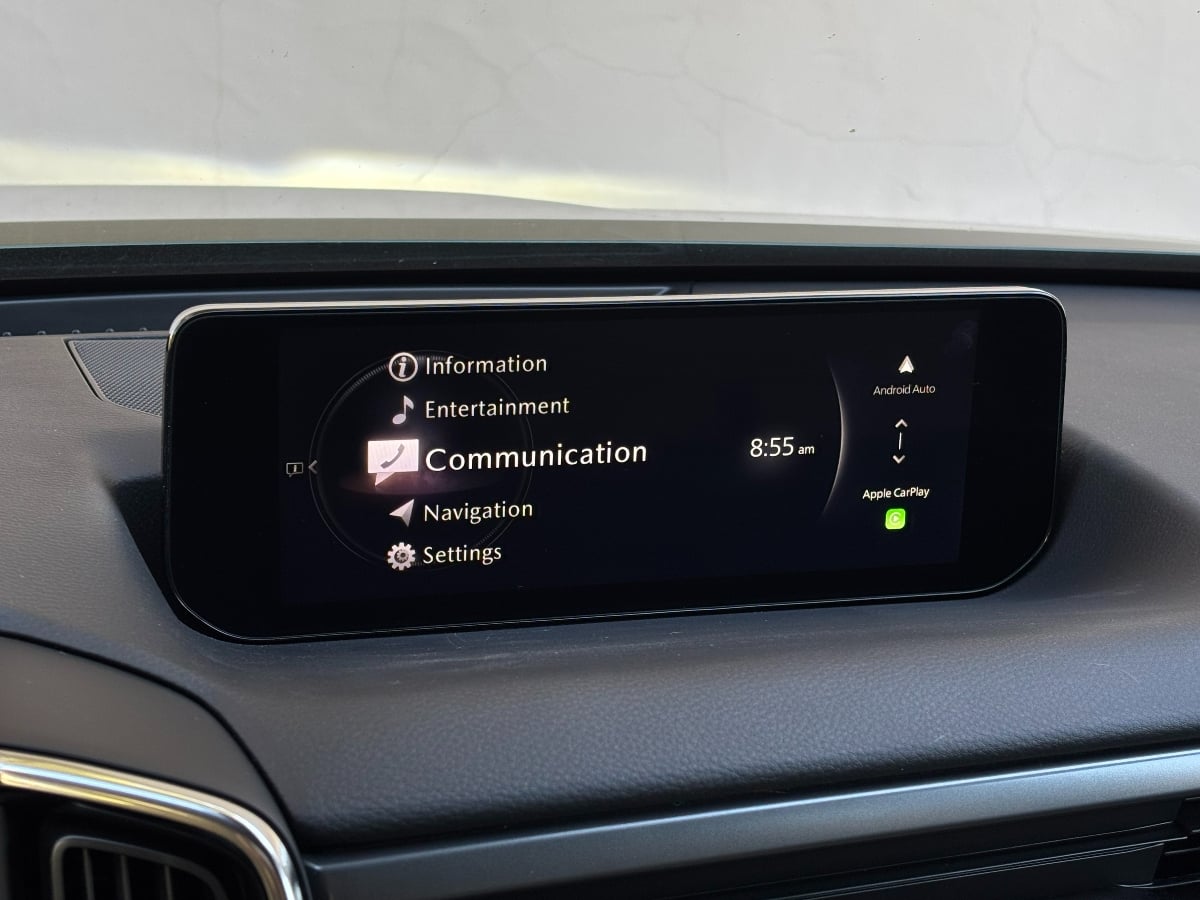
Photo: James Riswick
When you look at the list of included features below, the Mazda Connect infotainment system looks perfectly competitive in 2026. It comes with:
Upper trims, including all Turbo models, also include SiriusXM satellite radio and a 12-speaker Bose sound system.
Once inside the CX-50, though, you can see that this system is a blast from the past. Note that it says “infotainment display” rather than “touchscreen” above. While the vehicle has touchscreen capability, it works only for Apple CarPlay or Android Auto, and only when the car is stopped.
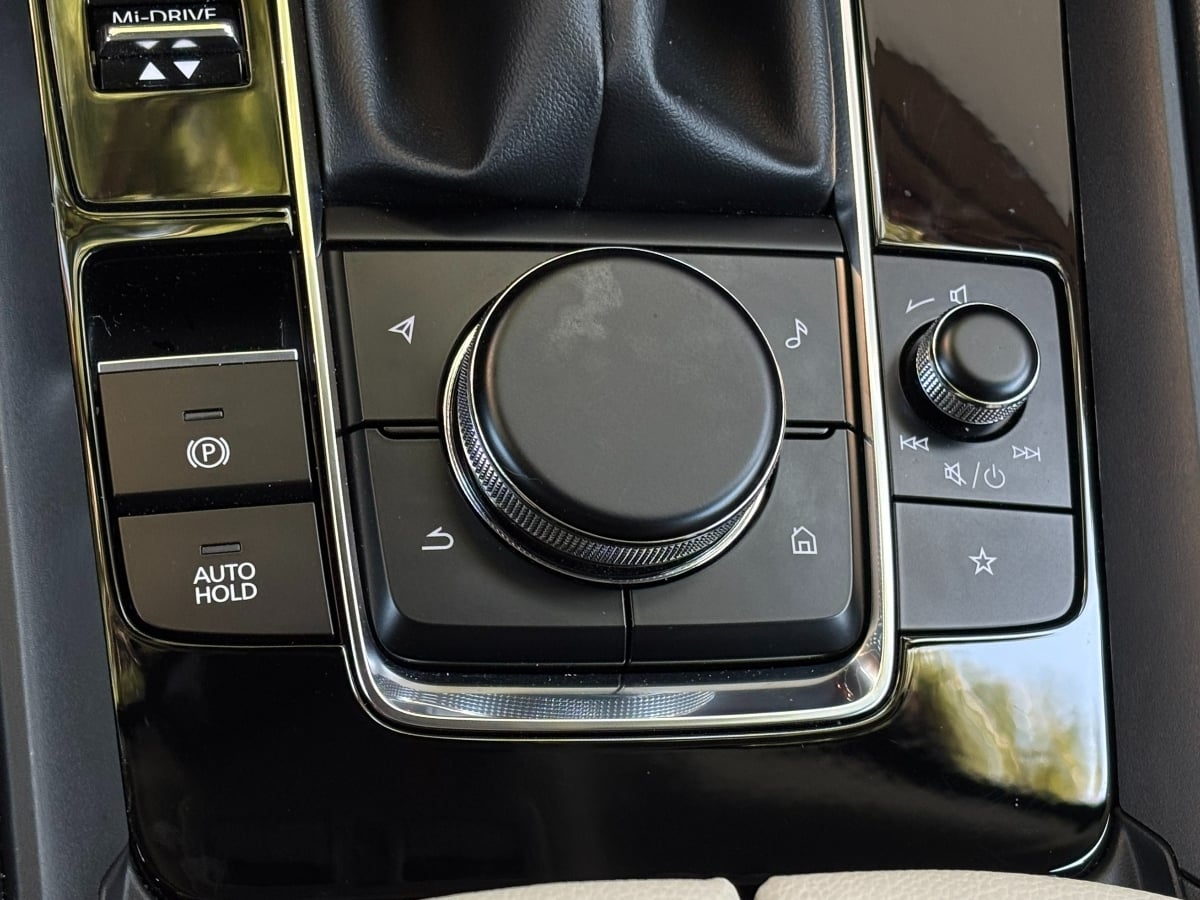
Photo: James Riswick
Once you are moving, you have to use the system’s standard input method: a large knob on the center console with accompanying menu buttons that control the display. This is a fine interface for zooming a map, selecting a phone contact, or scrolling through radio presets or songs downloaded on your phone. It is almost useless for Apple CarPlay (and presumably Android Auto), where you have to wheel and click through every icon on screen before getting to what you want. The menu buttons also switch between controlling the car’s native system and CarPlay, which was confusing and frustrating.
If I owned this car, I would not bother with CarPlay. Instead, I would do what I do in my 13-year-old Mercedes-Benz E-Class, which has a similar knob-and-screen interface: connect my phone to a magnetic phone mount on the left side of the windshield and play whatever entertainment I select from it via Bluetooth audio. I can also use Google Maps this way. This is just my own workaround, however. It is not an endorsement.
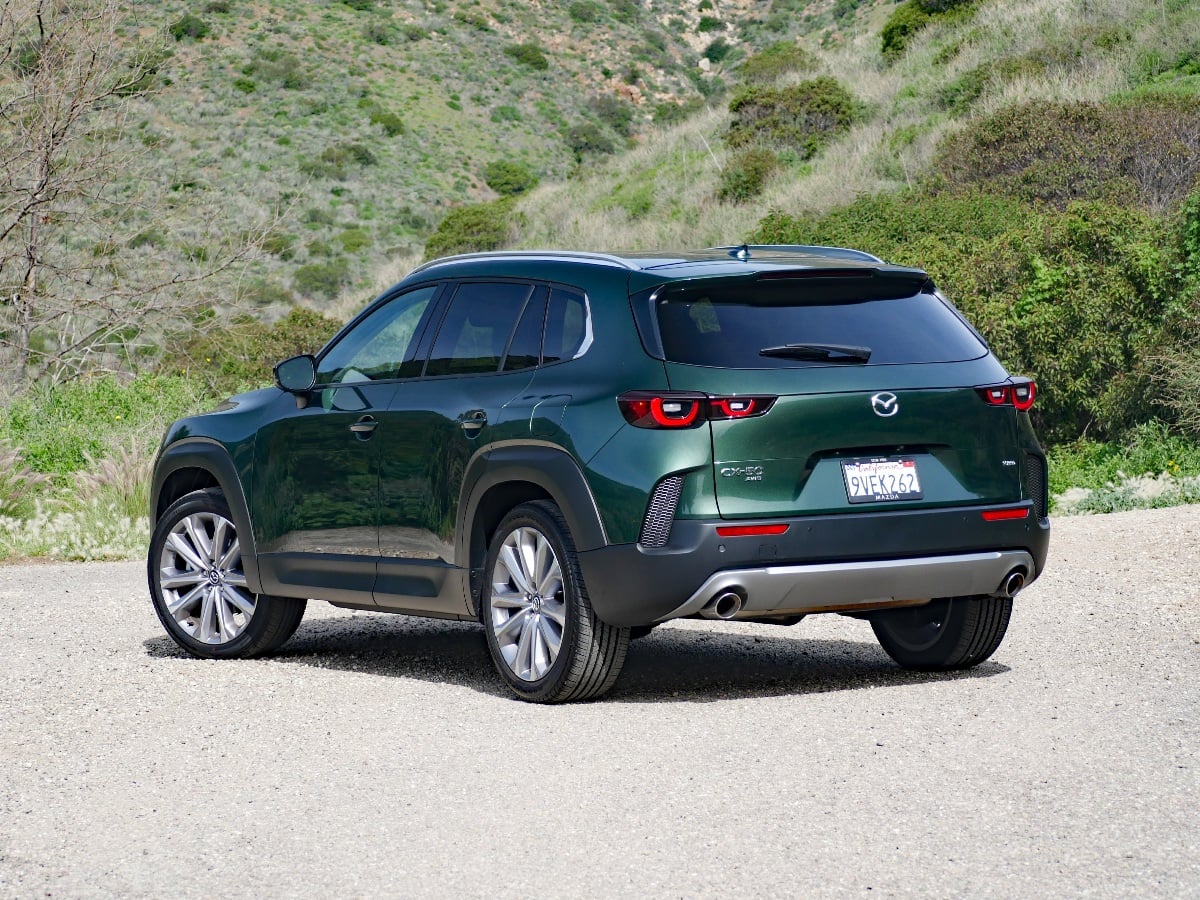
Photo: James Riswick
OK, now the good stuff, because the main reasons to consider the 2026 Mazda CX-50 are in this section. As previously stated, the CX-50 is leagues more enjoyable to drive than any other compact SUV, with the possible exception of Mazda’s own CX-5. In fact, I enjoyed driving the CX-50 2.5 Turbo more than most luxury compact SUVs.
It all starts with finely tuned primary controls. The precise steering is chock-full of feel and feedback, yet perfectly pleasant when parking. There are no adjustable steering settings, but it does not need them. This is Porsche-level goodness. Ditto the spot-on throttle and transmission response, which get even sharper when the sport mode is engaged. The brakes? The pedal feel is firm, reassuring, and gold-star material.
All told, the CX-50 2.5 Turbo is a joy to drive on the serious mountain roads that are part of my standard evaluation route. While other compact SUVs merely traverse these roads with varying degrees of acceptable control and engagement, the CX-50 thrives and let me have fun doing it. It felt light, agile, and communicative in a way few other SUVs do.
Moreover, this handling excellence does not come at the expense of ride quality. It is not plush, but it is never harsh, nervous, or jiggly. It is genuinely comfortable. Road noise is a bit elevated on concrete highways, but it is still acceptable.
The 2.5 Turbo trim features a turbocharged 2.5-liter four-cylinder engine that produces 256 horsepower and 320 pound-feet of torque. A six-speed automatic transmission and all-wheel drive (AWD) are standard. While I found the 187-hp base powertrain to be similarly responsive and powerful enough to get the job done, the Turbo takes things to luxury-performance levels. However, the Toyota-sourced hybrid is a different story.
All that torque makes the CX-50 Turbo feel tremendously powerful when shooting off the line or passing on the freeway. The throttle and transmission response make it feel even gutsier, especially on those aforementioned mountain roads. This powertrain is always ready to keep the party going.
That said, if you embrace this engine’s gutsy eagerness, fuel economy will suffer. My mountain-going exuberance reduced the overall fuel economy of my 75-mile mixed driving route to a mere 20 mpg. The Environmental Protection Agency (EPA) says it should get 25 mpg combined. Then again, I was averaging only 26.4 mpg on the 40-mile highway portion of my route, compared with an EPA-estimated 29 mpg. I often match or exceed the EPA highway estimates.
The CX-50 Hybrid achieves an EPA-estimated 38 mpg, so there is thankfully an alternative for those who care more about fuel economy than performance. Unfortunately, after driving the CX-50 Hybrid, the difference in performance, refinement, and response compared with both gas-only engines is substantially greater than you will find elsewhere. The hybrid versions of the Honda CR-V, Hyundai Tucson, and Kia Sportage are actually better to drive than their gas-only counterparts.
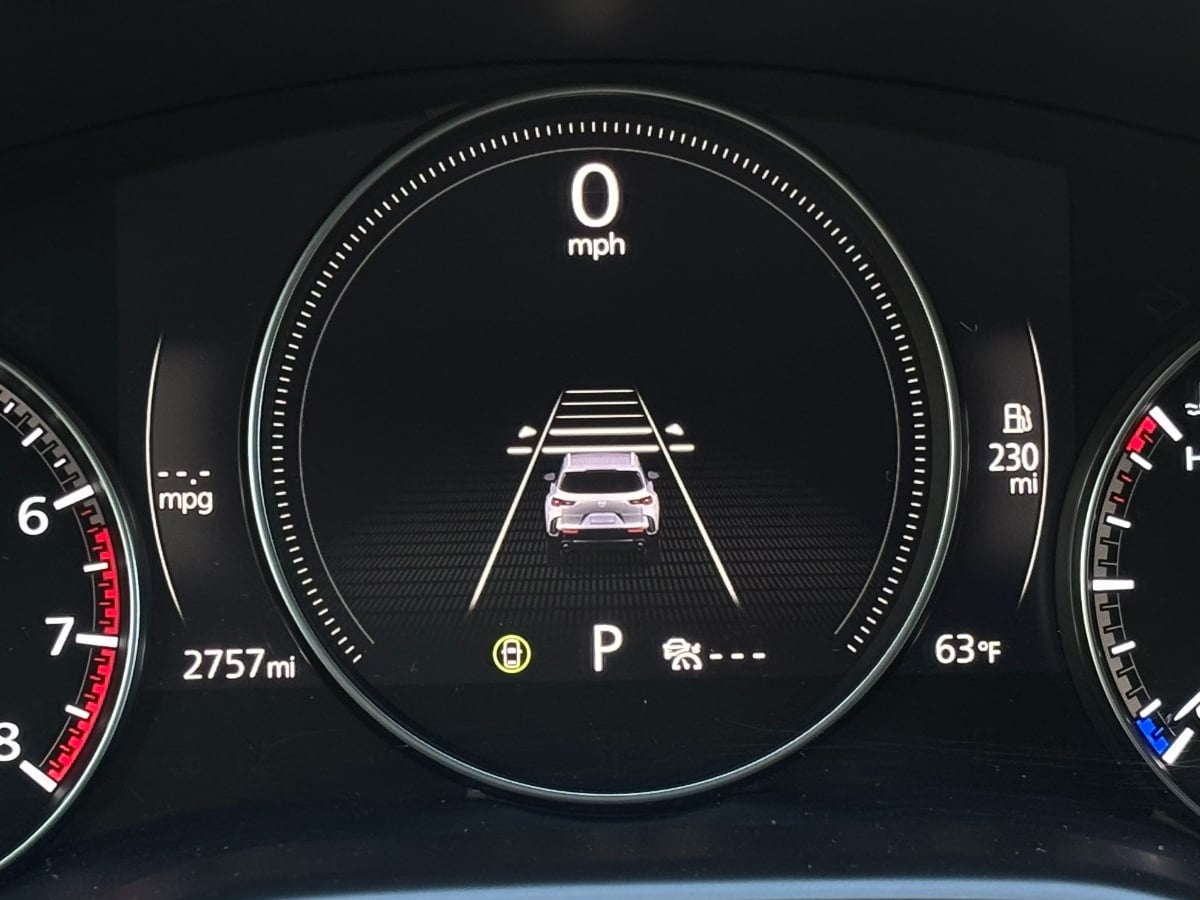
Photo: James Riswick
The CX-50 comes standard with a substantial, though typical, selection of advanced driver assistance systems (ADAS). Standard features include:
Front and rear parking sensors are included on all but the base model, but only the range-topping Turbo Premium Plus includes front cross-traffic warning and lane centering assistance (aka “Cruising and Traffic Support”).
While the CX-50’s infotainment technology is a bit retro, its safety systems are more up-to-date. I could do without the “beep!” that accompanies the lane departure warning system, as the vibrating steering wheel is sufficient. At least, the system is not overly sensitive. I kept it on through the tight mountain roads. The blind spot warning system really did not like double left-turn lanes (beep!), but overall, the safety system’s performance was average and tolerable.
The adaptive cruise control did a good job of maintaining speed and distance and got back up to speed smoothly. The lane centering assistance was just OK. It made me feel like the car was skewing to the right. It is actually an optical illusion; the car was actually skewing toward the middle, whereas I have found most cars skew to the left to counter this illusion. Sharper highway corners caused the car to drift out of its lane. There were no issues on straight stretches of highway.
Finally, the National Highway Traffic Safety Administration (NHTSA) gave the 2026 CX-50 five (out of five) stars for overall crash protection. Meanwhile, the Insurance Institute for Highway Safety (IIHS) named it a Top Safety Pick+ for the 2025 calendar year.
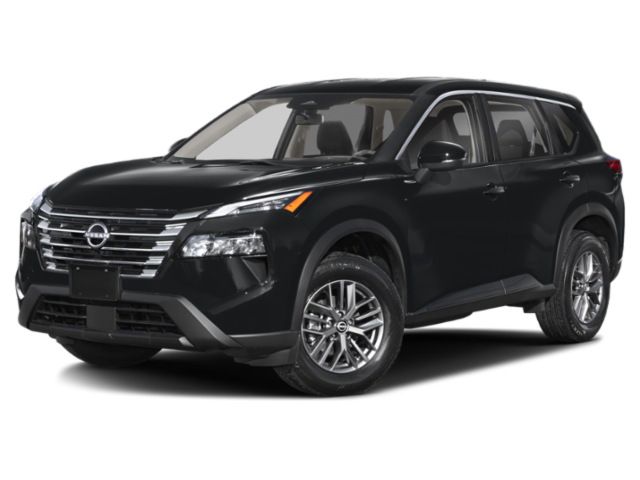
According to the JD Power 2025 Initial Quality Study (IQS), the Ford Escape ranks highest in the Compact SUV segment. The Jeep Wrangler and the Nissan Rogue are the next highest-ranked models.
According to the JD Power 2025 Automotive Performance, Execution and Layout (APEAL) Study, the Nissan Rogue ranks highest in the Compact SUV segment. The Buick Envision and the Mitsubishi Outlander are the next highest-ranked models.
Other 2026 CX-50 competitors include the Chevrolet Equinox, Honda CR-V, and Toyota RAV4.