See answers to common EV questions, tax incentives, charging maps & more.
Explore EV
16 - 20
17 - 23
305 - 420
10 speed, Automatic w/Paddle Shifters, 8 speed, Automatic
Gas V8, Turbocharged Diesel I6, Turbocharged Gas I4
Four Wheel Drive, Rear Wheel Drive
The 2026 Chevrolet Silverado 1500 falls short of the Ford and Ram full-size trucks overall, but how does it fare in more specific terms? After all, full-size trucks are available in a dizzying array of configurations. The right combination of features can possibly make the Silverado a better fit for you. In that spirit, this review will focus on the TurboMax engine, the six-passenger cabin, the upper trim interior design, and the sporty-looking RST trim level.
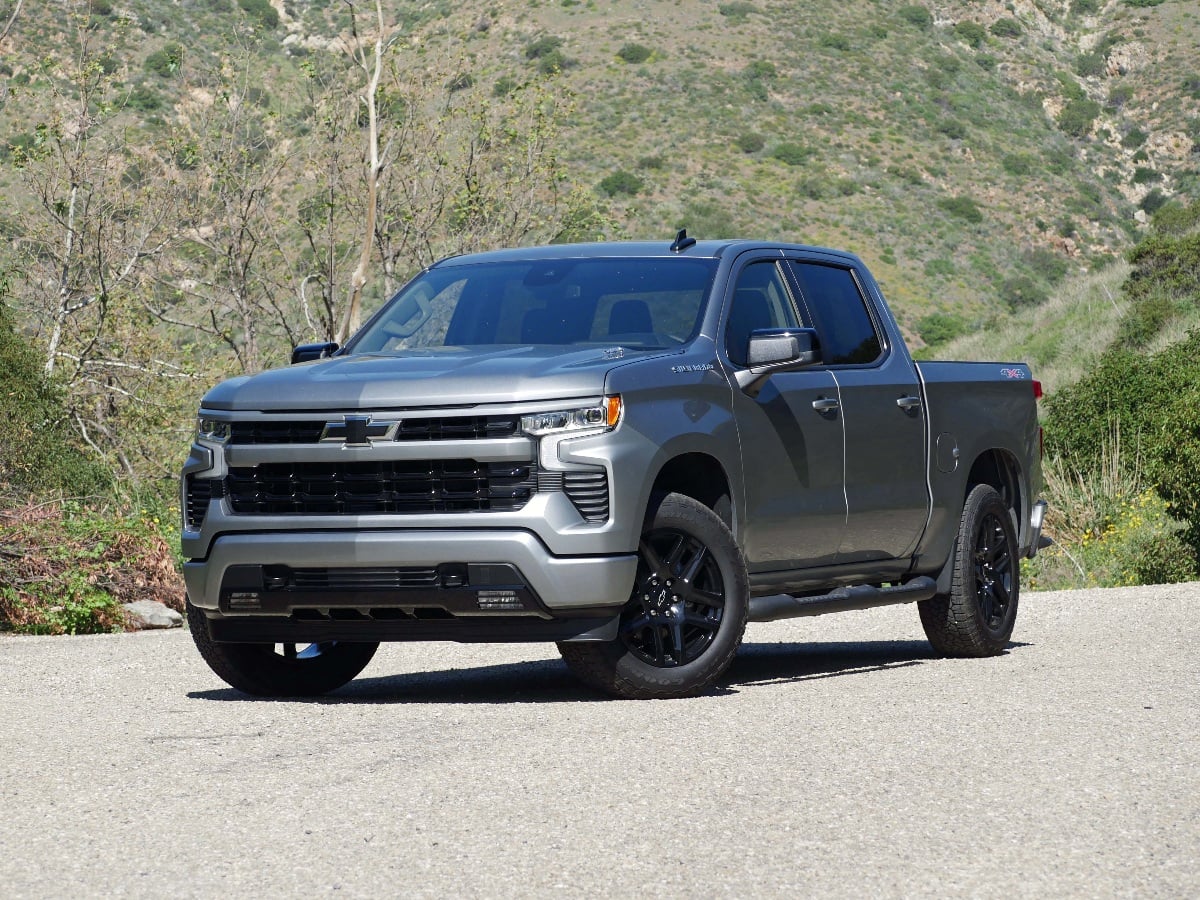
Photo: James Riswick
The RST trim is noteworthy for 2026 because it gains a new Select package, exclusively available with the TurboMax engine. It adds 20-inch black wheels, all-terrain tires, assist steps, a bed liner, and all-weather floor mats. Chevrolet makes no other major changes to the Silverado 1500 for 2026.
As such, the Silverado 1500 (versus the heavy duty 2500 and 3500) remains available in regular, Double (extended), and crew cab styles, with the regular and crew cabs offered in multiple bed lengths. Available trims include WT, LT, Custom, Custom Trail Boss, RST, LT Trail Boss, LTZ, High Country, and ZR2. Base prices range from about $40,000 to roughly $75,000, including the destination charge.
For this 2026 Silverado 1500 review, Chevrolet provided a test vehicle equipped with a crew cab, a short bed, a six-passenger interior, the TurboMax base engine, four-wheel drive (4WD), RST trim, the RST Select package, and no other options.
The test vehicle’s manufacturer suggested retail price (MSRP) was $54,305, including the $2,795 destination charge and a $6,350 RST Select package discount listed on the truck’s window sticker that still applied at the time of this writing. The price does not reflect any other current rebates, incentives, or price adjustments since Chevrolet manufactured the test vehicle in Roanoke, Indiana.
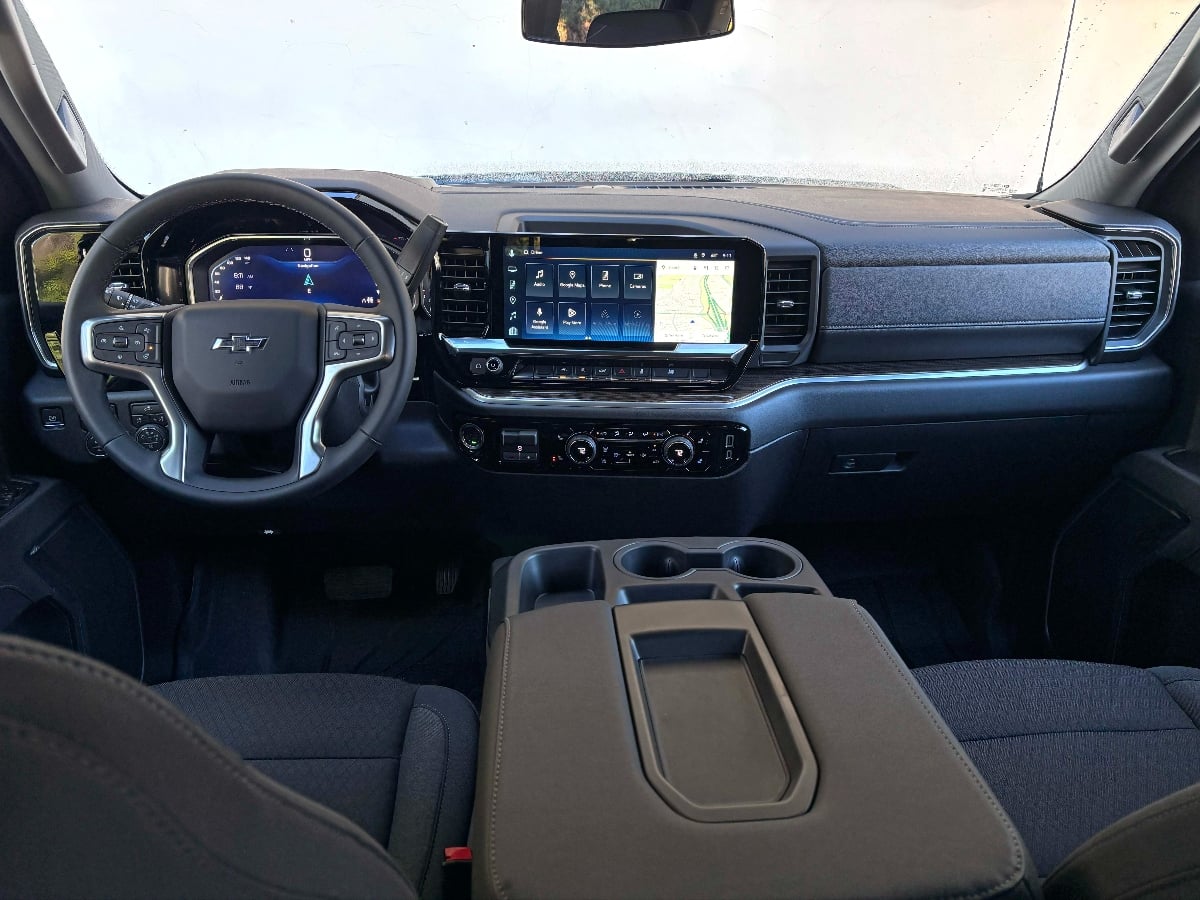
Photo: James Riswick
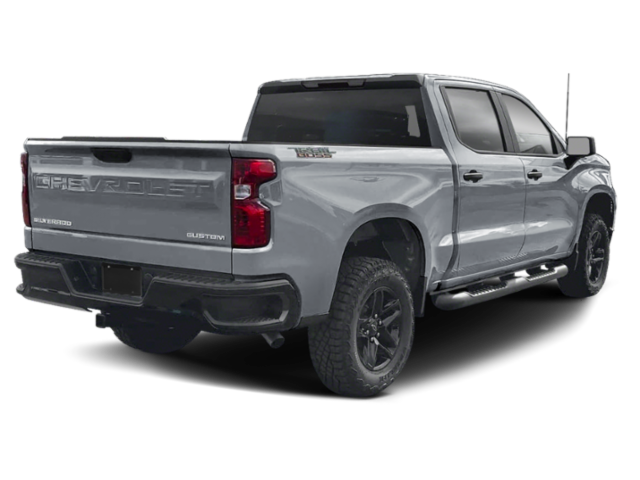
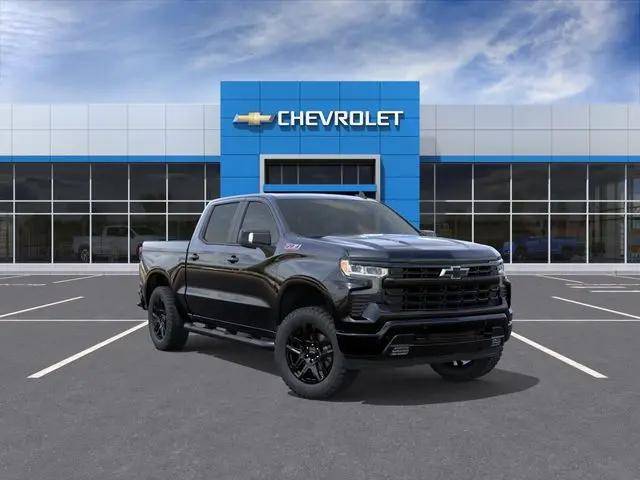
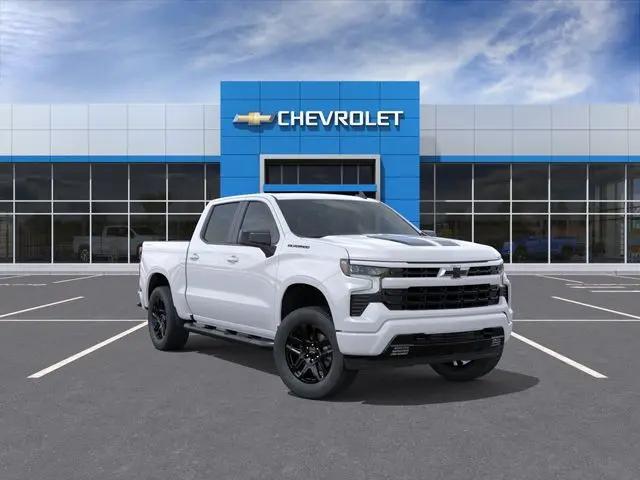
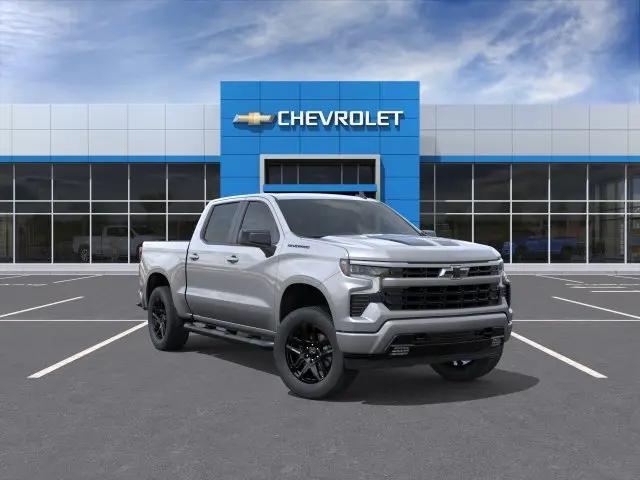
The RST is the Silverado’s sporty looking trim. It trades acres of chrome and macho/off-road styling cues for more body-colored trim, a sleeker grille, and black bowtie emblems. The RST Select package ups the cool with black wheels wrapped in all-terrain rubber. I dig it; it is not trying too hard.
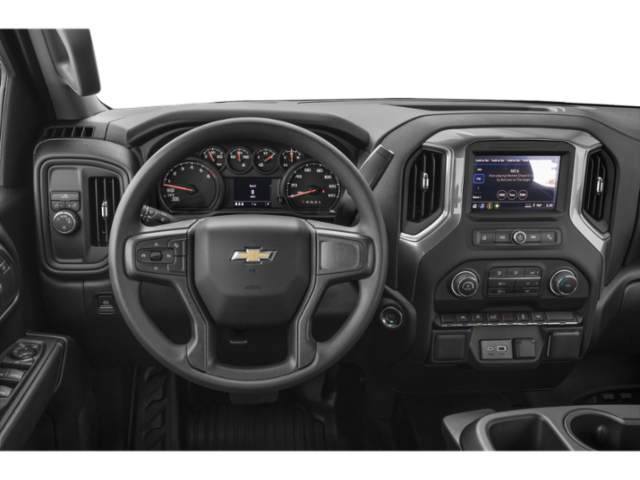
As one of the Silverado 1500’s upper trims, the RST has the newer, far more attractive cabin design that features up-to-date technology. The lower WT, Custom, and Custom Trail Boss trims have the rather ugly, lower-quality cabin design with technology that is older that this Silverado generation had when it debuted. This is obviously subjective, but I think it is the best-looking full-size truck cabin. It is not the most functional, however.
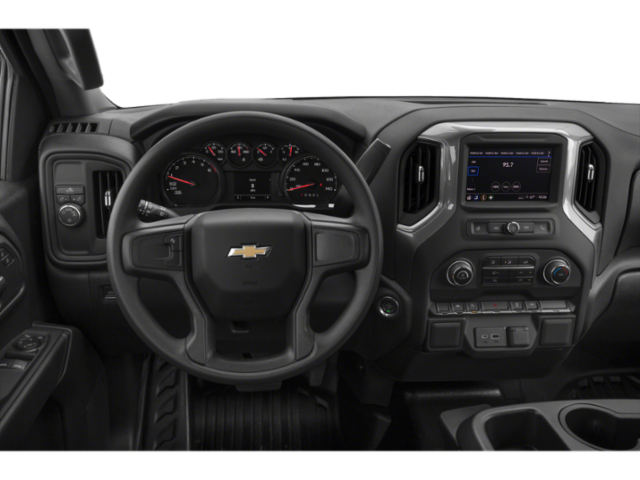
All the physical buttons and knobs for the lights, climate controls, and transfer case, plus toggle switches for other functions, are quite good. This truck is not difficult to figure out. I will touch on it more later, but the technology is also easy to use.
Instead, the issues start with this test truck’s front bench seat that seats three across, which is standard with the TurboMax engine and available with the 5.3-liter V8 and diesel engines. The middle seat is hard, mounted high, and, unlike the Ford and Ram front middle seats, has a low seatback without a head restraint. If you really need six-passenger seating, I would choose a different truck.
It is not just a matter of comfort, though. Storage takes a hit, too. While there is a hidden compartment under the seat, the fold-down seatback and armrest offers barely usable cupholders, a shallow bin under the armrest, and some haphazardly shaped, plastic-coated mini “bins.” The best place to put your phone is in the plastic gutter in the middle of the armrest.
Not surprisingly, I found the full center console in a five-passenger Silverado to be more functional, but it is still not nearly as versatile or as thoughtfully designed as what is offered in the Ram 1500 or the Ford F-150.
Thankfully, the front outboard seats are separate from the middle one, and I could achieve a comfortable driving position with the power-adjustable driver's seat. I did need to raise it a bit higher than normal, since the hood and dashboard seem so unusually high on the Silverado.
The crew cab’s back seat offered the same sort of palatial head- and legroom you will find in the biggest cabs of other trucks. My knees were not even close to the seatback in my far-flung seating position. Not surprisingly, there is also plenty of room for a child seat. Securing it can be tricky because of the convoluted rear LATCH strap attachment points (reading the manual is a must), but it is better than in the Ford F-150.
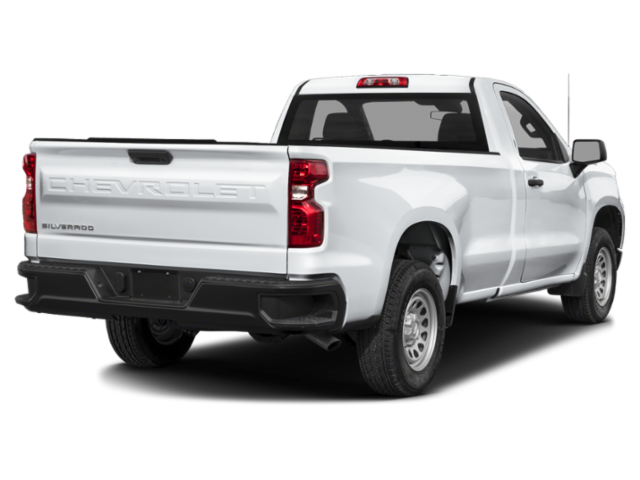
As for the cargo bed, my test truck had the 69.92-inch short bed, which has a payload of 2,020 pounds. The bumper had corner steps to make it a little easier to get inside, but lacks the clever Multi-Flex tailgate, which includes an integrated step and other novel features. At least the test truck’s plain-Jane tailgate is impressively light.
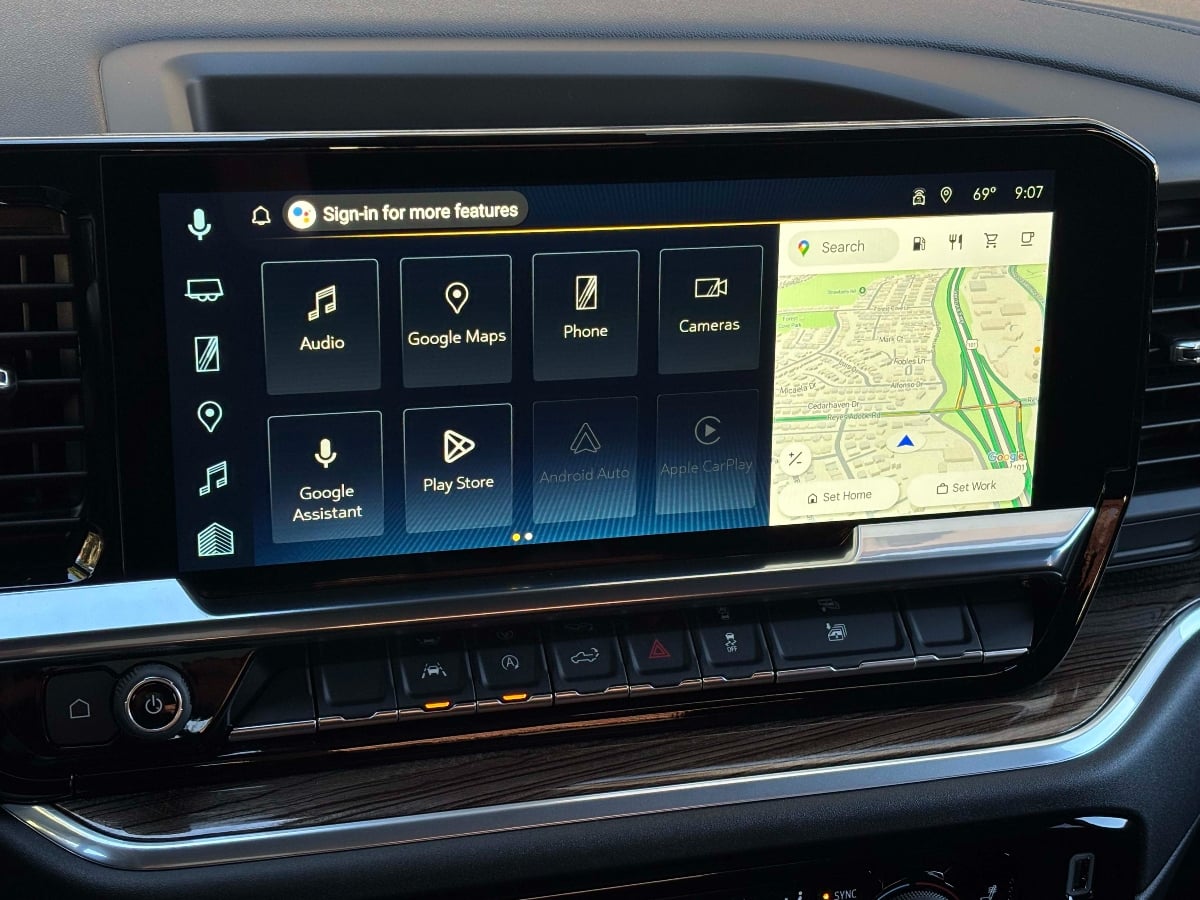
Photo: James Riswick
Standard on the 2026 Silverado 1500, starting with the LT, is a 12.3-inch digital instrument panel and a 13.4-inch infotainment touchscreen. There are no screen upgrades beyond these. Standard equipment includes:
A wireless smartphone charger is available, but not with the front bench seat.
The Silverado’s widescreen layout makes good use of its real estate with a well-designed layout, clear graphics, and a familiar navigation setup thanks to integrated Google Maps. The Google voice controls also work well, even if they cannot call up a SiriusXM channel. Ford and Ram have great infotainment systems, too, so despite how much I like this system, I do not consider it much of an advantage, if any.
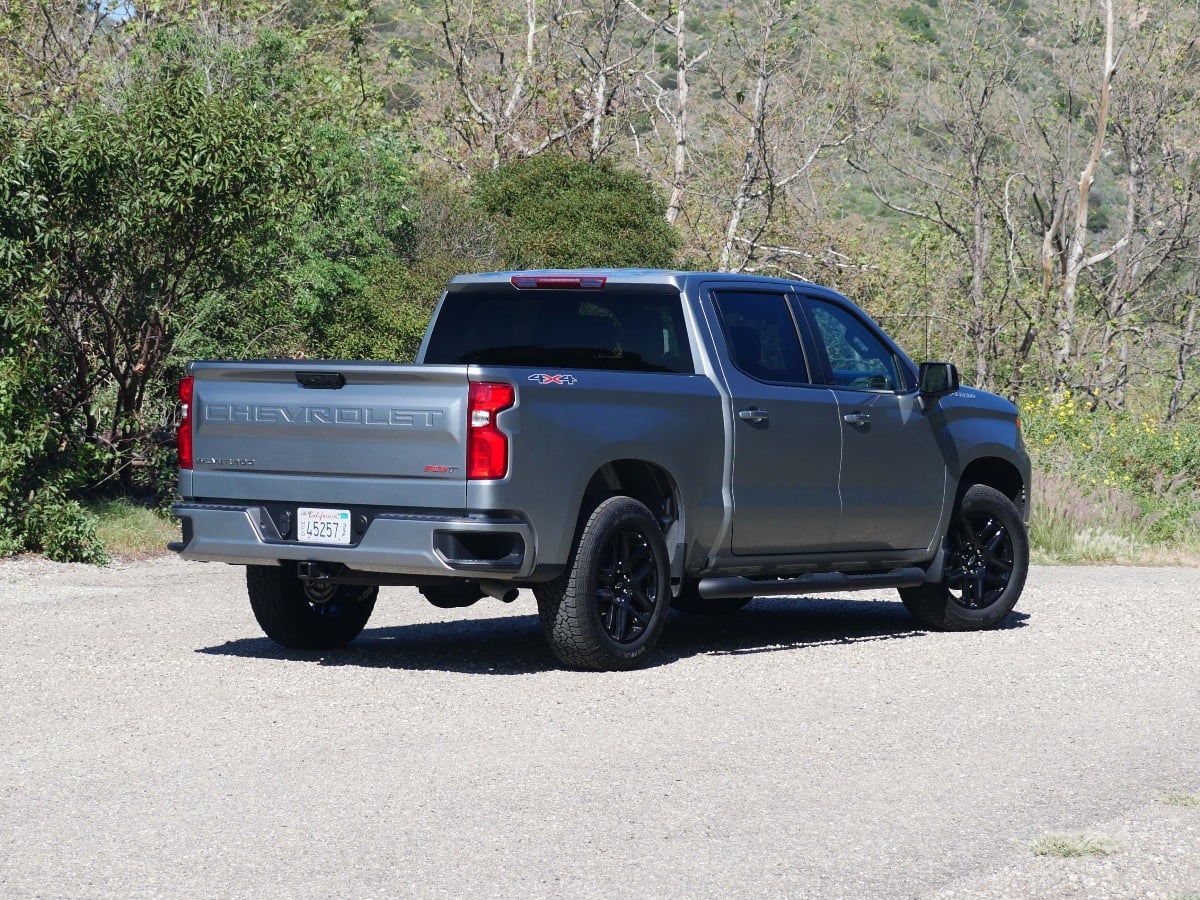
Photo: James Riswick
The TurboMax engine is a turbocharged 2.7-liter four-cylinder producing 310 horsepower and 430 pound-feet of torque.
Fuel economy does not match that of the 3.0-liter diesel engine, but you also do not have to fill it with diesel. EPA-estimated fuel economy for the RST with the TurboMax and 4WD is 18 mpg combined. I matched that on my 83-mile truck evaluation route. The Silverado’s V8 engines can manage at best 17 mpg.
So, sticking with the TurboMax is not exactly a fuel economy windfall, but it is certainly more than capable of moving this full-size truck with authority. It actually has 47 more pound-feet of torque than the 5.3-liter V8 and has half as many cylinders to lug around.
Performance is not the TurboMax’s issue. Refinement is. It very much sounds like a four-cylinder, and not in a good way, unlike the one in a Ford Ranger or Bronco. It sounds rough and gravelly, and there is too much vibration, especially at the low rpm the transmission remains on while cruising on the highway.
Speaking of the eight-speed automatic transmission, it upshifts too quickly, especially on long highway grades. The constant up-down-up-down of gear changes got old. Although selecting Sport mode tended to hold a lower gear longer, driving up a long highway grade is not what I would consider sporty driving, and I have a hard time imagining many owners would think to engage Sport … or even know it exists in the first place.
Needless to say, I think opting for one of the V8s is a better bet, especially given their minor fuel economy penalty. The 6.2-liter, in particular, is a night-and-day difference. It is much smoother and quieter … at least until you lay into it, at which point it sounds far cooler. That said, I think the ultra-smooth, torque-rich turbo six-cylinders offered by Ford and Ram are even better.
Beyond the engines, the Silverado’s steering once again impressed me with its precision and hefty, reassuring weighting. I appreciated its solid on center feel on the highway. The Silverado ensures you always feel in control.
I also appreciated that the RST Select package’s 20-inch wheels and all-terrain tires did not add much harshness over bumps, unlike other wheel and tire packages. However, like other Silverados I have driven, this one still had far more wiggling and jiggling over bumps than the Ram 1500 or Ford F-150. Even the F-150 Lobo, with its lowered suspension and 22-inch wheels, had a better ride than this RST.
The Silverado does offer an adaptive suspension that smooths things out considerably, but it is an option reserved for the top-of-the-line High Country. Even then, I still think Ford and Ram have it beat.
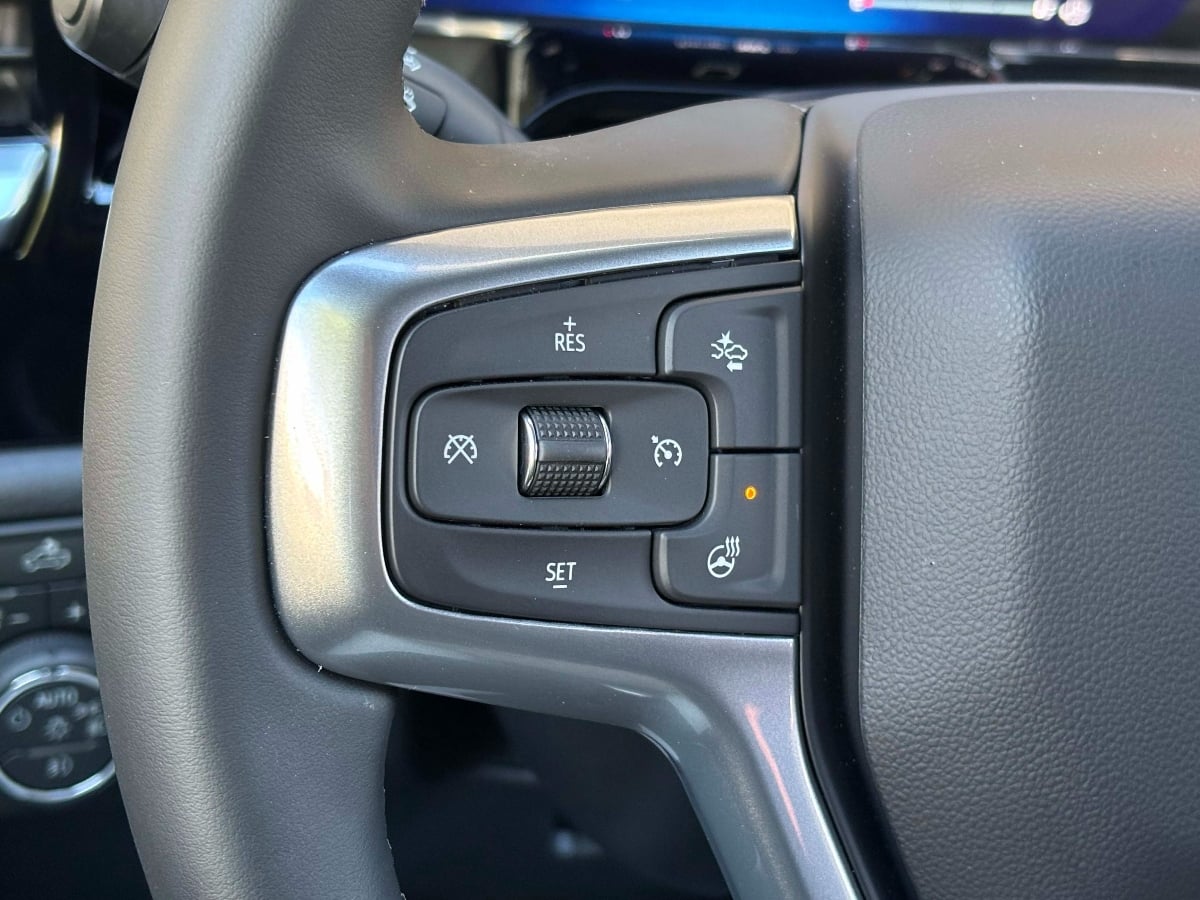
Photo: James Riswick
The Silverado comes standard with the Chevy Safety Assist suite of driver assistance technologies, which does not include as many features as Ford’s. It includes:
Available on most trims but not included on my test truck:
GM’s Super Cruise hands-free driver assistance system is exclusive to the top High Country trim, whereas Ford’s equivalent, BlueCruise, is more widely available.
Since my RST only came with the standard features, I did not have much to test, but I can say the lane keeping system was unsophisticated and intrusive. It kept turning for me on a winding mountain road, which made it feel like a ghost driver possessed the truck. No thanks. The lane keeping systems in other trucks are better.
The Silverado 1500 crew cab also received iffy safety ratings from the Insurance Institute for Highway Safety (IIHS), including Marginal (second worst) and Poor (worst) scores in frontal impact tests. In the side impact test, the Silverado 1500 rated second best—Acceptable. Even the headlights received a Poor rating. The Ram 1500 and Ford F-150 have better, though not perfect, scores.
According to the JD Power 2026 Initial Quality Study (IQS), the Ford F-150 ranks highest in the Large Light Duty Pickup segment, with the Chevrolet Silverado 1500 and Toyota Tundra ranked second and third, respectively.
According to the JD Power 2025 Automotive Performance, Execution and Layout (APEAL) Study, the GMC Hummer EV ranks highest in the Large Light Duty Pickup segment.
Other 2026 Silverado 1500 competitors include the GMC Sierra 1500, Ram 1500, and the Rivian R1T.
Those crash-test scores should probably give you pause about the Silverado, but that is just one of many areas where Chevy falls short of Ram and Ford. Even when looking at individual elements like the TurboMax engine or the six-passenger cabin, it does not shine. This is a truck in need of an update.
James Riswick has been testing and reviewing cars since 2007, serving as an editor at Edmunds and Autoblog. In addition to jdpower.com, he has also contributed to Autotrader, Autoguide Magazine, Auto Express, Capital One Auto Navigator, Car and Driver, and Hagerty. He resides in Southern California and owns a 1998 BMW Z3, a 2013 Mercedes-Benz E350 Wagon, and a 2025 Cadillac Optiq.