See answers to common EV questions, tax incentives, charging maps & more.
Explore EV
14 - 22
18 - 25
325 - 720
10 speed, Automatic w/OD
Regular Gasoline V-8, Twin Turbo Gas/Electric V-6, Twin Turbo Regular Gasoline V-6
Four Wheel Drive, Rear Wheel Drive
It is time to pull the handle on the Ford F-150 configuration slot machine and review a different set of key elements of this full-size pickup. I had previously tested a modestly equipped STX with the V8 engine and the Lobo “street truck” package. This time, it is something very different: a Lariat near-luxury trim with the PowerBoost hybrid engine and several noteworthy features and options, including the Pro Access Tailgate and BlueCruise hands-free driving. Let’s take a closer look.
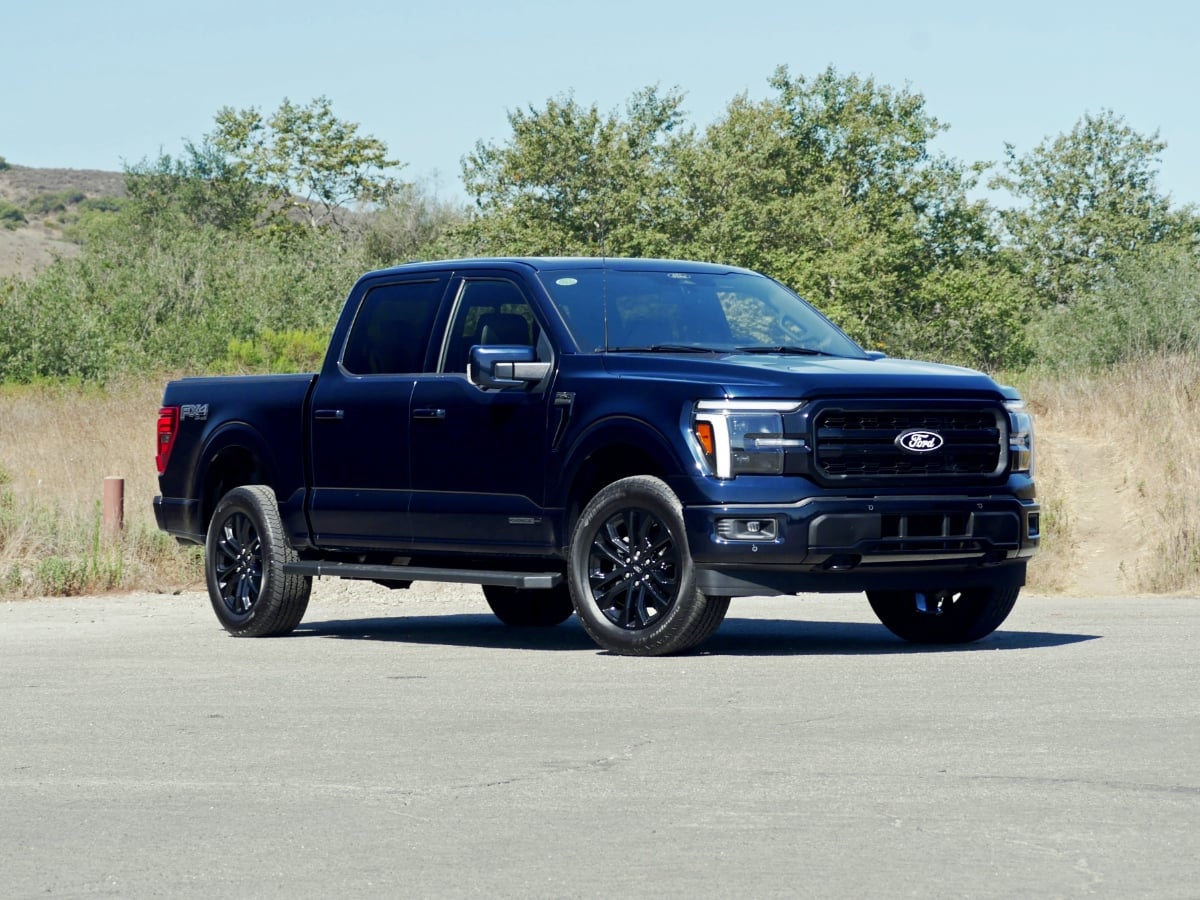
Photo: James Riswick
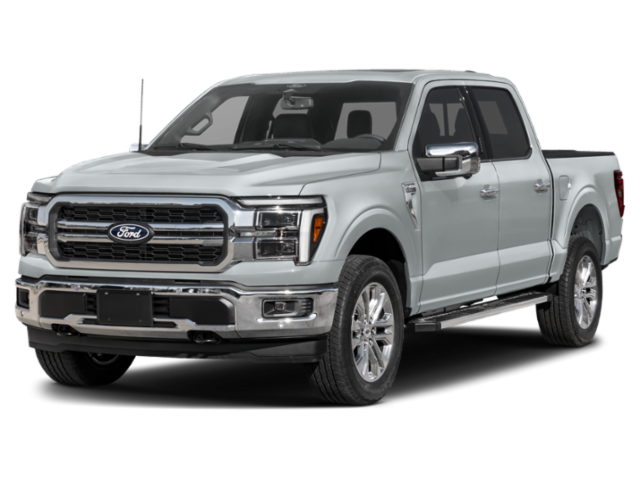
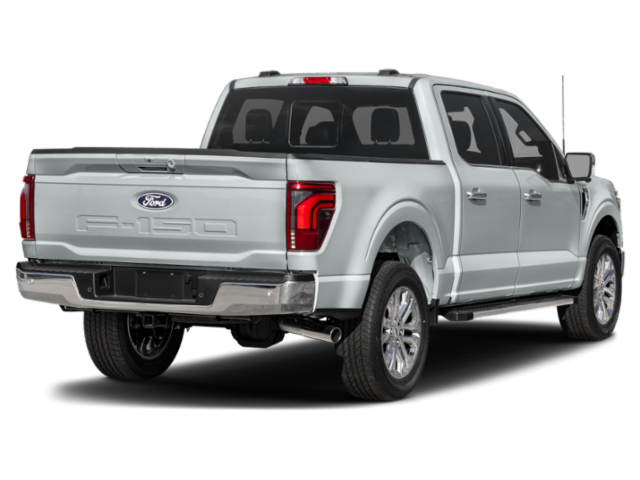
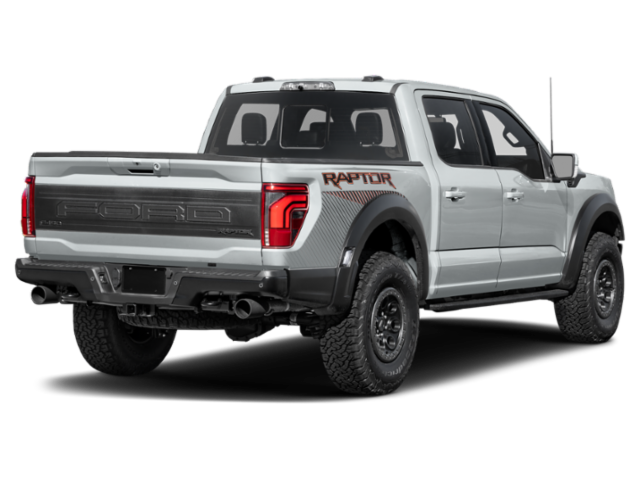
The 2026 Ford F-150 is available in regular, extended (Super Cab), and crew (SuperCrew) cab styles; three bed lengths; six engines; and eight trim levels: XL, STX, XLT, Lariat, King Ranch, Platinum, Tremor, and Raptor. Not all combinations are available. Base prices range from about $40,000 to around $82,000, including the destination charge.
For this 2026 F-150 review, Ford provided a test vehicle equipped with Lariat trim and the following significant options:
The test vehicle’s manufacturer suggested retail price (MSRP) was $81,630, including the $2,795 destination charge. The price does not reflect any current rebates, incentives, or price adjustments since Ford manufactured the test vehicle in Dearborn, Michigan. The F-150 is also built near Kansas City, Missouri.
According to verified owners, the F-150 earns an award as the highest-ranked model in its segment in the 2026 Initial Quality Study (IQS).
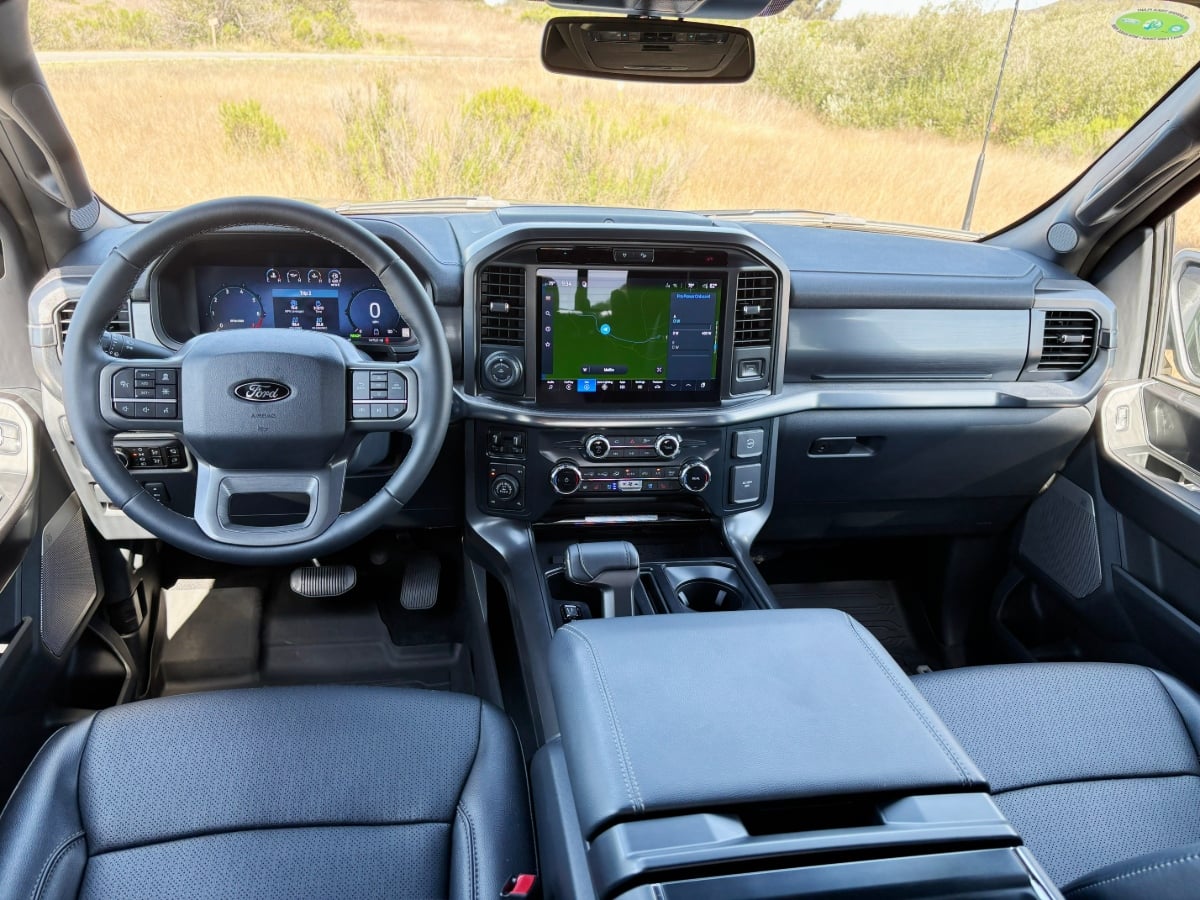
Photo: James Riswick
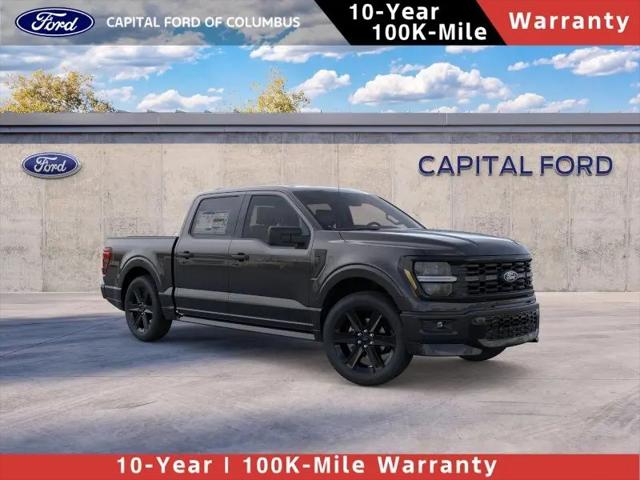
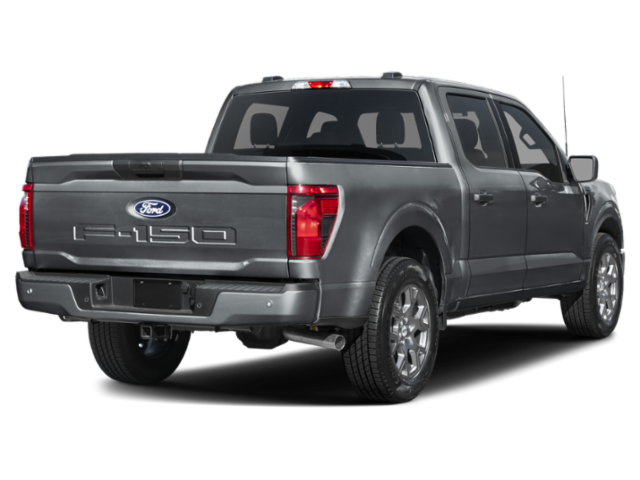
The test truck’s black appearance package replaces the Lariat’s standard chrome grille, trim, and silver 18-inch wheels with black and body-color trim pieces and 20-inch black wheels wrapped in Hankook Dynapro AT2 all-terrain tires. Paired with extra-dark Antimatter Blue paint, the truck looks classy. It is not trying to be macho or fancy. It is just cool.
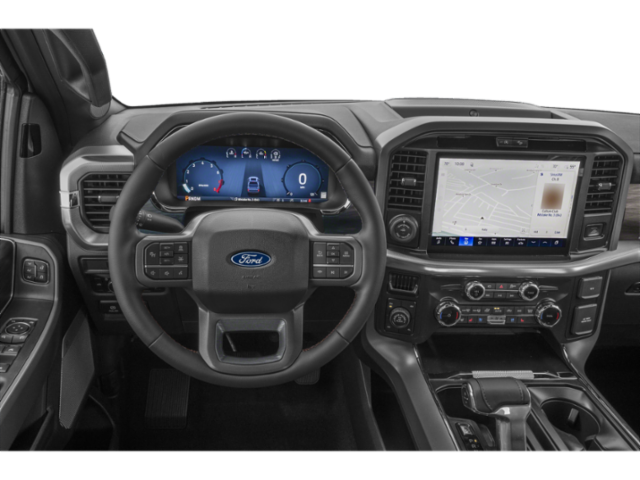
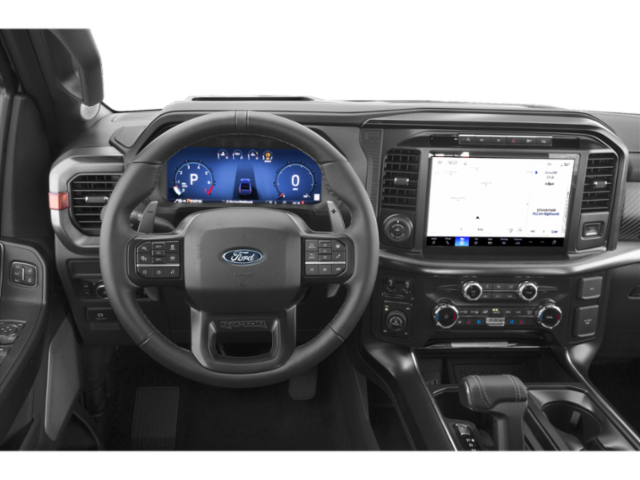
The interior does not quite have the same classy vibe. It is pretty plain bordering on ugly. The giant TV-like touchscreen in the middle of the dashboard does it no favors. However, the Lariat does get some nicer trim pieces than the all-plastic cabin of the STX/Lobo I tested earlier this year. There is padded, stitched simulated leather on the dashboard, an interesting denim-look vinyl on the doors, and ActiveX simulated leather covering the seats that does a good job of mimicking the real deal.
It is acceptable quality for the segment, but I would not call it luxurious. For that, you need to step up to the King Ranch, though that could be considered a tad garish inside, or the top-of-the-line two-tone Platinum Plus cabin.
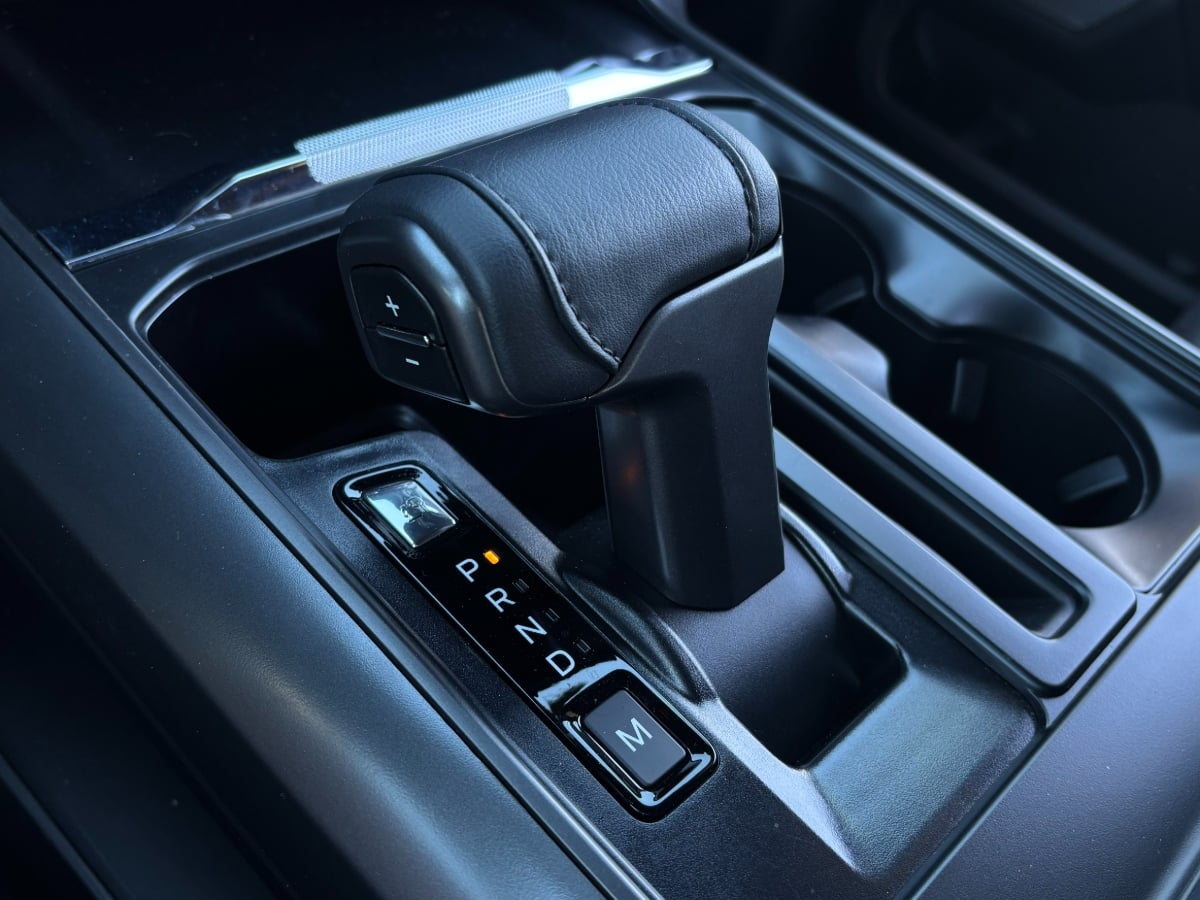
Photo: James Riswick
One key functional difference from the STX/Lobo I previously tested is the shifter. Lower trims have a column shifter that moves between gears with buttery smoothness. It also keeps the center console entirely free for storage, including a deep bin that gets filled with an electronic console shifter in the Lariat. Frankly, I do not like the console shifter. It is too far rearward, particularly when in Drive.
Furthermore, both my test trucks had the Mobile Office package, which includes a center armrest that flips forward and over to create a long, flat work surface. To make that possible, you have to motor the console shifter into that deep bin. It is needlessly complicated, especially since the column shifter is so good and offers more storage. The rest of the storage is just as convenient, with great cupholders and a deep phone bin that includes wireless smartphone charging.
As for cabin controls, they are refreshingly straightforward, with physical knobs and buttons for the climate controls rather than being baked into the touchscreen. That includes separate buttons for the heated and ventilated front seats.
In terms of seat comfort, the Lariat offers abundant power seat adjustments, power-adjustable pedals, and a far-telescoping steering wheel. The seat itself, however, as with other F-150s I have tested, was oddly pinchy on my lower back. I got used to it, but it is strange to find such atypical seats in a best-selling model.
As with other crew cab trucks, the back seat is spacious in the Lariat’s standard SuperCrew configuration. It is also comfortable, and there is a storage bin under the 60/40-split seat bottom, with sides that fold down to create a flat rear floor. Unfortunately, the F-150’s rear child seat anchor system is not intuitive, and its fabric straps are far less confidence-inspiring than the typical metal hooks. Reading the manual is more important than ever.
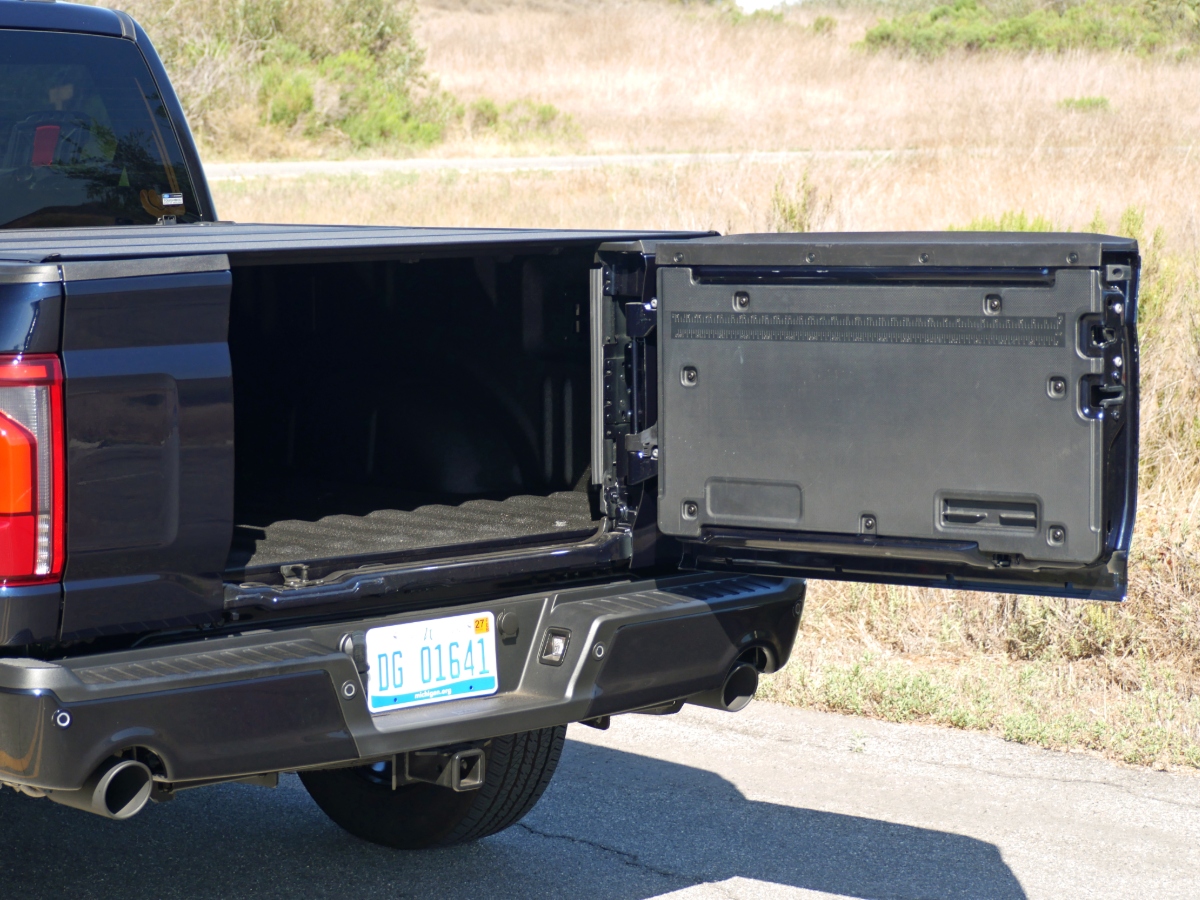
Photo: James Riswick
As for the bed, the Lariat test truck offered several options that improved its utility. The spray-in bedliner and multi-panel rigid tonneau cover are common. It also included the Pro Access Tailgate, which you can power up and down or swing its middle segment out to make it easier to climb into the bed using the license-plate bumper cutout. Additionally, the truck was equipped with the 7.2-kW Pro Power Onboard system, which has five electrical outlets, including one compatible with 240 volts. Whether for powering tools or tailgate parties, it is a great, unique feature.
The maximum payload for the SuperCrew with a 5.5-foot bed, four-wheel drive (4WD), and the PowerBoost hybrid powertrain was 1,740 pounds. The V8 and the non-hybrid 3.5-liter V6 can haul more.
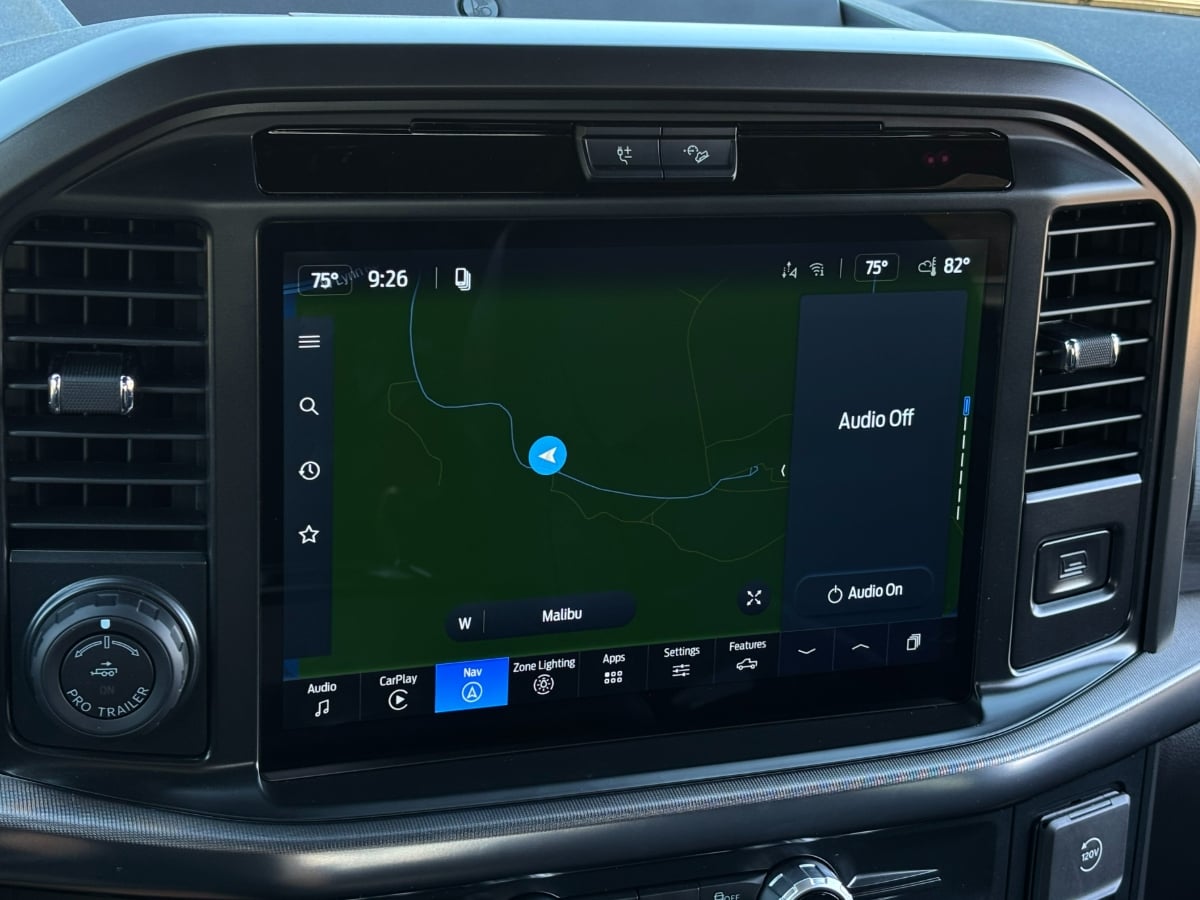
Photo: James Riswick
The F-150’s standard Sync 4 touchscreen infotainment system is included on every trim; there is no rinky-dink base screen or extra large upgrade. The Lariat also has a 12-inch digital instrument panel, as does the lower XLT trim, which is optional on the STX. A head-up display is available but was not included in my test truck. Standard equipment includes:
The main differences between this Lariat’s infotainment offerings and those of the lower STX trim I tested previously were the useful integrated navigation system and an unremarkable B&O premium sound system. Otherwise, it is the same user friendly touchscreen that is easy to read and well laid out. The radio controls are not obtuse; it works well with Apple CarPlay, and I like its split-screen functionality that can simultaneously show the navigation map and audio information.
I think every full-size truck has a great infotainment system (except the GM trucks’ ancient base system), but the F-150’s is ultimately my favorite of the bunch, even if the right-hand side is a little hard to reach.
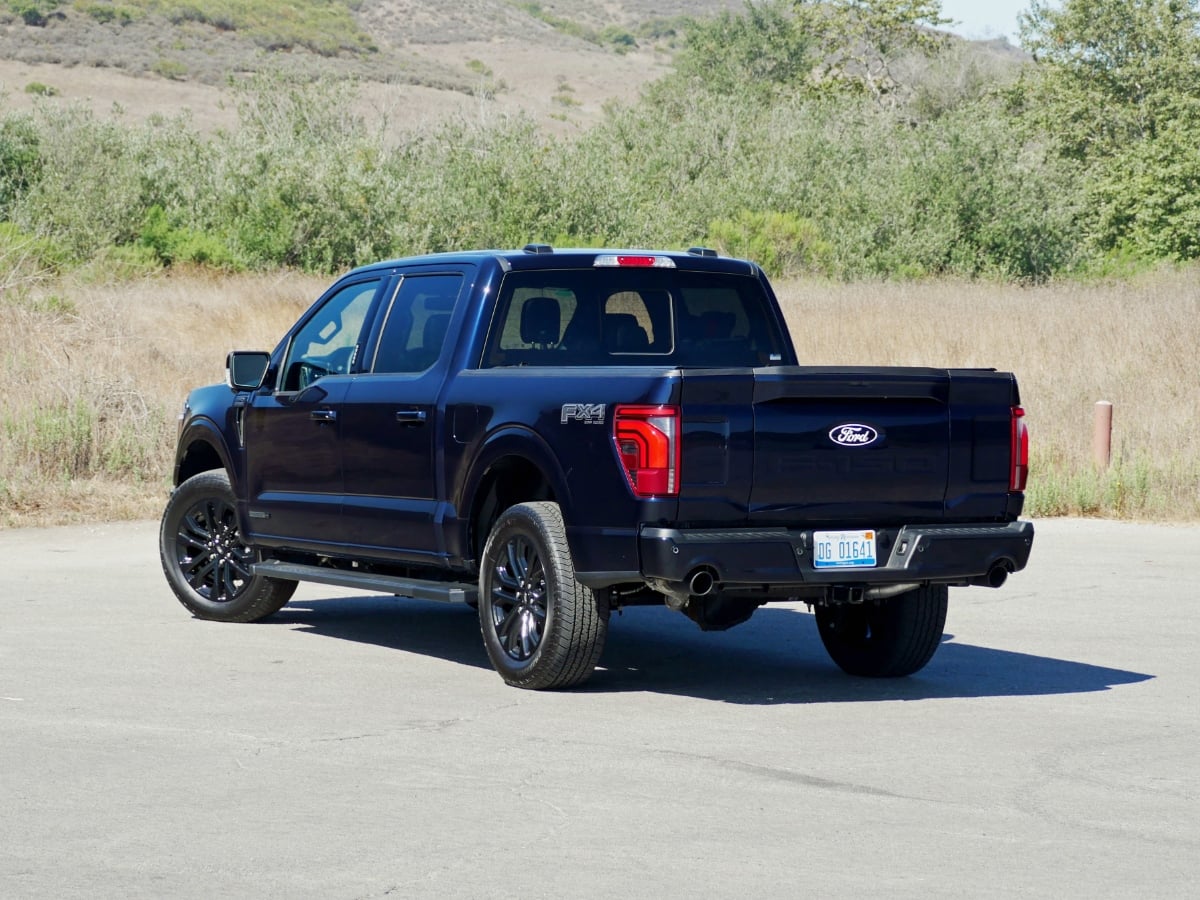
Photo: James Riswick
My Lariat test truck came with the PowerBoost hybrid engine option, which pairs a twin-turbocharged V6 with an electric motor integrated into the 10-speed automatic transmission. It produces 420 horsepower and 570 pound-feet of torque, making it the most powerful and torque-rich engine in the F-150 lineup, aside from those in the high-performance Raptor.
EPA-estimated fuel economy is 23 mpg combined with 4WD. That is 3 mpg better than the F-150’s base 2.7-liter V6. I averaged 20.2 mpg on my 83-mile truck evaluation route, with 22.4 mpg on the 40-mile highway segment. To be fair, heavier-than-normal traffic likely lowered the highway figure.
Despite being disappointing compared with the EPA estimates, the fuel consumption is still far better than the 18.2 mpg I got on the same test route with the Chevrolet Silverado 1500’s base four-cylinder engine. My overall fuel economy dipped to 19.3 mpg after an additional 150 miles of suburban and highway driving; I got a dismal 15.3 mpg in similar conditions with the F-150’s 5.0-liter V8.
Besides its good fuel economy, the PowerBoost is still a great performance option. The combination of a turbo V6 and an electric motor delivers buttery-smooth power and immediate torque that the V8 or even the non-hybrid 3.5-liter twin-turbo V6 cannot match. The only way the V8 is superior is in terms of payload and noise, but at least the PowerBoost still sounds pretty good, with a deep snarl when accelerating hard.
The rest of the F-150 Lariat’s driving experience is not quite as impressive as the PowerBoost by itself, but there is still a lot to like. The ride quality is especially good for a full-size truck. The impact harshness and jiggling over sharp bumps are far less than in a Chevy Silverado or a Toyota Tundra, and it was only really noticeable when I was trying to press a touchscreen button precisely or when my son’s child seat would rattle.
Then there is the Black Appearance package’s seemingly unusual all-terrain tires. The Hankook Dynapro AT4s are technically all-terrains, but their tread looks more like all-season tires, and they sure behave like it. There is none of the tire roar or rock-hard reactions to bumps that are typical of all-terrains, as I experienced one week prior in the Ford Explorer Tremor. For on-road driving, they are great tires. Unfortunately, I was not able to test them off-road.
The overall result is a very refined truck with the added benefit of precise, confidence-inspiring steering and comparatively controlled body motions around corners. It is a full-size truck, so it is still ponderous on winding roads, but it provides sufficient control.
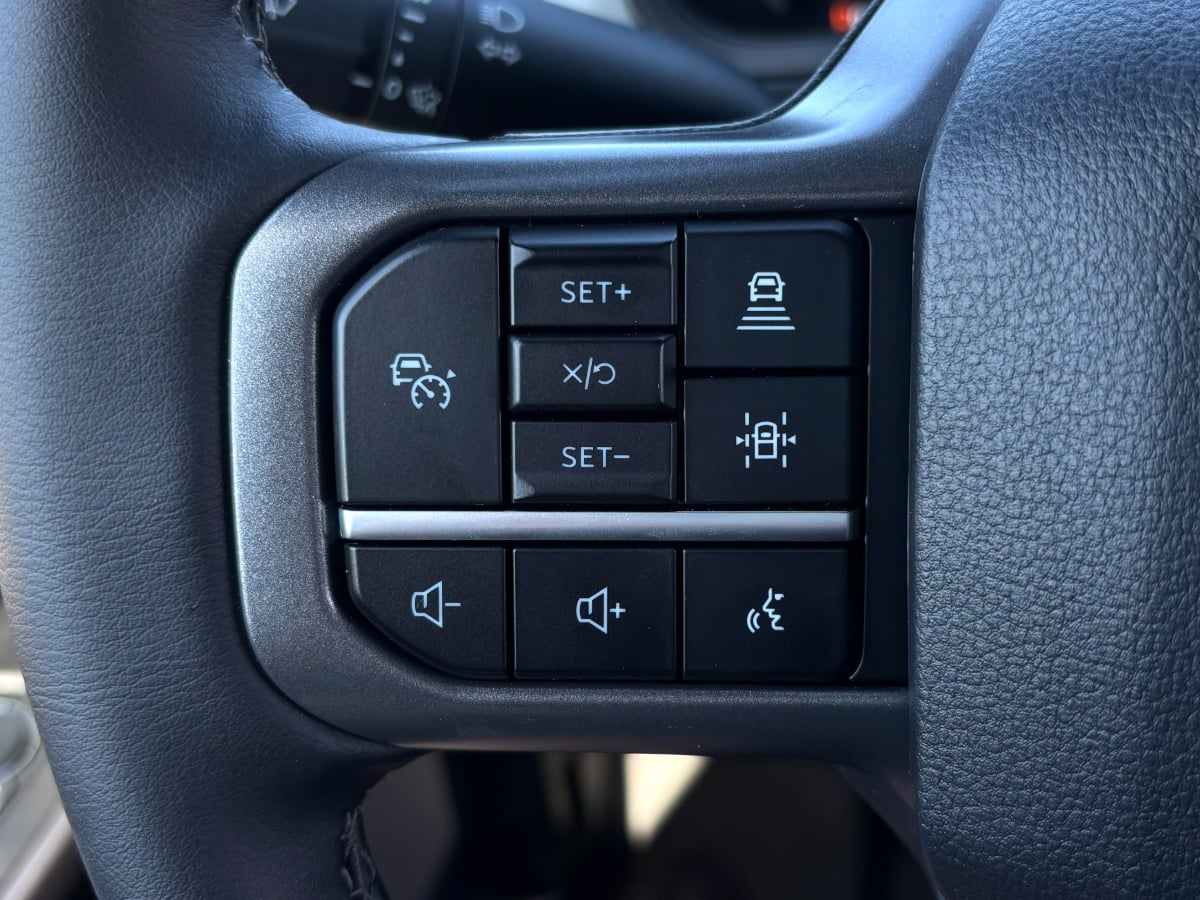
Photo: James Riswick
The F-150 Lariat comes standard with the Ford Co-Pilot360 Assist 2.0 suite of advanced driver assistance systems (ADAS). The suite includes:
All but the last four items are standard even on the base XL and the lower STX trim I previously tested. They also performed just as well in both trucks I tested. Indeed, I have found these systems to be among the best performing in the industry.
I particularly like that the systems let you customize the sensitivity and warning type. For example, I could set the lane departure system to buzz the wheel and not take action. This is a great way to ensure they do their jobs without annoying drivers and therefore forcing the latter to turn them off. The lane keeping system is also quite good without being overly obtrusive, unlike the Chevy Silverado, but it is easily shut off with a steering wheel button.
While I am always impressed with Ford’s standard adaptive cruise control and lane centering systems, my test truck had the BlueCruise hands-free highway driving assistance system.
As long as you are looking at the road (it monitors your eyes to make sure you are), it will steer, accelerate, and brake for you on the highway. It does a good job, and I trust it. Specifically, I noticed that the system maintained a longer minimum distance from vehicles ahead than a BlueCruise-equipped Ford Explorer I drove the previous week. It seems to be a good idea for a big, heavy truck.
It is also worth noting that BlueCruise is more widely available across the F-150 lineup than GM’s similar Super Cruise system, which is exclusive to the Silverado and GMC Sierra's top trims.
The National Highway Traffic Safety Administration (NHTSA) gave the 2026 F-150 SuperCrew a five-star overall crash rating, the highest possible. The Insurance Institute for Highway Safety (IIHS) was less impressed, as an updated “moderate overlap front” test yielded the worst possible Poor result. The frontal crash prevention system also received a Poor rating. Other crashworthiness and crash avoidance categories earned the best possible Good rating.
According to the 2026 IQS, the Ford F-150 ranks highest in the Large Light Duty Pickup segment, with the Chevrolet Silverado 1500 and Toyota Tundra ranked second and third, respectively.
According to the JD Power 2026 Automotive Performance, Execution and Layout (APEAL) Study, the Ram 1500 ranks highest in the Large Light Duty Pickup segment, with the Toyota Tundra and Ford F-150 ranked second and third, respectively.
Other 2026 F-150 competitors include the GMC Sierra 1500 and Rivian R1T.
Price is obviously a major factor here, but my F-150 test truck had a chef’s kiss selection of options that made it a full-size pickup that would be hard to beat. The PowerBoost Hybrid delivers a best-of-both-worlds blend of performance and fuel economy. The options list included unique and useful features like Pro Power Onboard, the Pro Access Tailgate, and the center console workstation. It even looked cool and was notably refined to drive. What a great truck.
James Riswick has been testing and reviewing cars since 2007 and has served as an editor at Edmunds and Autoblog. In addition to jdpower.com, he has also contributed to Autotrader, Autoguide Magazine, Auto Express, Capital One Auto Navigator, Car and Driver, and Hagerty. He resides in Southern California and owns a 1998 BMW Z3, a 2013 Mercedes-Benz E350 Wagon, and a 2025 Cadillac Optiq.