87 - 128
167 - 601
1 speed, Automatic
Electric
All Wheel Drive, Rear Wheel Drive
Kia builds capable, sophisticated electric vehicles (EVs), and assembles them in the United States.
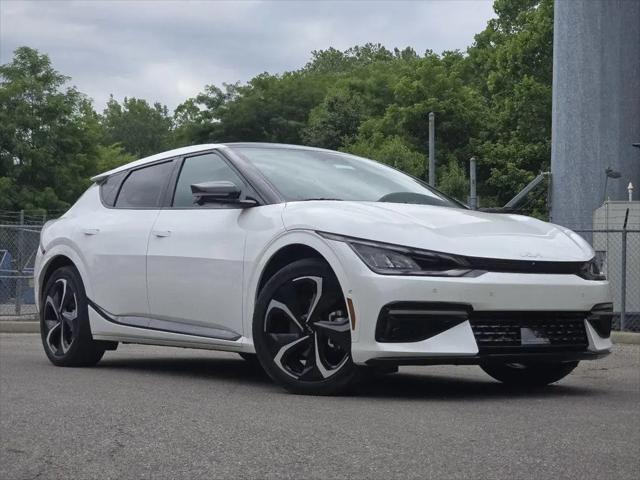
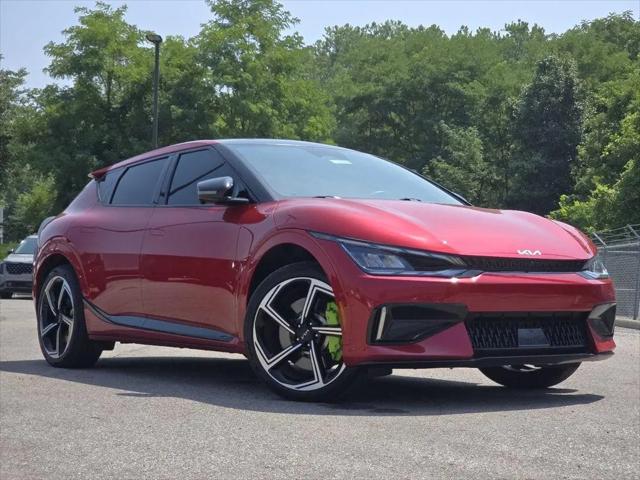
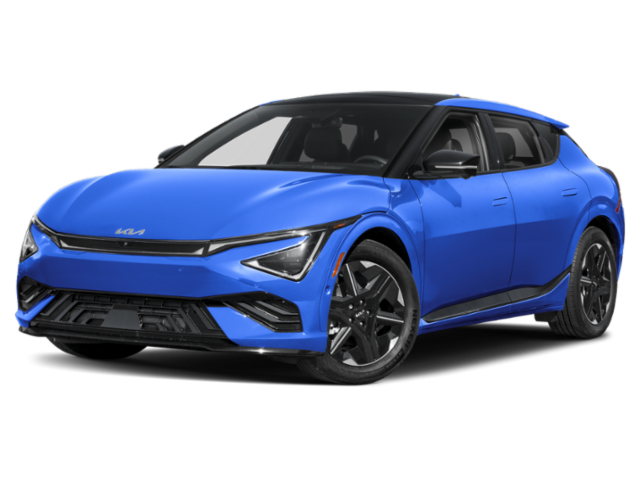
The 2025 Kia EV6 is a two-row crossover that is more like a sport wagon than an SUV, while the EV9 is a three-row crossover that takes the form of a traditional, family friendly SUV. They offer more than 300 miles of range, Tesla Supercharger access, and ultra fast DC charging capability that can bring the battery to an 80-percent charge in about the time it takes to catch up on email or social media.

Photo: Christian Wardlaw
For the 2025 model year, the EV6 is better than ever. Kia has increased its battery capacity for more range, added new technology, revised the styling, and updated the interior. The North American Charging Standard (NACS) port allowing for Supercharger use is new, and moves to a left rear fender location on most EV6 models. Kia also began building the EV6 at its West Point, Georgia, plant to ensure continued eligibility for the now expired federal EV tax credit. Oops.
Five versions of the 2025 EV6 are available. The most affordable one is the EV6 Light, equipped with a standard range battery and a single motor powering the rear wheels for $44,395, including the destination charge. The Light trim level also offers a long range battery and a more powerful motor. Next up are the EV6 Wind and GT-Line featuring the long range battery and single motor rear-wheel drive (RWD) or dual motor all-wheel drive (AWD).
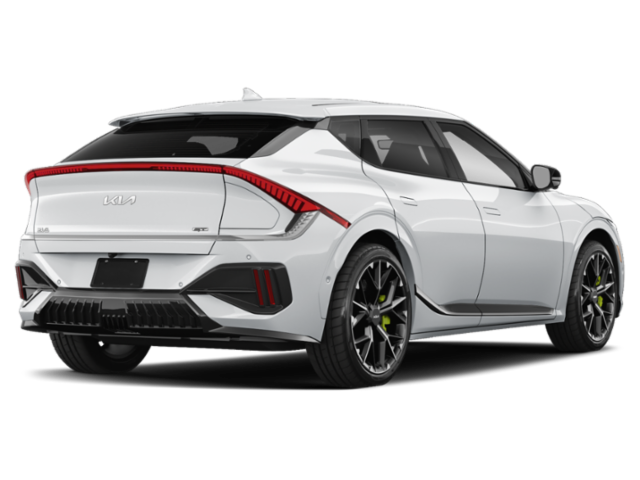
A powerful EV6 GT performance trim sits at the top of the lineup at $65,685, including destination. It supplies 601 horsepower and 545 pound-feet of torque from its dual motor AWD layout, increasing to 641 hp and 568 pound-feet when the driver puts the EV6 into launch mode. For the 2025 model year, it adds a new Virtual Gear Shift feature that simulates shifts through motor torque adjustments, sound effects, and visual indicators.
This review is not about the EV6 GT. Kia provided a test vehicle equipped with GT-Line trim and the following options:
The test vehicle's manufacturer suggested retail price (MSRP) was $60,740, including the $1,475 destination charge to ship the electric SUV from the West Point, Georgia, assembly plant to a local dealership. The price does not reflect any current rebates, incentives, or price adjustments since Kia manufactured the test vehicle.
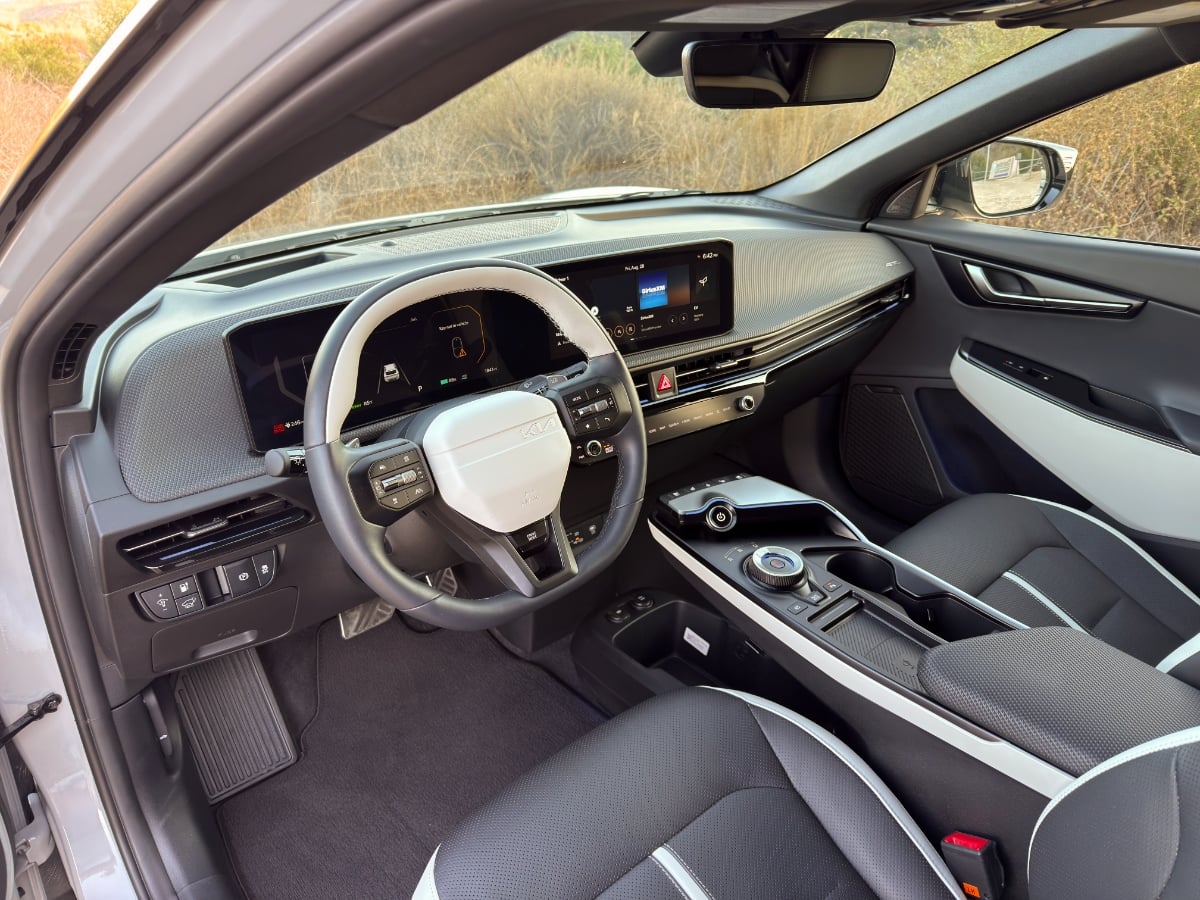
Photo: Christian Wardlaw
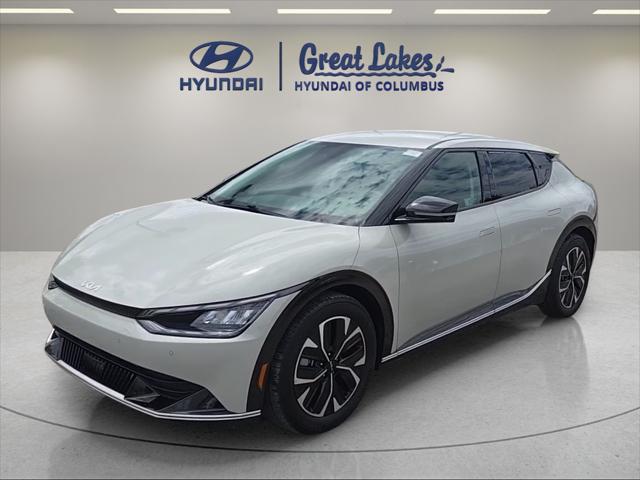
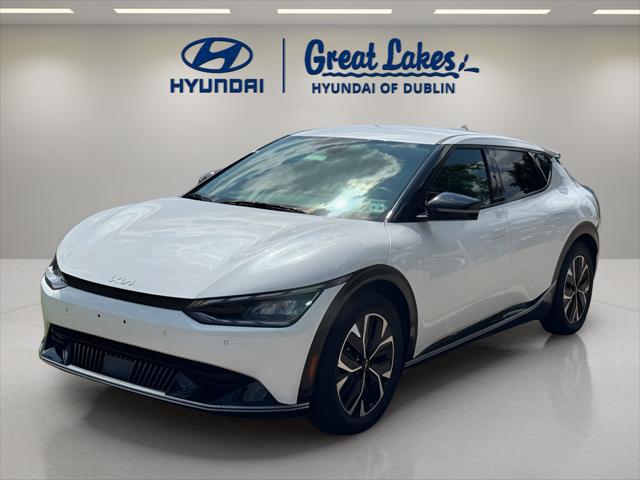
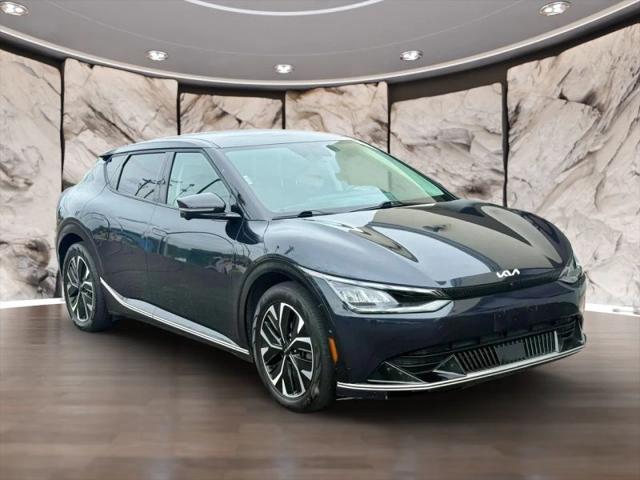
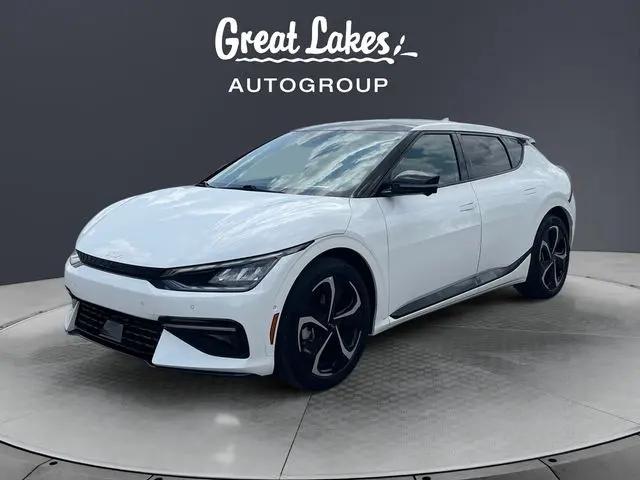
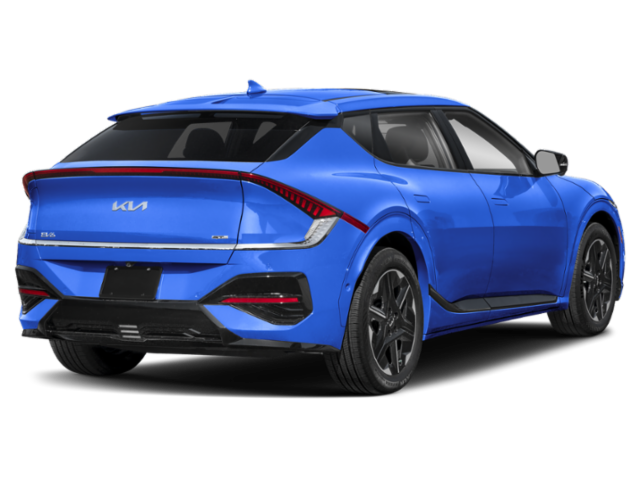
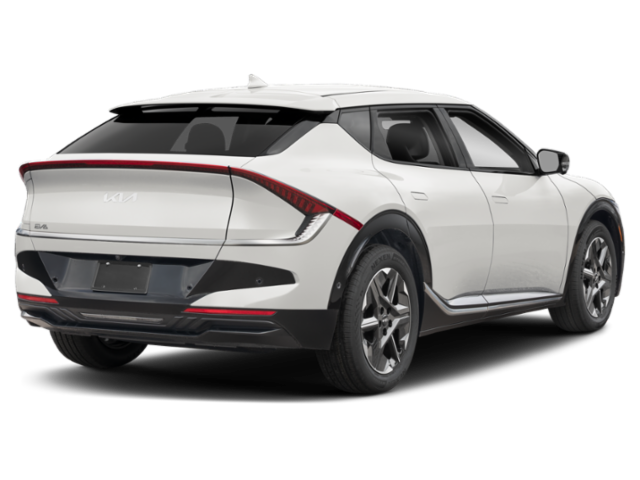
The most dramatic updates to the 2025 EV6's styling are evident in front, where a new Star Map lighting motif and restyled fascia clean up the EV's appearance. Similar, but less obvious, tweaks characterize the profile and rear of the vehicle, and new wheel designs round out the changes.
With a tall floor located over the battery pack and a low-slung roofline, entering and exiting the EV6 is a little tricky. The updated interior also feels snug, especially if you prefer to sit taller behind the new D-shaped steering wheel. Though the front seats were comfortable and equipped with heating and ventilation in the test vehicle, it took me a couple of days to find an acceptable driving position.
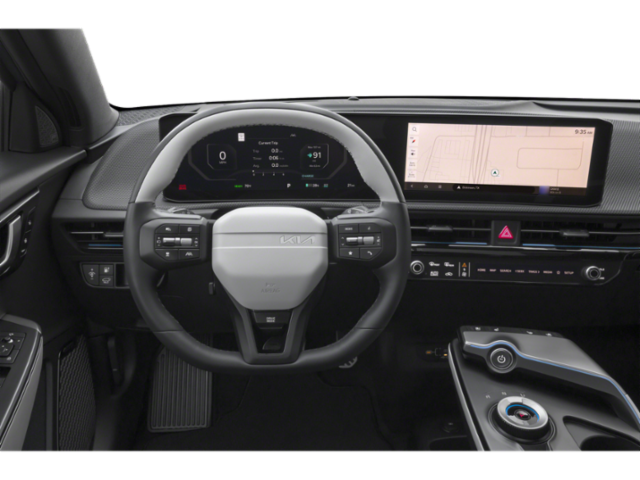
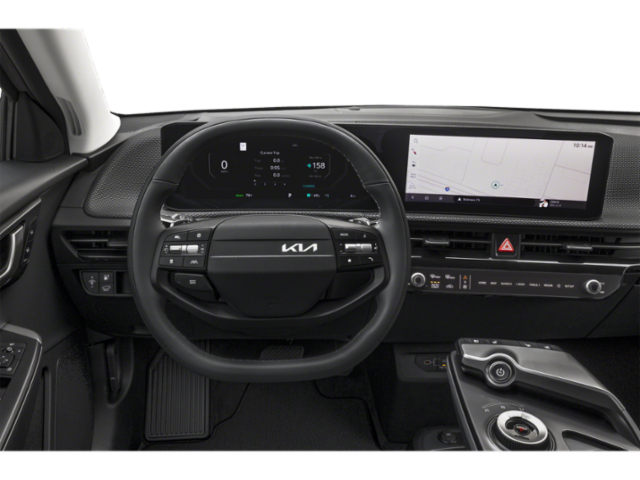
Kia provides two 12.3-inch screens within a single panoramic display for a modern interior appearance. A control panel under the center screen offers dual-mode functionality for climate and infotainment functions, and in the test vehicle, defaulted to the latter after adjusting the former. That resolves past frustrations with this design. A revised center console is new for 2025, and successfully blends futuristic style with plenty of practicality. The GT-Line's interior quality was impressive.
Rear passengers may find the foot room tight, but otherwise the back seat offers plenty of space and comfort on a supportive cushion and a properly angled backrest. My test vehicle had rear air conditioning vents, USB charging ports, and heated outboard seating positions.
A hands-free power liftgate is available for the EV6. Stand near the rear of the EV with the key fob, and it will open after a few seconds. This approach means you never need to waggle a foot under the bumper, as with most hands-free liftgate designs. The trade-off is that it can open inadvertently. Owners can turn this feature on or off as they prefer.
Behind the back seat, the EV6 offers up to 24.4 cubic feet of cargo space. However, if you want to keep your belongings under the cargo cover, it does not seem to provide more room than a typical sedan's trunk. Fold the rear seats down, however, and you can expand the space to 46.7 cubic feet.
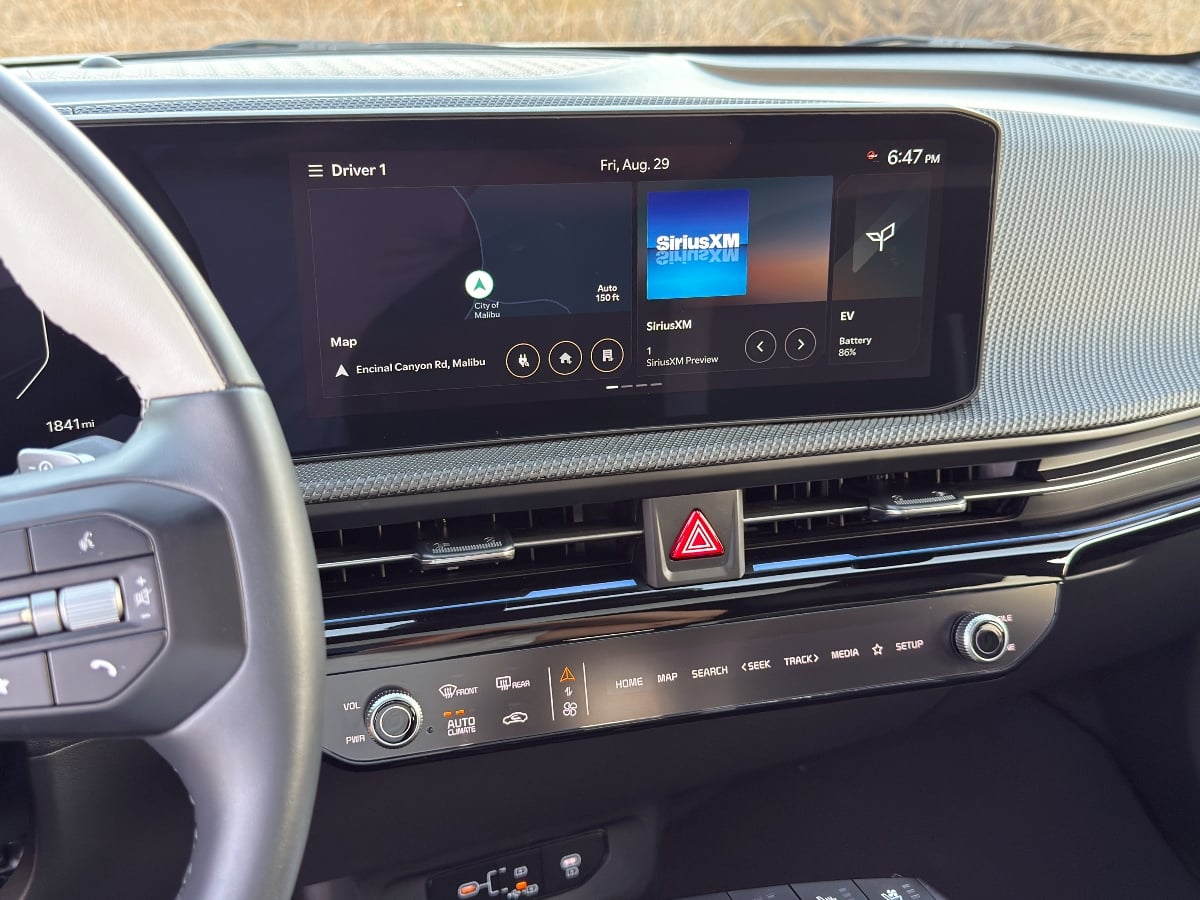
Photo: Christian Wardlaw
For the 2025 model year, the Kia EV6 upgrades to a new Connected Car Navigation Cockpit (ccNC) infotainment system with a standard 12.3-inch touchscreen. Highlights include over-the-air update capability, faster processing than the EV6's previous infotainment system, and access to a new Kia Connect store featuring digital features and services available at an extra cost. The graphics and overall system layout are also far more refined and sophisticated.
The new ccNC system includes:
Kia Connect includes a complimentary three-year subscription. Unfortunately, unless you activate it, the voice recognition system is nearly worthless. It was not active in the test car, so when I asked the digital voice assistant to "Find the nearest Starbucks," it replied, "Sorry, I didn't understand that."
After that abject failure, I switched to the wireless Apple CarPlay connectivity, which worked well during the one-week testing period. Siri had no trouble finding coffee or anything else I sought. Streaming Apple Music was no trouble, and the EV6 GT-Line's Meridian premium audio system produced satisfying sound.
While we are on the topic of technology, the 2025 EV6 features a new Digital Key 2.0 system that lets you use your smartphone as the vehicle's key without removing it from your pocket.

Photo: Christian Wardlaw
Kia offers two battery packs in the 2025 EV6. The base Light trim has a 63-kilowatt-hour (kWh) standard range pack, while other models have an 84-kWh long range pack. Both batteries are larger than before, providing minor improvements in maximum range and, with the larger pack, improved towing capacity to 2,700 pounds.
Every 2025 EV6 (except the performance-oriented GT) has a single electric motor propelling the rear wheels. In the Light, it provides 167 hp and 258 pound-feet of torque. Other versions of the EV6 make 225 hp and 258 pound-feet of torque. A dual motor AWD system is available, supplying 320 hp and 446 pound-feet. Not including the EV6 GT, range estimates vary from 237 to 319 miles.
Every EV6 is compatible with 350-kilowatt (kW) DC fast chargers that can bring the battery from 10 to 80 percent in 20 minutes. For 2025, the new NACS port is standard, with a CCS port adapter available as an option. The NACS port means the EV6 can use the extensive Tesla Supercharger network, but it is not quite that simple.
Early on a Sunday morning, I headed to the Tesla Supercharger nearest to my house. I downloaded the Tesla app, opened an account, added a payment method, and then searched for a way to activate the charger. Unfortunately, as it turns out, only selected Tesla Superchargers are approved for non-Tesla vehicle use, and I was not parked at one of them.
So, thinking I had seen a CCS adapter in the test car, I headed over to my local Electrify America charging station. But guess what? The doohickey in the EV6 was not a CCS adapter. Instead, it appeared to be a device related to the Kia's vehicle-to-load (V2L) power export capability. Fail Number Two.
By now, I had wasted quite a bit of time, and I was still several miles away from the closest Tesla Supercharger available to the Kia. My app said that the station was nearly full, even at the early hour. Grrrrr.
In my opinion, if you are going to get an EV, you should consider getting a 240-volt home charging station. It really is worth the extra expense to avoid the regular hassles of public charging.
Overall, I liked driving the Kia EV6 GT-Line AWD. It is quick, quiet, and remarkably composed, even more so in 2025 thanks to frame reinforcements for improved safety, revised steering, and additional sound-deadening materials. It has a firm, sporty ride and flat, stable handling. Drivers can also choose between four levels of brake regeneration. My favorite was Level 3, because I found the Level 4 one-pedal driving setting (i-Pedal Max) too aggressive.
But is this version of the EV6 fun? At first, yes, especially if you are unaccustomed to how EVs accelerate, ride, handle, stop, and sound. But after a while, those qualities become less unique, and at that point, the EV6 drives a lot like many other EVs. I have never driven the EV6 GT; I assume that one retains its fun factor over time.
According to the Environmental Protection Agency (EPA), the EV6 GT-Line AWD offers a maximum driving range of 270 miles and consumes 35 kWh of electricity per 100 miles of driving. During my evaluation, the Kia averaged 33.3 kWh/100 miles, proving more efficient than expected despite the mountainous route.
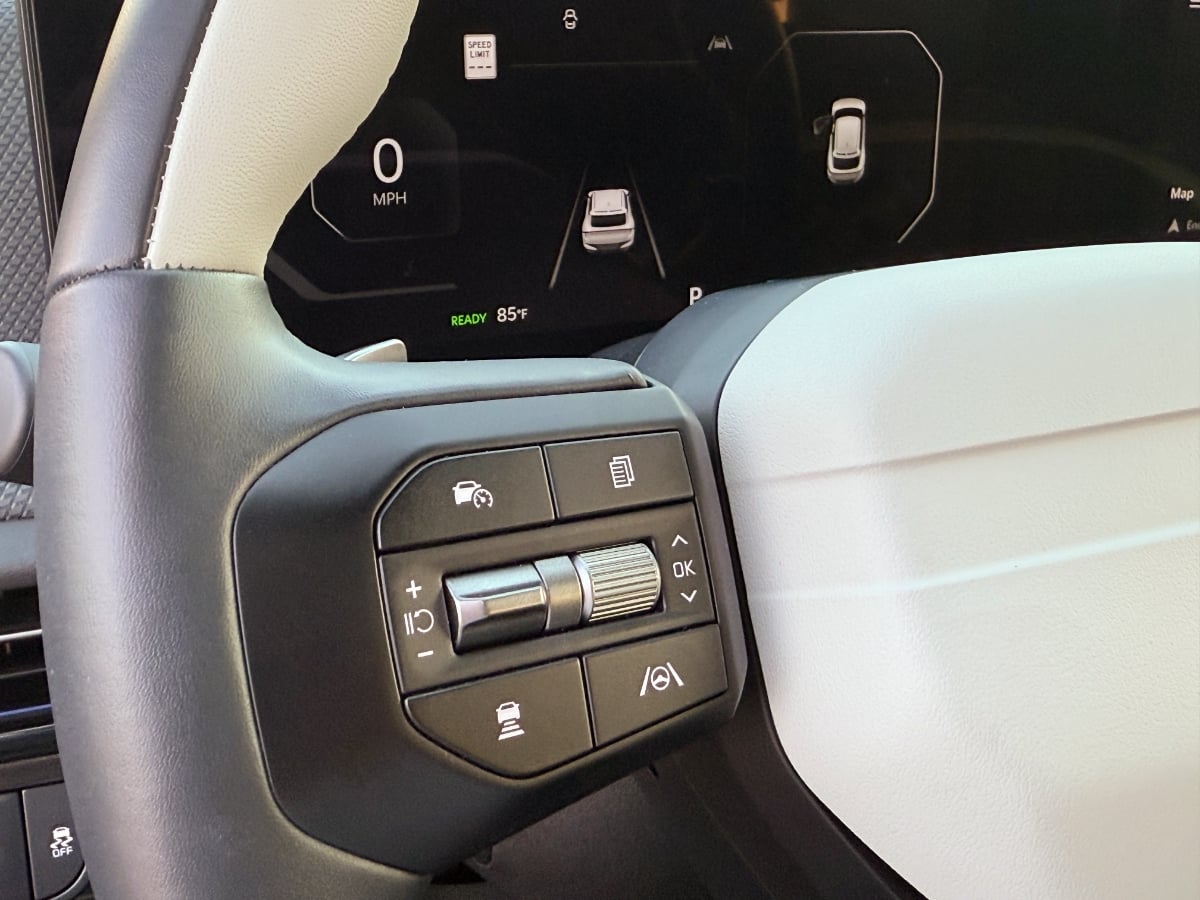
Photo: Christian Wardlaw
Kia offers a commendable list of standard advanced driver assistance systems (ADAS) on the 2025 EV6. They include:
As you move higher on the trim level ladder, the EV6 adds more ADAS, such as:
That self-parking system is called Remote Smart Parking Assist 2. To use it, step out of the EV6 and, using the key fob, direct the vehicle to park in or exit parallel, perpendicular, or diagonal parking spaces. Additionally, it can pull into or reverse out of a garage space. This technology is new for 2025.
My test car had Highway Driving Assist 2. It combines adaptive cruise control, lane centering assistance, and lane change assistance. During my evaluation, it worked exceptionally well and required only a light touch of my fingers on the steering wheel to remain engaged. It is not a hands-free technology like General Motors’ Super Cruise or Ford’ BlueCruise, but it is just one rung down from those systems.
Another new feature for 2025 is the addition of sensors to help prevent collisions. This upgrade is not necessarily an improvement. On one occasion, when reversing from a driveway, the rear cross-traffic warning system alerted me to an approaching vehicle. I waited, and when it was nearly out of view on the reversing camera, I continued to back into the street. Instead, the EV6 slammed on the brakes.
On another occasion, while dropping off my child at school, I waited for the left through-traffic lane to clear and attempted to enter it from the right drop-off lane after the last car passed me. Once again, the EV6 had other ideas and slammed on the brakes. This time, the parent behind me almost hit the back of the Kia. Needless to say, as soon I returned home, I turned off as much of this feature as I could.
If a collision occurs anyway, the National Highway Traffic Safety Administration (NHTSA) suggests that the EV6 will do a good job of protecting its occupants. It earns top five-star ratings in nearly every assessment. The Insurance Institute for Highway Safety (IIHS) is less enthusiastic, giving the EV6 a mix of Good, Acceptable, and Marginal ratings.
According to the JD Power 2025 Initial Quality Study (IQS), the Ford Escape ranks highest in the Compact SUV segment. The Jeep Wrangler and the Nissan Rogue are the next highest-ranked models.
According to the JD Power 2025 Automotive Performance, Execution and Layout (APEAL) Study, the Nissan Rogue ranks highest in the Compact SUV segment. The Buick Envision and the Mitsubishi Outlander are the next highest-ranked models.
Other 2025 EV6 competitors include the Chevrolet Equinox, Honda CR-V, and Toyota RAV4.