See answers to common EV questions, tax incentives, charging maps & more.
Explore EV
21 - 25
27 - 30
181 - 250
8 speed, Automatic w/OD
Intercooled Turbo Premium Gasoline I-4, Intercooled Turbo Regular Gasoline I-3
Four Wheel Drive
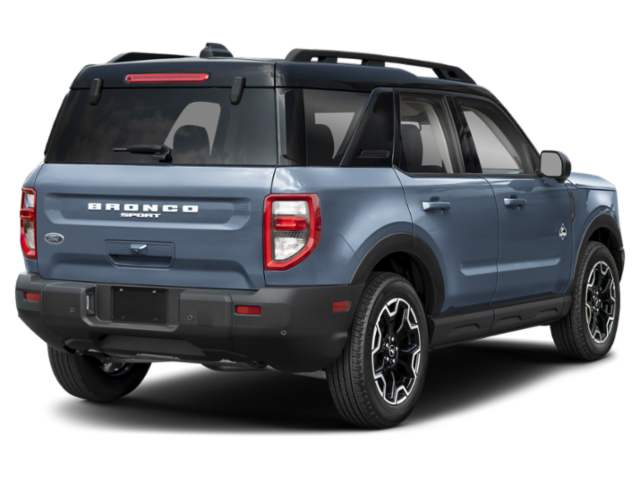
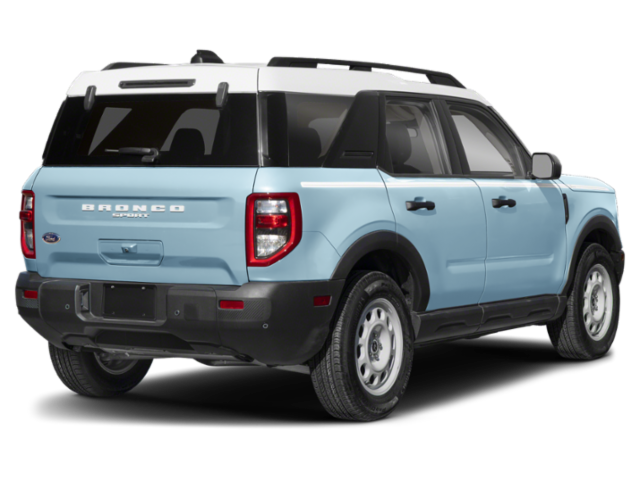
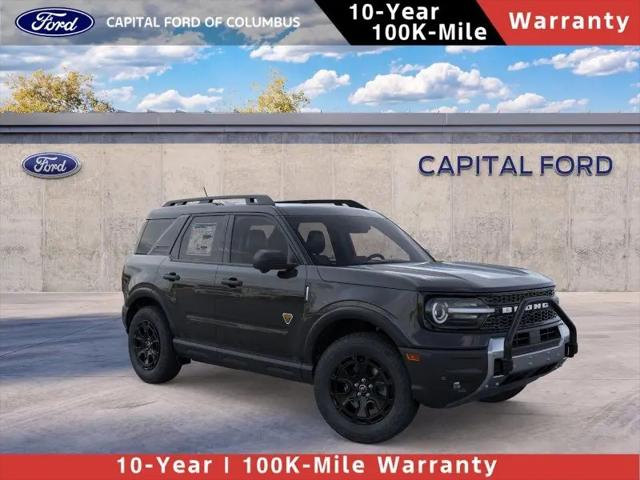
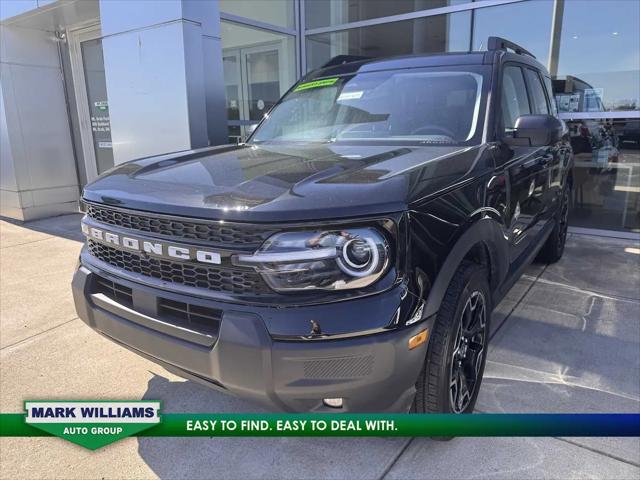
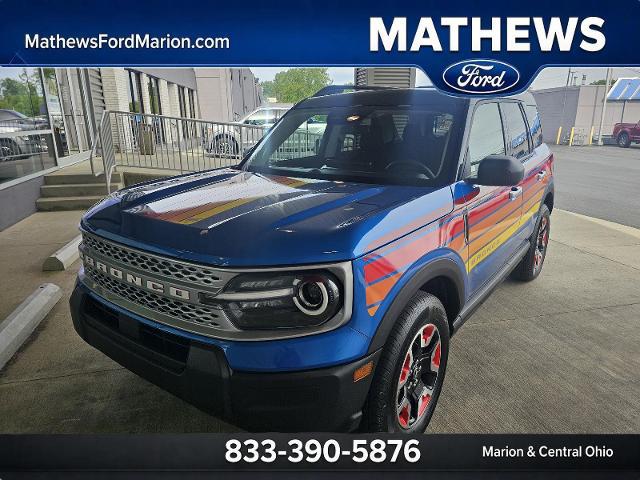
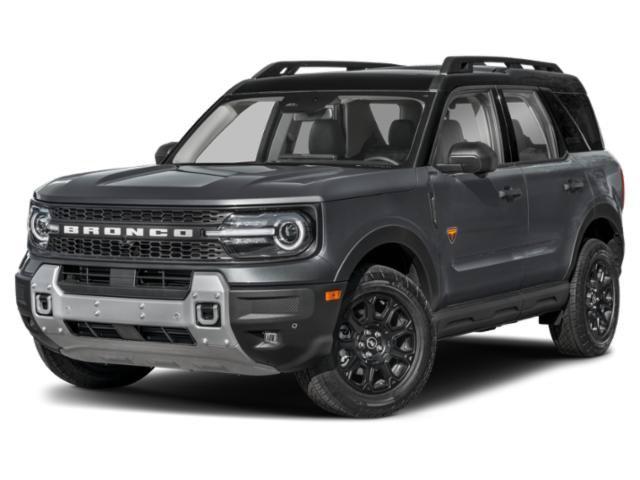
Some might dismiss the 2025 Ford Bronco Sport as merely a Ford Escape dressed up to look like the big, bad Bronco. They’re wrong. While capability varies throughout the lineup, the range-topping Bronco Sport Badlands with the new Sasquatch package is shockingly capable (and fun!) off-road. It’s also a versatile and surprisingly fun-to-drive SUV everywhere else, despite its rugged upgrades.

Photo: James Riswick
New for 2025, the Sasquatch package is available on the Outer Banks and Badlands trim levels. While they share many upgrades (listed below), a key difference remains under the hood. The Outer Banks version retains its usual three-cylinder engine but adds the Badlands’ twin-clutch rear-drive unit, which improves the all-wheel-drive (AWD) system. A new high-speed drive mode called “Rally” also makes its debut on all Badlands and Outer Banks Sasquatch models.
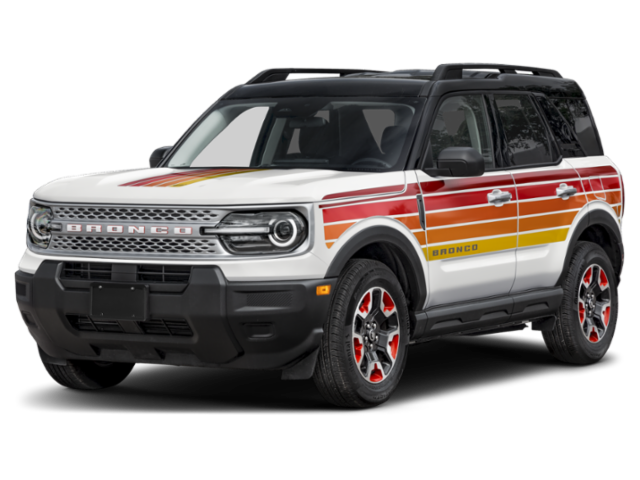
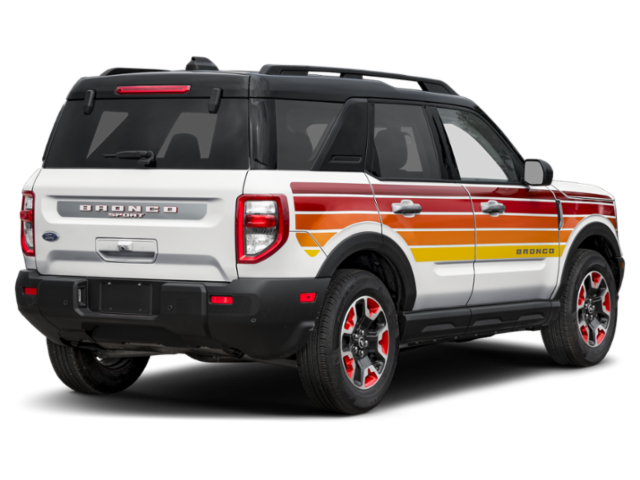
The rest of the Bronco Sport lineup carries over for 2025 with only minor updates. It includes Big Bend, Heritage, Outer Banks, and Badlands trims. All come standard with AWD, but the system differs by trim level. The first three trims are equipped with a turbocharged 1.5-liter three-cylinder engine, while the Badlands features a turbocharged 2.0-liter four-cylinder engine. Base prices range from $32,590 to $41,710, including the destination charge.

Photo: James Riswick
For this 2025 Bronco Sport review, Ford provided a test vehicle with Badlands trim and the following options:
The Sasquatch package on the Bronco Sport Badlands offers a range of off-road features. Highlights include:
The test vehicle’s manufacturer's suggested retail price (MSRP) was $46,520, including the $1,595 destination charge to ship the SUV to your local dealership from the Hermosillo, Mexico, assembly plant.
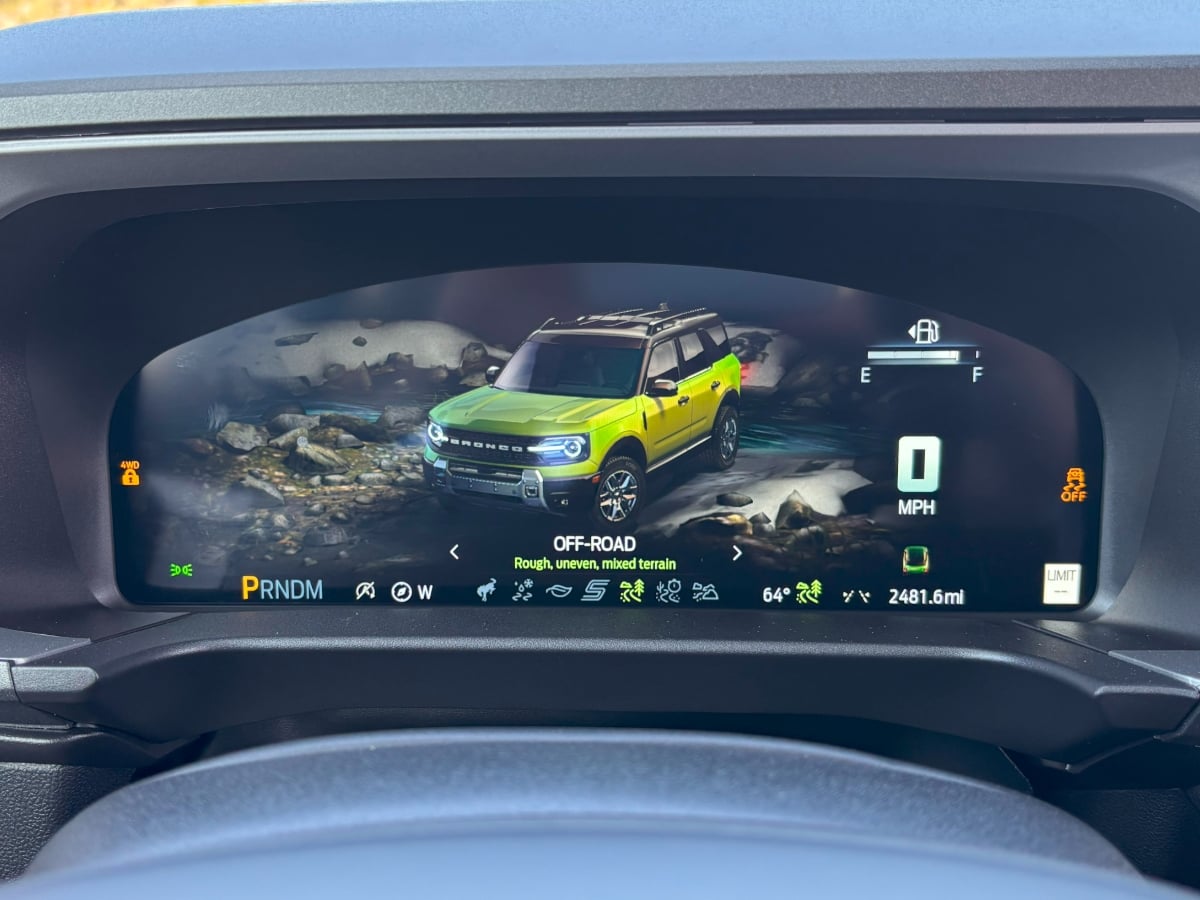
Photo: James Riswick
Ford’s customer research shows that Bronco Sport buyers are 3.5 times more likely to go off-roading than owners of rival vehicles. They are also twice as likely to go camping. This makes off-roading performance and the availability of the Badlands trim and Sasquatch package especially important. The same goes for all the Bronco Sport’s clever storage solutions, but I’ll cover that later.
The Sasquatch’s special suspension increases the ride height by 0.4 inch over the standard Badlands to 8.7 inches and adds 0.6 inch of suspension travel. The approach, departure, and breakover angles are also improved. I noticed this right away. Spots on my go-to off-road trail that often cause chins to scrape, tails to drag, and bellies to grind over ridges proved to be no problem for the Bronco Sport.
How much of this was due to the Sasquatch elements versus the Bronco Sport’s inherent size, especially the wheelbase, is debatable without another trim level available for comparison. Still, the Bronco Sport’s size was definitely an advantage off-road, where it moved over the trail like a mountain goat.
There were deep, nasty ruts I didn’t dare drive into. For that, I would’ve needed something higher off the ground with bigger tires, like the standard Bronco or the Ram 1500 Warlock I tested on the same trail. I would’ve needed to drive into the ruts with those, though. In contrast, the Bronco Sport is so small that I was able to drive around them, demonstrating how its compact size is an advantage on a trail.
It's not all about avoidance, though. You can push this little guy quite a bit. Even less severe ruts still managed to lift one or more tires off the ground at times. Yet, the Badlands/Sasquatch’s AWD system intelligently distributes power front and rear, as well as side to side, to maintain traction (the twin-clutch rear axle can also mimic a locking rear differential). It was a non-event, yet from the outside, it would have seemed quite the adventure.
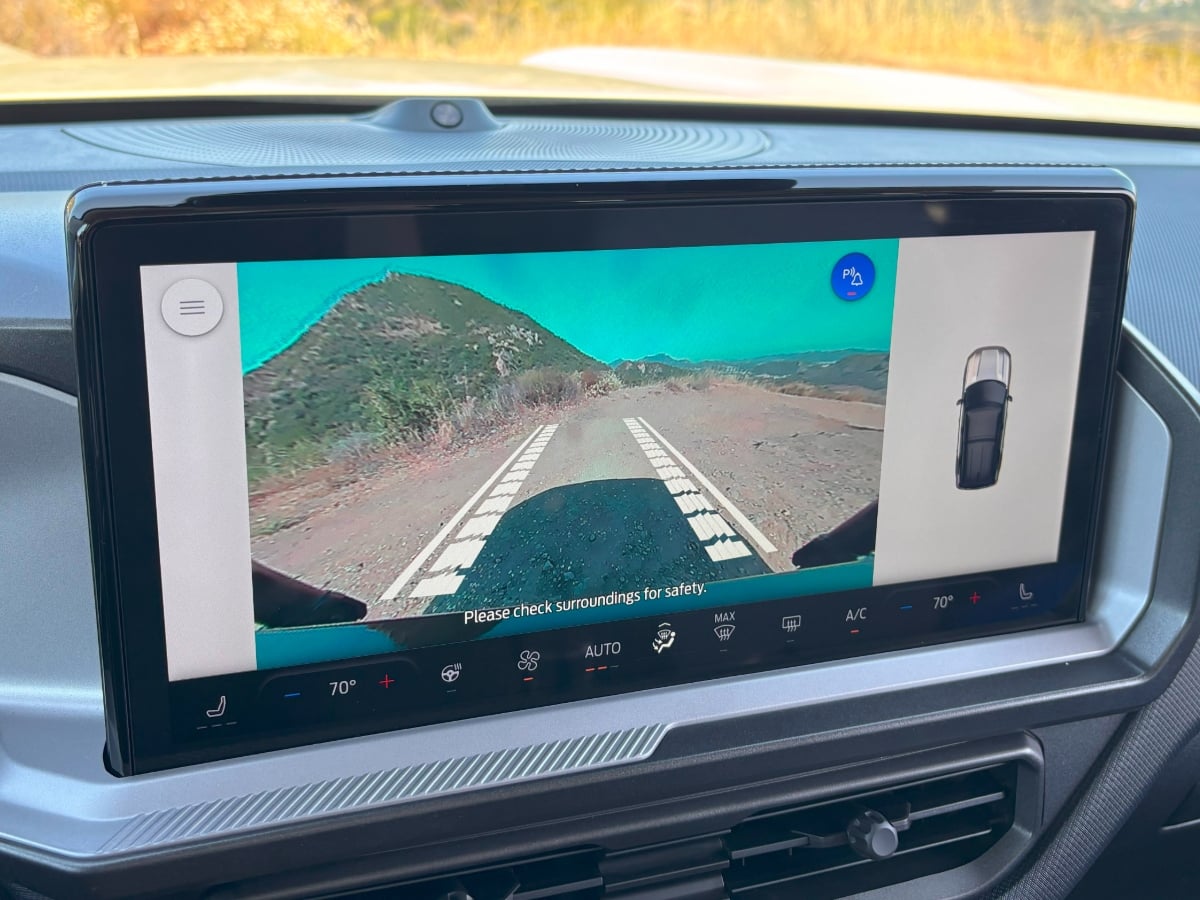
Photo: James Riswick
Kudos to the Badlands’ excellent forward camera, which automatically activated on the large touchscreen when I selected an off-road drive mode. To turn it off, I would have needed to override it manually with a button on the dashboard, and it wouldn’t turn off by itself after 9 mph like every Toyota I’ve tested. Excellent.
The Bronco Sport’s AWD system, along with the 2.0-liter engine and various G.O.A.T. off-road drive modes, proved their capability up a pair of steep dirt inclines, one of which I didn’t even attempt in that previously mentioned Ram. It was my easiest climb so far, surpassing off-road trucks, SUVs, and crossovers. With the general “Off-Road” drive mode selected, the little Bronco Sport just scampered up with minimal tire slippage and no engine strain.
Credit again to the Bronco Sport’s size (this time, its relatively light 3,809 pounds), but also to its turbocharged 2.0-liter four-cylinder engine that delivers an energetic 250 horsepower and 280 pound-feet of torque. The Outer Banks trim, which is also eligible for the Sasquatch package, produces only 180 hp and 200 pound-feet from its 1.5-liter turbo-three.
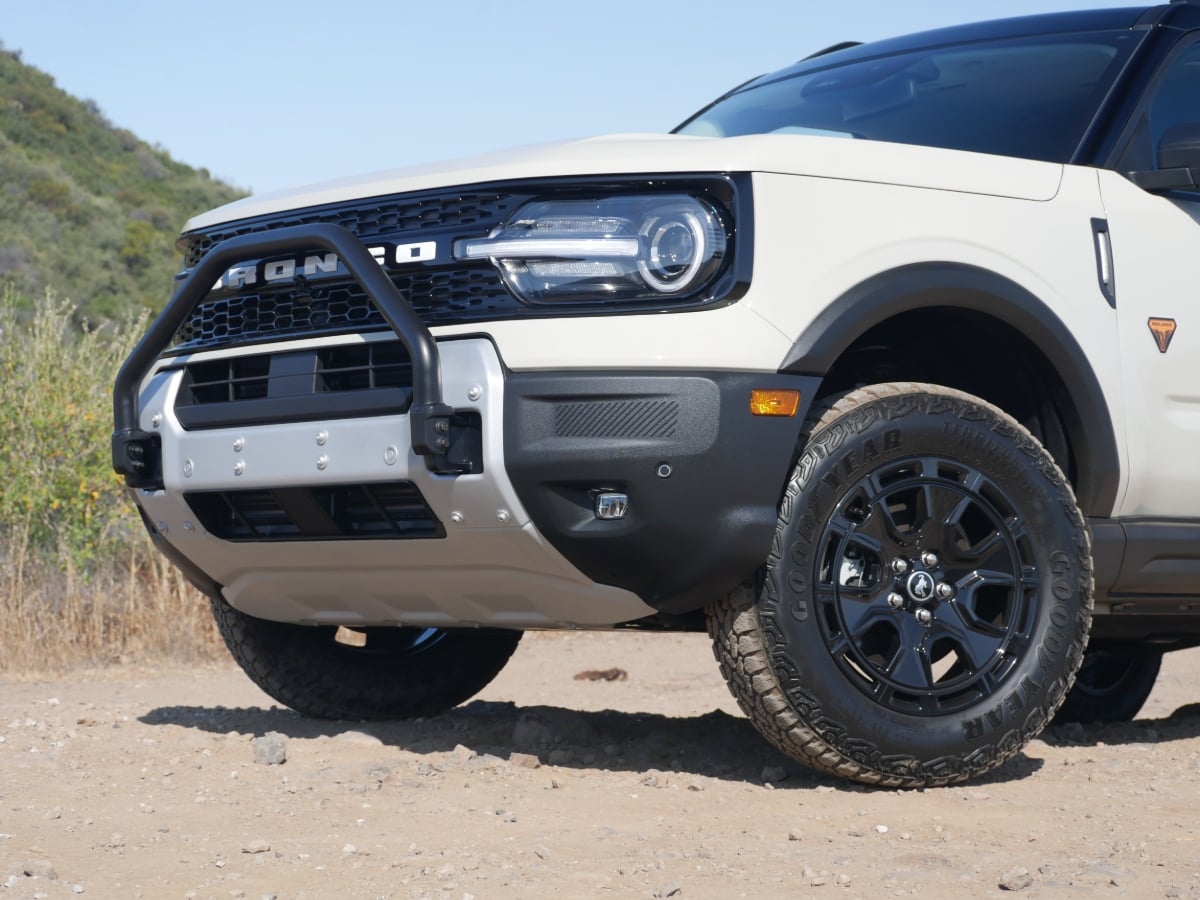
Photo: James Riswick
The turbo engine that helped the Badlands climb those 40-degree inclines also delivers surprisingly quick on-road acceleration. It’s got real guts, especially for highway passing and merging. Toeing the responsive throttle shifts gears swiftly and kicks in a rush of torque. It also sounds really cool, with a deep, warbling growl that’s reminiscent of the very cool Ford Focus ST. That car also had a 2.0-liter turbo-four with comparable power. Come to think of it, the Focus RS also featured a twin-clutch rear-drive system. Hmm.
That’s not the only time the Bronco Sport reminded me of a sporty Focus. Sure, the former is taller with some body lean and limited grip from those all-terrain tires, but its compact size, sharp steering, and well-tuned suspension make it feel more like a hot hatch on-road than something called Bronco. It’s genuinely fun to zip around town in the Bronco Sport.
OK, so what about comfort? The all-terrain tires are immediately noticeable, absorbing bumps harshly rather than cushioning the impact. It didn’t become unbearable during my three-hour, 125-mile trip to San Diego (maybe the Sasquatch’s fancy dampers help here), but ride comfort is decidedly worse than in previous Bronco Sports I’ve tested.
The Bronco Sport’s adaptive cruise control and lane-centering assistance system performed exceptionally well during a tough test for any such system: the Greater L.A. area. It felt like BlueCruise Lite—a quasi-version of Ford’s hands-free highway driving system with nearly identical lane-centering and speed-matching features, but requiring you to keep a hand on the wheel. It’s so effective that I sometimes forgot I needed to.
Finally, the fuel economy isn’t very impressive. The Environmental Protection Agency (EPA) estimates the Badlands Sasquatch to get 23 mpg combined. I managed 21.8 mpg on my 75-mile standard evaluation route, but achieved 28.3 mpg on my 250-mile highway round-trip. The three-cylinder engine in other Bronco Sport trims (excluding the Outer Banks Sasquatch) is estimated to get 27 mpg combined, which is only one mpg lower than the three-cylinder Ford Escape..
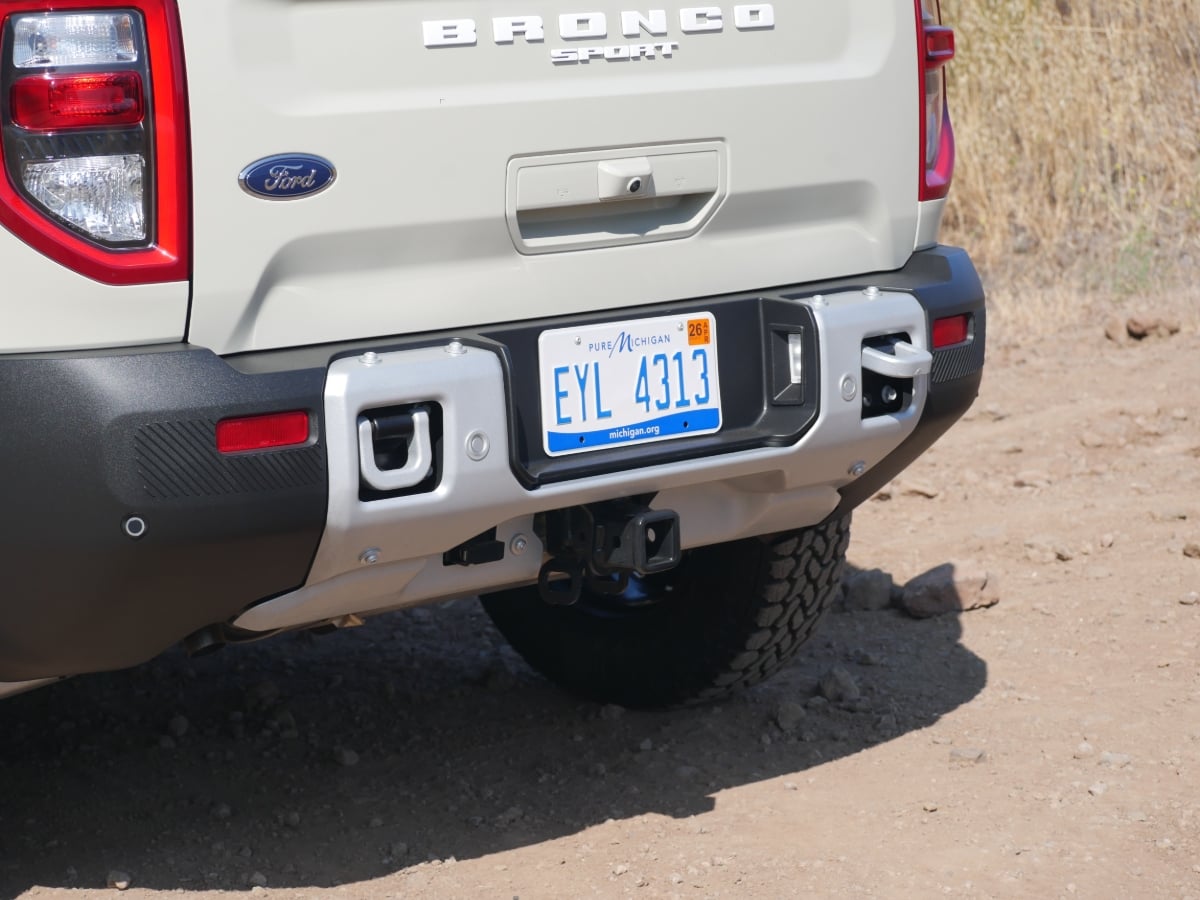
Photo: James Riswick
The Bronco Sport might be better than other small SUVs at handling dirt trails, but it’s also more capable of transporting stuff to whatever’s at the end of that trail.
The Badlands has less cargo space than other trim levels (29.4 cubic feet behind the back seat compared to 32.5), with the Sasquatch shaving off a few extra tenths. The reason, it seems, is the larger full-size spare tire lurking under the floor, which is higher to accommodate it. That said, the space is boxy (always a good thing for loading stuff), and I managed to fit as much luggage inside as I could in the much larger Honda CR-V. The Bronco Sport’s rear glass can also pop open separately from the liftgate, allowing you to carry longer items more easily.
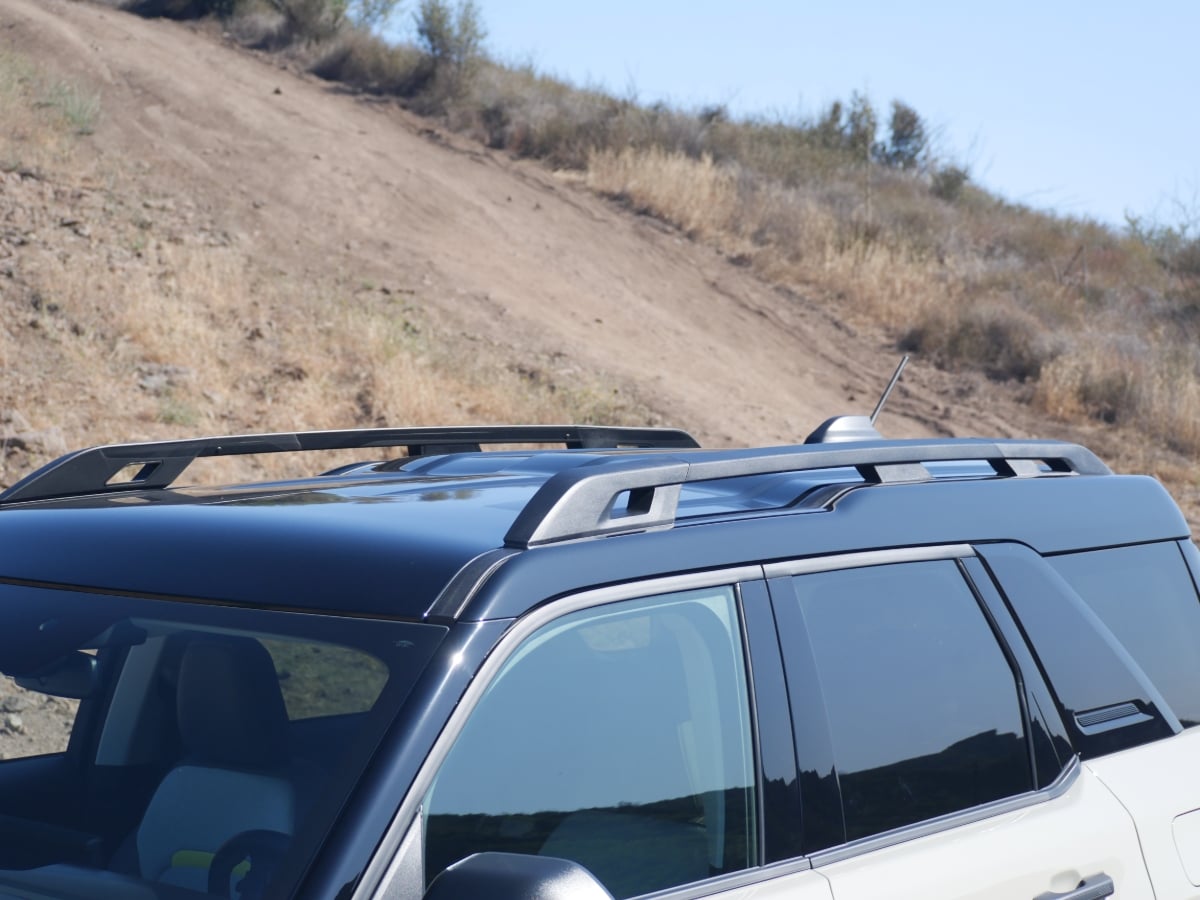
Photo: James Riswick
For items that can’t fit inside, every Bronco Sport has raised roof rails. This allowed me to use my aftermarket crossbars, which can move around to accommodate different gear, instead of needing to buy specialty fit bars that often screw into fixed points. These rails also function as tie-down points, similar to the cast-metal D-rings on the Sasquatch's rear bumper that pop out, and the unique piton-looking metal tie-downs that extend from each front fender. My test vehicle also had a hitch I could plug my bike rack into.
The cargo area features unique gear-securing hooks, a hidden bottle opener, and a pair of sturdy liftgate grab handles you can use to hang wet items (though there’s no power liftgate, which is a bit frustrating). My test vehicle’s optional cargo management system included a folding tray that can create a dual-level cargo space, divide the cargo floor, or extend outward to serve as a table. Clever design.
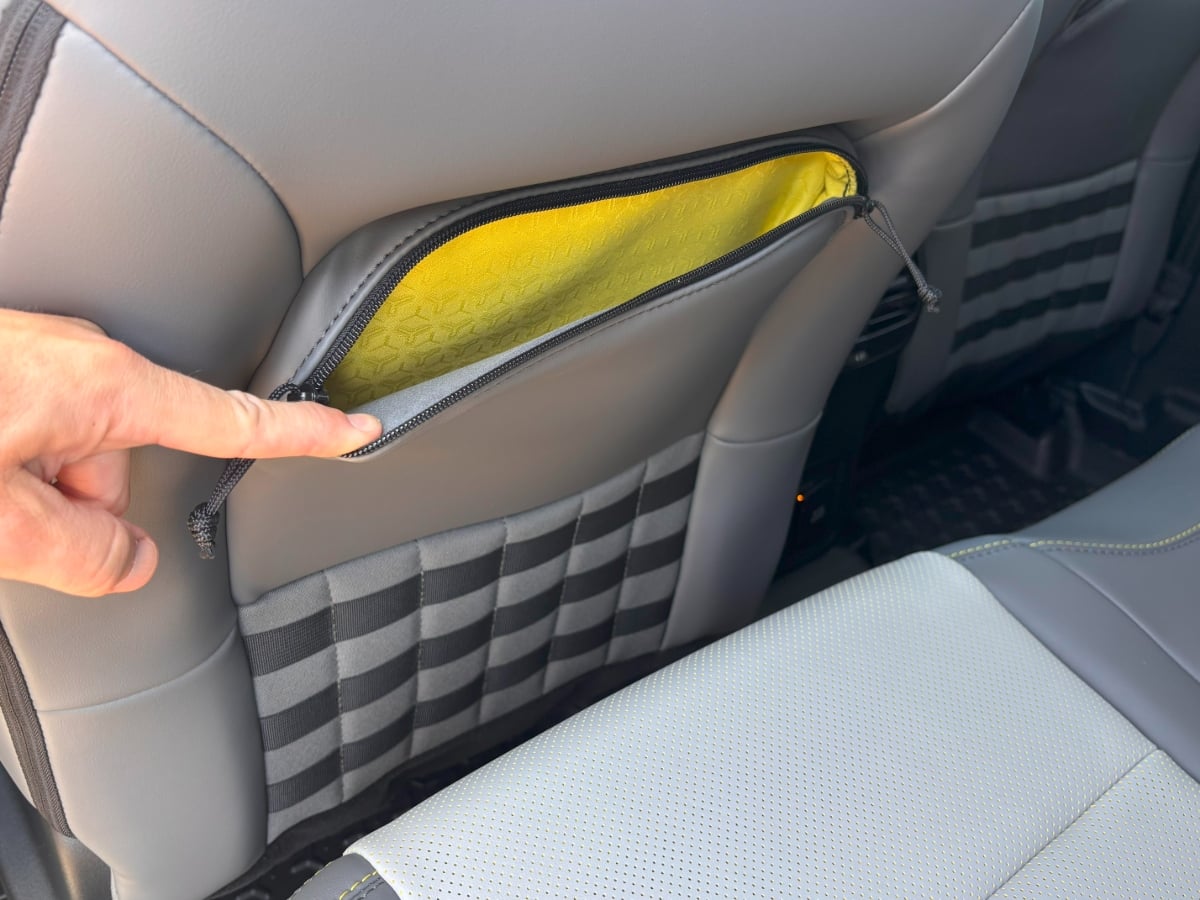
Photo: James Riswick
Perhaps the coolest details are reserved for those in the back seat: the front seatbacks have a zippered compartment for tablets, a pouch for phones, and MOLLE straps for attaching items with carabiners.
Space for people isn’t very good, though. I’m 6-foot-3, and the driver’s seat couldn’t slide back far enough, but even if it could, it would make rear legroom non-existent. The back seat is mounted high, which helps provide sufficient, chair-like legroom for most people, but the rows of seats are still close together. That meant I had to move the passenger seat all the way forward to give enough room for my son’s legs in his forward-facing child car seat. A rear-facing seat would be even worse.
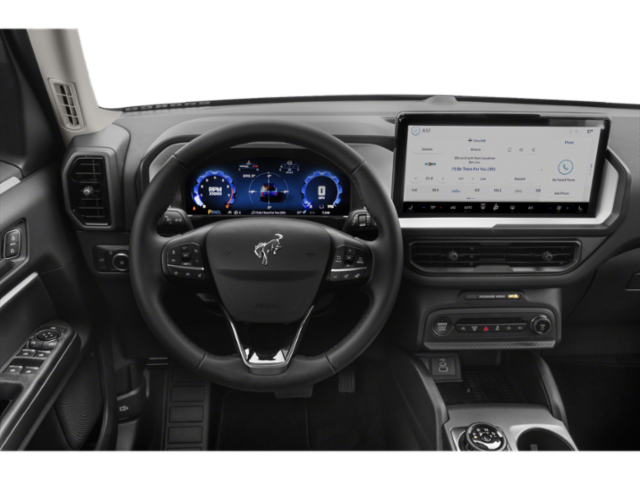
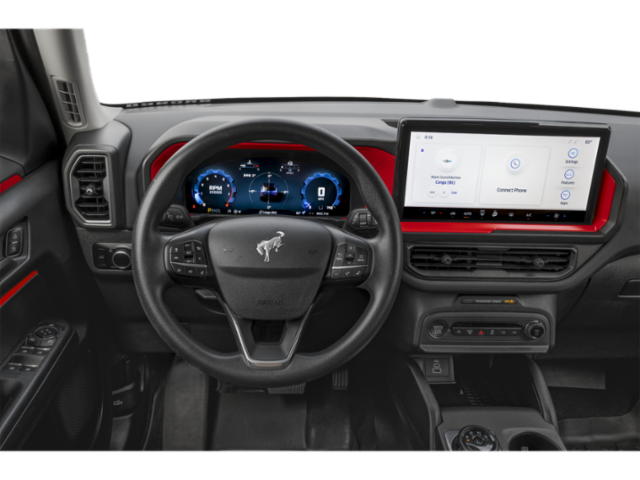
For everyday use, the interior works well. The cupholders accommodate large bottles, the wireless charging pad is conveniently located, and the 13.2-inch touchscreen utilizes space efficiently with a clean and logical layout. I really enjoyed using it, which is a rarity these days.
The Bronco Sport’s interior quality is much better than its basic, almost ugly design would suggest. The dashboard, doors, and armrests feature soft-touch, nicely textured materials. The upholstery also looks great, especially in the Sasquatch.
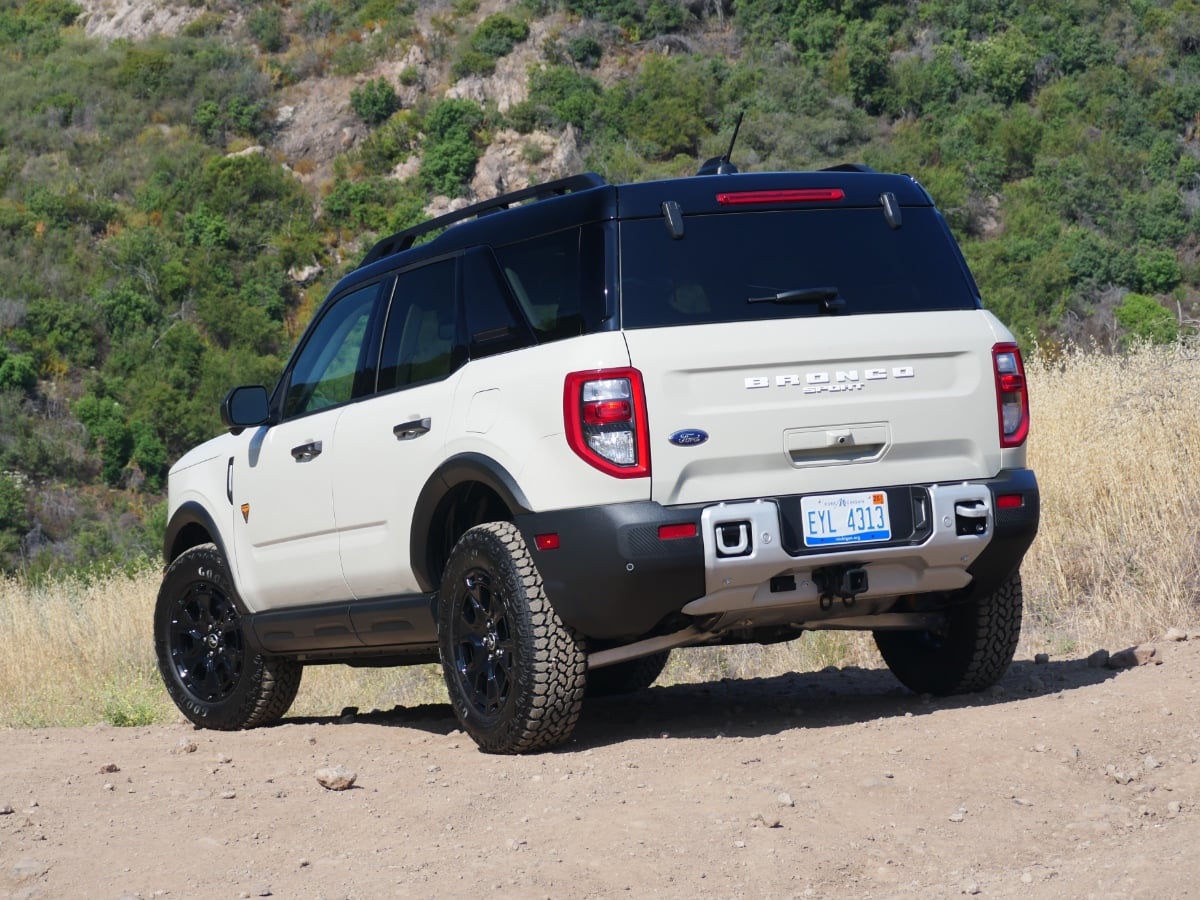
Photo: James Riswick
The Bronco Sport Badlands Sasquatch isn’t cheap, costing over $46,000. You can find larger or more luxurious SUVs for less. However, it’s challenging to assess the value of its unique blend of capability, utility, and style. For the right buyer, it’s perfect—nothing else compares—and it’s still cheaper, more efficient, and more maneuverable than a similarly equipped big Bronco.
James Riswick has been testing and reviewing cars since 2007, serving as an editor at Edmunds.com and Autoblog. He has also contributed to Autoguide Magazine, Autotrader, Capital One Auto Navigator, Car and Driver, and Hagerty. He resides in Southern California and owns a 1998 BMW Z3, a 2013 Mercedes-Benz E350 Wagon, and a 2025 Cadillac Optiq.