
The all-electric Polestar brand has a new flagship. The 2026 Polestar 5 is a sleek, high-powered sedan that will sit atop a lineup that currently consists of SUVs. It boasts a new, aluminum-intensive platform, and, true to an all-electric super sedan, eye-popping maximum performance numbers: 884 horsepower, 749 pound-feet of torque, and a claimed zero-to-60-mph time of 3.1 seconds. A range north of 300 miles is expected.

There will be two versions of the new Polestar 5. The Dual Motor has a pair of electric motors, one powering each axle for all-wheel drive (AWD). They will produce a total of 748 hp and 599 pound-feet of torque and will reach 60 mph in 3.8 seconds. Polestar says the 884 hp and 749 pound-feet of torque Performance will reach 60 mph in 3.1 seconds. The Performance trim which boasts the maximum performance specs, also has dual motors and AWD.
The two trims share a common 112-kilowatt-hour (kWh) battery pack with 800-volt electric architecture and 350-kilowatt (kW) maximum charging, so expect the less powerful Dual Motor to go further.
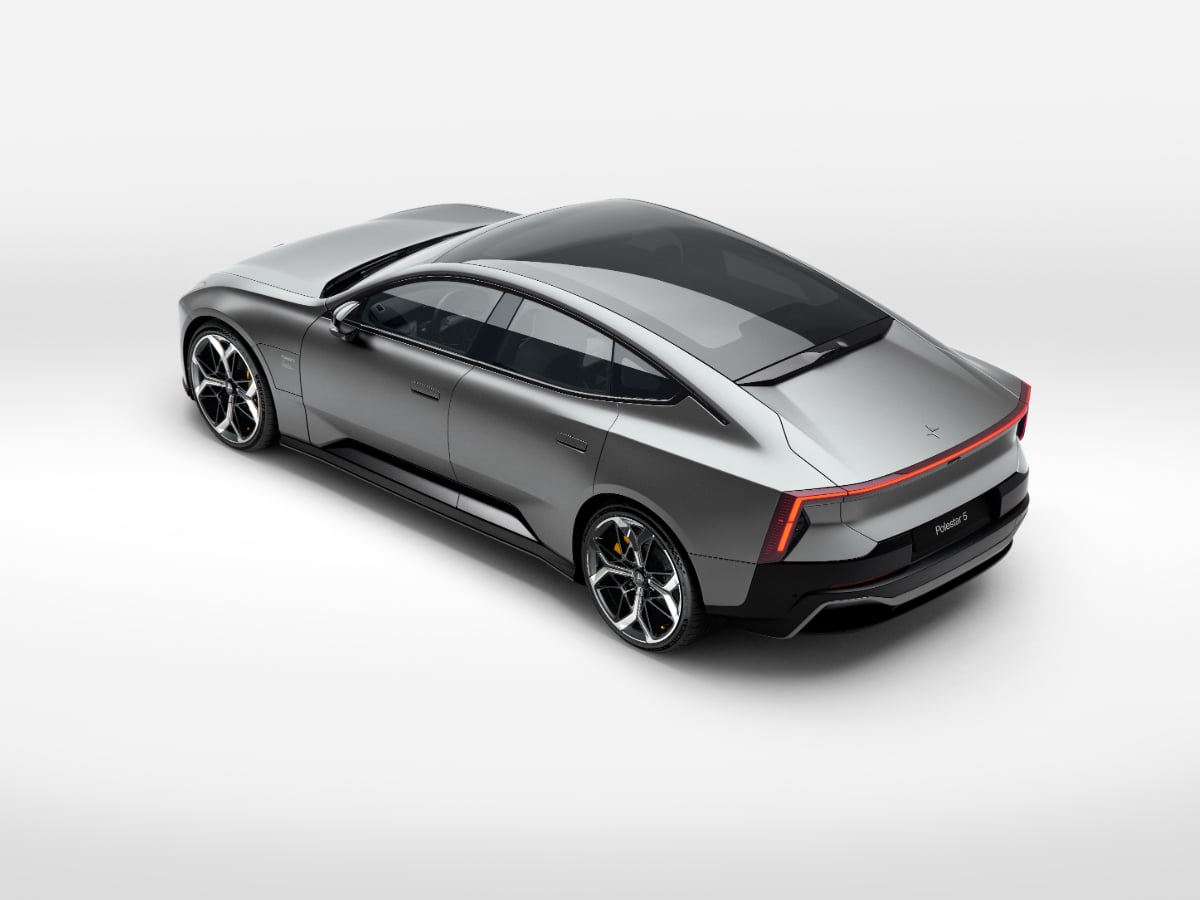
The Polestar 5 is a whopping 200.3 inches long, which is about 5 inches longer than a Lucid Air and Porsche Taycan, and 3 inches longer than a Tesla Model S. Its 120.2-inch wheelbase is similarly larger than that group. In gas-powered sedan terms, its length and wheelbase fall almost directly between the Mercedes-Benz E-Class and S-Class.
The clean, purposeful design is true to Polestar and its Volvo roots, although its sleek profile and rear lighting are awfully indicative of a Kia K4. That is not the controversial element of the 5’s rear end, though. That would be the lack of a rear window. Made possible with digital rearview mirror technology, ditching the back window allowed designers and engineers to create the 5’s fastback profile while maintaining rear seat headroom. Expect this to be controversial, much as it was with the similarly rear-windowless Polestar 4.
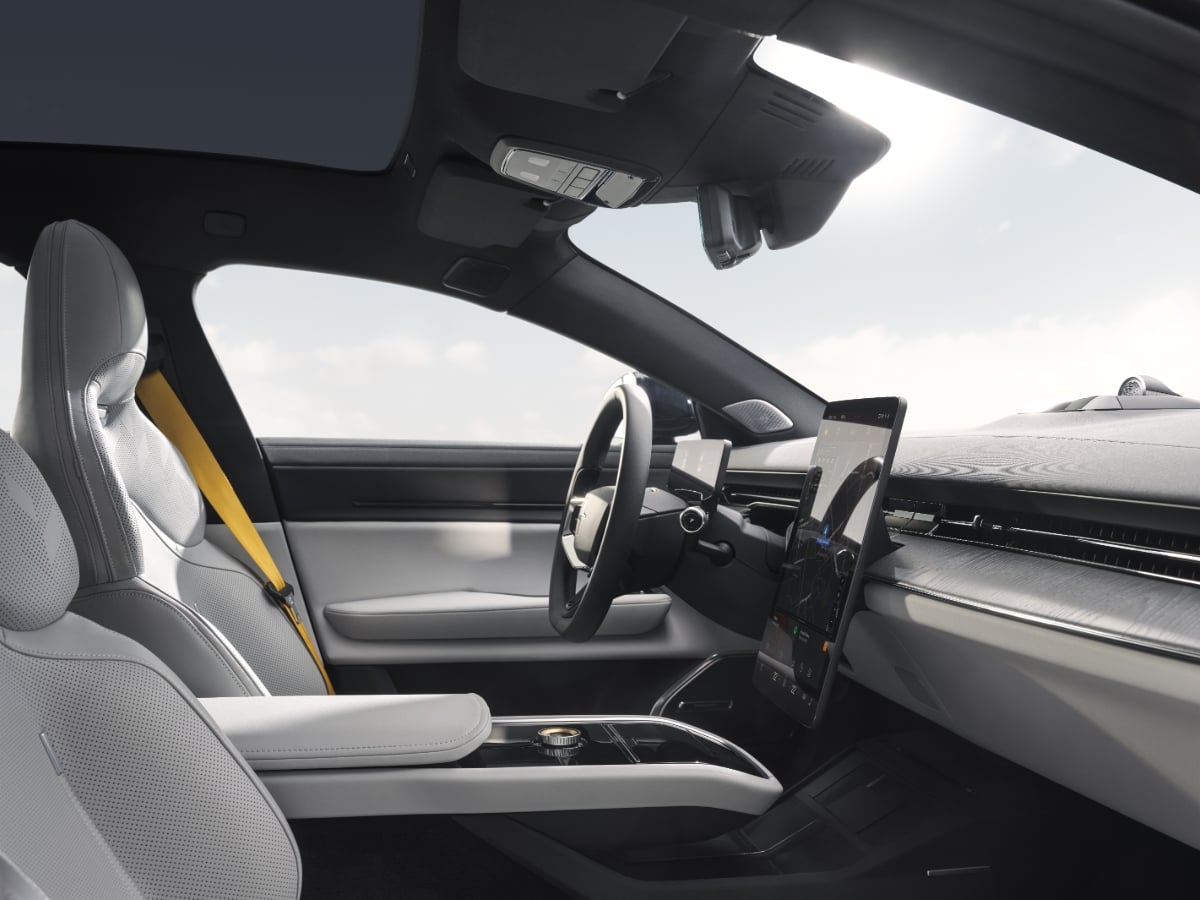
Polestar describes the 5’s driving position as low-slung and deliberately reclined with a steering wheel brought close to the driver. That sure seems in keeping with a car with sporting pretenses, not unlike the Porsche Taycan. The interior design is sparse and dominated by its portrait-oriented touchscreen. One could describe it as Tesla-like, but then Tesla interiors could be described as Scandinavian-inspired. As Polestar hails from Sweden, who is copying who?

The cabin is described as having a “4+1” arrangement. It has four proper seats, with a fifth added by raising the large rear center armrest/console. The resulting backrest is considerably forward of the outboard seats, which Polestar says benefits shoulder room. Either way, I do not think you would want to sit there very long.
Polestar says it used “natural fiber materials” throughout the cabin, including a “bio-based” alternative to carbon fiber that is 40-percent lighter than plastic and uses 50 percent less fossil fuel-based materials. Recycled materials are used for the carpets, headliner, and upper door trim. A “MicroTech” cloth or animal-welfare-secured Bridge of Weir leather is available for the seats.

The Polestar 5 Dual Motor produces a combined 748 hp and 599 pound-feet of torque. Polestar says it will accelerate to 60 mph in 3.8 seconds. The Polestar 5 Performance produces 884 hp and 749 pound-feet of torque; it promises to hit 60 mph in 3.1 seconds.
Both trims share the same 112-kWh battery pack, with 106 kWh being usable. Its 800-volt architecture helps it achieve its 350-kW maximum charging rate. It is unclear at this time whether the 5 will have a Tesla-style NACS charge port when it arrives in North America, but Polestars do have access to many Tesla Superchargers.
The 5 is the first to feature the new Polestar Performance Architecture (PPA) that uses “hot-cured bonded” aluminum that Polestar says is ultra-rigid and comparatively light. It also features 13-percent recycled aluminum, with 83 percent of the overall aluminum produced using renewable energy.
The Dual Motor model has passive dampers by BWI, much like the single-motor Polestar 3 that impressed me with its ride and handling balance. The Performance has magnetically controlled adaptive damping (MagneRide), which goes even further in providing taut body control and a comfortable ride. Given how responsive and engaging I found the Polestar 3 to drive, it is easy to assume that the more advanced, lower, and more powerful Polestar 5 should raise the bar even higher.
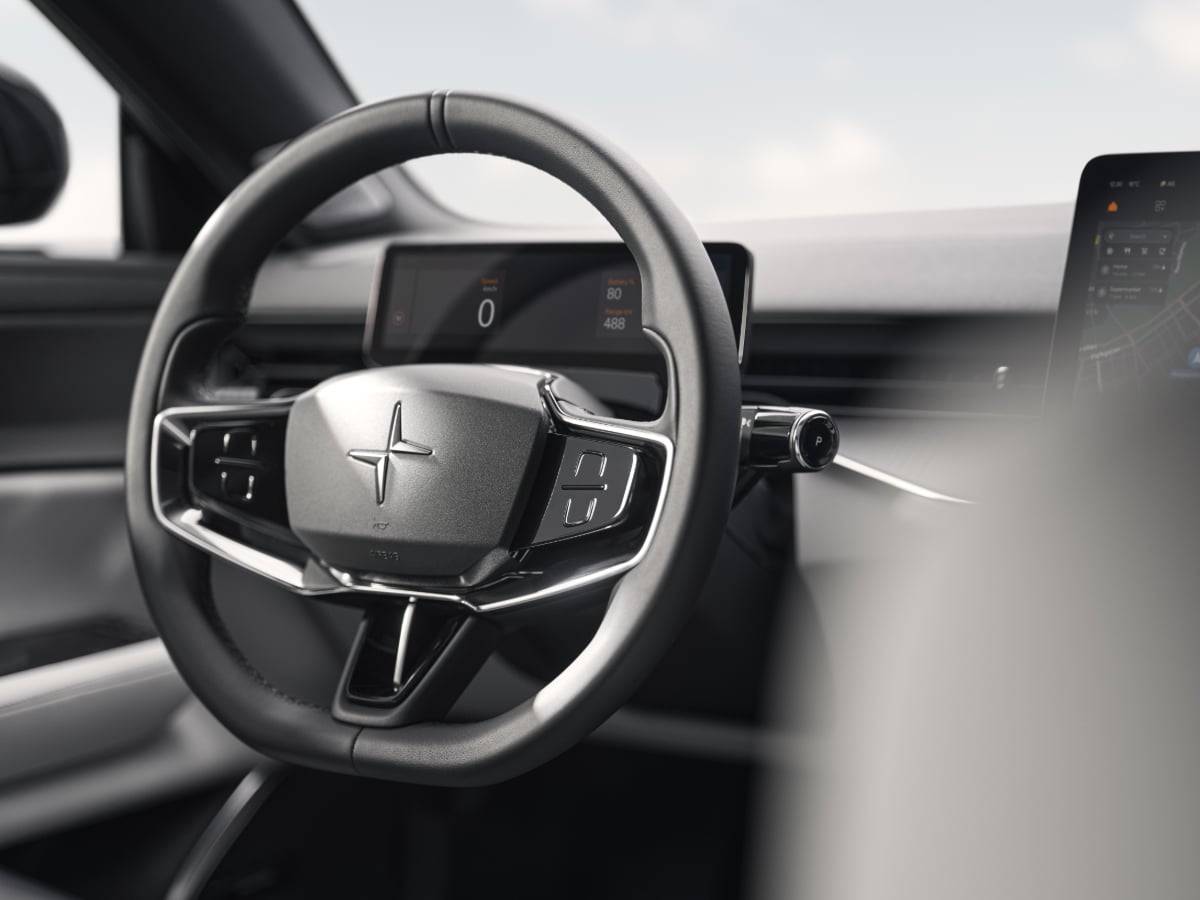
The Polestar 5’s sparse cabin is dominated by the standard 14.5-inch portrait-oriented touchscreen, which runs a Polestar-specific version of the Android Automotive operating system. It has Google Built-in functionality (integrated Google Maps, Google Assistant, and Google Play Store), while the Home screen features customizable menu shortcut “tiles” that rest below a permanently docked Google Maps area. Polestar did not specify if it would include Apple CarPlay and Android Auto smartphone mirroring, but the Polestar 3 does.
A 10-speaker Polestar sound system will be standard, with a 21-speaker Bowers & Wilkins upgrade available with 1,680 watts of ear-blasting power.
In terms of safety tech, the Polestar 5 will be available with Pilot Assist, which is lane centering assistance provided in conjunction with adaptive cruise control. There is no hands-free functionality. Polestar did not mention other functions in its press release, but it is safe to assume the car will have the same features as the cheaper Polestar 3, including lane change assist when using Pilot Assist, lane keeping assistance, forward collision warning, a driver monitoring system, active blind spot warning with automatic emergency steering, and rear cross-traffic warning with automatic braking.
The Polestar 5 has some of the most impressive electric vehicles in its sights: Audi E-tron GT, Lucid Air, Porsche Taycan, and Tesla Model S. The BMW i7 and Mercedes-Benz EQS also seem likely to be in its price range, but they are more limo than sport sedan.
Polestar is the source of information in this article. It was accurate as of September 9, 2025, but it may have changed since that date. Always confirm product details and availability with the automaker’s website or your local dealership.
James Riswick has been testing and reviewing cars since 2007, serving as an editor at Edmunds.com and Autoblog. In addition to JDPower.com, he has also contributed to Autoguide Magazine, Autotrader, Capital One Auto Navigator, Car and Driver, and Hagerty. He resides in Southern California and owns a 1998 BMW Z3, a 2013 Mercedes-Benz E350 Wagon, and a 2025 Cadillac Optiq.


If you are searching for the best deals on the most popular new trucks in October 2026, your search ends here. We researched the latest incentives and offers for America's 10 top-selling trucks.* ...See More
Read the Full Article
If you are searching for the best deals on the hottest new SUVs in October 2026, your search ends here. We researched the latest car incentives and offers for the 20 top-selling SUV models in ...See More
Read the Full Article
With Labor Day in the rearview mirror, fall is just around the corner. That also means the 2026 model year is drawing to a close, and automakers and dealers are clearing out 2026 inventory to make ...See More
Read the Full Article
Are you looking for the best deals on the hottest new cars in September 2026? Look no further. We researched the latest car incentives and offers for America’s 10 top-selling cars. Here, listed ...See More
Read the Full Article