See answers to common EV questions, tax incentives, charging maps & more.
Explore EV
31 - 53
38 - 46
138 - 169
1 speed, CVT w/OD, 10 speed, Automatic/CVT w/OD
Gas/Electric I-4, Regular Gasoline I-4
All Wheel Drive, Front Wheel Drive
The Toyota Corolla maintains a steadfast loyalty among compact-car buyers. With nearly a quarter-million vehicles sold in the United States in 2025, the Corolla is the queen of compact cars. These numbers only add to the 50 million-plus Corollas purchased since its inception in 1966. Is this because Toyota has built the perfect small commuter car? Yes, and no.
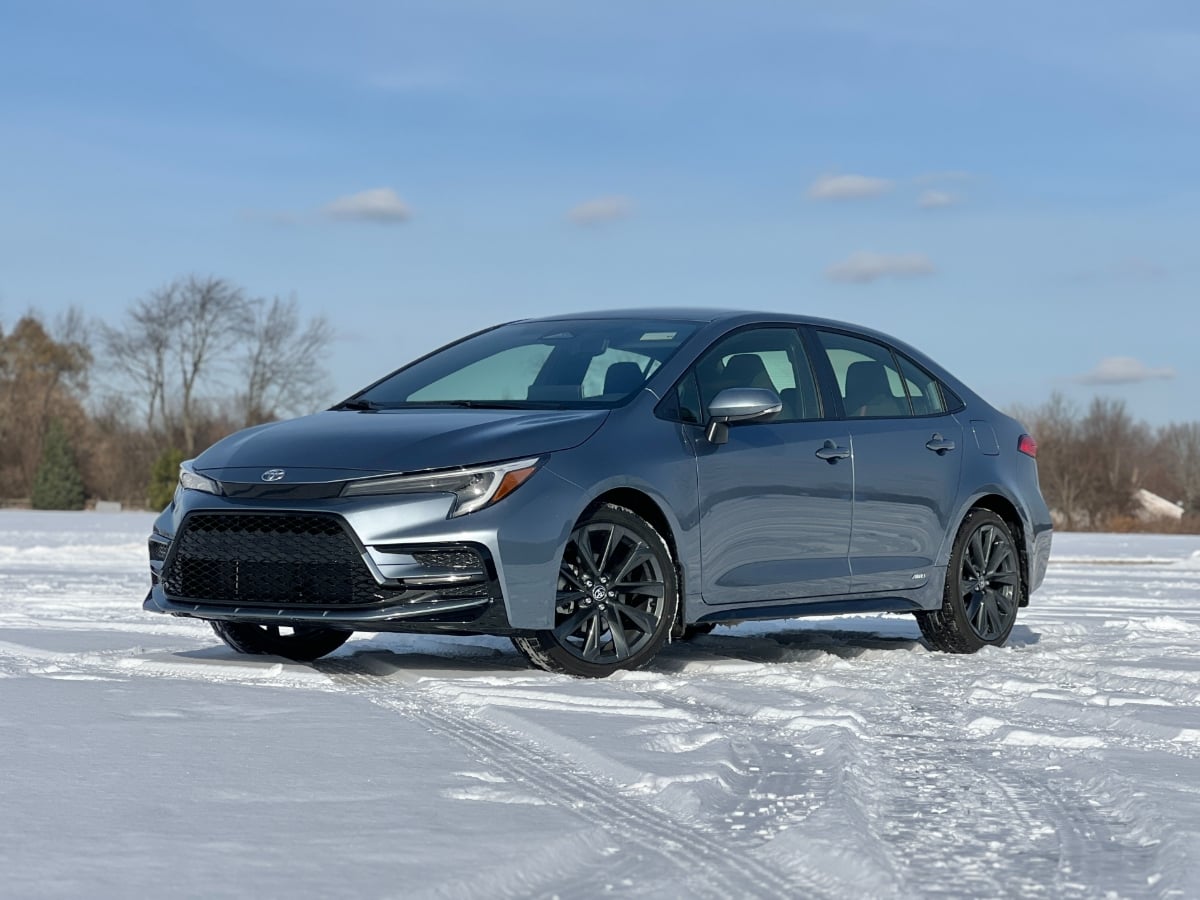
Photo: Beverly Braga
Affordable, durable, reliable—these are longstanding hallmarks of the Toyota brand. However, when it comes to emotional intangibles such as design, dynamics, and delight, the stirring of one's heartstrings is not exactly a priority for the Japanese automaker. But not everything has to be about fun.
In its 12th generation, the 2026 Toyota Corolla is a carryover model that adds a few standard features, including blind spot warning with rear cross-traffic alert and a larger multi-information display.
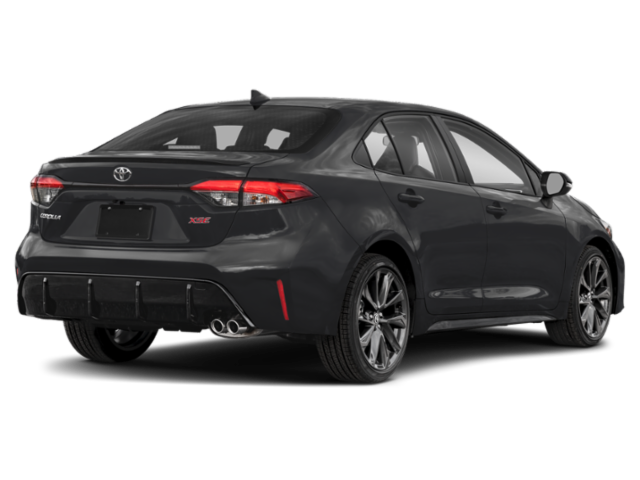
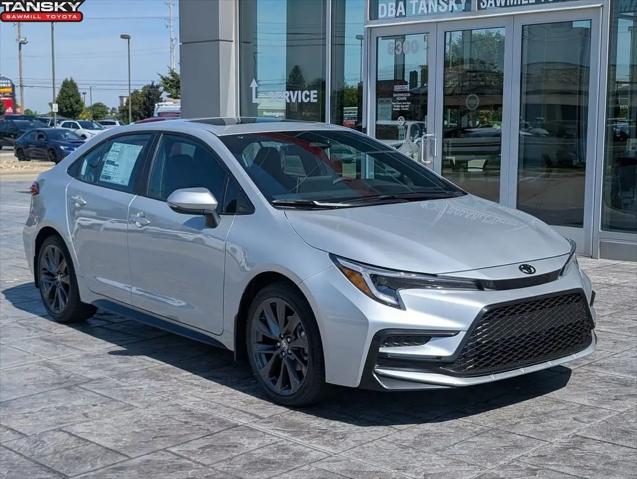
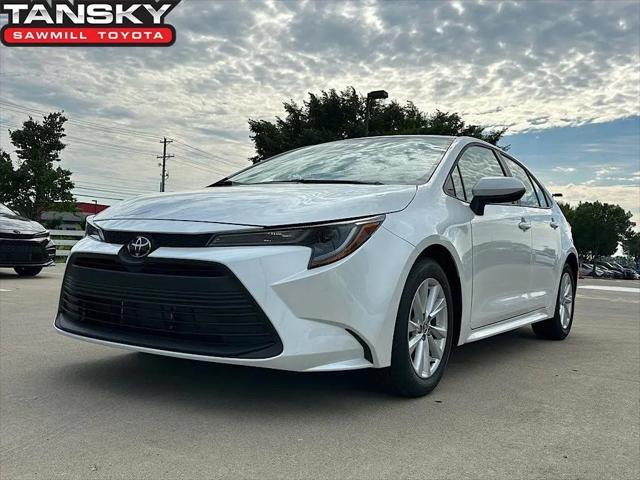
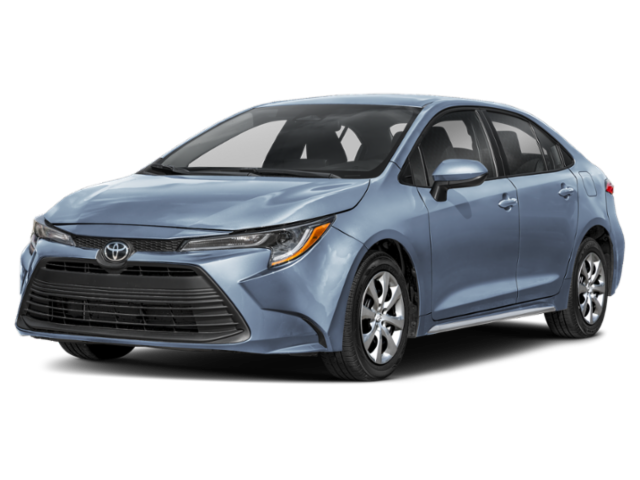
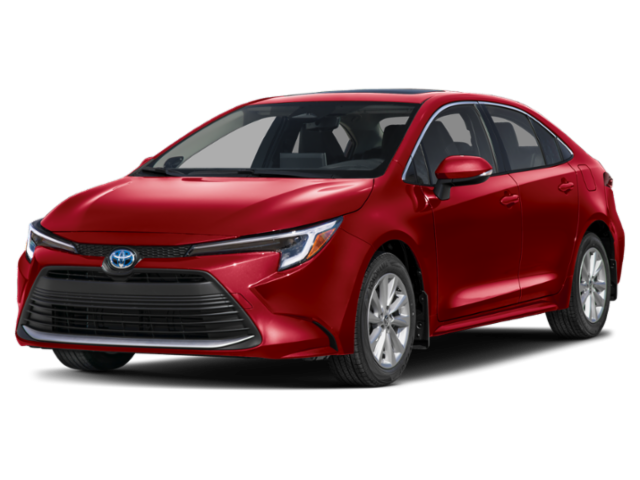
The Corolla sedan drops the FX trim level from its 2026 lineup, leaving the LE, Hybrid LE, SE, Hybrid SE, XSE, and Hybrid XLE. The FX Edition remains available on the Corolla Hatchback. Offered in front-wheel drive (FWD) and all-wheel drive (AWD) configurations, the 2026 Corolla sedan prices range from $24,120 to $30,335, including the destination charge.
For this 2026 Corolla review, Toyota provided a test vehicle equipped with Hybrid SE trim, AWD, and the following significant options:
The test vehicle’s manufacturer suggested retail price (MSRP) was $31,677, including the $1,195 destination charge to ship the sedan from the Aichi, Japan, assembly plant to a local dealership. The price does not reflect any current rebates, incentives, or price adjustments since Toyota manufactured the test vehicle.
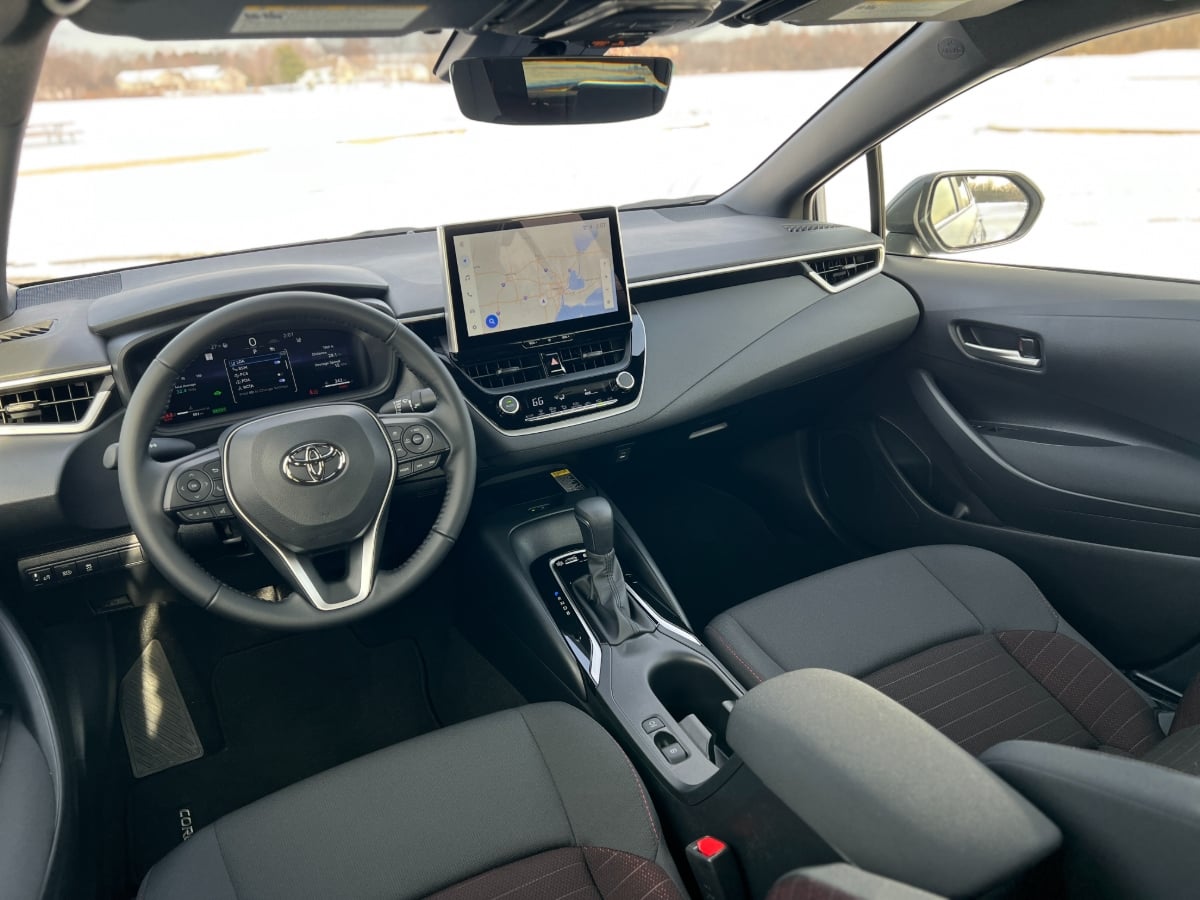
Photo: Beverly Braga
According to research from JD Power and GlobalData, the average new vehicle transaction price currently hovers around $47,000, while used-car prices average about $29,500. By comparison, a brand-new, non-bare-bones Corolla is a steal. Just don't expect many frills.
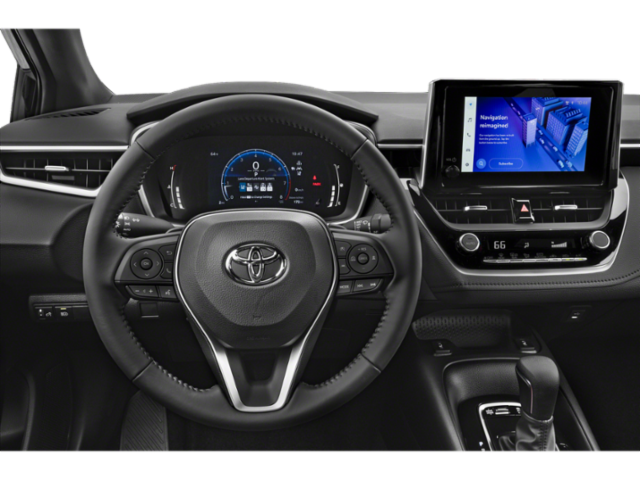
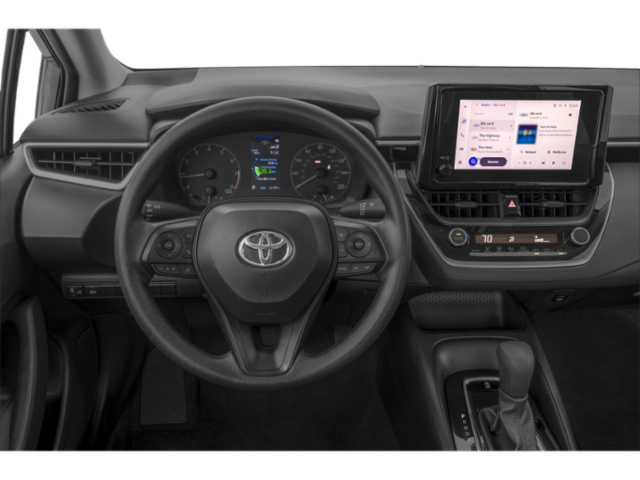
The Corolla Hybrid SE offers a clean, comfortable cabin. There are no excessive buttons or a massive door-to-door infotainment screen. Instead, the knobs and switches for frequently used features, such as climate control and audio volume, are ergonomically straightforward. The Corolla vibe is surprisingly analog, even as the rest of the world grows increasingly dependent on digital controls.
For a small sedan, the Corolla feels spacious. The cabin is not cramped, and the trunk is large enough to accommodate a standard three-piece luggage set. However, the Corolla Hybrid sedan's 13.1 cubic feet of cargo space is less than the Mazda Mazda3 sedan's 13.2 cubic feet and pales in comparison to the Honda Civic (14.8 cubic feet), Hyundai Elantra (14.2 cubic feet), and Nissan Sentra (14.3 cubic feet).
As the mid-level trim, the Hybrid SE features plush, comfortable sport seats. Their color-contrasting fabric inserts and trim detail also provide the only splash of color in an otherwise drab interior awash in black. Everything else is just black. And plastic.
The amount of plastic used in the Corolla's cabin is a social media influencer's ASMR dream. Nails tapping on the dashboard, center console, and door panels produce the perfect cringe-inducing pitch for your next viral video. As a former owner of a 2003 Corolla S, and knowing how many soft-touch points there used to be, experiencing the 2026 Corolla's interior materials felt like a 3D-printed disappointment.
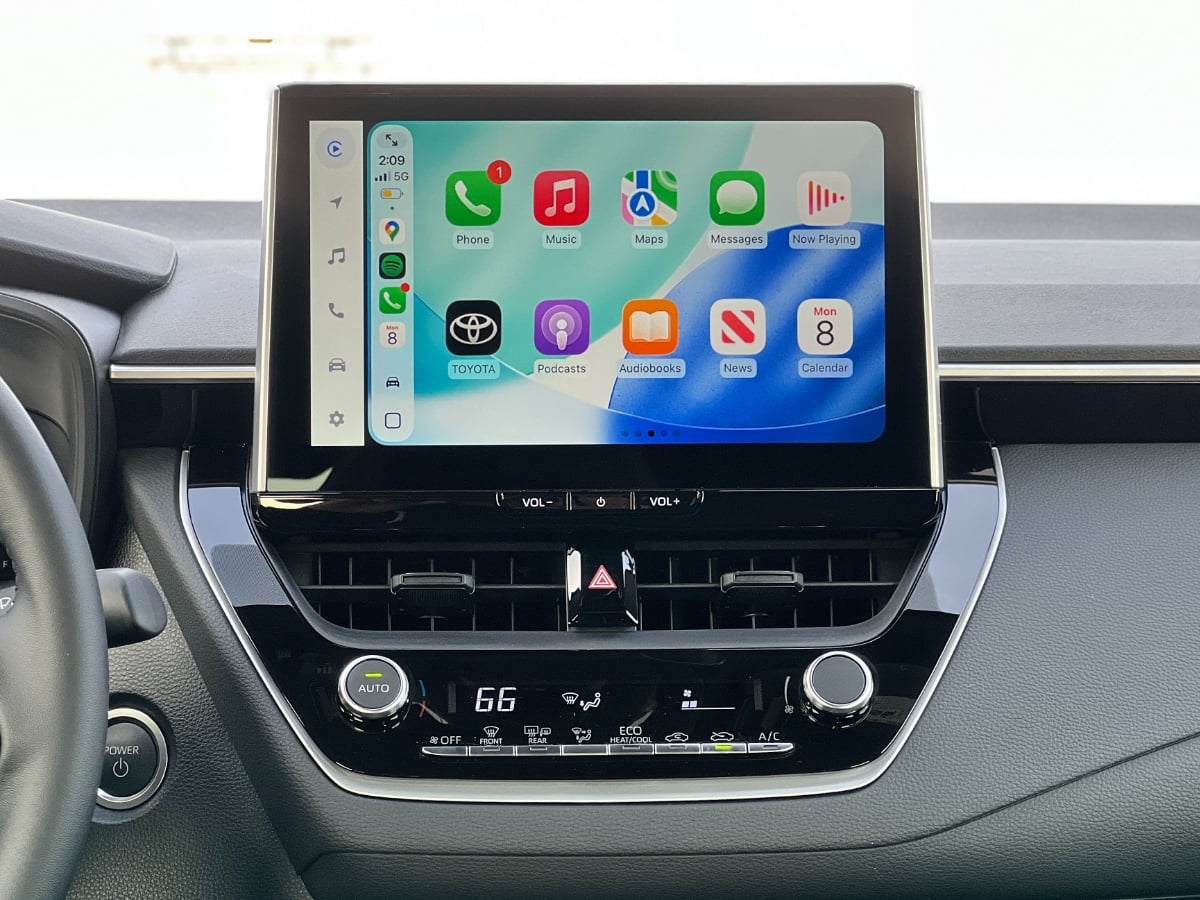
Photo: Beverly Braga
The 2026 Corolla Hybrid comes standard with an 8-inch touchscreen featuring the Toyota Audio Multimedia infotainment system, while a 10.5-inch screen is available on the SE trim and standard on the XLE.
Standard infotainment features include:
Depending on trim level, additional technology features include:
Toyota optioned my test vehicle with the SE Premium package, which upgrades the technology with larger screens and adds wireless smartphone charging. The standard 7-inch digital gauge cluster and 8-inch infotainment display are replaced with 12-inch and 10.25-inch versions, respectively. The larger screens helped me quickly decipher information, but they are not angled toward the driver. As a petite person, the touchscreen seemed to face away from me the closer I moved my seat toward the steering wheel.
Smartphone connectivity is easy, and switching between the native navigation system and Apple CarPlay is just as effortless. The wireless charging pad is a nice premium add-on for what is essentially a basic commuter car, but I found the connection fussy. While driving, I noticed the charging icon disappearing, so I would have to adjust my phone's position to reconnect the devices.
That said, Toyota's multimedia system is highly responsive, with crisp graphics and a soft color palette that is easy on the eyes. Using the in-car navigation is a painless process. Press the microphone button, ask the voice assistant to drive to an address, and that is it. The directions populate quickly, with no specific prompts or voice commands needed.
Maneuvering the menus can be a burden, however, and this applies to both the infotainment screen and the digital cluster display. For example, when looking for vehicle settings and fuel economy statistics on the center display, I found myself searching through multiple tabs for features I assumed would be grouped together. The digital cluster was even more frustrating.
Although customization is allowed, there is too much of it. While the cabin design focuses on simplicity, the tech features are about overstimulation. As a hybrid vehicle, it offers multiple graphics and charts to monitor fuel economy, battery usage, electric-vehicle driving ratio, and more. But accessing these via the driver information display requires a lot of button-pushing to scroll through the menus. The repetitive movement gave me a slight case of gamer's thumb.
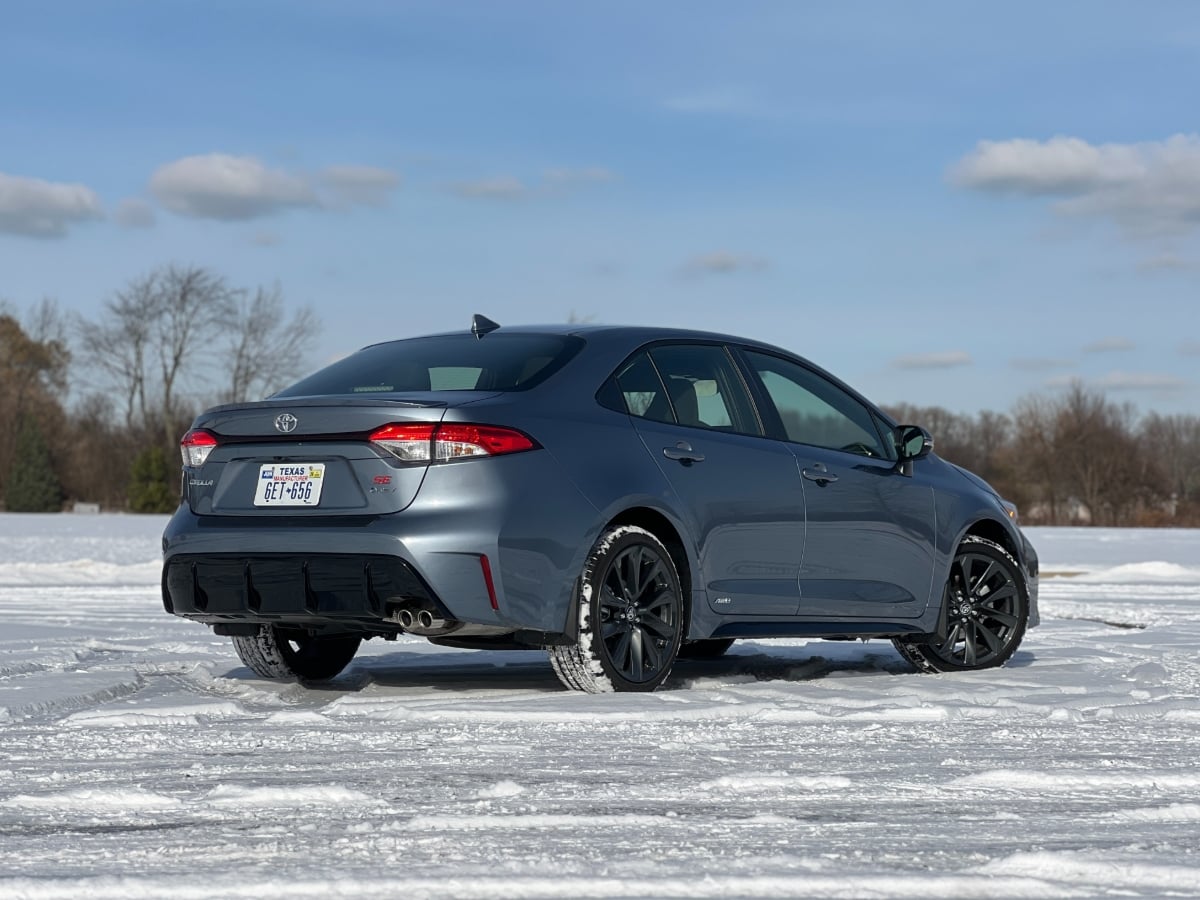
Photo: Beverly Braga
The Corolla Hybrid is equipped with a 1.8-liter four-cylinder engine and an electric motor, producing a combined 138 horsepower and 105 pound-feet of torque. When AWD is selected, a second motor is added to the rear axle, but it does not increase the overall power. By comparison, the non-hybrid Corolla is powered by a 2.0-liter inline-four with 169 hp and 151 pound-feet of torque. Regardless of powertrain, all 2026 Corollas feature a continuously variable automatic transmission (CVT).
The point of a hybrid, of course, is not its power output but its fuel efficiency. Depending on the drive configuration, the 2026 Corolla Hybrid returns an EPA-rated 44 to 50 mpg in combined driving, while the gas model musters no more than 35 mpg. My actual mileage, sadly, was far worse. I averaged 34.4 mpg over 120 miles of mixed driving.
To be fair, my time with the Corolla Hybrid was in southeast Michigan in December, when a blistering winter storm stopped by for an extended visit. High winds, sub-freezing temperatures, and decent snowfall likely throttled the hybrid's overall performance while also making driving treacherous.
Although my test car had AWD, its all-season tires were not winter rated. The highways and main thoroughfares were heavily salted and cleared quickly, but the side streets and unpaved alleys, like the one leading to my driveway, were not. Traction on ice and slush was nonexistent at times, proving that winter tires are a must-have in places where the ground and air freeze. Suffice it to say, I did not attempt any zero-to-60 mph sprints or high-speed cornering.
Everything had to work harder to make up for the single-digit temperatures. Upon startup, the HVAC system did not turn on right away. With the hybrid powertrain, the engine did not fire up, which, on more than one occasion, made me believe the vehicle was not on.
Acceleration came with caution, but I knew the Toyota was doing its best given the conditions. It took longer to warm up, and I could hear the Corolla extracting every ounce of energy from its frozen soul to spin its wheels. The suspension was buttoned up and absorbed rough roads and potholes with a gentle thump instead of a harsh thud.
There are three drive modes (Normal, Eco, and Sport) that can be switched on the fly, even when cruise control is active. If left in Normal or Eco during shutdown, the vehicle will maintain those drive modes upon restart. Sport mode will default back to Normal. However, steering feel and handling still felt numb and loose regardless of mode.
Unless you add a "GR" badge, the Corolla's claim to fame is not sports-car-like dynamics. Its cabin will not be a place of quiet solitude, either. Look to luxury barges for that theater-level of sound deadening. This is a mass-market compact car developed for daily commutes and everyday errands. With that in mind, the Corolla Hybrid fits the bill.
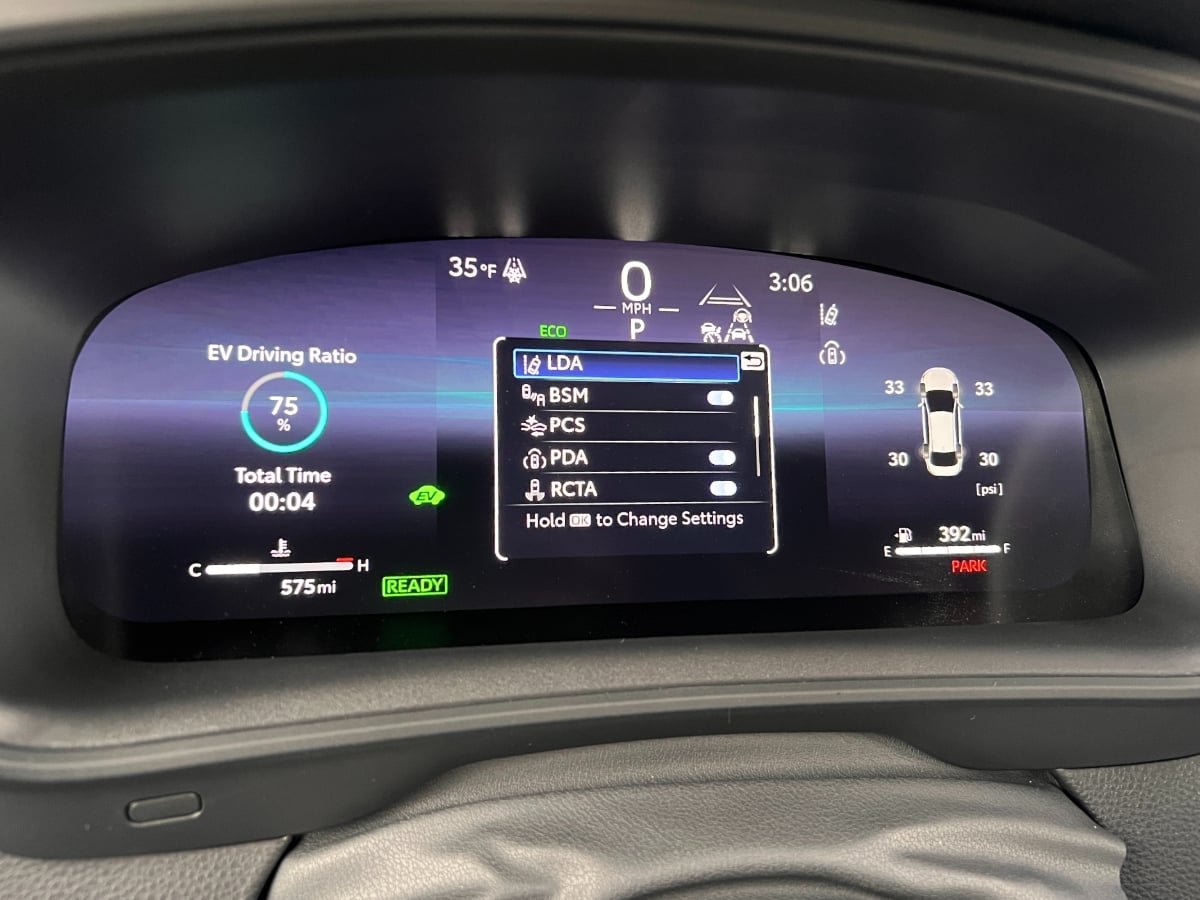
Photo: Beverly Braga
A robust suite of safety features is standard on all 2026 Corollas. Under the Toyota Safety Sense 3.0 (TSS 3.0) umbrella, the following advanced driver-assistance systems (ADAS) are included:
My drive route for evaluating a vehicle's ADAS includes a mostly flat, straight section of US-23, ideal for testing features like automatic lane changing. But the Corolla's safety tech is not from the luxury box. Still, there are a handful of highway curves and elevation changes to make ADAS tests interesting.
Starting in Ann Arbor, Michigan, I headed south toward Toledo, Ohio, where the closest Waffle House is. I cannot help it if cold weather makes me crave covered, smothered, and topped carbs. Besides, the highway was ice free, so I set the adaptive cruise control to the 70-mph speed limit. I selected the second (of three) following distances as an extra buffer.
One thing worth noting for Google Maps users: The speed displayed on the Corolla's digital cluster can vary by up to 3 mph from the number shown in Google Maps. During my drive, Google Maps showed 71 mph, while the vehicle gauge listed 73 mph. This discrepancy was consistent, and I also noticed it when test-driving a Toyota Sienna. When comparing the listed speeds to my personal vehicle (not a Toyota), I found no difference, so I am not sure why the Toyota's speed does not sync.
As for the other driver-assistance features, the vehicle's handling of the aforementioned curves was like that of a newly licensed driver. And like the speedometer, there was no consistency.
In one sweeping section, the ADAS made fractional adjustments to steering, acceleration, and braking throughout the entire curve. In contrast, a good (human) driver could easily maintain the vehicle's momentum while holding the wheel steady.
During another curve, the ADAS oversteered, then overcorrected, then oversteered again. Toyota Safety Sense 3.0 is a hands-on assistance system, but I only lightly placed my hands on the wheel to better feel what the vehicle was doing, rather than relying on my own natural response. The straights did not inspire much confidence either, as I found the car generally hugging the left half of whichever lane it was in. It was just odd.
None of this might be as bothersome or even noticeable on a long road trip, yet for my 45-minute commute, the hesitation and inconsistencies were apparent but not necessarily unsafe.
As of this writing, the National Highway Traffic Safety Administration (NHTSA) hasn’t rated the 2026 Toyota Corolla sedan’s crashworthiness. However, the agency gave the 2026 Corolla hatchback a five-star overall safety rating, the highest possible mark. According to the Insurance Institute for Highway Safety (IIHS), the Corolla earned Good ratings in every test conducted by the nonprofit organization. Still, it did not receive a Top Safety Pick designation, unlike the previous model year.
According to the JD Power 2025 Initial Quality Study (IQS), the Nissan Sentra ranks highest in the Compact Car segment. The Kia K4 and the Hyundai Elantra are the next highest-ranked models.
According to the JD Power 2025 Automotive Performance, Execution and Layout (APEAL) Study, the Kia K4 ranks highest in the Compact Car segment. The Honda Civic and the Hyundai Elantra are the next highest-ranked models.
Other 2026 Corolla competitors include the Mazda Mazda3, Subaru Impreza, and Volkswagen Jetta.
According to verified owners, the Corolla earns an award as the highest-ranked model in its segment in the 2025 Vehicle Dependability Study.