
The 2026 Toyota GR Corolla is a performance car you could drive to work every day, then hit the track or the back roads on weekends to enjoy its wild driving fun. Alternatively, it could serve as a secondary car for weekend outings; it is fun, distinctive, and collectible enough to be considered a toy, but it is not as practical or every day friendly as other sport compact cars.

Photo: James Riswick
For 2026, Toyota strengthens the GR Corolla’s body and chassis to enhance suspension and steering. Additionally, Toyota improves engine cooling with a secondary air intake; and the bulging hood with functional vents—previously exclusive to higher trims—is now standard. Inside, the Premium Plus trim level features a new JBL sound system, a head-up display, and artificial engine noises.
Toyota eliminated the Core base trim level for 2026, increasing the starting price. However, the new “GR Corolla” base trim is cheaper than the previous Premium mid-grade trim despite having similar features. Exceptions include heated seats, a heated steering wheel, and JBL audio, now only available on the Premium Plus. Base prices now range from $41,115 to $47,160, including the destination charge, with the standard six-speed manual transmission. The eight-speed automatic is essentially a $2,000 option.
For this 2026 GR Corolla review, Toyota provided two test vehicles equipped with the Premium Plus trim. I tested one with a six-speed manual transmission on the track at Sonoma Raceway, and another with the optional eight-speed automatic on the roads from the track to Napa, California.
There are no factory options available, bringing the manufacturer’s suggested retail price (MSRP) to $49,160 for the automatic and $47,160 for the manual, including the $1,195 destination charge. The price does not include any current rebates, incentives, or price adjustments since Toyota manufactured the test vehicle.

Photo: James Riswick
Making the bulging hood standard for 2026 was a smart move. It works beautifully with the equally bulging fenders, giving every GR Corolla a strong, muscular look. The roof and spoiler color still vary by trim (the Premium Plus has a gloss black spoiler and forged carbon fiber roof), but both feature those cool triple tailpipes.
The interior still feels pretty bland. It lacks the design flair of the Hyundai Elantra N and the bright red upholstery and carpets of the Honda Civic Type R. The interior materials also fall short of the Honda's. Nonetheless, it features supportive sport seats, a nicely contoured sport steering wheel, grippy suede-like upholstery, red stitching throughout, alloy pedals, unique instrument graphics, and, most importantly, a large chunky mechanical hand brake.

Photo: James Riswick
As impressive and practical as that handbrake is compared to a button-operated electronic system, installing it results in the removal of the center armrest. Although a small tray remains, it is not very useful. The cupholders are still there, despite being moved, so Toyota did not entirely sacrifice functionality just for cool handbrake turns.
In other respects, the GR Corolla is just as practical as a regular Corolla Hatchback. That means its four doors and versatile hatchback cargo area make it a better daily driver than a sporty car like the Toyota GR86.
On the other hand, its back seat and cargo space are cramped compared to what you will find in a Civic Type R or Elantra N. Even the latter’s traditional trunk could carry more luggage in my previous testing than the Corolla with the seats up. As a result, the GR Corolla is not as practical a daily driver as the Honda or Hyundai.
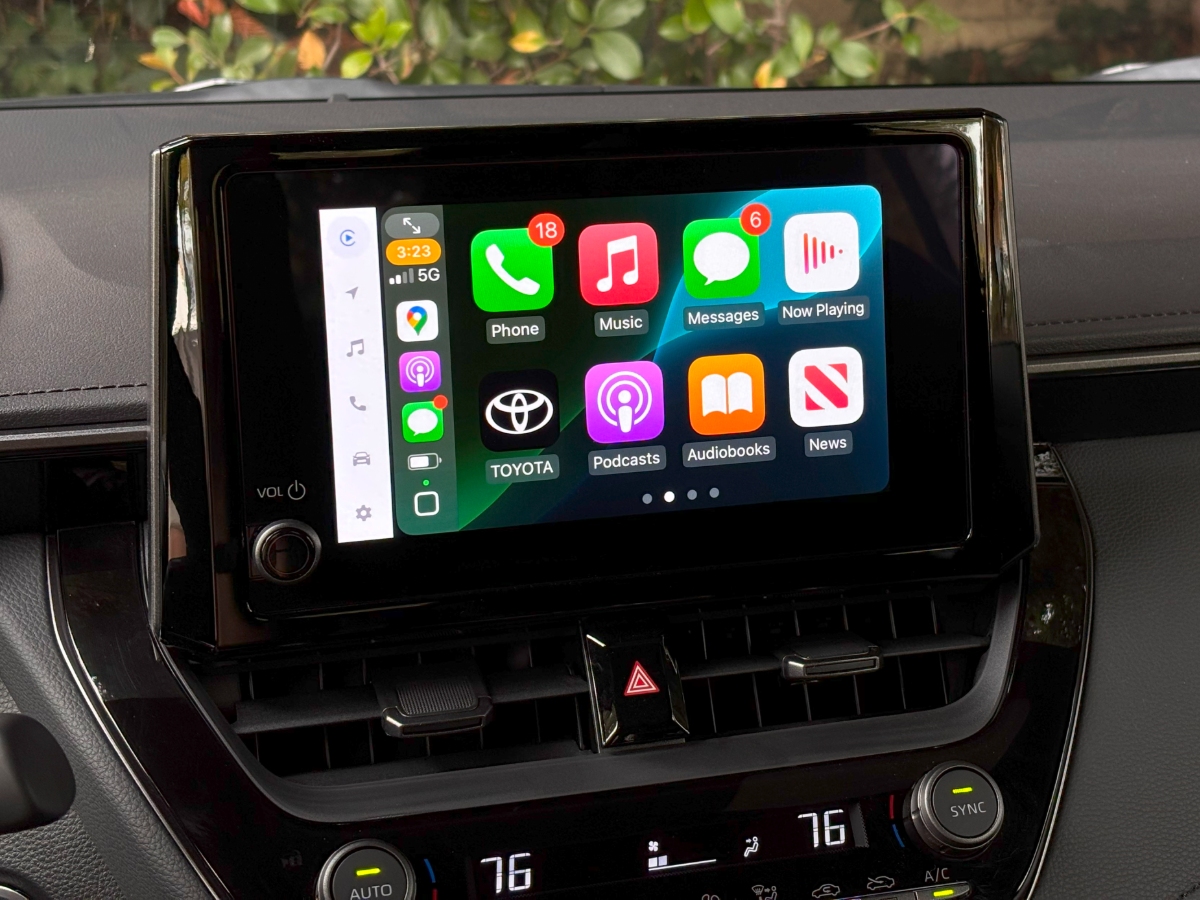
Photo: James Riswick
The GR Corolla features an 8-inch Toyota Audio Multimedia infotainment system. It is a relatively small touchscreen (the Civic Type R’s measures 9 inches; the Elantra N’s is 10.25 inches, and the Volkswagen Golf R’s is 12.9 inches), but its appearance and functionality closely resemble the larger screens in other Toyotas. This makes it easy to use and read at a glance, with only a few minor issues I could live with.
The GR Corolla also comes well equipped with features that include:
The GR Corolla also features a 12.3-inch digital instrument cluster with performance-focused graphics and various layouts. For example, you can replace the traditional dial-style tachometer with a large horizontal bar tachometer at the top of the instrument panel—it is easy to see while keeping your eyes on the track. The Premium Plus trim further adds a head-up display, which is even more helpful for track driving.
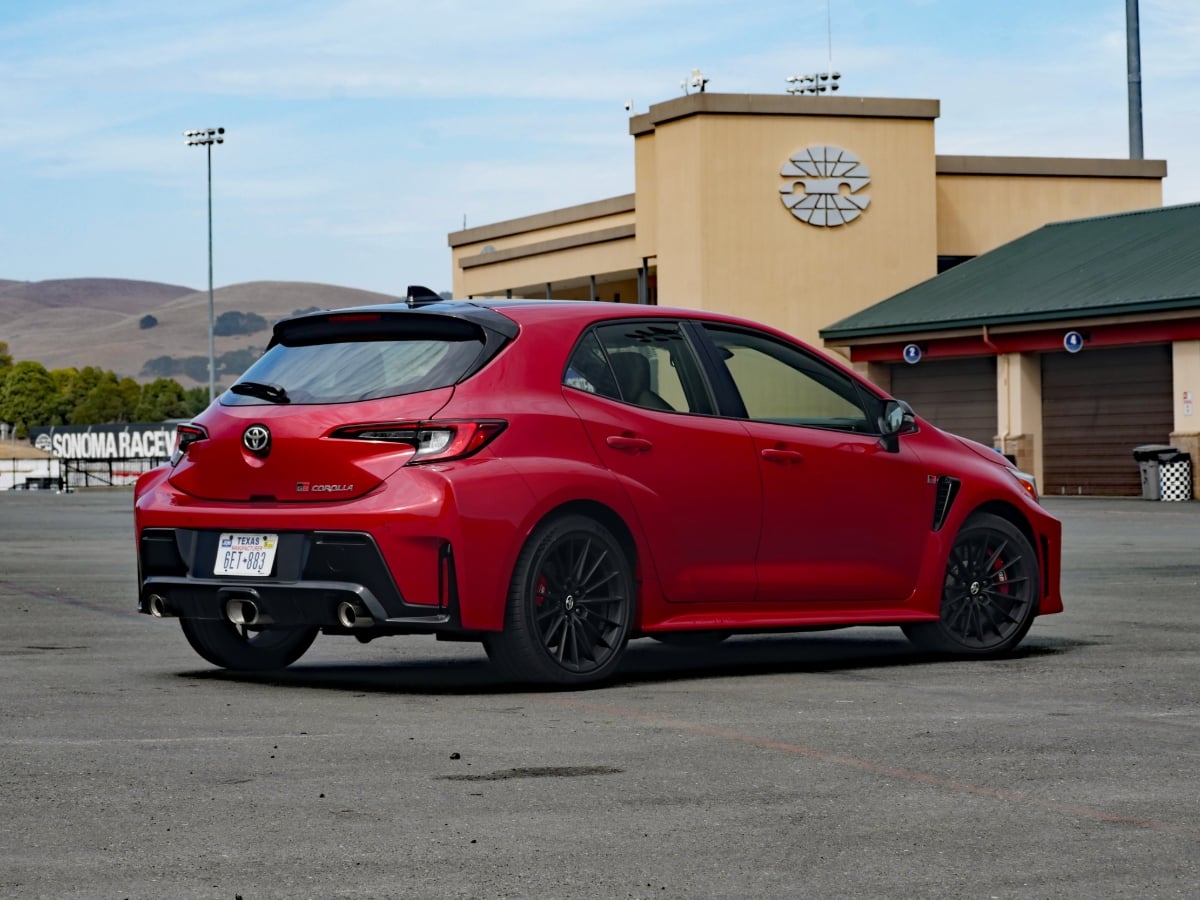
Photo: James Riswick
The GR Corolla is powered by a small but mighty engine—a turbocharged 1.6-liter three-cylinder that delivers a fierce 300 horsepower and 295 pound-feet of torque. The torque is 22 more than at launch (Toyota upgraded it for 2025), and although the difference is not huge, I could feel it when climbing the turn-one hill at Sonoma during back-to-back drives with a 2023 model. Toyota estimates it will reach 60 mph in 4.9 seconds with either transmission.
As fun and thrilling as the acceleration can be, it is the noise that has always made this engine so special. It’s like a growling bulldog puppy tugging on a rope, accompanied by the song of three tailpipes. It is incredibly characterful and cool, and a significant reason why the whole car is so outstanding and unique.
I say this as someone who has driven a GR Corolla without the new “Active Sound Control” system, which uses the Premium Plus’ JBL sound system to simulate engine noises inside the cabin. During my street drive (while wearing a helmet on the track), I could not tell what was real and what was artificial, but knowing there is fakery involved tarnishes what could otherwise be an authentic experience. It seems so pointless.
Again, I only drove the six-speed manual on the track. The brake and throttle pedals are a little far apart, even with 11.5-sized shoes, which makes the auto rev-matching i-MT an invaluable feature when downshifting into corners on the track or street. I would probably keep it on all the time, but I appreciate that Toyota moved the i-MT button to a spot next to the shifter rather than its original position down near the driver’s left leg.
The shifter is not as smooth in action, nor as precise as the Civic Type R’s. It also lacks the satisfying mechanical feel of the Toyota GR86’s. That being said, this manual is easy to operate, with a clutch that is not hard to use in terms of effort or engagement point. I would not hesitate to use it for daily driving.
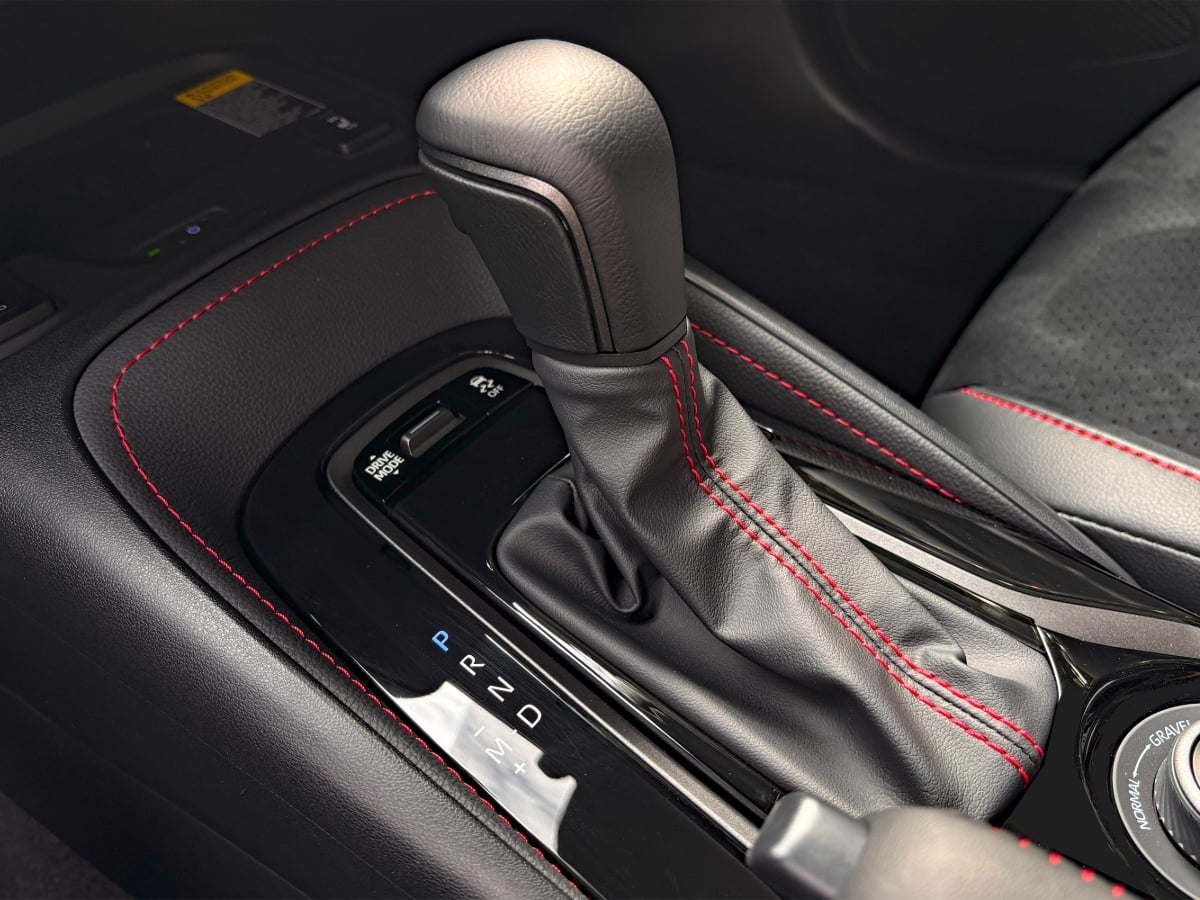
Photo: James Riswick
Of course, if you frequently find yourself in gridlock, there is the eight-speed automatic I tested away from the track. It responds quickly enough for passing on the highway or when using a paddle shifter. Still, it does not feel as crisp and as performance-focused as the dual-clutch automated manual transmissions in the Hyundai Elantra N or, to a lesser extent, the Volkswagen Golf R.
Therefore, if I genuinely wanted an automatic, I would choose one of those cars. The overall feeling of driver involvement drops too sharply from manual to automatic. The Elantra N and Golf R also provide more comfortable rides thanks to adaptive damping suspensions, making them more practical for everyday driving.
Now, regardless of transmission, the GR Corolla comes with the standard GR Four all-wheel-drive system, which lets the driver choose among three front-to-rear power distribution modes. Normal is 60:40, Gravel is 50:50, and Track is a variable setting that ranges from 60:40 to 30:70.
Despite the name, I preferred Gravel mode on the track, which isnot as nutty as it sounds since the 50:50 setting was the GR Corolla’s original track-oriented mode. Just as I did back in 2023 when I tested the different power distributions on a track, I still favor the more neutral and predictable behavior of 50:50 when pushing the car hard. The current Track setting’s ability to send up to 70 percent of the power to the rear was helpful when accelerating out of hairpin turns, but overall it just feels looser and less precise.
Overall, the GR Corolla remains as engaging and enjoyable to drive on a track or a winding road as ever, now with slightly sharper steering response and firmer body movements thanks to increased rigidity. It continues to be a highly communicative and controllable car that allows you to steer as much with the throttle as with that well-shaped sport steering wheel. Grip provided by the tires, the suspension, the GR Four system, and the front and rear limited-slip differentials is excellent.
Heck, even with limited grip, the GR Corolla is a blast. I briefly drove one on a gravel track, and I actually enjoyed slipping and sliding more in a rally style setting than on the track. If this sounds like your kind of driving, the case for the GR Corolla over its competitors just got a lot stronger.
Finally, Toyota estimates fuel economy at 24 mpg combined with the manual transmission and 22 mpg combined with the automatic. With the automatic, I achieved 24.5 mpg over 26 miles of rural highway driving, including some stop-and-go traffic.
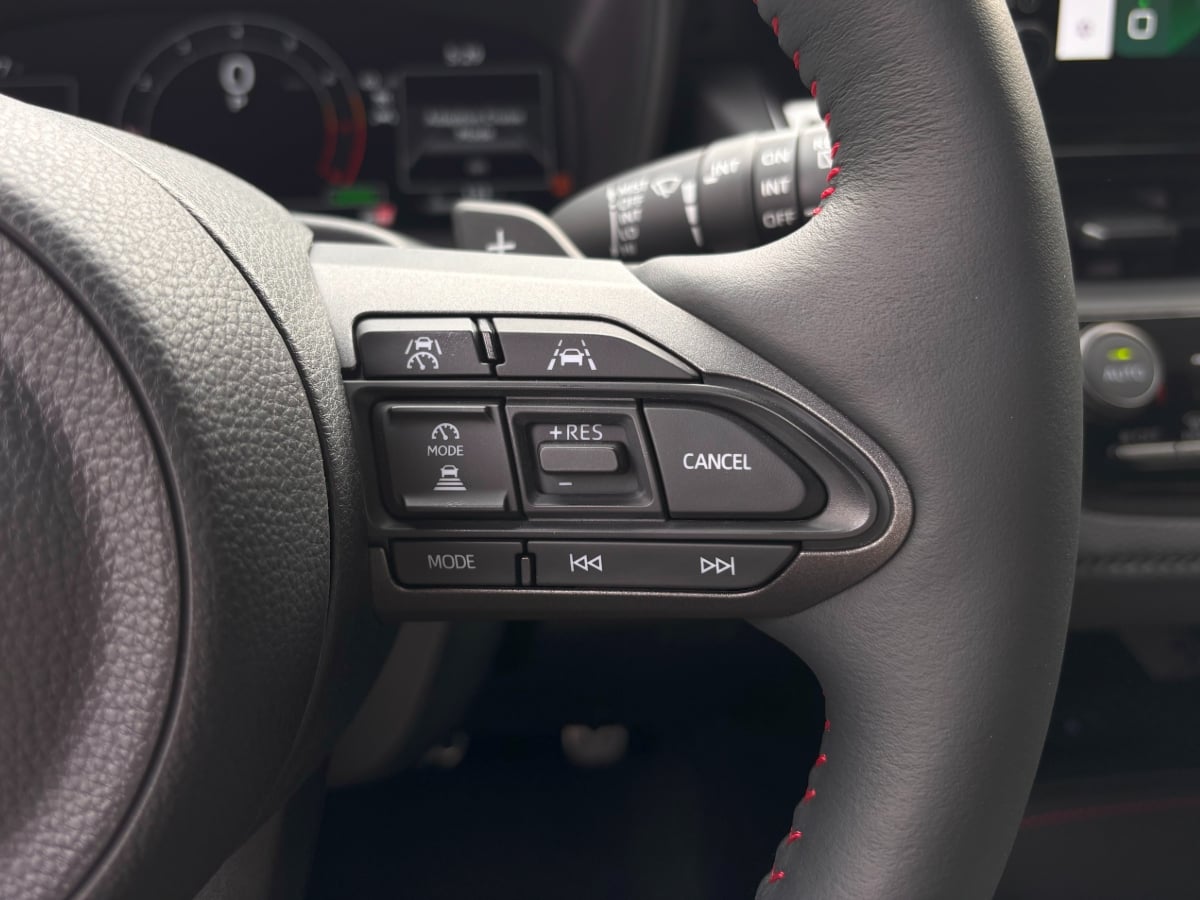
Photo: James Riswick
The GR Corolla is equipped with Toyota Safety Sense 3.0, a suite of advanced driver assistance systems (ADAS) that includes:
When equipped with the automatic transmission, the ACC becomes a “full-speed” system that can operate at lower speeds and come to a complete stop. Unfortunately, the car will not remain stationary, nor will it start again once traffic begins to move. After automatically stopping, the system would warn me after a certain number of seconds to apply the brakes because it was about to stop doing so.
My shorter-than-usual time with the car didn’t give me much chance to evaluate the other systems, but it did not reveal any bad habits or false alarms either.
The 2026 Toyota GR Corolla is a characterful and perpetually fun performance vehicle, whether you’re after a daily driver or a weekend toy. It is probably a smarter choice if you prefer the latter, as its competitors offer more practical interiors, smoother rides, and superior automatic transmissions.
James Riswick has been testing and reviewing cars since 2007, serving as an editor at Edmunds.com and Autoblog. In addition to JDPower.com, he has also contributed to Autoguide Magazine, Autotrader, Capital One Auto Navigator, Car and Driver, and Hagerty. He resides in Southern California and owns a 1998 BMW Z3, a 2013 Mercedes-Benz E350 Wagon, and a 2025 Cadillac Optiq.


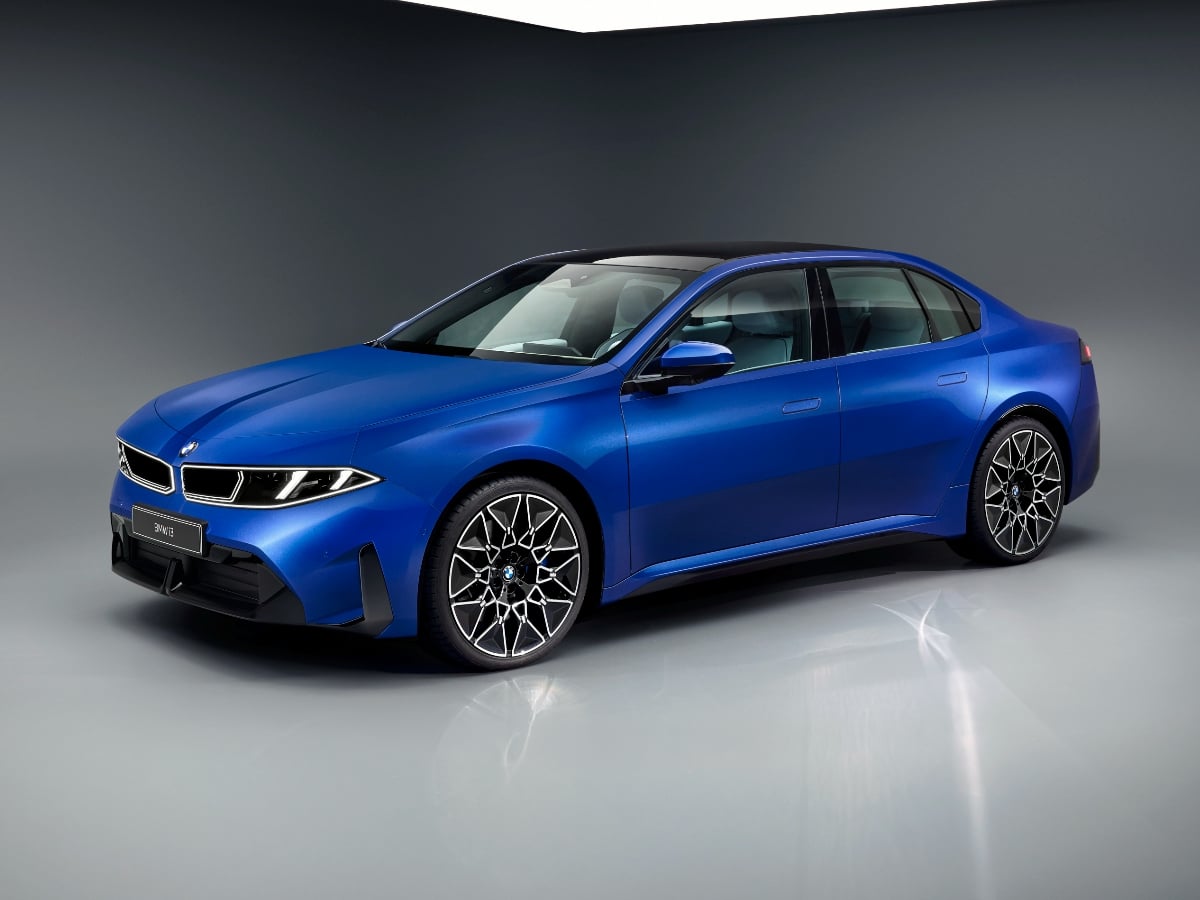
The new 2027 BMW i3 boasts an estimated range of up to 440 miles, 400-kilowatt DC fast charging capability, bidirectional charging to a home or the grid, and next-generation technology.
Read the Full Article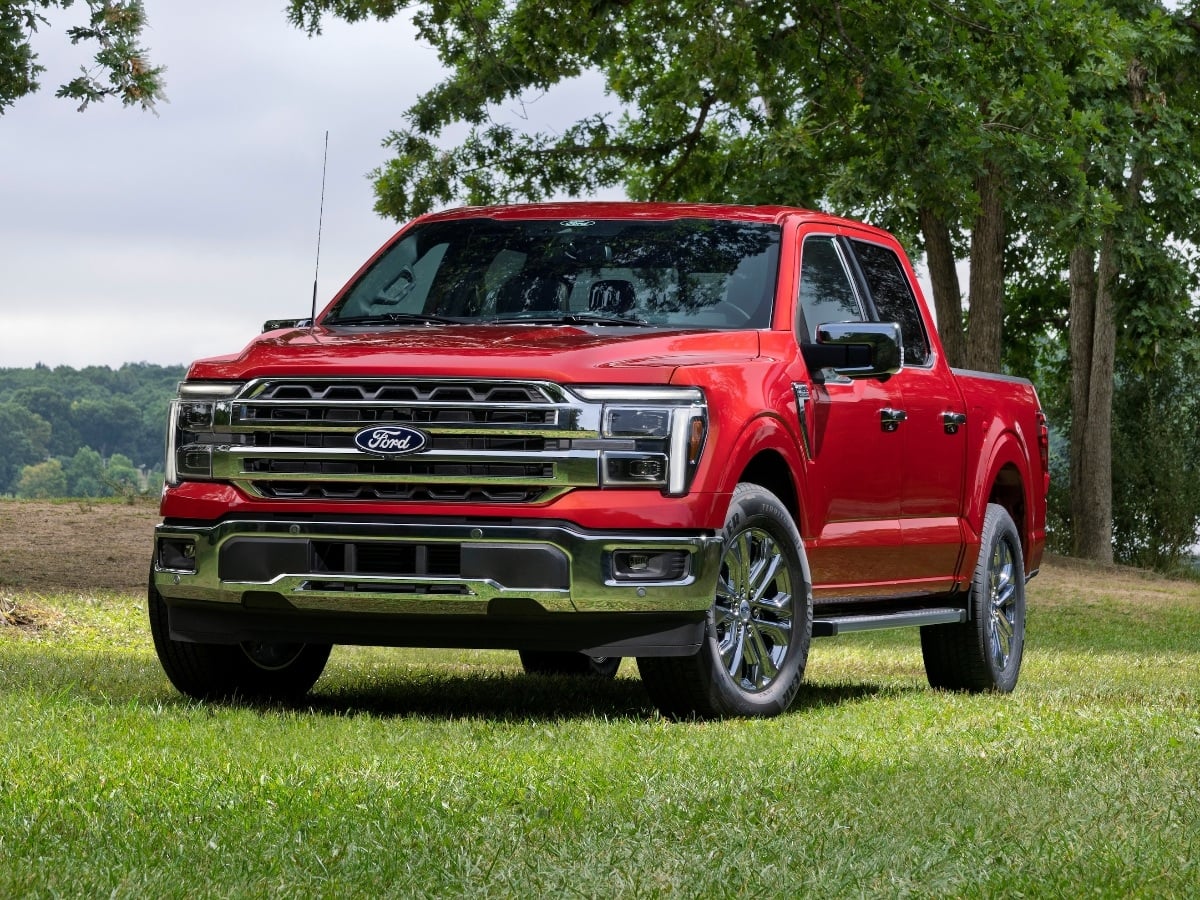
Facing renewed competition in the full-size, light duty pickup truck segment, the 2027 Ford F-150 receives subtle styling updates, a new standard engine, broader availability of its 5.0-liter V8, and ...See More
Read the Full Article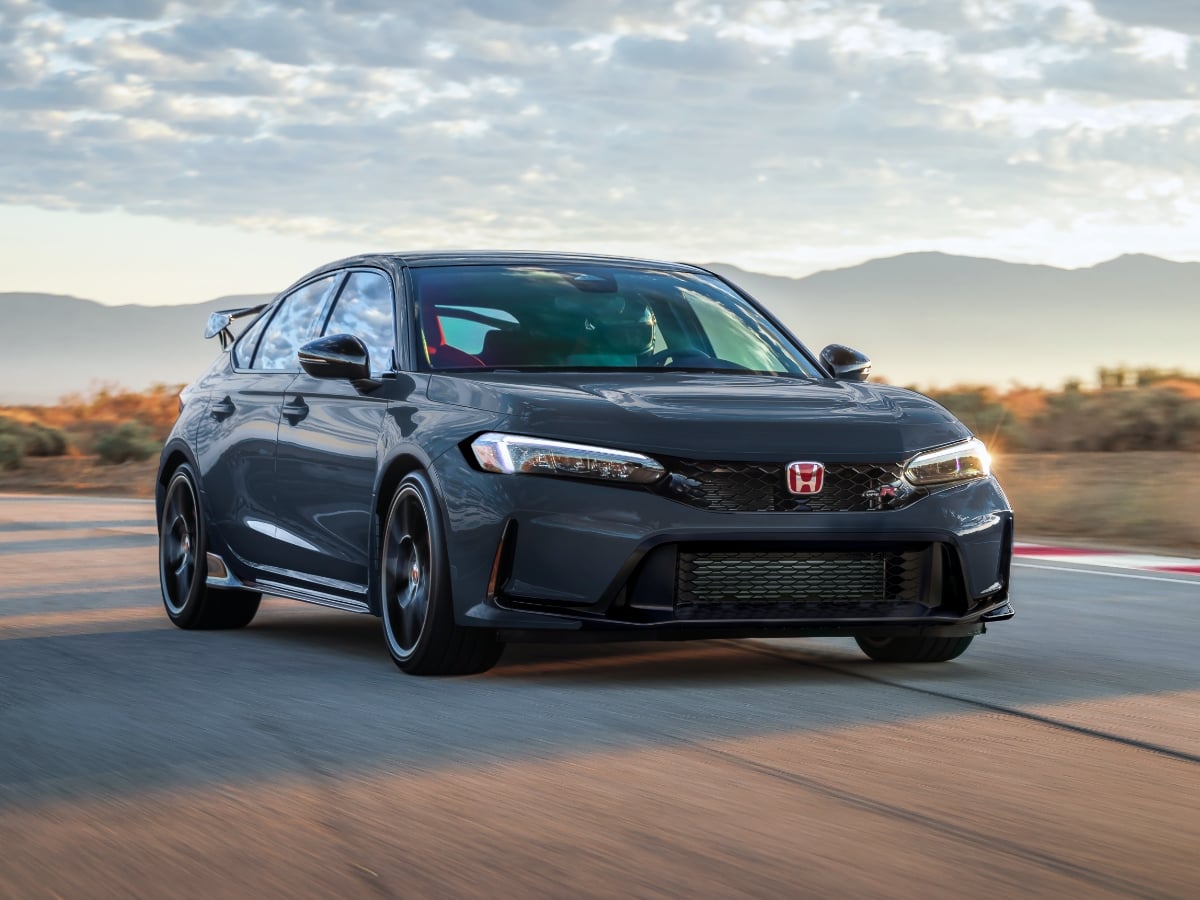
The 2027 Civic Type R goes on sale in October 2026, and it starts at $49,990, including the $1,295 destination charge.
Read the Full Article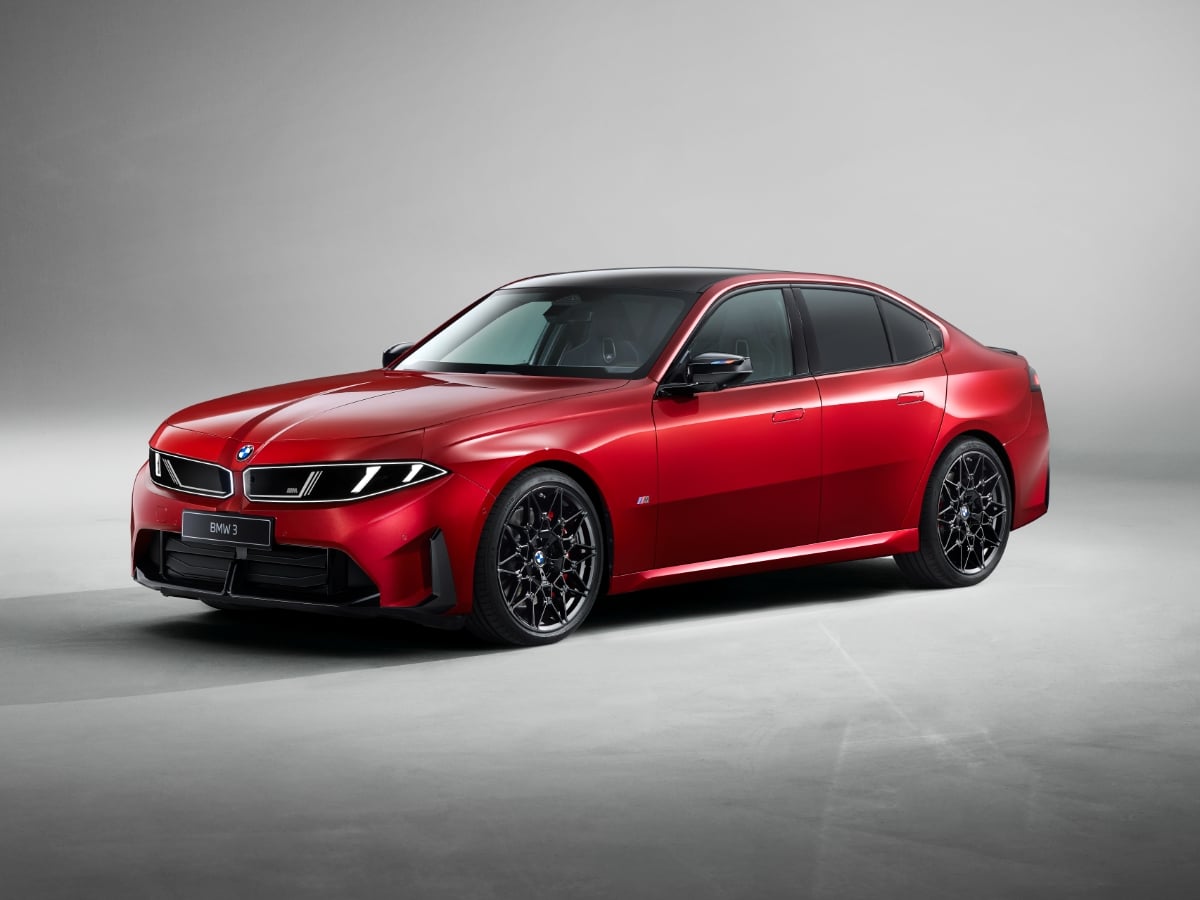
Part of BMW’s Neue Klasse (new class) rollout of redesigned models, the 2027 BMW 3 Series is all-new and goes on sale in the first quarter of 2027.
Read the Full Article