See answers to common EV questions, tax incentives, charging maps & more.
Explore EV
24 - 26
175
1 speed, Continuously Variable Ratio, 8 speed, Automatic
Turbocharged Gas I4
All Wheel Drive, Front Wheel Drive
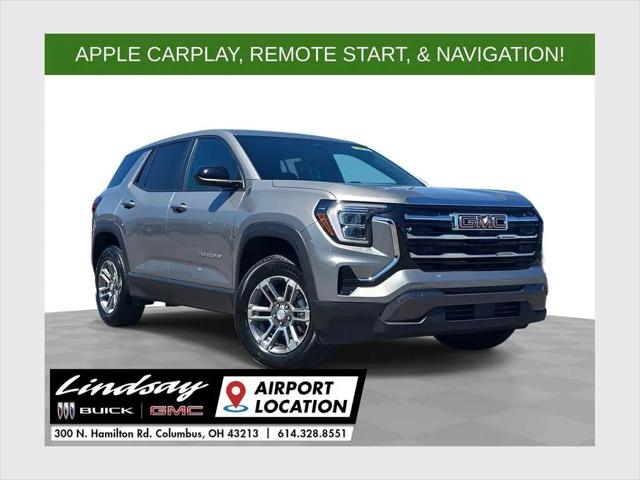
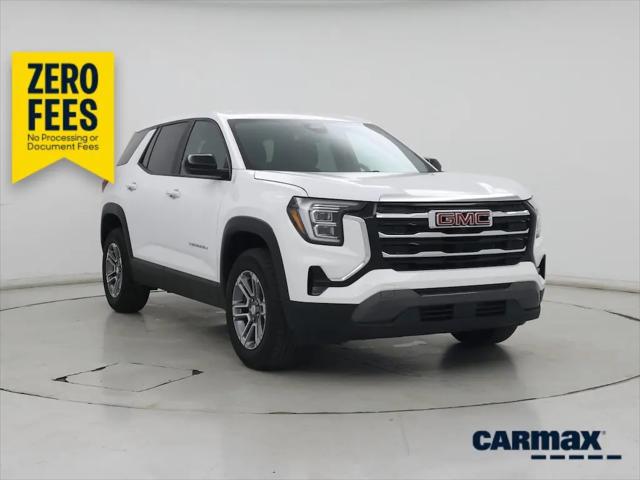
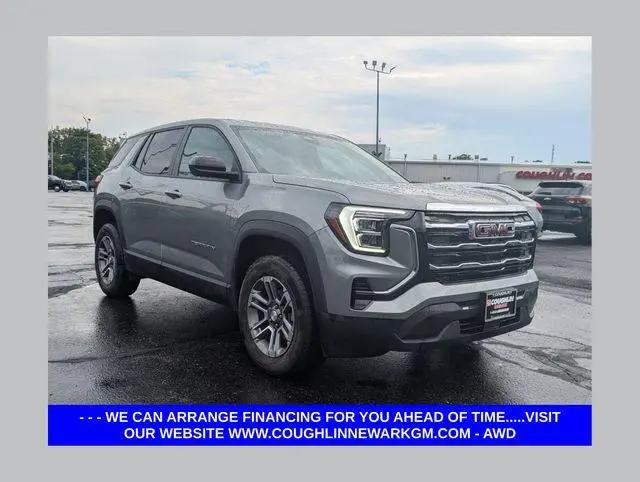
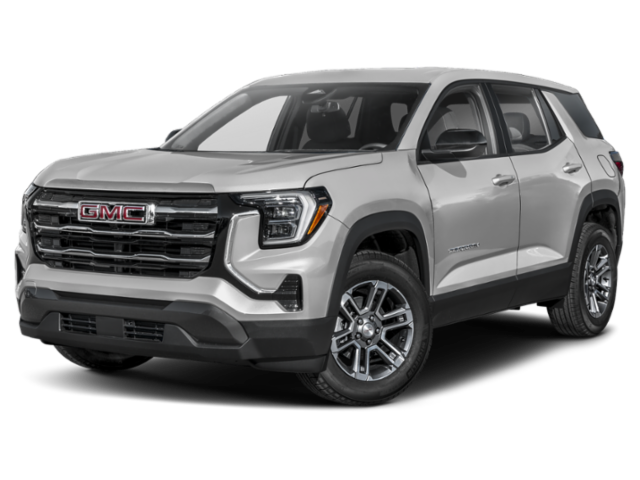
The 2026 GMC Terrain offers a more upscale take on the compact SUV segment. The interior impresses with high-quality materials, advanced technology, and ample storage. The AT4 and Denali trim levels go even further, adding numerous features and boasting unique color options. Unfortunately, there is little that feels truly premium about the driving experience: the powertrain, handling, and steering are just not competitive.
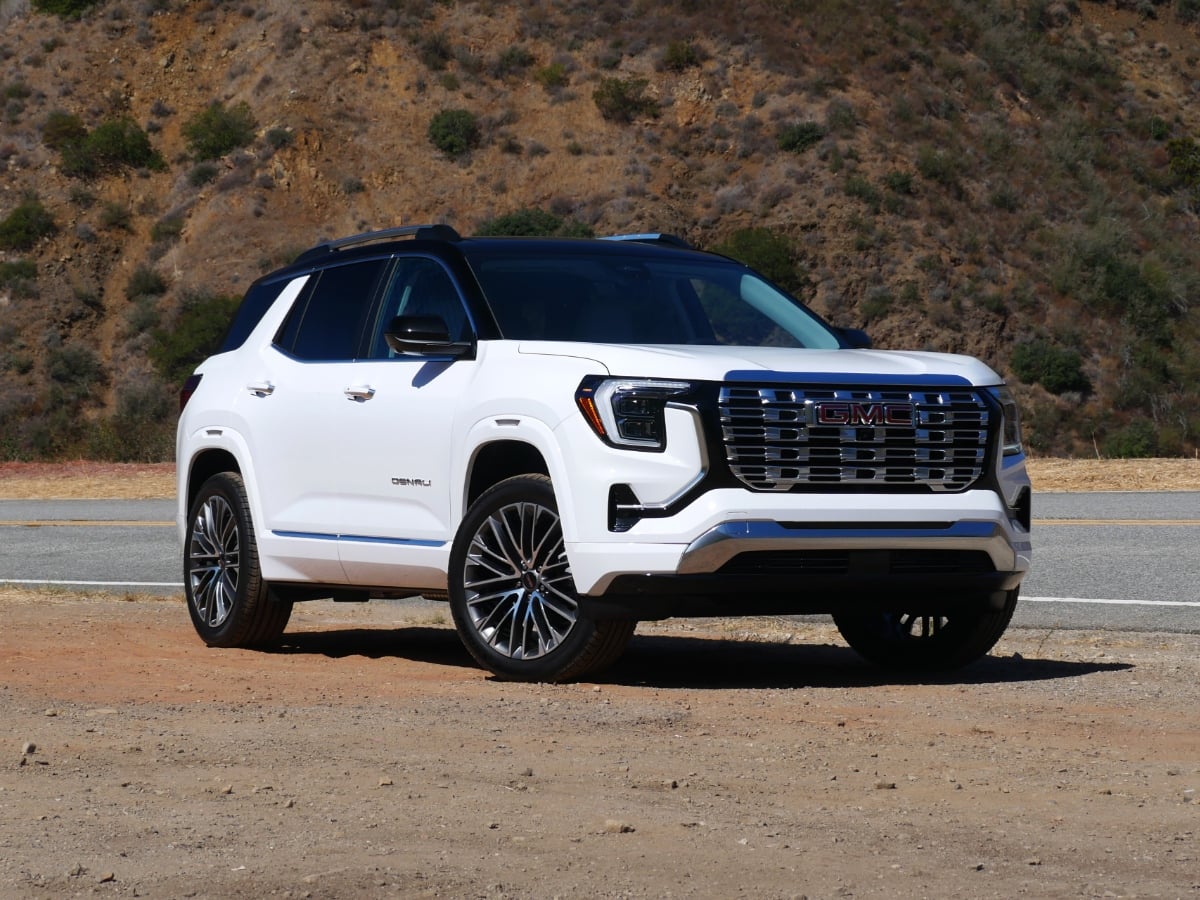
Photo: James Riswick
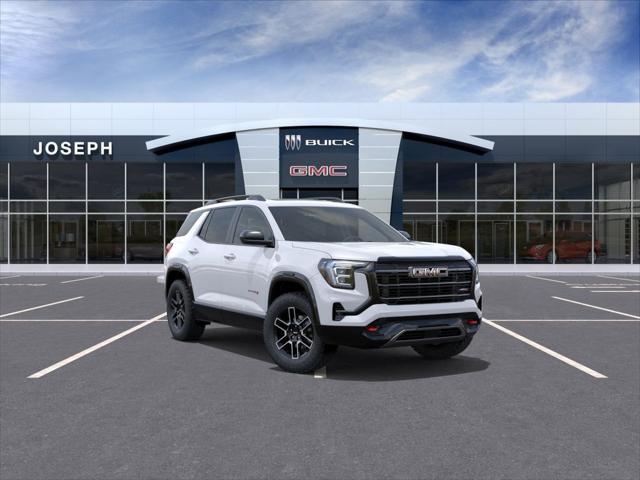
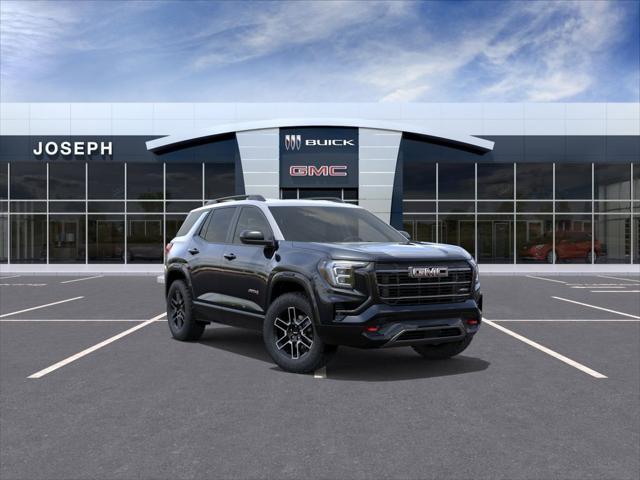
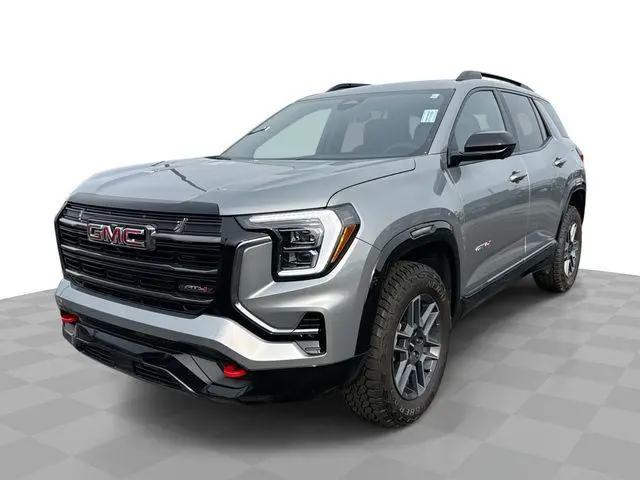
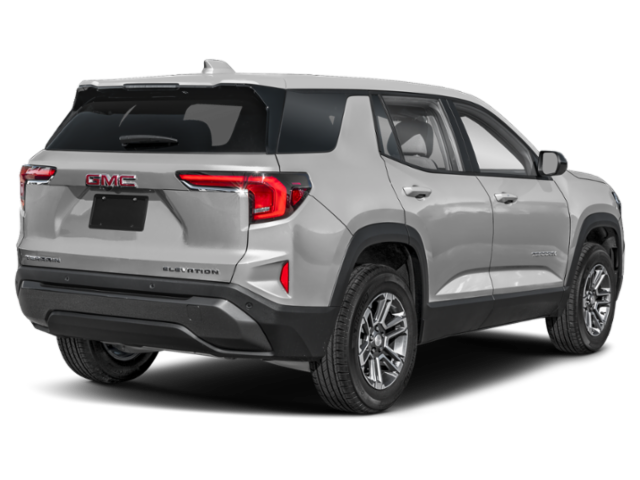
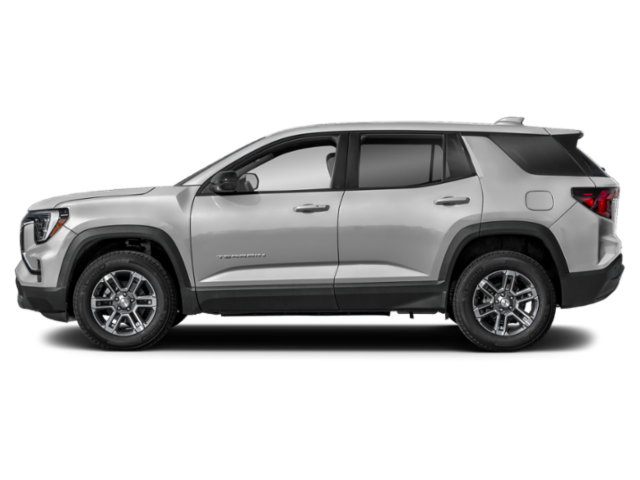
After completely redesigning the SUV for the 2025 model year, the GMC introduces the off-road-oriented AT4 and luxury-focused Denali trims for the 2026 Terrain. In addition to adding features that were previously unavailable on the carry-over Elevation trim, these trims bring their own unique style and mechanical upgrades.
The trim level count has now increased to three: Elevation, AT4, and Denali. Base prices range from $31,895 to $43,595, with nearly $10,000 separating the Elevation and AT4.
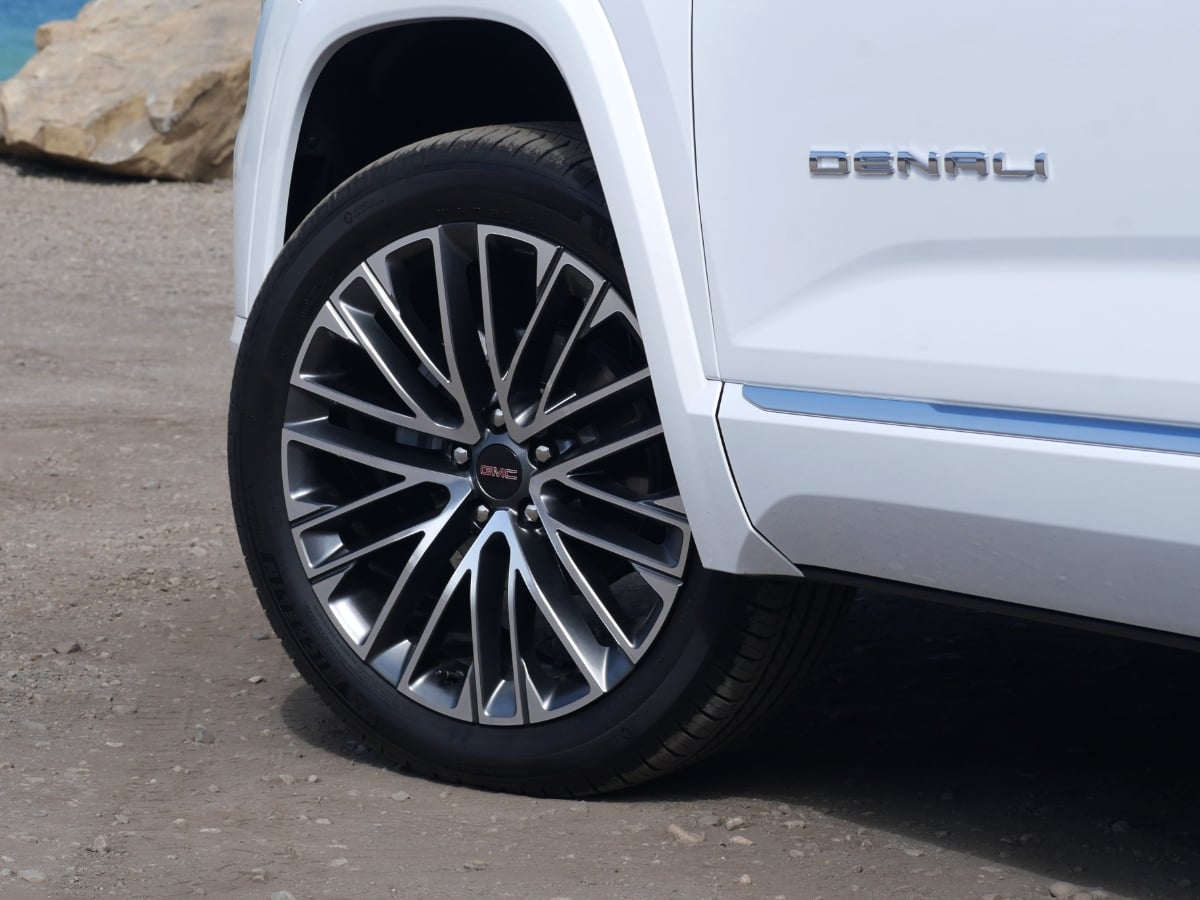
Photo: James Riswick
For this 2026 Terrain review, GMC provided a test vehicle equipped with Denali trim and the following options:
The test vehicle’s manufacturer suggested retail price (MSRP) was $46,435, including the $1,795 destination charge to ship the SUV from the San Luis Potosí, Mexico, assembly plant to your local dealership. The price does not reflect any current rebates, incentives, or price adjustments since GMC manufactured the test vehicle.
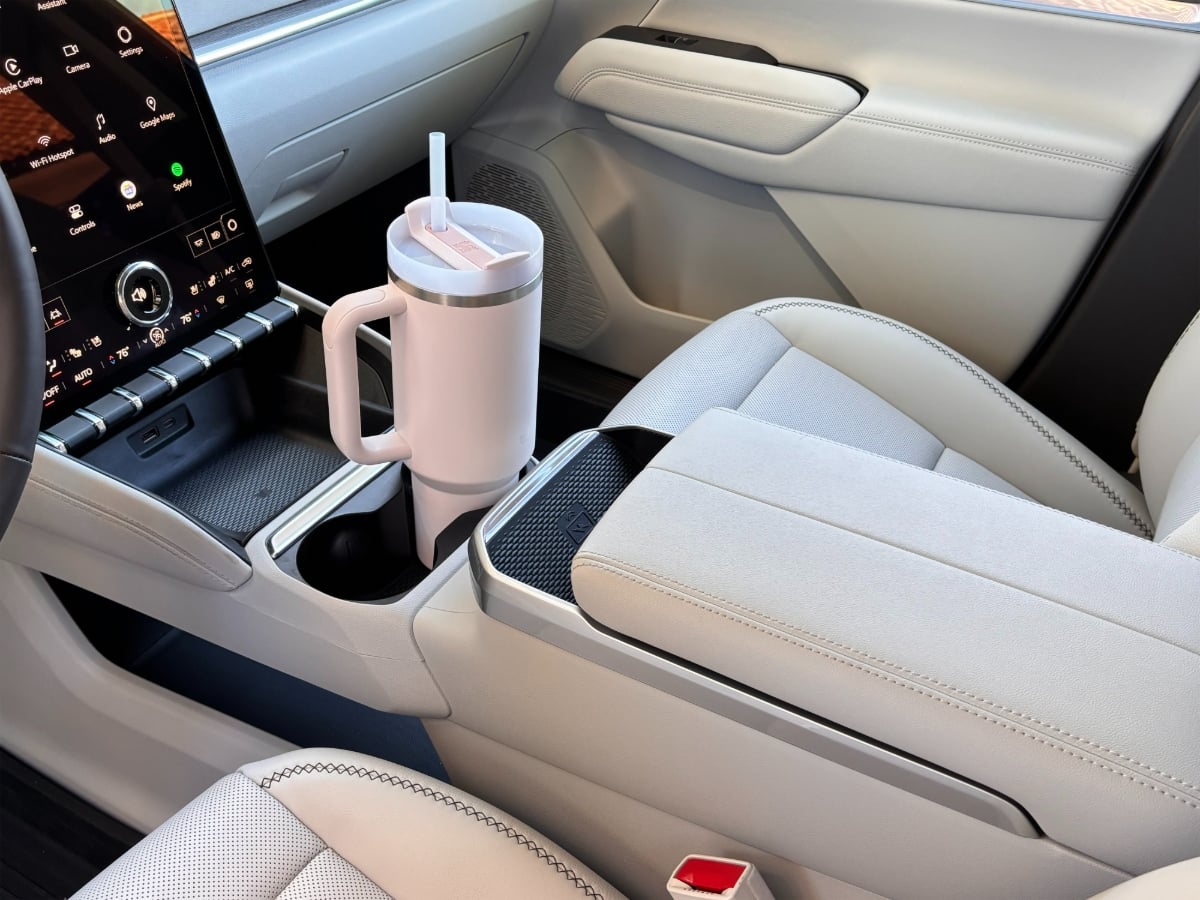
Photo: James Riswick
The Denali stands out with a chrome grille and body trim, along with its available 20-inch “After Midnight” wheels. However, the interior is not much different from the base Elevation trim. The classy Light Ash Gray/Very Dark Atmosphere (also known as gray and brown) color option shown here is unique to the Denali, but aside from its leather upholstery, the materials seem to be shared across the range. That is a good thing.
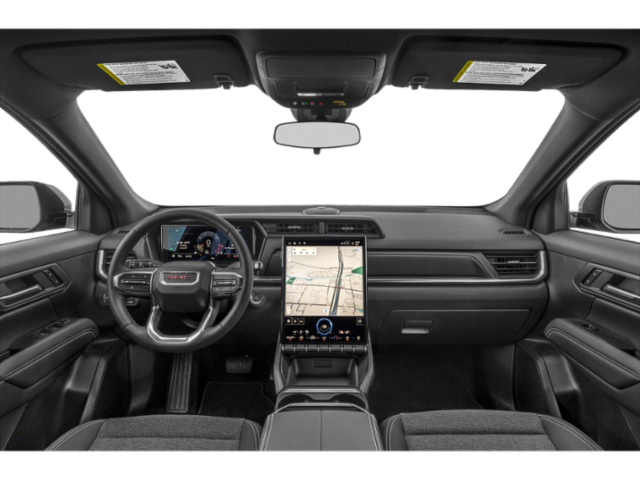
Most surfaces in the front are nicely textured and soft to the touch, while the doors, dashboard, and center console are finished in soft, padded, and stitched simulated leather. Hard plastics are limited to the lowest areas of the front cabin and rear doors, but even they are pleasing to the eyes and fingers.
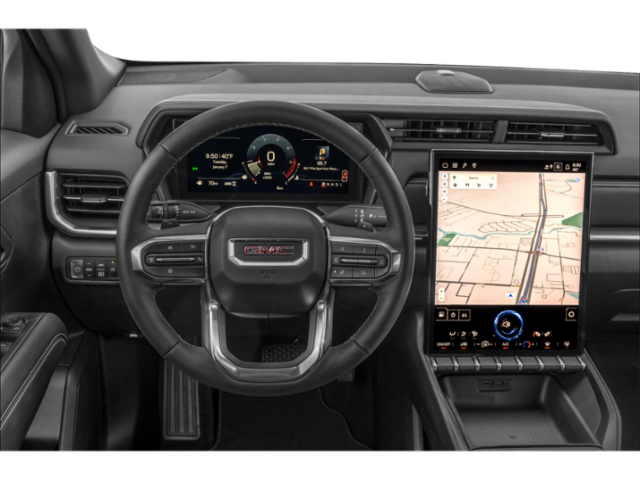
The big, chunky toggle switches next to the central touchscreen are high quality, which is refreshing given how many vehicles now rely heavily on touchscreen controls. They also have a more premium look and feel than the glossy black climate controls found in the mechanically related Chevrolet Equinox.
Now, the touchscreen still displays what the climate system is doing, along with seat heating and ventilation buttons, and air recirculation, which work the same way as physical buttons. However, the 15.1-inch portrait-oriented screen offers so much available space, that functionality is not limited. More on that later.
The screen’s shape and placement also allow the air vents to be positioned high, instead of aimed at your knuckles like in the Equinox. Additionally, the air conditioning worked so well on hot days that I felt it was worth mentioning.
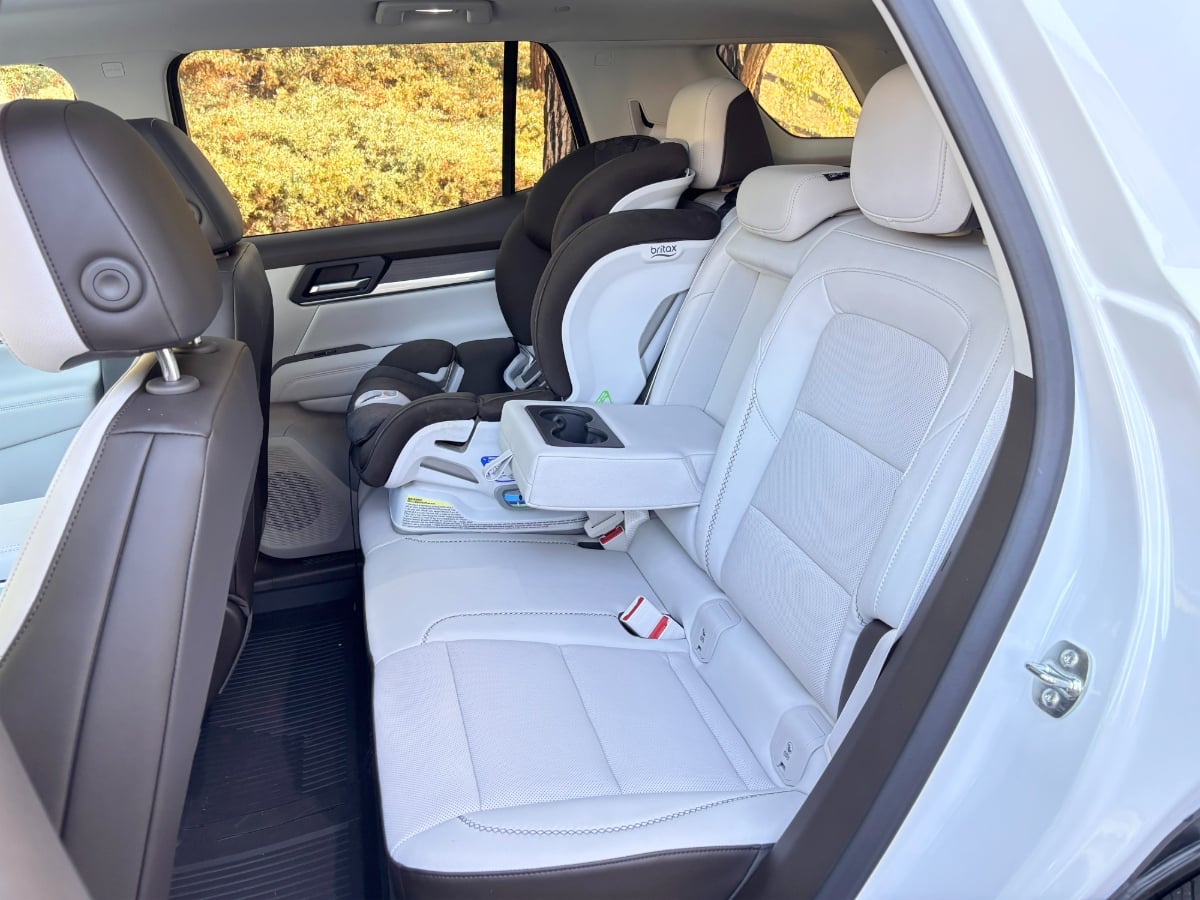
Photo: James Riswick
Cabin storage is excellent, too. A large, rubber-bottomed tray with USB-C ports is perfect for ID badges, sunglasses, or a sandwich (ask me how I know!). You could put a phone in it, but you would be better off using the clever, space-saving, angled wireless charging pad that cools your phone to prevent overheating. There is also storage under the console and the usual bin under the armrests.
Cupholders? They are also great. The ones in the center console are large enough and, importantly, secure enough to hold a 40-ounce jumbo cup and a water bottle the size of a wine bottle. The rear cupholders can also fit them, which is rare. The door bottle holders are not as good; they will struggle to hold hard-shell water bottles.
The cargo area also falls short, especially when compared to other compact crossover SUVs. Most have more space behind the back seat, some significantly so. My own real world testing confirmed this, as the Terrain simply could not hold as much luggage and gear as competitors. It was also more challenging to load.
The pendulum swings back toward the positive in passenger space. The driver's seat offered more travel and adjustment than I needed, which is rare for someone who is 6-foot-3. However, I advise that shorter drivers may need to raise their seats higher than usual, as the dashboard and hood are quite tall.
The back seat provides space comparable to other compact SUVs like the Honda CR-V, Mazda CX-50, and Volkswagen Tiguan. My knees just grazed my own extended driving position, and there was ample headroom despite my test vehicle having the panoramic sunroof. Other GM SUVs with this feature often had my head touching the ceiling. Fitting and securing my son’s forward-facing car seat was straightforward.
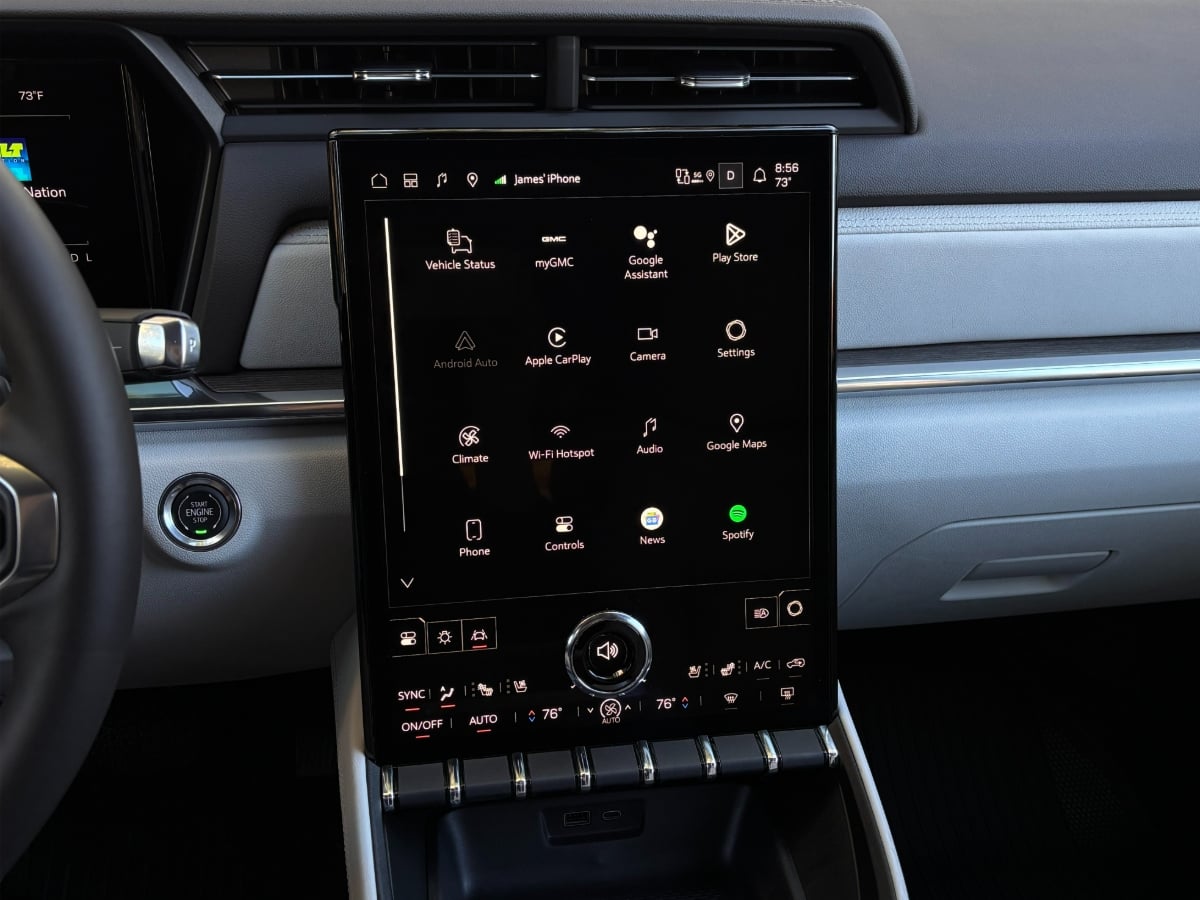
Photo: James Riswick
Every 2026 Terrain comes standard with a pair of screens that do more than just impress with their size. They actually enhance functionality. The 11-inch digital instrument panel features crisp graphics and multiple layout options, including a more traditional tachometer/speedometer combination dial centered within the display.
I usually prefer wide screens, but the Terrain’s 15.1-inch portrait-oriented display is an exception. While its menu structure and overall functionality are similar to the Equinox’s, which is already a pretty good system, the Terrain’s screen intelligently uses its extra space to spread everything out, making it easier to read and press icons at a glance. This approach avoids cramming even more onto the display.
I also appreciated that the wireless Apple CarPlay smartphone mirroring interface does not have to fill the entire screen. It simply does not need to, not when the displayed area appears larger than the full screens in some vehicles. Limiting it to the upper half of the screen allows for two driver-selectable tiles below, which I used to display audio system song information and trip computer data. Overall, this has become one of my favorite tech interfaces.
Wireless Android Auto is included, though the system’s built-in Google features make it less necessary. This provides integrated Google Maps and Google Assistant voice controls, along with access to more apps from the Google Play Store. These operated as reliably as they always do.
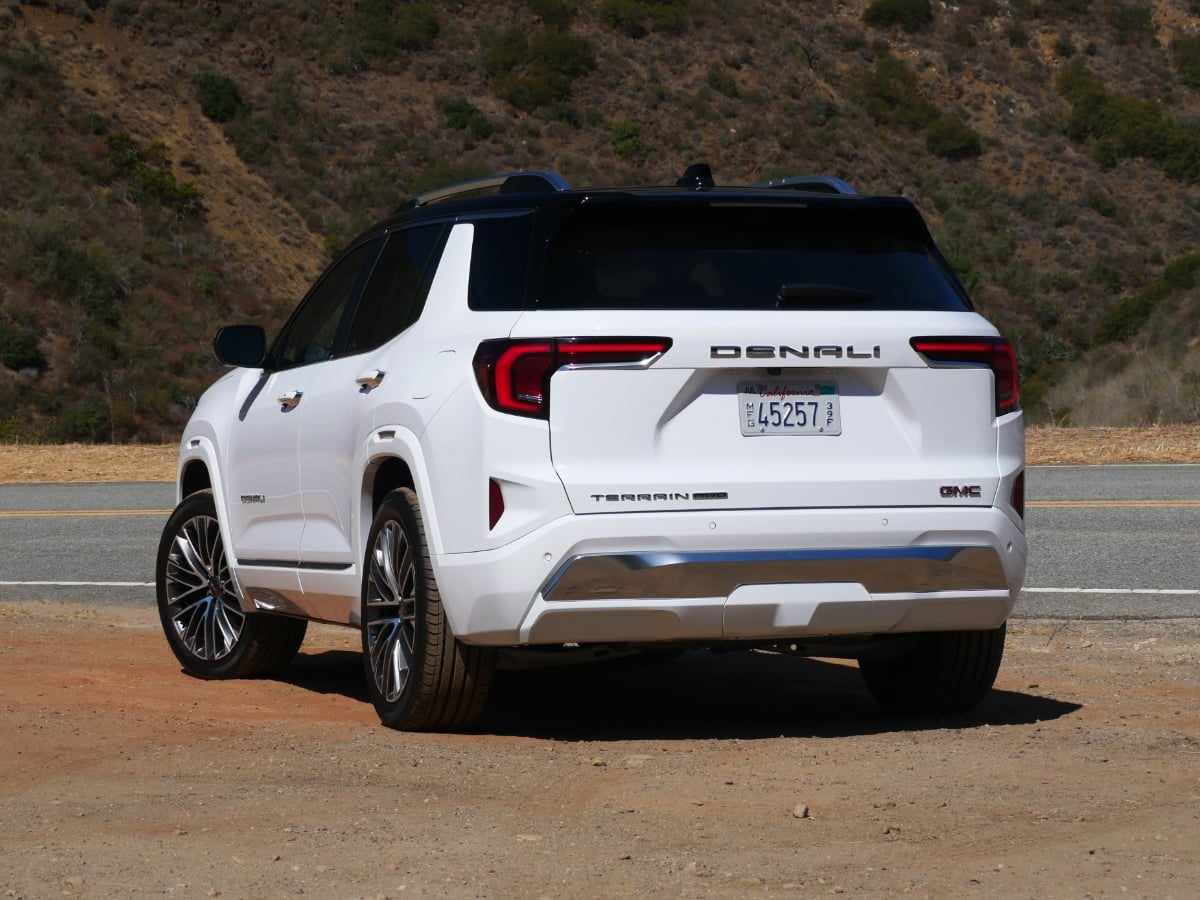
Photo: James Riswick
The Terrain Denali features a “premium suspension” with Smart Frequency Damper technology. While I am unsure how much it enhances the ride compared to the Elevation or AT4, I can confirm that its ride quality is excellent for a compact SUV. It impressively isolated sharp impacts and large bumps from the cabin, even with my test vehicle’s optional 20-inch wheels. It is very well executed. However, everything else about the Terrain’s driving experience is disappointing.
The only available engine is a turbocharged 1.5-liter four-cylinder. It only delivers 175 horsepower and 184 pound-feet of torque in the front-wheel-drive (FWD) Elevation, which also uses a continuously variable automatic transmission. I cannot imagine a world where that would be even worse to drive.
When equipped with all-wheel drive (AWD), which is standard on the AT4 and Denali, the same engine’s torque increases to a more competitive 203 pound-feet. It also gets a much smoother eight-speed automatic transmission.
That said, this is not a competitive powertrain. While the decent torque kept it from feeling strained around town and during highway acceleration, that was only with myself and a 38-pound five-year-old on board. Fill it up with people and their gear, and I strongly suspect the Terrain Denali would feel much slower than its competitors, especially the hybrid models. The small engine also sounds weak and unrefined, producing thin, breathy noises.
Furthermore, the transmission and AWD system are unusual. To engage a lower gear when going downhill, you need to press the L button on the steering wheel before pulling a paddle. Usually, you only have to do the latter. For AWD, you have to press a button to activate the system, rather than it being always ready to go. It seems to me that people will A) forget to engage it, B) leave it engaged all the time, or C) not know about the button at all and drive around in FWD, wrongly believing that AWD is activated.
Worse still is the fuel economy. Although it is less powerful than a Mazda CX-50 and VW Tiguan, it only matches their 25 mpg combined fuel economy, as estimated by the EPA. Its highway rating is 26 mpg, 3-4 mpg lower than those two competitors. I actually managed to surpass that during a 40-mile highway test drive with 28.6 mpg, but it then dropped to 20.9 mpg over the full 75-mile evaluation route.
I always notice a dip in fuel economy in the back half of my route because of the mountain roads. Small displacement vehicles usually perform the worse. However, the drop was much more severe than usual with the Terrain, and I was not exactly cruising the Malibu, CA, mountain roads at high speed. In fact, nothing about the Terrain made me want to do that. It is slow, hard to handle in corners, and the steering offers no communication or confidence.
More importantly, though, the steering system’s performance elsewhere is much more concerning. On suburban roads and especially on the highway, it was hopelessly numb and imprecise in the center, then seemed to make subtle steering corrections on its own in response to pavement imperfections. It felt like a hyperactive lane centering assistance system was engaged, but the Terrain’s standard adaptive cruise control (ACC) system does not even include that feature. I also triple-checked that it was not the lane keeping system being overly vigilant.
It would be one thing if the steering was simply over-boosted and overly isolating, but this combination of numbness and ghostly responses during normal, everyday driving was unsettling and exceptionally bad.
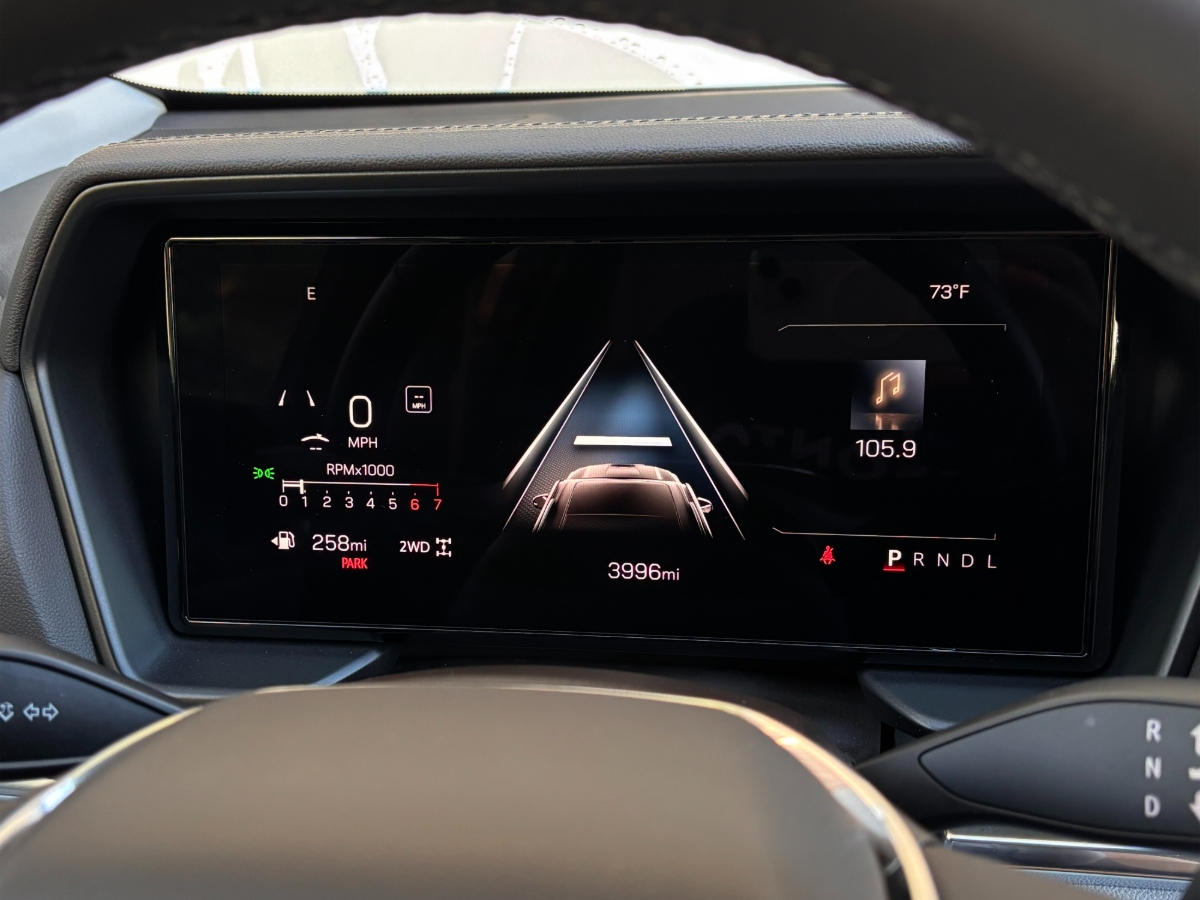
Photo: James Riswick
The Terrain comes standard with many advanced driver assistance systems (ADAS), including some that are usually optional: adaptive cruise control, blind spot warning, and rear automatic braking. Its complete ADAS suite includes:
The Denali features a rearview camera mirror, a rear pedestrian alert system, and an outstanding surround view camera system that delivers a clear image and practical viewing angles. These are optional on other trims through the Technology Package II.
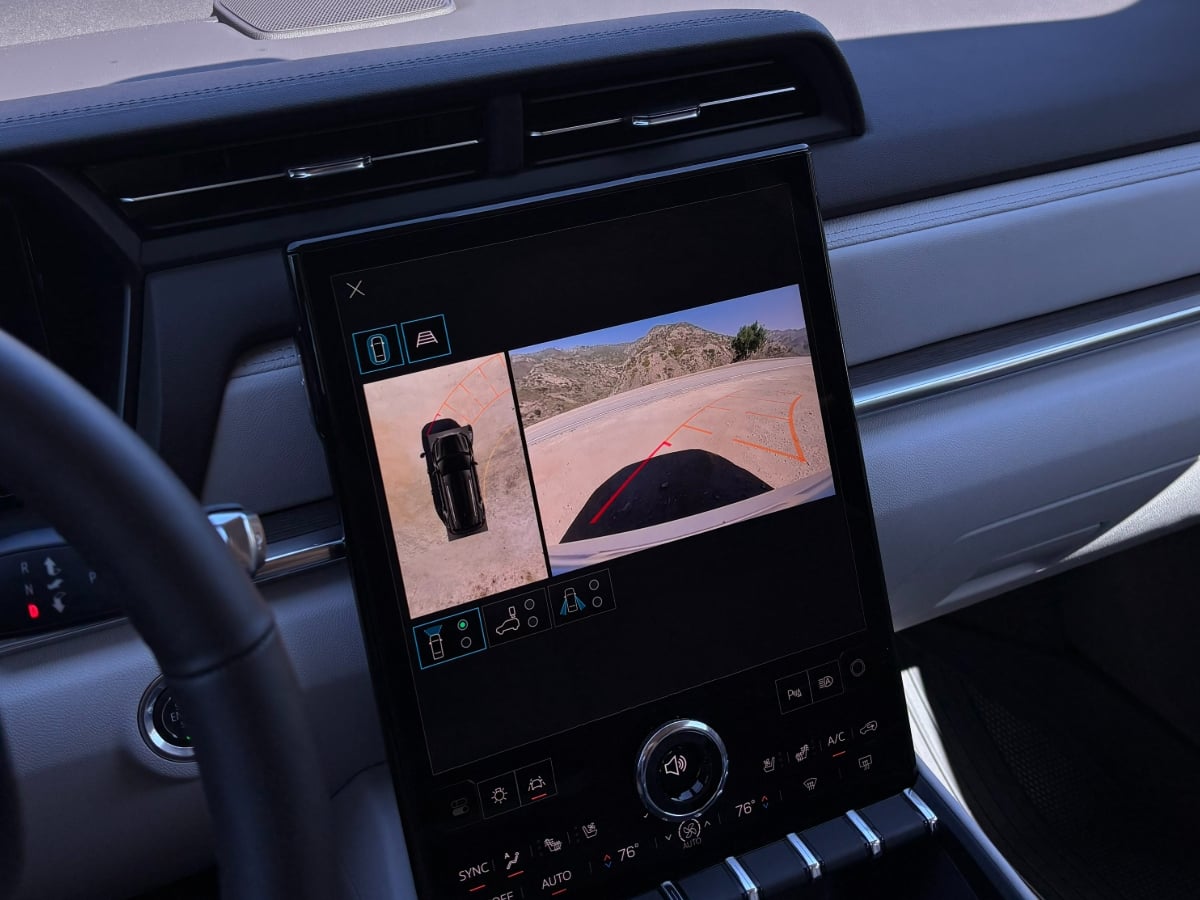
Photo: James Riswick
Despite the sheer quantity of these systems, their performance is only fair. They did not annoy with false alarms or overly aggressive warnings, so they are unlikely to make drivers turn them off. That said, the lane keeping assistance system worked well on straight roads but struggled to prevent lane departures on long highway turns. Some rival systems perform better.
The ACC system also lacks lane centering assistance, and GM’s excellent Super Cruise hands-free highway driving system is not available.
According to the JD Power 2025 Initial Quality Study (IQS), the Ford Escape ranks highest in the Compact SUV segment. The Jeep Wrangler and the Nissan Rogue are the next highest-ranked models.
According to the JD Power 2025 Automotive Performance, Execution and Layout (APEAL) Study, the Nissan Rogue ranks highest in the Compact SUV segment. The Buick Envision and the Mitsubishi Outlander are the next highest-ranked models.
Other 2026 Terrain competitors include the Chevrolet Equinox, Honda CR-V, and Toyota RAV4.