See answers to common EV questions, tax incentives, charging maps & more.
Explore EV
22 - 26
201
8 speed, Automatic w/OD
Intercooled Turbo Regular Unleaded I-4
All Wheel Drive, Front Wheel Drive
The 2025 Volkswagen Tiguan represents the third generation of the compact SUV in the United States. This time, Volkswagen emphasizes more style and refinement while removing the cramped third-row seat option. The Tiguan largely determines VW's success in America, as it sells more of these than any other model to a diverse group of buyers seeking practicality and a European influence.
 Photo: Jim Resnick
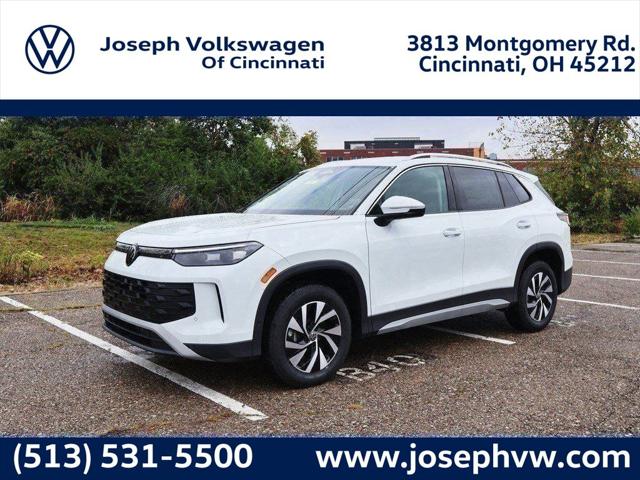
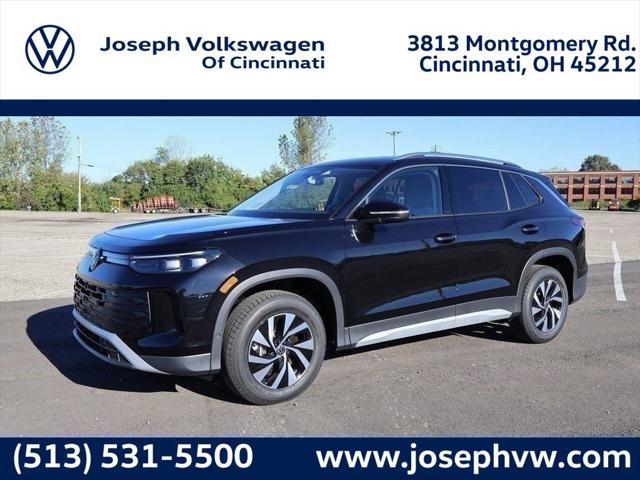
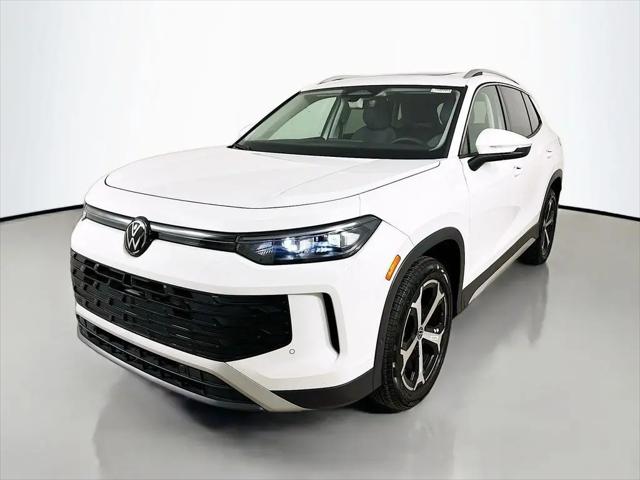
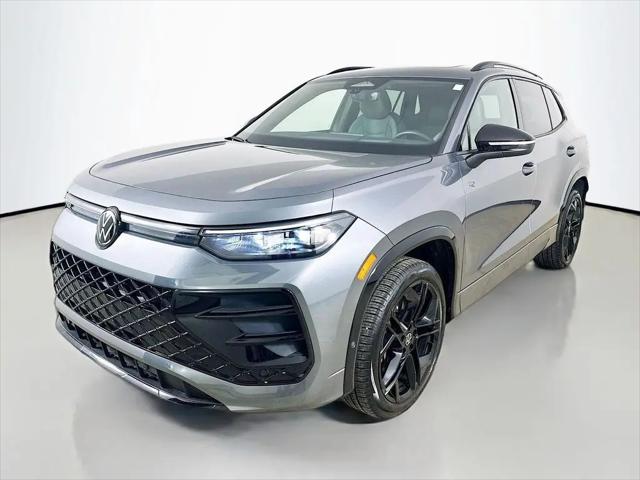
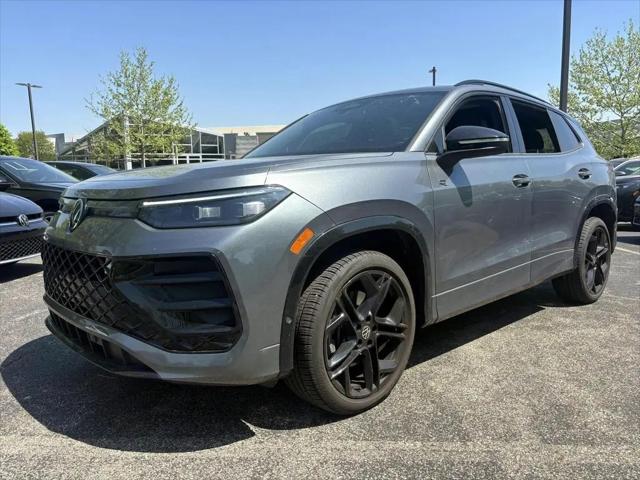
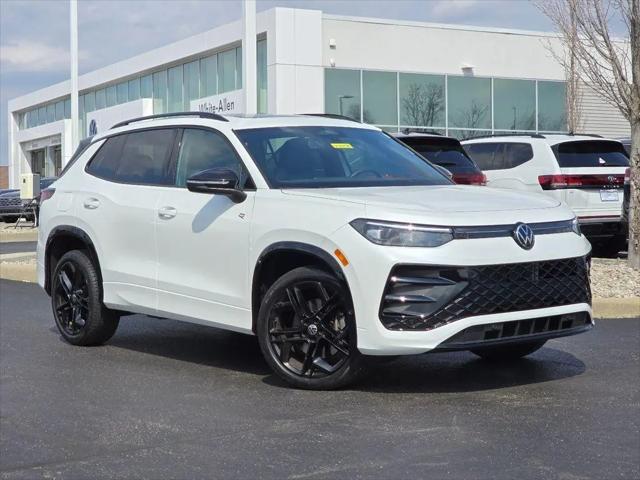
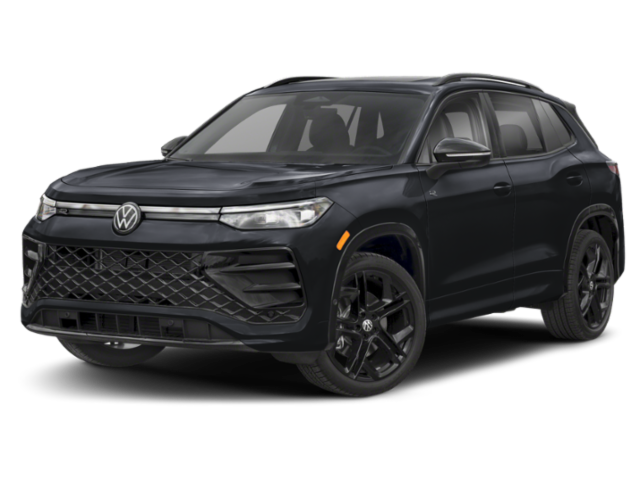
Even using the phrase "showing off" in their marketing, VW charts a stylish new direction for the revised 2025 Tiguan. Front-end updates feature a large black grille and more slender headlights. The base-model wheels appear upscale; a broad expanse of side glass, trimmed with softer edges and angles, creates a more open feel, and the overall look is slightly more refined than before.
The Tiguan continues to offer only one body style, but with several trim levels, starting with the S and progressing through the SE, SE R-Line Black, and finally, the SEL R-Line. Pricing begins at about $32,000 and rises to the low $40,000s, including the destination charge.
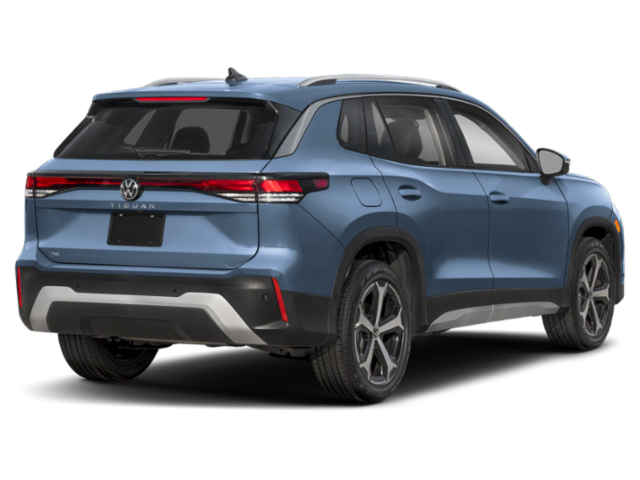
For this 2025 Tiguan review, Volkswagen provided a test vehicle equipped with SEL R-Line trim, dressed in the extra-cost Monterey Blue paint. The test vehicle’s manufacturer's suggested retail price (MSRP) was $42,385, including the $1,425 destination charge to ship the crossover SUV from the Puebla, Mexico, assembly plant to a local dealership. The price does not reflect any current rebates, incentives, or price adjustments since Volkswagen manufactured the test vehicle.
 Photo: Jim Resnick
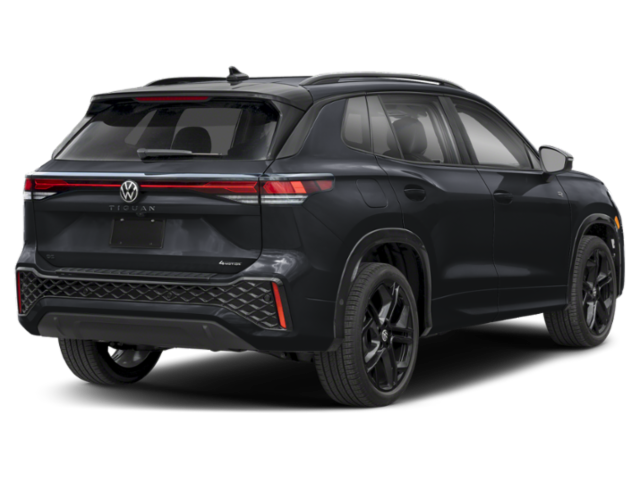
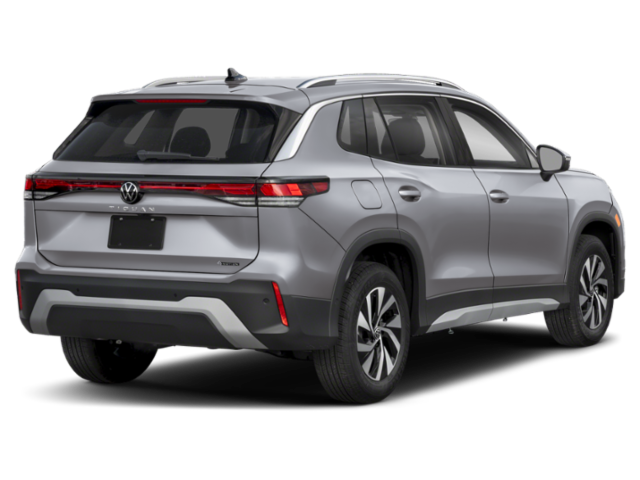
Volkswagen has updated the 2025 Tiguan with new exterior styling and refreshed interior features. VW redesigned the headlights to be slimmer, with the larger black lower grille positioned below. A thicker single bar and an illuminated VW badge across the front replace the chrome bars of the old grille. Meanwhile, a red-colored band running across the tailgate houses LED taillights, with a lit VW badge at the top.
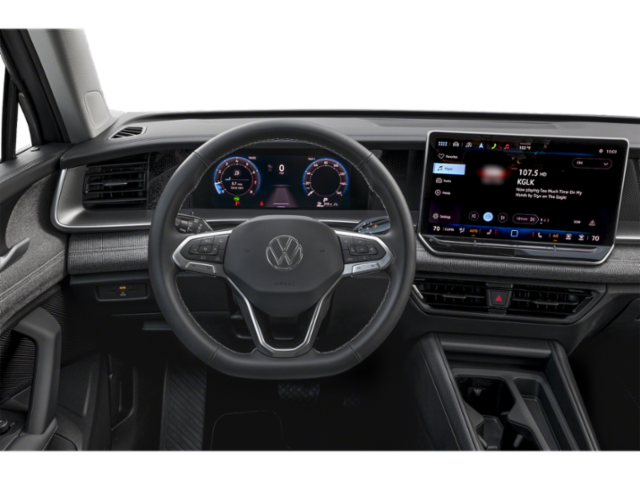
Inside, VW significantly enhances the Tiguan's interior, especially in the top-trim SEL R-Line tested here. The wood trim, with a distinctly Danish feel, features a stitched dashboard below the wood, perforated leather seats stitched in a diamond pattern, a thick-rimmed steering wheel, and piano black accents, all of which exude a premium look and feel. It would all equally be at home in an Audi.
Volkswagen also reuses the column-mounted transmission selector from the electric ID.4 for the new Tiguan. Twist it clockwise to choose Drive, counterclockwise for Reverse, while Park is activated by a button at the tip. Engaging the Sport mode for the transmission requires a second twist clockwise. It's a logical design, although there is no option to shift the transmission manually.
Volkswagen has revised the front seats to strike an outstanding balance between sporty support and easy entry. These are engineered to support the needs of an enthusiastic drive without compromising everyday comfort and usability. The SEL R-Line tester also included zone-specific heating, along with ventilation and massage features in both front seats.
Rear passengers enjoy 1.5 inch more legroom than in previous Tiguans, and VW has removed the third-row seat, which was more a penalty box than a useful space for friends or family. I sat in the back seat, with the front seat adjusted to accommodate my 6-foot, 1-inch height, and had more than enough room, which is rare in a small SUV. The SEL R-Line rear bench also features heating elements for the outboard seats.
Strangely, the cargo space in the updated Tiguan is disappointing at just 26.5 cubic feet, compared to the Toyota RAV4’s 37.6 and the Honda CR-V’s 39.3. This shortfall is likely due to two reasons: a rearward shift of the rear seat to accommodate more legroom, as there is no third row, and a 1.7-inch reduction in overall length from the 2024 Tiguan.
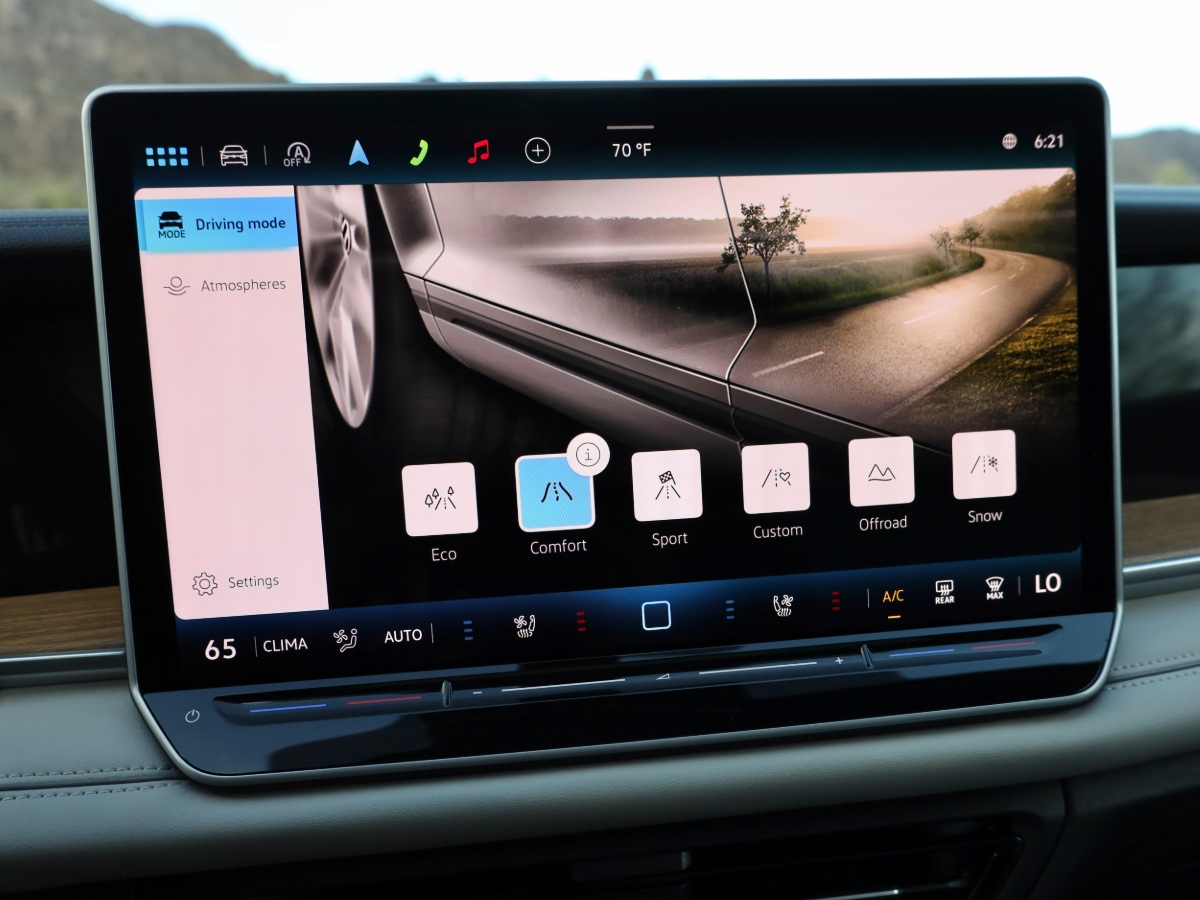 Photo: Jim Resnick
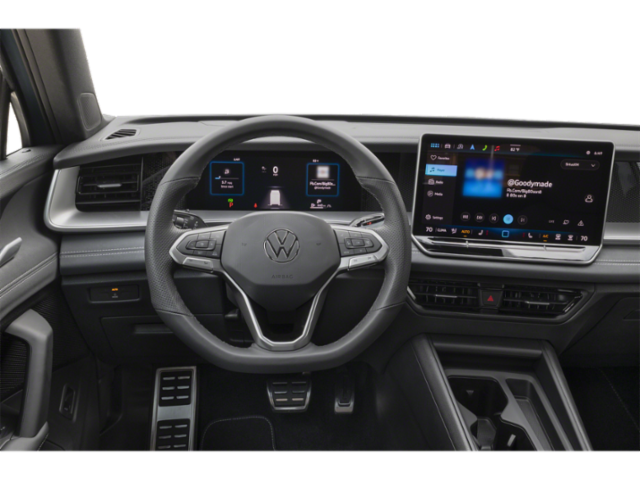
The Tiguan SEL R-Line's massive Discover Media 15-inch touchscreen is nearly as large as those in the Tesla Model 3 and Model Y (15.4 inches). And those Teslas rely entirely on their touchscreen for all the vehicle’s information. At the same time, the Tiguan provides instruments directly in front of the driver, all of which are integrated within the standard configurable Digital Cockpit Pro.
The Discover Media infotainment system includes:
Lesser trims still feature a large 12.9-inch touchscreen. Still, in the R-Line, its sheer size allows the Home screen to display multiple menu tiles at once, which you can choose to arrange in your preferred order.
It features a row of digital buttons at the top of the screen for main vehicle settings, navigation, phone, and music. You can also set a single button on the top of the screen for a feature you prefer. This row of buttons enhances the system's usability. Other current Volkswagen displays lack this simple, intuitive guidance, requiring the user to navigate through a frustrating menu.
There is, however, one exception. Most climate control adjustments are still only accessible through the touchscreen; ergonomically, this is a subpar setup, in my opinion. Sliders for audio volume and temperature sit just below the screen, but they are the finicky haptic touch-sensitive type. At least they are now backlit. And Volkswagen thankfully replaced the haptic steering wheel buttons with normal-feeling buttons that click.
The SEL R-Line also features a configurable head-up display. It can show the current speed, advanced driver assistance systems (ADAS), the cruise control status, the posted speed limit on the current road, and turn-by-turn navigation graphics. It may seem like a lot, but it remains clear.
A new feature for the Tiguan is an upgraded voice control system called Plus Speech (also known as "Premium Speech" in some references). Plus Speech utilizes AI to handle a broader range of questions and requests. It is now included as part of Volkswagen's Car-Net subscription service, which the automaker offers for free in the first year of Tiguan ownership.
Activated by saying "Hello, Volkswagen," Plus Speech manages all the expected interactions naturally. Placing phone calls, adjusting the climate controls, and setting a navigation destination are all handled through Plus Speech. It also understood foreign language names, from "Chipotle" to "Yukata" to "Spiga Cucina Italiana." Perhaps the Tiguan is a secret foodie.
Owners can activate a Wi-Fi hotspot that supports up to four devices through their myVW account. Apple CarPlay and Android Auto are supported via VW's App-Connect, and the Tiguan makes it easy to connect phones through both wireless and wired options. I had no trouble pairing my iPhone with the system, and it automatically connected each time I returned. The wireless smartphone charging pad is conveniently located in an air-conditioned center console. Thoughtful.
The SEL trim's Harman Kardon audio system features 11 speakers and a subwoofer, powered by a 16-channel amplifier that delivers 700 watts of power. The sound is outstanding. However, connected to the audio system is the new Atmospheres ambient lighting system that confounded me. It synchronizes the configurable ambient interior light color with the audio signals for a simulated light show. Why exactly do I want a cheesy dance club in my car?
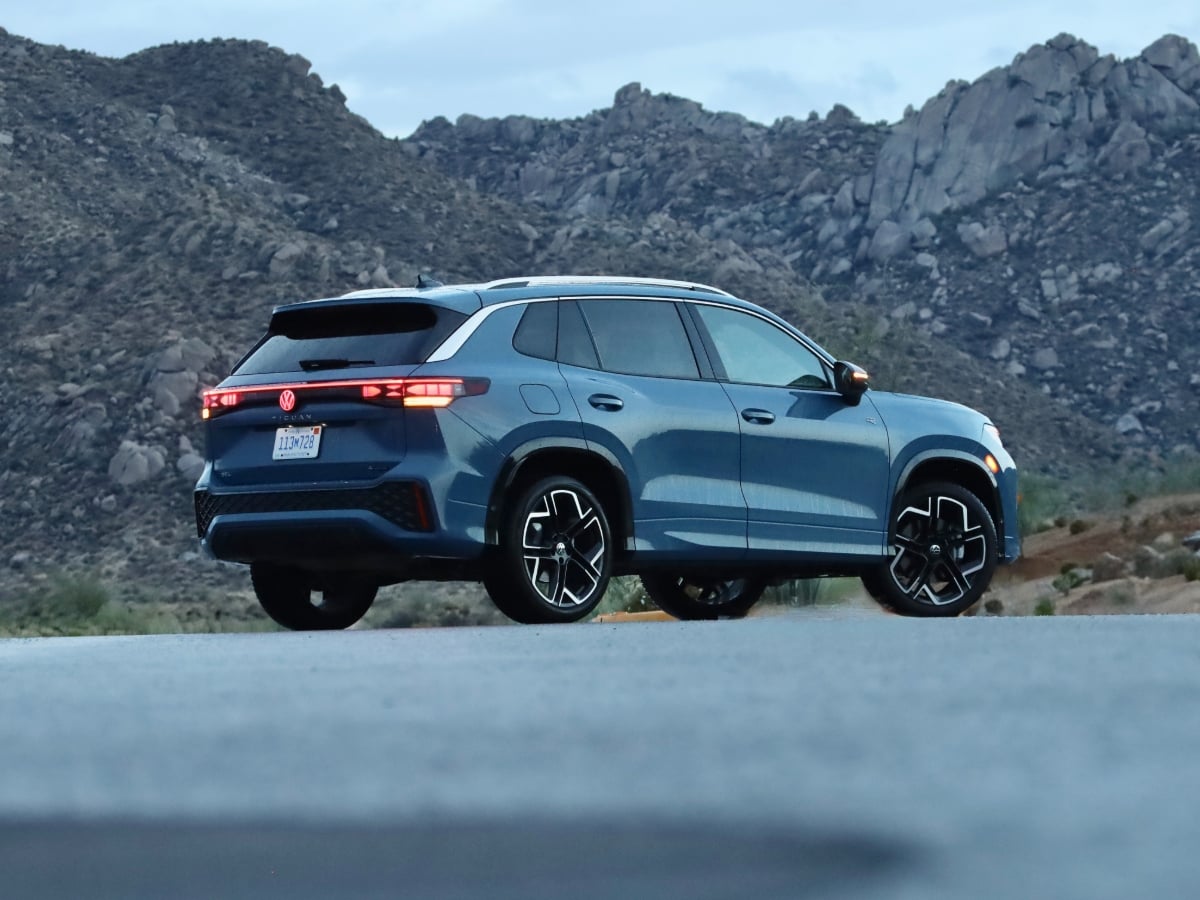 Photo: Jim Resnick
Every 2025 Tiguan model features an updated turbocharged 2.0-liter four-cylinder engine that delivers 201 horsepower—a 17-hp increase from the previous year. With all-wheel drive (AWD), it also produces 221 pound-feet of torque and gets 25 mpg combined, according to the Environmental Protection Agency (EPA). Meanwhile, front-wheel-drive versions produce 207 pound-feet and achieve 28 mpg (although the base S trim rates 29 mpg combined).
The Tiguan drives impressively, with good power delivery in most situations. Response from a complete stop with the eight-speed automatic transmission is not as quick as that of an electric car or hybrid, but the improved power and the 170-pound weight loss VW claims definitely enhance responsiveness. While EPA numbers increase slightly over the 2024 model, response and fuel economy would be better with a hybrid powertrain.
A Driving Experience dial in the center console adjusts the audio volume, the Atmospheres lighting program, and driving modes (also selectable from the infotainment screen). The Tiguan’s driving modes include Eco, Comfort, Sport, Custom, plus the Active Control modes for extreme situations, Offroad and Snow.
The Eco and Comfort modes felt closely aligned, but the Sport mode sharpens the throttle response once moving and adjusts shift points while reducing the steering assist, all to good effect. None of the modes change suspension settings, unlike some systems, as the shocks are traditional passive units. The R-Line's ride quality, which becomes rough on poor surfaces, would likely improve with 18- or 19-inch wheels, rather than the 20-inch wheels it currently has.
When the road curves, the Tiguan SEL R-Line handles with precise steering and responsive brakes. The Tiguan is not an overgrown GTI, nor does it pose a serious performance challenge to sportier small SUVs like the Mazda CX-50 Turbo, but that's not its aim anyway.
 Photo: Jim Resnick
All 2025 Tiguan SUVs come standard with IQ.Drive, the automaker's ADAS package. It is a comprehensive set of systems that covers all the key features in the ADAS world. It includes the following:
While that's undoubtedly a comprehensive list, the Tiguan SEL R-Line also includes other features, such as:
All the ADAS features performed well, with no surprises or unusual behavior, such as misinterpreting typical roadside irregularities such as hazards, animals, or safety threats. The ACC responded smoothly to vehicles merging onto the highway and adjusted the speed subtly.
The lane-centering function kept the SUV steady. It also worked well on secondary roads, a task where some smaller and less expensive vehicles tend to fall short. Additionally, most cars with the blind-spot warning system use a small indicator light in the side mirrors. The Tiguan's indicator light is larger than most.
Finally, the standard automatic emergency stop assistance system, which brings the vehicle to a safe stop if the driver becomes unresponsive, is usually reserved for expensive and luxury vehicles. So I am glad to see it in an affordable, high-volume SUV.
At the time of writing, neither the National Highway Traffic Safety Administration (NHTSA) nor the Insurance Institute for Highway Safety (IIHS) has published crashworthiness scores for the 2025 Volkswagen Tiguan.
According to the JD Power 2025 Initial Quality Study (IQS), the Ford Escape ranks highest in the Compact SUV segment. The Jeep Wrangler and the Nissan Rogue are the next-highest-ranked models.
According to the JD Power 2025 Automotive Performance, Execution and Layout (APEAL) Study, the Nissan Rogue ranks highest in the Compact SUV segment. The Buick Envision and the Mitsubishi Outlander are the next-highest-ranked models.
Other 2025 Tiguan competitors include the Honda CR-V, Jeep Cherokee, and Toyota RAV4.