See answers to common EV questions, tax incentives, charging maps & more.
Explore EV
19 - 23
278 - 326
8 speed, Automatic w/OD
Intercooled Turbo Gas/Electric I-4, Intercooled Turbo Regular Gasoline I-4
Four Wheel Drive, Rear Wheel Drive
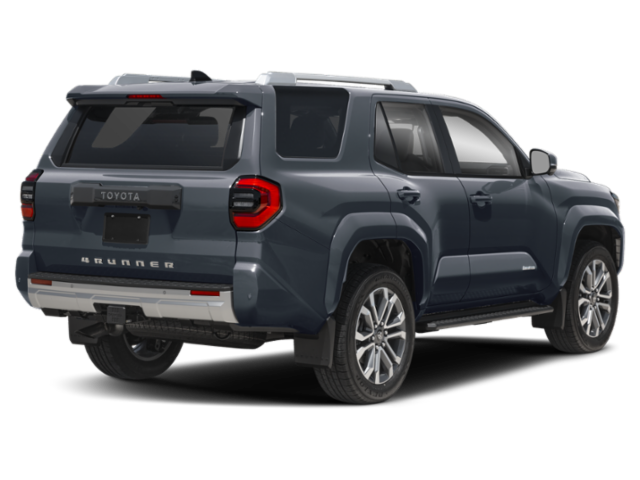
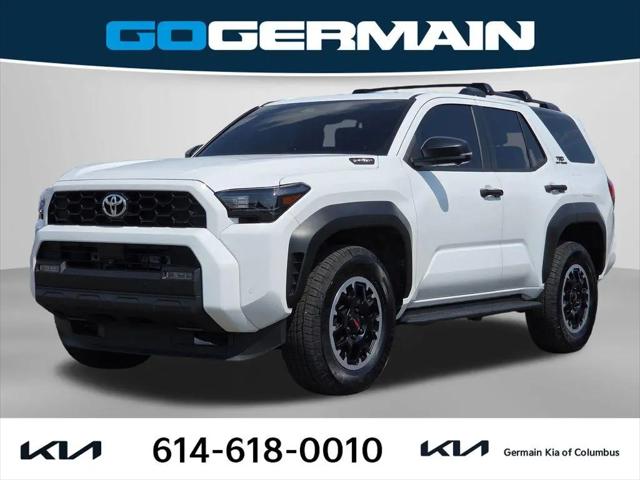
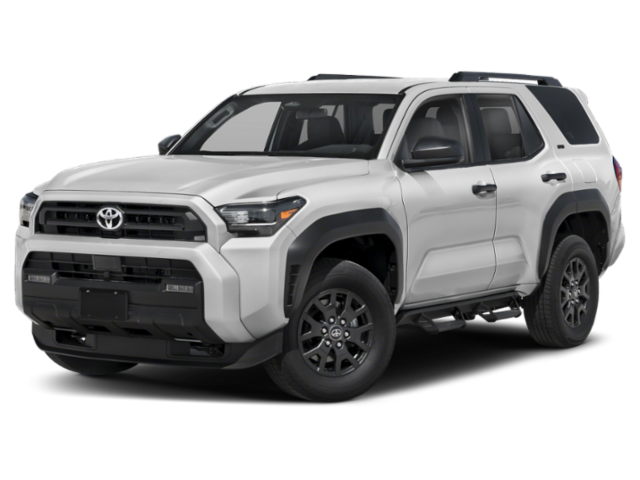
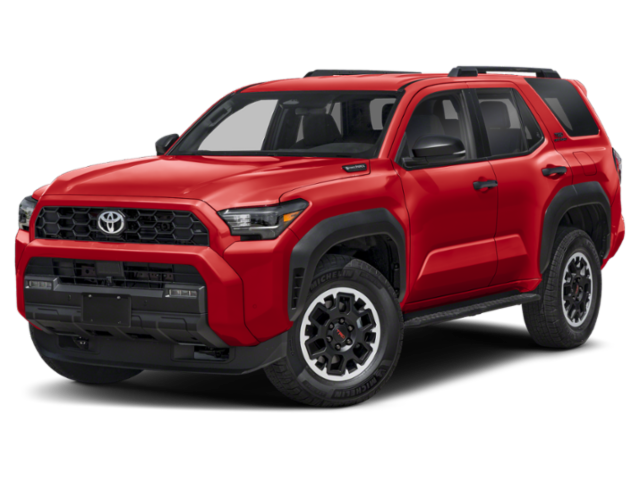
Every 2025 Toyota 4Runner offers some degree of off-roading talent, but at the top of its lineup resides a pair of equally priced off-road monsters intended for different tasks and tastes. Want to go fast, slide in the sand, and maybe catch some air? There’s the TRD Pro. But if you’re more of a slow, rock-crawling, overlanding sort, there’s the new 4Runner Trailhunter.

Photo: James Riswick
Our 2025 Toyota 4Runner First Drive review covers the broad strokes of the new lineup, which is as redesigned as it gets. This review focuses on the Trailhunter—one of two lineup newcomers (along with the luxurious Platinum) that boasts unique, overlanding-oriented features that fundamentally change how the 4Runner drives, performs, and looks.
As such, the Trailhunter isn’t for everyone, but that’s OK because Toyota has done its best to create a 4Runner for everyone. There’s the baseline SR5, the on-road-oriented TRD Sport, feature-rich Limited and Platinum, and the rugged trio of TRD Off-Road, TRD Pro, and Trailhunter. Prices range from the low $40,000s to the high $60,000s, including the destination charge.

Photo: James Riswick
For this 2025 4Runner review, Toyota provided a test vehicle equipped with Trailhunter trim and no options.
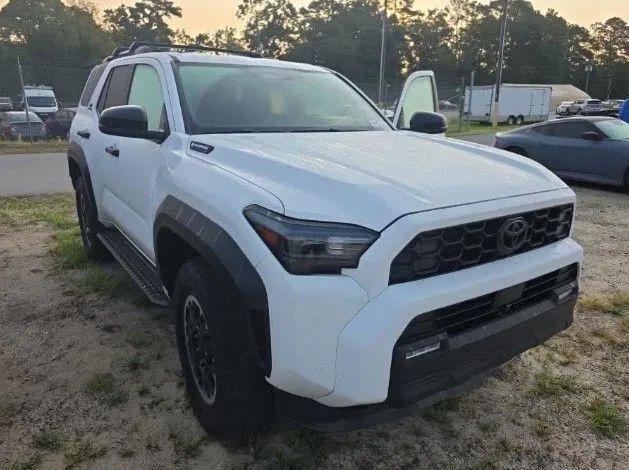
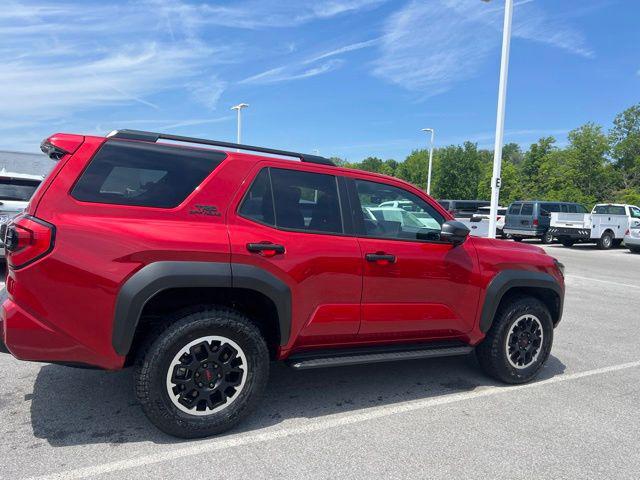
The Trailhunter shares many elements with the TRD Pro, including its standard hybrid powertrain, 33-inch Toyo Open Country A/T tires, a disconnecting stabilizer bar, extra-wide fenders, a high-clearance front bumper, and a grille with large “TOYOTA” lettering. Features unique to the Trailhunter include:
The test vehicle’s manufacturer's suggested retail price (MSRP) was $68,350, including the $1,450 destination charge to ship the SUV to your local dealership from the Tahara, Japan, assembly plant.
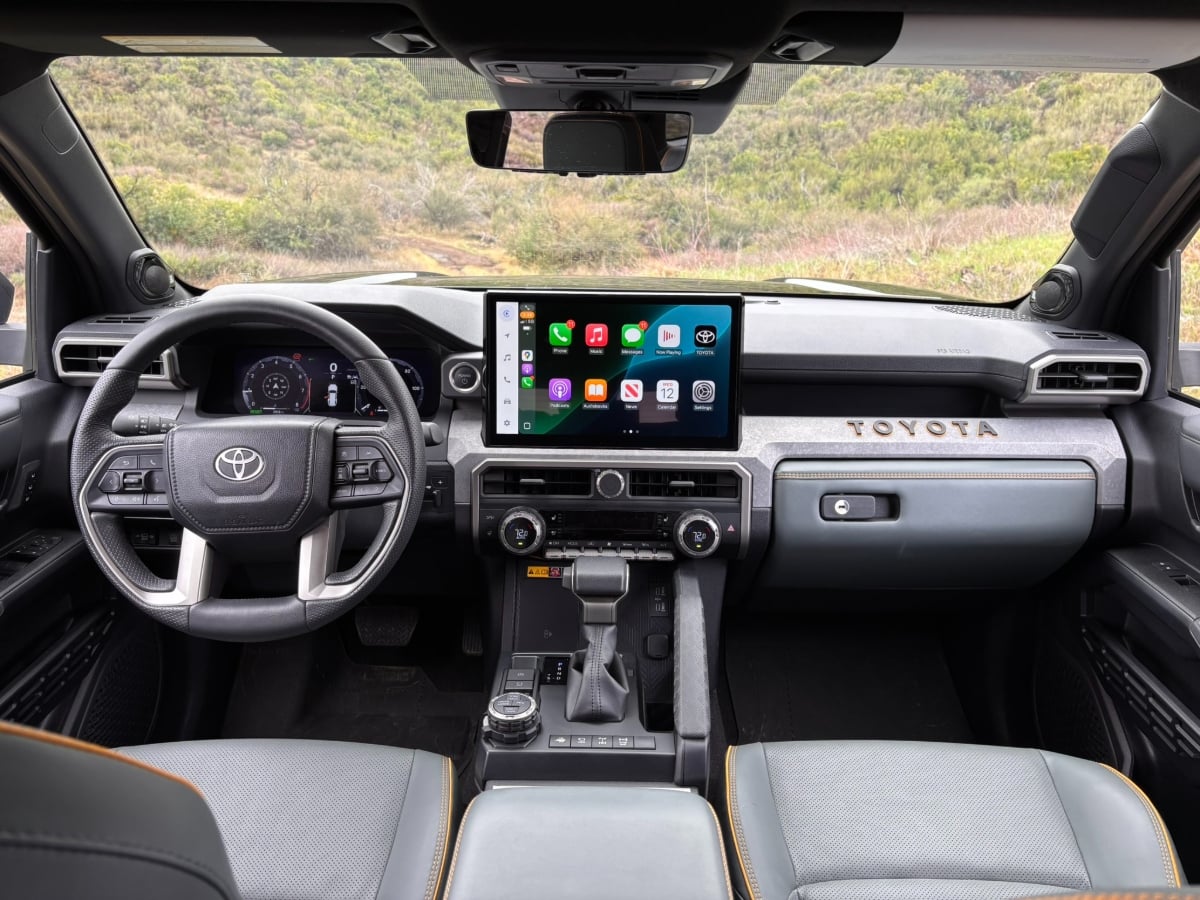
Photo: James Riswick
The Trailhunter’s OME shocks and 33-inch tires result in a 1.5-inch ride-height increase, making it challenging to hoist yourself on board. The passenger-side A-pillar features an integrated grab handle, whereas the driver side doesn’t. I’m 6-foot-3, and it was still quite the climb aboard. Once inside, the Trailhunter’s pale green upholstery with yellow accents and stone-looking trim is the lineup’s best look, as far as I’m concerned.
It’s not luxurious, but the door sills and armrests are nicely padded and covered in simulated leather. The real stuff is on the shifter and chunky, nicely contoured steering wheel. A large grab handle on the center console is coated in rubber to provide passengers with a firm grip when holding on for dear life.
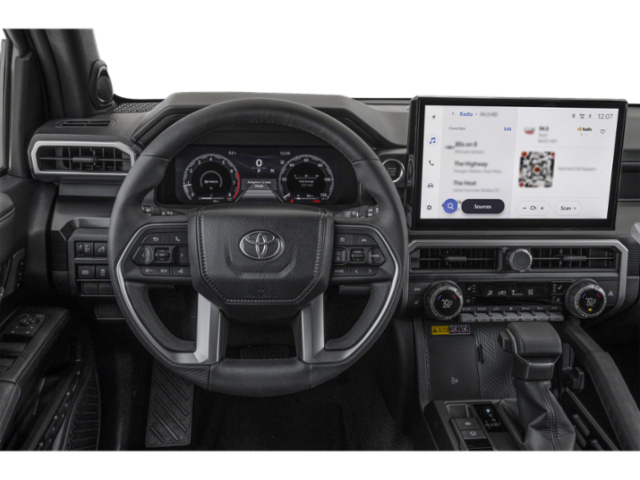
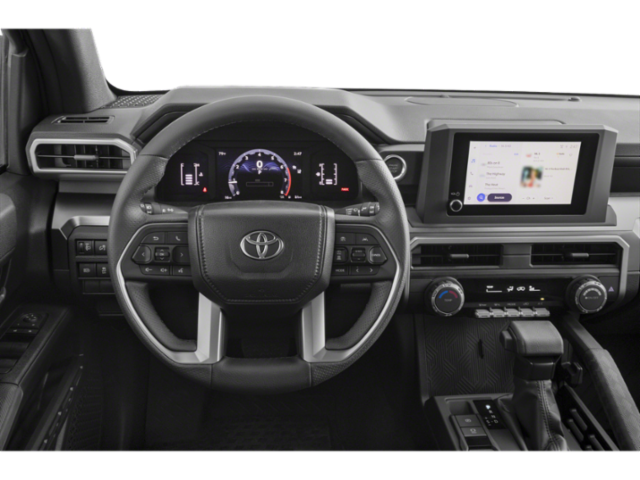
The Trailhunter features the 4Runner’s largest available 14-inch touchscreen, dedicated solely to infotainment and vehicle settings. Buttons and knobs operate the climate controls, four-wheel-drive (4WD) and off-road functions, and various random features like those sweet color-switching fog lights. There are even three auxiliary buttons to accommodate aftermarket accessories.

Photo: James Riswick
Interior storage in the 2025 4Runner has massively improved over its predecessor. The Trailhunter features a space-saving, upright wireless charging pad, a deep well for sunglasses or another phone adjacent to the grab handle, handy cubbies in each door, a spacious glove box, a large tray above it, and functional cupholders. It’s all very good.
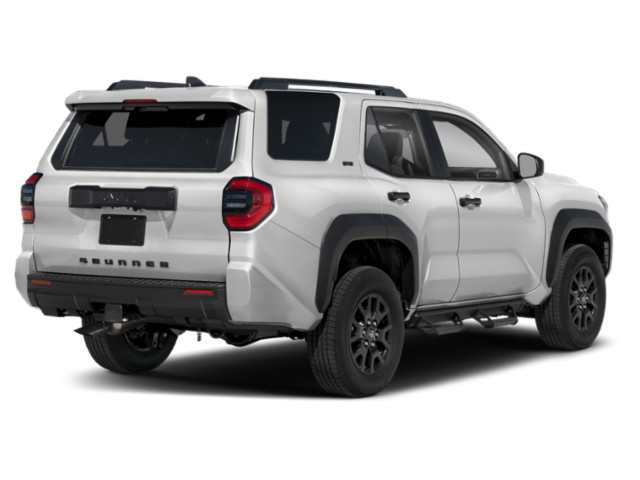
The Trailhunter’s ARB roof rack should satisfy the need for a rooftop tent or other gear during an overlanding adventure, as it can hold a maximum static weight of 700 pounds. It also looks cool, although it does add noticeable wind noise and may slightly reduce fuel economy. It’s also harder to remove than crossbars should you grow weary of those downsides.
Inside, the Trailhunter cargo area measures 42.6 cubic feet. That’s a vast amount, which accommodated seven suitcases, three duffels, and a 38-quart cooler. Still, base-engine 4Runners have 48.4 cubic feet of cargo space and could swallow even more items. Why? The Trailhunter’s hybrid battery pack raises the floor by 5.5 inches, according to my tape measure, thereby decreasing volume and increasing lift-over height. This goes for every hybrid-powered 4Runner.
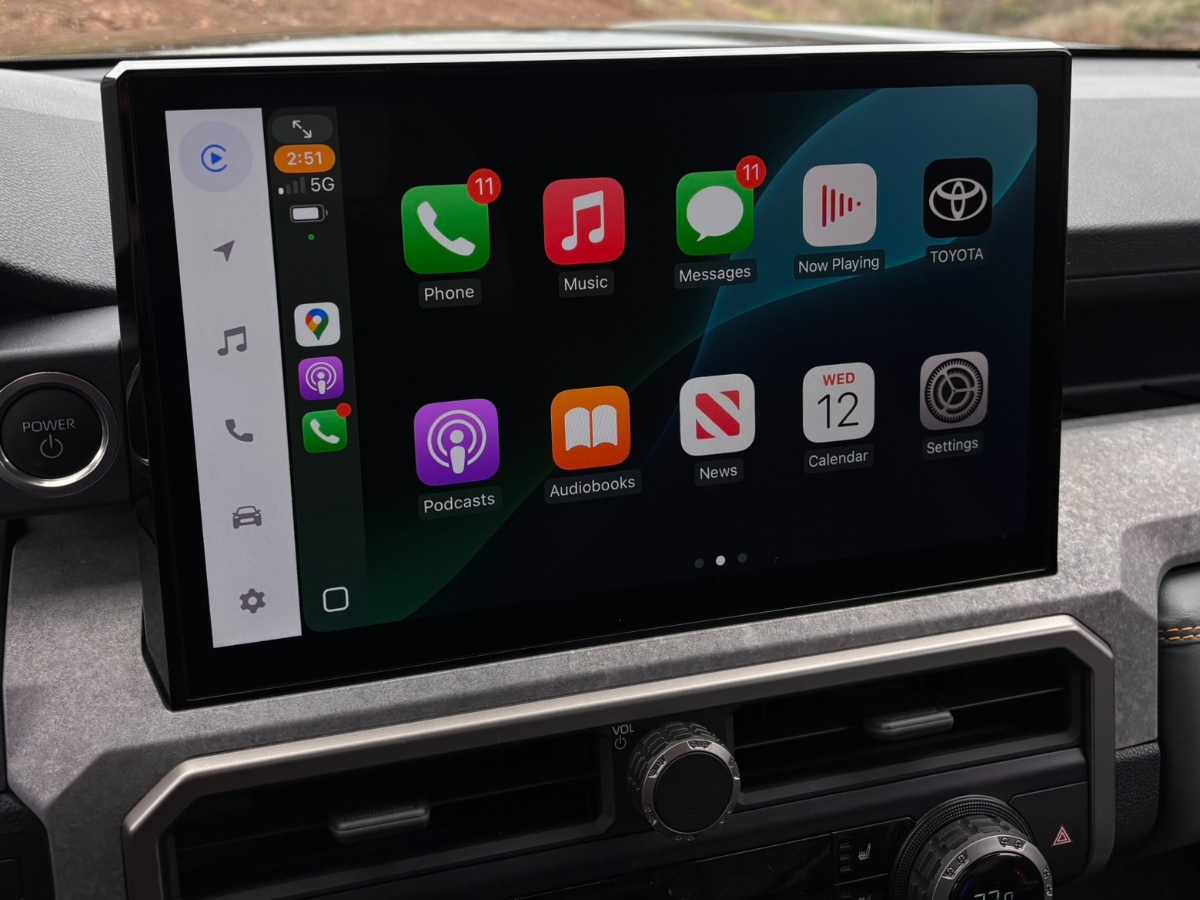
Photo: James Riswick
While the TRD Off-Road and other lower trim levels feature an 8-inch Toyota Audio Multimedia infotainment touchscreen, the Trailhunter comes with the 14-inch upgrade. They look and function the same; it’s just a difference in real estate and some features.
Infotainment features in the Trailhunter include:
The Trailhunter also features a 12.3-inch digital instrument panel, similar to the TRD Off-Road and TRD Pro models, along with the Multi-Terrain Monitor system, which includes forward, side, and rear cameras. These crisp views, aided by washers, are a godsend off-road. The forward camera is particularly helpful given the 4Runner’s high hood, narrow windshield, and low seating position.
As for the infotainment elements, this is the same system you’ll find in virtually every Toyota. There are a few irksome things (why does the navigation system always forget you want to see the North Up map view?), but generally, it’s user-friendly and easy to use at a glance. Apple CarPlay also functioned as expected, and the permanently docked menu icons facilitate easy switching between the native and Apple menus.
The sound quality from the JBL system upgrade is surprisingly good (my expectations were low); it’s a good thing because the combination of wind, tire, and snorkel noises (more on that soon) presents quite a challenge for the speakers to overcome.

Photo: James Riswick
I’ve tested a 2025 Toyota 4Runner TRD Off-Road Premium, and without a doubt, it drives differently than the Trailhunter.
The 2025 TRD Off-Road exhibits significantly tighter body motions compared to previous models, leaning less in corners and no longer nosing down when braking. It has a sportier, more controlled driving experience, albeit with a firmer ride that amplifies sharper bumps. I haven’t tested other 4Runner variants, but their suspension hardware would suggest they’d be more similar to the TRD Off-Road.
The Trailhunter feels more like the last 4Runner TRD Pro. Its long-travel shocks result in heave-ho cornering, “prepare for dive!” braking, and a pitched-up hood when accelerating. The ride is also more comfortable, with less jostling on choppy highway pavement. There’s a certain charm to it.
There’s also a certain charm to the “whoooosh” from the high-mount intake (snorkel) with every throttle application. It’s fun and characterful, but after a while, it gets old.
Power is the other big differentiator. Like the TRD Pro, the Trailhunter is equipped with the i-Force Max hybrid powertrain, which produces 326 horsepower and 465 pound-feet of torque. The base turbocharged four-cylinder makes 278 hp and 317 pound-feet of torque, which I found to be merely sufficient in the TRD Off-Road, compared to the much slower old V6. The hybrid gets the job done far more convincingly, thanks to a smooth wave of torque provided by its turbo-four engine and electric motor.
For those weary of the hybrid element, it’s not the same powertrain concept you’d find in a Prius. That’s meant to maximize fuel economy; this fundamentally different design maximizes performance while minimizing the fuel economy penalty.
You can occasionally feel a brief shudder as the engine kicks in when starting from a stop. Still, with a conventional automatic transmission changing gears (unlike the electronically controlled continuously variable automatic transmission of Prius-like Toyota hybrids, which slurs ratios), this hybrid generally behaves like a powerful turbocharged V6.
As for fuel economy, I averaged 15.9 mpg on my standardized driving route. I also got precisely 20 mpg on a 50-mile highway journey. This compares to Toyota’s estimates of 23 mpg city/24 mpg highway/23 mpg combined applied to every hybrid-equipped 4Runner. Given all the Trailhunter’s efficiency-hurting elements (roof rack, higher ride height, all-terrain tires, and no aero curtain under the bumper), those estimates seem unrealistic. According to the Environmental Protection Agency (EPA), Turbo 4Runners supposedly return 19/25/21 mpg.
Since this is a Trailhunter, it’s time I tell you about hunting for trails. Sadly, I didn’t embark upon a five-day overlanding excursion, but my time on a local trail still showcased most of the Trailhunter’s tricks.

Photo: James Riswick
Gnarly body-twisting ruts showcased the OME shocks and the added wheel articulation provided by the disconnecting stabilizer bar. The multi-camera system and the unique front end’s sharper approach angle helped prevent bashed bumpers. The 4x4 system and those fat tires clawed up a steep incline of loose dirt with ease. The extra clearance provided by the tires and shocks also ensured that I didn’t need the additional underbody protection.
Unfortunately, a lengthier second off-road attempt was thwarted by a rainstorm that turned everything to muck. I attempted the same steep incline with the Trailhunter in the Multi-Terrain Select system’s Mud mode, but the Toyos just sprayed mud everywhere while getting hopelessly caked. After a harrowing slide back down the hill, and without a companion SUV or a winch (the Trailhunter should really have a built-in winch), I called off the hunt.
A Jeep Wrangler Rubicon or Ford Bronco Badlands are likely better rock crawlers, but on the road, the Toyota provides a substantially more comfortable, quiet, and refined experience. Even the racket created by the snorkel and roof rack pales in comparison to what you’d experience in a hardtop Wrangler or Bronco.
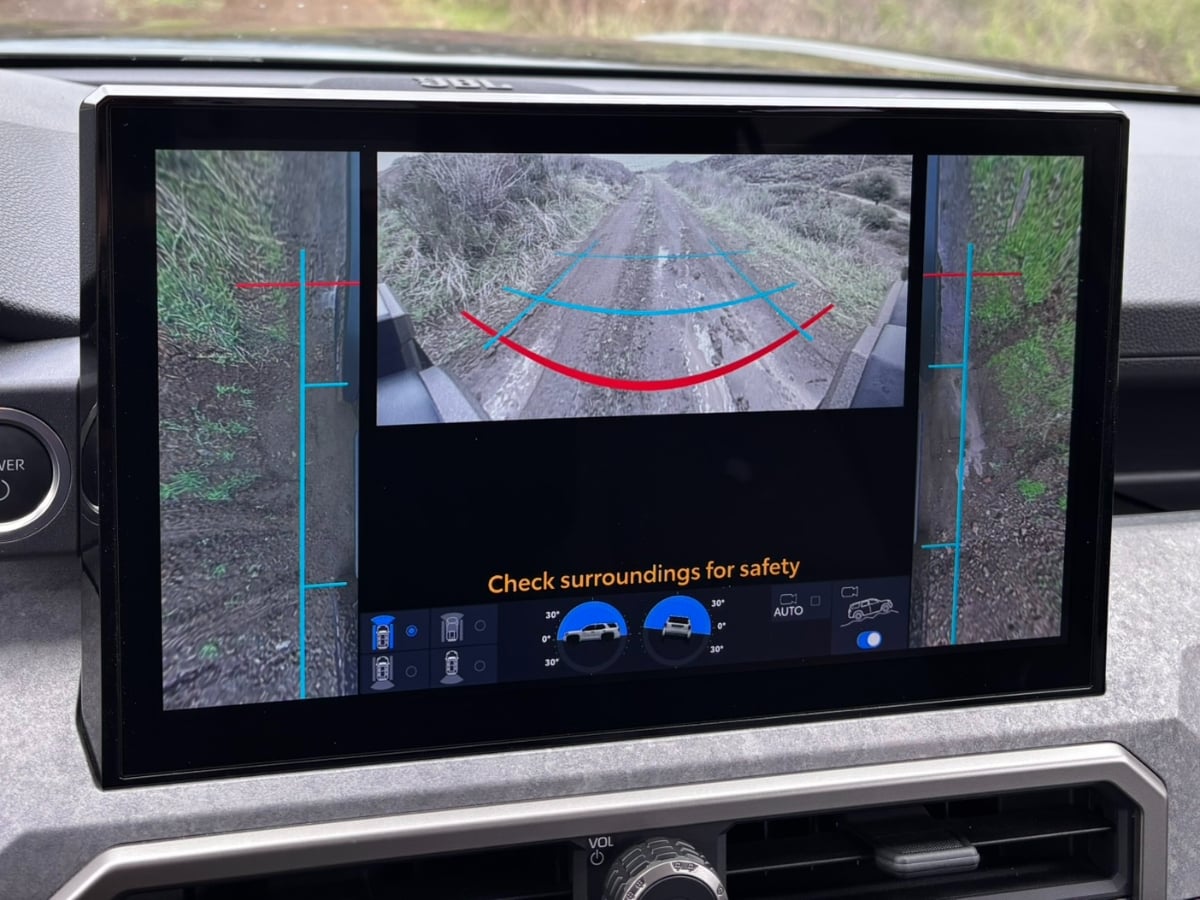
Photo: James Riswick
Every 2025 4Runner is packed with the Toyota Safety Sense 3.0 suite, which includes:
The Trailhunter also includes blind-spot warning and front and rear cross-traffic warning.
These systems work very well, including the lane-keeping assistance, which is impressive given the Trailhunter’s wide footprint, off-road tires, and the tight mountain roads upon which I was driving. The ACC’s steering assistance worked impressively well too, keeping the 4Runner centered in its lane with only a token finger on the wheel. The ACC’s minimal distance to vehicles ahead was also reasonable.
It's also worth recognizing the Trailhunter’s blind-spot and cross-traffic warning systems, as well as the parking sensors and multiple off-road camera views, which are particularly helpful in a vehicle with limited visibility.
According to the JD Power 2024 Initial Quality Study (IQS), the Chevrolet Traverse ranks highest in the Upper Midsize SUV segment. The Ford Explorer and the Kia Telluride are the next highest-ranked models.
According to the JD Power 2024 Automotive Performance, Execution and Layout (APEAL) Study, the Kia EV9 ranks highest in the Upper Midsize SUV segment. The Kia Telluride and the Hyundai Palisade are the next highest-ranked models.
Other 2025 4Runner competitors include the Jeep Grand Cherokee, Kia Sorento, and Nissan Pathfinder.

Photo: James Riswick
The 4Runner Trailhunter’s floppy on-road suspension performance, whistlin’ dixie snorkel, and compromised fuel economy add up to an SUV with significant drawbacks. Still, they’re not as severe as what you’d encounter in a Wrangler or Bronco, and unlike those competitors, there are substantially different and more civilized versions available. Add in the general goodness of every 2025 4Runner, and you get a deeply enjoyable SUV.
James Riswick has been testing and reviewing cars since 2007, serving as an editor at Edmunds.com and Autoblog. He has also contributed to Autoguide Magazine, Autotrader, Capital One Auto Navigator, Car and Driver, and Hagerty. He resides in Southern California and owns a 1998 BMW Z3, a 2013 Mercedes-Benz E350 Wagon, and a 2023 Kia Niro EV.