See answers to common EV questions, tax incentives, charging maps & more.
Explore EV
18 - 20
25 - 29
300 - 400
10 speed, Automatic w/OD
Intercooled Turbo Premium Gasoline I-4, Twin Turbo Premium Gasoline V-6
Four Wheel Drive, Rear Wheel Drive
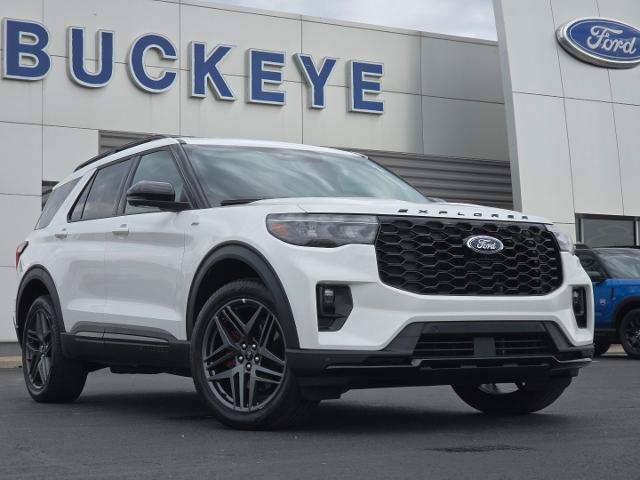
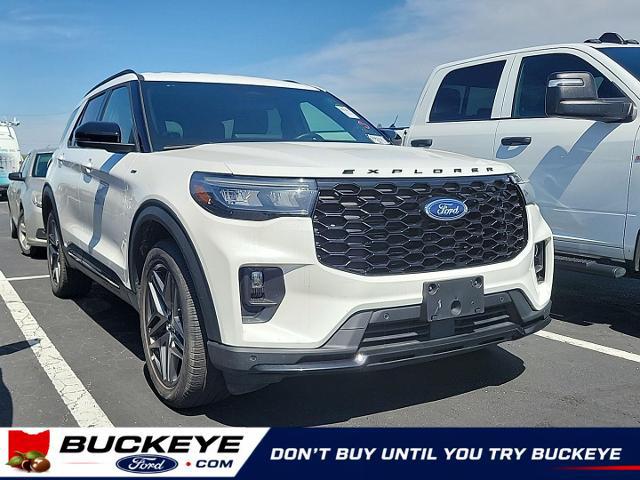
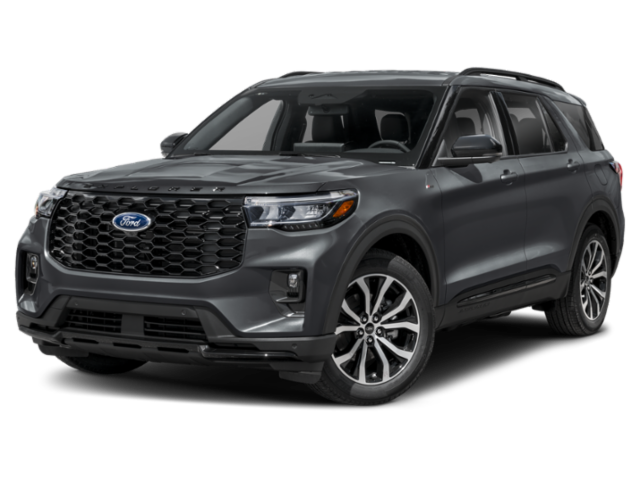
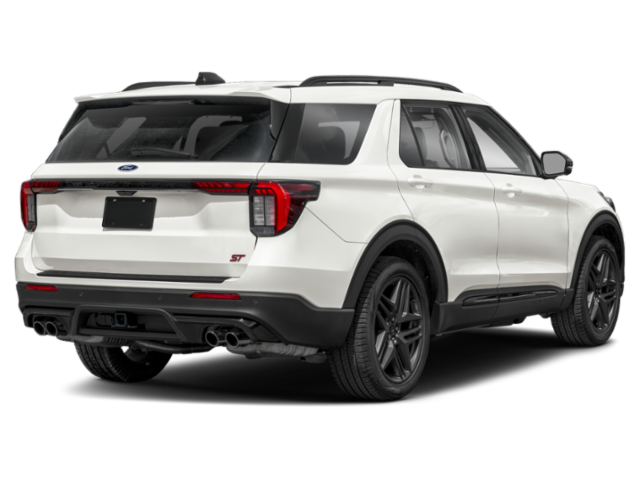
For any driving enthusiast who needs a midsize three-row SUV, the 2025 Ford Explorer ST represents the best of both worlds. Equipped with a turbocharged V6 engine, standard rear-wheel drive (RWD), a sport suspension, performance brakes, and 21-inch wheels, it is a rarity in a segment where extra body cladding, all-terrain tires, suspension lifts, and roof racks are all the rage.

Photo: Christian Wardlaw
Like other Explorer trim levels, the ST is refreshed for the 2025 model year. Exterior styling updates, a redesigned interior, and new technology are the highlights, the latter including a Ford Digital Experience infotainment system and a BlueCruise hands-free driving system.
Ford has also simplified the standard and optional equipment lists for the 2025 Explorer ST. More features are included in the base price, so it rises substantially to $56,495, including the $1,695 destination charge.
For this 2025 Explorer review, Ford provided a test vehicle equipped with the ST trim, four-wheel drive (4WD), and the Sun and Sound option package. The test vehicle's manufacturer suggested retail price (MSRP) was $61,460, including the destination charge to ship the SUV from the Chicago, Illinois, assembly plant to a local dealership. The price does not reflect any current rebates or incentives.

Photo: Christian Wardlaw
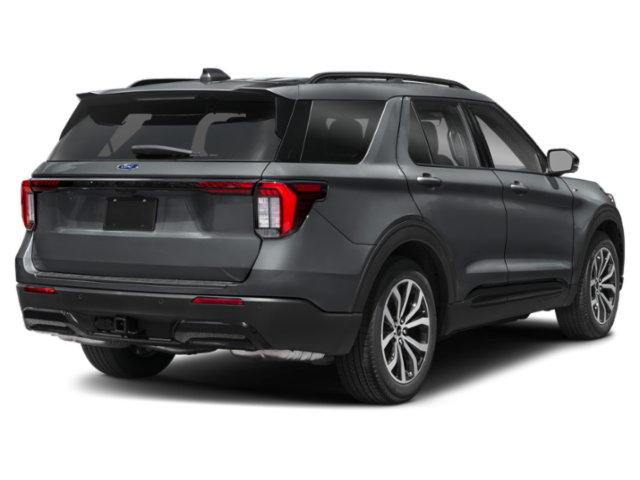
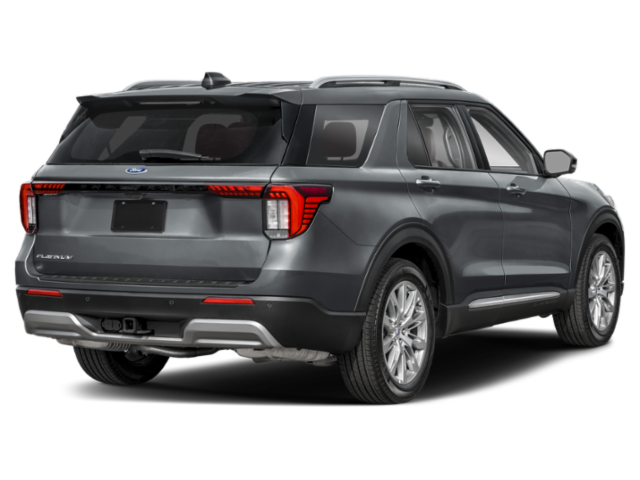
For the 2025 Explorer, Ford introduces a bolder look with revised headlights, a larger grille, and a reshaped bumper. New wheel designs and minor rear styling modifications complete the changes.
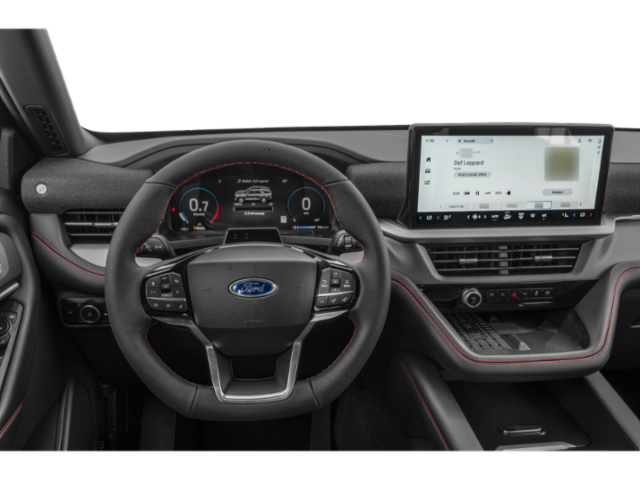
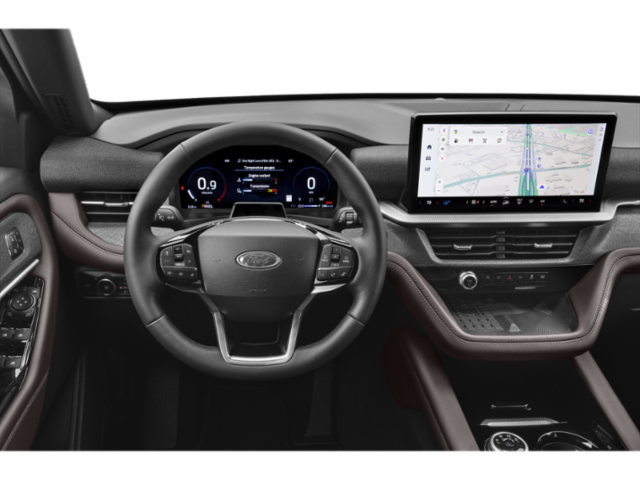
Inside, the updates are more apparent. A redesigned dashboard and improved materials will be readily apparent to anyone familiar with the previous version of the SUV, and the standard 12.3-inch digital instrumentation panel and 13.2-inch touchscreen infotainment system make every version of the 2025 Explorer appear to be more high-tech.
Get the optional Sun and Sound package, and Ford equips the Explorer ST with power-adjustable, heated, ventilated, and massaging front seats. They are wrapped in artificial leather with simulated suede inserts, and the driver faces a heated steering wheel. Comfort is excellent, and those suede inserts help to hold you in place when sampling the ST's impressive handling capability.
Heated second-row captain's chairs are standard in the Explorer ST. They are roomy and nearly as comfortable as the front seats. Unfortunately, you cannot get a second-row bench seat in the ST, so passenger count is four with the third-row seat folded down and six when it is in use.
That third-row seat is uncomfortable. It is low to the floor, unsupportive, and hard to enter and exit. Adults fit only when the people riding in the second row slide their chairs forward. Plus, it chews up cargo space. Most likely, you will fold it down and leave it that way.
Up front, the storage space is good, and the redesigned dashboard features a new tray with wireless smartphone charging. In the second row, Ford prioritizes a pass-through between the captain's chairs instead of a console with storage. Stash space is limited to the front seatback pockets and bins embedded in the door armrests.
With the third row in use, the Explorer supplies 16.3 cubic feet of cargo space. There is a large storage area under the load floor, perfect for securing groceries. Still, with the third row folded down, this SUV provides a generous 46 cubic feet of cargo room behind the captain's chairs. Fold those down, and the Explorer ST can swallow 85.3 cubic feet of cargo.

Photo: Christian Wardlaw
One of the most dramatic improvements to the 2025 Explorer is the new Ford Digital Experience infotainment system. From its wide 13.2-inch touchscreen display mounted in landscape orientation on the SUV's dashboard to its Google-based software, it represents a massive upgrade over the previous Sync 3 technology.
In the 2025 Explorer, the Ford Digital Experience includes:
In my test vehicle, the technology worked almost flawlessly. From using the conversational digital voice assistant (Google Assistant) to find nearby points of interest and specific destinations, to pairing my iPhone and running Apple CarPlay to stream music to the Sun and Sound package's outstanding Bang & Olufsen audio system, the experience was effortless.

Photo: Christian Wardlaw
The Explorer ST is the only version of the SUV equipped with a standard turbocharged 3.0-liter V6 engine. The latter is optional on the Explorer Platinum. This "EcoBoost" V6 generates 400 horsepower and 415 pound-feet of torque when burning premium gas, an increase of 100 hp and 105 pound-feet over the Explorer's standard 2.3-liter four-cylinder EcoBoost engine.
Ford Performance engineered the ST, so it has more than just a larger and more powerful engine. The 10-speed automatic transmission adds paddle shifters, the sport suspension improves handling, and the performance brakes are ready to haul the ST down from speed. Also, here is a fun fact: Buy an Explorer ST, and you get a complimentary ST Driving Experience program through the Ford Performance Racing School.
While the Explorer ST has RWD in its standard specification, a 4WD system is available. Choose it, and you get extra traction from the front wheels, but you will also see the fuel economy rating drop from 21 mpg in combined driving to 20 mpg. On my mountainous Southern California evaluation loop, the ST averaged 17.3 mpg. Evidently, there is nothing economical about this EcoBoost engine.
However, the ST sure is fun to drive. The acceleration is quick, the ride is firm, and the handling is nimble. You can effortlessly slice through traffic in this SUV, and it is remarkably quiet on the highway, making it perfect for longer road trips.
Take the ST for a run on your favorite back road, and it provides more driving enjoyment than other three-row SUVs. Switching to the Sport mode quickens throttle response and adds some weight to the steering, while the standard 21-inch wheels and P275/45R21 Pirelli Scorpion Zero tires tenaciously grip the road. After repeated hard use, the performance brakes remained fade-free and ready for more.
The one negative dynamic trait I noticed was a tendency for the rear suspension to toss the SUV's weight laterally when rounding lumpy, uneven curves. That made the ST harder to trust, denting driver confidence. Still, considering the Explorer is a three-row SUV engineered in Michigan instead of Munich, the ST's performance is remarkably satisfying.

Photo: Christian Wardlaw
Although Ford's BlueCruise hands-free driving technology steals the spotlight, it builds on the technology contained in the automaker's Ford Co-Pilot360 collection of advanced driver assistance systems (ADAS).
The 2025 Explorer ST has Co-Pilot360 Assist 2.0, which equips the SUV with:
Additionally, the Explorer ST includes a complimentary 90-day trial subscription to BlueCruise, with the ability to upgrade to one year of service for $495. BlueCruise is an excellent hands-free driving-assistance system. It clearly communicates its status at all times and is easy to trust thanks to its accurate, smooth, and refined operation. However, unless you spend a lot of time on the highway in light to moderate traffic, and you intend to use the system regularly, BlueCruise amounts to an expensive toy.
Separately, the elements of the Co-Pilot360 Assist 2.0 package that I could safely test worked well. Due to the angle of my driveway, I had to turn off the rear automatic braking feature, because it thought the approaching street surface was an obstacle that I was about to hit. Also, the lane assistance tech had some trouble on the Pacific Coast Highway when two lanes converged into one or one lane broadened into two. Otherwise, the ADAS was not troublesome.
According to the National Highway Traffic Safety Administration (NHTSA), the 2025 Explorer is a safe SUV. It earns a maximum five star overall rating and, notably, gets five star ratings in each individual assessment, combined with a four star rollover-resistance rating.
The Insurance Institute for Highway Safety (IIHS) does not give the 2025 Explorer a “Top Safety Pick+” rating for only one reason. The LED headlights used for the base Active and the sporty-looking ST-Line trims get a “Marginal” rating instead of “Acceptable” or “Good.” That should be an easy fix if Ford values that rating.
According to the JD Power 2025 Initial Quality Study (IQS), the Kia Telluride ranks highest in the Upper Midsize SUV segment. The Subaru Ascent ranks second, and the Hyundai Palisade and Nissan Pathfinder rank third (in a tie).
According to the JD Power 2025 Automotive Performance, Execution and Layout (APEAL) Study, the Dodge Durango and Hyundai Santa Fe rank highest (in a tie) in the Upper Midsize SUV segment. The Chevrolet Traverse is the next highest-ranked model.
Other 2025 Explorer competitors include the GMC Acadia, Honda Pilot, Jeep Grand Cherokee, and Mazda CX-90.