See answers to common EV questions, tax incentives, charging maps & more.
Explore EV
19 - 20
26 - 29
277
8 speed, Auto-Shift Manual w/OD
Intercooled Turbo Regular Unleaded I-4
All Wheel Drive, Front Wheel Drive
The 2025 Hyundai Santa Fe Hybrid has a stylish, practical, comfortable, and technologically advanced interior. The generous ownership benefits Hyundai offers to its customers are also irresistibly appealing. However, the real-world fuel economy and crash-test ratings fall short of expectations.
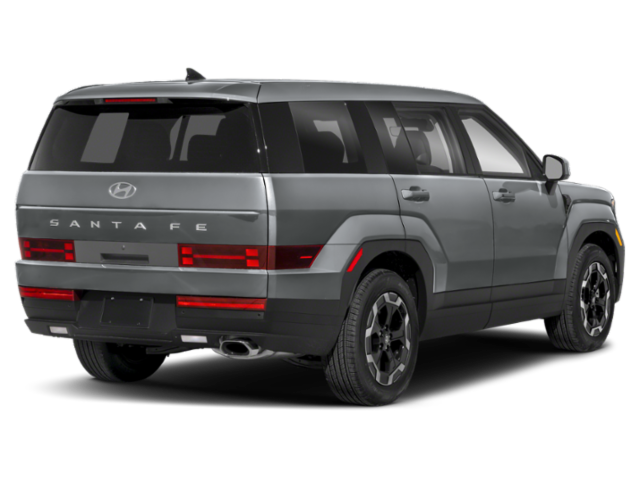
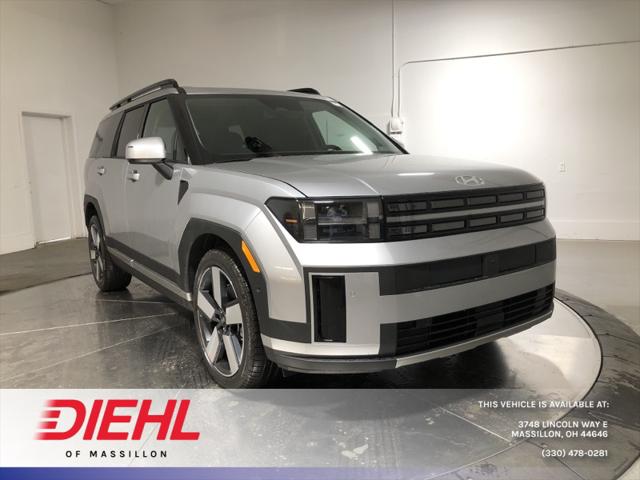
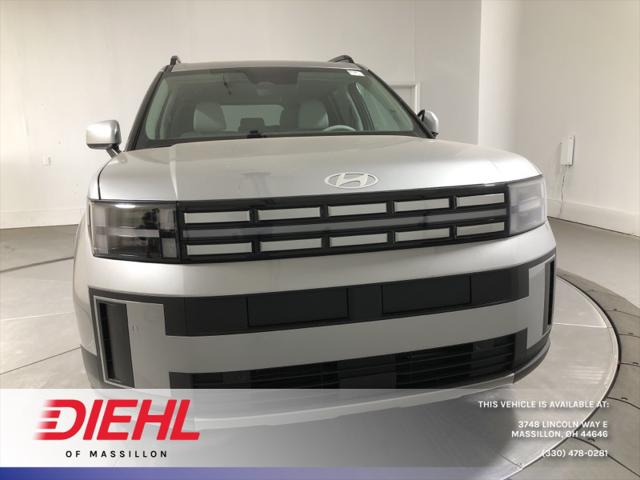
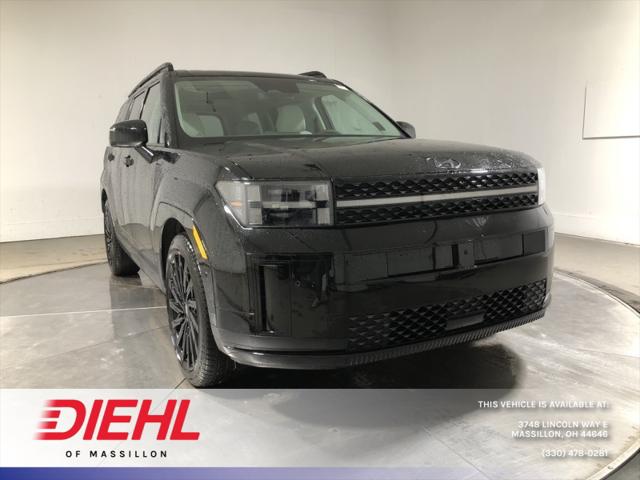
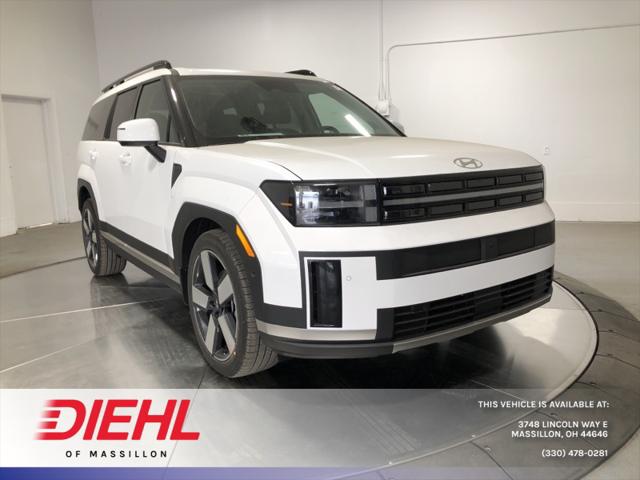
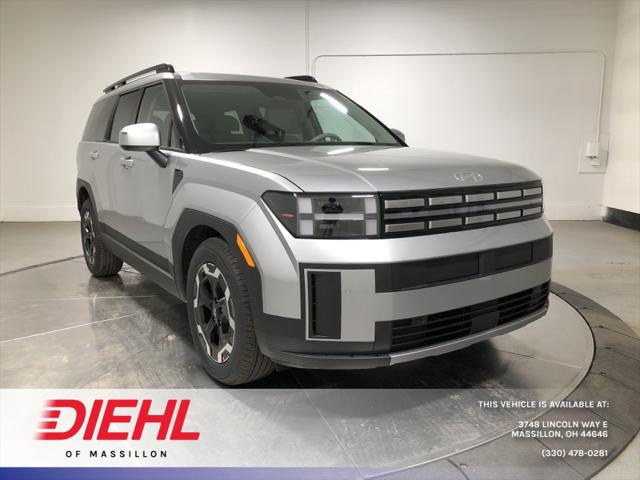
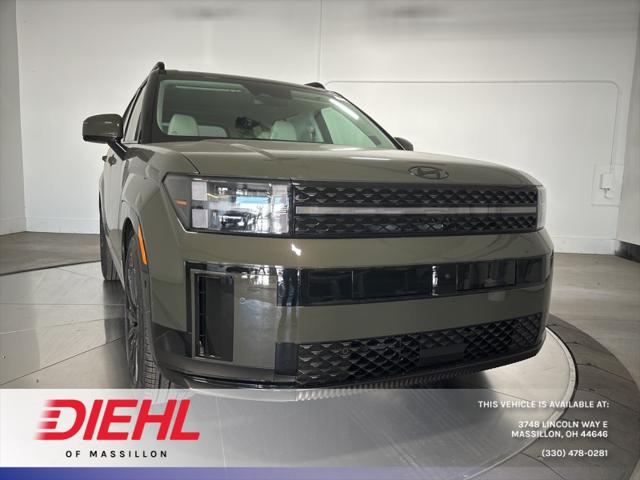
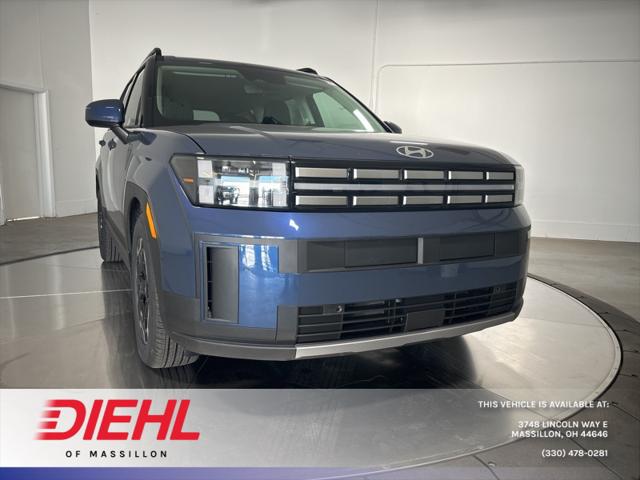
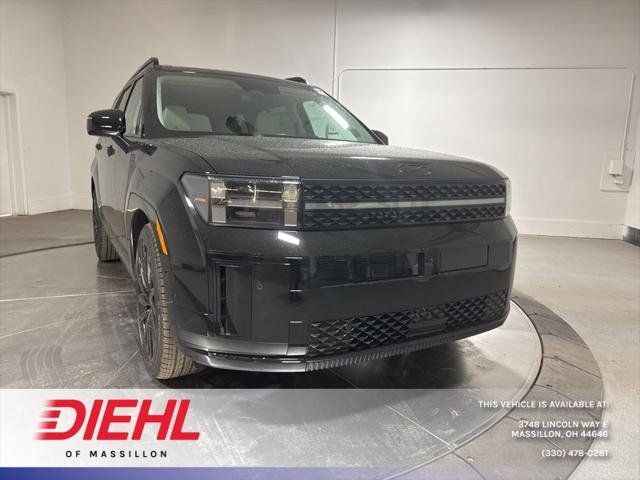
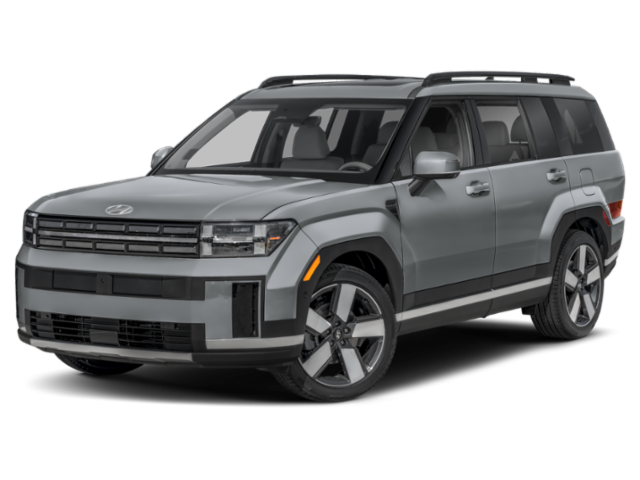
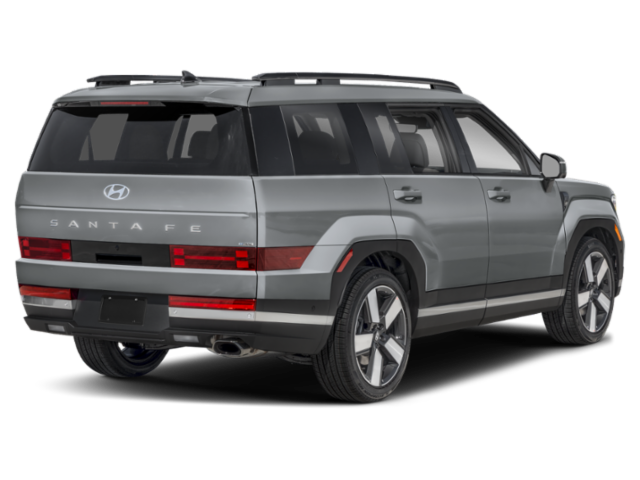
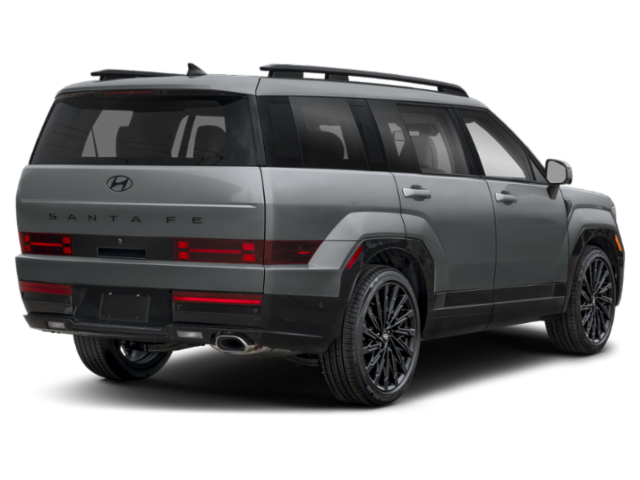
In a sea of lookalike midsize crossover SUVs, the 2025 Hyundai Santa Fe is different. It stands out, especially in one of the more vivid or unusual colors. Love it or hate it, the latest Santa Fe makes a statement, and that's an achievement in a segment where the different makes and models all look the same.
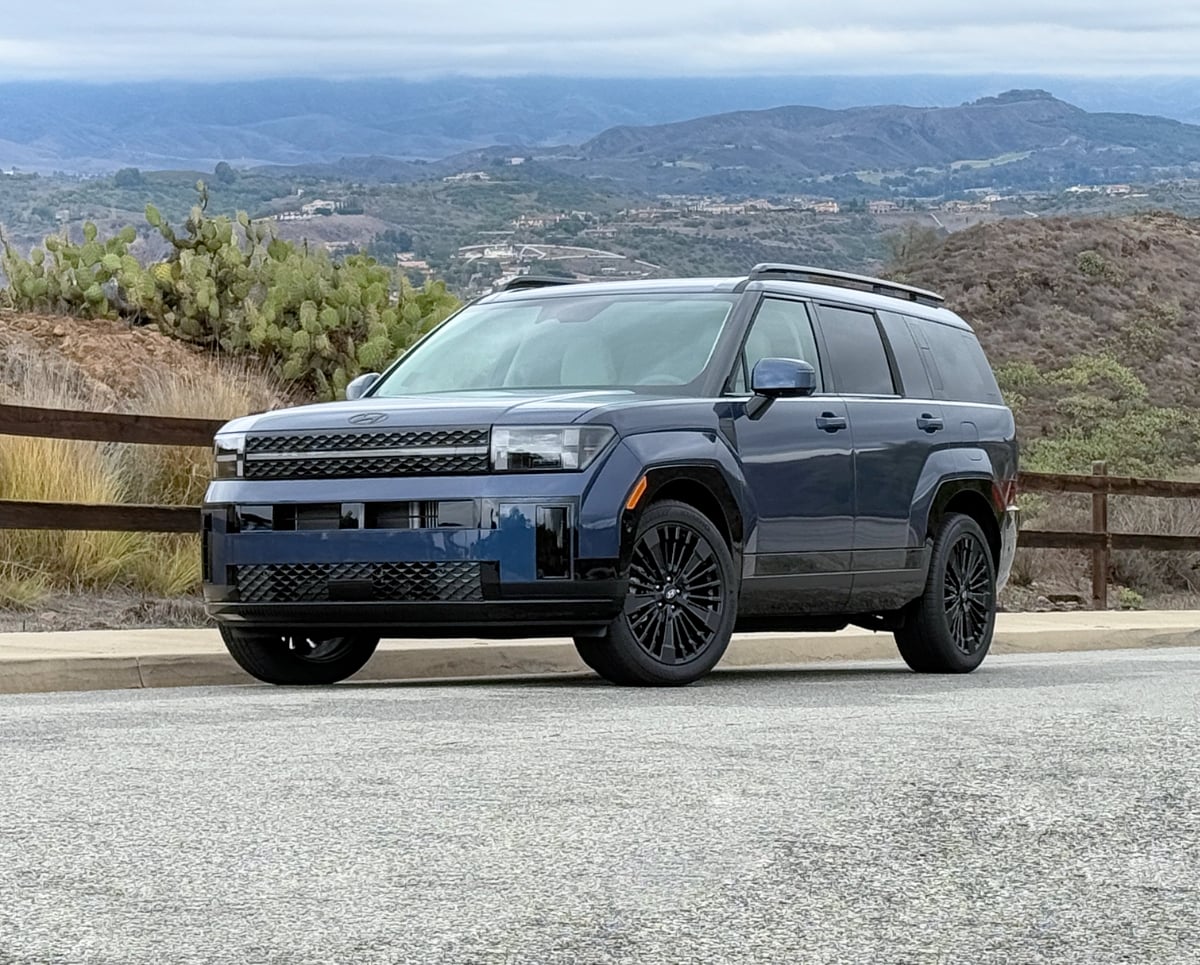
Photo: Christian Wardlaw
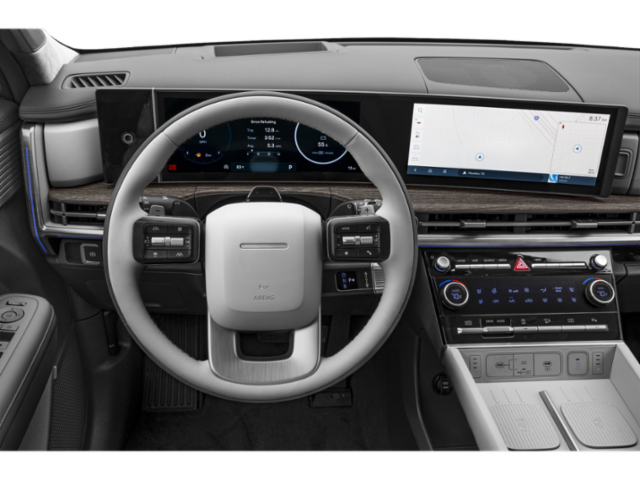
But that's not why I'm reviewing the 2025 Santa Fe Hybrid. Previously, JD Power published a First Drive review of a 2024 Santa Fe equipped with the SUV's standard turbocharged 2.5-liter four-cylinder engine. The test vehicle has the available hybrid drivetrain this time, and I've been living with the SUV for a week. And I'm here to tell you that if you like the way the Santa Fe looks on the outside, you'll love what Hyundai has done with the place on the inside.
The 2025 Santa Fe Hybrid uses a turbocharged 1.6-liter four-cylinder engine, a six-speed automatic transmission, and an electric motor to improve fuel economy compared to the turbocharged 2.5-liter four. Front-wheel drive (FWD) is standard, with all-wheel drive (AWD) optional. Hybrids are available in SEL, Limited, and Calligraphy trim levels, with base prices ranging from $39,175 to $49,225, including the $1,475 destination charge.
For this review of the 2025 Santa Fe Hybrid, Hyundai provided a Calligraphy test vehicle equipped with AWD and a single option: carpeted floor mats. The test vehicle's price was $50,675, including a $1,415 destination charge to ship the SUV to your local dealership from the Hyundai assembly plant in Montgomery, Alabama. Since the test car rolled off the assembly line, Hyundai has raised prices and the destination charge.

Photo: Christian Wardlaw
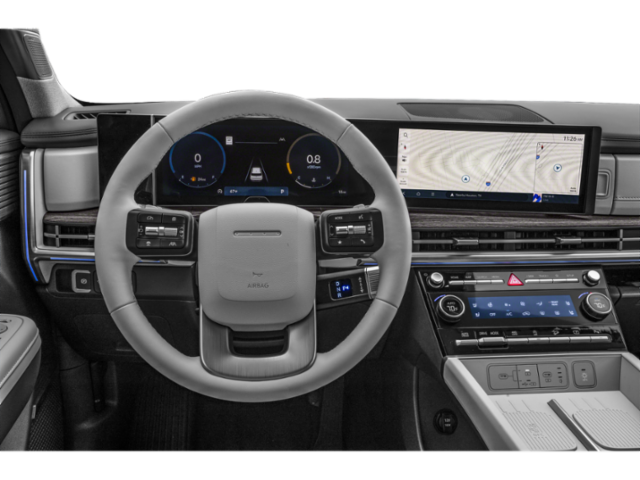
Open the Santa Fe Calligraphy's front door, and a high-tech, inviting interior awaits. The test vehicle had high-contrast light gray seats, metallic accents, simulated wood trim, an artificial suede headliner, and high-quality materials and finishes, making the Santa Fe appear more expensive than it is. In my notes, I called it a work of art.
Front seat comfort is excellent and offers a commanding view out. With Calligraphy trim, Hyundai equips the Santa Fe with "relaxation seats" featuring power-extending leg rests. Premium Nappa leather is standard in this version of the Santa Fe, and both the driver and front passenger benefit from power height adjustment, heating, and ventilation. The steering wheel is heated too.
The Calligraphy's heated second-row captain's chairs aren't quite as comfortable as the ones in front, but there is plenty of legroom, and they slide forward and back to make room for people in the third row. My test vehicle had a second sunroof panel over this row of seats, sunshades that covered the entire rear door window glass, and handy USB ports embedded into the front seatbacks.
Conscientious owners take note: The Santa Fe's long rear doors have sharp lower corners, so unsupervised children who open them will easily dent adjacent vehicles. My teenagers struggled to exit this SUV in tight parking situations.
Those long doors make third-row access easier, but it remains a hassle for adults. Nevertheless, after moving the second-row seat forward to a still-comfortable position, I could fit into the third row, and I am not a small person. Knee clearance was okay, but foot space was tight, and while the accommodations are better than I expected, I still wouldn't want to sit there for long.
The Santa Fe's cabin wows you with thoughtful details. For starters, Hyundai provides plenty of physical switchgear to make using the controls easier and more natural. In addition, the front cupholders hold 32-ounce Hydro Flask water bottles, and my Calligraphy test vehicle had dual wireless smartphone quick-charger pads and a super-cool UV disinfecting tray hidden behind the upper right dashboard panel.
Storage is seemingly everywhere. Hyundai elegantly and discreetly places shelves, hooks, bins, and trays throughout the cabin. The front center console has a dual-hinged armrest cover, making it accessible to front and second-row occupants. The rear passengers can also slide out a huge storage bin from the bottom of it. Hyundai includes smartphone pockets on the front seatbacks, drink box and cupholders on the rear door panels, and air vents and USB charging ports in all three rows.

Photo: Christian Wardlaw
Every 2025 Santa Fe Hybrid has a 12.3-inch touchscreen infotainment system. With Limited and Calligraphy trim, it pairs with a matching 12.3-inch driver display under a single piece of curved glass.
Highlights include:
Upgrade to the Limited or Calligraphy, and the system adds:
Hyundai's latest digital instrumentation and infotainment systems are outstanding. The user interface is natural and intuitive, and in this test vehicle, the natural voice recognition system gave a nearly flawless performance in response to my standard set of prompts. Even the 12-speaker Bose premium sound system is decent.
The test vehicle had a head-up display showing plenty of data, including when other cars were in the Santa Fe's blind spots. A camera-based digital rearview mirror aids visibility when the cargo area is packed full, digital key technology turns your smartphone into the SUV's key, and Hyundai even offers a blue light filter for the displays.
Overall, the depth and breadth of the tech is remarkable. Better yet, most of it is genuinely helpful.

Photo: Christian Wardlaw
The Santa Fe's hybrid powertrain uses a turbocharged 1.6-liter four-cylinder engine as its basis. It pairs with a 44.2-kilowatt (kW) electric motor and a 1.49-kilowatt-hour (kWh) lithium-ion battery to generate 231 horsepower and 271 pound-feet of torque. The system powers the front wheels through a traditional six-speed automatic transmission, and AWD is an option.
Compared to the Santa Fe's standard turbocharged 2.5-liter four-cylinder engine, the Santa Fe Hybrid posts impressive fuel economy ratings. The EPA says it offers up to 12 mpg more in combined driving, setting your expectations at 36 mpg with FWD and 34 mpg with AWD. Non-hybrid Santa Fe models earn ratings of 22 mpg to 24 mpg, depending on the trim level and drivetrain.
Unfortunately, my real-world observation was nowhere near the official numbers. On my Southern California test loop, the Calligraphy AWD test vehicle averaged 26.3 mpg while using the Eco driving mode at all times except when hustling the SUV in the mountains in Sport mode. Nearly all hybrids I evaluate fall short of their EPA estimates, so this isn't surprising. Just disappointing.
Speaking of driving in the mountains, the Santa Fe Hybrid prefers a relaxed pace. It is too soft and disengaged to reward a driver seeking excitement. Also, with just 7 inches of ground clearance and shallow approach, breakover, and departure angles, it doesn't inspire off-road adventuring. For that, you need a Santa Fe XRT.
Instead, this SUV excels during the daily grind. Outward visibility is outstanding, and it's easy to place all four corners of this SUV for easier maneuvering in cramped parking lots and garages. My test vehicle's surround-view camera included guidance and predicted travel-path lines for the tires, helping to prevent wheel scrapes on curbs.
Power is there when you need it to accelerate onto the highway, pass slower vehicles, or take advantage of holes in traffic. I like that Hyundai uses a traditional automatic instead of a droning continuously variable transmission (CVT). The brakes feel good underfoot, and the suspension provides a controlled ride without unwanted body motion. Closing the sunroof shades helps to quiet the cabin when driving on the highway.
Consistently, the steering is dissatisfying. It feels artificially boosted and conveys nothing about what's happening at the road surface. Switching from the column-mounted electric steering to a rack-mounted version would probably help.
Nevertheless, you expect dull driving dynamics from a hybrid SUV. The disappointing fuel economy? Not so much.
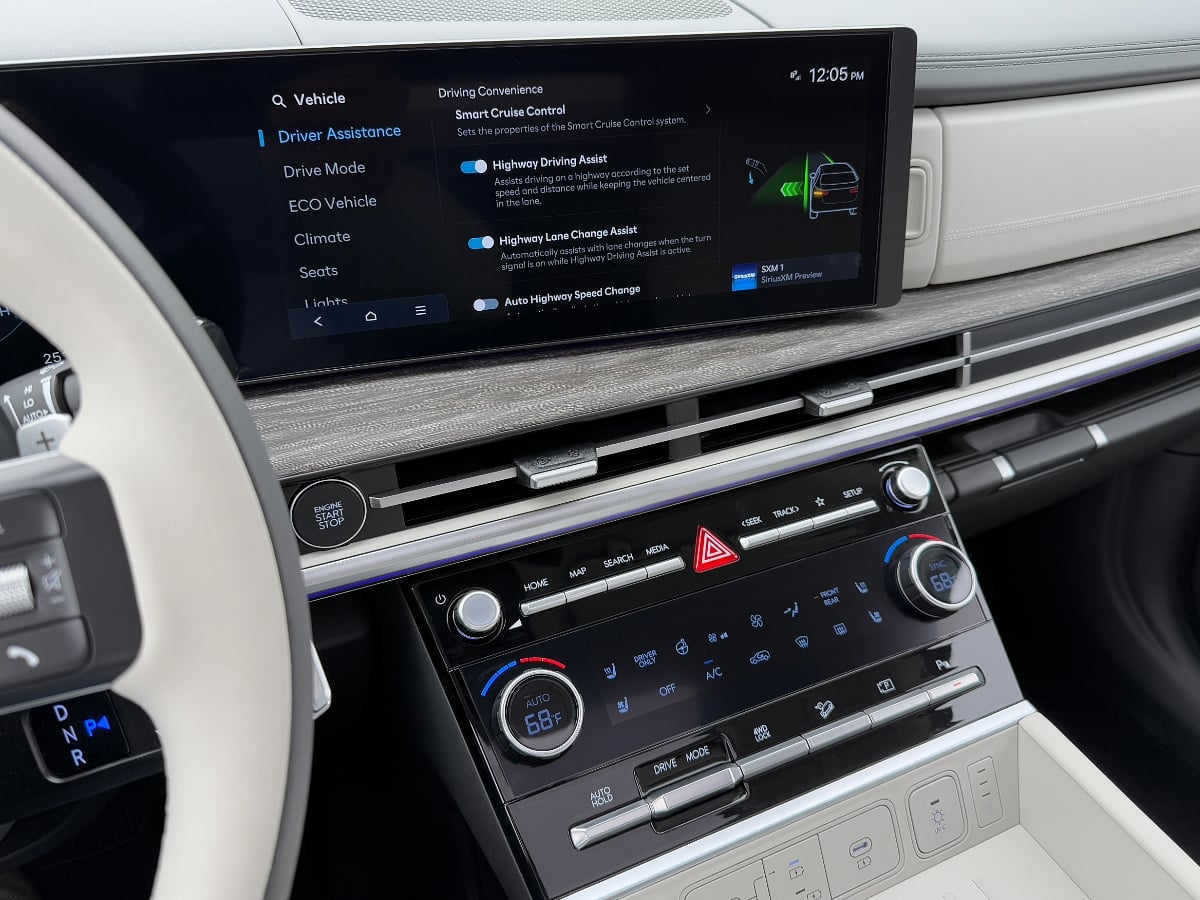
Photo: Christian Wardlaw
Hyundai provides a generous package of standard SmartSense safety features on every 2025 Santa Fe Hybrid. This collection of advanced driving assistance systems (ADAS) includes:
Upgrade from SEL to Limited trim, and this SUV has:
The Calligraphy trim level has every piece of tech Hyundai offers for this SUV:
Another great feature that Hyundai offers is a leading vehicle departure alert. Turn this on, and when you're sitting in traffic or stuck at a light and scrolling on your phone, it will tell you when the vehicles ahead are moving again. Of course, it won't work if you're the lead vehicle, so pay attention in those situations.
Overall, the Santa Fe's SmartSense collection of ADAS works well. You're aware of the tech's inputs, but they're subtle enough that they don't cause aggravation. In addition, I received no false alerts or warnings during my evaluation.
One of the roads on my testing route is a rural two-lane highway cutting across Ventura County farmland. Trees lining its south-facing shoulder cast shadows on the pavement, and farming activity leaves dust and dirt on the road, obscuring the painted markings. During the Santa Fe Hybrid test, a construction zone left a patchwork of fresh but lumpy blacktop and metal grates in the travel lane. Yet, the Santa Fe's adaptive cruise control and lane-keeping assistance systems proved unperturbed.
There was one time I had to intervene and override the technology. On the 101 freeway, all lanes of traffic came to a stop in the middle of a bend in the freeway. With Highway Driving Assist active, the tech initially began to brake. But as the car ahead entered the bend, it must have disappeared from the driving assistance system's "sight" because the Santa Fe began speeding back up when what it needed to do was brake harder.
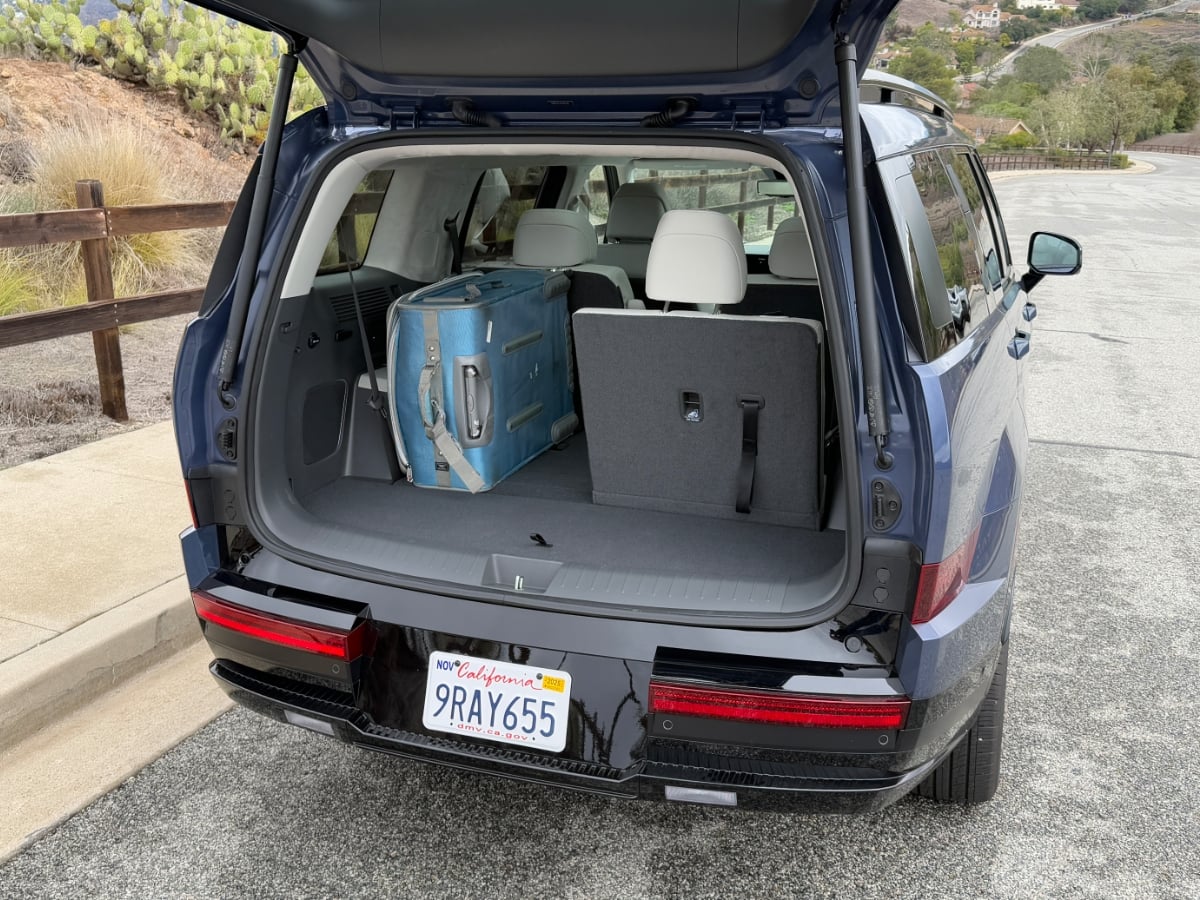
Photo: Christian Wardlaw
My test vehicle had a hands-free power liftgate. To open it when your hands are full, all you must do is stand near the back of the SUV for a few seconds, and it will automatically rise.
That's great when that's your intent, especially since you won't need to balance on one foot, which can be unsafe in icy conditions. But that's not great if you're just talking to another parent after soccer practice. Fortunately, you can activate or deactivate this feature within the infotainment system.
When the liftgate opens, it reveals 14.6 cubic feet of cargo space behind the third-row seat. That sounds roomier than it is, and there isn't much storage beneath the load floor. Most of the time, you'll probably want the third row folded flat, giving you 40.5 cu-ft. The maximum volume with the second-row seats folded is 79.6 cu-ft.
In my experience, the answer is no. The official rating for the SUV when equipped with AWD is 34 mpg in combined driving, and I observed nothing close to that.
When driving only in the city, the test vehicle returned 27.7 mpg. Add mountain, coastal, rural, and freeway driving, and that dipped to 26.3 mpg on my testing loop. With its 17.7-gallon fuel tank, that result translates into a real-world range of 465 miles, or about 400 miles between visits to the gas station.
While the Santa Fe Hybrid has plenty of driver assistance and collision avoidance technology, crash testing reveals concerns.
For example, the new Santa Fe earns a four-star overall rating instead of a five-star rating in NHTSA testing. In addition, the SUV got a Marginal rating in a new Insurance Institute for Highway Safety (IIHS) test measuring how well rear passengers fare in moderate offset frontal-impact collisions.
Prices for the 2025 Santa Fe Hybrid range from $39,175 to $49,225, including the $1,475 destination charge.
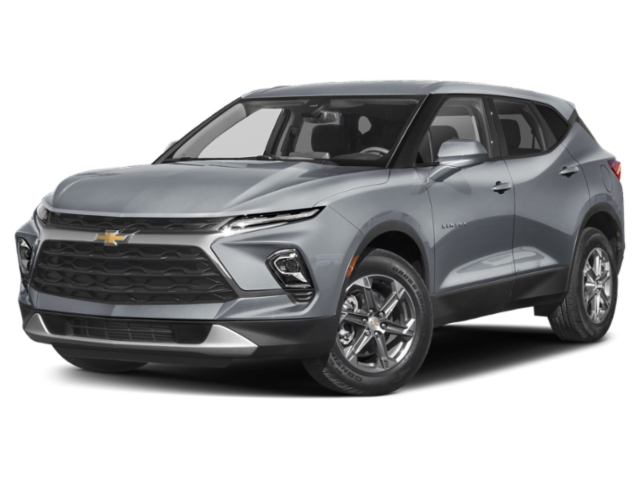
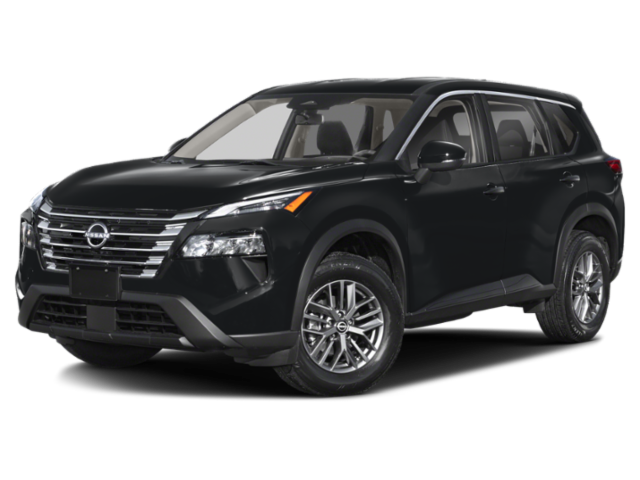
In the JD Power 2024 Initial Quality Study (IQS), the Nissan Murano ranks highest in the Upper Midsize SUV segment. The Chevrolet Blazer and the Ford Edge are the next highest-ranked models.
In the JD Power 2024 Automotive Performance, Execution and Layout (APEAL) Study, the Hyundai Santa Fe ranks highest in the Midsize SUV segment. The Nissan Murano and the Chevrolet Blazer are the next highest-ranked models (in a tie).
Other 2025 Santa Fe Hybrid competitors include the Kia Sorento Hybrid, Mazda CX-90 PHEV, and Toyota Highlander Hybrid.

Photo: Christian Wardlaw
While the Santa Fe Hybrid's exterior styling does it no favors, that's a subjective issue. Objectively, the real-world fuel economy is disappointing, and the crash-test results are concerning for an all-new design.
That's unfortunate because the Santa Fe's interior is stylish, practical, comfortable, and technologically advanced. The generous ownership benefits Hyundai offers to its customers are also irresistibly appealing.
Having lived with a Santa Fe Hybrid for a week, I like this SUV, but I can't recommend it until it boasts top-notch safety ratings and an observed fuel economy of 30 mpg or more. For American families, the shortfalls in those areas are problematic.
Christian Wardlaw is a veteran automotive journalist with 30 years of experience in the field and has held automotive editorial leadership positions at Edmunds, JD Power, and The New York Daily News. Today, Chris owns a content agency called Speedy Daddy Media, and in addition to JDPower.com, his work appears on Capital One Auto Navigator, CarGurus, and Edmunds.