
Full-size SUVs are for towing heavy trailers, carrying many people comfortably, and fitting in plenty of cargo. Those qualities typically come at a significant cost in terms of purchase price and fuel, but people who need those capabilities find the added expense worthwhile.
 Photo: Christian Wardlaw
Several luxury models are also available in this segment, including the redesigned 2025 Infiniti QX80. For over 20 years, Infiniti has offered a QX-badged alternative to the Cadillac Escalade, Lexus LX, Lincoln Navigator, and others. With the all-new 2025 QX80, Infiniti hopes evolved design themes, a more efficient drivetrain, and next-generation technologies will steer more wealthy customers its way.
The QX80 is available in Pure, Luxe, Sensory, and Autograph trim levels. They all have a twin-turbocharged V6 engine and a nine-speed automatic transmission, and the Pure and Luxe versions are the only ones with standard rear-wheel drive (RWD). The Sensory and Autograph have standard four-wheel drive (4WD), an option for the Pure and Luxe. Prices range from about $87,500 to more than $112,500, including the destination charge.
For this review of the 2025 QX80, Infiniti provided a pre-production test vehicle equipped with Autograph trim and extra-cost Dynamic Metal paint. The test vehicle’s price was $112,590, including the $1,995 destination charge to ship the large three-row luxury SUV from the assembly plant in Kyushu, Japan, to your local dealership.
 Photo: Christian Wardlaw
Infiniti equips every QX80 with running boards, and you need them to climb up into and down out of this SUV. The Luxe, Sensory, and Autograph trims include an air suspension that you can lower to make entry and exit easier.
Once you’re aboard, the QX80 Autograph is exceptionally comfortable. Premium semi-aniline leather upholstery and heated, ventilated, and massaging front and second-row seats are standard, and the steering wheel and third-row seats are also heated. Accessing the third-row seat is surprisingly easy, and adults can fit in without much trouble or complaining.
Drivers face what Infiniti calls a “Monolith” driver and infotainment display. It marries two 14.3-inch screens under a single piece of glass and is one of the most modern pieces of technology ever found in an Infiniti. A separate 9-inch touchscreen controls the climate system and other secondary functions, and the Autograph also gets a touchscreen for rear-seat passengers to use to control the climate system, seat comfort features, and more.
Especially with Autograph trim, Infiniti checks all the quality boxes, though some secondary parts and pieces appear sourced from a Nissan parts bin. The Autograph’s leather is soft and supple, and an artificial suede headliner covers the cabin’s roof. Ambient lighting and a panoramic glass sunroof are standard with all trim levels.
Storage is less generous than expected due to the small center cool box under the armrest and the odd smartphone charger location. If Infiniti swapped the climate control touchscreen for conventional knobs and buttons, more storage space would be available. That’s true in the Autograph’s second row, too, where the oversized console provides remarkably little storage space, partly because there is a largely redundant screen on top of it.
 Photo: Christian Wardlaw
The Monolith display contains two configurable 14.3-inch screens. Controls on the steering wheel operate the one in front of the driver, while the center Infiniti InTouch infotainment display is touch-sensing. Over-the-air software updates keep the technology current.
In the QX80, Infiniti InTouch includes:
This version of Infiniti InTouch is thoroughly modern, proving easy and intuitive to use. I had no trouble pairing an iPhone to the Bluetooth connection or running Apple CarPlay, and Google Assistant responded to voice queries quickly and accurately. The only exception was when I asked to listen to reggae music on SiriusXM satellite radio, and the digital voice assistant responded that the genre was unavailable.
A 14-speaker Klipsch premium sound system is standard with Pure and Luxe trim, while the Sensory and Autograph have a 24-speaker high-end audio system from the same manufacturer. With 1,200 watts of power and flashy-looking head restraint speakers, it promises an impressive listening experience. Aside from sounding a little brassy at times, it met expectations, particularly its ability to deliver pounding bass free of distortion.
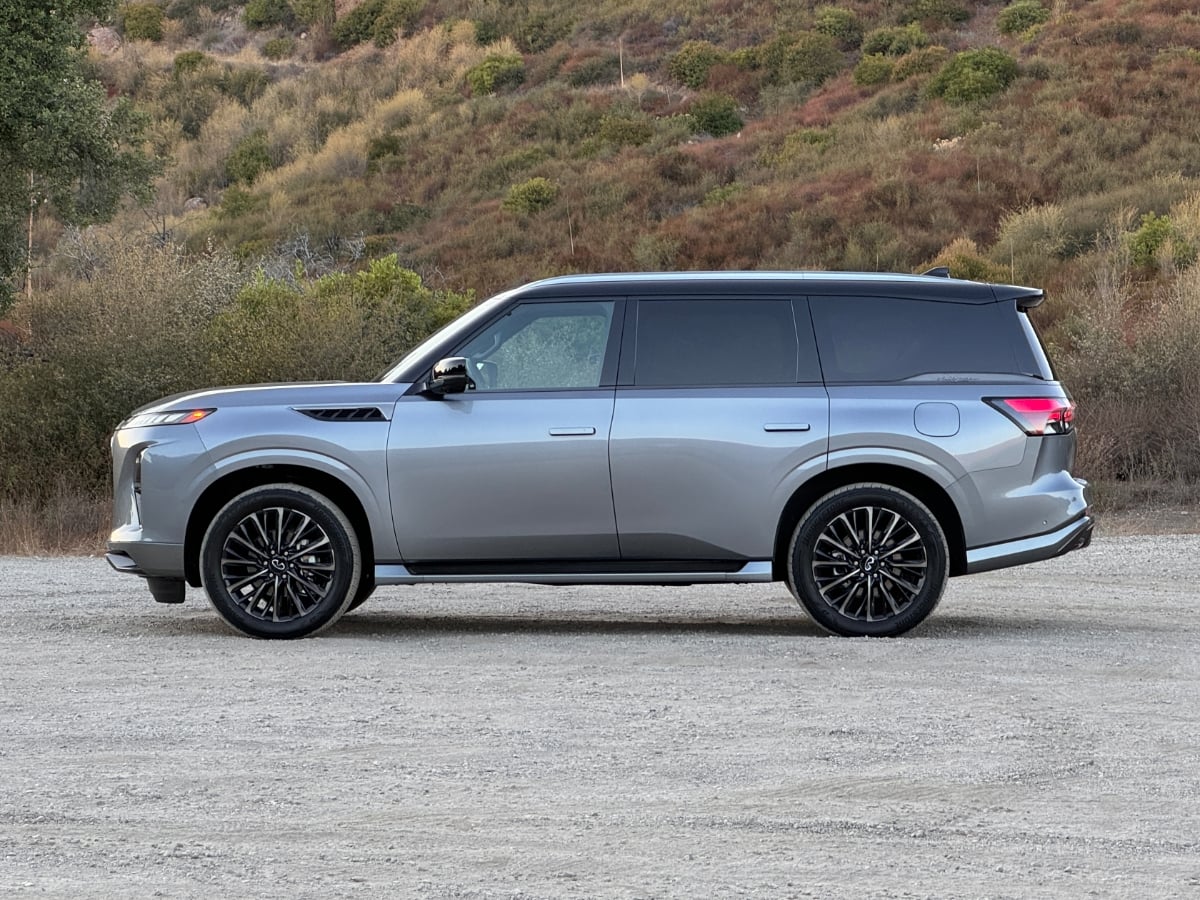 Photo: Christian Wardlaw
Philosophically, the most significant change with the 2025 QX80 is the new twin-turbocharged 3.5-liter V6 engine, which replaces the 5.6-liter V8 Infiniti long offered in this model. The twin-turbo V6 makes 450 horsepower and 516 pound-feet of torque—gains of 50 hp and 103 pound-feet over the previous-generation QX80. Not only is the new model more powerful, but it is also more fuel efficient, posting gains of 2 mpg in combined driving for both RWD and 4WD models.
Equipped with robust body-on-frame construction, the QX80 Autograph weighs a whopping 6,204 pounds and rolls on 22-inch wheels wrapped in P275/50R22 all-season tires. Double wishbone front and rear suspension designs and an adaptive damping air suspension suggest the QX80 will provide a smooth and refined ride, but that wasn’t my experience.
Instead, I thought the QX80 rode like a stiffly sprung pickup truck, jittering and jiggling on anything except the most flawless pavement. On undulating mountain roads, lateral and vertical body motion created additional unpleasantness, and over city speed humps, the rear end would buck. The Autograph’s disagreeable ride and handling made me wonder if a QX80 Pure, with its smaller wheels, thicker tire sidewalls, and coil springs, would be better to drive.
Still, that wouldn’t resolve just how massive the QX80 felt on the narrow and congested lanes of Los Angeles freeways and the busy city streets of Hollywood. Finding adequately sized parking spaces in urban areas was a genuine challenge, and despite the numerous cameras designed to improve outward visibility, this Infiniti felt massive and unwieldy in town.
Suburbs are more navigable, and on the open road, the QX80 cruises effortlessly. Also, during a mountain descent with repeated use of the brakes, they resisted fade and inspired confidence—good things in a vehicle engineered to tow up to 8,500 pounds. The SUV’s new electric steering is agreeable, too, with perfect weighting and reasonably accurate response to input.
As for the new V6 engine, it’s impressive. While I miss the sound of the previous V8, the twin-turbo V6 accelerates the three-ton QX80 rapidly, and the automatic transmission shifts flawlessly. Not only that, but I also nearly matched the official Environmental Protection Agency (EPA) rating on my mountainous testing loop.
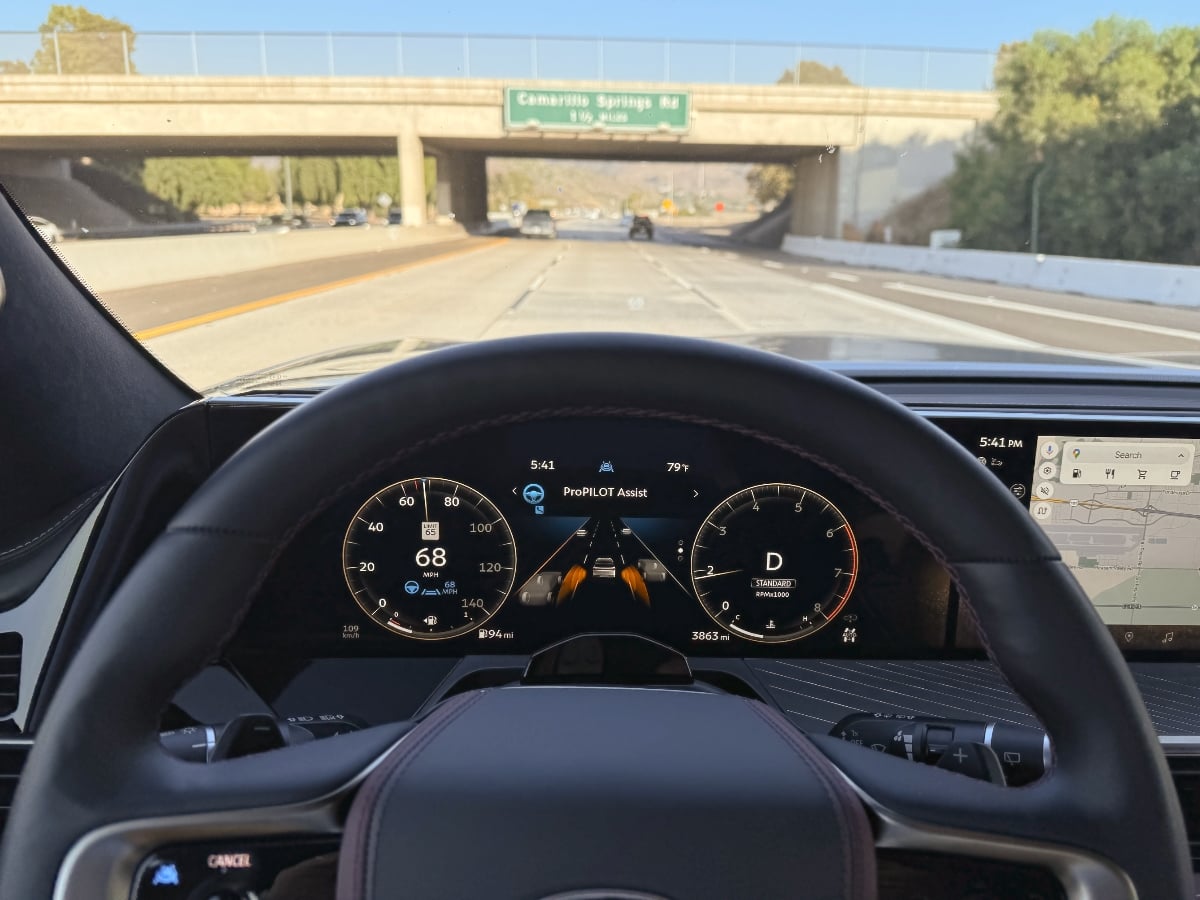 Photo: Christian Wardlaw
Every 2025 QX80 has a comprehensive list of standard advanced driver assistance systems (ADAS). They include:
The Pure, Luxe, and Sensory include ProPilot Assist 1.1, combining adaptive cruise control and lane-centering assistance to create a hands-on semi-autonomous highway driving system. Autograph trims get ProPilot Assist 2.1, a hands-free version of that technology that includes automated lane-change assistance. ProPilot Assist 2.1 is an option with Luxe and Sensory trim levels.
On a lightly traveled four-lane freeway (two lanes in each direction), ProPilot Assist 2.1 performed flawlessly. However, it proved less effective with thicker traffic, added travel lanes, and bends in the highway. In addition, as of this writing, the system doesn’t work on several sections of Southern California’s freeway network, including the one closest to my home.
What bothered me most about the QX80’s ADAS collection were the lane-keeping and lane-centering assistance systems. When the driver wishes to override the technology, it too strenuously resists human inputs. When the tech finally relents, it does so suddenly, exaggerating the driver’s steering action. In turn, to the occupants within the Infiniti and the observers outside of it, the QX80’s behavior feels and looks erratic.
 Photo: Christian Wardlaw
Infiniti says the QX80 holds 22 cubic feet of cargo behind its third-row seat, 59 cubic feet behind the second-row seats, and a maximum of 101 cubic feet. Compared to a rival that ranks highly in JD Power studies, the Cadillac Escalade, those measurements are less generous.
There is a small storage compartment under the load floor, and with Sensory and Autograph trims, the QX80 has a household-style power outlet in the cargo area. Power-folding third- and second-row seats expand capacity, and to make it easier to load heavy items, you can lower the air suspension using a button in the cargo hold.
According to official EPA ratings, a QX80 with RWD should get 18 mpg in combined driving, while versions of the SUV equipped with 4WD should return 17. Don’t forget the engine requires more expensive premium fuel to make its maximum horsepower and torque.
During the evaluation drive, my Autograph 4WD test vehicle averaged 16.6 mpg. With its 23.6-gallon fuel tank full, it could travel more than 390 miles between fill-ups, though you’d likely stop at the 350-mile mark.
As of this writing, the National Highway Traffic Safety Administration (NHTSA) and the Insurance Institute for Highway Safety (IIHS) haven’t performed crash tests on the redesigned QX80.
However, the SUV has a long list of standard safety features to help prevent a collision from happening. And if you do get into an accident, the QX80 weighs about 6,000 pounds, depending on the drivetrain and trim level. That’s more than most other cars and SUVs on the road, and heavier vehicles tend to fare better in a crash.
Prices for the 2025 Infiniti QX80 range from $85,550 to $110,595. To those numbers, you must add the $1,995 destination charge.
In the JD Power 2024 Initial Quality Study (IQS), the previous-generation QX80 ranks highest in the Large Premium SUV segment. The Cadillac Escalade and the Land Rover Range Rover are the next highest-ranked models.
In the JD Power 2024 Automotive Performance, Execution and Layout (APEAL) Study, the Land Rover Range Rover ranks highest in the Large Premium SUV segment. The Cadillac Escalade and the Mercedes-Benz GLS are the next highest-ranked models.
Other 2025 QX80 competitors include the BMW X7, Jeep Grand Wagoneer, Lexus LX, and Lincoln Navigator.
 Photo: Christian Wardlaw
Several appealing large luxury SUVs are available, as well as loaded versions of mass-market entries like the Ford Expedition Platinum, GMC Yukon Denali Ultimate, and Jeep Wagoneer Series III. Most bring something special to the segment, like on-pavement performance, off-road capability, alluring style, envy-inspiring brand cachet, futuristic technology, compelling value, or rival-beating towing capacity.
The redesigned 2025 Infiniti QX80 can’t boast of a segment lead regarding any of those qualities, and now that its prices are similar to many of the alternatives, the previous-generation model’s inherent value advantage has evaporated. Unquestionably, Infiniti has dramatically improved the new QX80, but it meets rather than exceeds expectations compared to its contemporary rivals.
Christian Wardlaw is a veteran automotive journalist with 30 years of experience in the field and has held automotive editorial leadership positions at Edmunds, JD Power, and The New York Daily News. Today, Chris owns a content agency called Speedy Daddy Media, and in addition to JDPower.com, his work appears on Capital One Auto Navigator, CarGurus, and Edmunds.


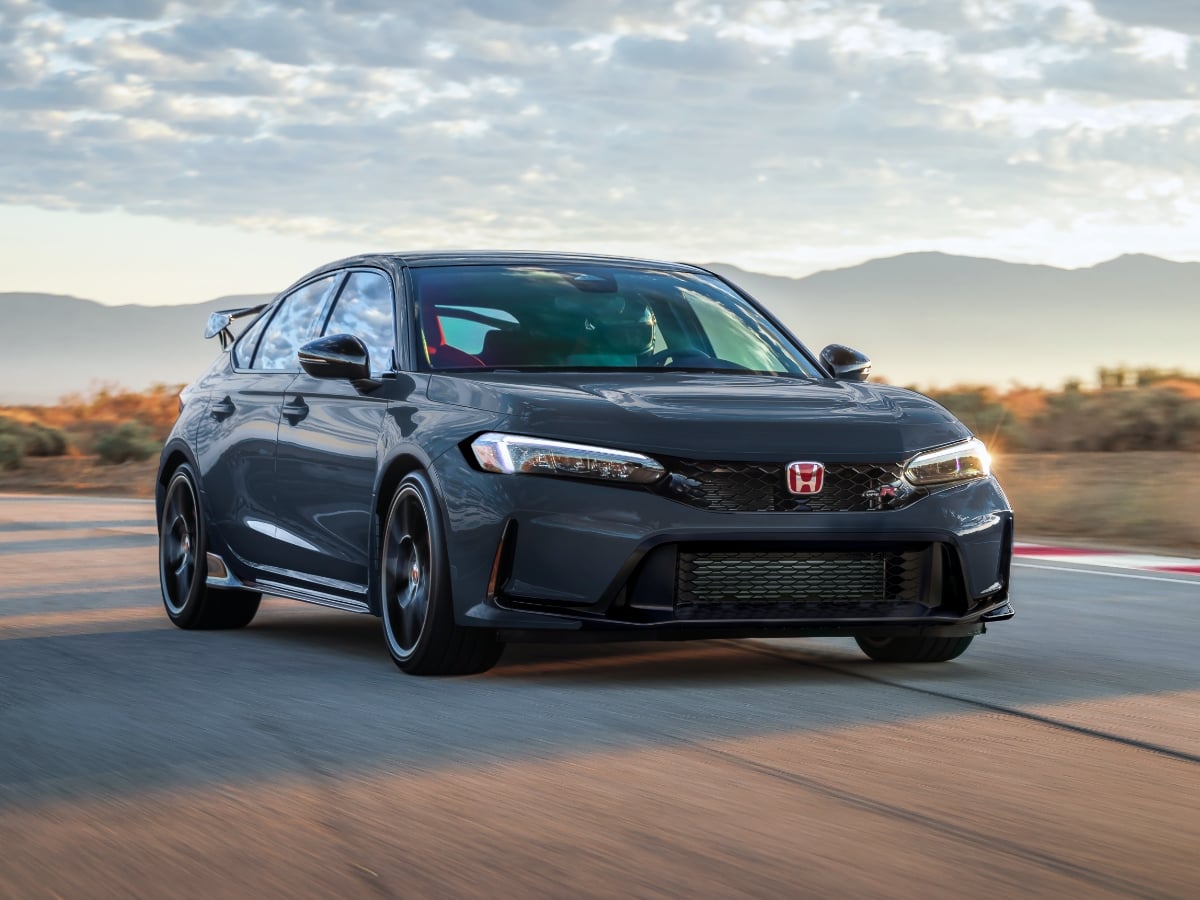
The 2027 Civic Type R goes on sale in October 2026, and it starts at $49,990, including the $1,295 destination charge.
Read the Full Article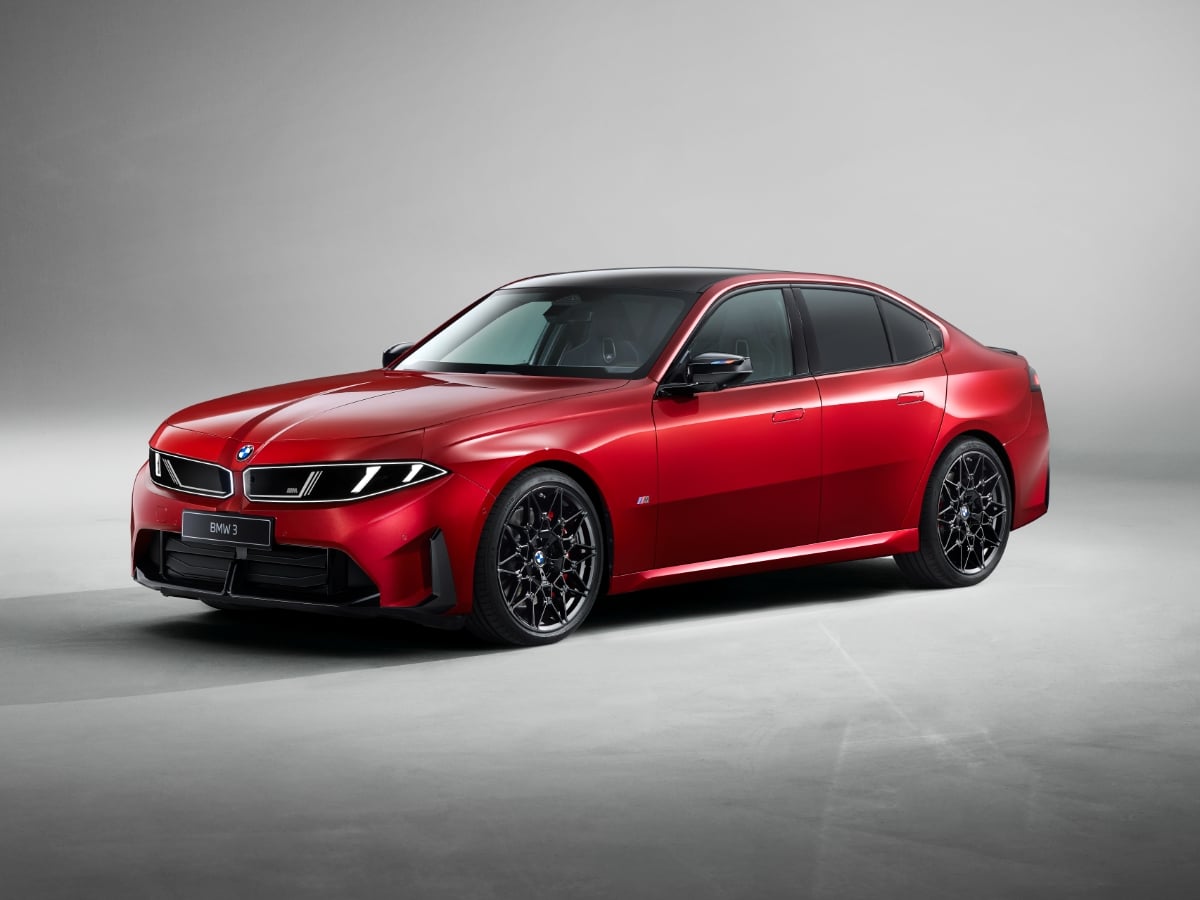
Part of BMW’s Neue Klasse (new class) rollout of redesigned models, the 2027 BMW 3 Series is all-new and goes on sale in the first quarter of 2027.
Read the Full Article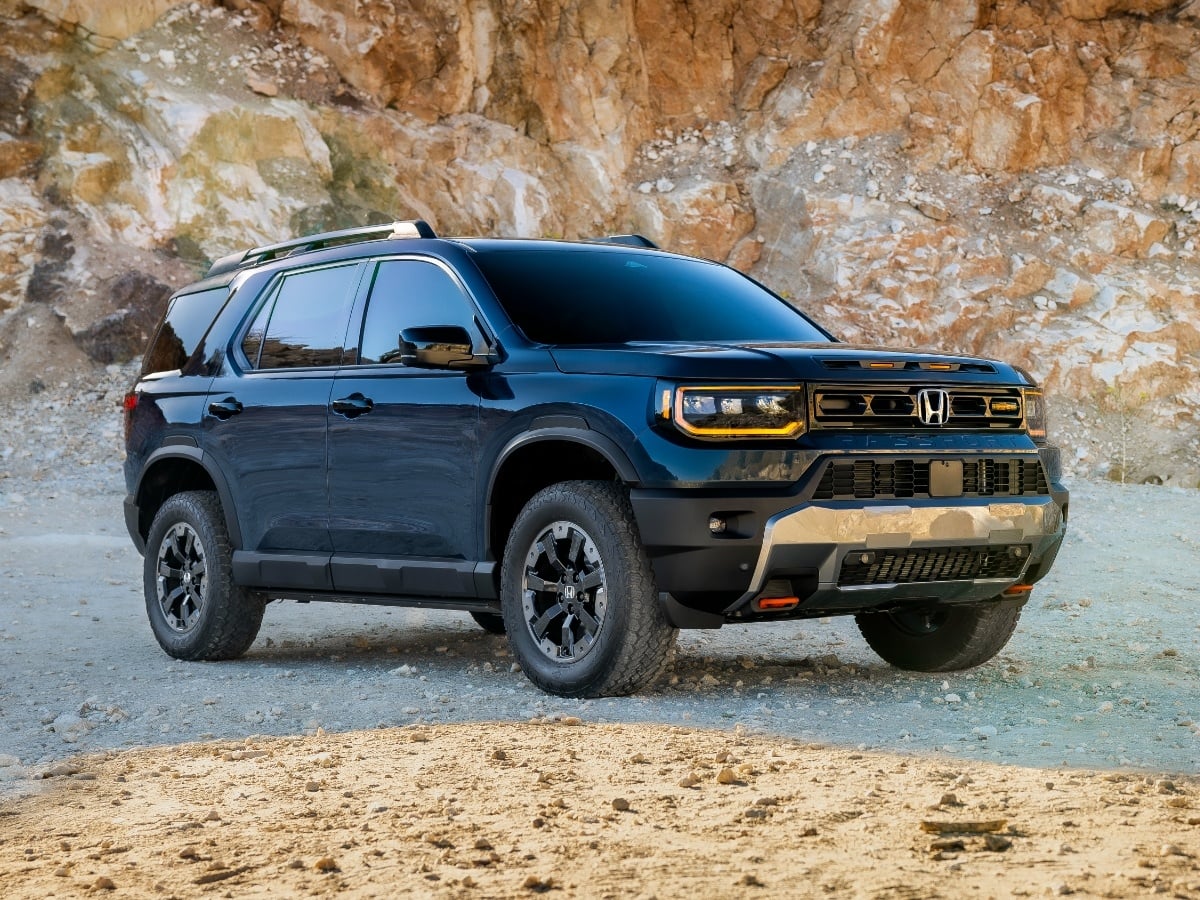
Updates to the 2027 Honda Passport TrailSport include a reworked suspension, improved steering, subtle styling enhancements, and added standard equipment.
Read the Full Article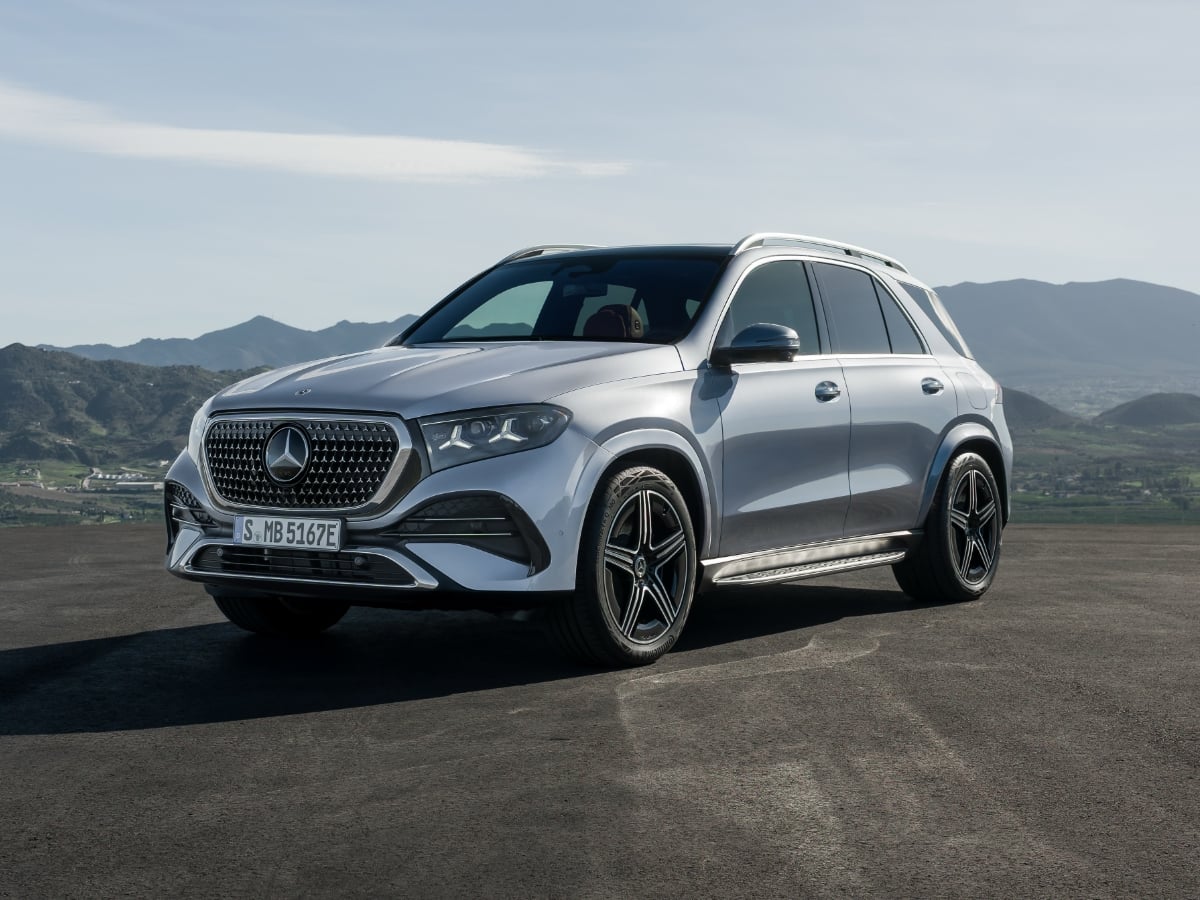
The midsize 2027 Mercedes GLE remains available in original and spicy Coupe recipes, now with standard 4Matic all-wheel drive (AWD), MBUX Superscreen technology, and a panoramic glass sunroof for ...See More
Read the Full Article