40 - 43
33 - 36
324
1 speed, CVT w/OD
Gas/Electric I-4
All Wheel Drive
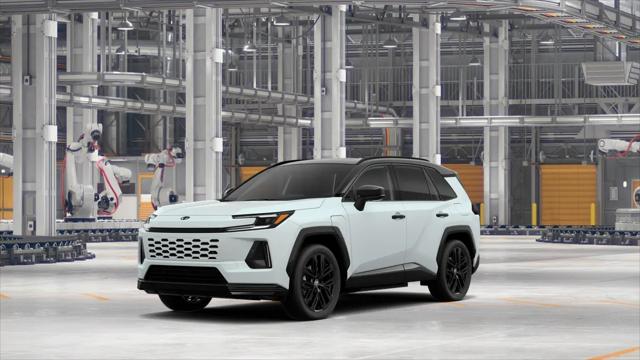
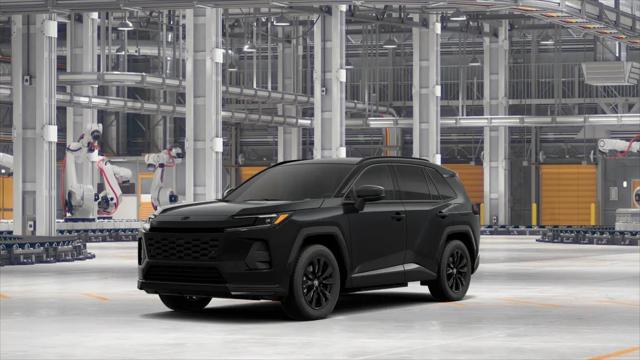
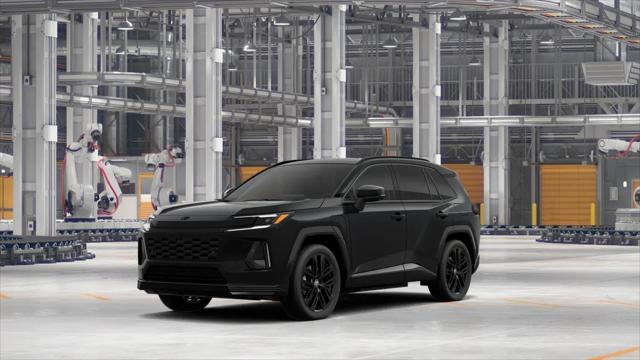
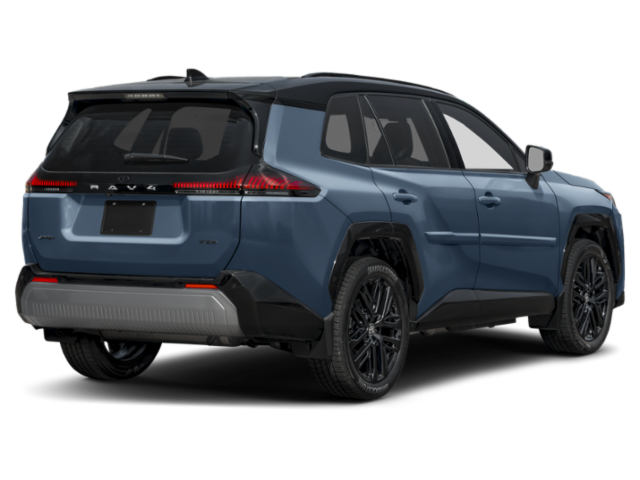
The plug-in hybrid (PHEV) version of the RAV4 returns for a second generation, even if its previous name, the Prime, does not. No loss there. The renamed 2026 Toyota RAV4 Plug-in Hybrid is not entirely new (more on that shortly), but it is improved and remains a top choice if you are considering the limited selection of compact SUVs with all-electric range.

Photo: James Riswick
The Toyota RAV4 PHEV is built on a strengthened, retuned version of the previous generation’s platform, as evidenced by its nearly identical dimensions. Still, there’s a lot that’s new, including next-generation powertrain and infotainment technology. There are also two new trim levels: the off-road-focused Woodland and the sport-tuned GR Sport.
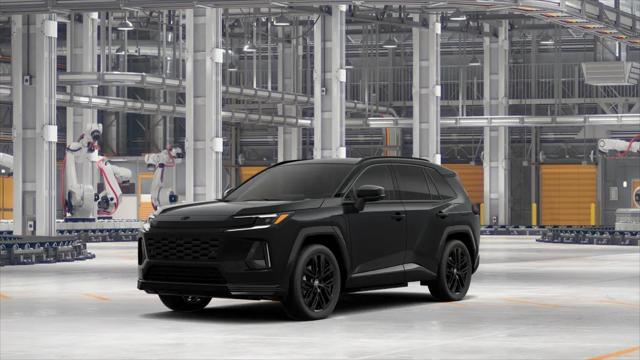
Joining those two trim levels are the carryover SE and XSE. Once again, you cannot pair the plug-in hybrid with the RAV4’s “core” trim levels of LE, XLE Premium, and Limited—they’re exclusive to the standard hybrid (reviewed separately). At the time of writing, Toyota has not announced pricing, but it should be revealed closer to the RAV4 Plug-in Hybrid’s on-sale date in the spring.
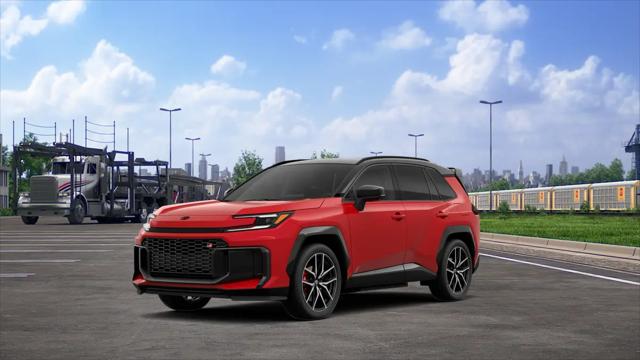
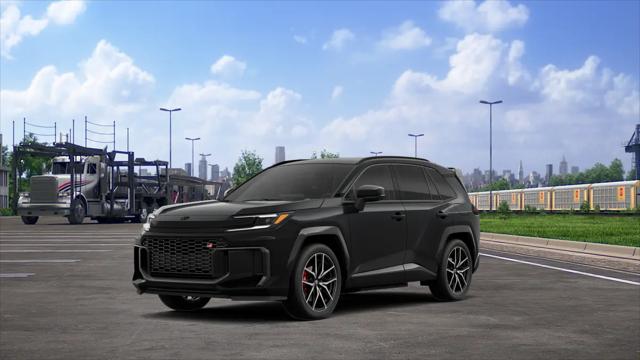
For this 2026 RAV4 Plug-in Hybrid review, Toyota supplied two test vehicles: a Woodland and the GR Sport (pictured). I also tested a standard hybrid in the XSE trim level, so I am broadly familiar with how that trim should perform, aside from its powertrain. That’s important because they all have fundamental chassis and equipment differences that influence how they drive.
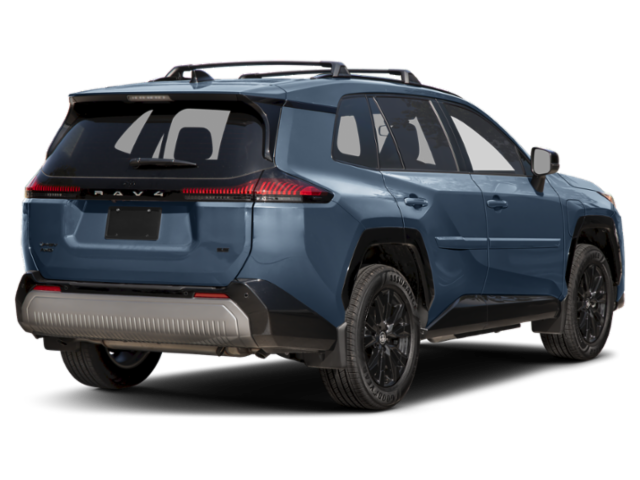
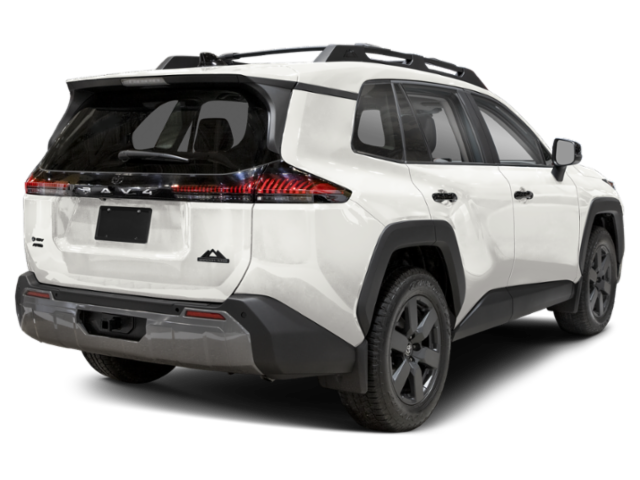
To its unique styling, the Woodland adds all-terrain tires on 18-inch wheels, a higher ride height (8.5 inches vs. 8.1), distinctive fog lights, raised roof rails, a 2-inch tow hitch, orange interior accents, and an option for a pale green interior.
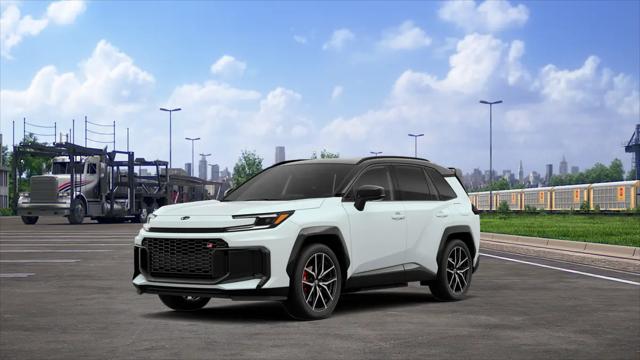
The GR Sport, meanwhile, features unique suspension components and steering tuning, a lower ride height of 7.5 inches, offset 20-inch wheels with summer tires, and aerodynamic upgrades such as a front lip and rear wing spoilers, rear diffuser, and front fascia air ducts. It also features distinctive exterior styling, simulated suede upholstery, red stitching, and numerous GR logos.
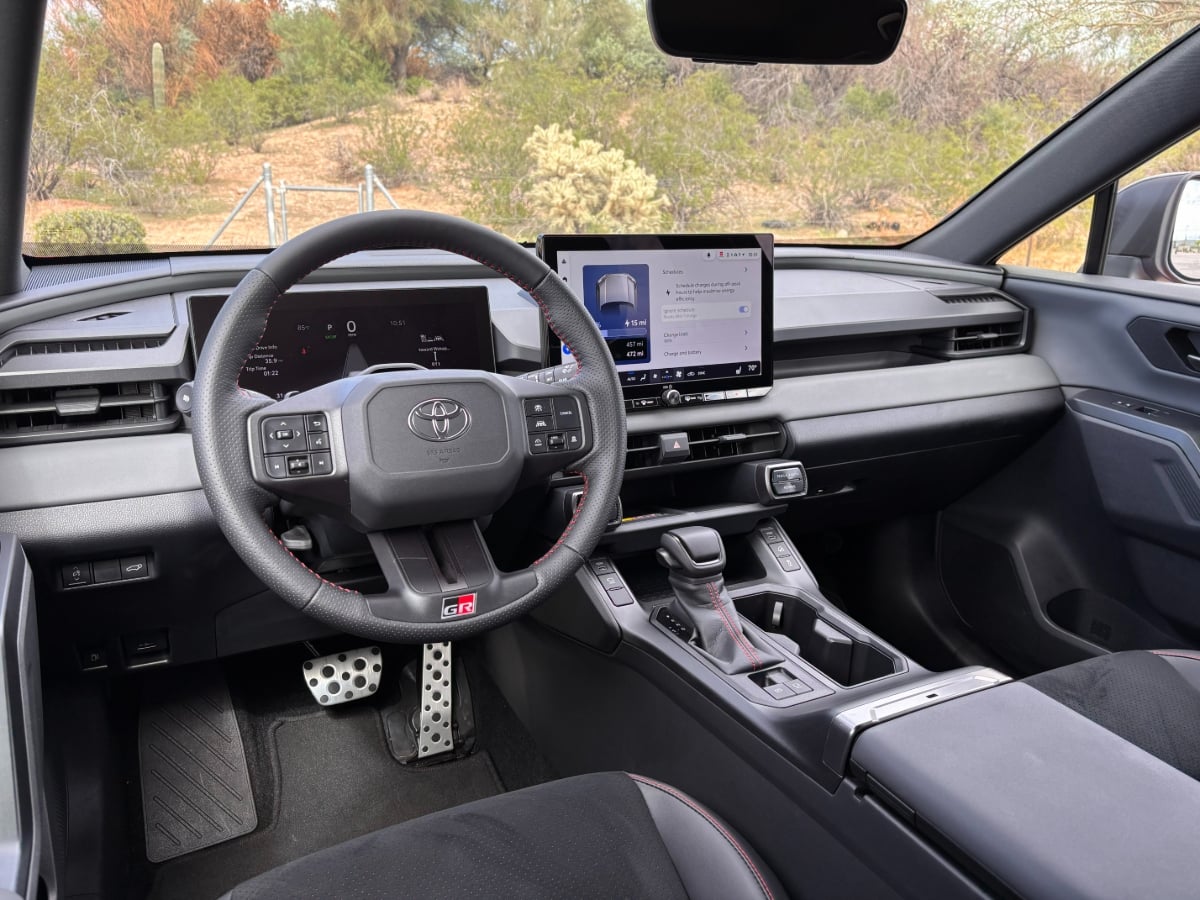
Photo: James Riswick
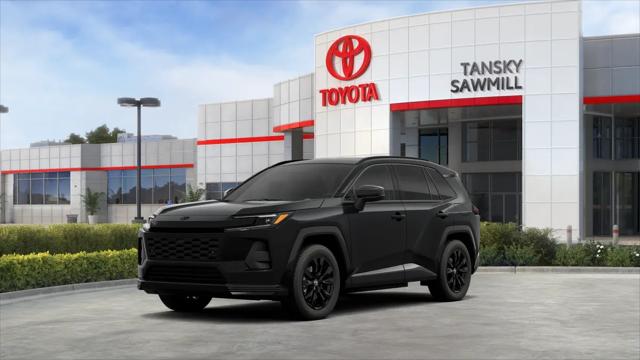
While the new RAV4’s rear end is clean and appealing, especially with the GR Sport’s large spoiler, the different front-end styles look like Toyota stitched the faces of various models onto the last-generation RAV4. The SE and XSE feature a Crown Signia grille; the Woodland adopts a 4Runner look; and the GR Sport resembles a scaled-up GR Corolla.
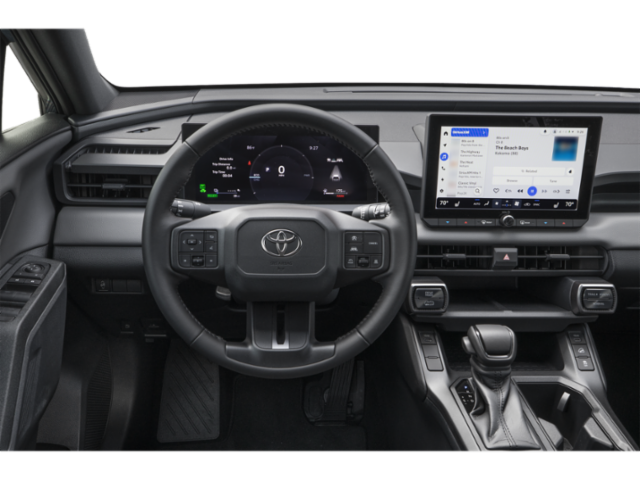
The interior design is quite comparable to the previous generation’s, as though elements were added and removed from a common base, but as a whole, it has taken a step back aesthetically. The metal trim is gone, there are fewer pops of color, and the overall look is plain and gloomy—even the Woodland’s pale green hue appears gray. The GR Sport could benefit from more red accents to brighten the space.
Removing the previous generation’s physical climate control panel in favor of touchscreen controls (though there are still physical temperature buttons) reduces functionality, as it distracts more from driving. Additionally, the dashboard opening they left behind looks unsightly. At least it is a practical opening with two slots designed for phone storage. One slot includes a wireless charging pad, except on the SE trim.
The rubber-lined area below, which used to be the phone-holding bin, is still available for any use you want. There is also a large tray in front of the passenger, deep door bins, and a new cupholder unit with a removable center partition that can be taken out to create an extra bin.

Photo: James Riswick
The center armrest also features an innovative functionality: the cover can be opened toward the driver or the passenger, or it can be removed and flipped over to reveal a hard plastic tray. Unfortunately, the mechanism is somewhat awkward, and the armrest itself is a bit too firm. It is also not covered in the same simulated leather upholstery as the door armrests.
From a space and comfort standpoint, the 2026 RAV4 Plug-in Hybrid’s dimensions are almost the same as the outgoing Prime’s. As a result, the back seat is still smaller than those of its rivals, the Hyundai Tucson and Kia Sportage PHEVs. We are essentially talking about slight differences in size here, as the RAV4 still offers a family-friendly back seat with plenty of head- and legroom for full-size adults, teenagers, and large car seats.
Cargo space is more competitive. The larger, plug-in hybrid battery clearly raises the cargo floor, reducing capacity slightly. Still, a decrease to 33.6 cubic feet from the hybrid’s 37.8 keeps it ahead of the Tucson and just behind the Sportage in capacity. It also retains something that Kia and Hyundai lose with their plug-in hybrids: a spare tire.
The Woodland’s raised roof rails and standard 2-inch tow hitch also boost utility by making it easier to install aftermarket racks.

Photo: James Riswick
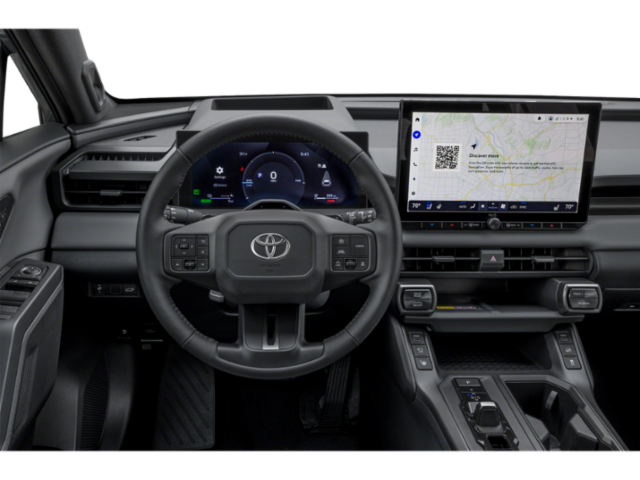
The 2026 RAV4 introduces Toyota’s next-generation infotainment system, still called “Toyota Audio Multimedia”. The SE and Woodland models feature a 10.5-inch screen, while the XSE and GR Sport have a 12.9-inch screen (pictured). They both appear to be identical in appearance, layout, and functionality.
This new system is also not that different from the one it replaces in those aspects. I appreciate that Toyota did not try to reinvent what was working, unlike other brands that have recently done so, to their detriment. There are some key upgrades, though. It was strange and sometimes frustrating that the old system did not have a Home screen. It now has one, featuring customizable tile and icon placement. It pairs with the carryover column of permanently docked menu shortcuts to make navigation easy.
The most significant improvements seem to be on the back end of the infotainment system. Toyota says the system now responds faster thanks to increased computing power. At the same time, the “Hey, Toyota” voice controls are quicker because many of their features no longer need an internet connection to function. I tested them, and they handled my usual queries well, but I cannot say how much better they are compared to the old system.
Buyers can add native navigation to any 2026 RAV4 through a subscription. It works like other integrated navigation systems, including displaying the map on the standard 12.3-inch digital instrument panel. However, it actually needs an internet connection to search for addresses and calculate routes. This meant I was out of luck when I was stranded without cell service in the Arizona desert and needed directions back to my hotel. Therefore, it was no more helpful than using Google Maps via Apple CarPlay.
Speaking of which, I was able to wirelessly connect to both Apple CarPlay and Android Auto smartphone mirroring without any issues. It is also still easy to switch back and forth between the Apple/Android and Toyota interfaces… at least once you realize that the little arrow in the upper left corner of the Android Auto screen acts as the escape button.
Also included is an integrated dash-cam system called Drive Recorder, which uses multiple exterior cameras to record 20-second clips that are automatically or manually saved based on specific “event” parameters. I can’t say the footage is the most dynamic video content you’ll watch, but I did watch some clips on the touchscreen.
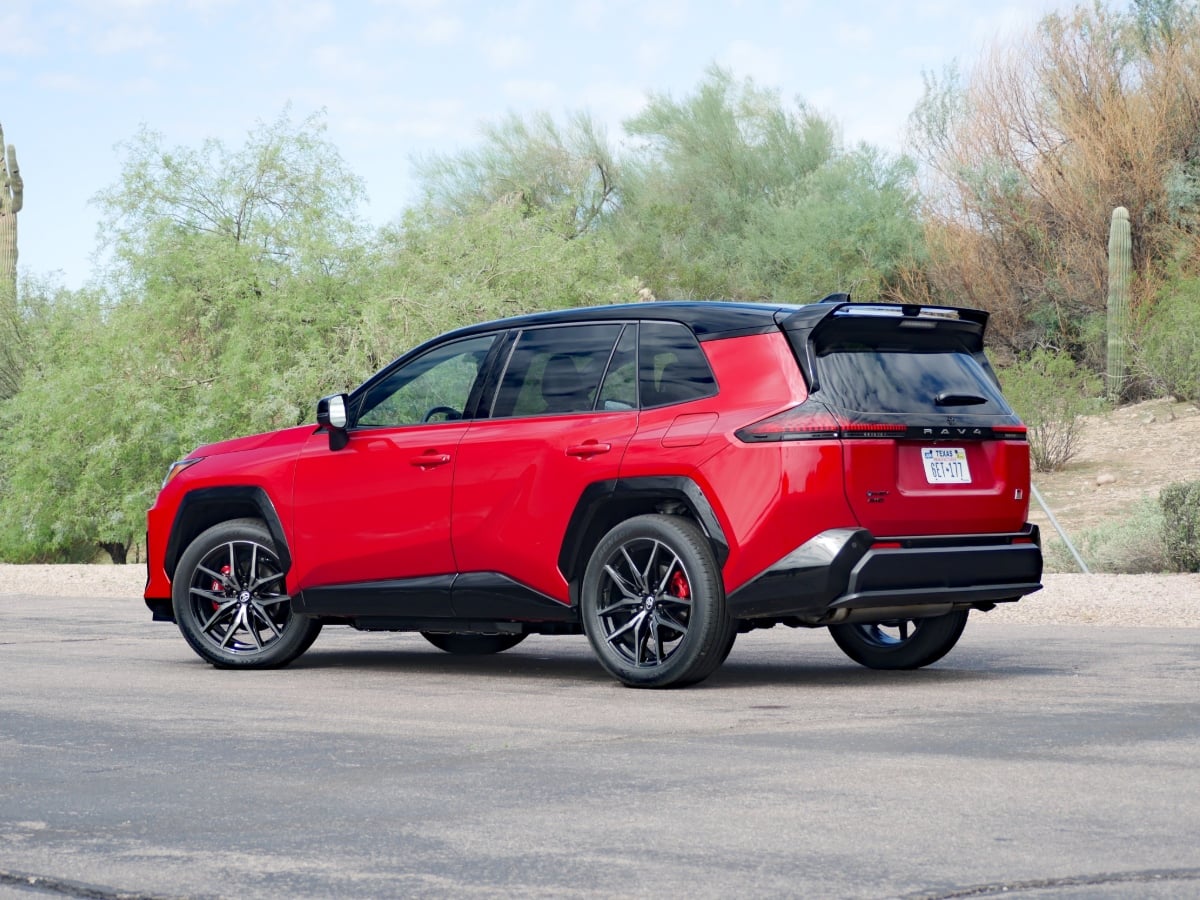
Photo: James Riswick
The 2026 RAV4 features Toyota’s new sixth-generation plug-in hybrid powertrain. It delivers 324 horsepower—a 22-hp boost over the outgoing Prime. It also provides 88-hp more than the standard hybrid with all-wheel drive, and although the PHEV weighs 490 pounds more, the difference is definitely noticeable.
The PHEV accelerates with much greater authority, especially when passing on the highway, and appears to rely more on its electric motor, providing an almost EV-like power delivery. It’s smooth, torque-rich, and ultimately, confidence-inspiring. The vehicle is also quieter because the increased reliance on the electric motor means the engine doesn’t fire up as often and doesn’t drone under hard acceleration like it does in the standard hybrid. It makes for a more enjoyable drive, as well.
The RAV4 PHEV’s Toyota-estimated all-electric range varies by trim level, with the SE and XSE reaching 52 miles. The older Prime, which also had those trim options, managed only 42 miles. The 2026 Hyundai Tucson and Kia Sportage plug-in hybrids, meanwhile, offer just 32 and 33 miles of range, respectively. Even the Prius Plug-in Hybrid has an all-electric range of only 40 miles.
Part of this increase is undoubtedly due to a slightly larger battery (22.7 versus 18.1 kilowatt hours). Still, it is also more efficient, with a mile-per-gallon equivalent of 107 MPGe for the SE and XSE, plus 41 mpg combined when the all-electric range is depleted. That’s up from 94 MPGe and 38 mpg combined for the Prime. It’s also significantly better than what the Tucson and Sportage can achieve. (Unfortunately, my brief driving sessions and the lack of typical traffic patterns out in the Arizona desert did not produce representative range or efficiency data.)
The Woodland and GR Sport are less efficient and, as a result, don not travel as far on a charge. The Woodland offers 49 miles and 38 mpg combined when the plug-in range is exhausted, while the GR Sport drops to 48 miles and 37 mpg. That’s still very good compared to the competition, especially considering their unique strengths.
For the Woodland, that means some semblance of off-road capability and increased utility. You cannot get the Sportage and Tucson’s similar off-road versions as plug-in hybrids. However, I strongly suspect the Woodland’s handling is worse than the other RAV4 trims because of the all-terrain tires and additional ground clearance, and I know for sure that the firm rubber transmits sharper impacts from bumps. Therefore, the ride is also poorer than in the other trims.
Yes, even compared to the GR Sport. I drove all these RAV4s on smooth pavement in the Arizona desert, but it didn’t seem like the GR Sport rode worse than the XSE. It definitely handled and steered better, though. Its improved suspension components make it feel more stable and composed around corners. It’s a significant dynamic upgrade.
The steering difference is even more noticeable. The XSE and Woodland’s steering feels quite numb, with an elastic quality to its response when turning into a corner. Turning on Sport mode only increases the effort required, worsening the numbness. In contrast, the GR Sport offers more precise and responsive steering. If you prefer a more engaging driving experience, the RAV4 GR Sport should be high on your test drive list, along with the Mazda CX-50.
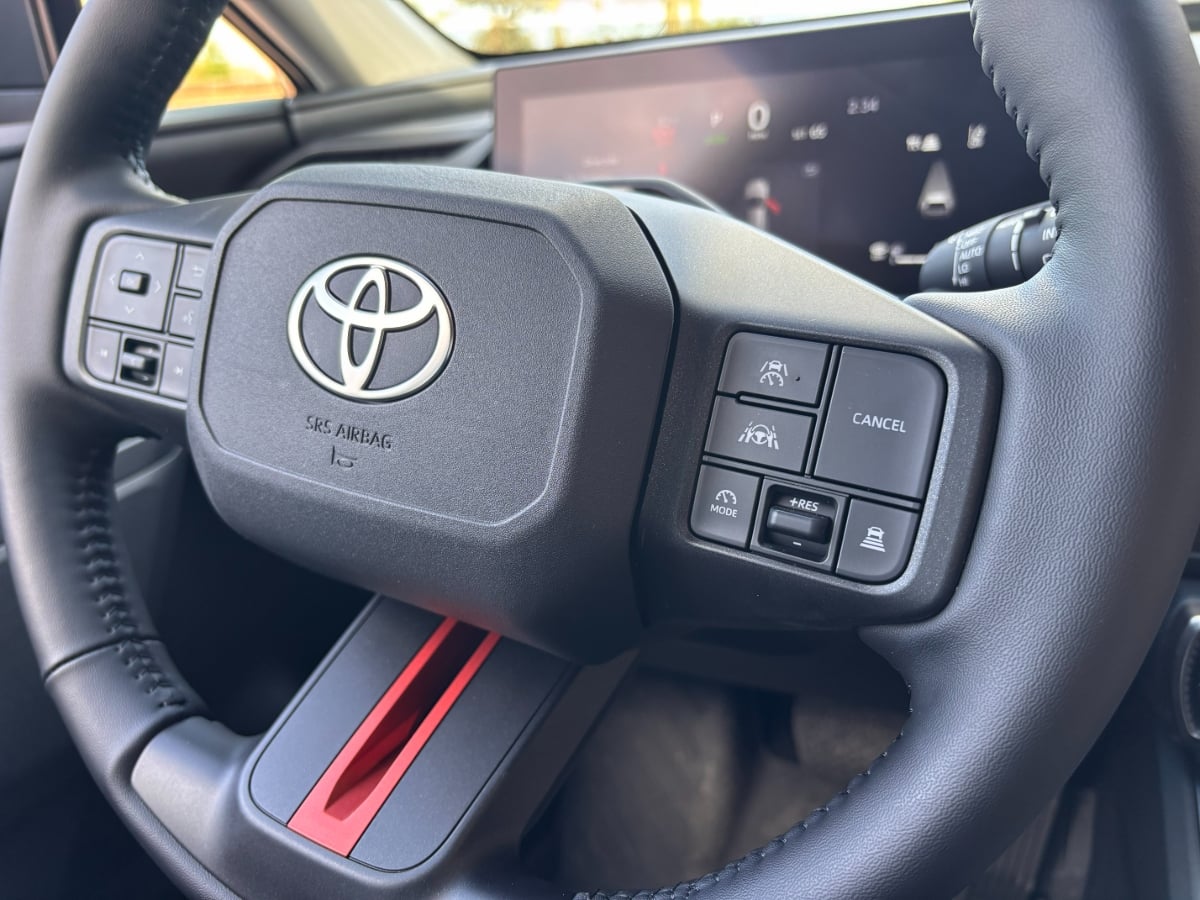
Photo: James Riswick
The 2026 RAV4 comes standard with Toyota Safety Sense 4.0 (TSS 4.0), the latest version of the automaker’s advanced driver assistance systems (ADAS), whereas the previous version topped out at 2.5. New features include front cross-traffic warning and a driver monitoring system, but the extensive standard feature list remains otherwise the same. It includes:
All except the SE feature a panoramic parking camera system.
Despite the minimal changes to the feature content, TSS 4.0 includes updates to system hardware and detection capabilities, so they should, in theory, perform better. Unfortunately, I had limited opportunity to drive on the highway or in typical suburban traffic—just a lot of open desert roads outside Phoenix. I can only say that the lane-centering assistance system seemed more advanced when used with ACC.
According to the JD Power 2025 Initial Quality Study (IQS), the Ford Escape ranks highest in the compact SUV segment. The Jeep Wrangler and the Nissan Rogue are the next-highest-ranked models.
According to the JD Power 2025 Automotive Performance, Execution and Layout (APEAL) Study, the Nissan Rogue ranks highest in the compact SUV segment. The Buick Envision and the Mitsubishi Outlander are the next-highest-ranked models.
Other 2026 RAV4 competitors include the Honda CR-V, Hyundai Tucson, Kia Sportage, and Subaru Forester.
According to verified owners, the RAV4 earns an award as the highest-ranked model in its segment in the 2025 Vehicle Dependability Study.