
What if a car company said that one of its most popular models could have more power and improved fuel efficiency? While that seems unlikely, that's precisely what you get with the all-new 2025 Subaru Forester Hybrid. The compact crossover introduces a fuel-efficient hybrid powertrain to America for the first time without compromising interior space or off-road capability while delivering an increase in power output.

Photo: Perry Stern
Completely redesigned for 2025, the sixth-generation Subaru Forester arrives with fresh styling inside and out, as well as updated technology and capability. Please read our 2025 Subaru Forester review for more details.
The new Forester Hybrid builds on the updated model with:
The 2025 Subaru Forester Hybrid is a compact SUV available in four trim levels: Premium, Sport, Limited, and Touring. All come standard with the brand's Symmetrical All-Wheel Drive (AWD) system. Base prices start at approximately $36,000 and range up to around $43,000, including the destination charge.
For this review of the 2025 Forester Hybrid, Subaru invited me to San Francisco, California, to drive a test vehicle equipped with Touring trim and a two-tone paint scheme of River Rock Pearl and Crystal Black Silica.
The test vehicle's manufacturer's suggested retail price (MSRP) was $44,005, including the $1,420 destination charge to ship the crossover to your local dealership from the Gunma, Japan, assembly plant. Subaru provided the vehicle for this Forester Hybrid review and covered the costs of airfare, lodging, and meals.
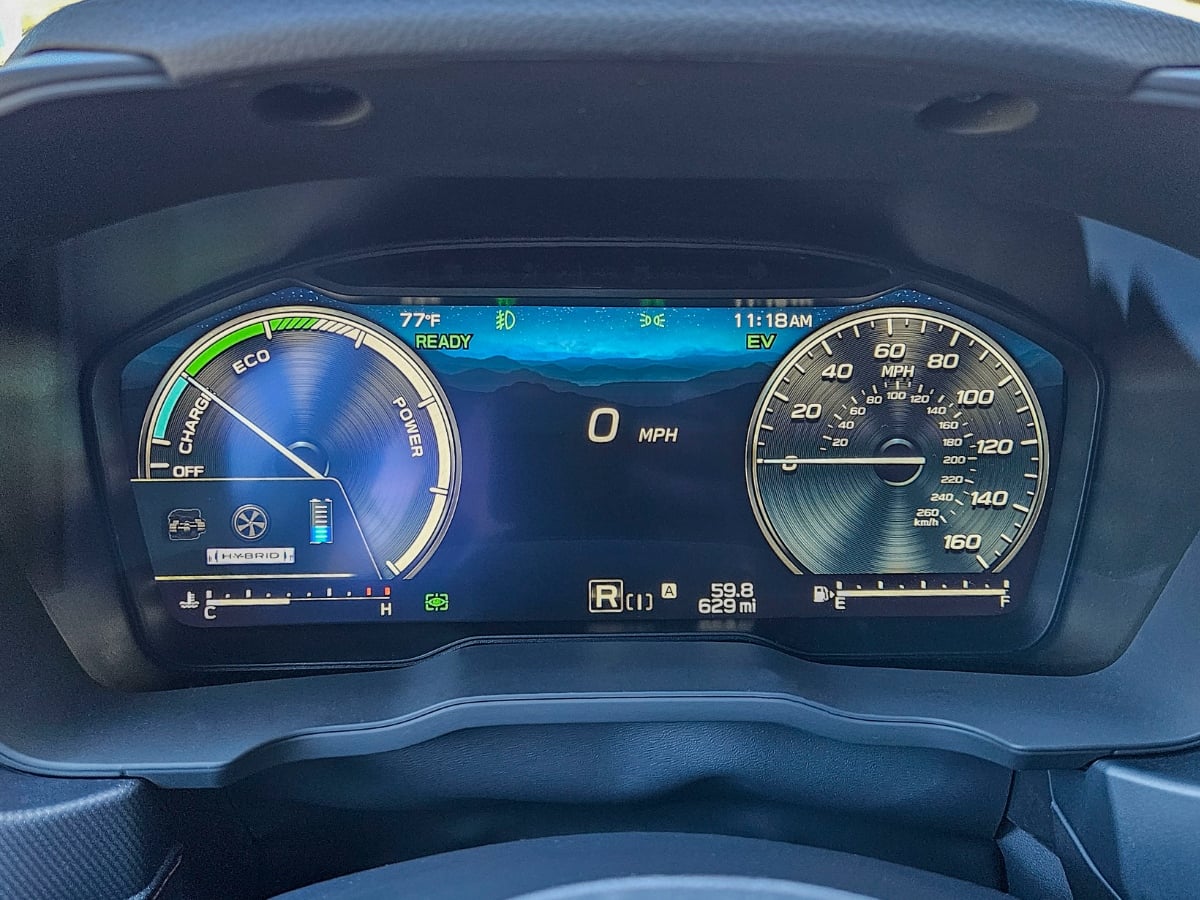
Photo: Perry Stern
The Forester has been a staple in Subaru’s U.S. lineup for almost thirty years, and for the first time, this popular SUV adds a hybrid version to the mix. While there are significant changes to the drivetrain with the hybrid, the visible differences are subtle as the company sticks with its winning formula.
Adopting all the new styling cues introduced with the non-hybrid Forester, the new Forester Hybrid's most obvious differentiator is the hybrid badges on the front doors and rear hatch. Other telltale hints are not as obvious. If you see a Forester Touring with a black roof, that is a two-tone paint treatment exclusive to the Forester Touring Hybrid. The new Daybreak Blue exterior color is only available on hybrid variants, and the Premium Hybrid version features 18-inch wheels that are not available on the non-hybrid Premium.
Like its conventionally powered sibling, the Forester Hybrid gets all the benefits of the 2025 redesign, including the new 11.6-inch central touchscreen display and the 12.3-inch digital gauge cluster. The configurable driver display features unique graphics indicating the power flow direction from the batteries or engine to the wheels, as well as a gauge displaying driving efficiency and charging status. At the top right, an electric-vehicle (EV) indicator will light up when the Forester is running on electric power only.
When the battery has sufficient charge and the conditions are right, the Forester Hybrid can operate in all-electric mode by pressing the EV button located to the left of the steering wheel.
With the battery stored below the cargo area and the electric drive components integrated with the transmission, the interior space is unchanged for the hybrid. The cabin is spacious, with ample room for both front and rear passengers, and the cargo area continues to offer nearly 30 cubic feet of space behind the rear seats. Interior trim features animal-free materials, except for the top-level Touring, which comes with genuine leather.
Like the non-hybrid version, the Forester Hybrid comes standard with Subaru’s EyeSight driver-assistance technology, which has an extensive feature list. The Forester Hybrid also features adaptive cruise control, which includes automatic emergency stop assistance. This feature is designed to bring the vehicle to a safe stop if the driver becomes unresponsive.
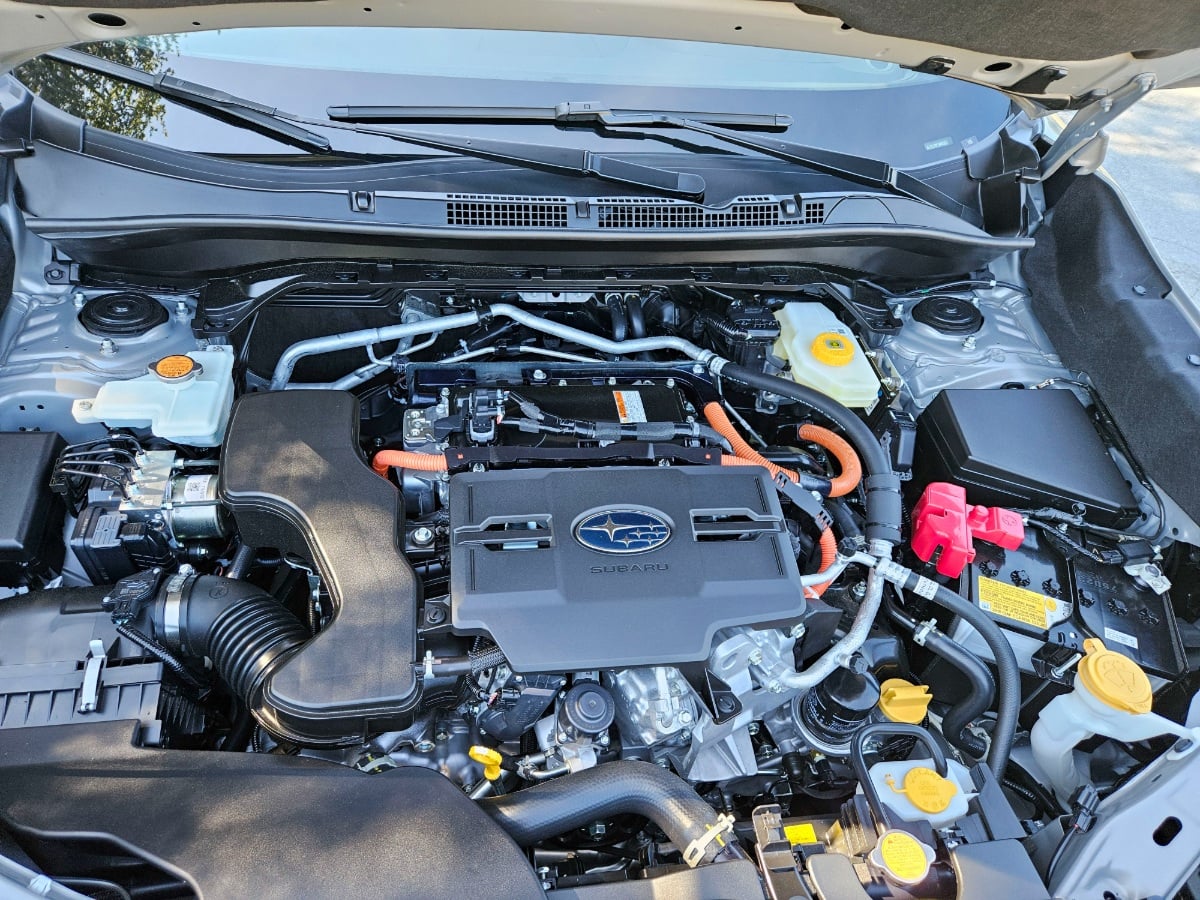
Photo: Perry Stern
At first blush, it appears that Subaru simply built a hybrid system on its current 2.5-liter four-cylinder engine. However, the engine in the hybrid is quite different from that in the non-hybrid variant despite having the same displacement.
The basis of the hybrid powertrain is a newly developed 2.5-liter Atkinson/Miller-cycle four-cylinder engine that teams with two electric motor/generators integrated into the Lineartronic continuously variable automatic transmission (CVT). One motor provides added power to the AWD system, while the second replaces the starter motor and uses engine power to charge the hybrid battery. Total output is 194 horsepower—14 more than the non-hybrid Forester.
By integrating the electric motors into the transmission, the Forester Hybrid maintains the brand's Symmetrical All-Wheel Drive system, which features a mechanical connection between the front and rear wheels. The result is no loss in off-road capability—a hallmark of the Forester and the Subaru brand. As a somewhat unusual feature, the transmission only has forward gears; driving in reverse uses just the electric motor.
While Subaru shares hybrid components with Toyota, the Forester Hybrid setup differs significantly from its Toyota counterpart, the RAV4 Hybrid. The RAV4 Hybrid utilizes a separate electric motor to power the rear wheels, eliminating the need for a center differential or prop shaft that can limit its capability—something I discovered during an off-road comparison test.
Not only does the Forester Hybrid retain its off-road prowess with increased power, but it also gets improved fuel efficiency. According to the Environmental Protection Agency (EPA), the 2025 Subaru Forester Hybrid achieves an estimated 35 mpg combined—a healthy improvement over the standard Forester's 29 mpg combined. During my drive in the Forester Hybrid, the trip computer indicated 31.8 mpg, but that also included an extended off-road jaunt.
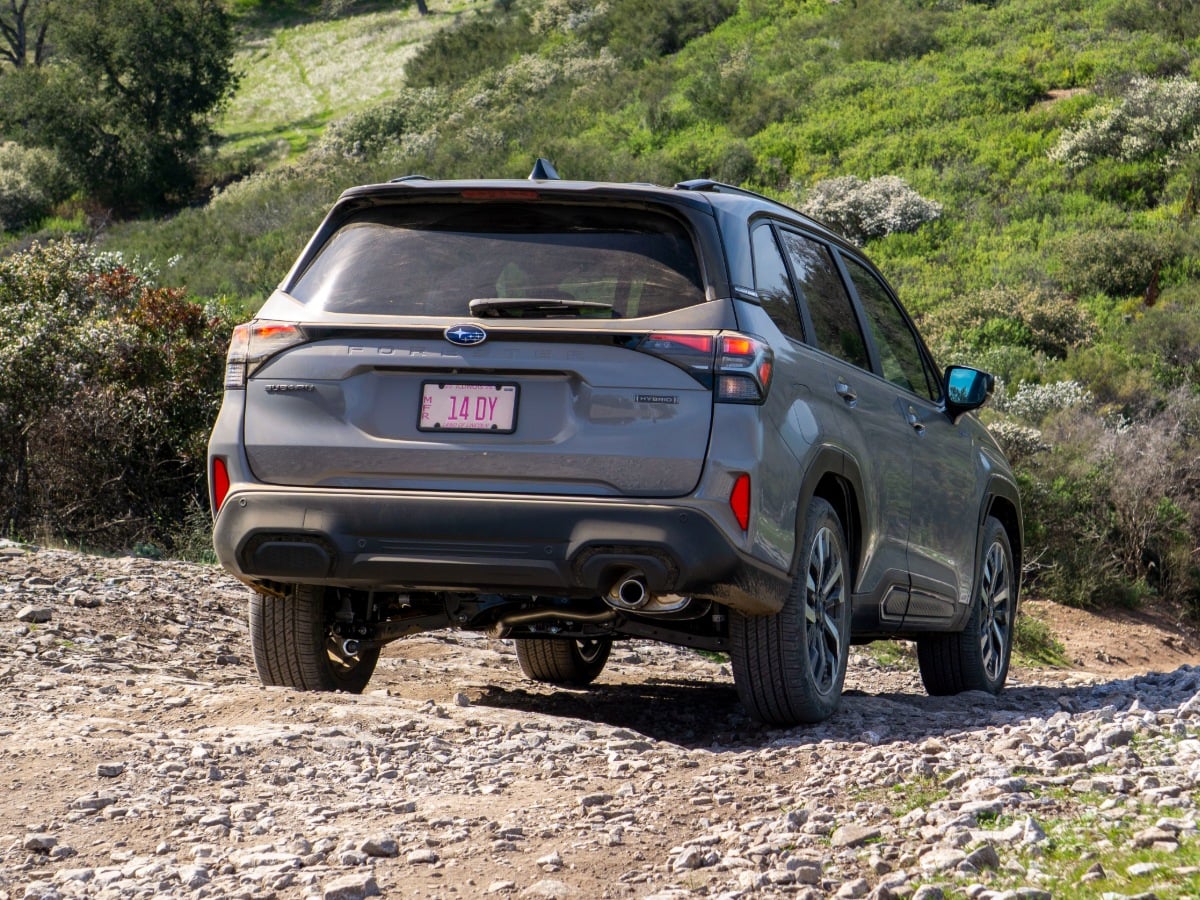
Photo: Perry Stern
During my evaluation, Subaru provided a mix of driving experiences in the Forester Hybrid that included highway, twisty mountain roads, city, and an extensive off-road course. While the Forester Hybrid has more power than its non-hybrid stablemate, it weighs almost 300 pounds more. That is a significant amount of extra weight to overcome with just 14 additional horsepower, so the hybrid doesn't feel any quicker than the non-hybrid version of the Forester.
The Forester Hybrid doesn't accelerate with any gusto from a stop, but power is more than adequate for most driving situations. It has no problem cruising on the Interstate at 70 mph, and while it takes a bit more planning, I was able to pass a slower vehicle on a two-lane road without much concern.
If there is sufficient battery charge and the conditions are right, the Forester Hybrid can operate in EV power mode only, activated via the aforementioned EV button. According to Subaru, the Forester can travel up to approximately 20 mph in EV mode for a short distance, but it cannot do so over long distances, unlike a plug-in hybrid.
For the most part, the Forester Hybrid moves along quietly with little road or wind noise. The hybrid system is very smooth, with the transition from running on the gas engine to pure electric almost imperceptible. However, under full throttle, the drone of the engine is quite noticeable and can be a bit bothersome. Handling is reasonably good, with nice steering feedback, and the AWD system keeps the crossover stable during quick direction changes.
When I arrived at the Hollister Hills State Vehicular Recreation Area for the off-road portion of the drive, a Honda CR-V Hybrid and a Toyota RAV4 Hybrid were available for comparison. All three vehicles participated in a climb up a 23-degree incline on a slick, rutted trail. We stopped halfway up the hill and then attempted to continue the climb to the top. This comparison demonstrated how effectively a vehicle distributes power from one wheel to another as tires lose traction or lift off the ground.
The Forester completed the climb to the top without much difficulty. It took a few tries, but I was able to reach the top in the Toyota, although it required some effort, as the RAV4 couldn't transfer power from the front to the back quickly enough to maintain traction. I tried several times in the Honda but ultimately had to give up and back down the hill. As a test created by Subaru, I expected it to favor the Forester Hybrid, but it was still an excellent showcase of the difference between hybrid AWD systems.
After the comparison test, I headed out on the trails, which were a mix of loose dirt and rock. The Forester Hybrid delivered the same confidence I've had when off-roading with non-hybrid Subarus, and there was always the needed grip to traverse steep climbs and tight turns.
All Forester Hybrids feature 8.7 inches of ground clearance and are equipped with X-Mode, which enhances traction through active torque vectoring and optimized traction and stability control. With X-Mode active, hill-descent control engages automatically when needed. Descending on loose surfaces, the system maintains a steady speed while keeping the Subaru balanced and stable. There was no question that the Forester Hybrid could handle anything the non-hybrid version could.

Photo: Perry Stern
As of this writing, Subaru has achieved 31 consecutive months of month-over-month sales growth, and as the brand's top seller, the Forester receives significant credit for that market success. The introduction of the more powerful and fuel-efficient Forester Hybrid, which builds on the improvements made to the conventionally powered 2025 Forester, maintains all the crossover's features and capabilities and should further contribute to its popularity.
The Forester doesn't sell at the same volume as rivals like the Honda CR-V or Toyota RAV4, both of which offer hybrid variants. However, with its excellent AWD system, spacious cabin, and impressive utility, the Forester Hybrid is ideal for the shopper who wants hybrid efficiency without compromising the ability to venture off-road confidently.
Perry Stern has worked in the automotive industry for over 30 years and has always been a car enthusiast. Driving almost every new car on the market, Perry has written for multiple publications in addition to his work for JDPower.com. Recently relocated to southeast Michigan, Perry remains passionate about cars, especially his 2006 Mazda MX-5 Miata.


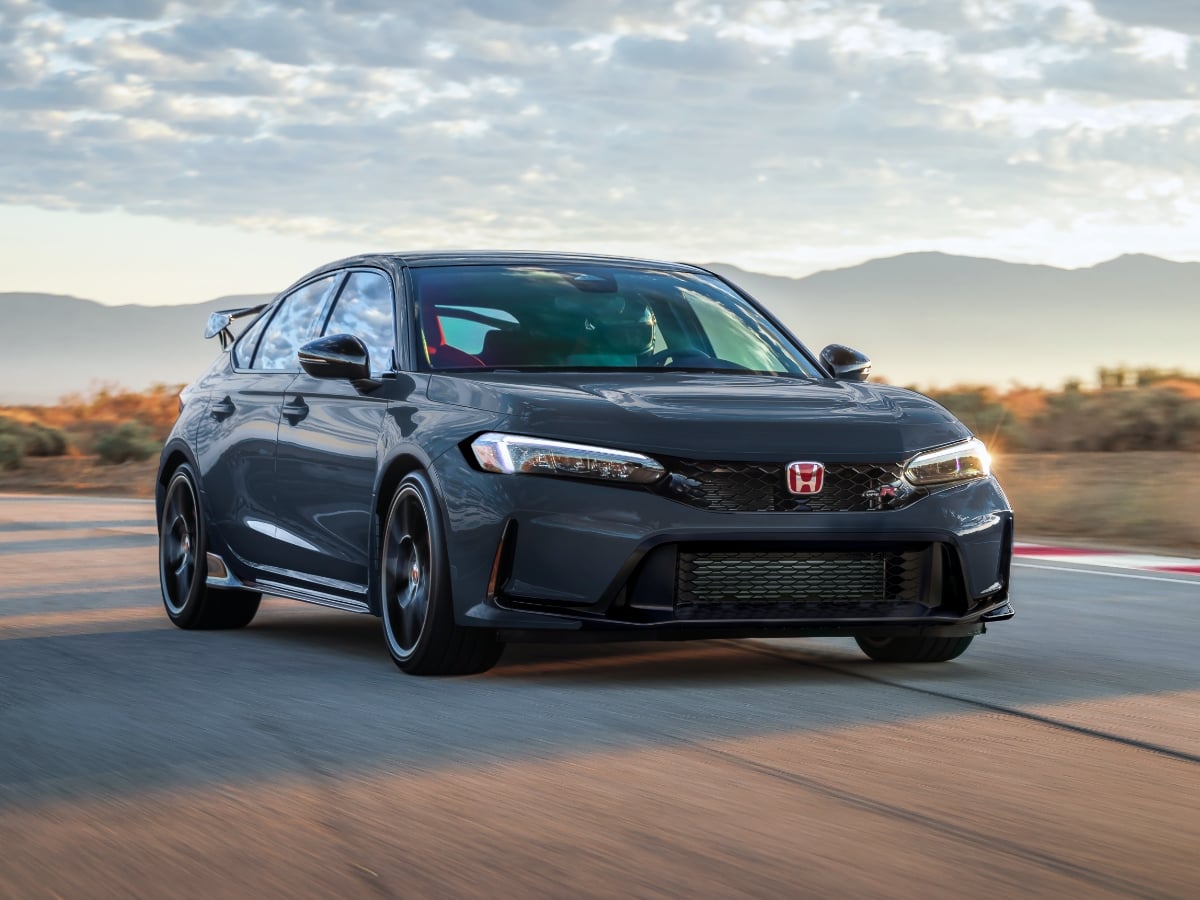
The 2027 Civic Type R goes on sale in October 2026, and it starts at $49,990, including the $1,295 destination charge.
Read the Full Article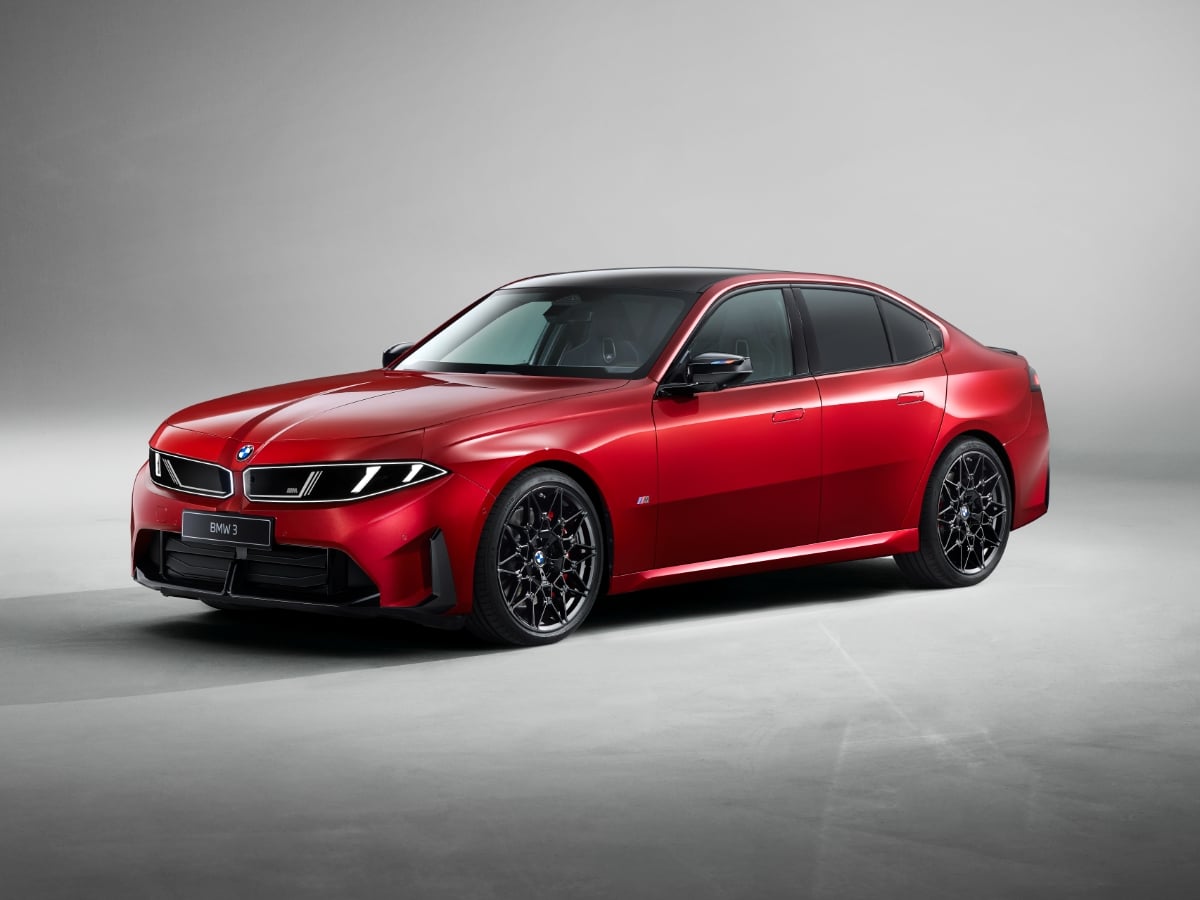
Part of BMW’s Neue Klasse (new class) rollout of redesigned models, the 2027 BMW 3 Series is all-new and goes on sale in the first quarter of 2027.
Read the Full Article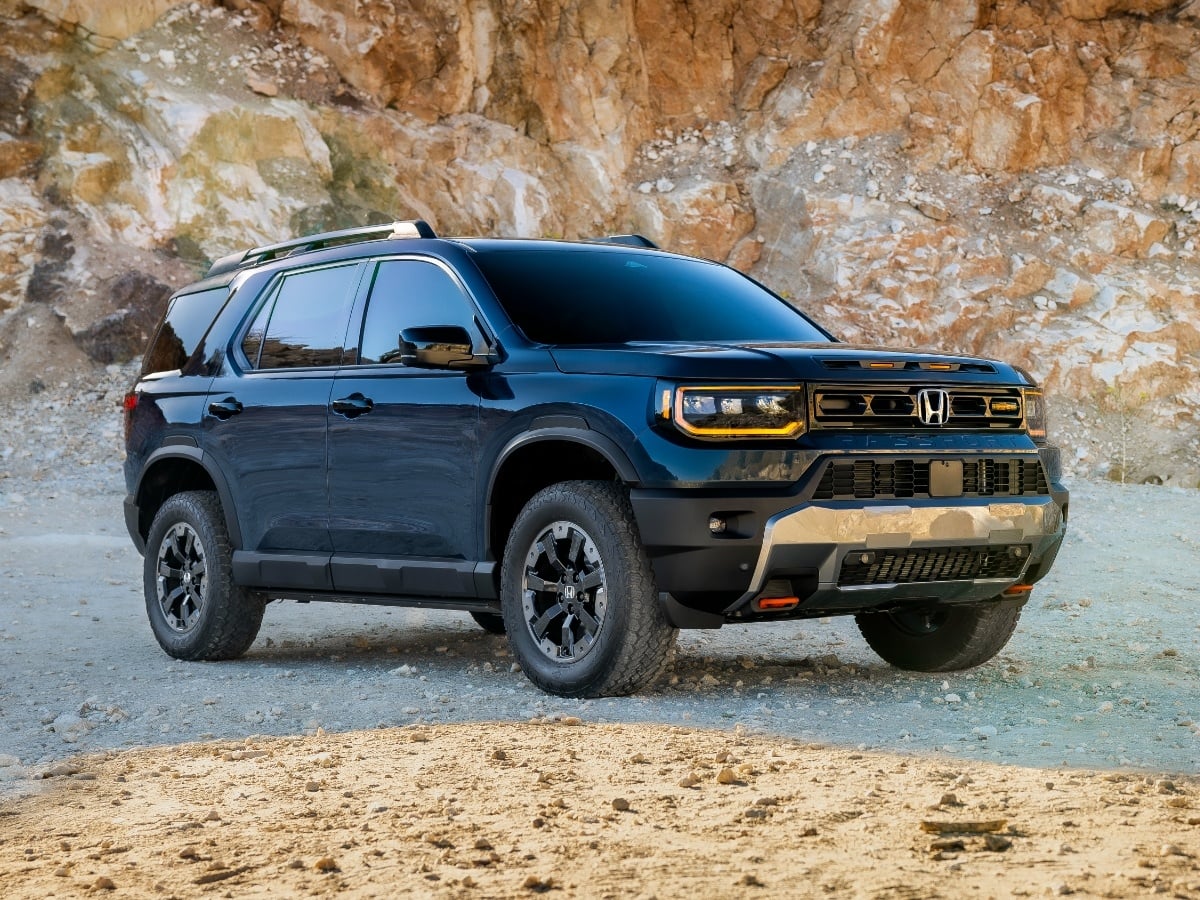
Updates to the 2027 Honda Passport TrailSport include a reworked suspension, improved steering, subtle styling enhancements, and added standard equipment.
Read the Full Article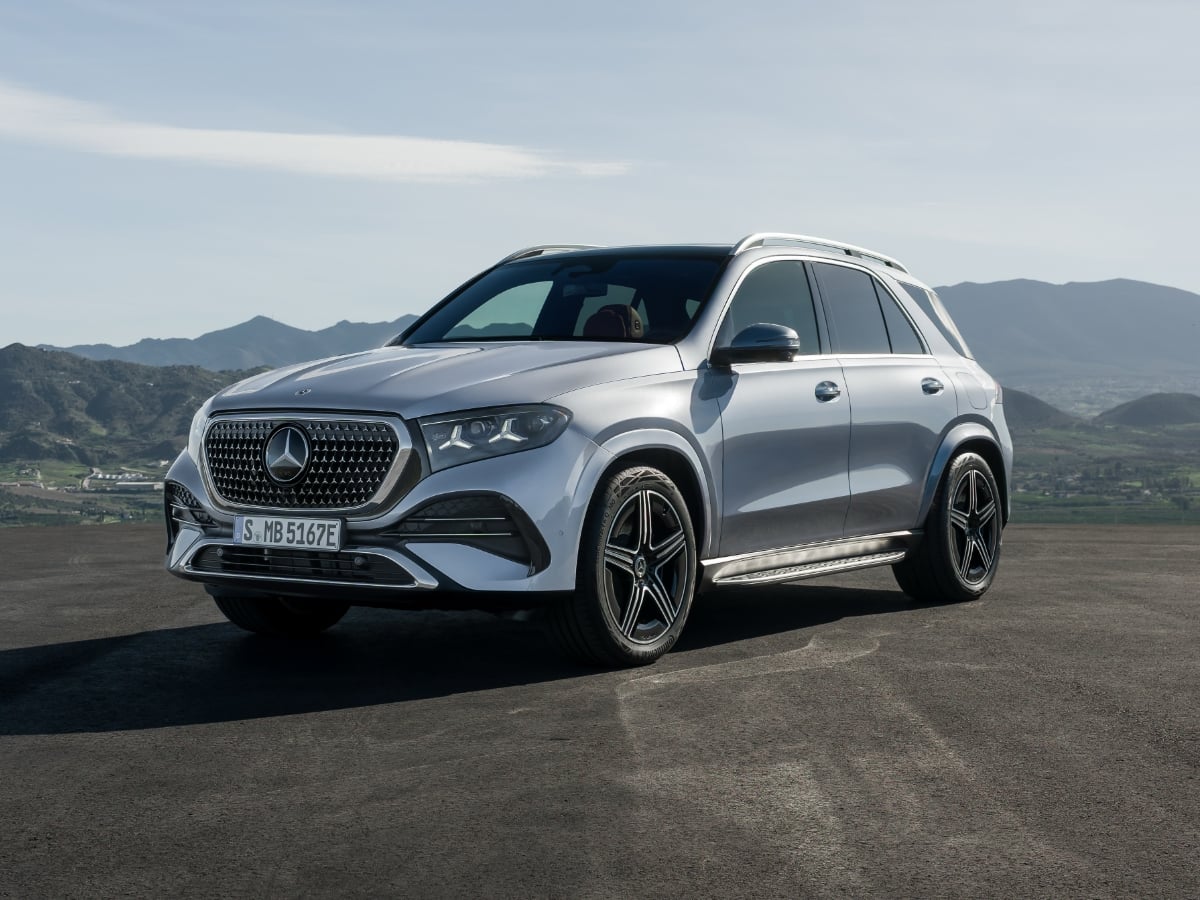
The midsize 2027 Mercedes GLE remains available in original and spicy Coupe recipes, now with standard 4Matic all-wheel drive (AWD), MBUX Superscreen technology, and a panoramic glass sunroof for ...See More
Read the Full Article