See answers to common EV questions, tax incentives, charging maps & more.
Explore EV
19 - 20
25 - 27
269
8 speed, Automatic w/OD
Intercooled Turbo Regular Gasoline I-4
All Wheel Drive, Front Wheel Drive
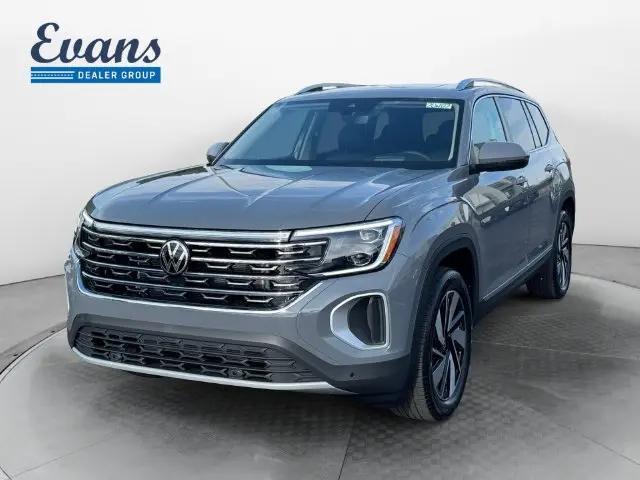
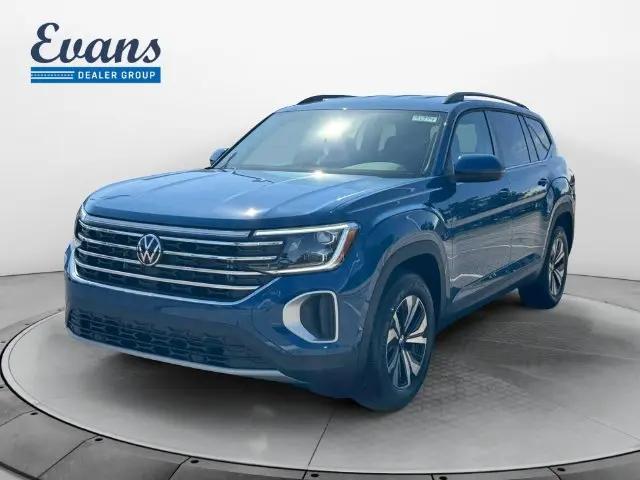
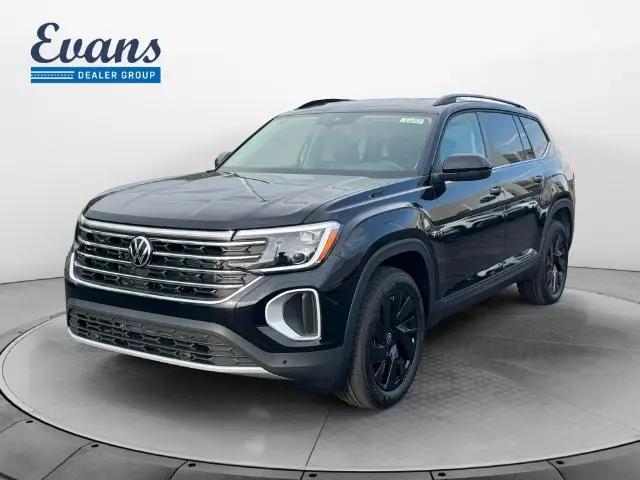
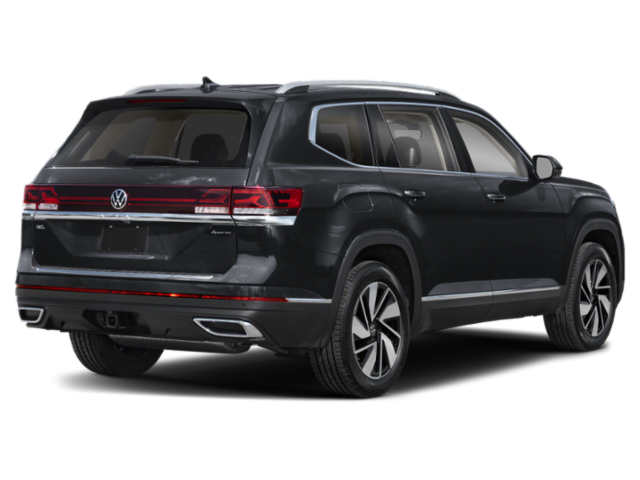
Volkswagen transformed small cars into both cool and countercultural icons in the 1950s and 1960s, and entered the three-row SUV market in 2018 with the Atlas. Granted, SUVs are ubiquitous today, but among SUVs, the Atlas offers spaciousness, a touch of German precision, good value for its size, and many desirable features. Big families or outdoorsy couples would find the Atlas a fine companion.
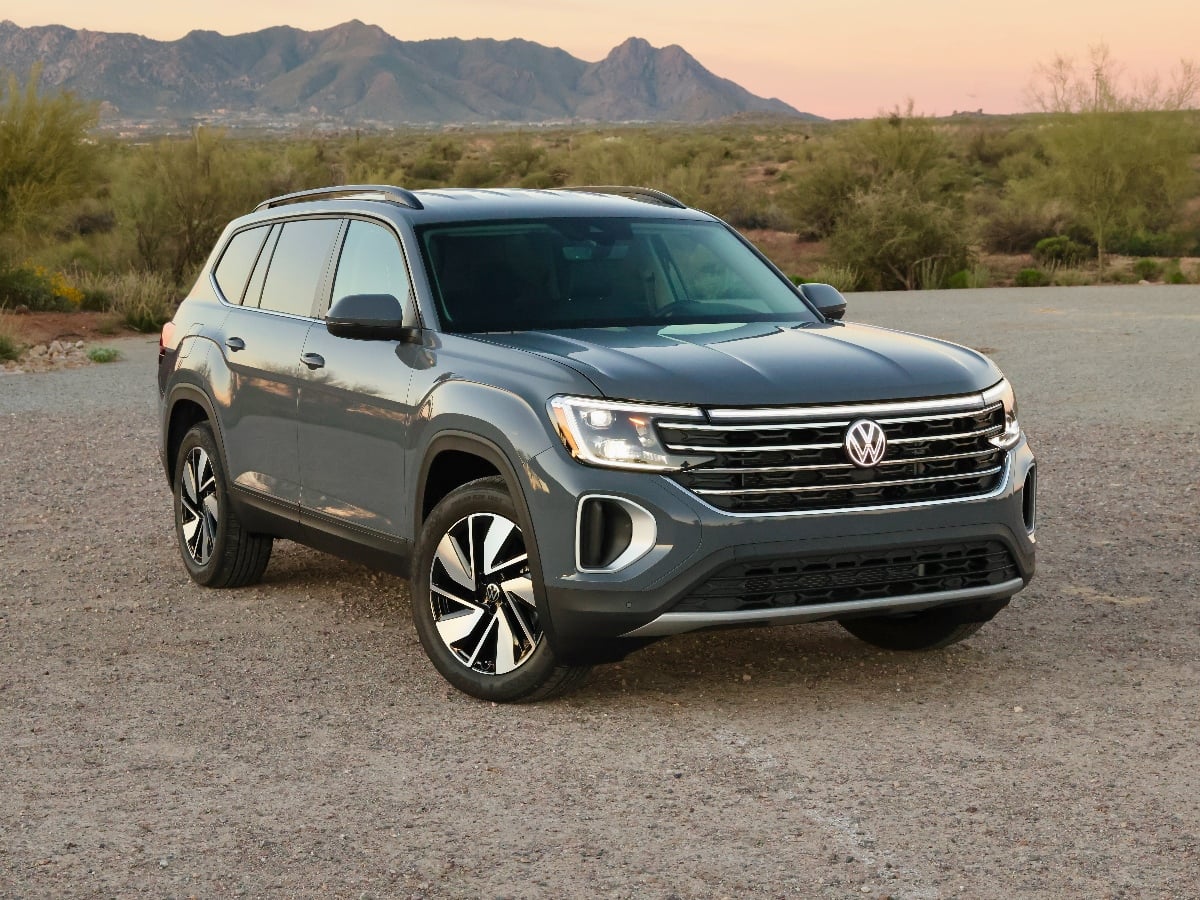
Photo: Jim Resnick
Volkswagen's three-row, four-door Atlas SUV also has a two-row counterpart. That Atlas Cross Sport wears a lower, sloping rear roofline, suggesting a sportier nature. Both four-door SUVs share a platform and mechanical components, but for this review, I tested only the three-row Atlas.
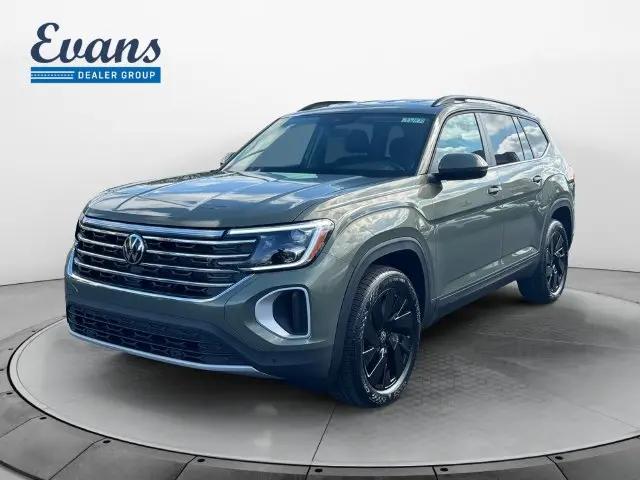
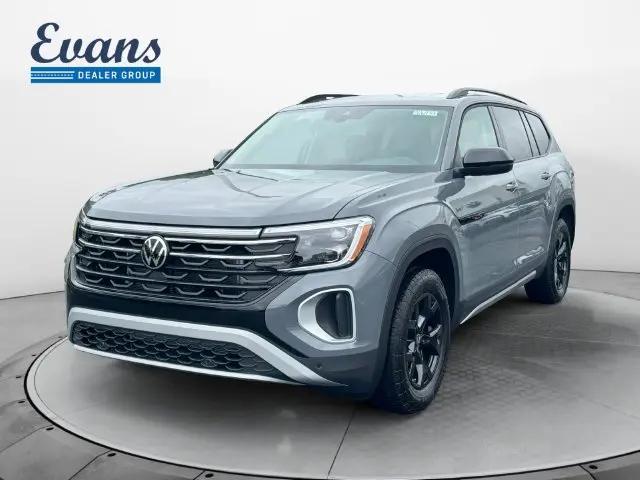
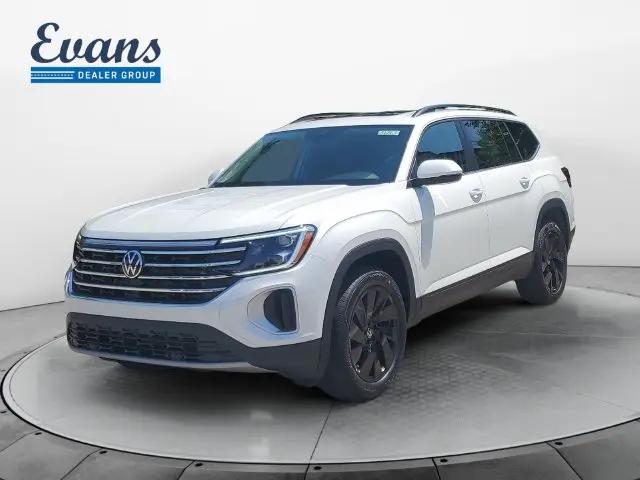
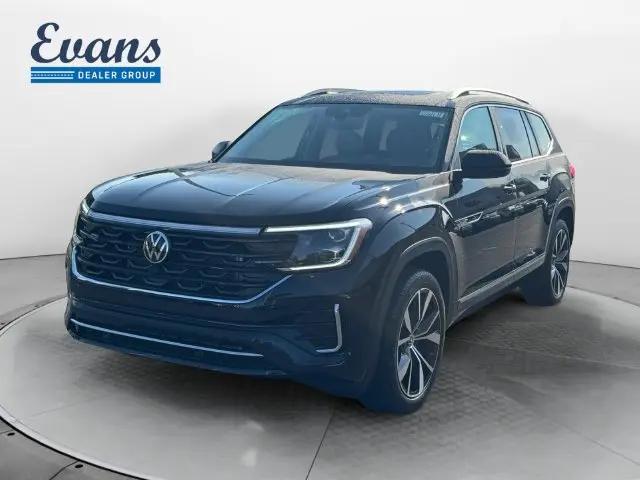
The Atlas comes in five trim levels for 2026: SE, SE with Technology, Peak Edition, SEL, and SEL Premium R-Line. Each trim includes additional standard features compared to the one below it. The base SE in front-wheel drive (FWD) configuration starts at just under $41,000, while the top Atlas SEL Premium R-Line begins at roughly $56,000, including the destination charge.
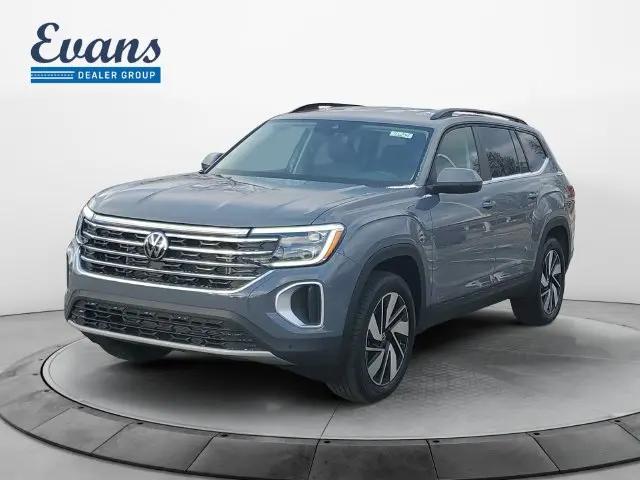
For this 2026 Atlas review, Volkswagen provided a test vehicle equipped with SE with Technology trim, FWD, and Pure Gray paint as the sole option. The $45,660 manufacturer suggested retail price (MSRP) included the $1,475 destination charge to ship the SUV from the Chattanooga, Tennessee, assembly plant to a local dealership. The price does not reflect any current rebates, incentives, or price adjustments since Volkswagen manufactured the test vehicle.
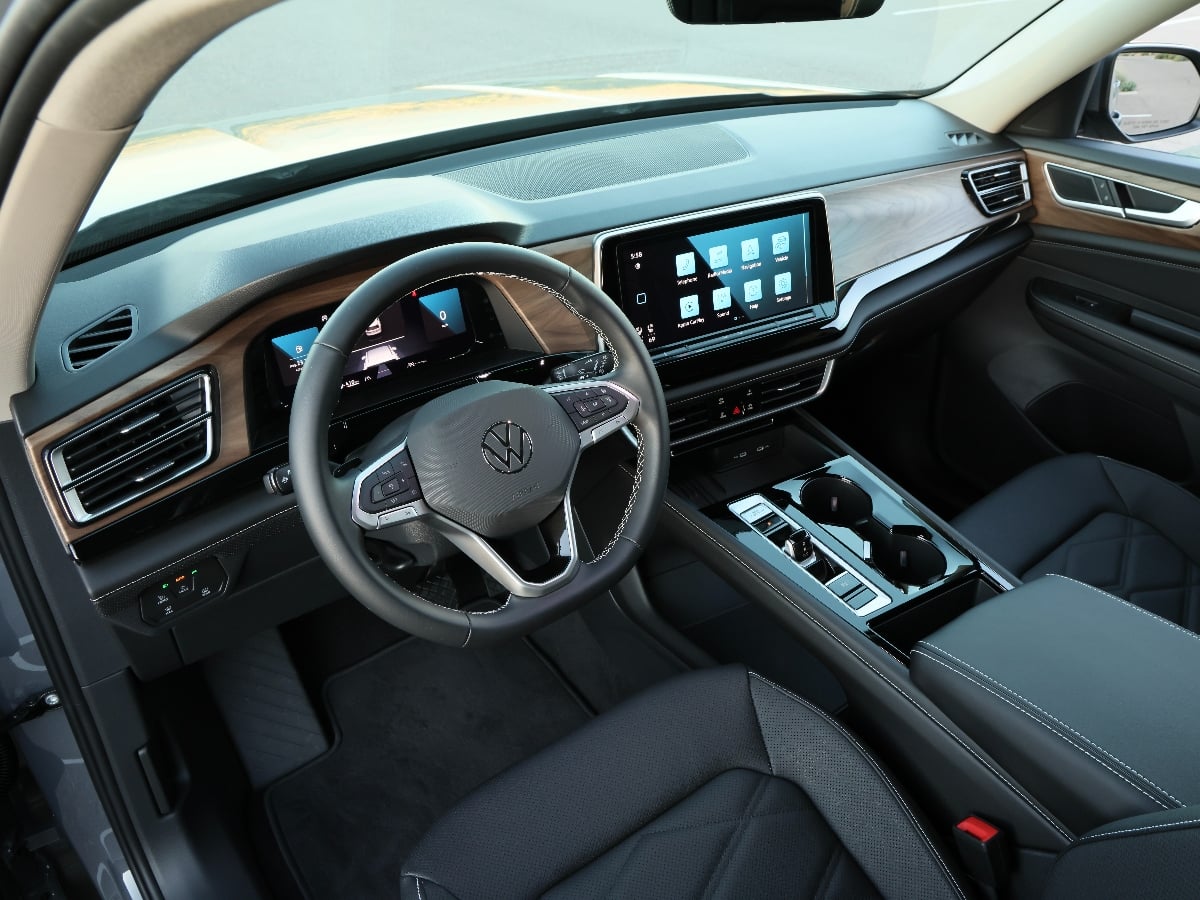
Photo: Jim Resnick
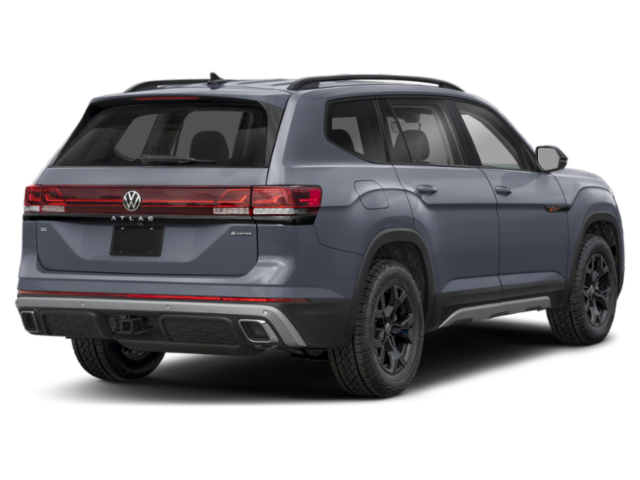
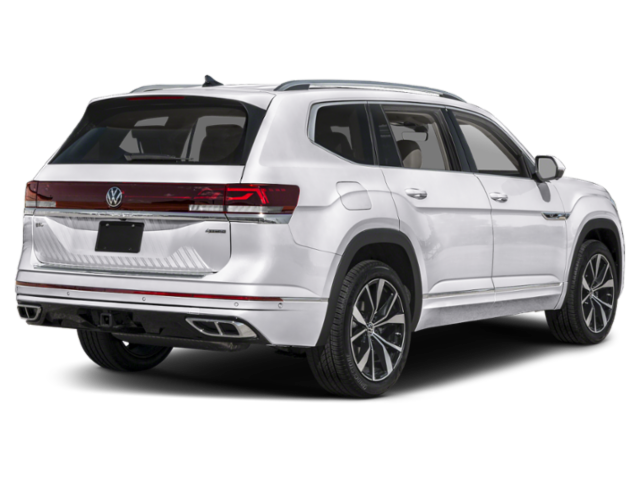
Volkswagen updated the Atlas's bodywork in 2024, and those front and rear revisions still look good. Inside, that same body update came with interior and technology upgrades, making the cabin more comfortable and attractive.
In the tester's SE configuration, a variety of finishes, including piano black, stainless steel, simulated wood, and flat black, impart a high-quality feel, even though this is the base trim. These varied trim elements also break up what would otherwise be a fairly monochromatic black interior, though one made of good quality materials.
Volkswagen's V-Tex seating surfaces feel somewhat like leather, and the seats' bolsters hold you in place, but they never get pushy; plus, they provide enough firmness to prevent squirming on extended drives. Standard heated and ventilated front seats also help.
The second-row seats provide excellent room, even when adjusted for a tall driver. The third row also proved comfortable for my tall frame, especially compared to some SUVs' jail-like third rows.
Ample cargo space sits out back, too, with 20.6 cubic feet behind the third row, 55.5 cubic feet behind the second row, and a substantial 96.6 cubic feet with both rows folded flat. Compared to the three-row Ford Explorer, the Atlas offers 4.3 cubic feet, 9.5 cubic feet, and nearly 11 cubic feet more, respectively.
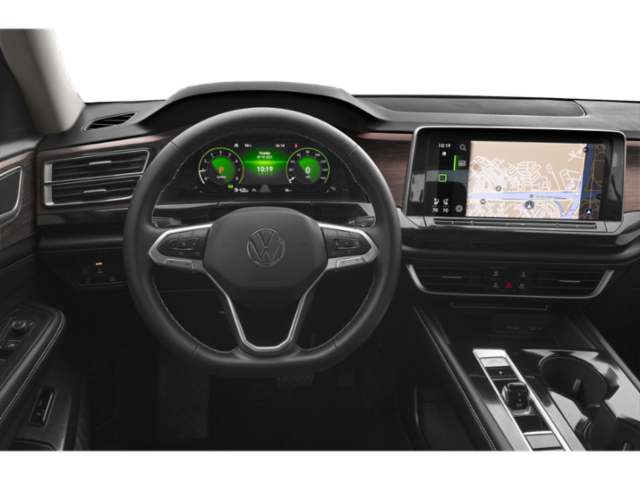
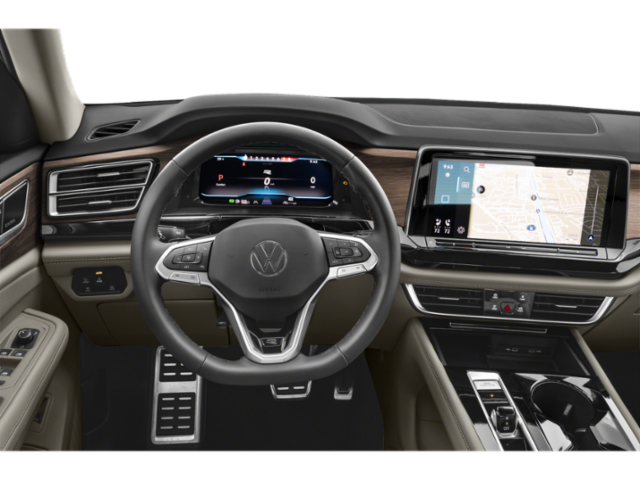
Most of the vehicle's climate controls reside on the infotainment touchscreen, but touch- and slide-sensitive bars for temperature and audio volume sit just below the screen. However, these sliders are not backlit, so they are nearly invisible at night. Conventional buttons to raise and lower temperature and volume would make more sense, and backlighting them would be easier to implement.
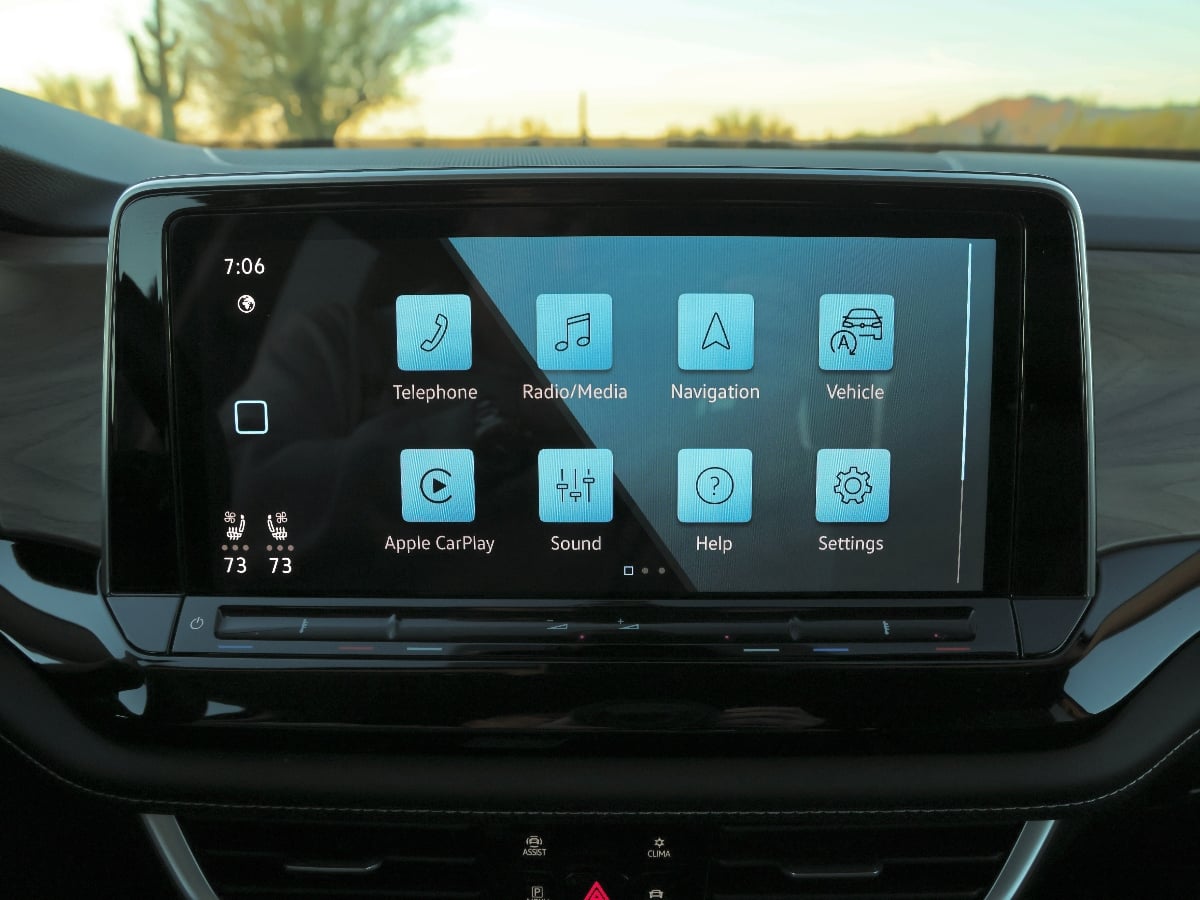
Photo: Jim Resnick
All 2026 Atlas trims feature a "floating" 12.0-inch infotainment display. Many vehicles today have towering, oversized tablets parked in the middle of the dashboard, making an aesthetic mess of things. Not so in the Atlas.
The Atlas infotainment system features the following highlights:
I paired my Apple iPhone through Volkswagen's App-Connect (which also supports Android Auto), though it proved more sluggish when connecting wirelessly than through a USB port. After that initial pairing, it responded more snappily.
Because the Atlas SE with Technology does not come with native navigation (VW fits that to SEL-trim Atlas), the SE relies on your smartphone for navigation, even though the main infotainment screen teasingly houses a navigation tile. Paired with my iPhone, both navigation and streaming music worked very well, but some flaws in the native audio and infotainment system remained.
The infotainment system does not remember your prior choices of radio station, audio band, or source. If I surfed away from SiriusXM to FM or another audio source and then returned, it always annoyingly brought me to the SiriusXM Category page instead of the station I had previously selected. However, playing any programming from my phone worked better and as expected.
All 2026 Atlas trims receive Digital Cockpit Pro, a presentation of driver instrumentation in configurable digital renderings with your choice of dial gauges or modern quadrants of information. The modern rendering of this equation is very legible, though a couple of related functions are not so user-friendly.
To reset the long-term tripmeter, I had to stop the vehicle and navigate through menus to find the proper function. I honestly cannot remember the last time I could not simply reset a tripmeter by holding a reset or "OK" button while the meter in question was visible in the instruments.
To make the infotainment system's architecture (or more accurately, its arrangement) less tragic, I often stuck with mirroring my own phone on the display through Apple CarPlay.
Also, likely for symmetry, the right- and left-side steering wheel buttons mirror each other, with the left-side ones adjusting cruise control. To increase or decrease speed, you press the buttons to the left and right of a center button. However, ergonomically, it makes more sense to have an acceleration button above, and a deceleration button below, rather than on either side of each other.
The Atlas' standard six-speaker audio system proved acceptable, though not outstanding. Bass frequencies are fairly well-defined, but the higher register can sound harsh. For audiophiles, the SEL Premium R-Line trim includes a 12-speaker, 400-watt Harman-Kardon audio system.
Finally, the Atlas' Car-Net subscription-based connected services offer a variety of features, including a Wi-Fi hotspot that allows up to four devices to connect at the same time, such as tablets, smartphones, laptops, and even gaming devices.
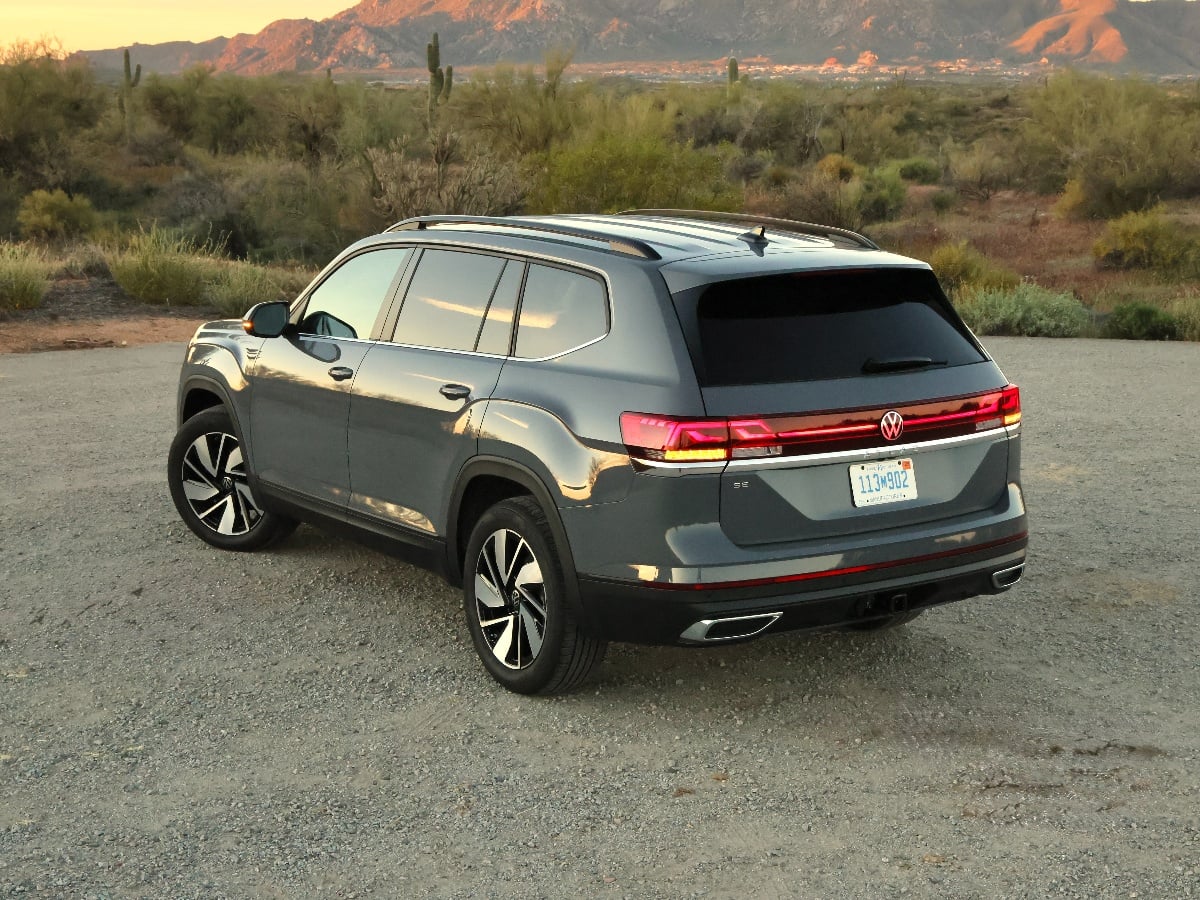
Photo: Jim Resnick
Volkswagen installs a turbocharged 2.0-liter four-cylinder engine in all 2026 Atlas SUVs, available in FWD or all-wheel-drive (AWD) configurations. It produces 269 horsepower and 273 pound-feet of torque and does not offer hybrid assistance, either as standard or optional. An eight-speed automatic transmission with steering-wheel paddles for manual shifting backs the engine.
The FWD Atlas SE I tested has a combined 23 mpg Environmental Protection Agency (EPA) rating, nothing to write home about. However, I averaged 25.7 mpg across mixed highway, suburban, and urban driving, which is a pretty positive result for a large, heavy SUV compared with the EPA figures.
There is decent power for the Atlas from its smooth 269-hp engine, but a vehicle this heavy really needs a bit more. You can select "Sport" from the driving modes, which instructs the transmission to stay in a lower-than-normal gear. Using the shift paddles to work the transmission manually can also yield a more sprightly response, but fuel mileage will suffer with both of these strategies.
The Atlas' steering feels communicative, and the overall impression the SUV gives while driving is one of solid, precise construction. However, there is a lot of body roll, even in medium-severity corners. The Atlas' weight and size prevent sporty outbursts, and the suspension does not really live up to the expectations of German engineering and a Teutonic love of driving.
Despite the handling picture, ride comfort feels excellent 95 percent of the time, especially on the highway. There is very little wind or tire noise, either. However, sharp bumps and potholes cause an unusually loud thud from the suspension, as if the bump stops are being hit prematurely. The Atlas SE is rated to tow just 2,000 pounds, but the upper trims can each tow up to 5,000 pounds.
The Atlas' brake specifications are nothing special, but I twice encountered sudden emergency stops that averted disaster, first with a suicidal deer and second with a bicyclist who literally fell into the road in front of me. In both cases, the brakes hauled the Atlas down to a standstill superbly, and without injury to man or beast.
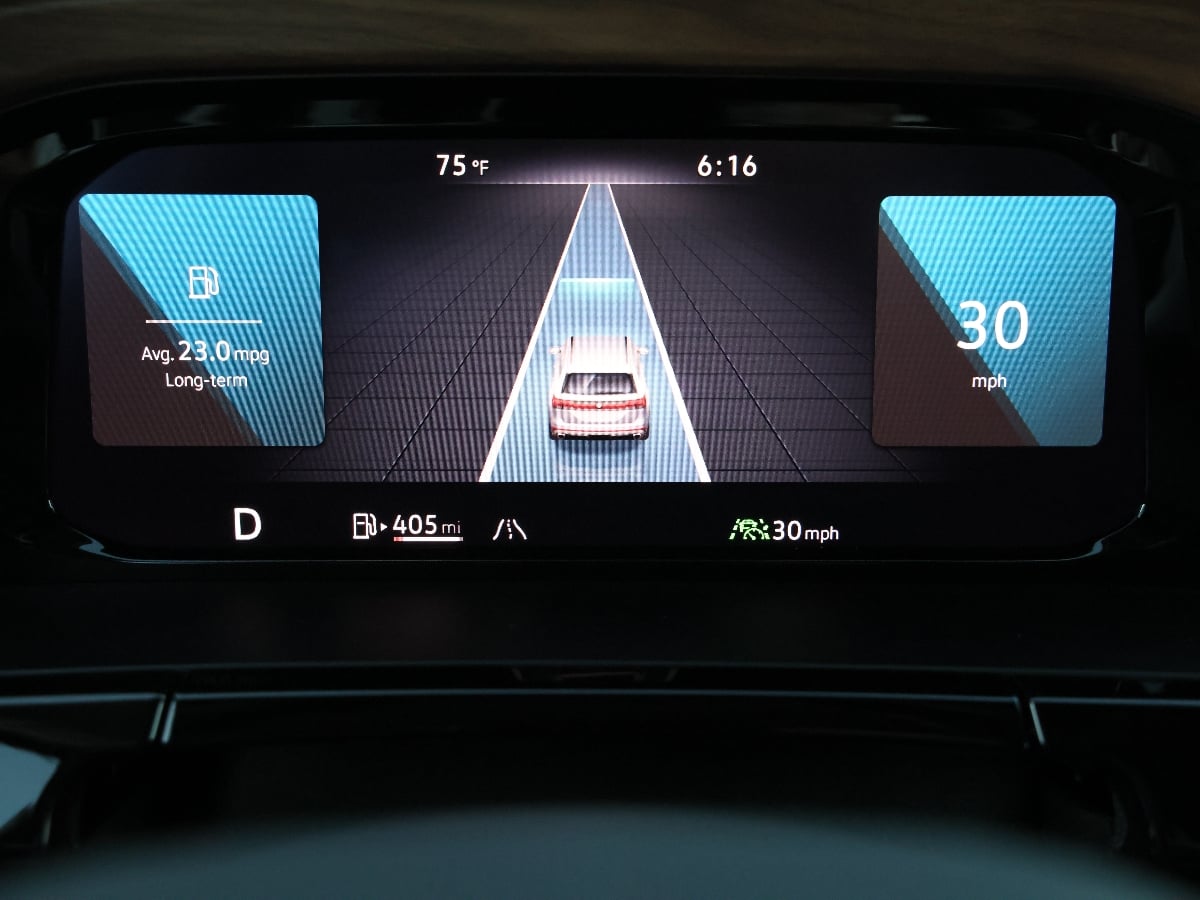
Photo: Jim Resnick
Volkswagen's IQ.Drive bundle of advanced driver assistance systems (ADAS) comes standard on all 2026 Atlases, regardless of trim level. It includes all the capabilities you would expect today, plus some you might not.
Volkswagen's Travel Assist feature with IQ.Drive goes one step further, enabling semi-autonomous driving assistance and lane centering by integrating all its many features. In fact, IQ.Drive is so comprehensive on the Atlas that no ADAS systems are offered as options. Here is a list of ADAS features standard on the 2026 Atlas:
The standard IQ.Drive ADAS on the Atlas worked well together, with the adaptive cruise system detecting leading vehicles changing lanes ahead quite well. It also did not mistake exiting vehicles, such as vehicles peeling off the highway toward an exit ramp, for vehicles dead ahead in the lane.
IQ.Drive did not perform as well when the painted lane lines at the sides of secondary roads did not sufficiently contrast with the pavement surface, in the mind of the Atlas. In these moments, the system did not always steer away from the road's edge.
Similarly, multi-lane concrete (light gray) highways with broken white lane markings apparently did not to satisfy the system's needs for consistent lane keeping or lane centering, likely due to a sight or contrast issue as well.
Bundled with everything else in the SUV, an automatic emergency stop assistance system can slow down and stop the Atlas if the driver becomes unresponsive, as if they are having a medical emergency. Most manufacturers offer this capability as an option (if they offer it at all), but it is standard in the Atlas.
Regarding crash safety, the National Highway Traffic Safety Administration (NHTSA) gave both the FWD and AWD 2026 Atlas five stars, the agency's highest rating. Similarly, the Insurance Institute for Highway Safety (IIHS) gave the 2026 Atlas its “Top Safety Pick” rating for 2026. However, the Institute rated the Atlas as Marginal for the ease of installing child safety seats, which is not a safety issue, per se, but a matter of ease of use.
According to the JD Power 2026 Initial Quality Study (IQS), the Subaru Ascent ranks highest in the Upper Midsize SUV segment, with the Ford Explorer and Kia Sorento ranked second and third, respectively.
According to the JD Power 2025 Automotive Performance, Execution and Layout (APEAL) Study, the Dodge Durango and Hyundai Santa Fe rank highest (in a tie) in the Upper Midsize SUV segment, with the Chevrolet Traverse ranked third.
Other 2026 Atlas competitors include the GMC Acadia, , and Toyota 4Runner.
Even with merely adequate power, significant body roll in corners, and some infotainment shortcomings, the Atlas proved enjoyable to drive. All versions come with a healthy list of standard features, plus all of Volkswagen's ADAS capabilities. The interior and cargo space are inarguably roomy.
However, rivals like the Toyota Grand Highlander and Kia Telluride outperform the Atlas on several fronts. In addition, Volkswagen is updating the Atlas for 2027, which means a several-month wait for a first look at a completely redesigned three-row Volkswagen SUV.
Jim Resnick is an author specializing in automotive, mobility, technology, and related topics. He has lectured at universities about the auto industry's relationship with government legislation, drawing on his experience as Technical Editor and Editor-in-Chief. In addition to jdpower.com, his work has appeared in more than 30 media outlets, including Wired, The New York Times, Car and Driver, Kelley Blue Book, and the BBC.