44 - 53
225 - 232
1 speed, CVT w/OD
Gas/Electric I-4
All Wheel Drive, Front Wheel Drive
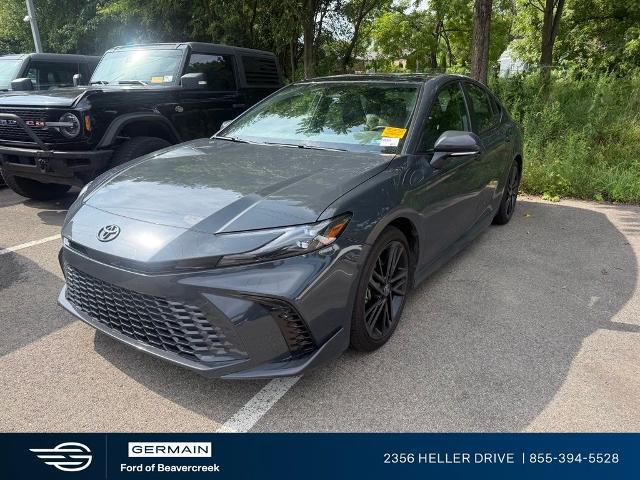
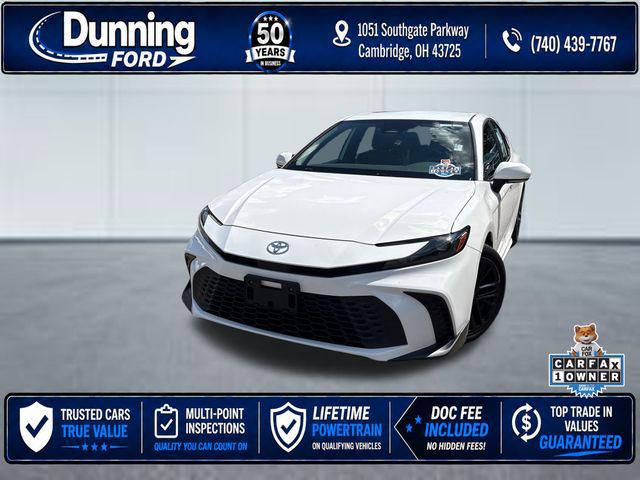
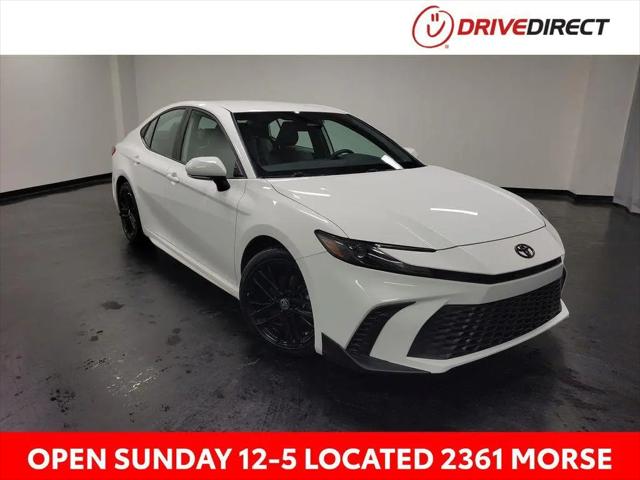
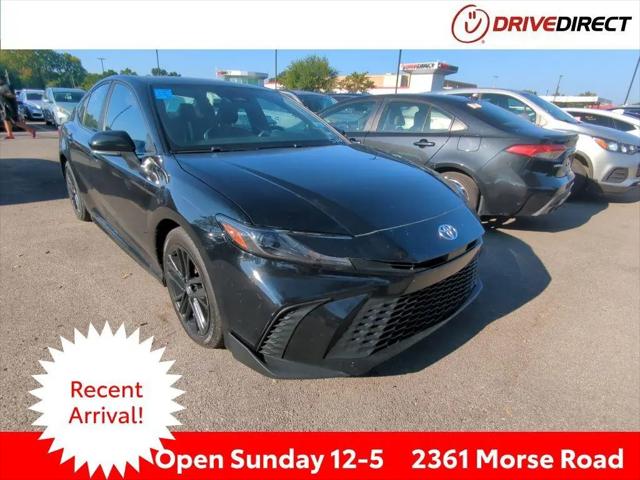
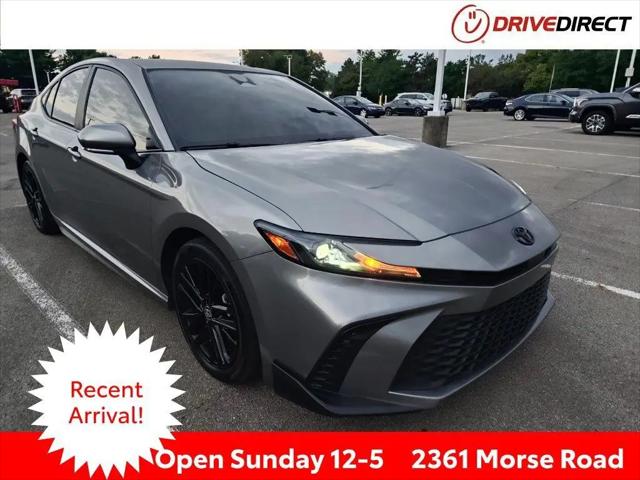
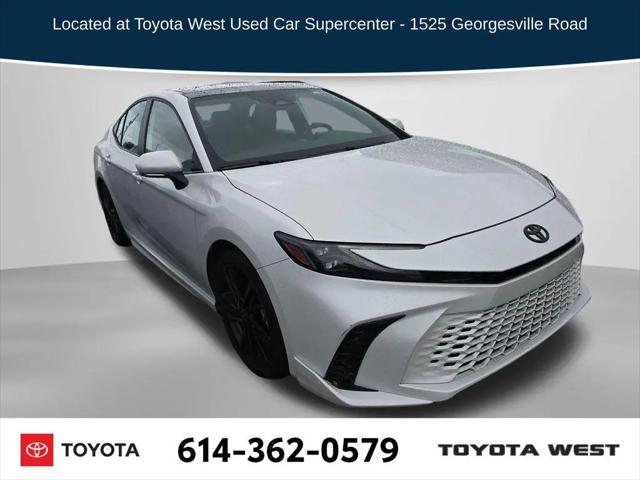
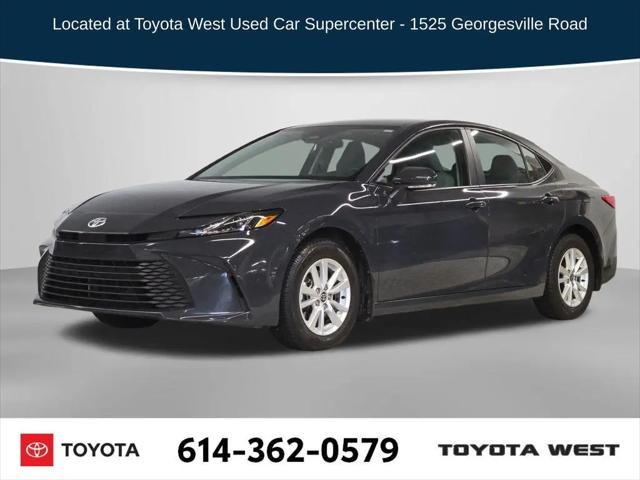
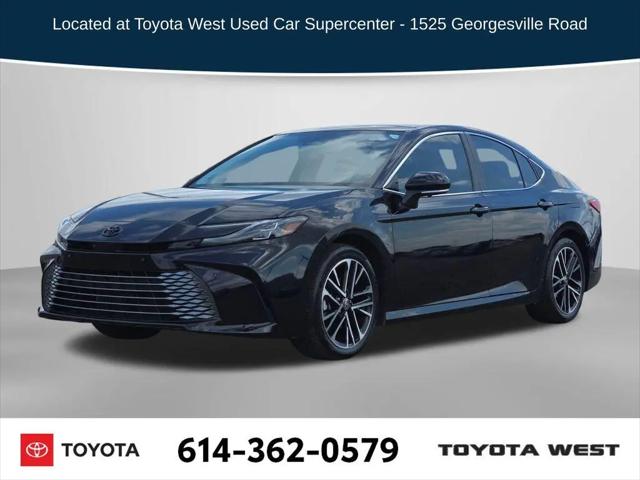
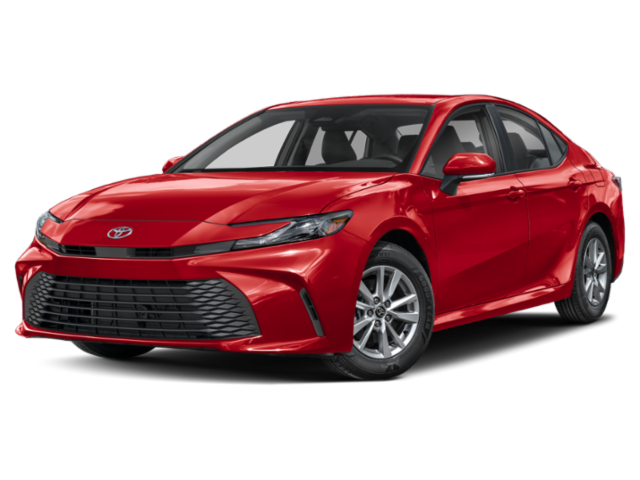
Long a standard bearer in the midsize family car segment, the Toyota Camry gets a major makeover for 2025. It’s not a clean-sheet redesign but is substantially revised inside, outside, and under the hood. Now hybrid-only and equipped with the latest infotainment and safety features, the 2025 Toyota Camry looks, feels, and drives better.

Photo: Christian Wardlaw
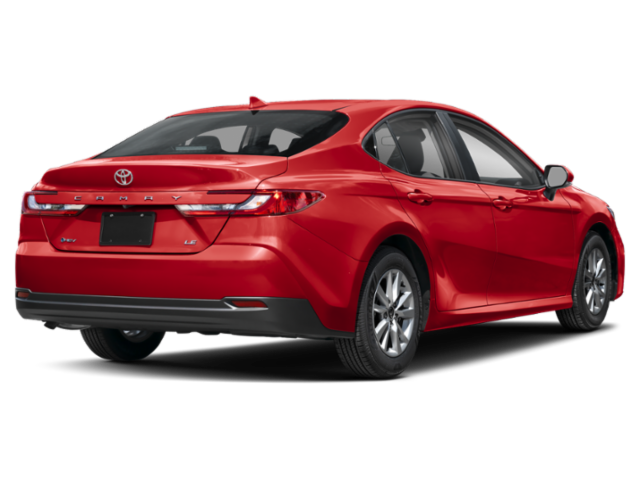
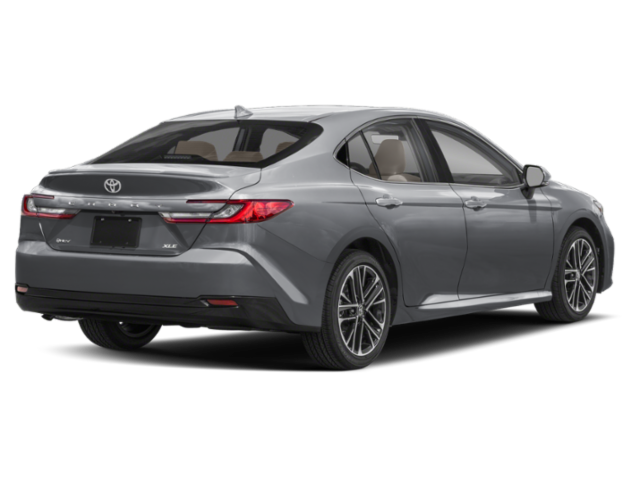
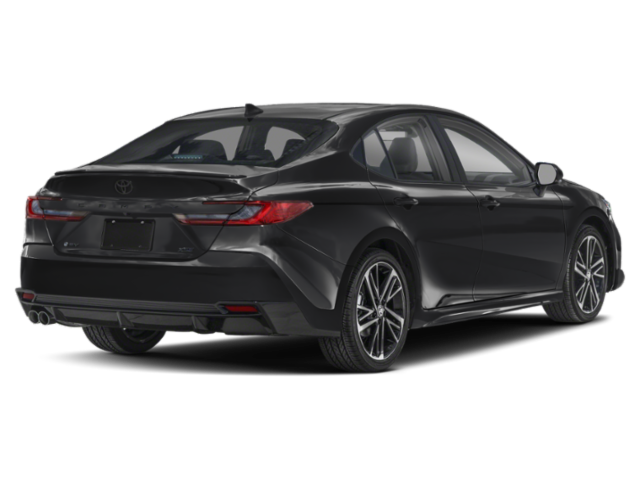
Look closely, and you can see the new 2025 Camry is nearly identical to the old car proportionally. Almost every exterior panel is new, though, and the Camry adopts a cleaner look, fresh wheel designs, and new paint colors such as the Ocean Gem hue seen in the photos. The modernized interior showcases a new infotainment system, and the latest Toyota Safety Sense 3.0 advanced driving assistance systems (ADAS) are standard.
The lineup includes LE, SE, XLE, and XSE trim levels, each with a standard hybrid powertrain and front-wheel drive (FWD) or all-wheel drive (AWD). With FWD, the car supplies 225 horsepower. The Camry AWD offers a little more, at 232 hp. Fuel economy ratings range from 44 mpg to 51 mpg in combined driving, depending on the version you get. Prices span from $29,535 to $35,735, including the destination charge.
For this review of the 2025 Camry, Toyota provided a test vehicle equipped with XSE trim and the following options:
The Premium Plus Package adds several comfort, convenience, and driver assistance features. Highlights include ventilated front seats, a panoramic sunroof, a JBL premium sound system, a head-up display, and digital key entry and start capability. In addition, it installs front and rear parking sensors, front cross-traffic warning, rear cross-traffic automatic braking, and a traffic jam assistance system.
The test vehicle’s price was $41,770, including the $1,095 destination charge to ship the car from the Toyota assembly plant in Georgetown, Kentucky, to your local dealership. (Toyota has since raised the destination charge to $1,135.)
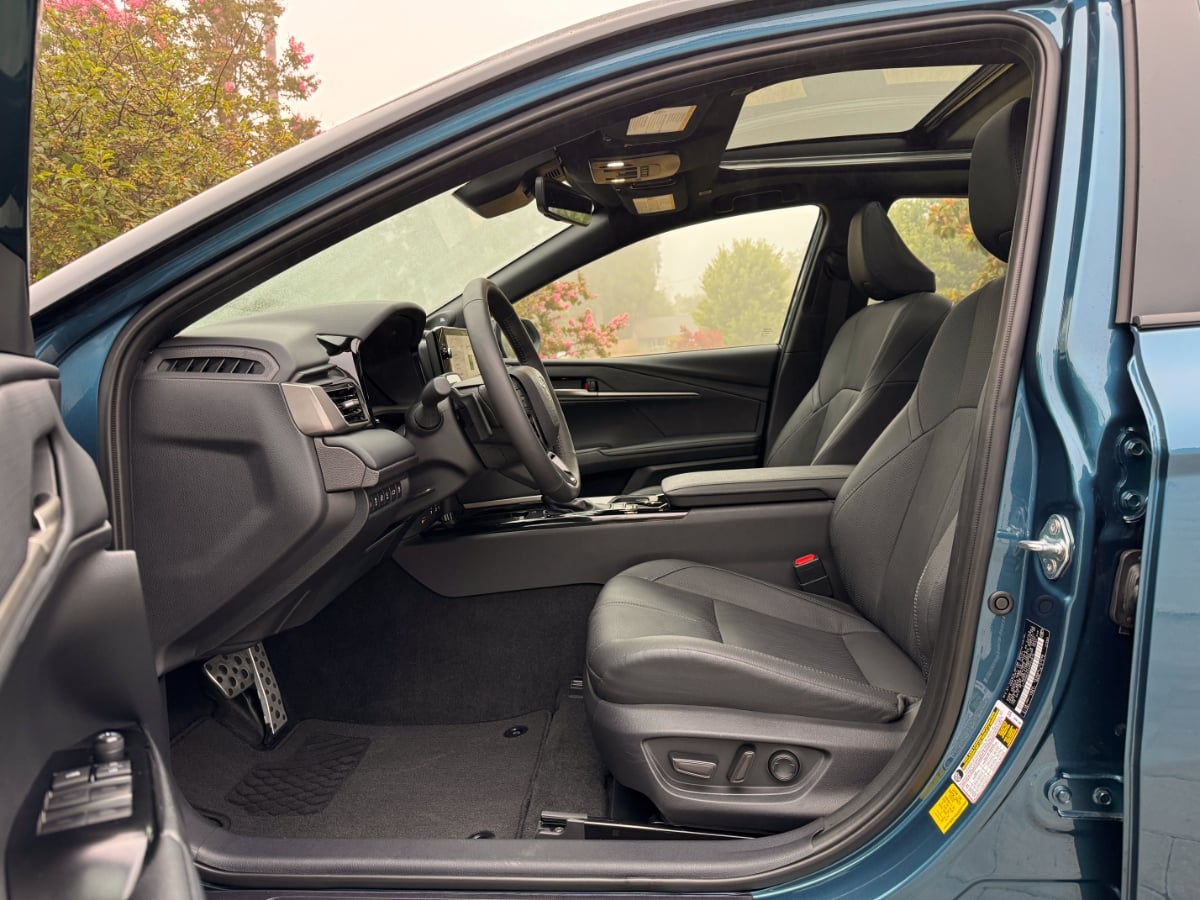
Photo: Christian Wardlaw
Camrys are low-slung and sit close to the ground, so they’re more of a hassle to enter and exit than a crossover SUV like a RAV4. However, Toyota wisely provides a seat-height adjuster for the front passenger’s seat in nearly every version of the Camry, a detail Honda fails to offer in the Accord. That sure makes it easier to get in and get out.
Unfortunately, the roof is so low that this thoughtful approach doesn’t matter as much as it should. My test car arrived with leather-wrapped eight-way power front seats featuring heat and ventilation, and I couldn’t raise the driver’s seat to my preferred elevation due to the scant headroom. That forced me to sit too low and reclined than I like, so while the seat was quite comfortable, the driving position proved dissatisfying.
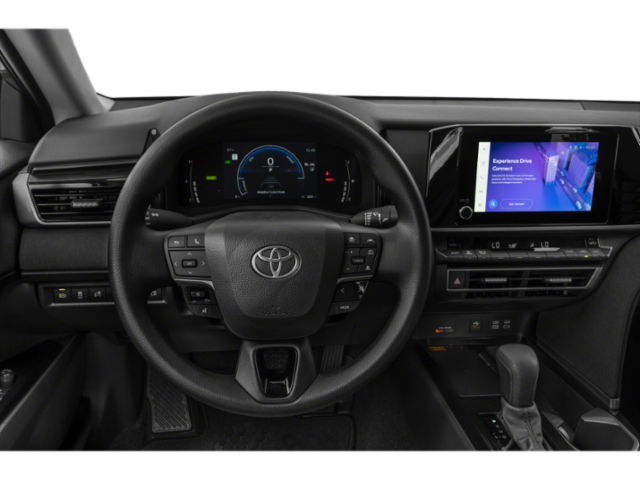
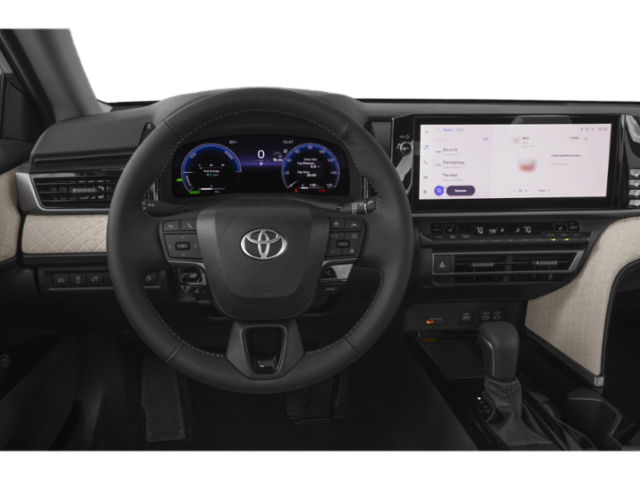
The front seats face a new asymmetrical dashboard that retains its driver-centric appearance. Dual 12.3-inch displays present the instrumentation and infotainment, and ribbed trim hides the car’s air vents. Storage space is plentiful.
Toyota provides a traditional shifter, plenty of buttons, and a volume knob, so using the controls is simple and straightforward from the moment you drive a new 2025 Camry home. Though my XSE featured elevated materials, it’s easy to spot evidence of cost-cutting.
Rear passengers won’t be as comfortable in a Camry as in some rivals in the segment. However, the seating position provides good support, and the soft front seatbacks are kind to knees and shins. Rear air conditioning vents aid comfort, and the optional panoramic sunroof brightens things up.
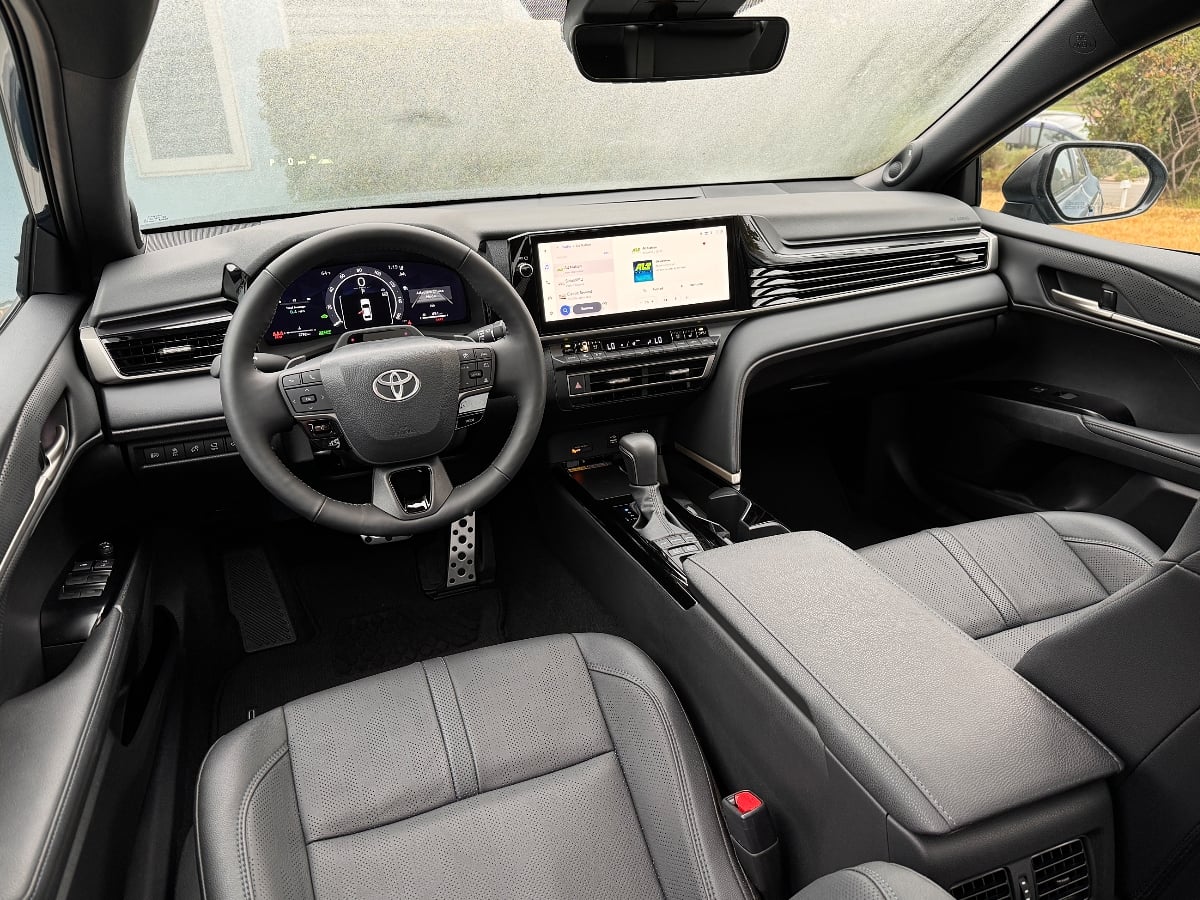
Photo: Christian Wardlaw
The 2025 Camry is one of the latest Toyotas to get the automaker’s latest infotainment technology. Toyota Audio Multimedia offers everything you expect to find in a modern car and then some.
Standard equipment includes:
While this system is robust, I find it hard to use during the day because the delicate graphics on the bright background cause legibility issues. In turn, that creates distraction while driving. The system also lacks a configurable Home screen showing multiple data panels, so you’re constantly fiddling with it to find features and information.
My test car had an active Drive Connect subscription, so the digital voice assistant was operational. However, on evaluation day, during the voice recognition test, it failed to respond to several commands due to a “busy network.” At other points during the week I spent with the Camry, it proved helpful, with only a few exceptions.
Pairing an iPhone, running Apple CarPlay, and streaming music wasn’t a problem. However, the best you can do regarding a premium sound system is a nine-speaker JBL setup, which the test car had. It’s adequate but not suitable for true audiophiles. This Camry also had a head-up display; it would be nice if it showed blind-spot warnings like in a Hyundai Sonata or Kia K5.

Photo: Christian Wardlaw
For 2025, Toyota dropped the previous four-cylinder and V6 engines and made the company’s fifth-generation hybrid powertrain standard on all models. Based on a 2.5-liter four-cylinder engine, it features a 100-kilowatt (kW) electric motor, a 252-volt lithium-ion battery, and a continuously variable transmission (CVT). Net system output measures 225 hp.
Get the optional AWD system, and a separate 30-kW electric motor powers the rear wheels when necessary to aid traction. That extra motor bumps output to 232 hp but nicks fuel economy. In any Camry, drivers can choose between Normal, Eco, and Sport driving modes. A separate EV mode allows for low-speed, electric-only driving for short distances.
My front-drive XSE test car carried an EPA fuel economy rating of 47 mpg in combined driving, but it averaged 34.9 mpg on my testing loop. One explanation for that could be a hot testing day with temperatures in the 90s. Also, I didn’t spend time crawling in commuter traffic in EV mode. Still, that’s a significant shortfall. Note that for the entire week of driving, the car got 41 mpg.
Since the Camry SE and XSE are sporty models, they get a sport-tuned suspension, a thicker front stabilizer bar, and larger wheels to provide more athletic ride and handling qualities. (The wheels in the photos are also available for the Camry SE.) In addition, Toyota says all new 2025 Camrys have a retuned suspension and a new electronic braking system.
The Camry XSE is enjoyable to drive. Quiet at highway speed, solid and secure over bumps, and offering a compliant yet connected ride, it is more refined than ever. Better yet, I barely noticed the CVT. My only complaint regarding daily driving is the heavy and numb brake pedal feel.
While the racy Camry TRD is no more, the Camry XSE can still hustle when the road ahead kinks and curves. With the heavy electric motor and battery mounted low in the platform, the sizable 19-inch wheels and tires, and the stiffer suspension, it eagerly tackles a twisty road with a flat, stable cornering attitude.
It might not be fast in a straight line, but the XSE’s dynamic tuning and predictable handling allow enthusiast drivers to conserve speed through every bend in the road, making for a quick trip across a mountain range.

Photo: Christian Wardlaw
Toyota’s latest safety tech is standard for every 2025 Camry, packaged under the Toyota Safety Sense 3.0 (TSS 3.0) umbrella.
The TSS 3.0 collection includes:
In addition, the Camry has a standard blind-spot warning, rear cross-traffic warning, and a safe exit system.
My test car’s Premium Plus Package added several advanced driving assistance systems (ADAS):
Overall, TSS 3.0 is impressive. On one occasion, the rear cross-traffic warning system failed to warn me of an approaching vehicle as I reversed from an angled parking space, but otherwise, the TSS 3.0 technology works as advertised. In some situations, though, it isn’t as transparent in operation as it should be.
When using the adaptive cruise control and lane-centering assistance systems, the steering occasionally resisted my inputs enough to draw my attention and ire. That also happened when using the lane change assistance feature. It will check to ensure the coast is clear and then semi-autonomously steer the Camry into the adjacent lane. However, this process takes a few moments, and if you’re impatient and override the feature, it can resist too much.
The Traffic Jam Assist system automatically activates when the Camry drops to 25 mph, taking control of the steering, braking, and accelerating. At that point, the technology requests permission to activate the in-car camera recording system unless you turn that feature off. When you exceed 25 mph, the system alerts you to retake control.
Notably, Toyota’s PDA system works well in the Camry. It automatically adds subtle braking and steering inputs to help you keep a safe distance from other vehicles. In everyday driving situations, it proved more refined and less intrusive than other instances of the tech I’ve experienced. However, it proved irritating on mountain roads.

Photo: Christian Wardlaw
The Camry’s 15.1 cubic-foot trunk falls short in the midsize car class. Also, the exposed hinges can crush luggage if you’re not careful, and Toyota doesn’t provide an inner handle to swing the lid shut, so you’ll get your fingertips dirty when closing it.
According to the EPA, my Camry XSE test car should have returned 47 mpg in combined driving. Over a week of driving, it averaged 41 mpg, a shortfall typical of hybrids. Based on that real-world result and the car’s 13-gallon fuel tank, you can expect to travel 533 miles, but you’ll pull into a gas station to refuel at the 500-mile mark or sooner.
According to the Insurance Institute for Highway Safety (IIHS), the 2025 Camry earns a Top Safety Pick+ rating for the 2024 calendar year. Check the IIHS website to see if that rating carries over for the 2025 calendar year. As of this writing, the National Highway Traffic Safety Administration (NHTSA) has not performed crash tests on the new Camry.
For the 2025 Camry, prices range from $29,535 to $35,735, including the $1,135 destination charge.
In the JD Power 2024 Initial Quality Study (IQS), the Toyota Camry ranks highest in the Midsize Car segment. The Nissan Altima and the Chevrolet Malibu are the next highest-ranked models.
In the JD Power 2024 Automotive Performance, Execution and Layout (APEAL) Study, the Kia K5 ranks highest in the Midsize Car segment. The Hyundai Sonata and the Hyundai Ioniq 6 are the next highest-ranked models.
Other 2025 Camry competitors include the Honda Accord and Subaru Legacy.
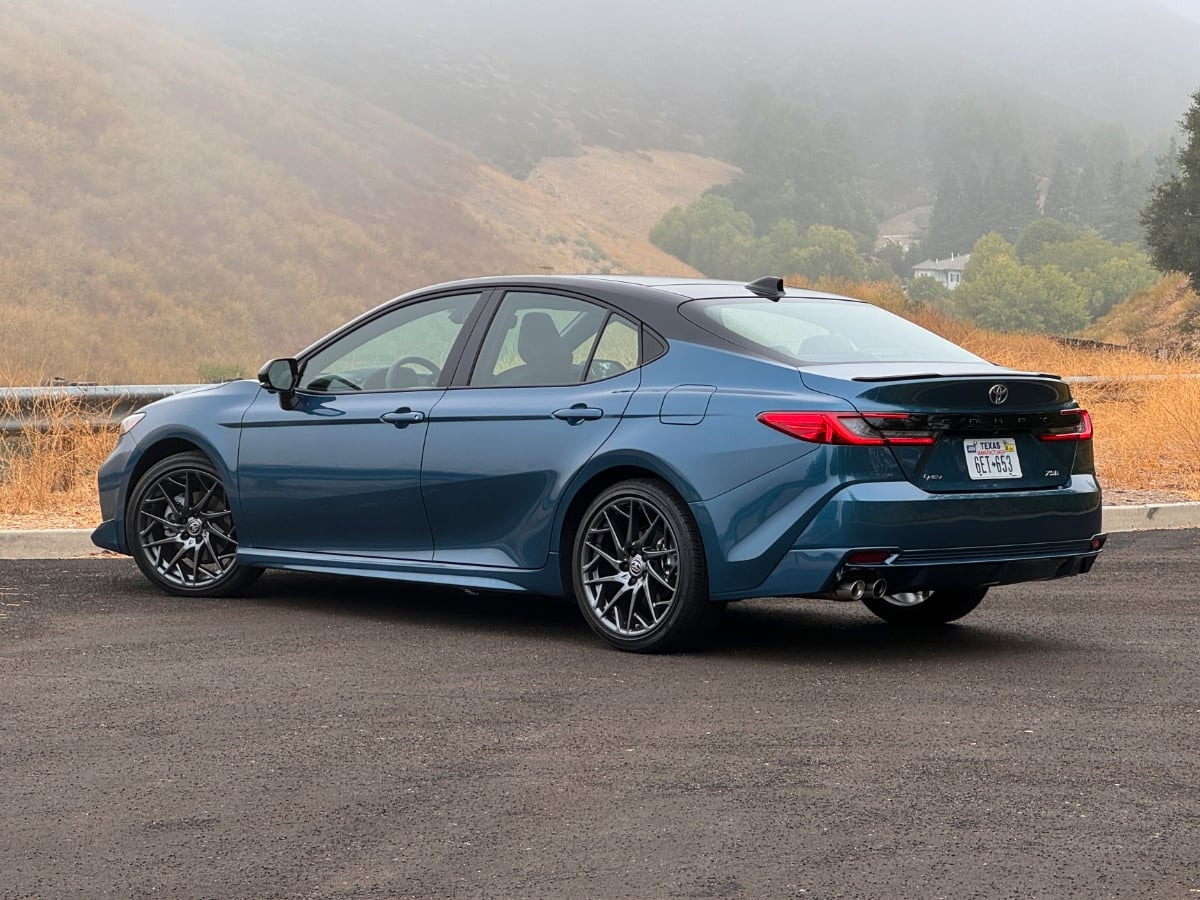
Photo: Christian Wardlaw
With the 2025 Camry, Toyota boldly moves to a standard hybrid powertrain, and the improved infotainment and safety technologies make it more appealing than before. With available AWD, rewarding driving dynamics, decent comfort levels, and impressive safety scores, it is ready to serve American families for years to come.
Christian Wardlaw is a veteran automotive journalist with 30 years of experience in the field and has held automotive editorial leadership positions at Edmunds, JD Power, and The New York Daily News. Today, Chris owns a content agency called Speedy Daddy Media, and in addition to JDPower.com, his work appears on Capital One Auto Navigator, CarGurus, and Edmunds.