See answers to common EV questions, tax incentives, charging maps & more.
Explore EV
23 - 26
33 - 37
191 - 290
8 speed, Automatic w/OD, 8 speed, Auto-Shift Manual w/OD
Intercooled Turbo Regular Gasoline I-4, Regular Gasoline I-4
All Wheel Drive, Front Wheel Drive
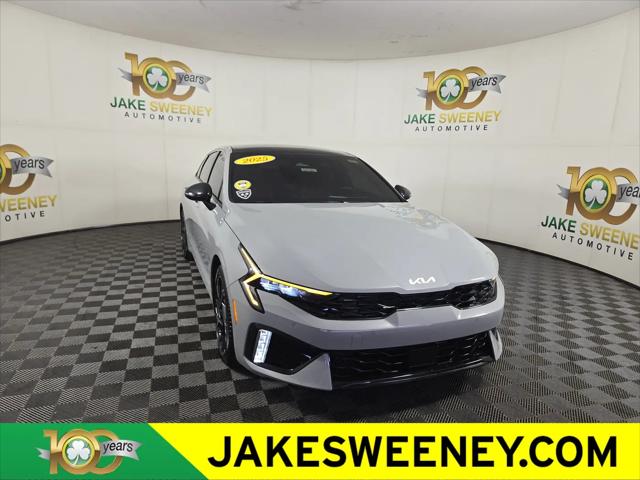
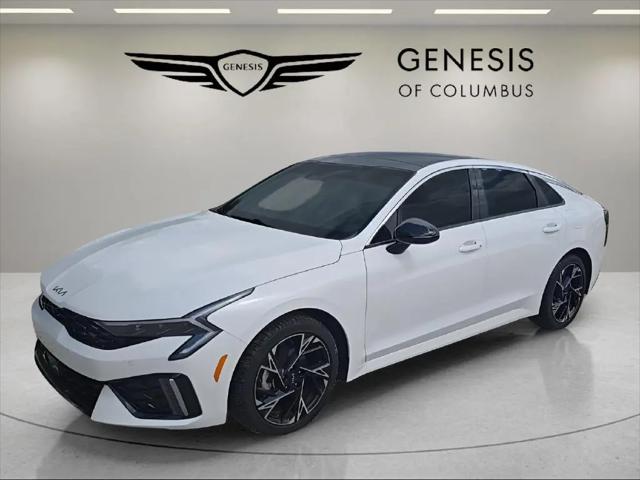
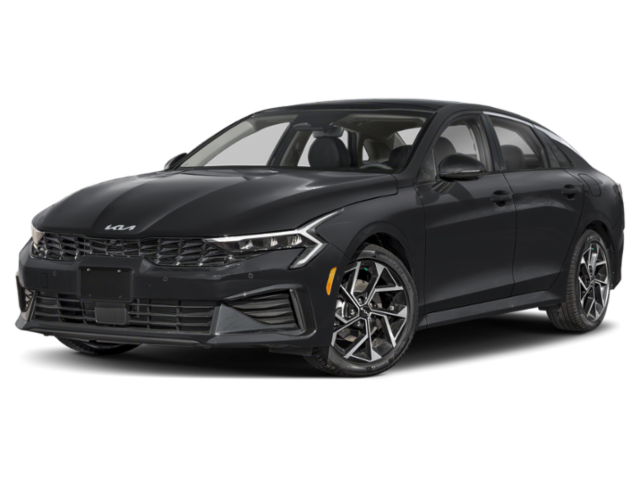
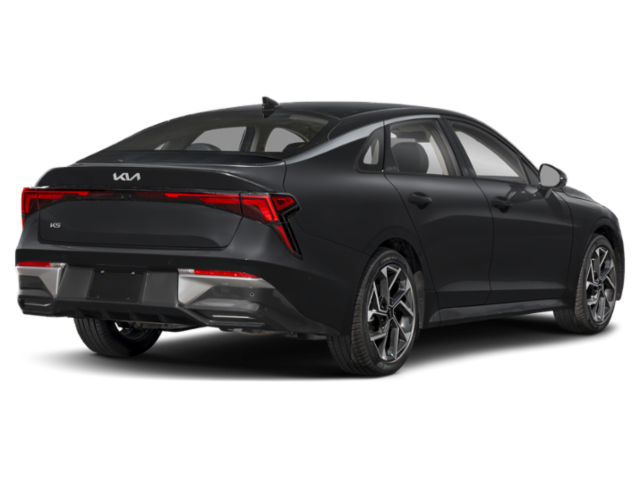
While the Chevrolet Malibu and Subaru Legacy will join the exodus from the family sedan category after the 2025 model year, Kia appears to be staying put in the segment. The refreshed 2025 Kia K5 receives a bolder look, a different standard engine, and new technology to keep it competitive for a few more years.

Photo: Christian Wardlaw
So, what's new for the 2025 Kia K5? Here are the highlights:
The 2025 Kia K5 lineup includes LXS, GT-Line, GT, and EX trim levels, with prices ranging from $26,990 to $34,490, including the destination charge. The LXS is the base model, the GT-Line has a sportier look inside and out, the GT has a more powerful engine and performance tuning, and the EX is loaded with features.
JD Power previously published a review of the 2021 Kia K5 EX. This review focuses on the K5's updates for 2025 and how they potentially impact its overall consumer appeal.
For this 2025 K5 review, Kia provided a test vehicle with EX trim and optional cargo and floor mats. The price was $35,930, including the $1,155 destination charge to ship the car from the Kia assembly plant in Hwasung, South Korea, to your local dealership.
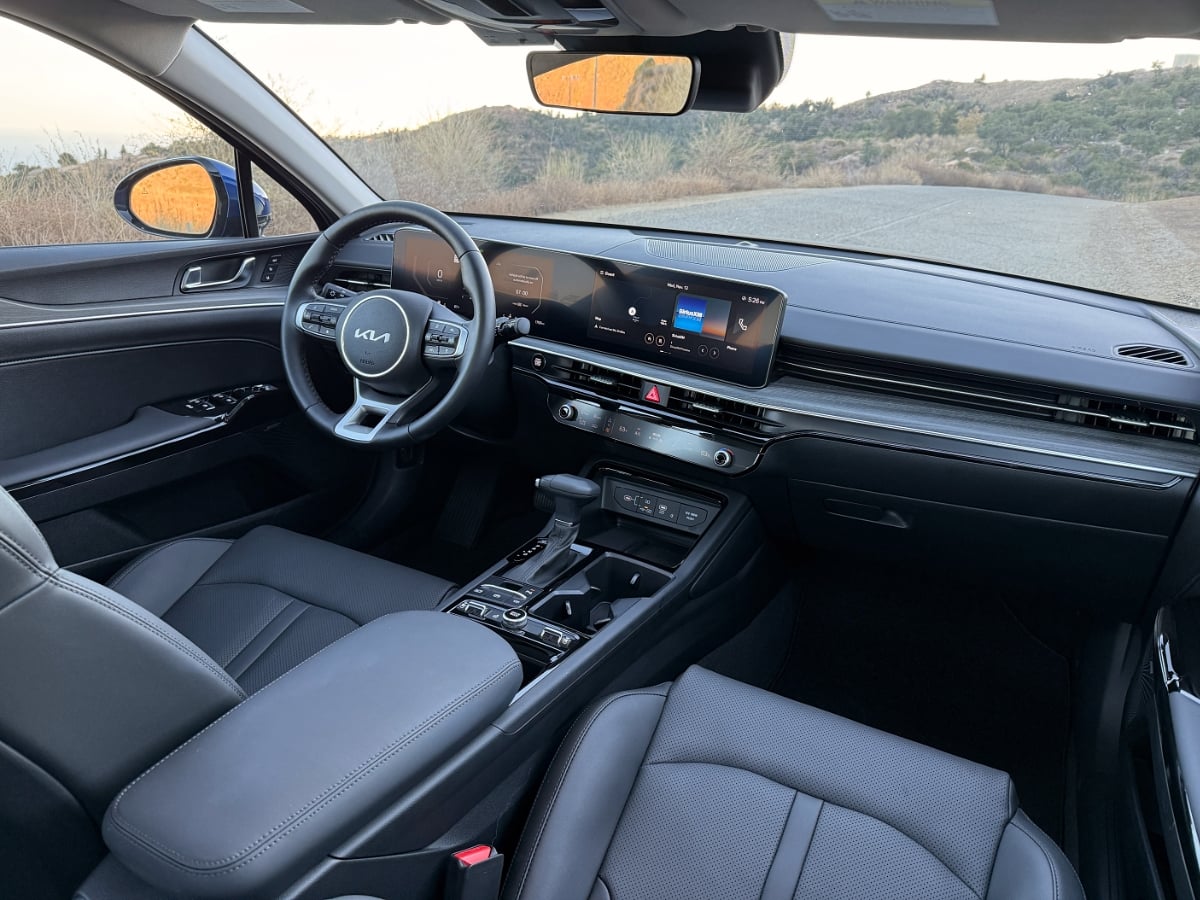
Photo: Christian Wardlaw
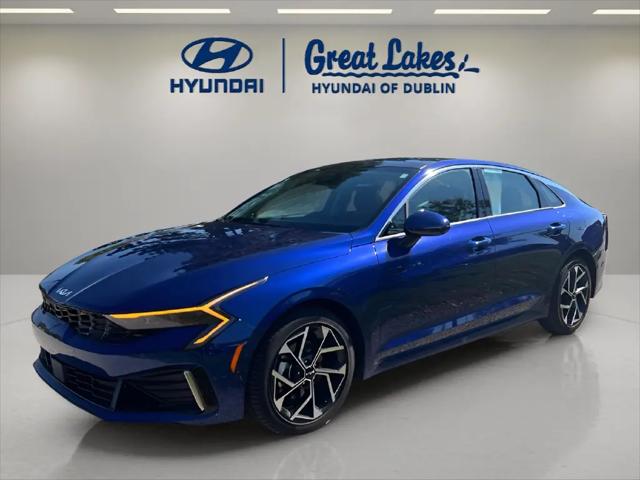
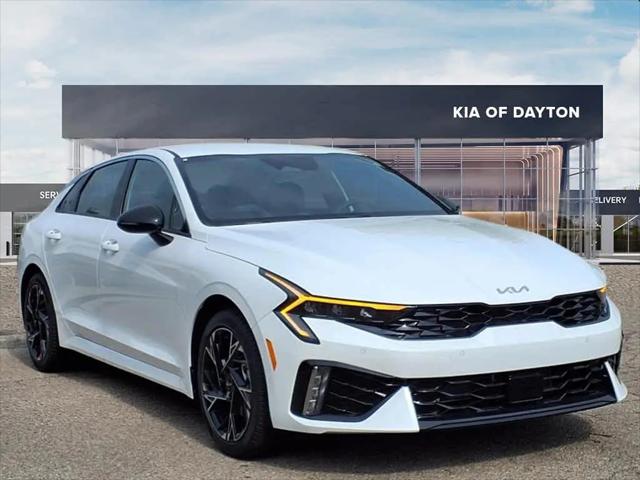
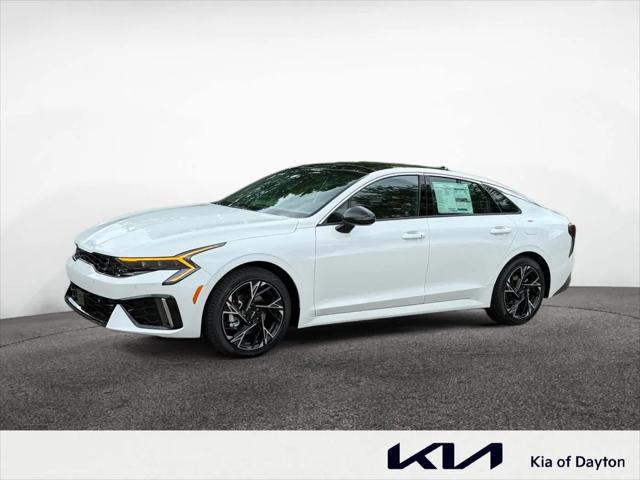
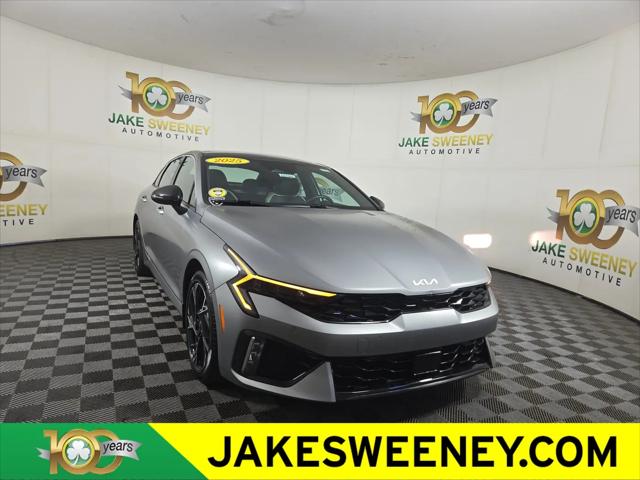
Thanks to Kia's subtle changes to the 2025 K5's front and rear styling, the sedan looks sharper and more distinctive. I prefer last year's design, but the updates for 2025 don't ruin the car's appearance.
For good measure, Kia revised all of the wheels. The LXS has black 16-inch wheels in a more expressive design. The GT-Line has appealing 18-inch wheels, performance-oriented K5 GT models have an intricate multi-spoke 19-inch design, and the upscale EX features 18-inch wheels with a geometric design.
Inside, you can get black cloth seats with LXS trim and black artificial leather in the three other versions of the car. Red is available with the GT-Line models, and GTs come with Neon Green accents whether you want them or not. Gray, tan, brown, or any other color is not on the menu, which is a shame because the black leatherette feels like you're sitting on a frying pan when the car is parked in the sun.
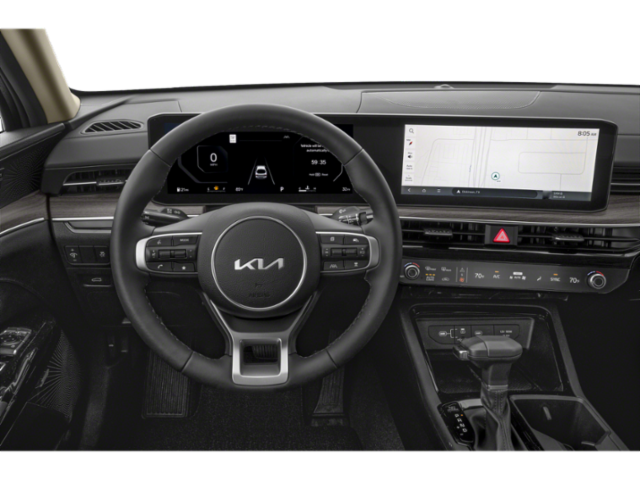
With EX trim, the K5 has dual 12.3-inch displays living under a single 24-inch piece of curved glass, adding a layer of sophistication to this midsize family car. Below it, a new touch-sensing panel controls the stereo, infotainment, and climate systems, but the user interface leaves something to be desired.
 Photo: Christian Wardlaw
Every 2025 K5 has a 12.3-inch touchscreen infotainment system featuring the automaker's latest software. Significantly, it adds wireless Apple CarPlay and Android Auto to every K5, but you'll also get multi-device Bluetooth pairing ability, SiriusXM satellite radio, and access to Kia Connect services.
Activate Kia Connect, and you'll enjoy Amazon Alexa compatibility, enhanced voice recognition technology, remote engine starting and climate system operation, a find my car function, and more. Unfortunately, the test car's Kia Connect subscription was inactive, so I couldn't evaluate its features.
Move up to the K5 GT-Line, GT, or EX, and you get a native navigation system that can automatically reduce vehicle speed for upcoming curves when driving with the adaptive cruise control turned on. These versions of the car also have a wireless charger, while the K5 EX boasts a 12-speaker Bose premium audio system.
While the test car's standard digital voice assistant couldn't understand the simplest of commands ("Go to Starbucks"), I had no trouble pairing my iPhone to the car's Bluetooth and running the wireless Apple CarPlay. Siri quickly found multiple nearby locations for America's most popular coffee shop and most other potential destinations.
Overall, I found the infotainment system easy to use. However, because the K5's lane-keeping and lane-centering assist systems are irritating, that aggravation grows when trying to remember which driving assistance sub-menu might contain their settings so you can turn them off. I don't mind their behavior when using the car's impressive Highway Driving Assist (HDA) technology. However, they are too obvious and intrusive when HDA is not in use.
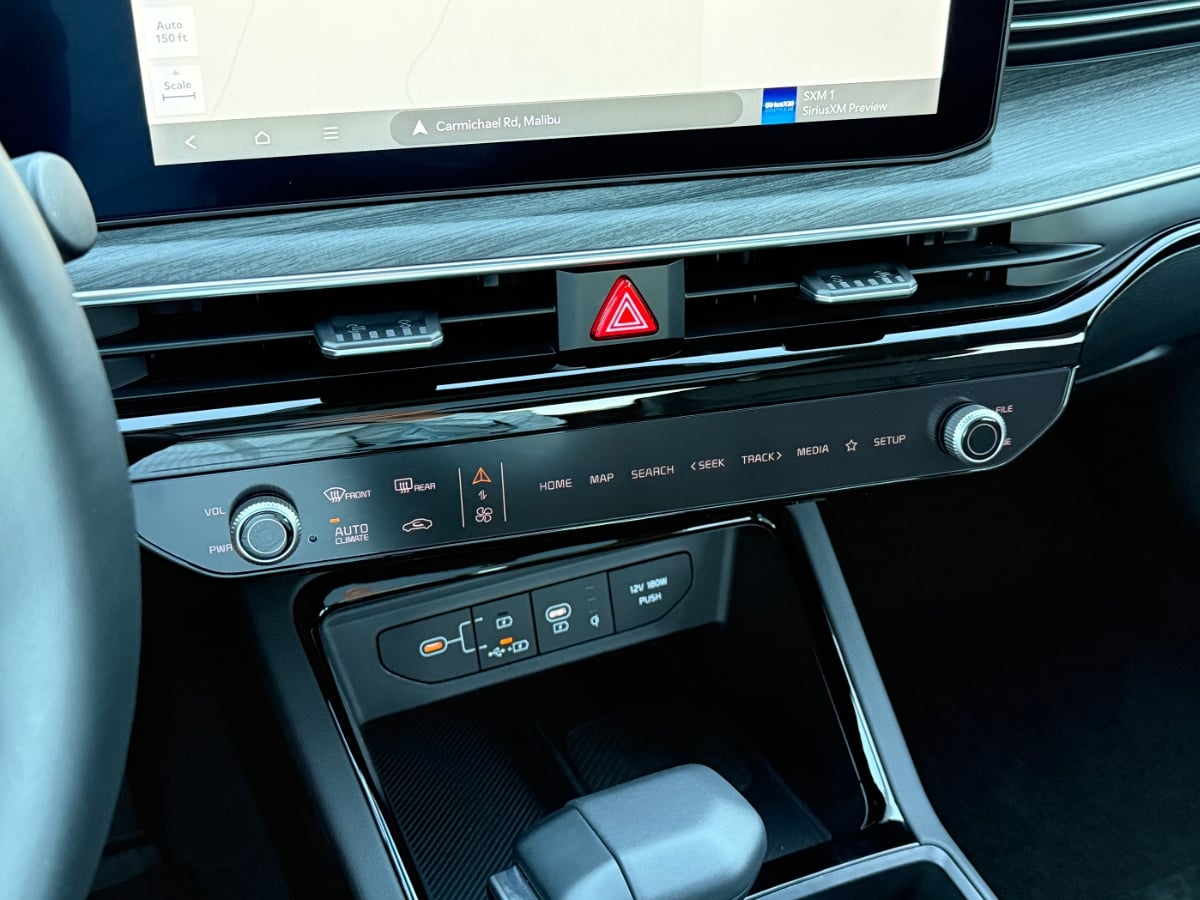
Photo: Christian Wardlaw
Below the new infotainment system, you'll find a pair of climate system air vents. Below those is a new touch-sensing panel that controls the stereo volume and radio tuning, shortcuts to the infotainment system menus, and the climate system. The interface serves dual purposes, and the driver must remember to switch between climate and infotainment before twisting knobs or touching other controls.
In theory, though it requires extra steps, this design shouldn't amount to more than a minor hassle. In the Sorento SUV, which I recently drove from Los Angeles to San Francisco and back, it caused no problems. But in the K5, it did.
To reach the left knob, I had to bring my right hand toward it from around the steering wheel rim. Often, my knuckle would contact the panel just before twisting the volume knob, brushing against the Auto Climate virtual button. That would switch the panel from infotainment to climate, so when I twisted what I thought was the volume knob, it was now a temperature knob.
When the stereo volume didn't increase or decrease, I'd twist more, adjusting the air conditioning or heat enough that the fan would blow harder. That would indicate to me the left knob was adjusting temperature, not volume.
Sure enough, I'd look down, see that the climate panel was active, mutter some unfavorable language about this horrible design, readjust the temperature, switch back to the infotainment panel, and then carefully twist the volume knob without touching the Auto Climate or defogger controls right next to it. Grrrrr.
As I said, during a family road trip in a Sorento, this design caused no trouble, perhaps due to the panel's placement on the dashboard. I've also used the dual-action touch panel without much aggravation in the EV6. But after spending a week driving the K5, I need to give Kia's approach two big thumbs down. It is distracting, irritating, and unhelpful.

Photo: Christian Wardlaw
Another unhappy development in the 2025 K5 is the new standard engine. Kia has shelved the previous turbocharged 1.6-liter four-cylinder engine, which made gobs of torque at low engine revs, replacing it with a normally aspirated 2.5-liter four-cylinder engine that's less responsive and enjoyable.
With 191 horsepower at 6,100 rpm and 181 pound-feet of torque at 4,000 rpm, the new engine provides adequate acceleration and acceptable fuel economy. Compared to the old turbo-four, the 2.5-liter makes 11 more horsepower at 600 higher rpm, but torque drops by nine pound-feet and arrives 2,500 rpm higher.
Without the former engine's swell of torque across the lower part of the engine's rev range, the 2.5-liter is lackluster and dull when accelerating. Thankfully, it pairs with an eight-speed automatic instead of a continuously variable transmission (CVT), and Kia continues to offer all-wheel drive as an option with GT-Line trim. The engine note is decent too, especially when you choose the Sport driving mode.
Regarding fuel economy, the new engine should get 25 mpg in the city, 36 mpg on the highway, and 29 mpg in combined driving. The K5 LXS with smaller wheels does better, while the GT-Line AWD does worse. Across the board, the new engine is less efficient than the old turbo four, which proved true on my Southern California testing loop. The 2025 K5 EX 2.5 averaged 24.9 mpg on it, a much lower figure than my last drive in a 2021 K5 EX 1.6 turbo, which got 28.6 mpg.
If you prefer a speedier sedan, the K5 GT delivers 60 mph in a claimed 5.4 seconds despite its front-wheel-drive-only status. It uses a turbocharged 2.5-liter four-cylinder supplying 290 hp and 311 lb-ft of torque bolted to a dual-clutch automatic transmission (DCT). This model also gets larger wheels, a sport suspension, a quicker steering ratio, and upgraded brakes. The EPA says it should get 27 mpg in combined driving, just two miles per gallon less than the standard engine.

Photo: Christian Wardlaw
Has Kia smashed one of the golden rules by fixing something that wasn't broken? In some ways, yes. While the 2025 Kia K5's improved infotainment system and additional standard safety features are welcome, the other changes the company made to the car don't make it more appealing. It's worse in some ways.
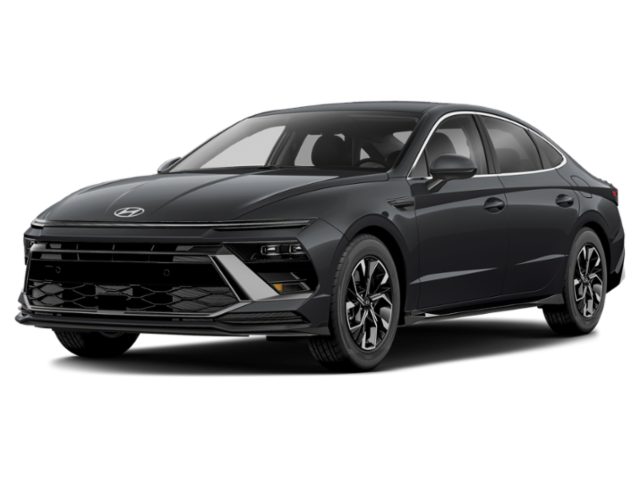
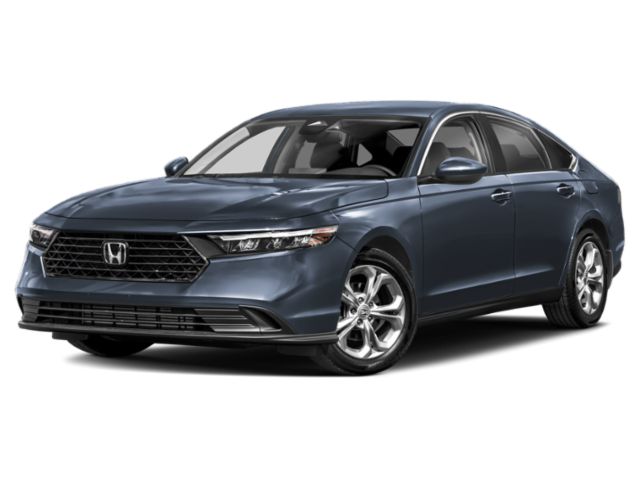
Also, the K5 doesn't offer a hybrid powertrain option. So, once the Chevy Malibu and Subaru Legacy vanish from showrooms, the K5 will be one of only two midsize cars that can't crack the 40 mpg barrier (the Nissan Altima is the other). If an electrified powertrain is what you want, your choices are the Honda Accord, Hyundai Sonata, and Toyota Camry.
Christian Wardlaw is a veteran automotive journalist with 30 years of experience in the field and has held automotive editorial leadership positions at Edmunds, JD Power, and The New York Daily News. Today, Chris owns a content agency called Speedy Daddy Media, and in addition to JDPower.com, his work appears on Capital One Auto Navigator, CarGurus, and Edmunds.