111
94
300
No data
Electric
All Wheel Drive
The 2025 Cadillac Optiq is the luxury automaker’s all-new electric compact crossover SUV. With the announced departure of the gas-powered XT4 crossover, the Optiq will be the brand’s smallest and most affordable SUV model, at the same time serving as the entry point to Cadillac electric vehicle (EV) ownership.
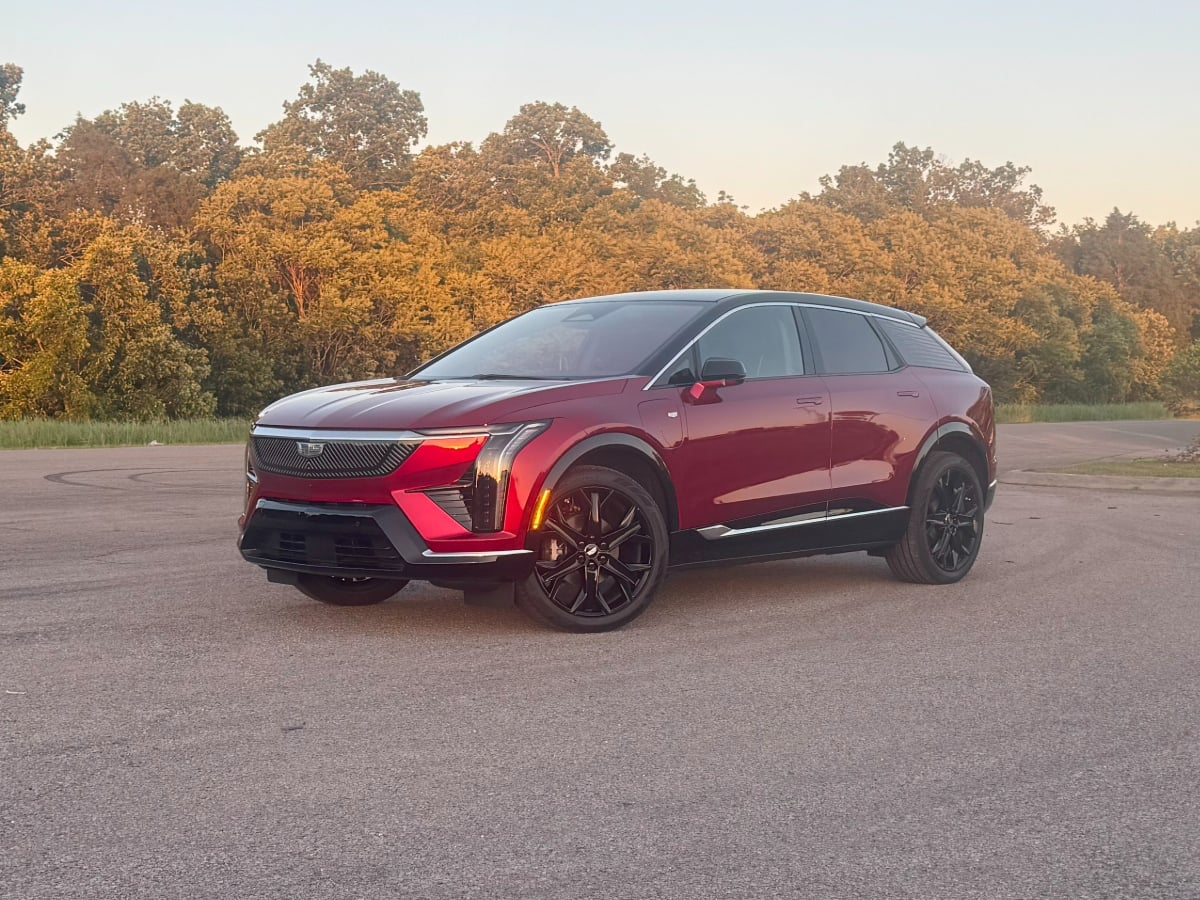
Photo: Jeff Youngs
Compact SUVs constitute a significant portion of the U.S. auto market. Therefore, automakers must establish a presence, not only to attract new buyers but also to retain them by familiarizing them with the brand and its other offerings. The Optiq also serves as a mobile showcase for several technologies, including its 33-inch LED driver information and infotainment display, AKG Studio audio system, and Super Cruise hands-free driving-assistance system.
The 2025 Cadillac Optiq is a two-row, five-seat compact crossover SUV with standard dual-motor all-wheel drive (AWD). It’s available in Luxury and Sport trim levels, with sub-trims 1 and 2 for each. Pricing starts at $54,390 for the Luxury 1 and increases to $57,090 for the Sport 2, plus the destination charge.
For this 2025 Optiq review, Cadillac provided a test vehicle equipped with Luxury 2 trim and the following options:
The test vehicle’s manufacturer's suggested retail price (MSRP) was $62,410, including the $1,495 destination charge to ship the SUV to your local dealership from the Ramos Arizpe, Coahuila, Mexico, assembly plant.
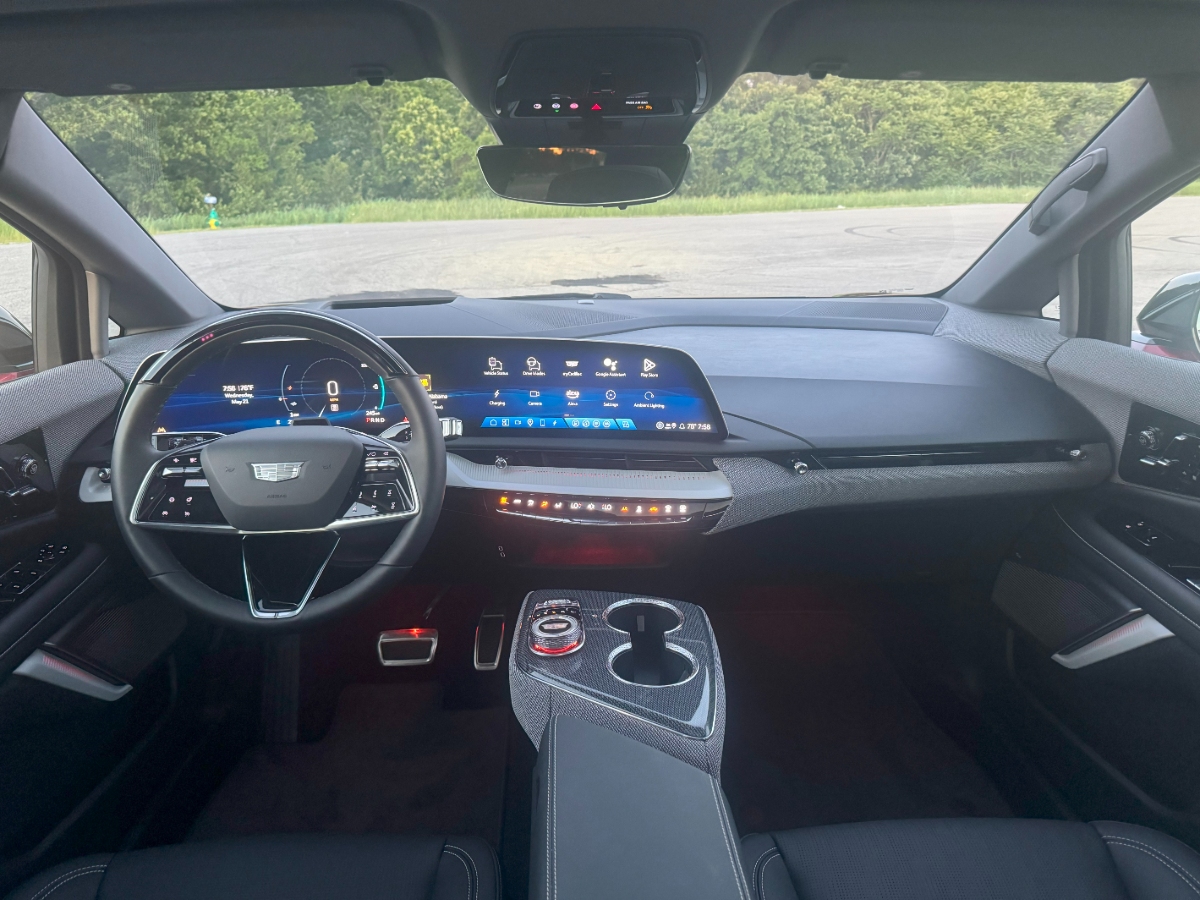
Photo: Jeff Youngs
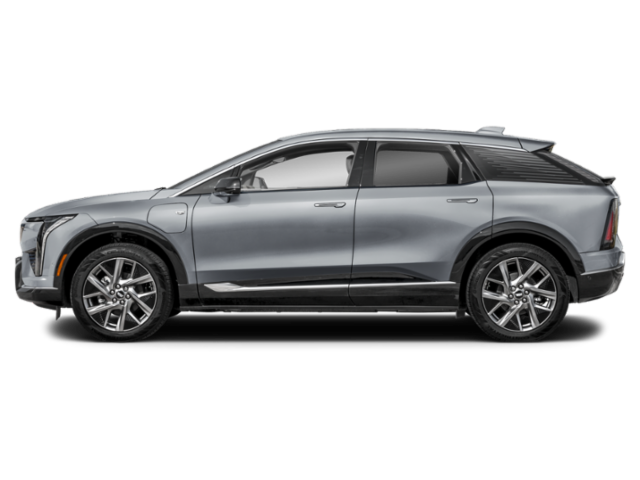
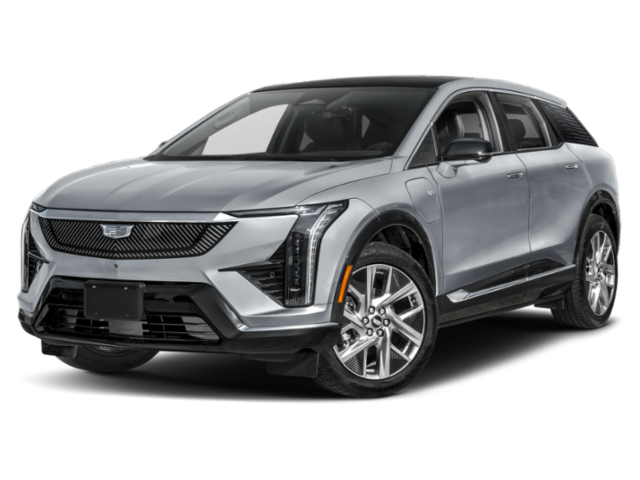
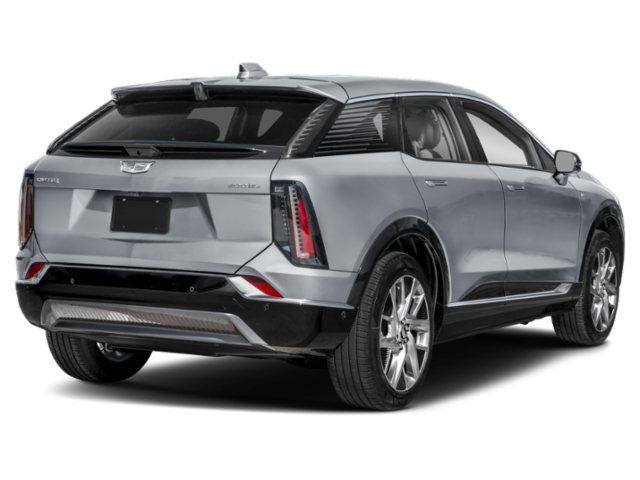
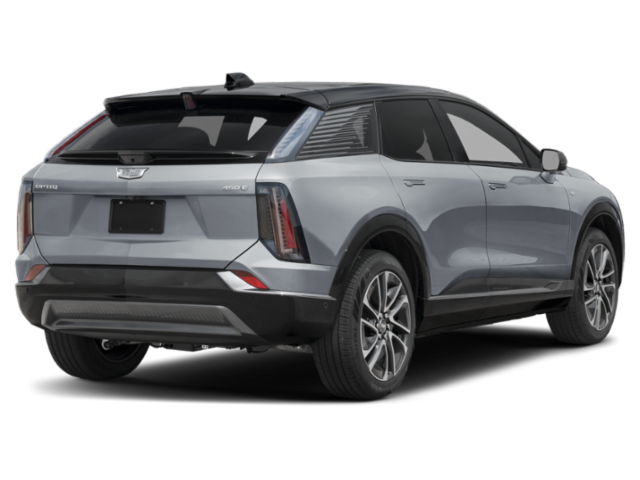
The Optiq is instantly recognizable as a Cadillac because its exterior design strongly resembles the brand’s other electric SUVs, including the Lyriq, Vistiq, and Escalade IQ. With its signature grille and crest logo, sharp body lines, and distinctive taillight design, there’s no mistaking the Optiq for anything but a Cadillac.
A popular feature among luxury models, welcome lighting greets you as you approach the Optiq. Meanwhile, the available puddle lamps and illuminated door sills add a premium touch.
Getting into the Optiq is easy. As a crossover SUV, its hip-point height makes it easy to slide in. Although the Optiq is a compact SUV, its cabin feels spacious and open. The power-adjustable driver and front passenger seats are heated and ventilated, and the outer rear seats are also heated. Finding a comfortable driving position is easy.
Additionally, I found there was plenty of legroom in the back seat with the driver’s seat set to my preferred position. Indeed, Cadillac claims the Optiq offers a segment-leading 37.8 inches of rear-seat legroom. And, with no driveshaft creating a hump that cuts into legroom, even the rear center seating position offers decent space.
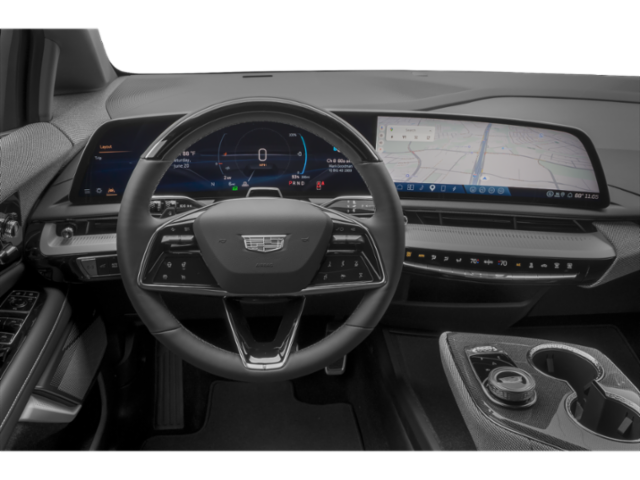
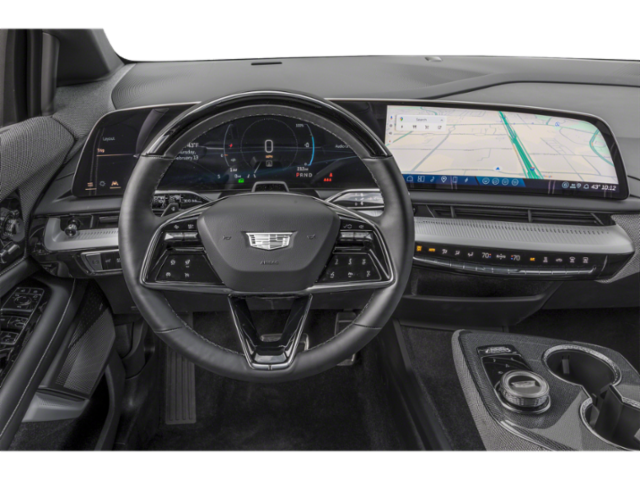
To my hands, the Optiq’s steering wheel rim felt slightly thicker than average but had a smaller diameter, giving it a sporty feel. Unlike some competitors, clear markings made it easy to identify and operate the buttons on the wheel for various vehicle functions and settings, reducing driver distraction.
The Optiq features a sleek, modern cabin that remains easy to operate. It's not quite minimalist, but it's simple. That’s not a bad thing. One of the standout interior features I especially liked was the 33-inch curved LED display, which combines driver instrumentation and the infotainment interface behind a single piece of glass.
I also liked the dedicated row of climate and seat heating and cooling controls located beneath the screen. However, I didn’t love the small, twist-to-adjust air vent controls, which seemed unnecessarily complicated and were somewhat difficult to figure out and operate.
Regarding interior materials, you expect a certain level of quality in a Cadillac, and the Optiq doesn’t disappoint. Although the Optiq is Cadillac’s entry-level EV, the automaker didn’t cut corners here, blending high-quality soft-touch materials on the door panels with harder, carbon fiber-look inserts, seamlessly integrating them into the dashboard and center console areas. The light and dark gray colors in the test vehicle’s Noir interior complemented each other nicely. Overall, it’s an appealing presentation.
According to Cadillac, the Optiq offers a segment-leading 26 cubic feet of cargo space behind the second row of seats and 57 cubic feet with the rear seats folded down. However, take this with a grain of salt. Loading a large shopping cart full of items from the local big-box store will test your spatial awareness and packing skills, but the standard hands-free liftgate makes it easier to access the space.
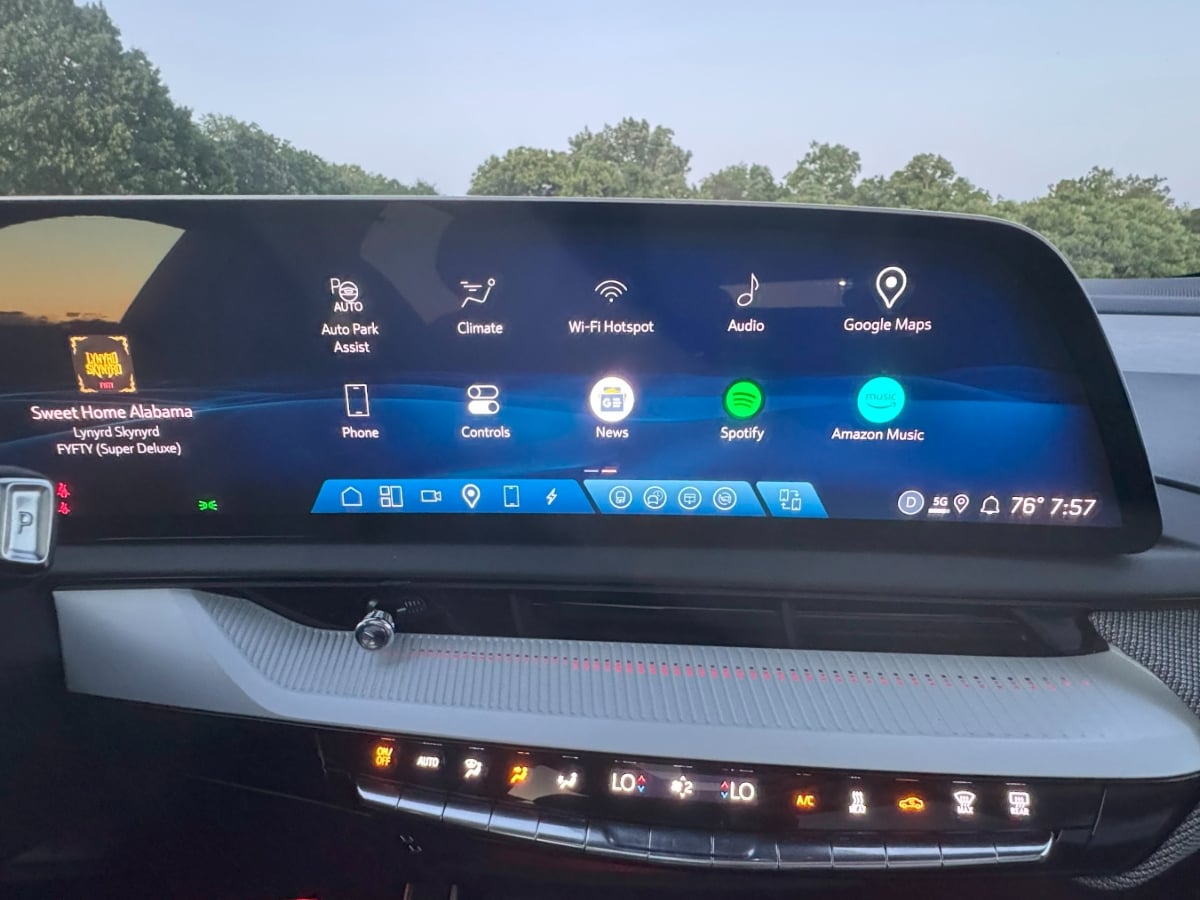
Photo: Jeff Youngs
The 2025 Cadillac Optiq features a standard Google Built-in infotainment system, displayed on the right side of the 33-inch LED screen. Features include:
The large LED display screen features sharp graphics, intuitive icons, and easy navigation. Its overall size provides ample space to display apps along with a small, static row of vehicle controls at the bottom, while the screen’s 9K resolution provides crisp, clear graphics.
Connecting a smartphone wirelessly to the system is simple; however, you must also sign in to your personal Google account to unlock its full features. Otherwise, you might face a frustrating experience. Initially, I attempted to use the system without logging in, but I soon gave up when I couldn't find nearby charging stations. Logging in quickly fixed that issue.
Now logged in, I found the Google Assistant to be very capable, successfully understanding all my requests and providing the desired results for audio, climate, and seat controls. Keep in mind, however, that to use certain music-streaming platforms, you need to tap on the Google Play icon and download your preferred apps. The system also delivered the local weather forecast, provided GM’s stock price for that day, and gave the correct answer when I asked how much horsepower the Optiq has.
One issue I encountered was that the case for my iPhone 15 Pro Max wasn’t compatible with the wireless charger. It turned out the case was too thick and prevented my phone from charging. Removing the case fixed that, but created another problem. Without the case providing some grip to keep the phone on the charging tray during sharp turns, my phone became a projectile, landing on the front passenger floorboard. Bottom line: You might need a new phone case to ensure your phone charges properly.
Despite all that goodness, the Optiq’s infotainment system does not support Apple CarPlay and Android Auto smartphone mirroring. Despite Google Built-in’s vast capabilities, not offering Apple CarPlay and Android Auto is a risky move for Cadillac, as car buyers have grown accustomed to having those platforms accessible through their vehicle’s infotainment systems. Ultimately, time will tell if this strategy backfires on the company.
If the lack of Apple CarPlay and Android Auto is a buzzkill for you, the standard 19-speaker AKG premium audio system with Dolby Atmos technology is a nice consolation prize. Needless to say, it sounded amazing across a variety of music genres, including classical, pop, rock, country, and reggae.
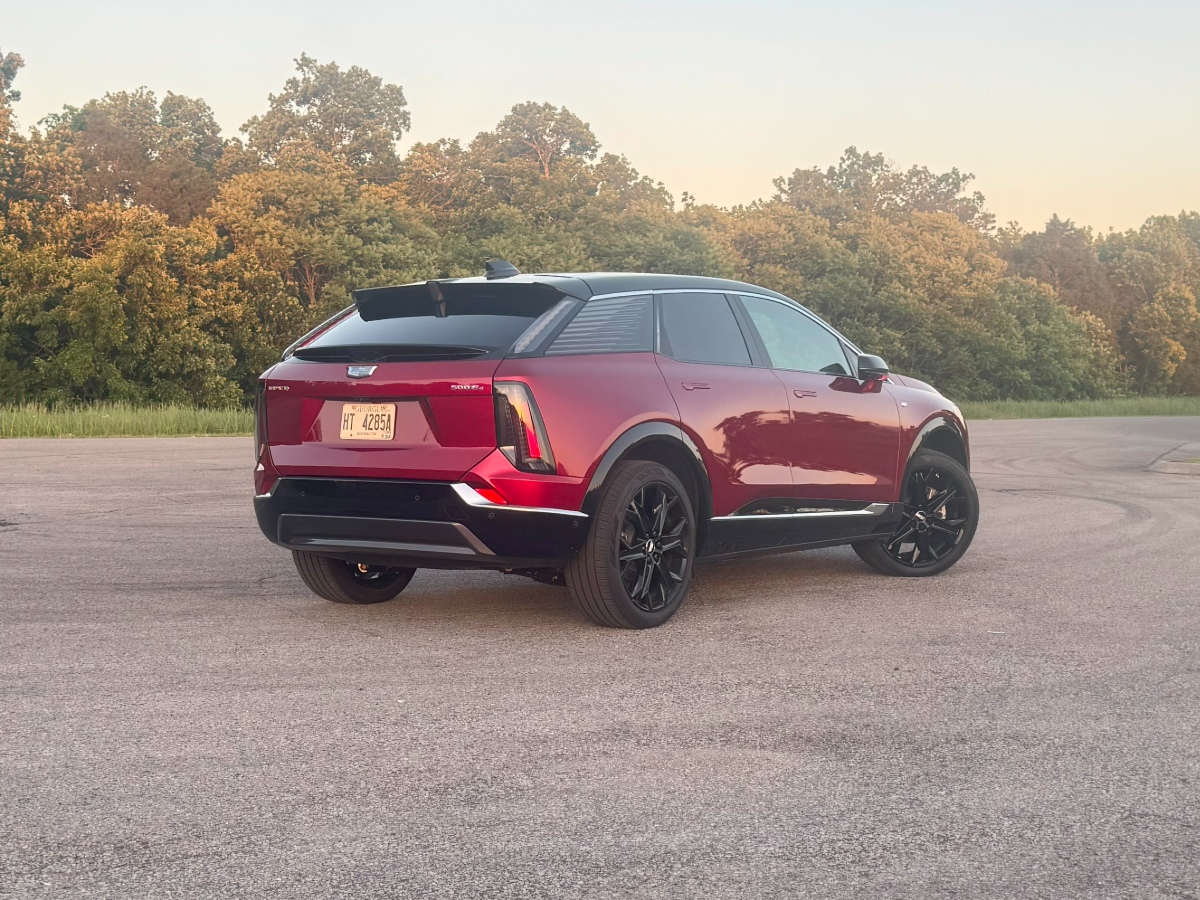
Photo: Jeff Youngs
The Optiq’s dual-motor setup—one at the front and one at the rear axle—delivers AWD performance. Powered by an 85-kilowatt-hour (kWh) battery pack, the system produces 300 horsepower and 354 pound-feet of torque. Four drive modes—Tour, Sport, Snow/Ice, and My Mode—allow owners to tailor their driving experience to suit their specific needs.
According to the Environmental Protection Agency (EPA), the Optiq gets 103 miles per gallon equivalent (MPGe) in combined driving while consuming 33 kilowatt-hours of energy per 100 miles (kWh/100). The estimated range is 302 miles. During my test, the trip computer showed an efficiency of 2.7 miles per kilowatt-hour, which translates to 37 kWh/100—slightly worse than the EPA’s estimate, but still in the ballpark.
Using a 150-kilowatt (kW) DC fast charger, Cadillac says you can add 79 miles of range in about 10 minutes. Using a Level 3 charger, I charged the Optiq from 30 to 100 percent in a couple of hours. At its peak, the Optiq regained 133 miles of range per hour. The charging rate slowed significantly as I approached 100 percent, dropping to just 37 miles of range per hour. When fully charged, the SUV showed a range of 302 miles, matching the EPA’s figure.
For home charging, the available GM PowerShift wall charger can add 55 miles of range per hour at a maximum rate of 19.2 kW. Of course, you can also use the dual-level charge cord to plug into a three- or four-prong household outlet, but only if you’re desperate. Additionally, bi-directional Vehicle-to-Home (V2H) charging allows you to power certain household appliances during a power outage or emergency.
Overall, the Optiq offers capable, if not exhilarating, driving dynamics (for peak performance, check out the upcoming 2026 Optiq-V, which boasts 519 hp). Despite the confident grip provided by AWD, off-the-line acceleration is accompanied by a hint of torque steer, though it is minimal. Most drivers won’t notice or mind, but you can customize the driving mode to influence how the Optiq behaves.
Once underway, the Optiq delivers the smooth ride and quiet cabin expected of a modern Cadillac. While ride quality is generally excellent, the SUV feels a bit “heavy” during around-town driving. That’s not a criticism; most EVs feel heavy because, frankly, they are. Cadillac doesn’t provide a curb weight for the Optiq, but online sources estimate the SUV’s weight at nearly 5,200 pounds. Despite this, the SUV feels well-planted and exhibits minimal body roll, likely due to the heavy battery pack being mounted low in the chassis.
On the highway, the Optiq’s ride quality shines in Tour mode. Wind and tire noise are minimal, and the brakes work smoothly, gently slowing the SUV without any fuss. Regenerative braking restores energy to the battery, and one-pedal driving makes the daily drive more fun. You can adjust the regen level to suit your preferences.
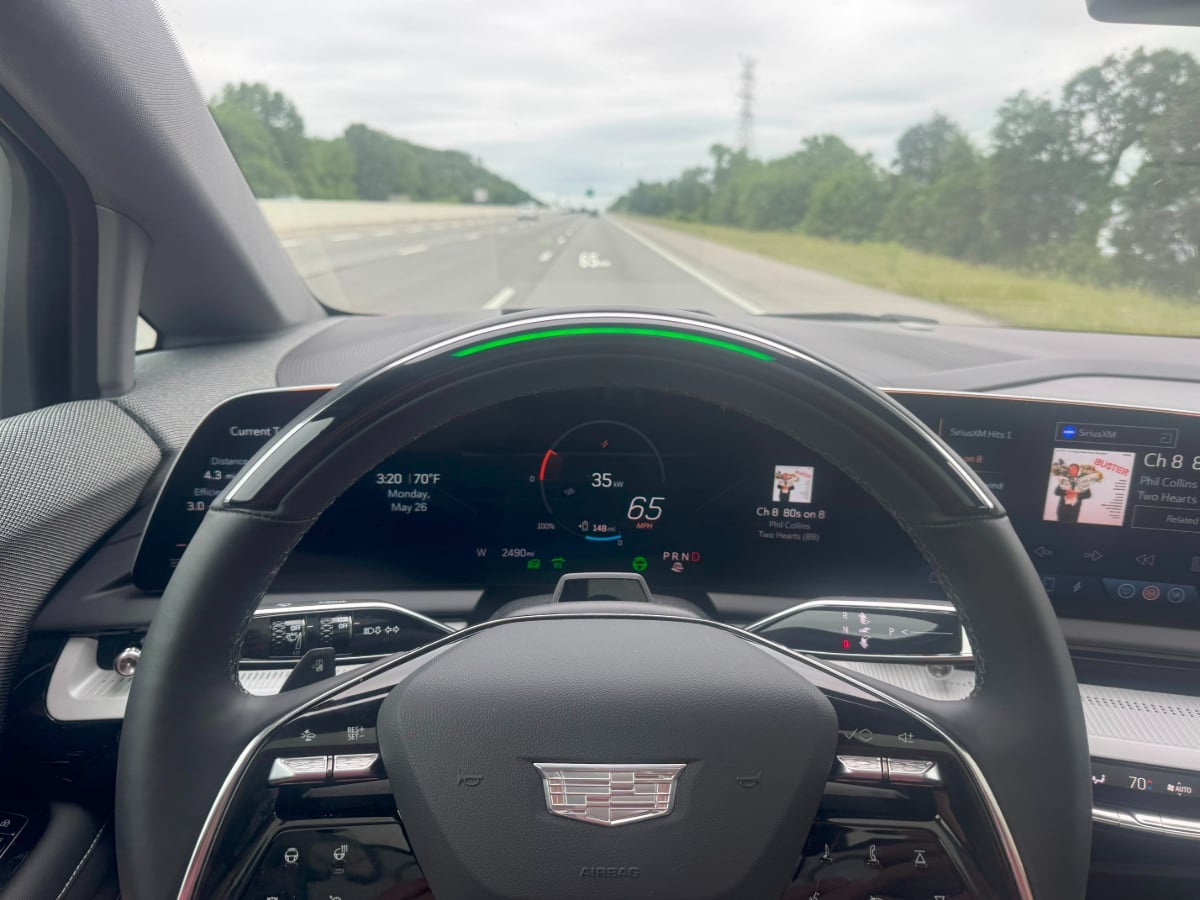
Photo: Jeff Youngs
As you would expect, the 2025 Cadillac Optiq includes a comprehensive list of standard advanced driver assistance systems (ADAS). Features include:
Additionally, the Optiq features the following ADAS:
While, for the most part, the various ADAS didn’t interfere with the drive, there were several instances of what I consider false alarms. While cresting a hill on a curve on a two-lane highway, a large brick mailbox along the roadside triggered a collision warning. Also, while backing down a steep driveway, the rear-collision alert system activated as the SUV’s bumper approached the street.
The most startling event, however, happened in a parking lot. As I was moving forward, perpendicular to a parked car in front of me with the plan to reverse into the parking space next to it, the Optiq’s emergency braking system, unaware of my intentions, activated to prevent what it thought was an imminent collision. The sudden brake application not only startled me but also caused a literal pain in my neck. This was a clear reminder that, while ADAS can prevent many accidents, they can’t read your mind, so drive accordingly.
On a positive note, the Optiq’s standard Super Cruise technology worked perfectly. Activated by a button on the steering wheel, Super Cruise offers hands-free driving on compatible highways, provided the driver remains alert. Using adaptive cruise control and lane-centering technology, Super Cruise keeps a set distance behind vehicles ahead. It can even change lanes automatically, then return to the original lane after passing slower vehicles.
As of this writing, neither the National Highway Traffic Safety Administration (NHTSA) nor the Insurance Institute for Highway Safety (IIHS) has rated the crashworthiness of the 2025 Cadillac Optiq.
According to the JD Power 2025 Initial Quality Study (IQS), the Acura RDX ranks highest in the Compact Premium SUV segment. The Lexus NX and the BMW X4 are the next-highest-ranked models.
According to the JD Power 2025 Automotive Performance, Execution and Layout (APEAL) Study, the BMW X4 ranks highest in the Compact Premium SUV segment. The Porsche Macan and the Jaguar F-Pace are the next-highest-ranked models.
According to the JD Power 2025 Electric Vehicle Ownership (EVX) Study, the BMW iX ranks highest in the Premium Battery Electric Vehicles segment. The BMW i4 and the Rivian R1S are the next-highest-ranked models.
Other 2025 Optiq competitors include EVs such as the Audi Q4 E-tron, Genesis Electrified GV70, Mercedes-Benz EQB, and the plug-in hybrid Volvo XC60.