111 - 114
93 - 94
215
1 speed, Automatic
Electric
All Wheel Drive
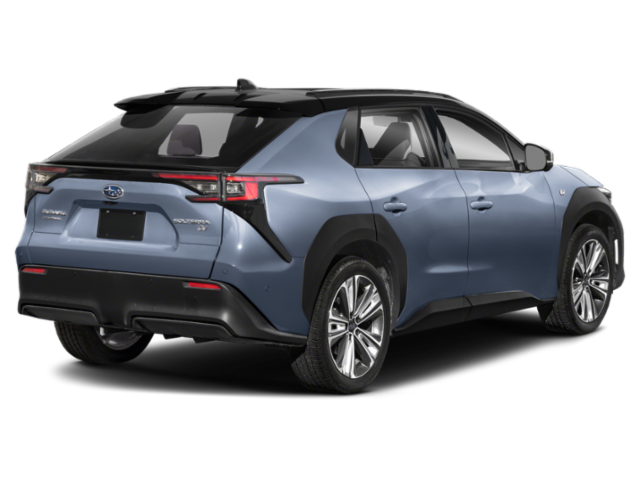
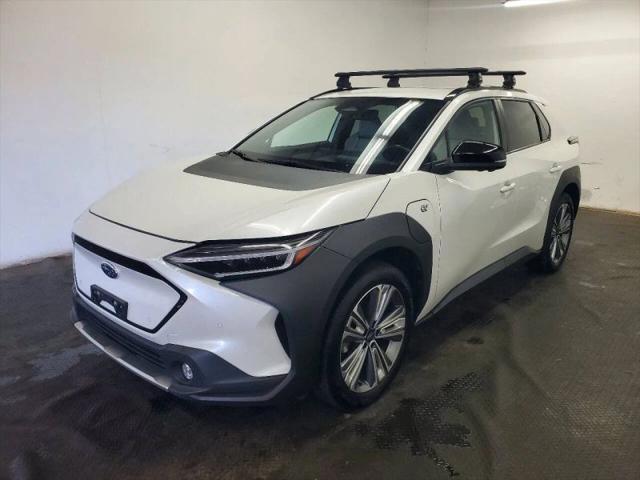
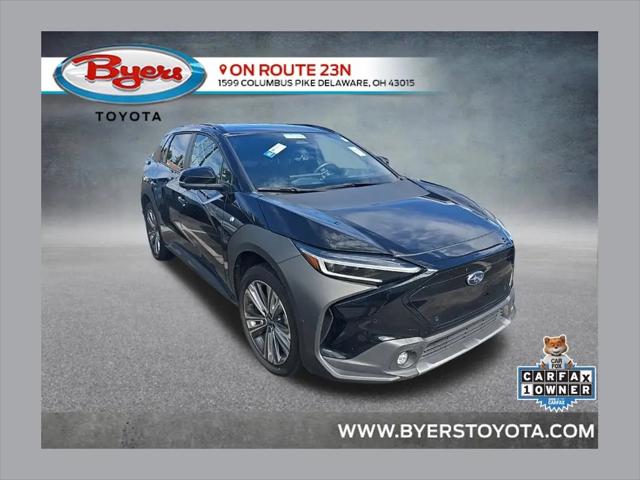
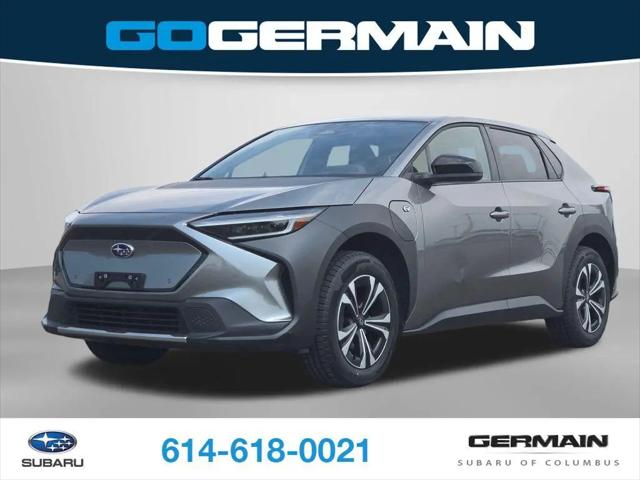
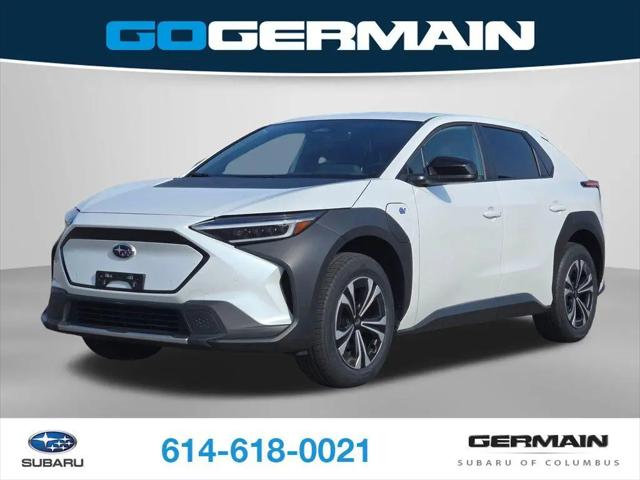
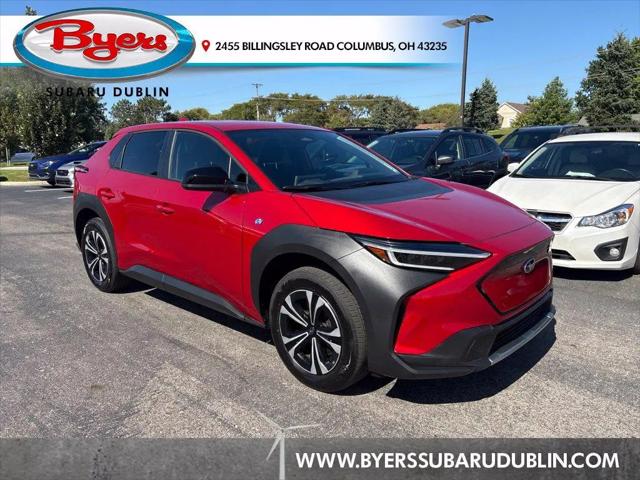
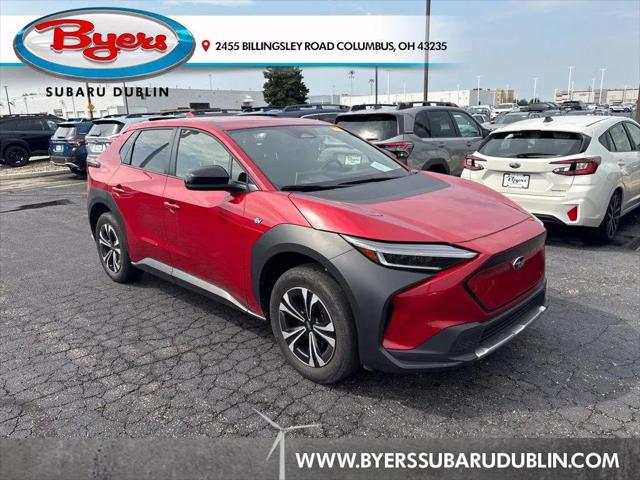
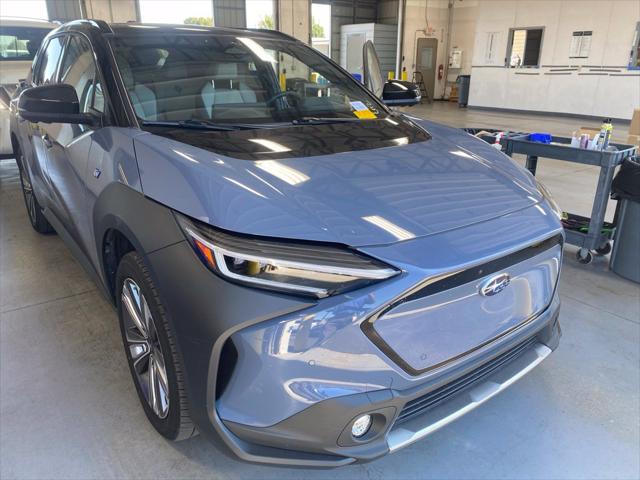
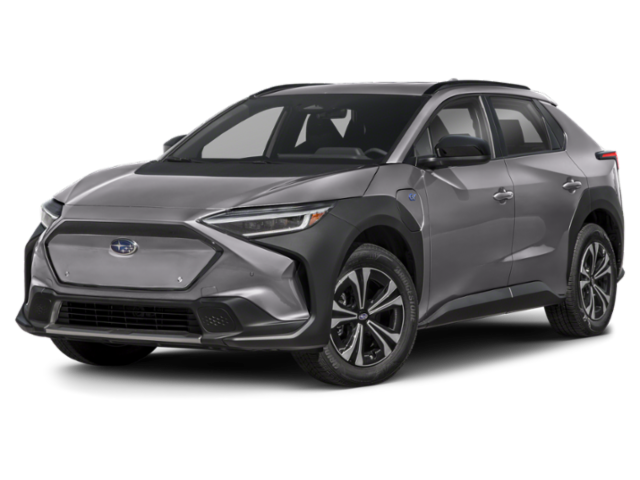
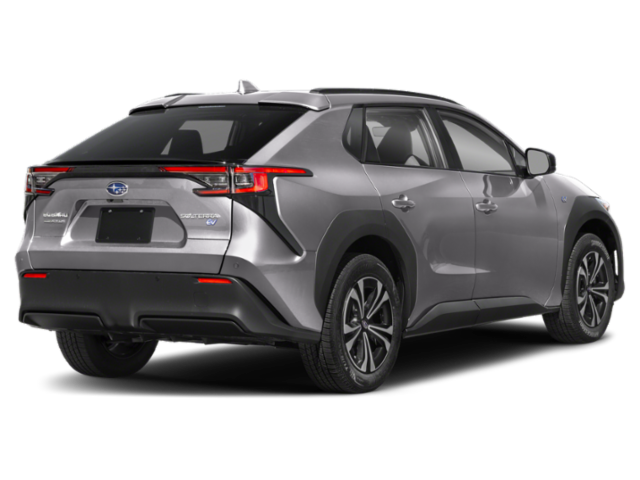
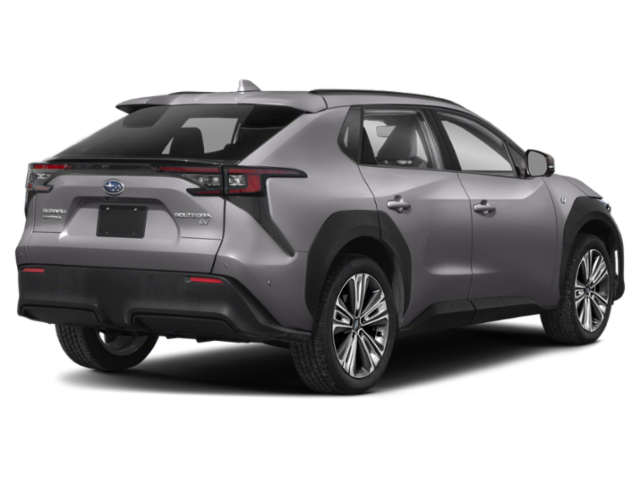
In 2024, most mass-market automotive brands offer an electric compact crossover SUV. Subaru's entry is called the Solterra, and it went on sale in 2023.
Developed in partnership with Toyota, which sells its version of the electric SUV as the bZ4X, the Solterra has traditional Subaru traits such as standard all-wheel drive, a raised ground clearance, and software for improved traction in snow, mud, and dirt. However, the Solterra lacks the powerful acceleration people expect from an EV and offers no more than 227 miles of driving range on a fully charged battery.

Photo: Christian Wardlaw
With the 2024 Solterra, Subaru addresses neither of those faults. However, the automaker has improved battery charging time (including in cold weather) and made several other safety, technology, comfort, and convenience changes.
Considering the JD Power 2024 U.S. Electric Vehicle Experience (EVX) Ownership Study finds public charging station availability and use to be the least satisfying aspect of owning an EV, the improved charging capability is an essential upgrade to Subaru's electric SUV. That's true even for the 83% of EV owners who recharge their EVs at home.
The 2024 Subaru Solterra is available in Premium, Limited, and Touring trim levels, each equipped with a dual-motor electric drive system. Prices range from $44,995 to $51,995, not including the $1,345 destination charge.
In the following sections, our independent expert analyzes a 2024 Subaru Solterra Touring without any options. The test vehicle's price was $53,340, including the $1,345 destination charge to ship the electric SUV from the assembly plant in Aichi Prefecture, Japan, to your local dealership. The Solterra is ineligible for a $7,500 federal income tax credit, but Subaru offers an incentive in that amount to make lease payments more affordable.

Photo: Christian Wardlaw
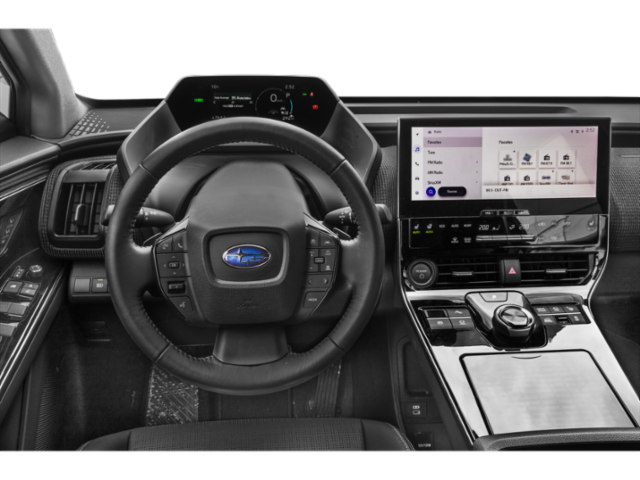
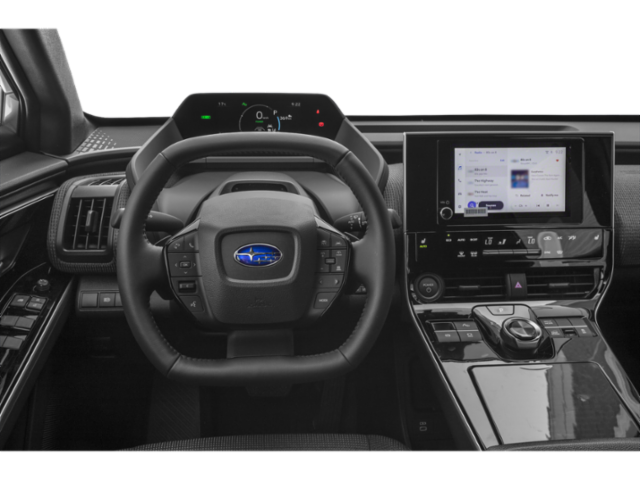
Like most crossovers, the 2024 Subaru Solterra sits high off the ground, making it easy to get into and out of the SUV. Once settled into the driver's seat, you'll find an unusual fabric-trimmed dashboard, a bridge-style center console with a dust-magnet gloss black surface, and a digital instrumentation display located high and near the base of the windshield. The "squircular" steering wheel shape is new for 2024, improving the driver's visibility of the data panel behind it.
The design is busy, promising to require lots of extra time to keep clean. In addition, it's easy to forget about the sizable floor storage tray under the console surface or the second cupholder beneath the center armrest. A hidden smartphone charger lives under a panel on the top of the console, its lid opening toward instead of away from occupants, adding awkwardness.
If you're familiar with modern Toyotas, you'll spot evidence of Subaru's collaboration with that automaker to create the Solterra. From the switchgear and materials to the infotainment system and driving assistance technologies, the Solterra is as much a Toyobaru as the BRZ sports car is. That's not a criticism. The in-car tech and Toyota-influenced EyeSight collection of safety features are better for it.
Drivers and passengers enjoy power-operated front seats and, with Touring trim, they include heating and ventilation. They're comfortable, and outward visibility is excellent. The Solterra Touring also has a heated steering wheel and a camera-based rearview mirror that enhances the view to the rear in certain situations.
The test vehicle's heated rear seats offered plenty of room for two adults (or three for a short trip). The back seat is comfortable, and air conditioning vents and USB charging ports help to keep passengers happy.
In addition to the floor storage tray, the Solterra has a deep bin under the center armrest. It provides two-tier storage, the bottom reserved for the items you'd typically carry in a glove compartment, which the Solterra lacks.

Photo: Christian Wardlaw
Subaru lifts the Solterra's infotainment system straight out of the Toyota parts bin, so it's a lightly reskinned version of the latest Toyota Audio Multimedia setup. And you know what? Compared to the Starlink systems in most other Subarus, it offers a superior user experience and interface.
Standard features with Premium trim include:
Upgrade to the Limited or Touring for:
Unlike the Starlink infotainment systems Subaru uses in most of its other models, the larger display in my test vehicle features landscape instead of portrait orientation. That emphasizes the width of the interior, making the Solterra seem more spacious inside.
In addition, the Solterra's infotainment system has more sophisticated graphics and features than Starlink. Here's another plus: the Solterra has a Harman Kardon rather than the JBL premium sound system in Toyotas. To my ears, Harman Kardon components produce much better sound than muddier JBL speakers.
I had no trouble pairing my iPhone to the Solterra's Bluetooth, using Apple CarPlay, or streaming music. Unfortunately, the test vehicle's connected services weren't active, so I could not perform a voice recognition test. In my experience, in Toyota and Lexus models with the same underlying technology, the cloud-based digital voice assistant has proven capable, if not flawless. But then, you can say the same thing about Apple Siri or Google Assistant.

Photo: Christian Wardlaw
Subaru equips every 2024 Solterra with a dual-motor electric drive system making 215 horsepower and 249 pound-feet of torque. This year, the 72.8-kilowatt-hour (kWh) battery recharges faster, particularly in cold weather, thanks to improved battery conditioning.
Subaru says recharging the Solterra at home will take about nine hours when using a 32-amp, 240-volt Level 2 charging station. At a DC fast charger, expect to wait 35 minutes to get from 10 to 80 percent, assuming ideal charging conditions.
The JD Power 2024 U.S. Electric Vehicle Experience (EVX) Ownership Study found public charging station availability is the least satisfying aspect of EV ownership, and it's getting worse. So, it's good that Subaru has reduced the Solterra's recharge time.
I stopped at a charging station equipped with a bank of four 150-kilowatt (kW) chargers, where someone in a Ford F-150 Lightning pickup truck had accrued 90 minutes of idle time fees and counting. About 15 minutes later, the Ford's owner came out, unplugged, and left, either oblivious to or unconcerned about the idle-time charge that would hit his Electrify America account. Either way, it's bad etiquette.
I pulled the Solterra into the newly vacant slot with a 27-percent charge remaining and plugged the SUV in. The charger took a long time to recognize the car and start the electricity flow. My app told me charge initiation had failed, but the charger whirred to life anyway, its screen telling me it would take two hours to charge the Subaru fully. Satisfied the juice was flowing, I walked to the nearby shopping center to run an errand.
After 20 minutes, the Solterra's battery had reached 60 percent. My app told me the average power delivery rate from the 150-kW charger was 60 kW. Not only that, the cost of the electricity was 48 cents per kWh. Meanwhile, an argument broke out in the line of EVs waiting for a charging station, with people out of their cars yelling at each other.
Given my experience, a home charging station is worth installing at your home if you buy an EV. That way, you can recharge at night when rates are lower without arguing with strangers about it.
As for the Subaru Solterra driving experience, I'd call it unremarkable. Like other EVs, it provides all of its torque the moment you step on the accelerator pedal, so it launches from a stop with authority and pushes you into your seat. But it's merely quick where many rivals are legitimately fast, and as your speed rises, the Solterra is less responsive to right-foot input.
The Solterra is quiet in town, provides excellent outward visibility, and feels structurally solid. However, it does not cushion speed bumps or humps, so go slow. On the highway, despite its acoustic sound-absorbing windshield, more road and wind noise enters the cabin than expected.
Handling on a mountain road is secure, and the brake pedal feels good underfoot, allowing you to drive the Solterra with confidence, if not joy. Occasionally, the undulating pavement produces odd body motions, but like most EVs, the Solterra displays a flat cornering attitude. The steering is accurate but unrewarding.
I did not take the Solterra off-roading. Recent rainstorms had created plenty of mud, but the test vehicle's all-season tires did not inspire me to tackle any trails in those conditions.

Photo: Christian Wardlaw
In the Solterra, Subaru's EyeSight collection of advanced driving assistance systems (ADAS) is a renamed version of Toyota Safety Sense 3.0. The package contains:
In addition, the Solterra's EyeSight package includes a Lead Vehicle Start Alert system. It notifies a distracted driver when traffic ahead starts moving, but it won't do any good if you're the first in line at a traffic light.
EyeSight also has Proactive Driving Assist, a Toyota technology that automatically applies subtle braking and steering to avoid obstacles and maintain safe following distances to vehicles ahead even when the adaptive cruise control isn't active.
Lastly, the Solterra adds standard DriverFocus technology for 2024. It monitors drivers for distraction and alerts them to pay closer attention when necessary. Unfortunately, if you drive one-handed, you'll frequently block the camera watching you, causing unnecessary warnings.
So, how did EyeSight work on my evaluation loop? Mostly well, but the adaptive cruise control and lane-centering assistance systems are a liability in curves. The Solterra slows down too much due to its automatic curve-speed adjustment feature, and the steering picks fights with the driver, forcing a manual override of the software's inputs.
In addition, when the lane-centering assistance deactivates for whatever reason, the driver hears an audible ding but doesn't see a corresponding message on either of the Solterra's display screens explaining the ding. There are icons on the digital gauge panel that illuminate when the ADAS is active, but they're crammed together in a small space, making them hard to reference at a glance. Ultimately, I noticed a dimmed lane-centering assist icon after a ding, which is how I determined what the alert was for.
The Solterra's Proactive Driving Assist didn't bother me much, so I kept using it. I also think some drivers will like the front cross-traffic alert system. However, during a week of driving, it issued alerts so many times during right turns on red that it trained me to ignore the warnings.

Photo: Christian Wardlaw
Open the Solterra's liftgate, and you'll find 23.8 cubic feet of cargo space behind the back seat. Remove the cargo cover, and you can slide in full-size suitcases on their sides. In addition, there are small storage areas under the load floor where you can stash the charging cable and other items. Fold the back seat down, and the Solterra can accept 63.5 cu-ft of cargo.
No, it doesn't. With Premium trim, it can travel 227 miles on a full battery. The Limited and Touring have range estimates of 222 miles.
As of this writing, the vehicle in the Solterra's segment offering the longest range with all-wheel drive is the Kia EV6 Long Range AWD. It beats the Subaru by 55 miles, is also more efficient than the Subaru at 31 kWh/100 mi compared to the Solterra at 32 kWh/100 mi, and recharges faster thanks to its compatibility with 800-volt DC fast charging stations.
Yes, it is. In crash tests performed by the National Highway Traffic Safety Administration (NHTSA), the Solterra earns a five-star overall rating and five stars in most individual assessments. The Insurance Institute for Highway Safety (IIHS) says the 2024 Solterra is a Top Safety Pick.
The Solterra Premium is the most affordable version of this EV, with a starting price of $44,995. The Solterra Touring is the most expensive version, at $51,995. Naturally, the Solterra Limited lands in the middle at $48,495. In addition, you'll need to add the destination charge of $1,345.
In the JD Power 2024 U.S. Electric Vehicle Experience (EVX) Ownership Study, the Ford Mustang Mach-E ranks highest among compact electric crossover SUVs. The Kia EV6 and the Nissan Ariya are the next highest-ranked models. Other competitors to the 2024 Solterra include the Honda Prologue, Hyundai Ioniq 5, and Toyota bZ4X.

Photo: Christian Wardlaw
Changes to the 2024 Subaru Solterra should increase the EV's appeal. However, it needs more power or range, ideally both, to win a larger share of a growing pie. Without resolving those problems, the 2024 Solterra is a me-too player in America's most competitive EV segment.
Christian Wardlaw is a veteran automotive journalist with nearly 30 years of experience in test-driving vehicles. In addition to JDPower.com, his work has appeared in numerous new and used-car buying guides, newspapers, and automotive industry trade journals.