
If you're considering buying an electric vehicle (EV), there are two critical units of measurement that you'll need to know: kW (kilowatt) and kWh (kilowatt-hour). Understanding these two related units of measurement will tell you how capable an EV is in terms of overall power and performance, charging speed, and all-electric range, the three most important operational aspects of EV ownership.
Let's see how kW and kWh can help you decide which EV is right for you.

Photo Credit: Christian Wardlaw
Before we explore the relevance of kW and kWh to EVs, it's essential to know the broad definitions of each and the relationship between them.
The unit kW refers to the power produced from the flow of electricity from a source.
When you apply the element of time to kW, you get kWh, which refers to the total amount of energy accumulated for storage or used in operation:
Power (kW) x Time of Use (hours) = Energy Stored or Consumed (kWh)
In other words, if you run a 50 kW device for three hours, your energy consumption would be 150 kWh.

Photo Credit: Christian Wardlaw/Electrify America app
A kW is a unit of measurement that defines electric power. One kW is equivalent to 1000 watts of electricity. This measurement directly translates to the energy a device can output in one hour of use. The higher the kW rating, the more powerful the device. An everyday example is a 100-watt lightbulb that puts out more energy than a 60-watt lightbulb.
For EVs, the kW rating is relevant to charging speed and vehicle performance. The first correlates to the power rating of a charging station and the vehicle's onboard charger, while the second correlates to the power rating of the vehicle's electric motors. Each demands a separate examination.
How fast your EV battery recharges depends on the level of charger you are using.
Level 1 charging occurs at home through a standard 120-volt outlet and typically charges at a speed of 1-3 kW. Depending on the EV's battery capacity, it could take days to charge the vehicle entirely.
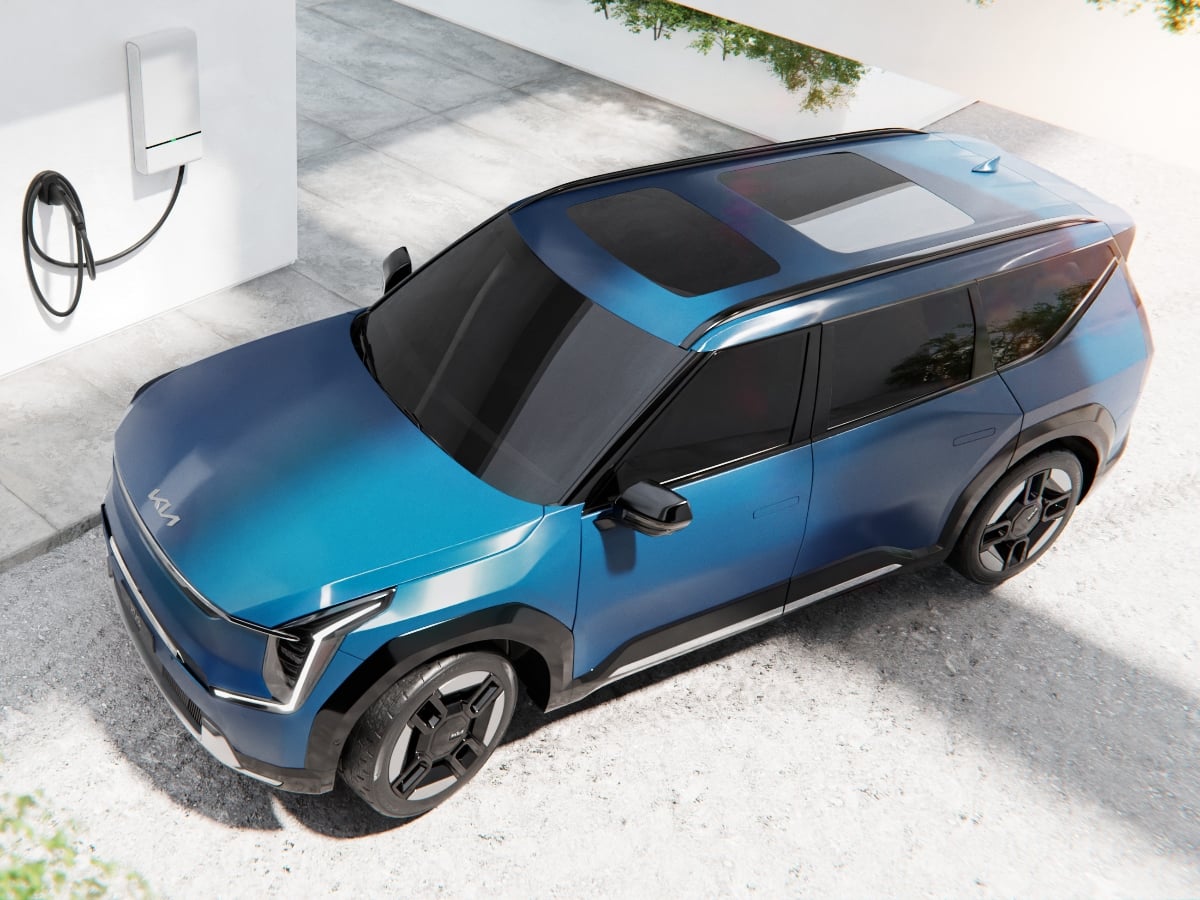
Photo credit: Kia Motor America
Level 2 charging is a much more practical solution, using either a home or public charging station. A Level 2 charger ranges from 7-19 kW of power and can charge most EV batteries in as little as six or as long as 12 hours.
However, with Level 2 charging, an EV's onboard charger comes into play. An onboard charger manages the amount of electricity that flows to the battery. Onboard chargers typically range from 6.6-11 kW, which limits the charging speed regardless of the charging station's power rating. The higher the onboard charger rating, the faster Level 2 charging can occur.
Pro tip: For the shortest Level 2 charging experience, get a vehicle with a high onboard charger rating and use a charger with a high power rating.
Level 3 DC fast charging is the quickest way to recharge an EV. A DC current circumvents the onboard charger and goes directly to the battery. A DC fast-charging station generally has a power rating of 50-350 kW and can typically charge a battery from 10 percent to 80 percent full in about 30 minutes. In some cases, depending on the vehicle and the charger, it can take less than 20 minutes or longer than 40 minutes.
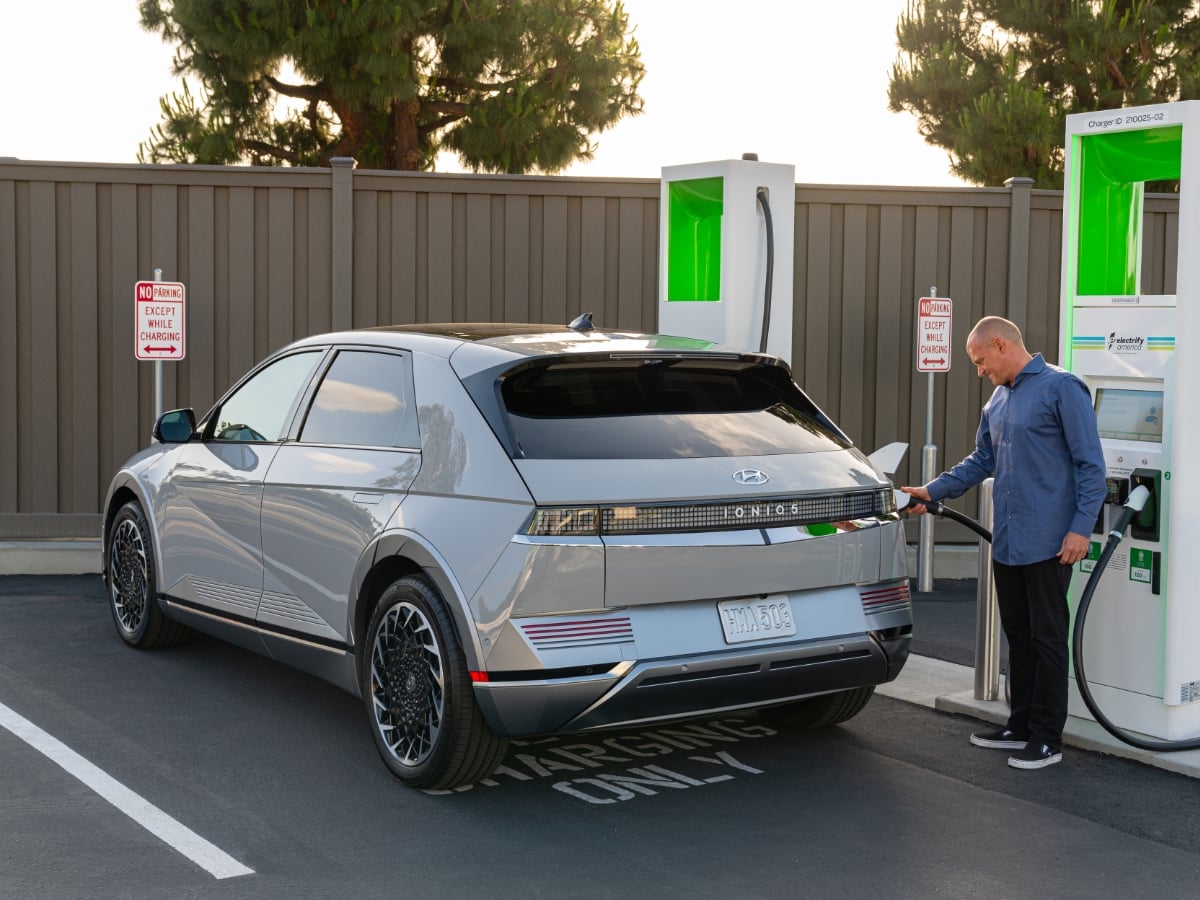
Photo credit: Hyundai Motor America
The exact DC fast-charging speed a vehicle can accept ranges from 50-350 kW. If you use a DC fast charger with 200 kW charging, but your vehicle has a maximum DC charging capability of 175 kW, the charging speed will be 175 kW. The same goes if you switch the kW figure between the car and the charger. The lower number is always the charging limit.
In the same way that an internal combustion engine (ICE) vehicle's performance depends on its engine's horsepower output, an EV's power results from the kW output of its electric motors. This figure varies widely depending on the model and the size of the car.
Compact EVs may have motors with outputs between 50-100 kW, while larger and high-performance EVs can be much higher. The higher the kW output of an electric motor, the more powerful it is. For example, the Porsche Taycan offers two electric motor powertrains. The one rated 300 kW is equivalent to 402 horsepower, while the one rated 320 kW makes 429 horsepower.
Keep in mind the higher kW rating also means greater energy consumption. If you have two vehicles with the same battery size but two different motors, the more powerful car may draw more power from the battery and, thus, provide a lower all-electric driving range.
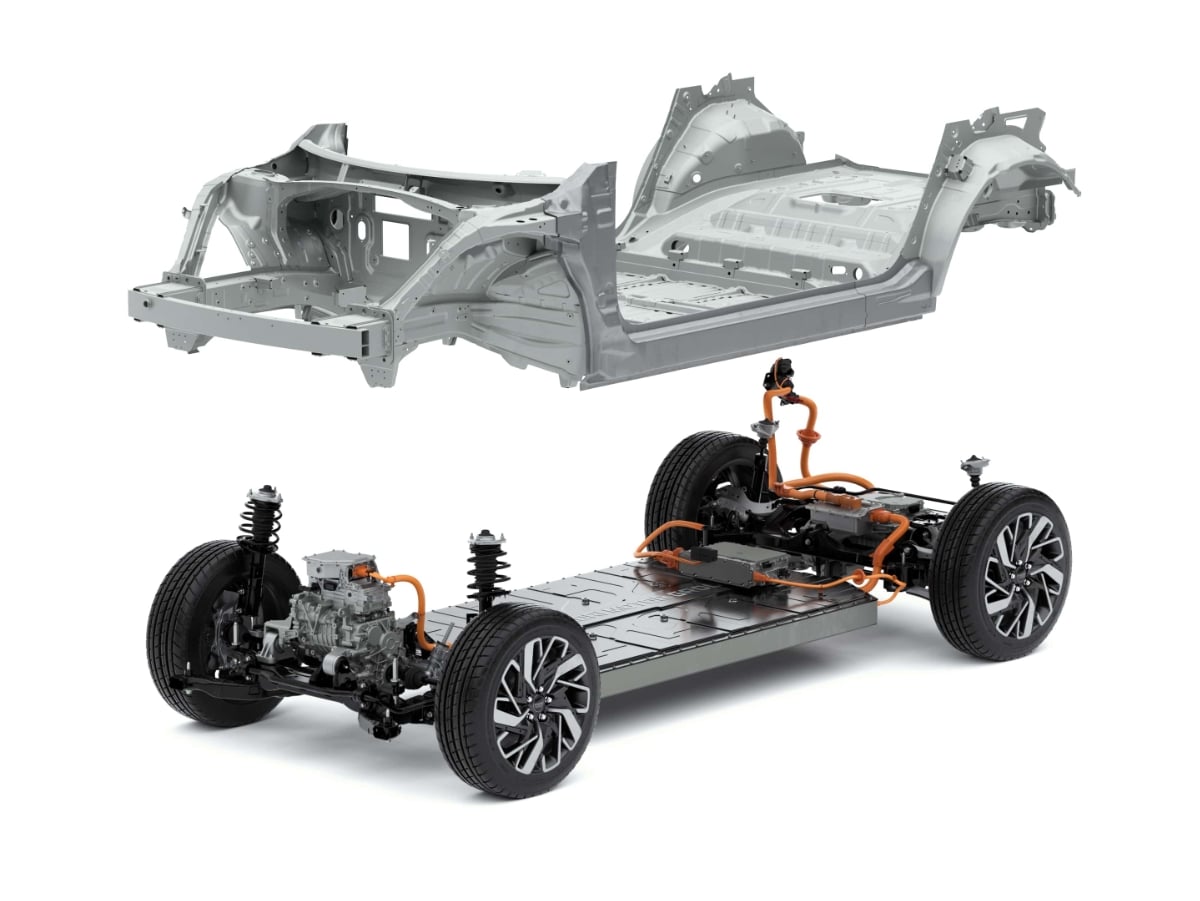
Photo credit: Hyundai Motor America
While kW measures power output, kWh is the capacity of an EV battery in terms of the amount of electricity consumed (or stored). It is a quantity of electricity, like a gallon of gasoline is a quantity of fuel. And just as a gas tank stores gallons of gasoline, an EV battery stores kWh of electricity that gets used up with every mile driven.
Since kWh refers to a specific amount of electricity, this measurement typically corresponds to how far an EV may travel on a fully charged battery. The larger the battery in kWh capacity, the more electricity it can store; the more electricity it can store, the longer the vehicle's range.
However, it is important to note that battery capacity alone does not determine an EV's all-electric range. Other factors, such as the kW power rating of the electric motor(s), whether it has two-wheel drive or all-wheel drive, aerodynamics, vehicle weight, driving style, and external conditions, such as road surface and weather, come into play.
With all things being equal, the kWh capacity of a battery can provide a good apples-to-apples comparison of range between EVs. Case in point, the Kia EV9 SUV offers two battery configurations: 76.1 kWh and 99.8 kWh. With RWD, the 76.1 kWh battery has an all-electric range of 230 miles, while the 99.8 kWh battery allows 304 miles of driving.
Based on that, if your EV uses about 25 kW of power every hour when you're driving it, the 76.1 kWh battery will last approximately three hours of driving until depletion. In contrast, the 99.8 kWh battery will last approximately four hours.
The measurement also plays a role in measuring the efficiency of an EV. Learn more about the Environmental Protection Agency (EPA) kWh/100 miles vehicle ratings.
When it comes to kW and kWh, it comes down to this:
Although there are always exceptions, these general rules will help shoppers better understand EV operation and ownership.
To learn more about electric vehicles, visit the JD Power Electric Vehicle Learning Center section of the website.
Jessica Shea Choksey is an experienced writer in the automotive field. In addition to JDPower.com, she was a correspondent for PBS's MotorWeek. Her work has also appeared in AutoTrader.


The Ford Transit is the automaker’s full-size cargo and passenger van offering, designed to serve a wide range of commercial and lifestyle applications. With 37 available configurations, the platform ...See More
Read the Full Article
The Chevrolet Tahoe is a full-size, three-row SUV with a standard V8 engine and available diesel power. Built on the same platform as the Chevrolet Silverado 1500 pickup, the Tahoe benefits from its ...See More
Read the Full Article
It is the end of the line for the Ford Escape. After 25 years as a fixture of Ford’s lineup, 2026 will be the compact SUV’s last model year.
Read the Full Article
The Colorado is Chevrolet’s midsize pickup. It ranks among the segment’s most capable trucks for payload and towing, and can be configured for both work and off-road adventures. For 2026, the ...See More
Read the Full Article