See answers to common EV questions, tax incentives, charging maps & more.
Explore EV16 - 21
18 - 25
270 - 405
10 speed, Automatic w/OD
Intercooled Turbo Regular Gasoline I-4, Twin Turbo Premium Gasoline V-6
Four Wheel Drive, Rear Wheel Drive
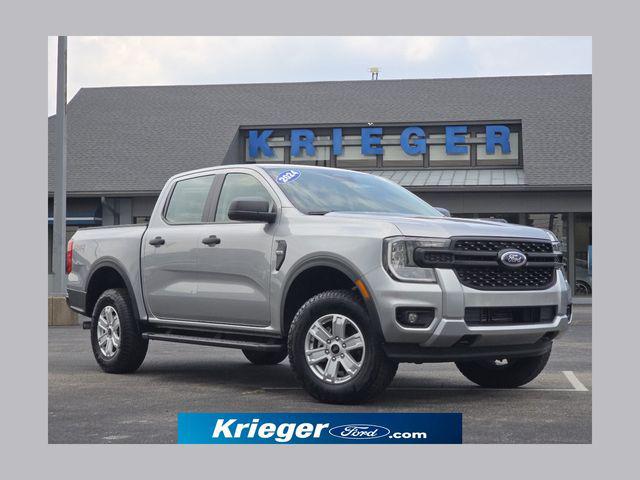
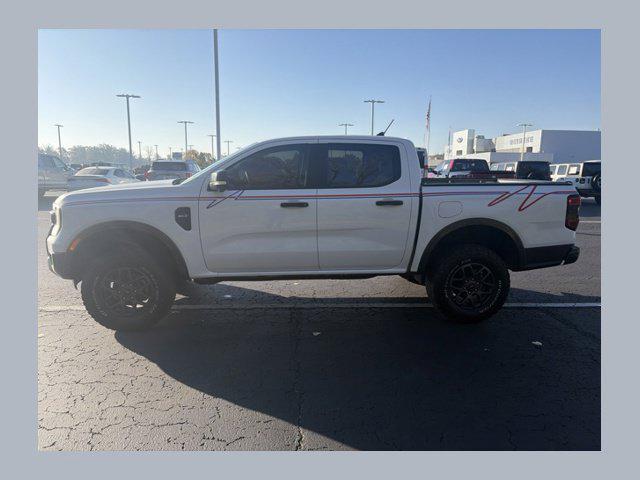
Often, a midsize pickup truck is all most people need, and the redesigned 2024 Ford Ranger demonstrates why. It tows up to 7,500 pounds, hauls up to 1,805 pounds of payload, and carries up to five people. Admittedly, some people need more capability than that, and the Ford F-150, F-250, and F-350 serve those needs. Otherwise, the 2024 Ranger is the right truck.

Photo: Christian Wardlaw
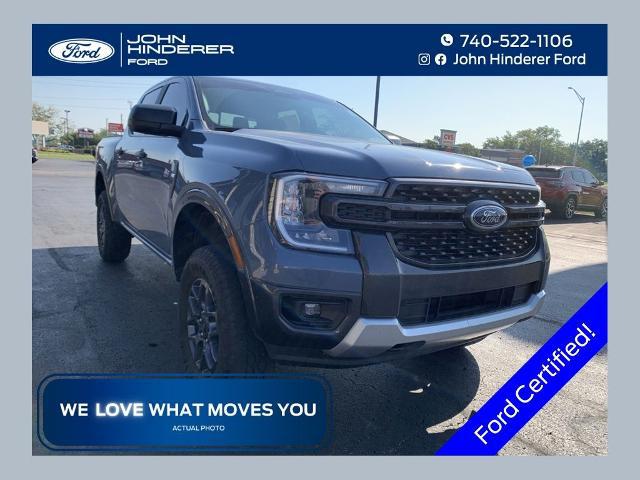
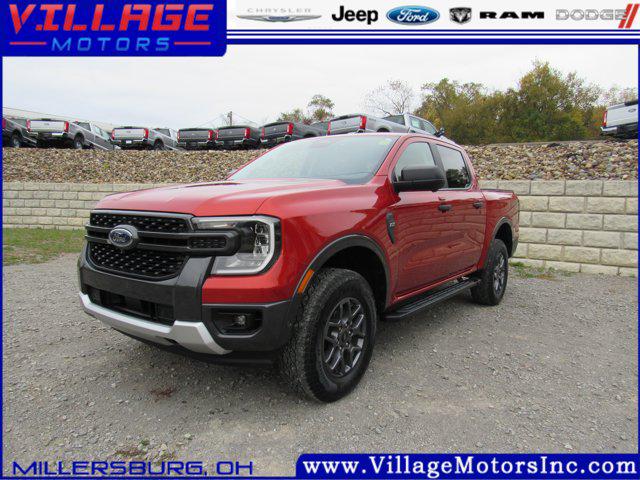
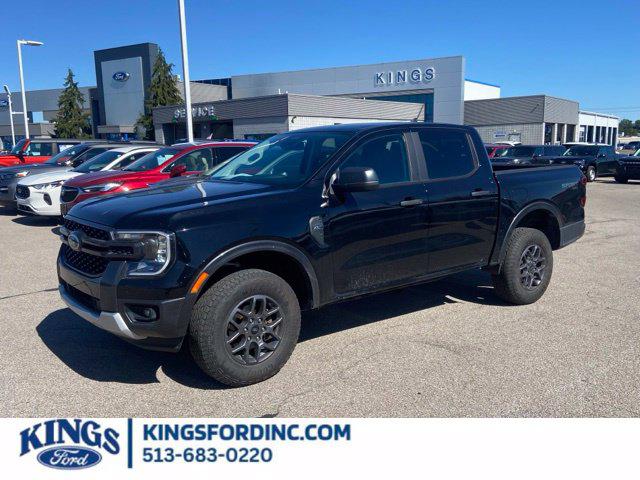
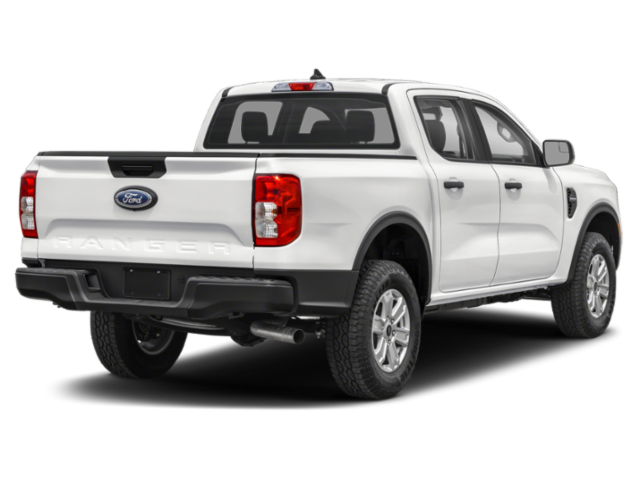
Redesigned for 2024, the new Ranger comes only in a crew-cab, shortbed configuration. Highlights include a broader model range, more powertrain options, added utility, and next-generation technologies. The new 2024 Ranger also has F-150 Junior styling, which can't hurt its prospects.
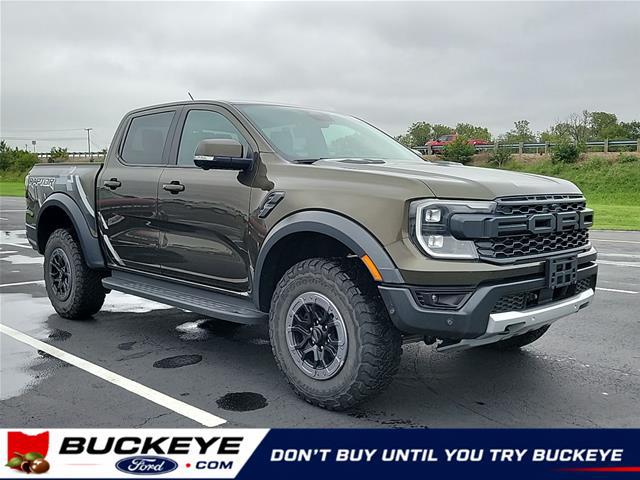
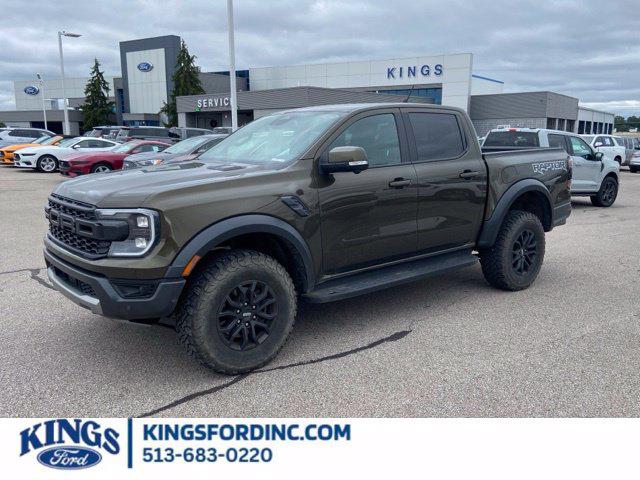
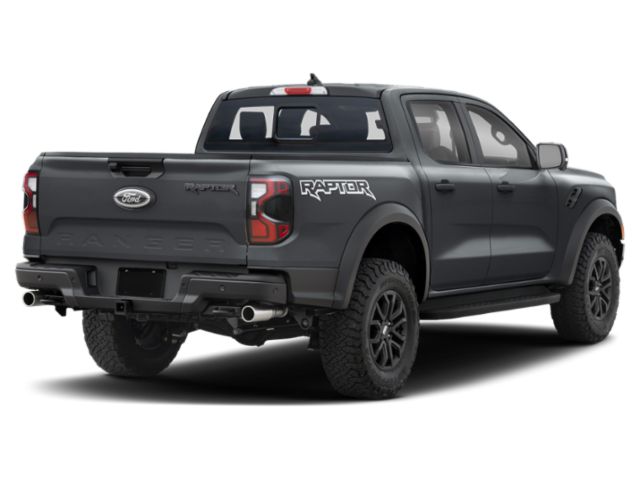
Ford offers the new Ranger in XL, XLT, Lariat, and Raptor trim levels. The Ranger Raptor is new to the lineup, adding an exclusive turbocharged V6 engine and numerous off-roading upgrades for maximum performance in the dirt. Prices range from $34,315 to $57,215, including the destination charge.
For this review of the 2024 Ranger, Ford provided a test vehicle equipped with XLT trim and the following significant options:
The test vehicle's price was $45,600, including the $1,595 destination charge to ship the midsize pickup truck from the Ford assembly plant in Warren, Michigan, to your local dealership.

Photo: Christian Wardlaw
Add the XLT High Equipment Group (301A) to a 2024 Ranger, and Ford installs lots of goodies you will probably want at a reasonable price. They include heated and power-adjustable front seats with lumbar support, dual-zone automatic climate control, a power sliding rear window, and a larger 12-inch touchscreen infotainment system.
Those power front seats are excellent. Wrapped in durable-feeling cloth, they allow you to sit high with good leg and back support and a clear view over the Ranger's squared-off hood. From what I can recall from my last review of this truck, rear seat legroom improves over the previous-generation Ranger, so adults fit more comfortably. The test truck did not have rear air conditioning vents; Ford should include them in the XLT High package.
The new Ranger feels wider and roomier from the driver's seat than the old Ranger. It also has a more rugged appearance, and unlike some rivals, the hard plastic surfaces don't look or feel egregiously cheap thanks to stylish texturing and quality finishes. This truck seems well-built too, especially when you hear the solid thunk as one of the four doors slams shut.
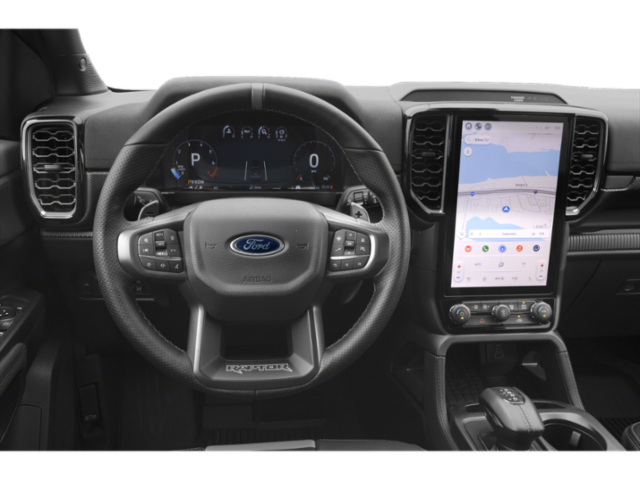
However, I prefer landscape-oriented rather than vertical touchscreens because the latter can create too much distraction as the driver looks down and away from the road to find and operate controls. In the Ranger's case, climate functions are at the bottom of the screen. Wisely, perhaps in recognition that some Ranger drivers might wear work or winter gloves, Ford locates redundant temperature, defroster, and fan speed knobs and buttons under the screen, along with a stereo volume control knob.
Ford provides just enough in-cab storage space that you won't want for more unless you're trying to find a spot to stash an oversized beverage or water bottle. Thoughtfully, Ford includes a handy storage shelf embedded into the dashboard in front of the passenger, and the test truck had a wireless smartphone charger forward of the shifter.
If you need space inside the cab to secure items, the single-piece rear seat cushion flips up to reveal sizable bins. You can also fold the backrest flat to create plenty of theft- and weather-proof storage for larger items within the locked cab.

Photo: Christian Wardlaw
Every 2024 Ranger has a Sync 4 infotainment system. With XL and XLT trim, the standard touchscreen measures 10 inches. A larger 12-inch touchscreen is optional on the Ranger XLT and standard on the Lariat and Raptor.
My test truck had the 12-inch screen vertically nestled into the dashboard between the air vents. Ford mounts the screen high enough that it didn't bother me much, and the redundant physical knobs and buttons for controlling the most commonly used functions helped. But I still prefer a horizontal (landscape) orientation.
Standard highlights of the Sync 4 system include:
In addition, my XLT test truck had SiriusXM satellite radio and wireless smartphone charging. The Ranger Lariat adds a three-year subscription to a connected navigation system and a 10-speaker B&O premium sound system by Bang and Olufsen.
Overall, Sync 4's performance was hit-and-miss. I had trouble with Apple CarPlay because it would sometimes drop the connection and fail to automatically resume when entering and starting the truck. The native digital voice assistant's responsiveness to "OK, Ford" was also inconsistent. While it responded accurately to most of my testing commands, when I asked for directions to the closest Chipotle, it recommended one almost 60 miles away instead of one in the California city where I was driving.
My test truck also had a configurable 8-inch digital instrumentation panel. You can customize its appearance and data panels using steering wheel controls, and I found it somewhat fussy to use, especially while driving. However, I'm sure with time and acclimation, it gets easier.
Finally, the Ranger's standard six-speaker stereo sounds better than I expected. Audiophiles will still want the B&O system, but everyone else will be satisfied with the stock setup.

Photo: Christian Wardlaw
Ford equips the Ranger XL, XLT, and Lariat with a standard turbocharged 2.3-liter four-cylinder engine. It makes 270 horsepower and 310 pound-feet of torque, which is plenty for a midsize pickup truck. However, a turbocharged 2.7-liter V6 is available, supplying 315 hp and 400 lb-ft. And the Ranger Raptor gets an exclusive turbocharged 3.0-liter V6 good for 405 hp and 430 lb-ft.
These engines employ a 10-speed automatic transmission to power the Ranger's rear wheels. A four-wheel-drive (4WD) system is optional with XL, XLT, and Lariat trim, and the Raptor gets a standard full-time 4WD system plus a thorough hardware upgrade to maximize its off-road performance. Driving modes include Normal, Eco, Sport, Tow/Haul, and Slippery (Raptors add Baja), and Ford Trail Control technology is available (standard on Raptor).
As you can see, Ford addresses any midsize pickup buyer's requirements unless they want a manual transmission. My test truck had the base engine, 4WD, and a 3.73 locking rear differential. It sat on gray 17-inch wheels wrapped in Goodyear Wrangler all-terrain tires, and when driving off-road, they provided plenty of grip as the truck clawed its way across rutted terrain.
The Ford Ranger XLT is a stiffly suspended truck. On L.A.'s notorious 405 freeway, the ride adds a tremor to your voice when you speak. Off-road, the suspension isn't shy about restricting excess body movement to protect the truck's underside. On winding mountain roads, the all-terrain tires lose grip early.
However, in the city and suburbs, the Ranger mows right over speed bumps and humps and exhibits remarkable structural rigidity. You need not care much about heaves and holes in the pavement, curbing a wheel, or crunching the front end on a parking block. Notice the truck doesn't have the deep front air dam you'll find on some competitors.
My test truck even delivered fuel economy in line with what the EPA predicts, getting 21.2 mpg on the evaluation loop, coming up just short of the official 22 mpg estimate in combined driving.
If there is a criticism of this version of the Ranger, it has to do with how power can fall off when driving in Normal mode. Round a corner, step on the accelerator pedal, and the drivetrain often takes more than a moment to figure out what gear is necessary to generate enough revs to propel the Ranger forward. It's not a consistent issue though, making it more aggravating because it always surprises the driver.
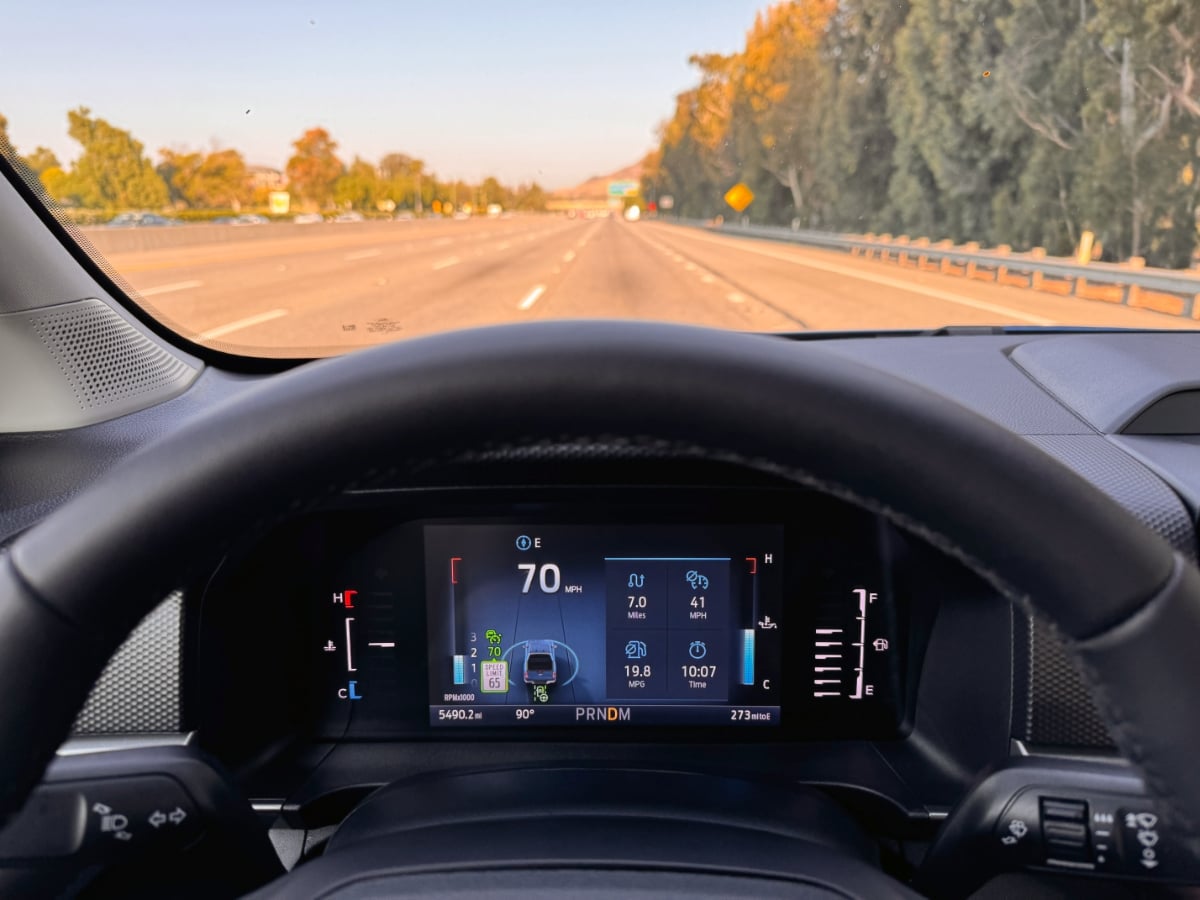
Photo: Christian Wardlaw
Ford equips every 2024 Ranger with a forward-collision warning system with automatic emergency braking. Starting with XLT trim, the Ranger has an upgraded reversing camera and Ford Co-Pilot360, a basic package of advanced driving assistance systems (ADAS).
On the 2024 Ranger, Ford Co-Pilot360 includes:
The Ranger Lariat adds front parking sensors, adaptive cruise control with stop-and-go capability, a surround-view camera, and Active Park Assist 2.0. That latter feature can semi-autonomously park the Ranger while the driver remains behind the steering wheel to take control if necessary.
My test truck also had the Advanced Towing Plus Technology Package. It installs:
I had nothing to tow with the Ranger, so I didn't use the trailering aids. However, previous experience using them on other Ford trucks and the automaker's semi-autonomous parking assistance system tells me they're effective.
The rest of the test truck's ADAS worked quite well. But, as I remembered in one driving situation, sometimes the technology is only as good as the motorists sharing the road. The driver ahead, who wasn't paying much attention, suddenly slammed on the brakes to avoid a collision with slowing traffic. In response, the Ranger's forward-collision warning system activated, and I had to take action, overriding the adaptive cruise control by applying a heavy foot on the brake pedal.
Sometimes, the ADAS worked too well. For example, when I activated the truck's reverse automatic braking system through the infotainment system, the Ranger refused to back out of my angled driveway without slamming on the brakes every few inches, even when creeping onto the street at a crawl. So, I had to pull forward, go into the safety features menu, and turn it off.

Photo: Christian Wardlaw
When properly configured, a 2024 Ford Ranger can tow up to 7,500 pounds (5,510 lbs. for the Raptor) and carry up to 1,805 pounds of payload. My test truck had in-bed power outlets and a spray-in bedliner, with little else but fixed cargo tie-downs and LED lighting to distinguish itself. I wished for the available integrated box steps on more than one occasion, suggesting the optional upgrade is a bargain at $215.
If you want to store things inside the cab, securely locked and out of the elements, Ford makes that easy. The rear seat cushion flips up to reveal storage space and to accommodate long items. Or, you can fold it down to create a flat (but high) load floor.
The EPA says a 2024 Ford Ranger with 4WD will get 20/24/22 mpg in city/highway/combined driving. On my evaluation loop, the test truck returned 21.2 mpg, close enough to the official rating to call it accurate. Based on that observed average and the Ranger's 18-gallon fuel tank, the maximum range is nearly 382 miles. However, you'll stop to refuel at around the 350-mile mark or sooner.
Unfortunately, as of this writing, crash-test ratings for the redesigned 2024 Ranger don't exist. Until the National Highway Traffic Safety Administration (NHTSA) and the Insurance Institute for Highway Safety (IIHS) perform testing on this new truck, I cannot answer this question.
The most affordable version of this truck is the Ranger XL with two-wheel drive. It costs $32,720 before you add any options. At the opposite end of the 2024 Ranger lineup, you'll find the Raptor, which has standard 4WD. Its price tag is $55,620. To these figures, you'll need to add a $1,595 destination charge and the cost of any options you select.
In the JD Power 2024 Initial Quality Study (IQS), the Hyundai Santa Cruz ranks highest in the Midsize Pickup segment. The Ford Maverick and the Nissan Frontier are the next highest-ranked models.
In the JD Power 2024 Automotive Performance, Execution and Layout (APEAL) Study, the Toyota Tacoma ranks highest in the Midsize Pickup segment. The Hyundai Santa Cruz is the next highest-ranked model.
Other 2024 Ranger competitors include the Chevrolet Colorado, GMC Canyon, Honda Ridgeline, and Jeep Gladiator.

Photo: Christian Wardlaw
The redesigned 2024 Ford Ranger is a good truck with competitive towing, payload, performance, and off-roading capabilities. Somehow, though, living with the quietly competent XLT was boring.
Nearly all of the Ranger's rivals bring something special to the table, from the Chevy Colorado's handsome design and the Honda Ridgeline's innovative cargo bed to the Jeep Gladiator's convertible top and the Toyota Tacoma TRD Pro's suspension seating.
Comparatively, the Ford simply goes about its business, and yours, exhibiting purpose without expressing much personality (Raptor excluded). And I think that's precisely what many truck buyers want.
Christian Wardlaw is a veteran automotive journalist with 30 years of experience in the field and has held automotive editorial leadership positions at Edmunds, JD Power, and The New York Daily News. Today, Chris owns a content agency called Speedy Daddy Media, and in addition to JDPower.com, his work appears on Capital One Auto Navigator, CarGurus, and Edmunds.