43 - 52
225 - 232
1 speed, CVT w/OD
Gas/Electric I-4
All Wheel Drive, Front Wheel Drive
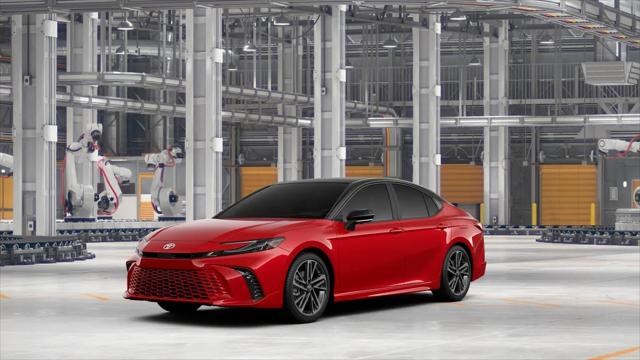
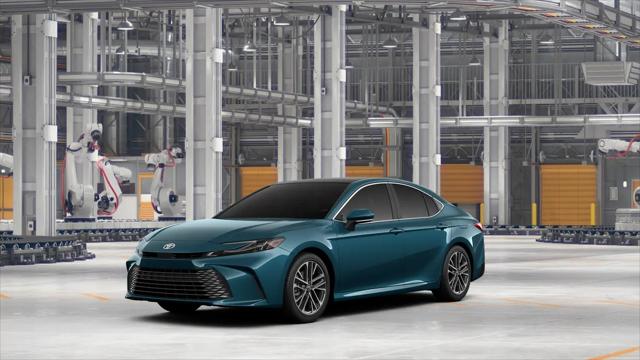
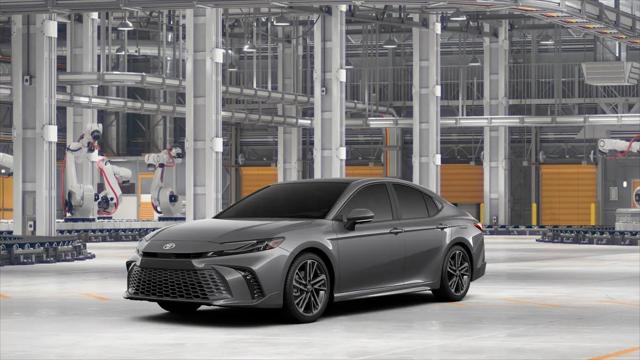
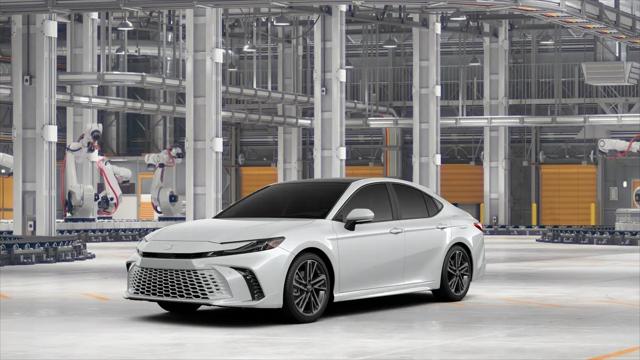
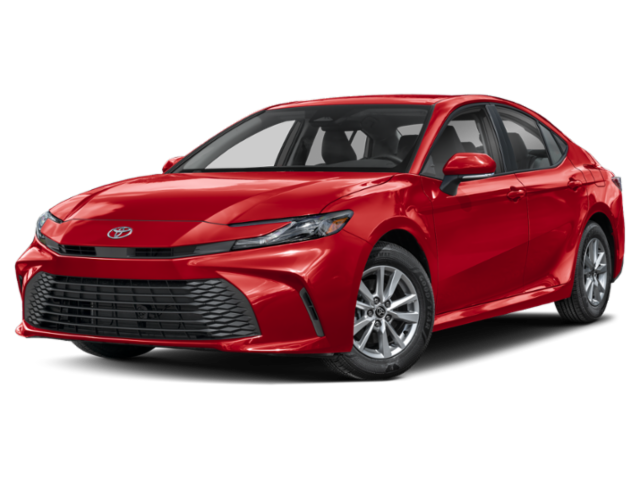
The 2026 Toyota Camry is the best-selling car in America, and it is easy to see why. Affordable, fuel efficient, and family-sized, this midsize sedan boasts all the latest technology, impressive safety ratings, and top-ranked dependability according to JD Power. Plus, it looks nice and drives well, especially in top trim levels.

Photo: Christian Wardlaw
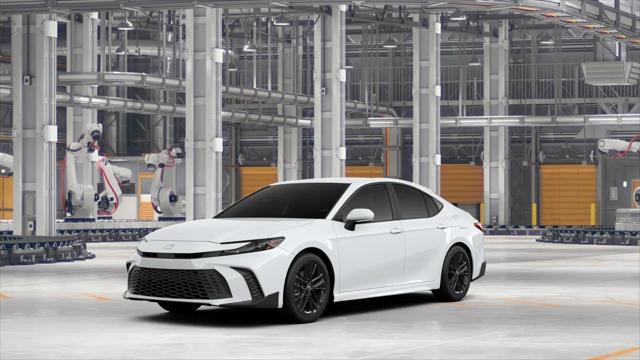
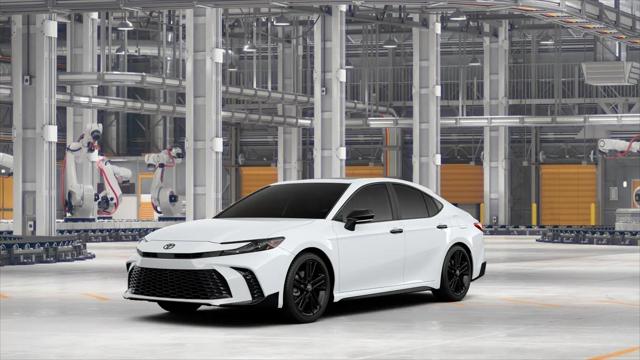
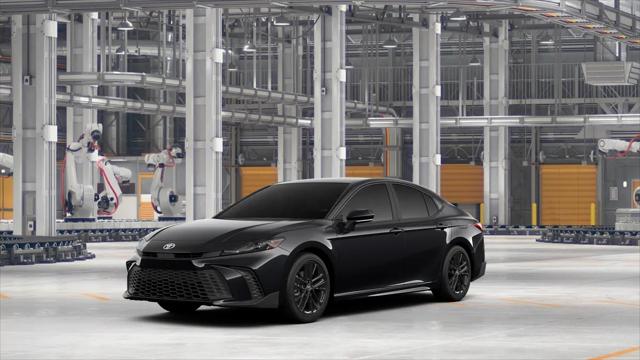
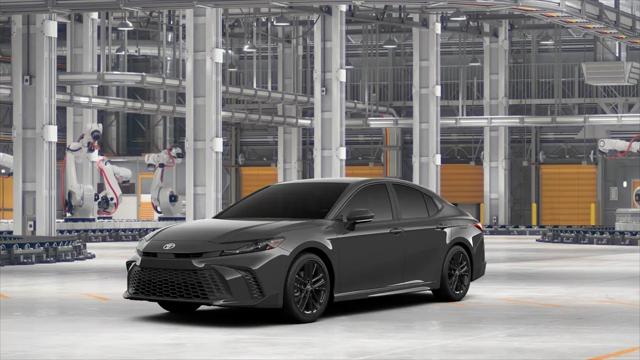
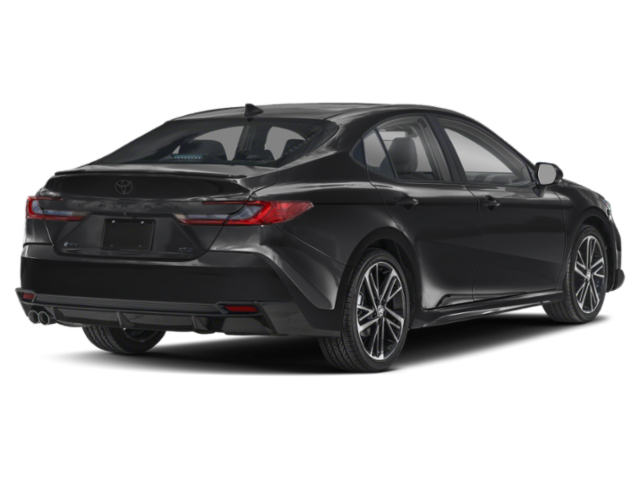
Following a significant restyling, re-engineering, and technology overhaul for 2025, the 2026 Camry receives few changes. A new Dark Cosmos color debuts, and a Nightshade trim arrives with black 19-inch wheels, black badges, and black exterior detailing including the side mirror caps and door handles.
The Nightshade squeezes into the middle of a Camry lineup that also includes the LE, SE, XLE, and XSE. They all have a fuel efficient hybrid powertrain and front-wheel drive (FWD), with all-wheel drive (AWD) available as an option. Base prices range from $30,895 to $38,820, including the destination charge.
For this 2026 Camry review, Toyota provided a test vehicle equipped with Nightshade trim and the following significant options:
The test vehicle’s manufacturer suggested retail price (MSRP) was $35,878, including the $1,195 destination charge to ship the sedan from the Georgetown, Kentucky, assembly plant to a local dealership. The price does not reflect any current rebates, incentives, or price adjustments since Toyota manufactured the test vehicle.
According to verified owners, the Camry earns an award as the highest-ranked model in its segment in the 2026 Vehicle Dependability Study (VDS) and the 2026 ALG Residual Value Awards.
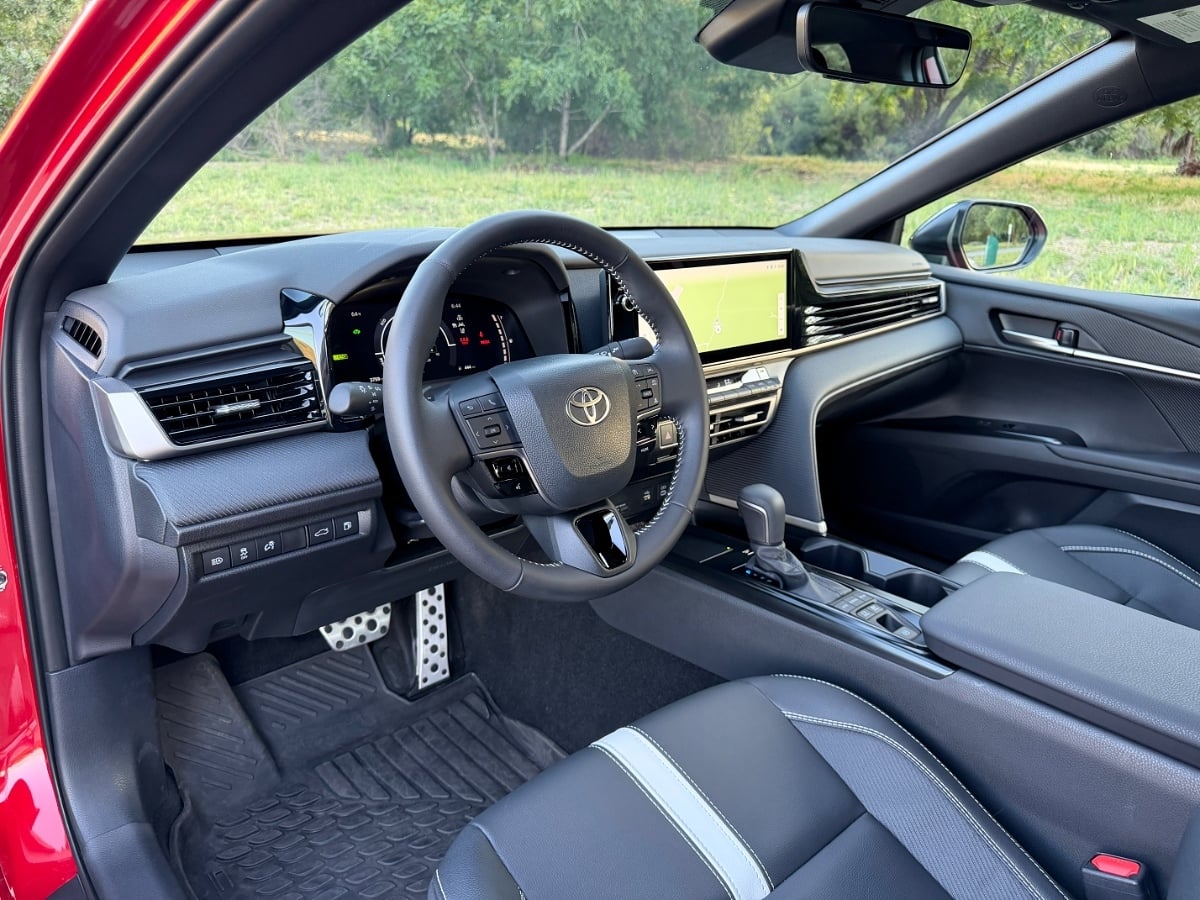
Photo: Christian Wardlaw
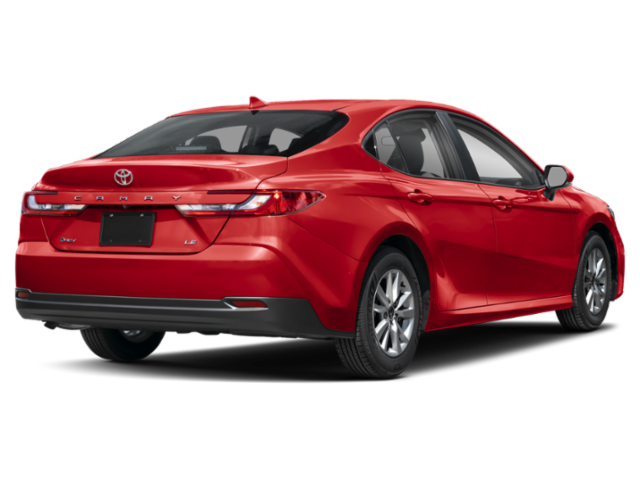
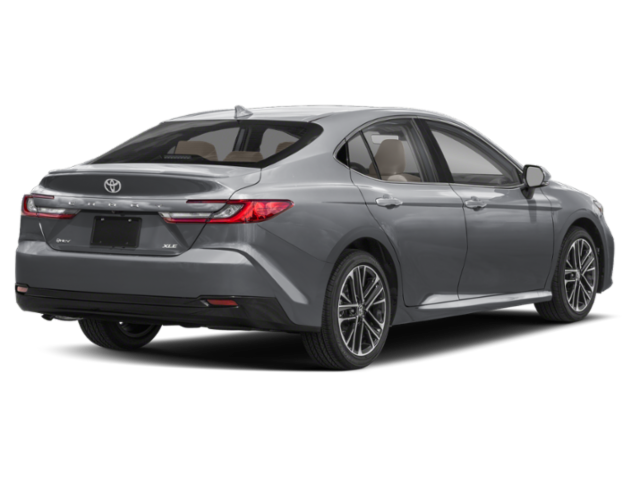
Inoffensively designed, the Camry is available in plain, sporty, and upscale styling themes. The base Camry LE is plain, the XLE is upscale, and the SE, Nightshade, and XSE are sporty.
Those descriptors apply to the interiors, too. The LE has plain cloth seats, while the SE and Nightshade offer a sporty blend of fabric and SofTex artificial leather. The XLE and XSE feature real leather. Each 2026 Camry offers a Black interior. A light gray color is also available for the LE, SE, and XLE, while the Camry XSE offers an exclusive Cockpit Red cabin.
Because the Camry sits low to the ground, it takes extra effort to get in and out compared to something like a RAV4. However, height-adjustable front seats are standard on every trim, making that task easier.
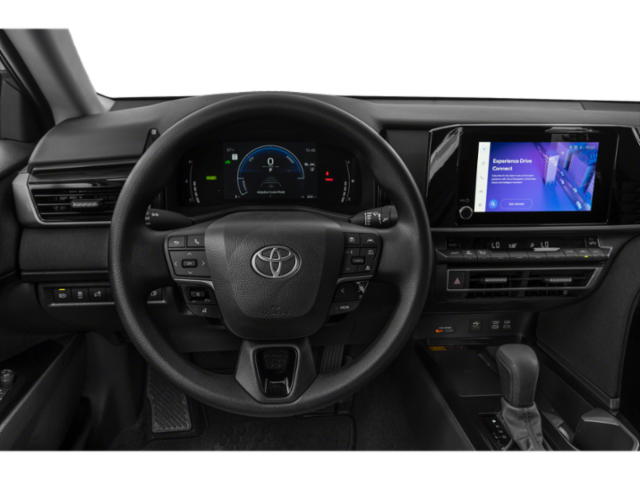
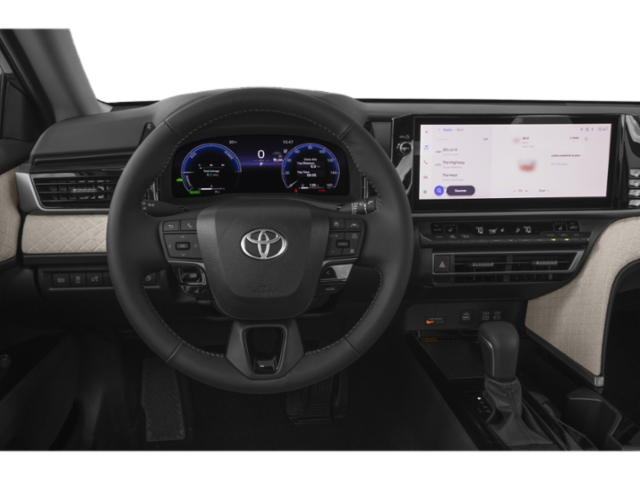
Settle in, and the driver faces a 7-inch or 12.3-inch digital display, depending on the trim. The touchscreen infotainment system offers an 8-inch or 12.3-inch display. They are housed in a driver-centric, architecturally styled dashboard that offers traditional knobs and buttons for the primary stereo and climate controls. Markings are clear and legible, making them easy to find and use.
In lower trims, the interior looks and feels durable. Upper trims add improved materials and detailing. My Nightshade test vehicle split the difference, with mixed-material upholstery, light-gray stitching and seat stripes, textured dashboard trim, and metallic pedal covers.
Front seat occupants will likely be comfortable in the Camry Nightshade. The driver’s seat offers eight-way power adjustment, the passenger’s seat is manually height-adjustable, and an optional Cold Weather package adds heated front seats and a heated steering wheel. Plenty of seat track travel accommodates taller people, and the steering wheel is pleasing to grip.
Rear seat accommodations are adequate. The Camry does not feel as roomy as rivals like the Honda Accord, but the back seat provides acceptable levels of support. Passengers will undoubtedly appreciate the rear air conditioning vents and USB charging ports found in my test vehicle.
Stashing items up front is not a problem. A huge bin sits under the center armrest, and the console includes oversized cupholders and a deep tray. Storage space for rear passengers is limited, and trunk space measures only 15.1 cubic feet. That is less than every other car in the class.
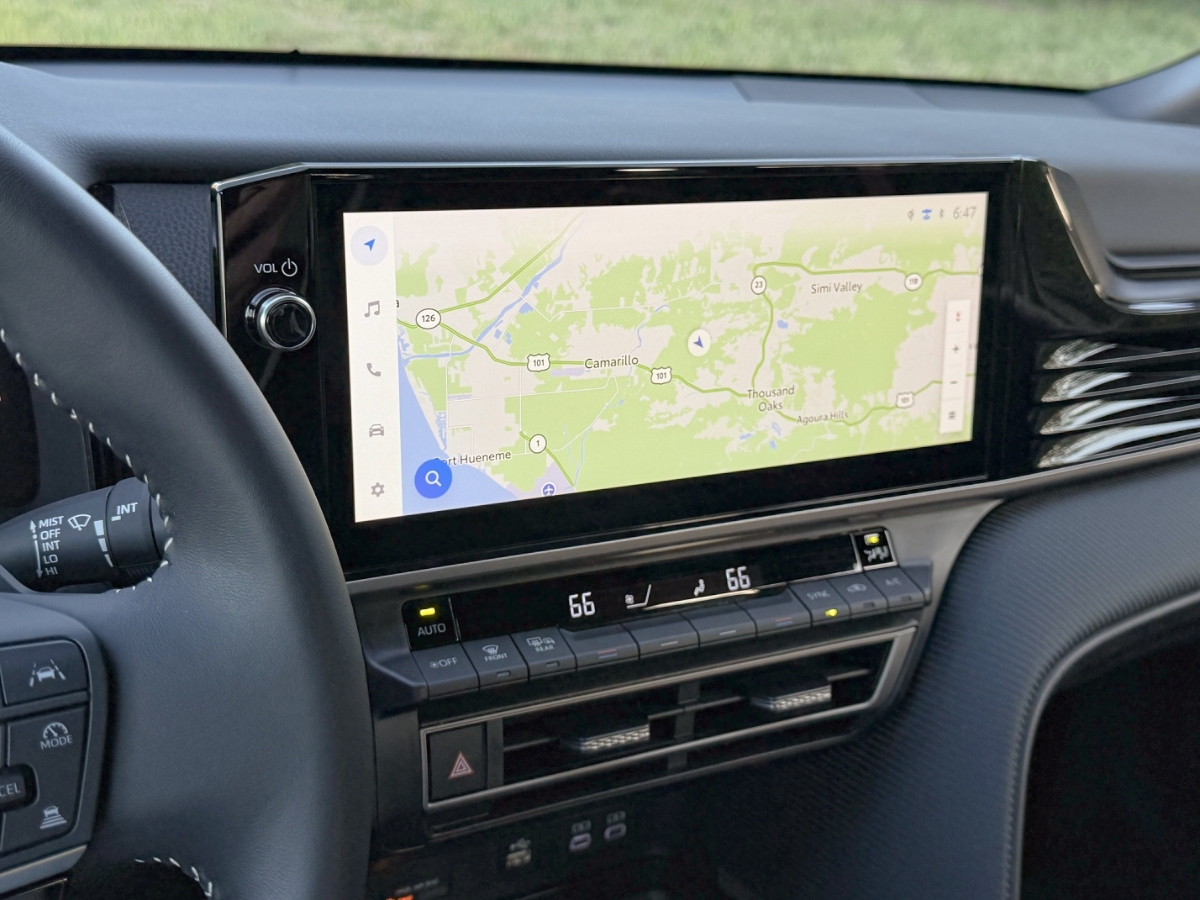
Photo: Christian Wardlaw
Every 2026 Camry has a 7-inch or 12.3-inch digital driver display and an 8-inch or 12.3-inch touchscreen for the Toyota Audio Multimedia infotainment system. The smaller displays are standard on the more affordable versions of the car, while the larger ones are standard with XLE and XSE trim.
The Toyota Audio Multimedia system includes:
This technology is easy to use, but Toyota makes a few UX/UI errors.
First, there is no Home screen that lets you display data from different main menus at the same time. For example, you cannot view the navigation map and the radio station information simultaneously. That means you will have to fiddle with the touch-sensing main menu icons on the left side of the screen more often than you would prefer.
Second, in daytime illumination mode, low contrast colors and delicate fonts make it hard to read data. Bumping up the brightness and/or contrast can help, but I find it is better in night or dark mode, even during the day.
Third, though Toyota provides a volume knob, a radio tuning knob is missing. You can use the virtual buttons on the touchscreen, the steering wheel controls, or the digital voice assistant to change radio stations, but I still wanted a tuning knob every time I drove the car.
That digital voice assistant is called the Intelligent Assistant and is available with an active Drive Connect subscription, which also equips the Camry with a navigation system. Drive Connect was active in the test vehicle, and the Intelligent Assistant worked well aside from some trouble rousing it with the “Hey, Toyota” wake phrase.
If you would rather not pay for Drive Connect, do not worry. Just pair your smartphone via the wireless Apple CarPlay or Android Auto, and you get similar features.
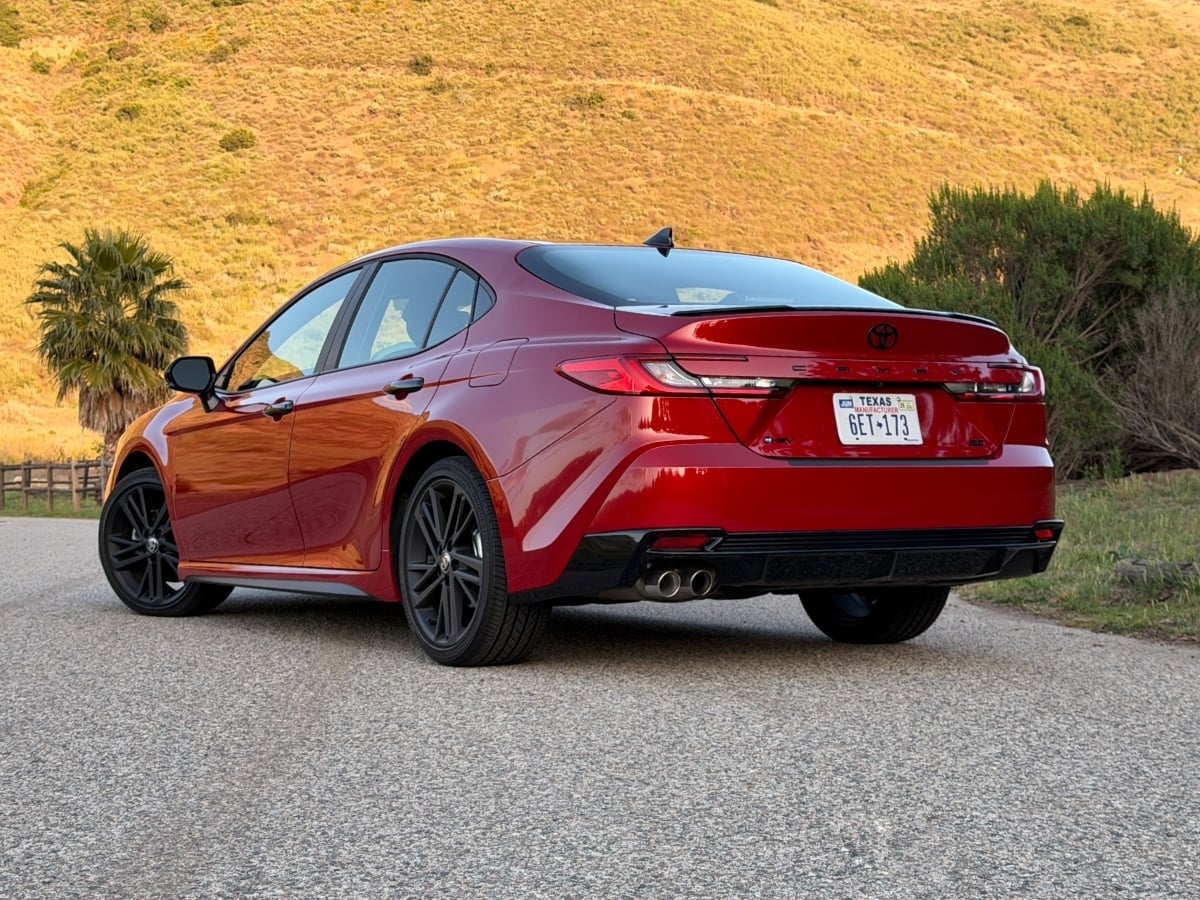
Photo: Christian Wardlaw
Every 2026 Camry has a hybrid powertrain based on a 2.5-liter four-cylinder engine. It pairs with an electronically controlled continuously variable automatic transmission (CVT), a 100-kilowatt (kW) electric motor, and a 251.6-volt battery, and produces a total of 225 horsepower. With AWD, a separate 30-kW electric motor powers the rear wheels, bumping total output to 232 hp.
According to the Environmental Protection Agency (EPA), fuel economy ratings range from 43 mpg to 51 mpg combined. The most efficient version is the Camry LE, and the least efficient is the Camry XSE with AWD. My Camry Nightshade test car carried an official gas-mileage rating of 46 mpg and averaged 44.5 mpg on my fuel efficiency test route. On the mountainous evaluation route, that dropped to just 37 mpg.
Four driving modes are available: EV, Eco, Normal, and Sport. The EV mode is for low-speed driving in traffic or when searching a space in a parking lot. If the battery has charge, it lets the Camry run purely on electricity for short periods, saving fuel.
I like driving the Toyota Camry. It is satisfyingly quick, and the sport-tuned suspension that is standard with SE, Nightshade, and XSE trims provides a pleasing blend of ride quality and handling capability. Switching into Sport mode makes the car feel a little more responsive, with heavier steering weight, but it does not make a dramatic difference.
My primary complaint about the Camry’s driving character is related to the CVT. When accelerating hard, such as on a freeway entrance ramp, when passing slower vehicles, or when powering up a grade, it causes powertrain drone. Most of the time, the CVT operates in the background and does not draw much attention to itself. But under load, it can cause a ruckus.
This is a good long-distance car, proving comfortable and reasonably quiet on the highway while returning impressive fuel economy. In urban and suburban situations, it feels nimble and athletic without slurping down gas. On a favorite backroad, the Camry does not communicate with the same level of clarity as a Honda Accord does, but it can carve a corner with enough speed to put a smile on a driving enthusiast’s face.
Add the Camry’s top-ranked position in the latest JD Power dependability study, and it is hard to go wrong with this Toyota.
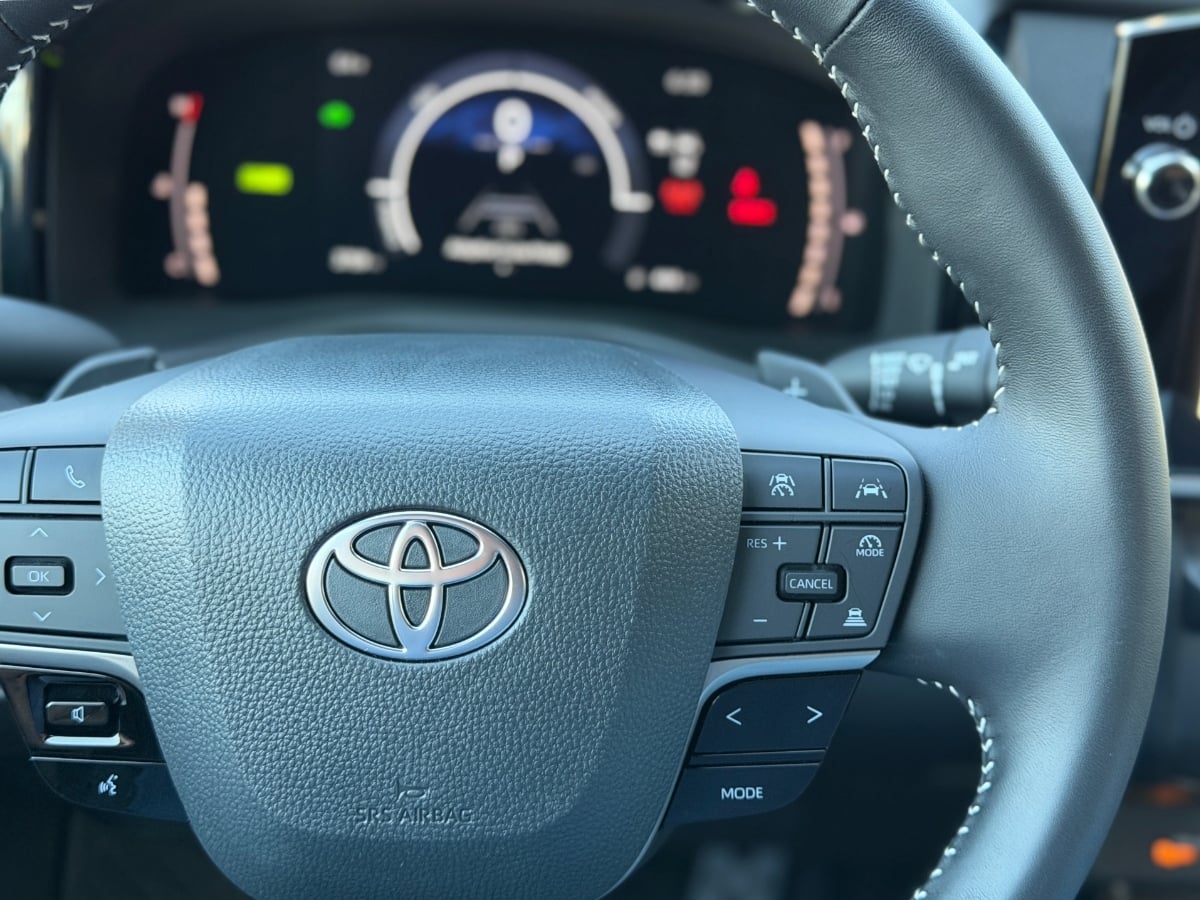
Photo: Christian Wardlaw
Toyota Safety Sense 3.0 (TSS 3.0) is standard on every 2026 Camry. It includes:
Separately from TSS 3.0 (for some reason), the Camry also has standard:
A Premium Plus option package is available for the XLE and XSE trims. It adds:
The test car’s Nightshade trim meant it did not have a Premium package, so I could not test the traffic jam assist system, which provides hands-free driving assistance at speeds up to 25 mph.
I was able to sample the rest of the Camry’s safety features, including Proactive Driving Assist (PDA). This system autonomously adds subtle braking and steering as you drive to help you maintain safe following distances and to avoid potential obstacles. As installed in the Camry, PDA was not very noticeable in typical situations, so I kept it on for an extra layer of safety. When driving in the mountains, it was irritating, so I turned it off.
Another source of aggravation is how much the Camry slows down in some curves when using the adaptive cruise control (ACC). The travel speed drops too much, upsetting the people in vehicles behind the Camry. I also observed resistance to driver override by the lane centering assist system, requiring me to muscle past it to take a line around a curve different from what the technology prescribed.
Something unusual occurred while driving on the 101 freeway in Camarillo, California. As we cruised along in the center of three lanes, the ACC and lane centering assist systems operating as expected, the Camry suddenly began to brake without any input from me. A warning on the digital driver display said “stopping assist” was active, a feature that Toyota does not discuss in its consumer or media materials.
It was easy enough to override by pressing on the gas pedal, and I assume it activated because the Nightshade’s steering wheel is not touch-sensing, so TSS 3.0 may have presumed I had become unresponsive for some reason. Still, it was startling and momentarily confusing.
As far as crash test ratings go, the National Highway Traffic Safety Administration (NHTSA) gave the 2026 Camry a maximum five-star overall rating. Not only that, but the car earns five-star ratings in every individual assessment except for driver protection in a frontal impact collision. That test resulted in a four-star rating.
The Insurance Institute for Highway Safety (IIHS) named the Camry a “Top Safety Pick+” for the 2026 calendar year.
According to the JD Power 2026 Initial Quality Study (IQS), the Hyundai Sonata ranks highest in the Midsize Car segment, with the Honda Accord and Kia K5 ranked second and third, respectively.
According to the JD Power 2026 Automotive Performance, Execution and Layout (APEAL) Study, the Kia K5 ranks highest in the Midsize Car segment, with the Hyundai Sonata ranked second.
Other 2026 Camry competitors include the Nissan Altima.
Incredibly, only four midsize sedans remain on sale in the U.S. market: Honda Accord, Hyundai Sonata, Kia K5, and Toyota Camry.
Each one has its pros and cons, and the Camry shines brightest regarding fuel economy, safety, and dependability. It is the only one that offers AWD with a hybrid powertrain, and it comes with two years or 25,000 miles of complimentary scheduled maintenance in addition to the trial subscriptions to connected services. Additionally, it drives well in a variety of situations.
In other words, there is plenty right and little wrong with the 2026 Toyota Camry.
Christian Wardlaw is a veteran automotive journalist with 30 years of experience in the field and has held automotive editorial leadership positions at Edmunds, JD Power, and The New York Daily News. Today, Chris owns a content agency called Speedy Daddy Media, and in addition to JDPower.com, his work appears on Capital One Auto Navigator, CarGurus, and Edmunds.