14 - 21
255 - 603
9 speed, Automatic w/OD
Intercooled Turbo Gas/Electric I-4, Intercooled Turbo Gas/Electric I-6, Twin Turbo Gas/Electric V-8
All Wheel Drive, Rear Wheel Drive
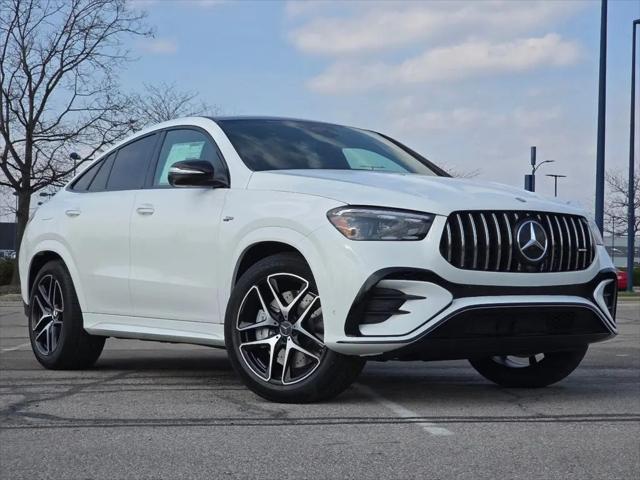
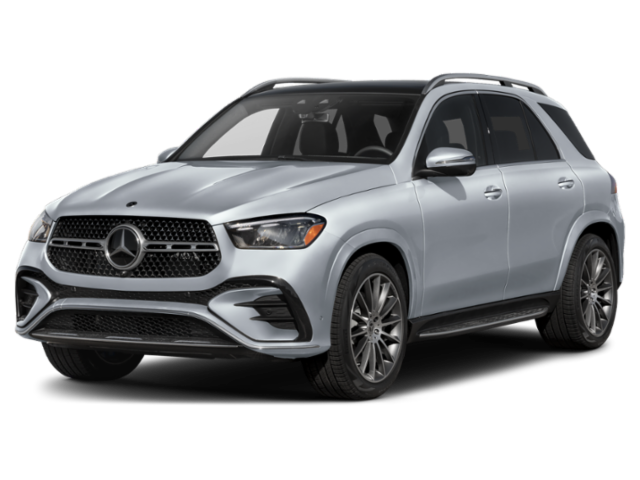
While the 2026 Mercedes-Benz GLE offers powerful AMG variants with sharper handling, this midsize SUV is at its best (and most competitive) when luxury takes priority over sportiness. If luxury is your goal, you might not find a better value than this GLE 450e test vehicle, which features a plug-in hybrid (PHEV) powertrain, plush Airmatic suspension, and a stunning wood-and-leather interior.

Photo: James Riswick
The 2026 GLE lineup is extensive, with each version featuring its own powertrain. The GLE 350 has a 255-horsepower mild hybrid turbocharged inline-four engine and is available with rear-wheel drive or 4Matic all-wheel drive (AWD); all other models are AWD only. The GLE 450 comes with a 375-hp mild hybrid turbo inline-six. The GLE 450e is a 381-hp PHEV with a turbo inline-four. The GLE 580 offers a 510-hp mild hybrid turbo V8.
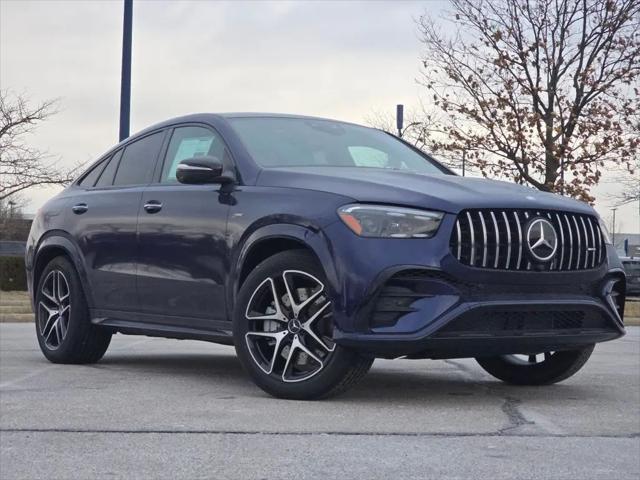
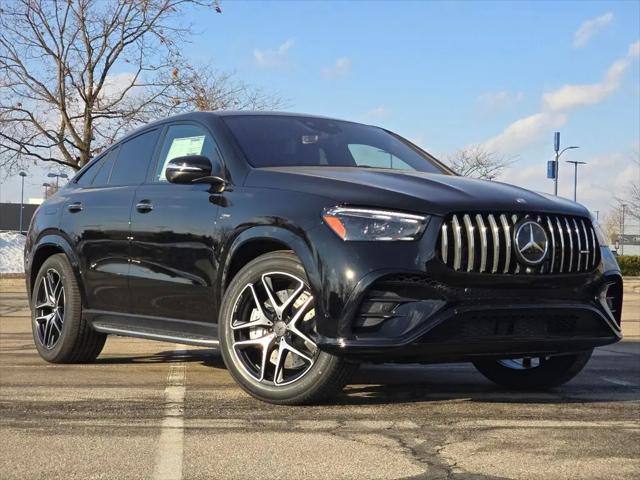
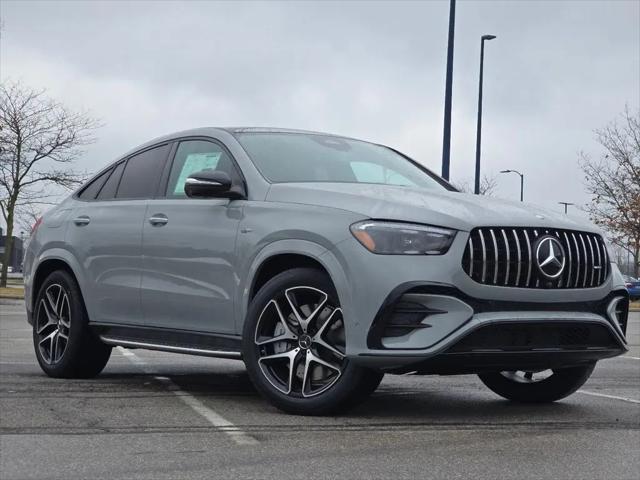
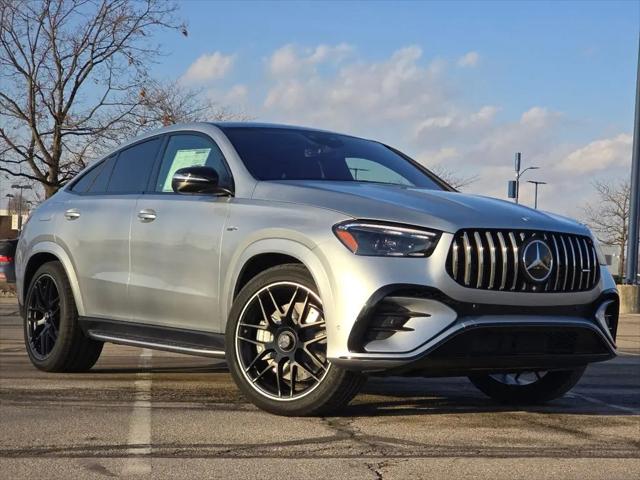
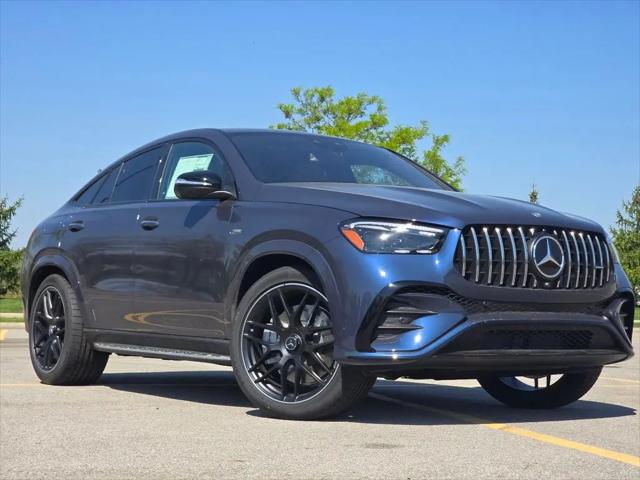
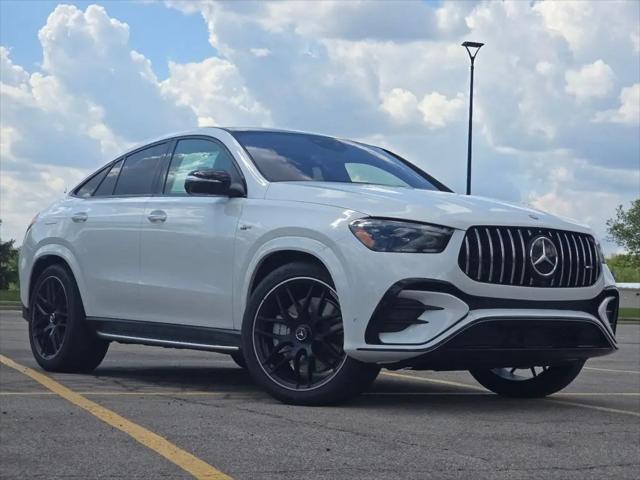
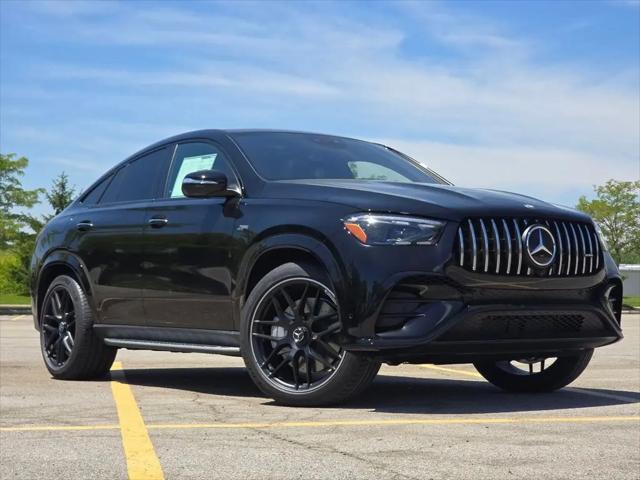
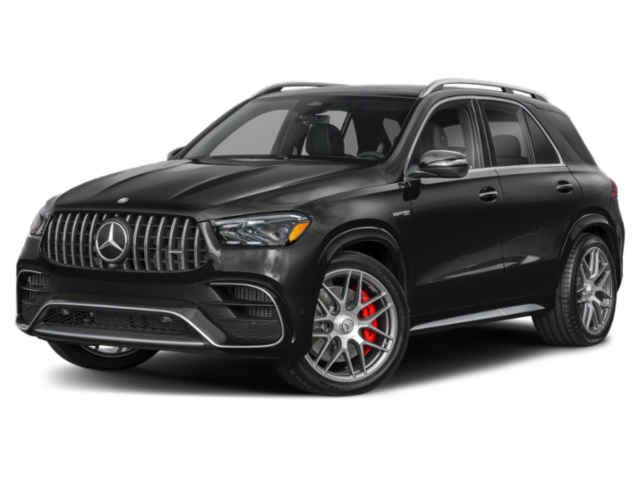
The AMG GLE 53 has a 429-hp mild hybrid turbo inline-six, while the AMG GLE 63 S boasts a 603-hp mild hybrid twin-turbo V8. Both AMG models also feature chassis enhancements.
Prices for the Alabama-made GLE range from the low $60,000s to the low $130,000s.
For this 2026 GLE review, Mercedes provided a GLE 450e test vehicle with a base price of $73,500, including the destination charge. It also had $21,150 worth of options, of which $10,650 was for the stunning green paint and the options automatically tied to it: a panoramic sunroof and the AMG Line exterior package. Other, more important options were more reasonably priced, including the Airmatic and Driver Assistance packages.
The test vehicle’s manufacturer suggested retail price (MSRP) was $94,950, including the $1,250 destination charge to ship the SUV from the Vance, Alabama, assembly plant to a local dealership. The price does not reflect any current rebates, incentives, or price adjustments since Mercedes manufactured the test vehicle.
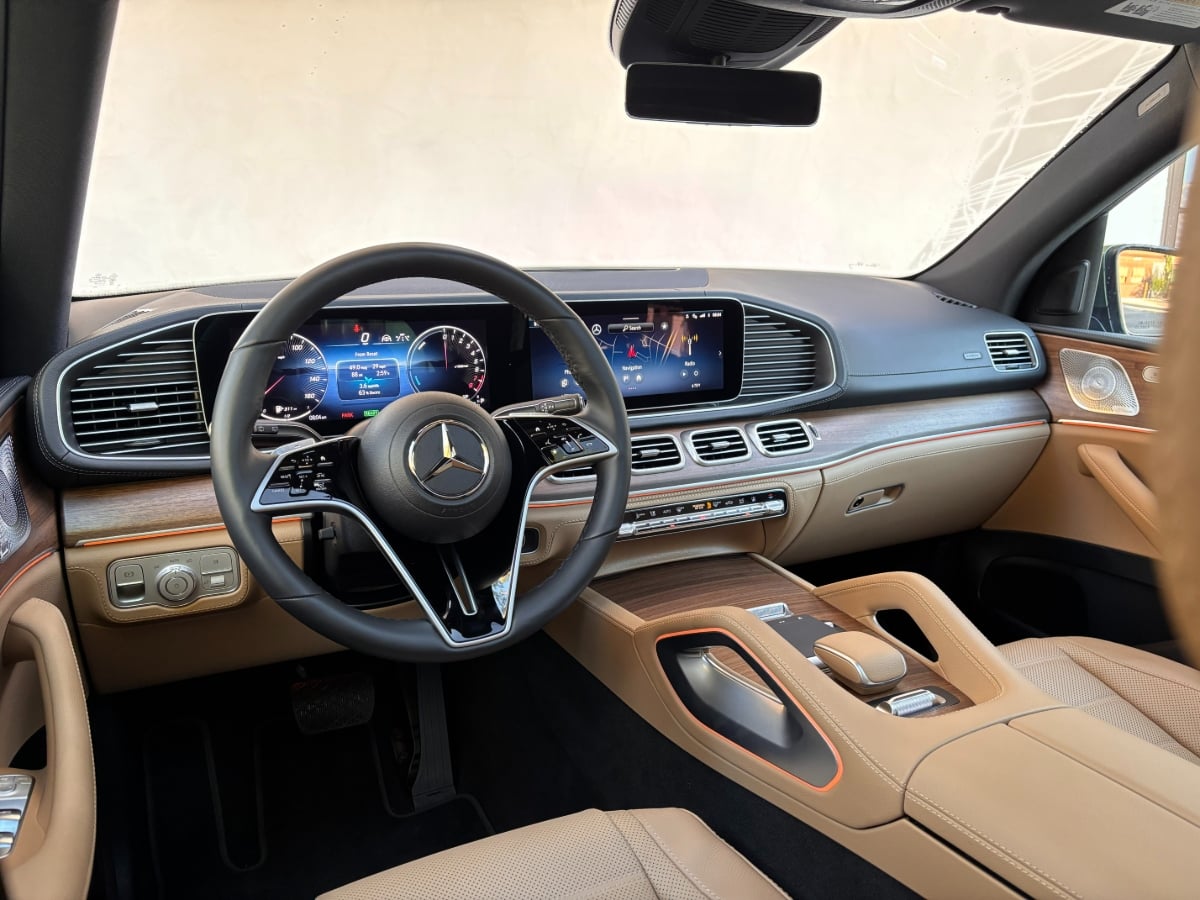
Photo: James Riswick
Although my test vehicle’s $1,620 Catalana Beige leather was attractive, I would argue that it is unnecessary, as Mercedes’ MBTex simulated leather is so good and will almost certainly wear better over time. I have it in my own 12-year-old Mercedes and it still looks brand new. That said, I would spend $160 for the beautiful Natural Grain Brown Walnut wood trim that spans the front doors and dashboard, cascading down the center console.
Indeed, it is all that trim, plus the metal air vent surrounds, MBTex-trimmed dashboard, and richly operating physical controls that make the GLE cabin significantly more attractive and luxurious than Mercedes’ newer interior design scheme in the new E-Class and various electric models. Their expanses of screens and Piano Black trim simply do not look or feel as luxurious.
That said, the GLE is not without its annoyances: the touch-sensitive steering wheel controls gather fingerprints and can be finicky, especially the volume control. Luckily, there is nothing bothersome about the other interior controls, including the physical climate buttons and toggles.
Just below those, hidden behind a lovely expanse of wood trim, are expanding cupholders that can fit and secure a wine-bottle-sized water bottle in the smaller of its two diameters. The upright wireless charging pad in front of them is a smart, space-saving design, although it can be hard to reach if you are using those cupholders to their full potential. The door bins and the bin under the armrest are just OK.
The driver’s seat adjustability and support are excellent. Plus, even with that seat pushed all the way back, at 6 foot 3, I still had a few inches of space between my knees and the seatback. That is typical for a midsize SUV, but it is definitely not guaranteed. Ultimately, though, it is the GLE’s width compared to the GLC and other compact SUVs that is the most significant advantage, as you are more likely to fit three people across.
There was plenty of space for a forward-facing car seat, and the combination of large doors and a relatively low step-in height made it easy to get my five-year-old son inside.
Regarding cargo space, the specs state that the GLE 450e has 31.5 cubic feet of volume behind the back seat. While this seems small for a compact SUV, in my experience testing the cargo areas of every vehicle I review, that number does not match the actual space available. I believe Mercedes may be using a different measurement standard than most other brands, which could result in the GLE’s cargo space being undersold.
The GLE fit two medium-sized roller suitcases that you would check onto a plane, four roll-aboard bags, three duffels, and a 38-quart cooler with room to spare and visibility maintained. That is significantly more than other SUVs, which have around 31.5 cubic feet, like a Mazda CX-50, for example. I believe the GLE would have at least 40 cubic feet with consistent measurements.
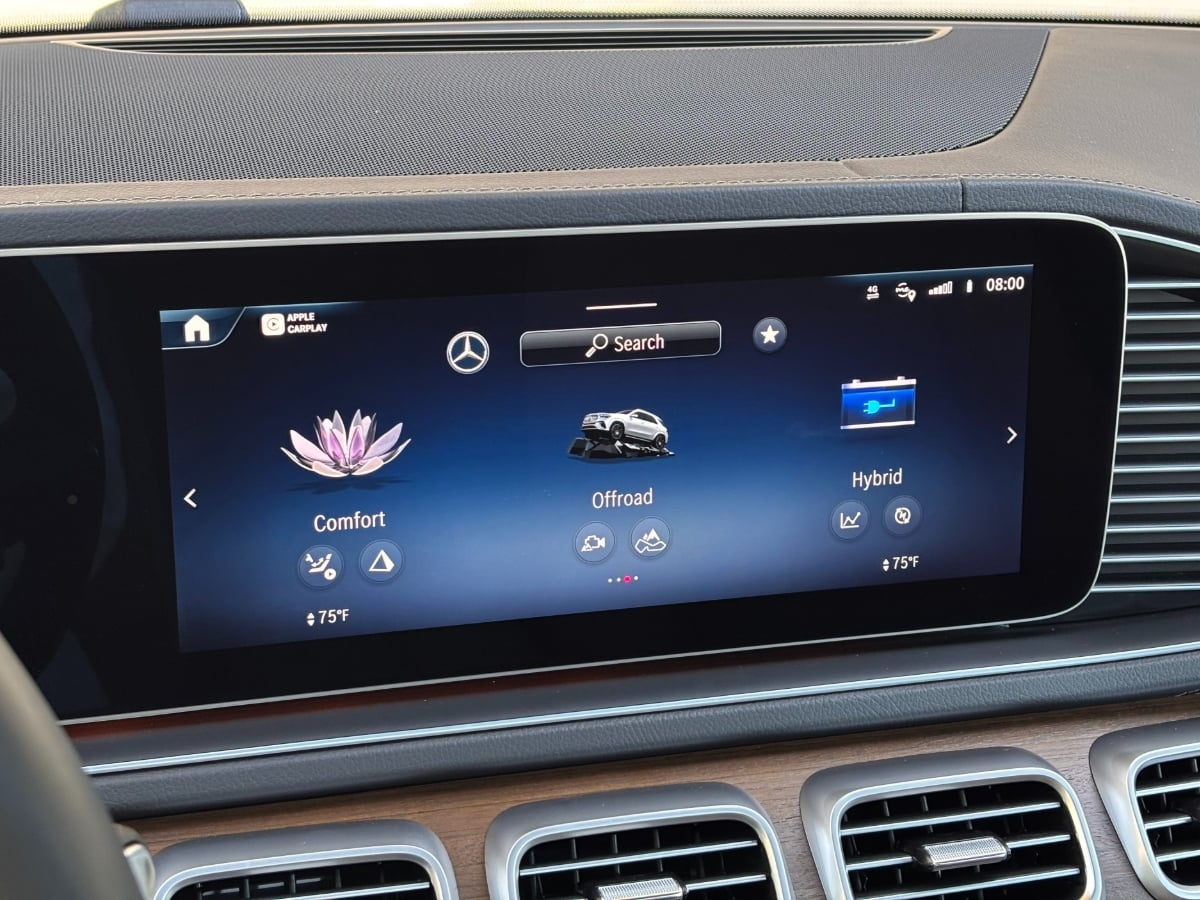
Photo: James Riswick
Although the GLE uses the same MBUX name for its infotainment system, it is not the latest third-generation version available in the E-Class and other models. The GLE’s setup includes two 12.3-inch screens—one a highly customizable instrument cluster and the other a touchscreen for infotainment—along with a redundant control pad and menu buttons. Its features include wireless Apple CarPlay and Android Auto smartphone mirroring, SiriusXM satellite radio, integrated navigation, and effective natural voice commands.
Having older tech is not necessarily a bad thing. Its redundant controls and separate climate buttons are advantages. So is the smaller screen, which contributes to the more comfortable cabin design described above. It was also quick and responsive.
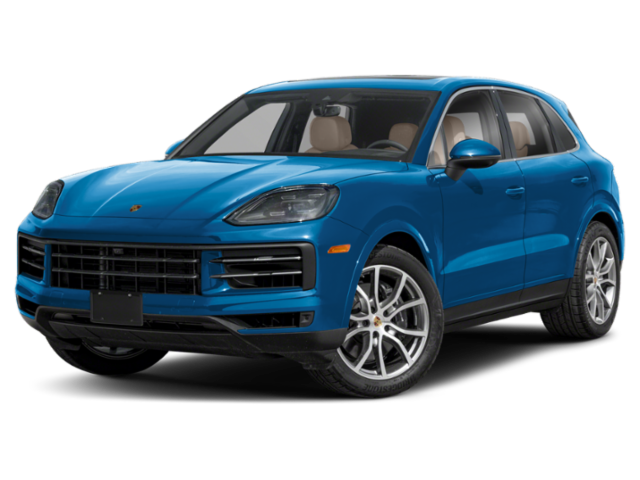
On the other hand, this tech interface’s Home screen only displays three menu icons at a time. It is a poor use of screen space, and while the large icons are easy to press, having so few on screen causes a lot of distracting swiping between multiple Home screen pages. The “Zero Layer” concept in the E-Class is better, as are the interfaces of the GLE’s competitors from Genesis, Lexus, Lincoln, and Porsche.
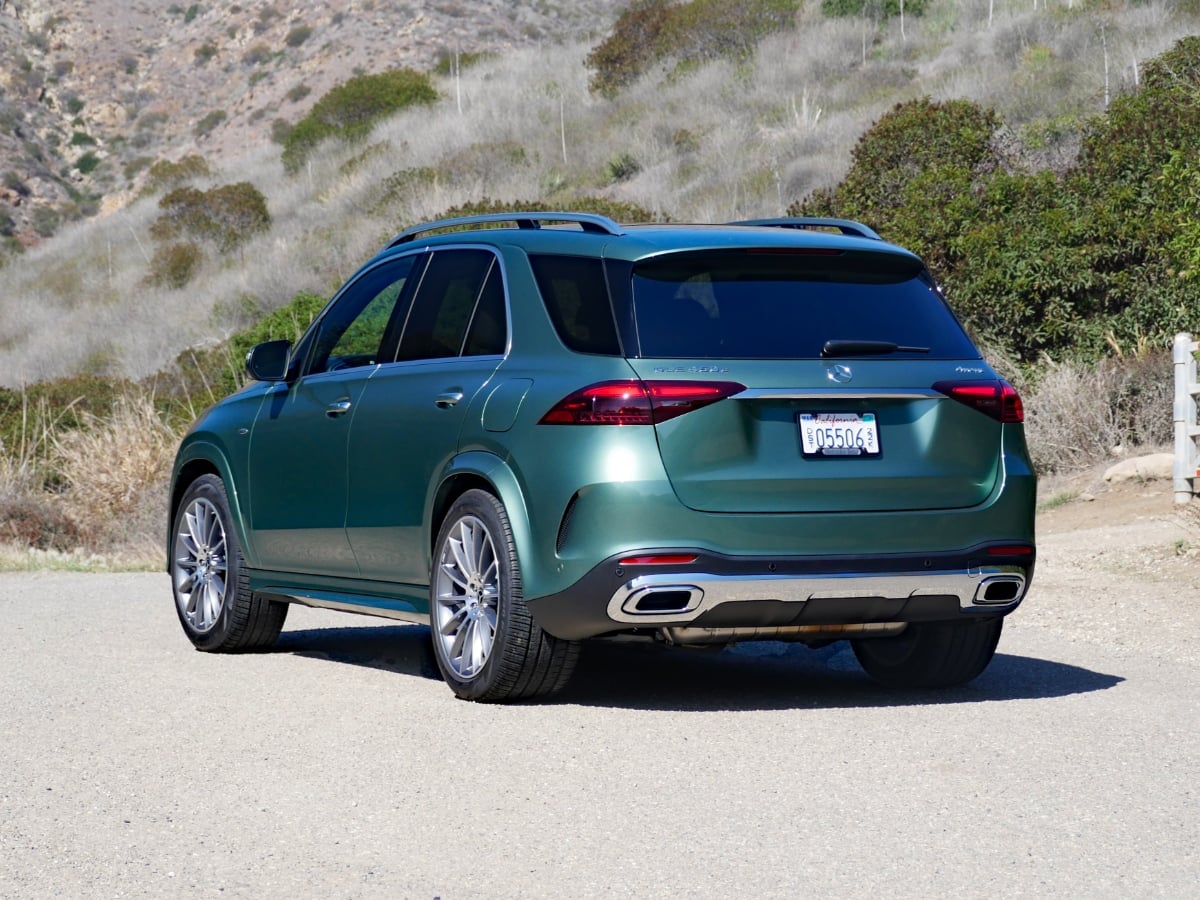
Photo: James Riswick
The plug-in hybrid powertrain in my GLE 450e test vehicle offered a very different driving experience compared to other models. It also, not surprisingly, delivered much better fuel economy, especially when compared to the GLE 450, which is nearly the same price and only slightly quicker.
The GLE 450e drivetrain features a turbocharged inline-four engine, a nine-speed automatic transmission, a 23.3-kilowatt-hour (kWh) battery pack, and an electric motor. Its total combined output is 381 hp. The Environmental Protection Agency (EPA) estimates 50 miles of range in electric-only mode, 23 mpg combined when running on gasoline alone, and 60 MPGe when using the EPA’s standardized mixture of both.
As it turns out, I achieved 60.3 mpg during my 75-mile mixed driving route that started with a full battery. I left the car in hybrid mode, which maximizes the electric range while keeping the engine more readily available (more on that in a moment).
Keep in mind, though, that 75 miles includes a drive up, down, and through the Santa Monica Mountains. Before reaching that point, I had been averaging 84 mpg for the first 59 miles. I also ended the drive with one mile of all-electric range remaining, and the car reported that I relied on the electric motor 71 percent of the time.
The performance story is almost as complex as the fuel economy one. Leaving the GLE in electric mode effectively halves the accelerator travel, resulting in an acceleration that is quite relaxed. You get a smooth initial jolt of electric torque, but beyond that, regular traffic often pulls away at stop lights and on access ramps.
Pushing through the heavy, halfway detent in the accelerator will activate the gas engine and provide the GLE’s full acceleration. Still, an inherent delay often kept me in hybrid mode most of the time.
The GLE 450e offers 60-kilowatt (kW) DC fast-charging capability, but I used my 9.6-kW home charger, which got me back to full charge in just over two hours. As a plug-in hybrid, I did not have to recharge it constantly. It essentially behaves like a regular hybrid, with the electric motor assisting the turbo-four. If worries about recharging are holding you back from fully electric vehicles, this should ease those concerns.
The PHEV powertrain was not the only feature that stood out. The $1,710 Airmatic suspension with air springs and adaptive dampers offered an exceptionally smooth, controlled ride in Comfort mode, especially on the highway. The fact that my test vehicle had 21-inch wheels (compared to the standard 20s) made the luxurious ride even more remarkable.
When I reached the mountain road section of my drive, however, that plushness suddenly turned into rolling and flopping around corners. Not good. Thankfully, selecting Sport mode eliminated that floppiness. It adjusted the firmness to ensure body control without going overboard by futilely trying to achieve a sport-tuned feel that might upset the chassis (and my stomach) while ultimately losing the purpose of this luxury-focused SUV.
This near-perfect duality makes the Airmatic package a must-have in my opinion. Even if you live somewhere with straight, flat roads, the ultra-luxurious ride should be worthwhile. Additionally, the air springs allow you to lower the rear with buttons located in the cargo area, making loading easier.
Common to every non-AMG GLE, however, is the steering, which may be an acquired taste. It feels quite loose at low speeds but tightens up as the speed increases without feeling numb, and it stays firmly straight on the highway. The effort remains relatively light even in Sport mode, making it easier to sense what the tires are doing when driving in the mountains. Overall, I am a fan.
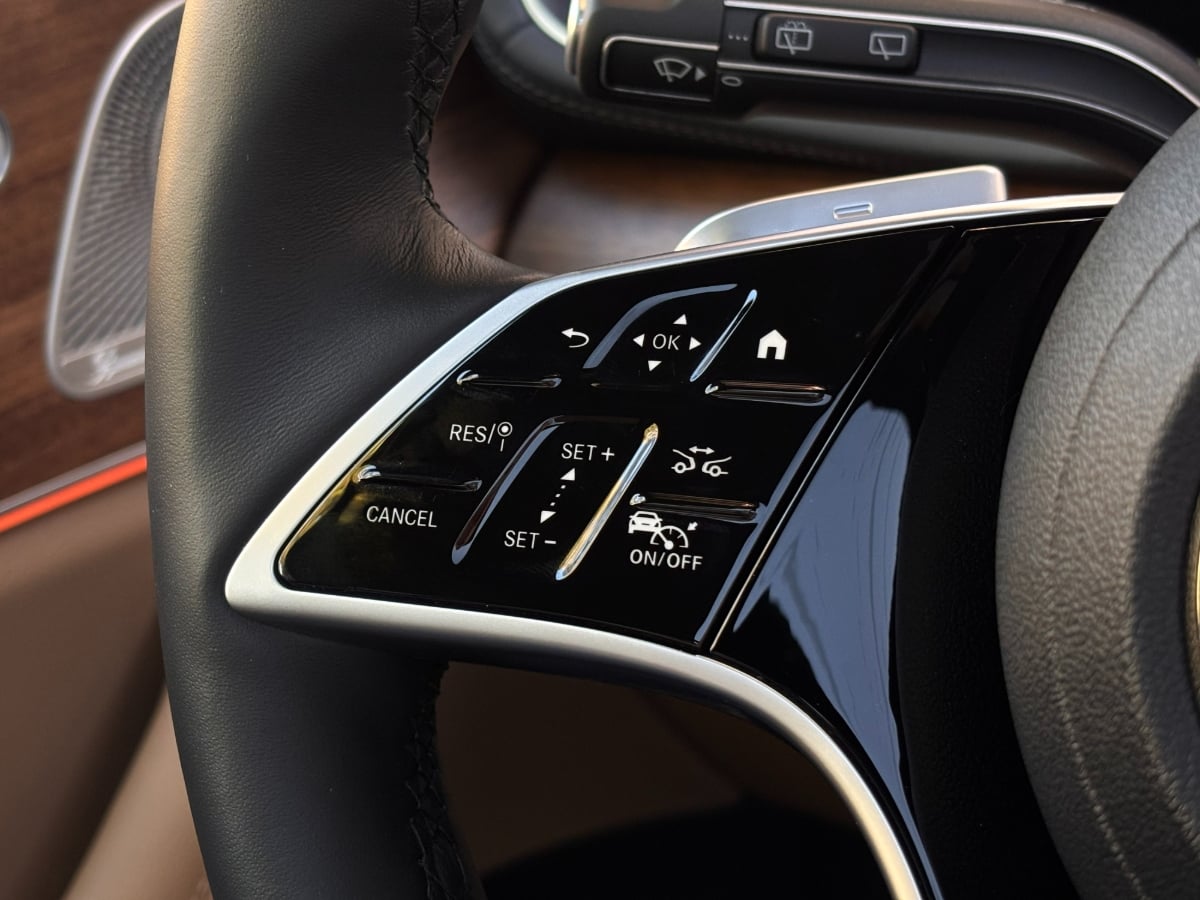
Photo: James Riswick
The GLE is equipped with the following advanced driver assistance systems (ADAS) as standard features.
The Driver Assistance package enhances many of the above ADAS and includes the following features:
With that package selected, the GLE offers one of the most comprehensive ADAS suites available. Most features work well overall, with a few exceptions.
I did not fully trust the lane centering assist around highway corners. It was fine otherwise, since it did not ping-pong between lines. If anything, the ACC was almost too effective. I could tell it was detecting slowing or stopped traffic ahead, but it would brake later and more forcefully than I normally would. This could be unsettling and potentially dangerous for drivers behind.
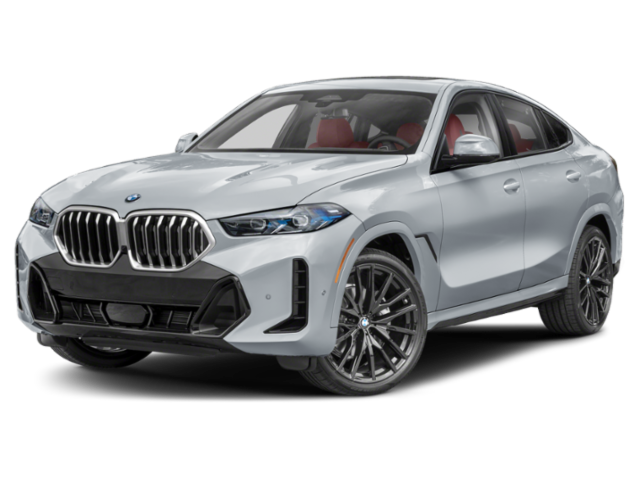
According to the JD Power 2025 Initial Quality Study (IQS), the BMW X6 ranks highest in the Upper Midsize Premium SUV segment. The Genesis GV80 and the Porsche Cayenne are the next highest-ranked models.
According to the JD Power 2025 Automotive Performance, Execution and Layout (APEAL) Study, the BMW X6 ranks highest in the Upper Midsize Premium SUV segment. The Porsche Cayenne ranks second, and the Genesis GV80 and Land Rover Range Rover Sport rank third (in a tie).
Other 2026 GLE competitors include the Audi Q7, BMW X5, and Volvo XC90.