See answers to common EV questions, tax incentives, charging maps & more.
Explore EV
No data
No data
296 - 626
8 speed, Automatic w/OD
Intercooled Supercharger Premium Gasoline V-8, Intercooled Turbo Gas/Electric I-6, Intercooled Turbo Premium Gasoline I-4, Twin Turbo Gas/Electric V-8
All Wheel Drive
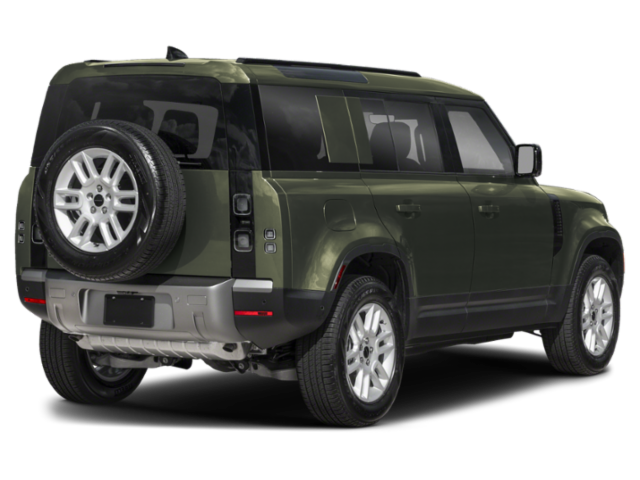
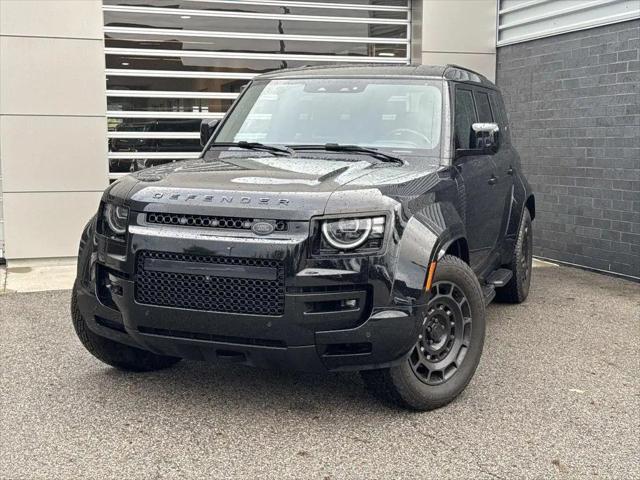
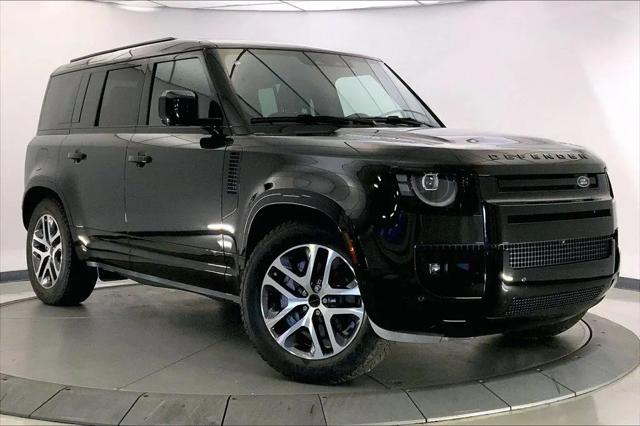
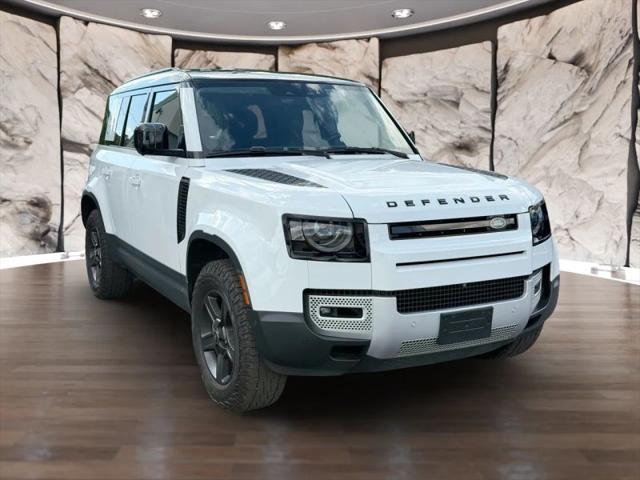
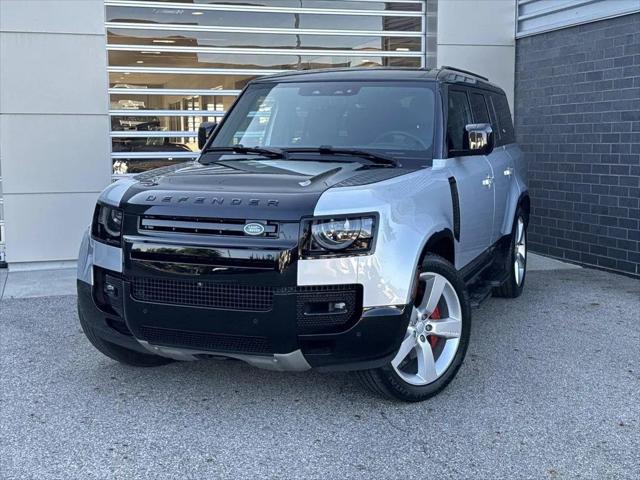
The three-row Land Rover Defender 130 is a brilliant family hauler dripping with character and offering a unique take on luxury. Much of its excellence stems from its sophisticated suspension, which can deliver a best-of-both-worlds combination of a plush ride and rugged off-road capability. That’s right, “can.” My test vehicle did not. It was a cautionary example of how one option can sabotage a vehicle’s defining talents and ultimately limit its appeal.
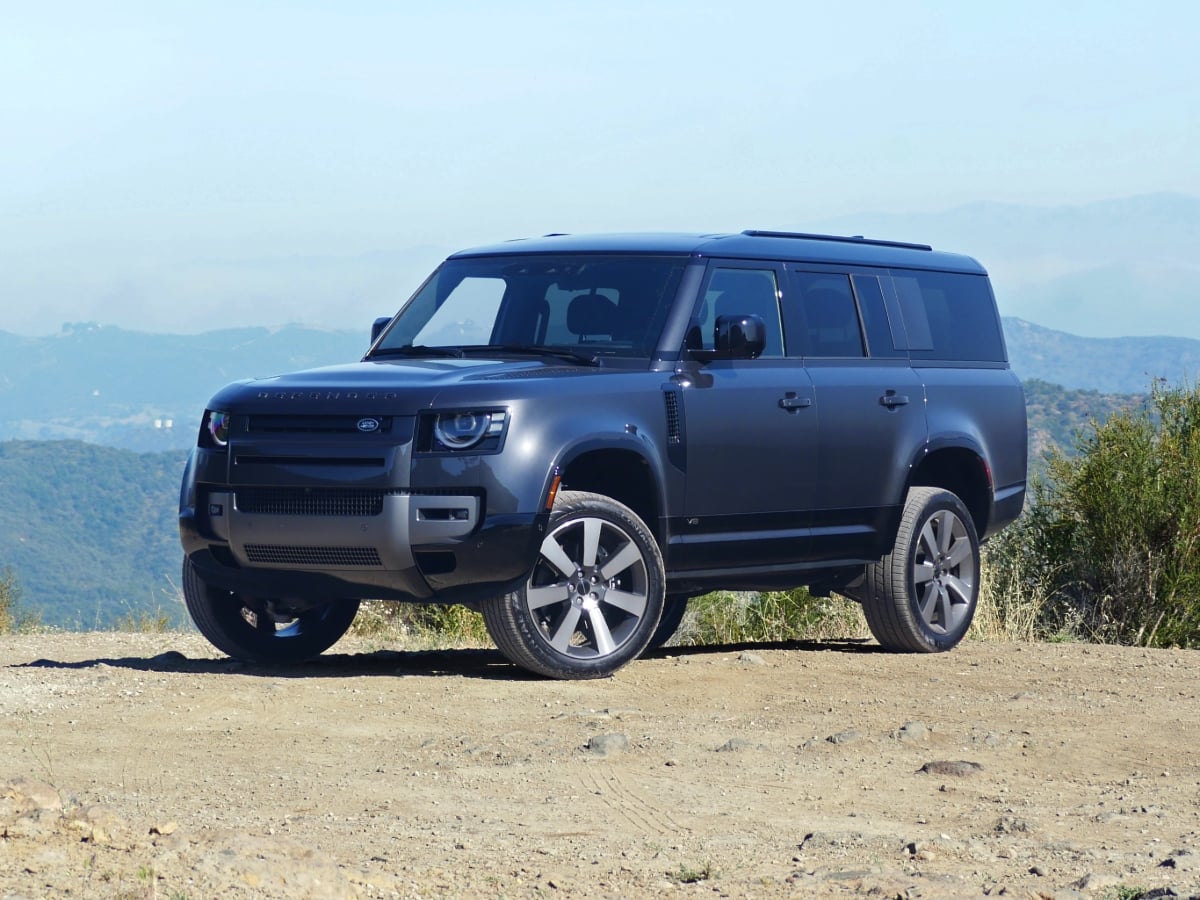
Photo: James Riswick
Substantial changes for 2026 include a larger standard touchscreen, subtly revised styling, an off-road cruise control function, and, for the 130, the option of an integrated air compressor. The Defender lineup gains a variety of new options for 2027, but the base four-cylinder and range-topping V8 engines are discontinued for the 130.
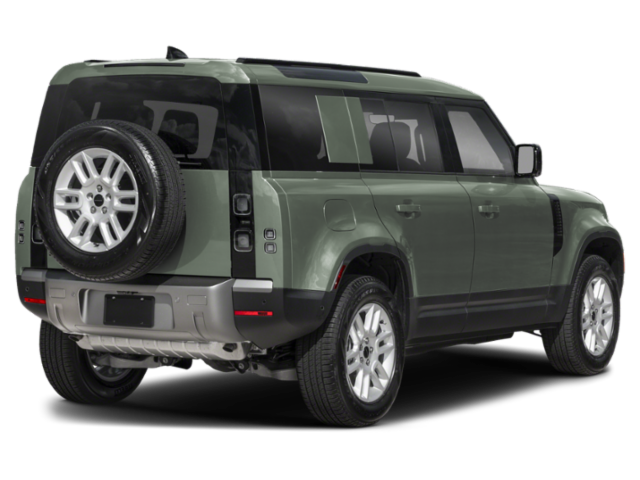
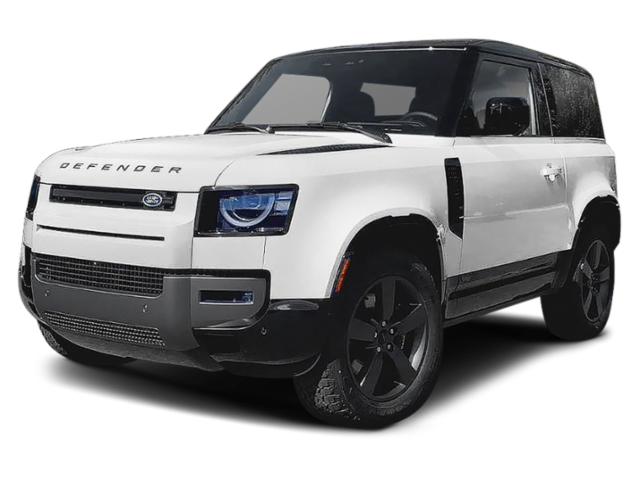
The 2027 Land Rover Defender lineup includes the two-door 90, the four-door 110 that comes standard with two rows and offers a small third-row option, and the extended-length 130 with a larger, more traditional third row. This review focuses on the 130. Looking at the 2027 model, available trim levels are S, X-Dynamic SE, Vertex, and the two-row Outbound version. Base prices range from about $76,000 to $107,000, including the destination charge.
For this 2026 Defender review, Land Rover provided a Defender 130 test vehicle equipped with “V8” trim. Land Rover has since discontinued that trim for 2027. Aside from its engine, however, its equipment list is broadly similar to that of the new Vertex trim introduced for 2027, with a few minor features moving to the options list. A comparable 2027 model, again without the V8, would likely be around $110,000.
My 2026 test vehicle had no major options. The manufacturer's suggested retail price (MSRP) was $129,036, including the $1,850 destination charge. The price does not reflect any current rebates, incentives, or price adjustments since Land Rover manufactured the test vehicle in Nitra, Slovakia.
According to verified owners, the Defender earns an award as the highest-ranked model in its segment in the JD Power 2026 Automotive Performance, Execution and Layout (APEAL) Study.
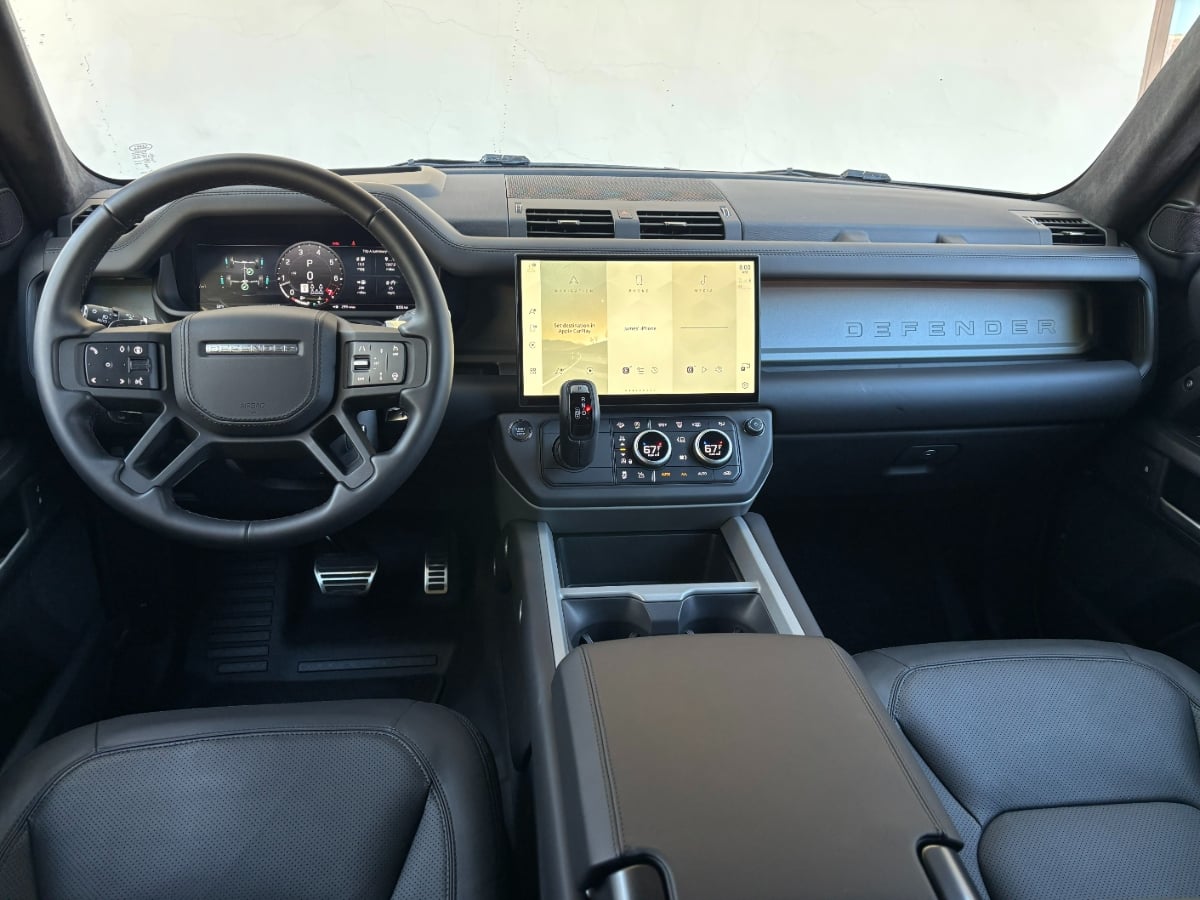
Photo: James Riswick
If you look at pictures of the Defender’s interior, you may not think it looks particularly luxurious, especially compared to a Range Rover. However, the Defender is luxurious in the same way a finely tailored tweed suit, a durable field coat, or an impeccably crafted watch is. The quality stems from its components and craftsmanship rather than from showy trim and technology. Everything you touch feels more expensive than the norm.
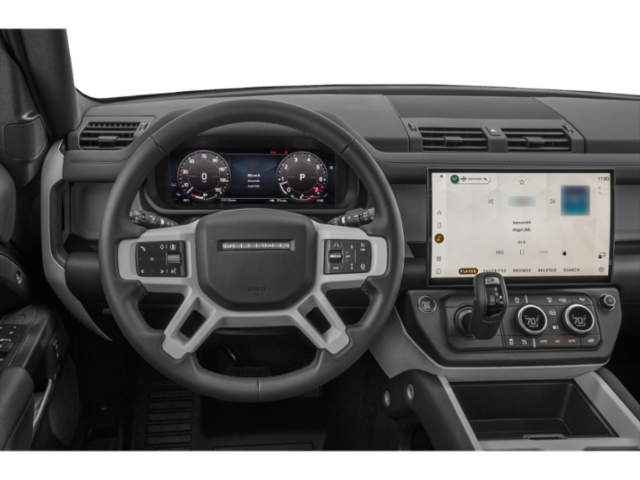
The front cabin is also highly functional. The center console features a bin that is big enough for sunglasses and other small items, and it slides under the dashboard to reveal an even deeper bin below. The adjacent cupholders were also big and grippy enough for my usual jumbo test cup and bottle. Shelves to the left of the wheel and in front of the front passenger should be useful for odds and ends, too.
The wireless smartphone charging pad is well placed and grippy, preventing my phone from sliding around, but it often failed to actually charge my phone, and when it did, it overheated it. So that is not great.
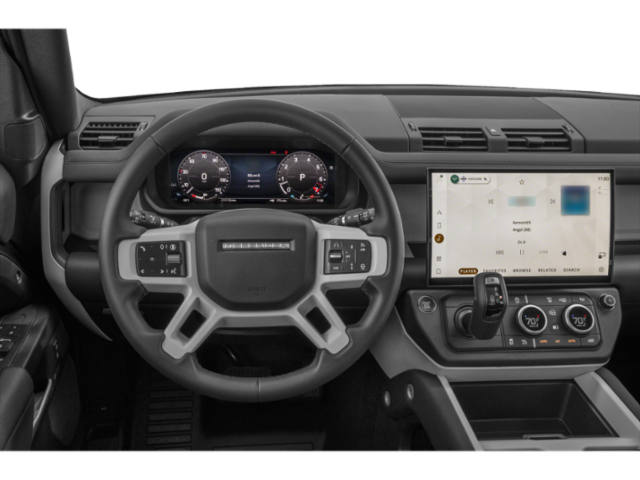
Neither is the control panel next to the shifter, which jumbles together buttons and knobs for the climate system and various vehicle controls. Do you want to increase fan speed? Oops, you engaged the “Rock Crawl” drive mode instead. Even the temperature adjustment knobs double as the heated and ventilated seat controls. Push the knob, then twist left (ventilation) or right (heating).
Thankfully, there is more to love. The front seats are very supportive and mounted high. Together with the tall windows, they provide a commanding view over the broad, flat hood.
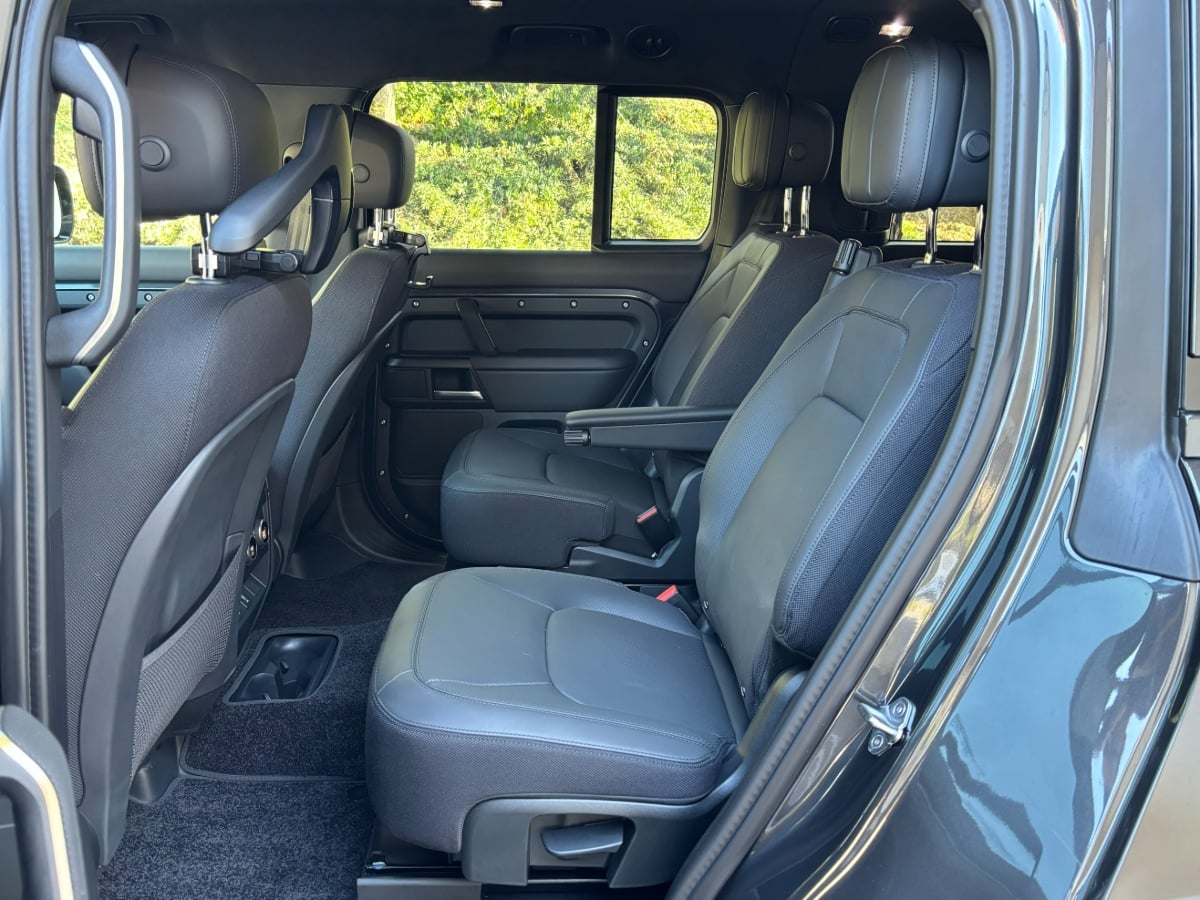
Photo: James Riswick
The space between the first and second rows is a bit tight if a tall driver is up front, but the second-row seats are so high that I still fit comfortably in their more chair-like position. The captain’s chairs themselves, an option for 2027, are similarly supportive as those up front and even come with the locking, angle-adjustable armrests that Range Rovers has had in the front row for years. The cupholders built into the floor hump are not very elegant, however.
The third row is not the most spacious, but it is very good by luxury standards. The seat is mounted relatively high, there is decent space to the second row, headroom is abundant, and the large windows provide an airy feel. At 6-foot-3, I was surprisingly comfortable back there. There are also pillar-mounted air vents and LATCH anchors for child seats. Unfortunately, access is hampered by a steep climb inside and a tight gap between the pillar and the captain’s chair.
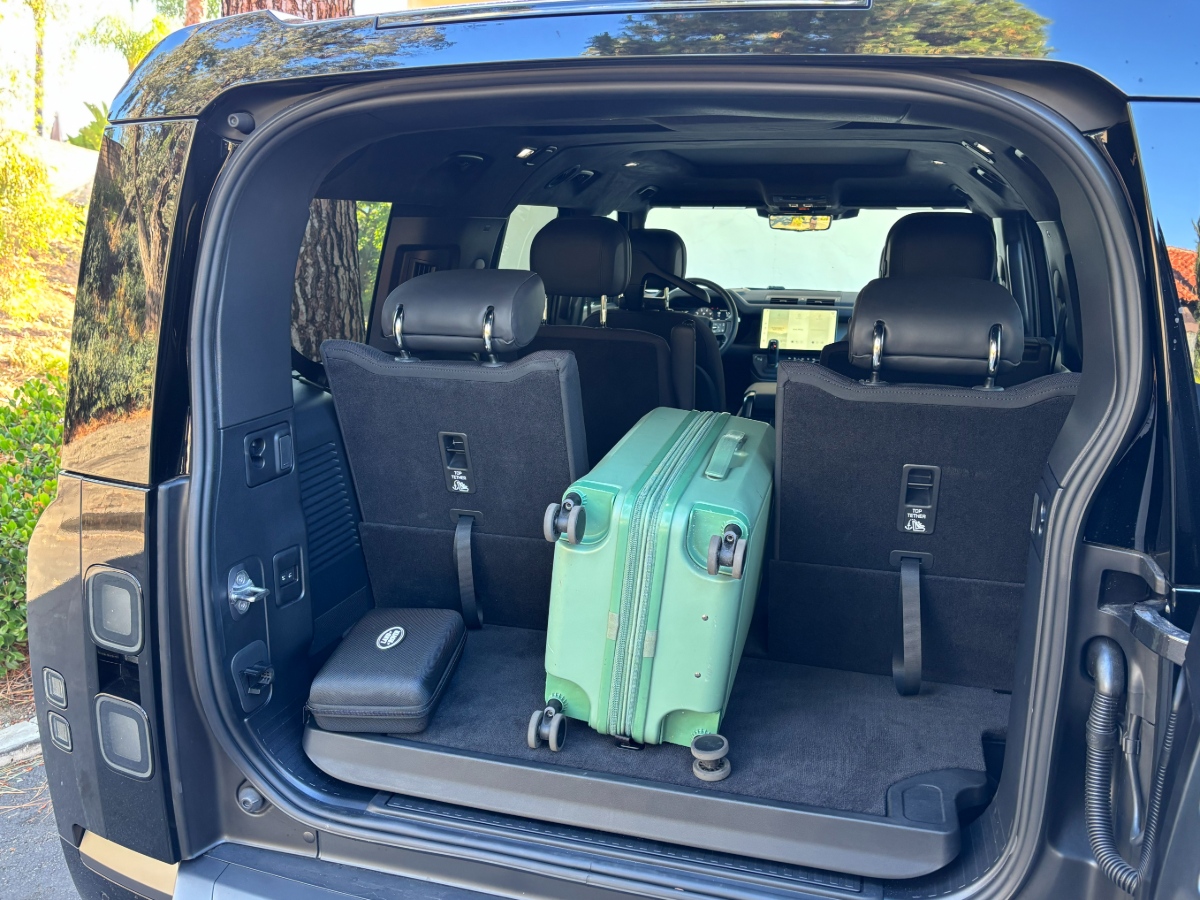 Photo: James Riswick
There is not much cargo space left when the third row is raised, but the Defender is so boxy that I could fit a medium-sized, check-in roller suitcase upright next to a pair of roll-aboard suitcases on their sides. That is much better than the 14.8-cubic-foot volume specification suggests and is actually quite good given what I found with other luxury three-row SUVs.
The 130 also features a distinctive 40/20/40 split in the third row. I could fold the 20 portion, slide in one of the roll-aboards, and still have room for bags on either side, and for two passengers in the two 40-seat portions.
Alternatively, lowering the third row yields 48.8 cubic feet of cargo volume behind the captain’s chairs (2027 figures). That is 8.6 cubic feet more than the Lexus GX and 12.6 cubic feet more than the two-row Defender 110.
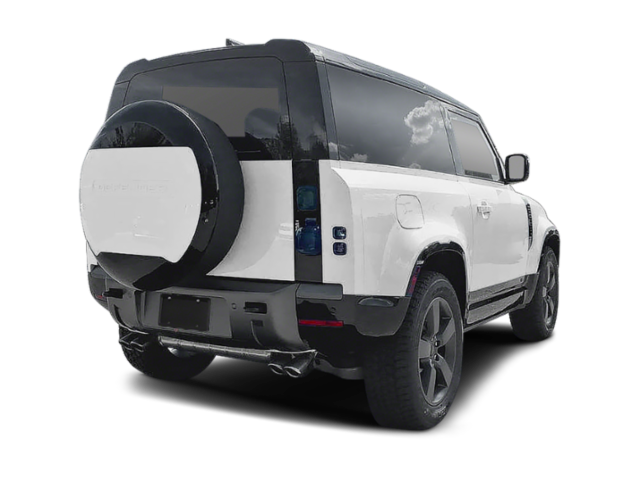
One more cargo related note: the Defender has a swing gate that opens toward the curb and does not have a power-opening mechanism. I also discovered that the gate-mounted spare tire can interfere with using the trailer hitch for a bike rack, the tire extends into the space where the closer of two bikes would be. Using a hitch extender might be necessary.
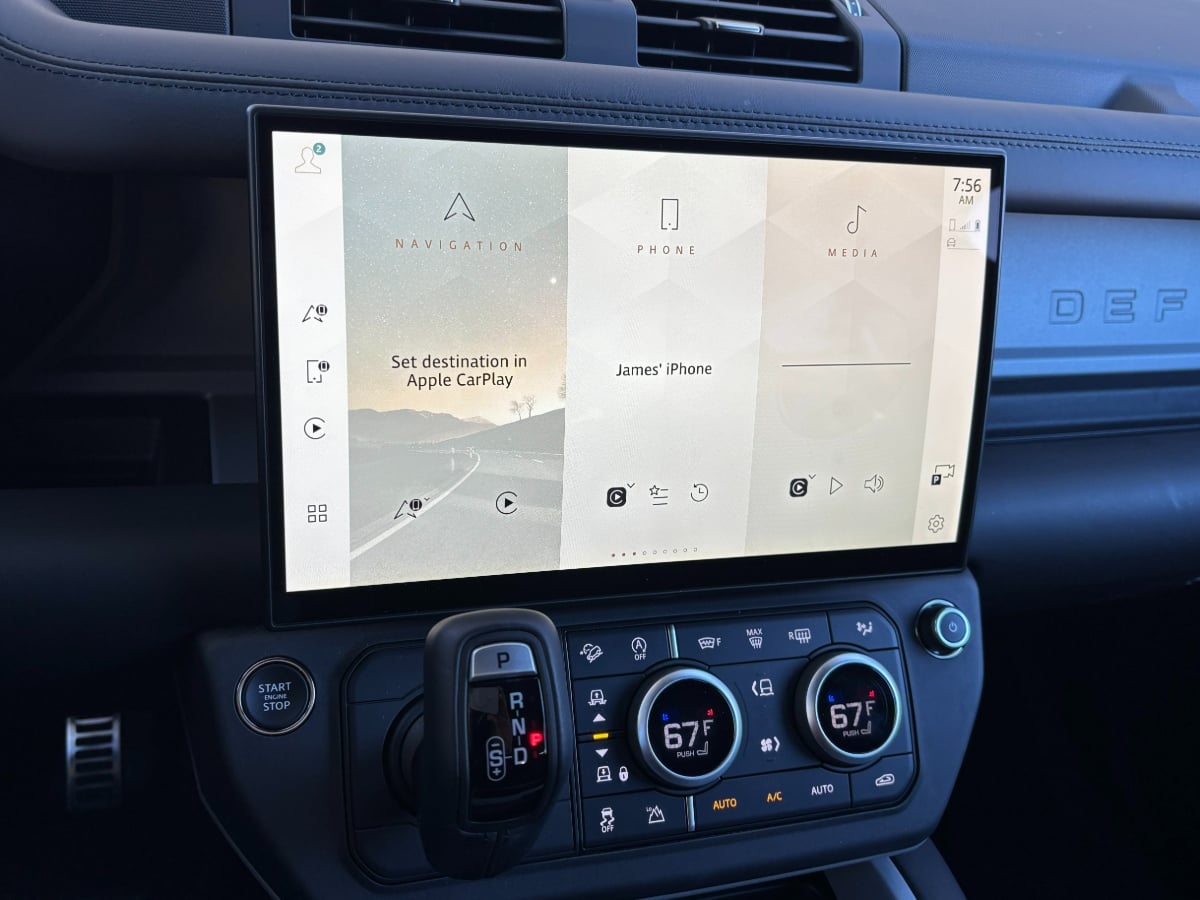
Photo: James Riswick
The Defender 130 comes standard with a 13.1-inch touchscreen featuring Land Rover’s Pivi Pro interface. It also includes a digital instrument panel and an optional head-up display. Standard features include:
In addition to the head-up display, upper trims are eligible for a 14-speaker Meridian surround-sound system. My test vehicle had both.
Overall, this system is tolerable. The interface can be slow at times, and the layout is convoluted. It also has a pet peeve of mine: the radio menu displays the SiriusXM favorites list and current song information on separate screens. I was able to use the voice controls to summon a specific station, though, so that is nice.
You can switch between the native navigation system and Google Maps via Apple CarPlay using a shortcut button on the left side of the screen (nice!), but it would forget my selection after I got out of the car (bad!). This became annoying during a road trip. I would make a pit stop, and when I got back in, it would pull up Google Maps, even though I had been using the native system. Not a big deal, certainly, but it speaks to a lack of polish. That said, if you rely primarily on Apple CarPlay or Android Auto, I cannot see this interface being a deal breaker.
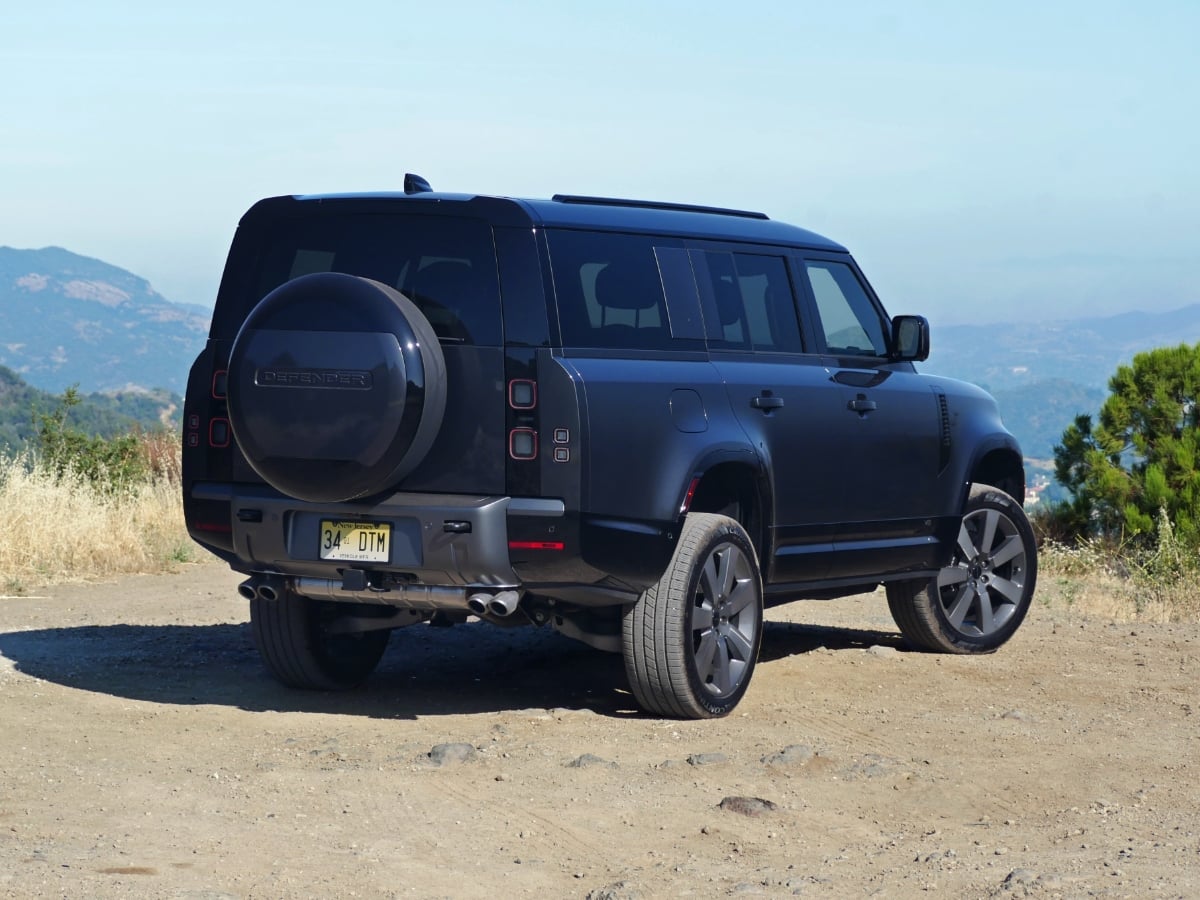
Photo: James Riswick
My 2026 Defender 130 had the now-discontinued 5.0-liter V8, which produced 493 horsepower and 450 pound-feet of torque. It got a dismal EPA-estimated 16 mpg combined, and I saw 19.4 mpg over 289 miles of mostly highway driving. Ultimately, the V8 was overkill, and despite sounding cool, its absence is OK.
In fact, I have tested a 130 with the 395-hp, turbocharged 3.0-liter inline-six, now available across all 130 trims except the base S. I found it provided ample power to move the biggest and heaviest Defender. I actually thought it would be fine with less power, which could be good news for the base S, which has a 296-hp turbo inline-six.
At the time of writing, fuel-economy estimates for 2027 have not been published, but the more powerful inline-six returned an EPA-estimated 18 mpg combined in 2026. That is still pretty bad, but it is better than the smaller, less powerful Lexus GX 550.
However, the engine was not the only thing that differed between my V8 test car and the last Defender I drove. While that had 20-inch wheels, this 130 V8 came equipped with 22-inch wheels, a size that is still available for 2027, including as standard equipment on the new Vertex trim. This would be the “cautionary example” option I mentioned at the beginning of this article.
The Defender features an electronic air suspension that raises and lowers for access and increased ground clearance, along with adaptive dampers that control body motion and limit body roll. The resulting ride quality can be sensational. There is a plushness to how the suspension responds to bumps, yet there is practically no rebound even after the biggest bumps. If this were the previous Defender I tested, my review would have ended there.
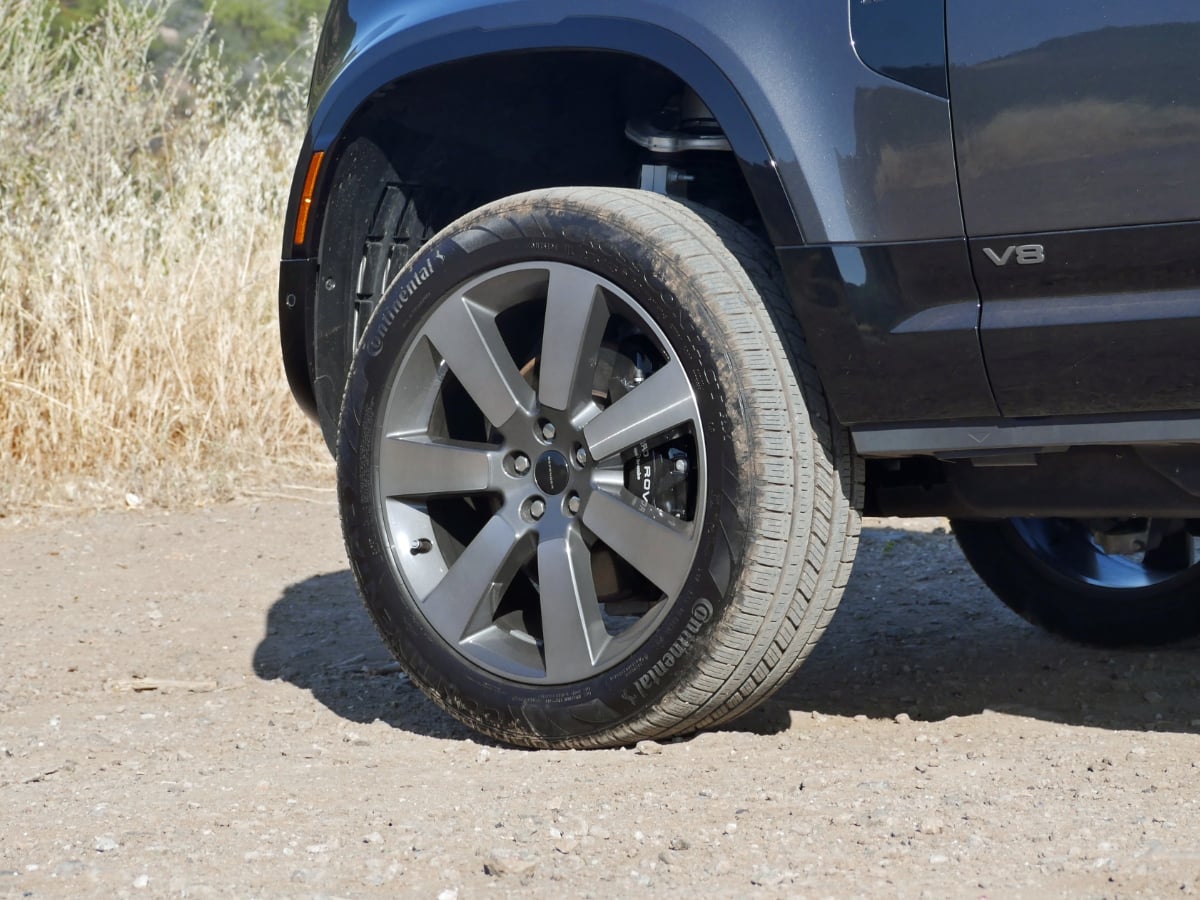
Photo: James Riswick
Alas, the 22-inch wheels introduce constant harshness. Every bump is transmitted throughout the Defender and into your body. Sharp bumps, in particular, are jarring. Quite simply, the wheels work against the Defender's sophisticated and incredibly impressive suspension.
It gets worse. This is a Land Rover Defender; one expects it to traverse land, and indeed, that height-adjustable suspension and other hardware make even the extended-length 130 well prepared for that task. I have off-roaded in one before; it was terrific.
And yet, on the same trail, those silly wheels betrayed the cause. The all-season tires provided just enough grip to get me up the off-road course’s 40-degree incline, but I was extremely wary of what the many sharp rocks strewn about might do to their low-profile rubber. I was even more concerned that the trail’s deep ruts and big rocks would severely damage the wheels.
Putting these 22s on a Land Rover Defender is like kitting yourself out from head to toe in the best backpacking gear at an outdoor store only to show up on the trail wearing high heels. Whether on- or off-road, the 22s neuter some of the Defender’s finest attributes.
It is not like they appreciably improve handling, either. Those adaptive dampers may limit body roll, but there is still plenty of it around corners, and the Defender always felt big and heavy on winding roads. Nothing encourages you to drive it quickly, and that is OK. It is a Land Rover Defender, but it is also another reason to ditch the V8.
Kudos to the steering, though, which is precise and buttery-smooth in its motions and reassuringly spot-on whether on a winding road, around town, or on the highway.
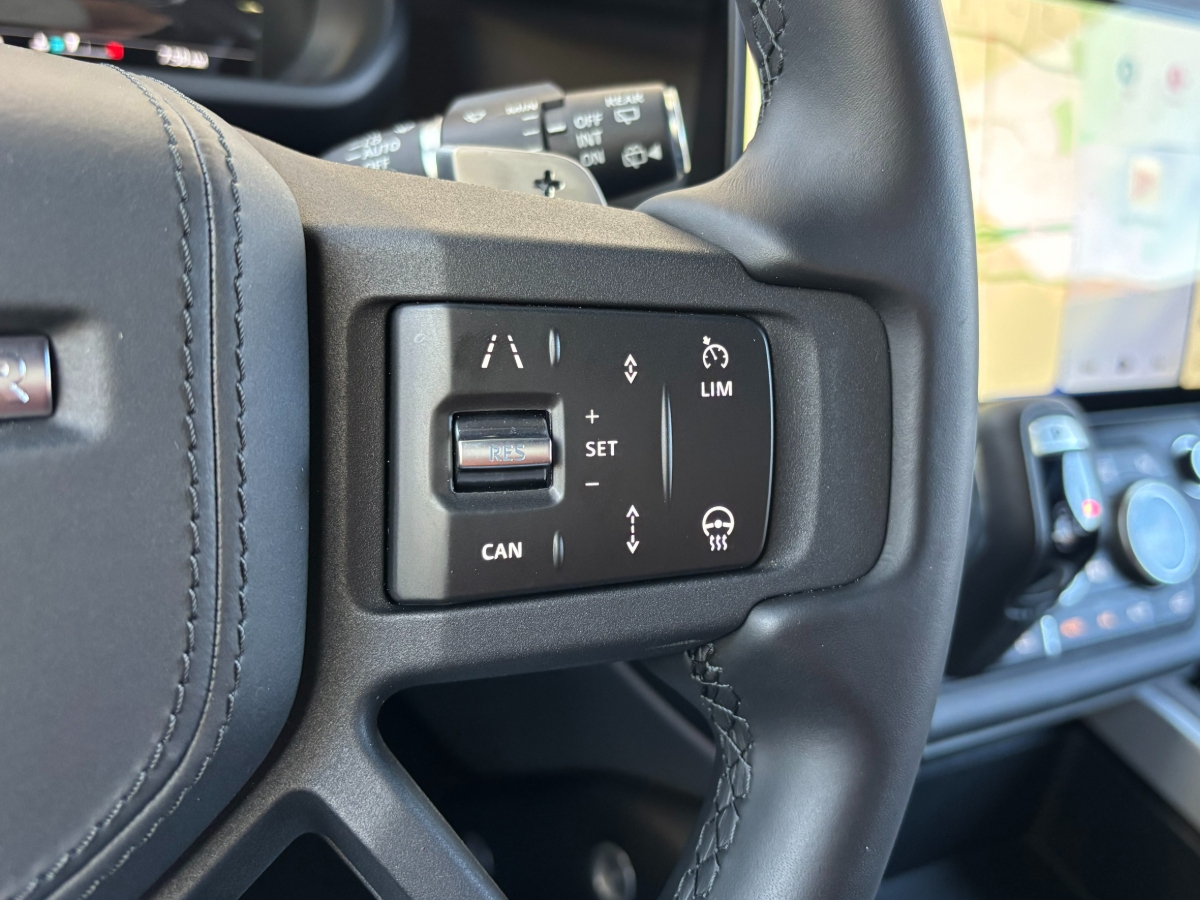
Photo: James Riswick
Land Rover does not skimp on standard driver assistance systems (ADAS). Everything listed below is standard:
Unfortunately, those features are not the best. The lane keeping assist did an OK job; it was not too intrusive, and I could keep it engaged on tight, winding roads. However, there were also times when it would randomly intervene even though I was very much in control of the steering wheel. There is also no lane centering assistance tied to the adaptive cruise control (ACC) system.
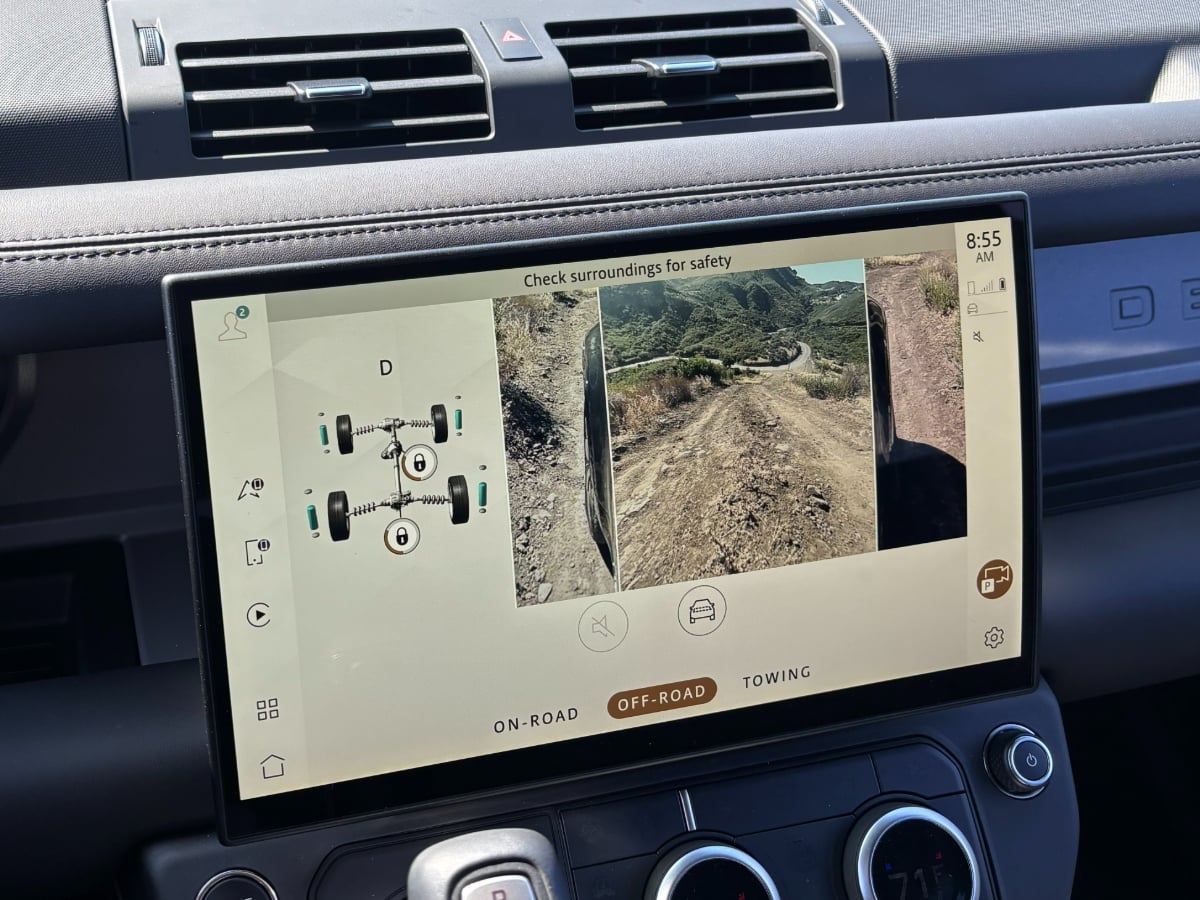
Photo: James Riswick
Speaking of which, ACC seemed unsophisticated. Even the smallest following distance setting left too large a gap to the cars ahead. Even if that may be prudent for a big, heavy vehicle like the Defender 130, it would also wait longer to brake than I or other ACC systems would, necessitating sharper braking. It would then be too slow to speed back up again. It also automatically defaults to the farthest distance setting when you turn the SUV off and on.
Then there are the controls, which make as much sense as that salad of climate/vehicle controls. The set/resume toggle is confusing, as is the weird LIM button that activates both ACC and Land Rover’s unusual speed limiter. Push twice for one, push once for the other? Maybe? Throughout my road trip, I remained completely flummoxed by it.
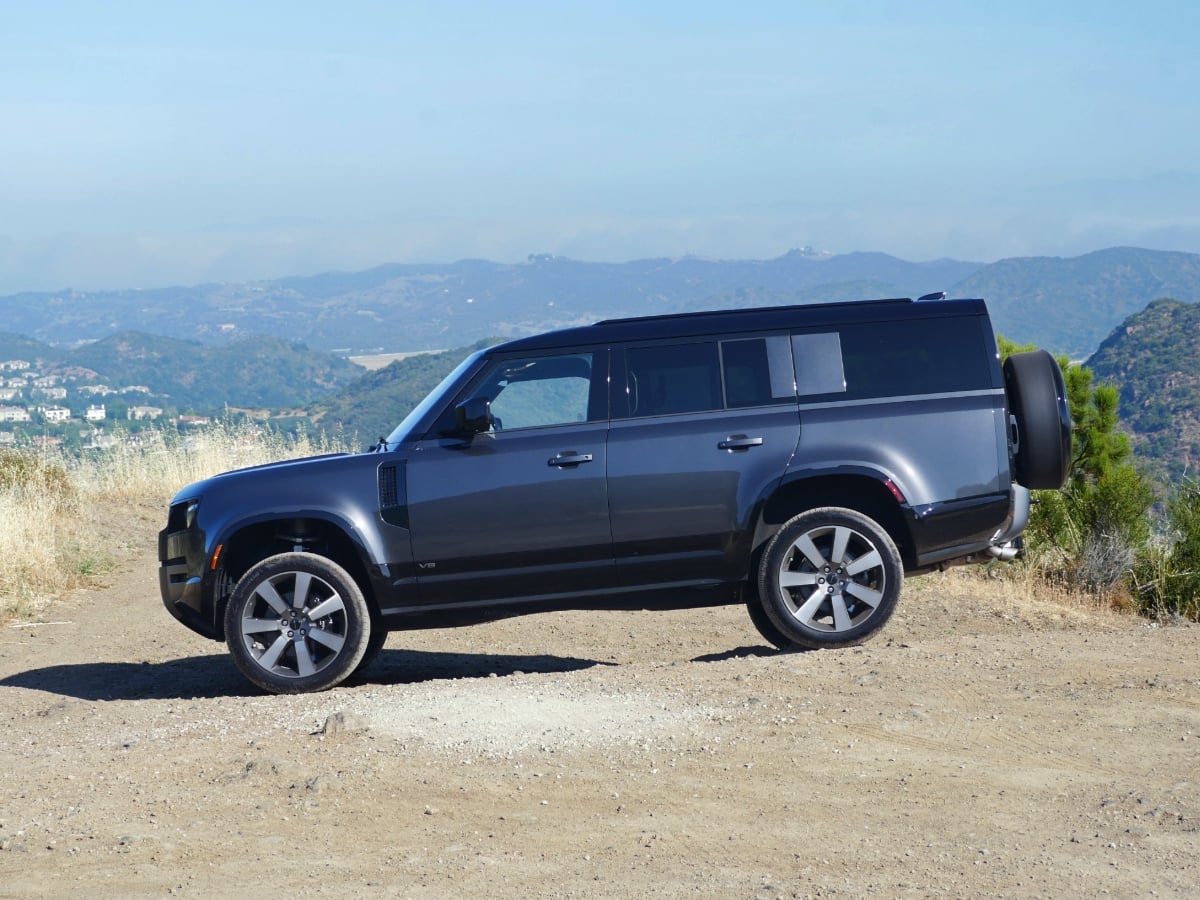
Photo: James Riswick
According to the JD Power 2026 Initial Quality Study (IQS), the Cadillac XT5 ranks highest in the Midsize Premium SUV segment, with the Lexus RX and Lexus TX ranked second and third, respectively.
According to the 2026 APEAL Study, the Land Rover Defender ranks highest in the Midsize Premium SUV segment, with the Lincoln Nautilus and Cadillac Optiq ranked second and third, respectively.
Other 2026 Defender competitors include the Acura MDX, Infiniti QX60, and Lexus GX.
First, do not get a Defender with the 22-inch wheels, even if that means skipping the new Vertex. Second, it is OK that Land Rover discontinued the V8 for the 2027 model year. Third, if you have the budget for one, I cannot think of a better family vehicle for long, adventure-seeking road trips. It has some strong negatives, to be sure, but its breadth of capability, combined with its honest luxury, distinctive character, and genuine practicality, makes it deeply desirable.
James Riswick has been testing and reviewing cars since 2007 and has served as an editor at Edmunds and Autoblog. In addition to jdpower.com, he has also contributed to Autotrader, Autoguide Magazine, Auto Express, Capital One Auto Navigator, Car and Driver, and Hagerty. He resides in Southern California and owns a 1998 BMW Z3, a 2013 Mercedes-Benz E350 Wagon, and a 2025 Cadillac Optiq.