See answers to common EV questions, tax incentives, charging maps & more.
Explore EV
22 - 24
30 - 31
186 - 227
6 speed, Automatic w/OD
Intercooled Turbo Regular Gasoline I-4, Regular Gasoline I-4
All Wheel Drive
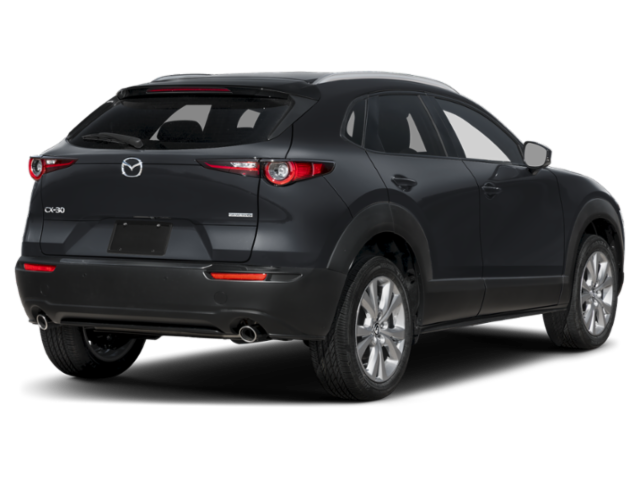
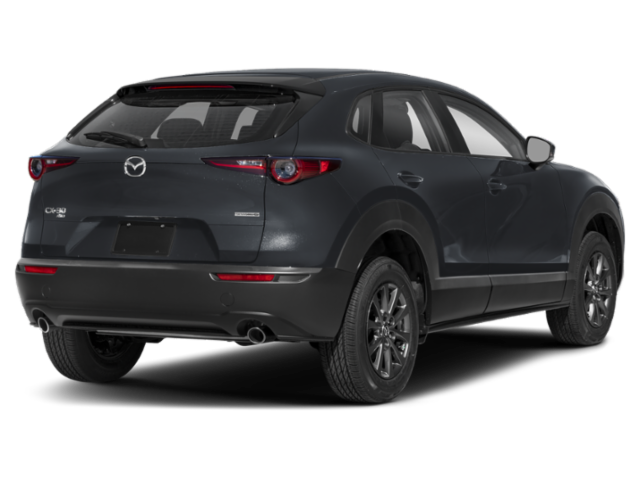
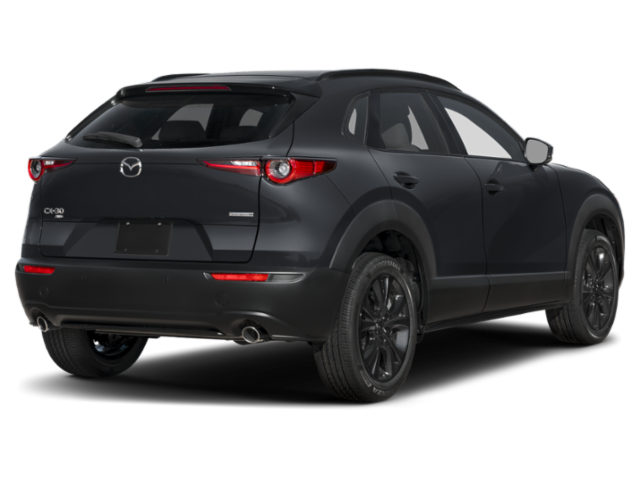
In an automotive sea teeming with SUVs, Mazda often builds vehicles with more driving verve than most and offers an interior quality that is a cut above the mainstream. That is the case with the 2026 CX-30, despite being a bit snug inside and shy on non-turbo power. For single folks or couples looking for small SUVs with a zest for driving fun and design flair, the CX-30 could fill that niche.
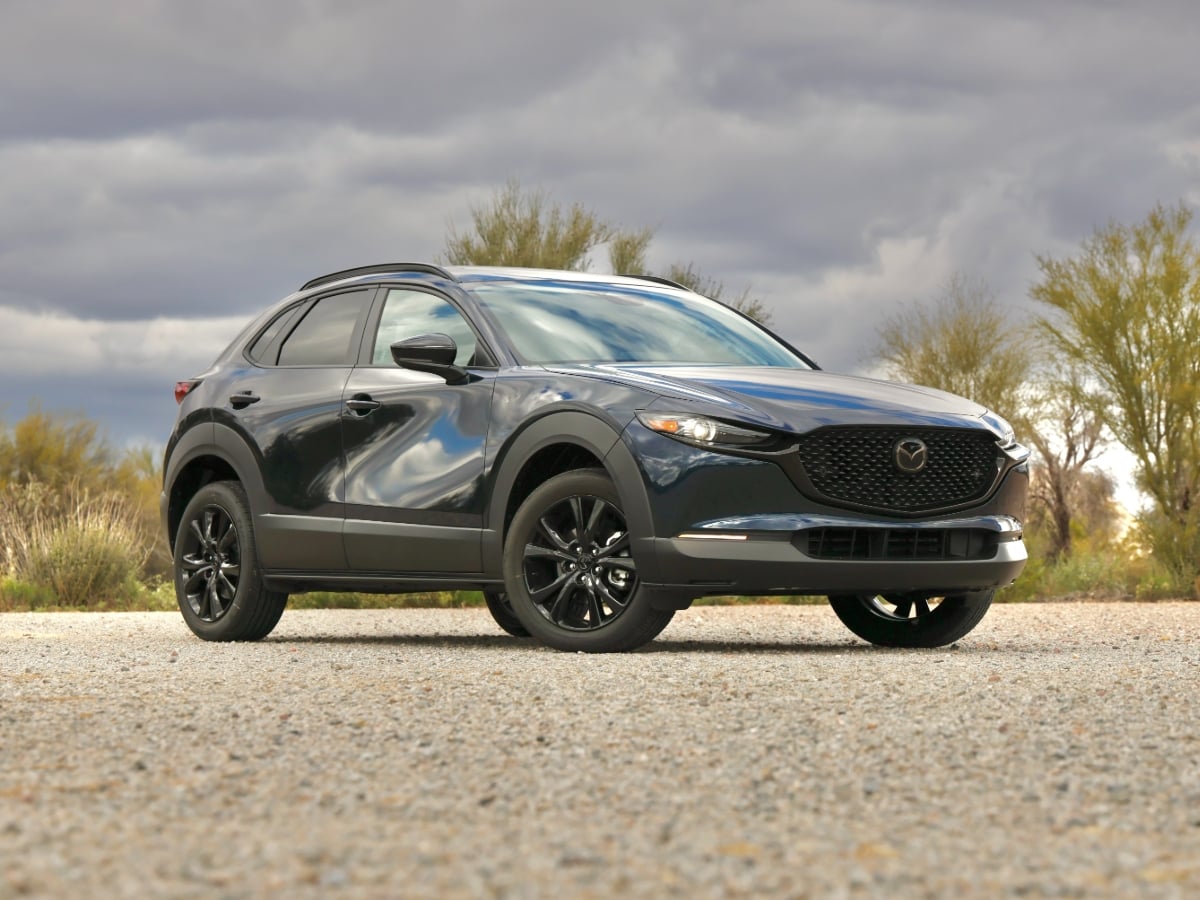
Photo: Jim Resnick
Mazda updates the 2026 CX-30 trim levels with the new 2.5 S Select Sport and Aire Edition. A new limited slip front differential debuts, and G-Vectoring Control Plus and off-road Traction Assist are now standard.
All told, the non-turbo CX-30 is available in S, Select Sport, Preferred, Aire Edition, Carbon Edition, and Premium trims. The turbo CX-30s are available in Aire Edition and Premium Plus trims. Base prices range from about $28,000 to around $40,000, including the destination charge.
For this 2026 CX-30 review, Mazda provided a 2.5 S test vehicle with Aire Edition trim, along with optional native navigation, illuminated door sills, and a rear cargo cover.
The test vehicle’s manufacturer suggested retail price (MSRP) was $33,035, including the $1,495 destination charge to ship the crossover SUV from the Salamanca, Mexico, assembly plant to a local dealership. The price does not reflect any current rebates, incentives, or price adjustments since Mazda manufactured the test vehicle.

Photo: Jim Resnick
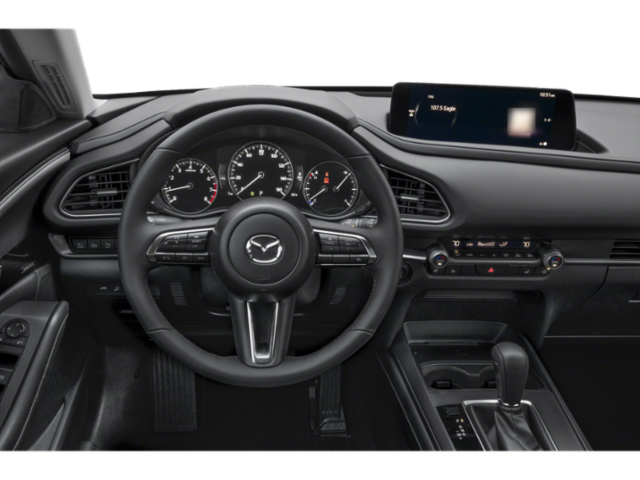
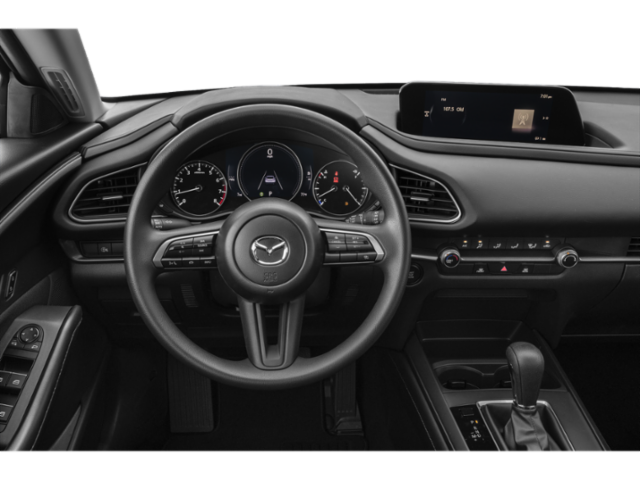
The 2026 CX-30 SUV reflects Mazda's tailored, crisp look, despite its compact size. The interior feels more expensive than the window sticker suggests, with materials, quality, and interior design meeting near-luxury standards. In addition, the instruments have a clear, high-quality look reminiscent of late '70s and '80s BMWs, which I think set a high-water mark.
Despite the above, not everything inside is perfect. The dashboard is partly covered in suede, which looks and feels odd. The dashboard sits oddly close to the passengers, making front passenger space feel tighter. The front seat bottoms provide little thigh support, so leg fatigue can set in. Also, the center console cannot open when the left seatback is folded; a minor but annoying oversight.
Thankfully, climate controls use hard switches, so there is no hunting around the infotainment screen to change them. However, these switches are small and lie in a horizontal plane, not vertical, which makes them slightly hard to read.
The rear seat is quite small, too. For example, the Kia Seltos offers 38.0 inches of rear legroom, compared with the CX-30's 36.3 inches, yet the difference feels even greater than the numbers suggest.
The CX-30 also has less cargo space, at 20.2 cubic feet compared with the Seltos' 26.6 cubic feet. However, even with this space deficit, the CX-30 still accommodated a hefty load of bulky equipment one evening during my test period without requiring me to fold down the rear seatbacks. This also kept all that gear out of prying eyes.
There is a modicum of forward cabin storage in the center console, door pockets, and the cupholder and wireless smartphone-charging mat, but the CX-30 Aire does not break any records for front storage. Rear passengers have bottle holders in the doors and cupholders in the fold-down armrest, but must make do with a single map pocket in the passenger-side seatback.
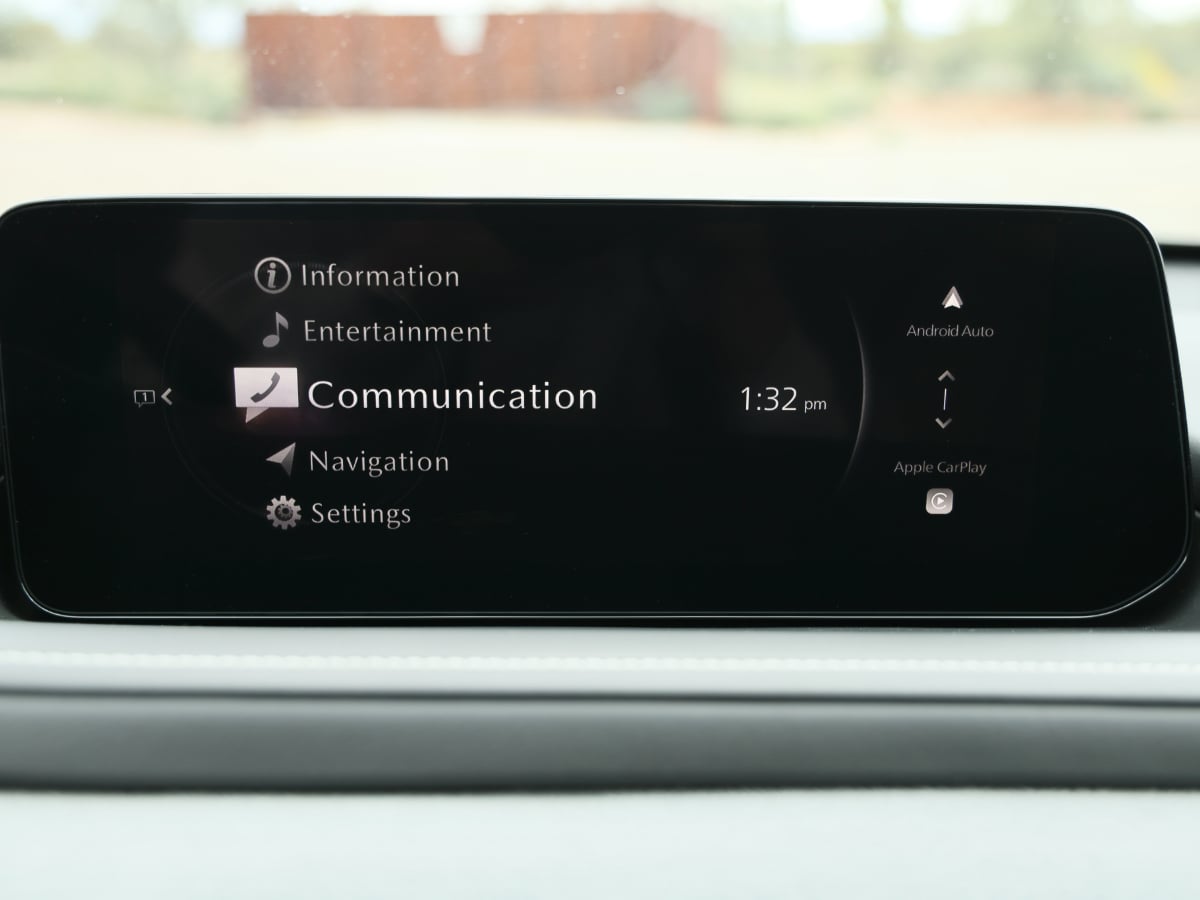
Photo: Jim Resnick
Lower Mazda CX-30 trims get an 8.8-inch Mazda Connect infotainment screen as standard equipment. From the 2.5 S Preferred up, including the tested Aire Edition, Mazda fits a 10.25-inch display with a touchscreen and a multi-function center console "Commander" control.
Standard features across all 2026 CX-30s include:
Optional trims add wireless Apple CarPlay and Android Auto, touchscreen support for both, Alexa Built-In, native navigation, and a 12-speaker Bose premium audio system.
The CX-30 Aire's 10.25-inch infotainment screen renders basic graphics with very good clarity. It also features the aforementioned touchscreen activation for Apple CarPlay and Android Auto selections, but not for the rest of the native systems.
A small set of prompts gives you voice control of the native Mazda Connect infotainment system. However, even with those prompts, the system repeatedly failed. Most CX-30 trims have Alexa Built-In, so signing in to Amazon alleviates this issue. Alternatively, you can use Siri or Google Assistant via CarPlay or Android Auto, as I did, and bypass the easily befuddled Mazda Connect.
The standard eight-speaker audio system covers the basics, but it does not render Bach, Bill Evans, or Boston with the reverie any of them might have wished for. Like other Mazdas, the CX-30 places its volume knob on the console near the shifter. It is an unorthodox location, but it makes a certain amount of sense: it keeps the screen and dashboard free of a dial and allows your front passenger to reach it easily.
Speaking of reach, the test vehicle's infotainment screen lets you select certain Apple CarPlay and Android Auto options by touch. While that is helpful in theory, the CX-30's actual screen sits deep in the dashboard, far enough away from both the driver and passenger, to render that option largely irrelevant.
Mazda places the infotainment "Commander" multi-function dial just aft of the shifter. By now, almost all automakers have moved to touchscreens and removed rotary dials from their interiors. Still, it works like other early-generation knobs, such as BMW's old iDrive, but it is undamped and weightless, and it feels a bit cheap.
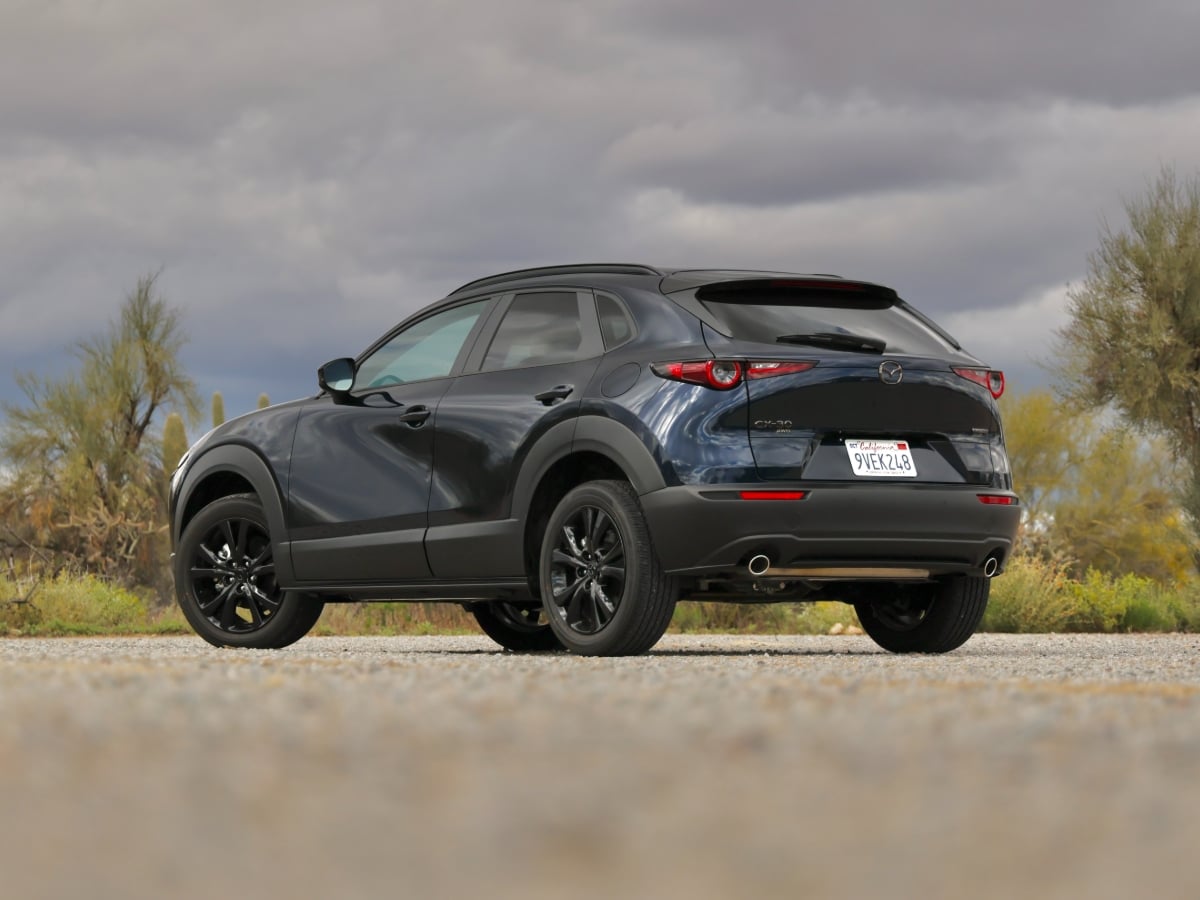
Photo: Jim Resnick
Powered by a naturally aspirated 2.5-liter inline-4 producing 186 horsepower and backed by a six-speed automatic transmission with selectable shift modes, the non-turbo CX-30 returned an impressive 31.4 mpg average in my mixed driving cycle, and I hardly babied it. Meanwhile the Environmental Protection Agency (EPA) rates it at just 27 mpg in combined driving.
Efficient though it may be, the 2.5-liter CX-30 does not exactly light up a dragstrip. It has just enough gumption to avoid the slow category, but the lively, responsive chassis deserves a bit more from the non-turbo powertrain to make the engine/handling equation a balanced meal. However, the Mazda's big four-cylinder never gets extremely vibrational like some other large fours.
The Sport drive mode in the six-speed automatic transmission helps keep the engine in the meatiest part of its power curve, and I left it there for much of the test period. However, for my controlled mileage run, I left it in Normal mode. Even if the CX-30 does not have steering wheel paddles for manual shifting, it does allow manual shifts at the gear lever itself, and I used it often.
Although it is not a sports car like Mazda's own playful Miata, the CX-30 takes to back roads well. On several favorite sinuous test roads, the CX-30 happily danced through their curves and hills. Mazda tunes the suspension for controlled body roll, but the communicative steering and responsive brake pedal are just as in tune with this type of driving as the springs and updated shocks.
On the freeway, the CX-30 2.5 S Aire keeps that lively feel going, with plenty of feedback through the wheel and seat. It does not drone on endlessly, either from the engine or the chassis, as it holds a steady heading at 75 mph, but it reminds you this is a small SUV with a more sporting character than most. For the old school, floating-on-air Dream Whip ride, you will need to look elsewhere.
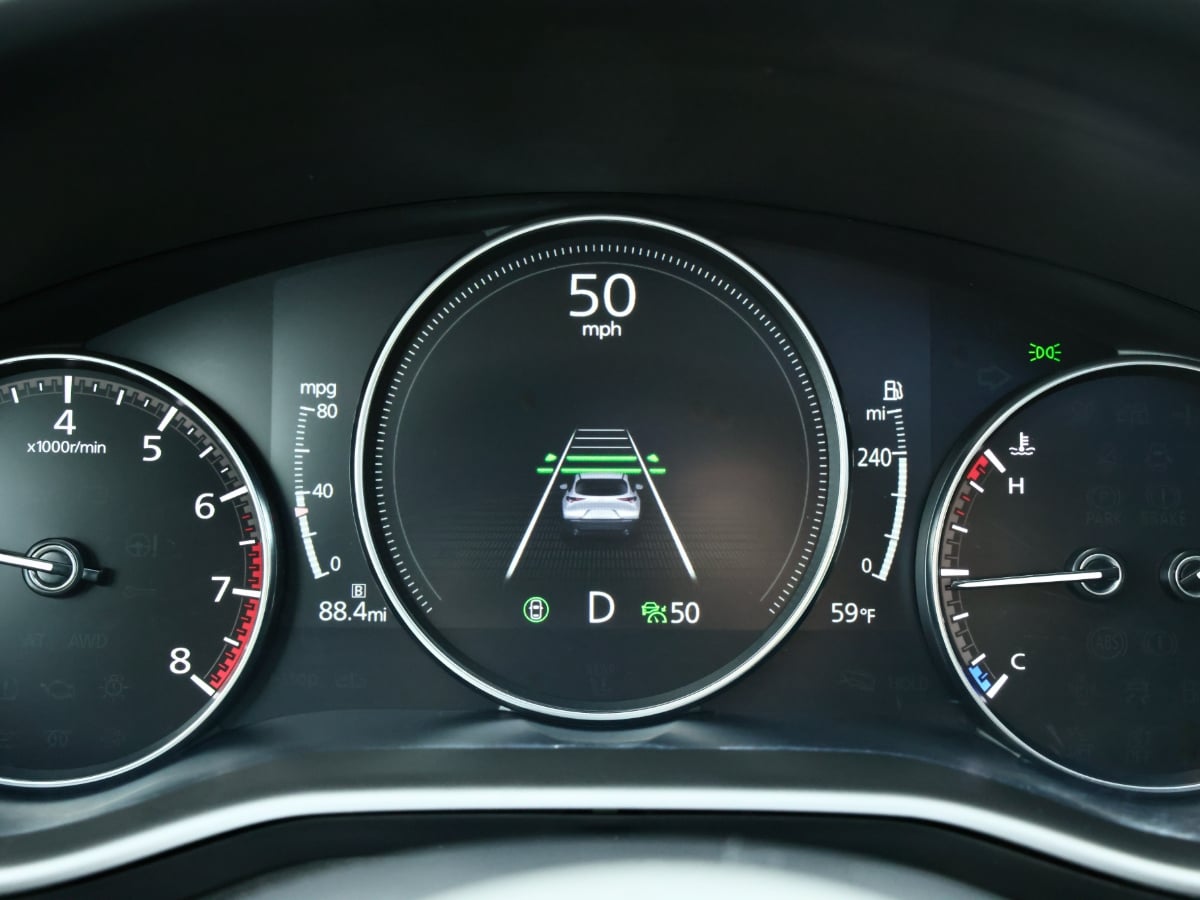
Photo: Jim Resnick
All 2026 CX-30s come with Mazda's i-ActivSense suite of advanced driver assistance systems (ADAS). This includes the most common active safety features as standard, making it a generous package. It includes:
Unfortunately, Mazda reserves some high-value active safety features for upper trims, including a surround view camera, rear automatic braking, traffic sign recognition, semi-autonomous driver assistance with lane centering (Mazda's Cruising and Traffic Support), and front and rear parking sensors.
The tester's adaptive cruise control (ACC), lane keeping assistance, and other systems worked mostly as expected, with a few caveats. While backing out of parking spots, the rear cross-traffic warning sounded even though no traffic was present. This happened three times in one day. Also, the ACC always overreacted, slowing too much for gentle curves on two-lane highways.
In crash tests, the 2026 CX-30 earned the highest five-star overall safety rating from the National Highway Traffic Safety Administration (NHTSA). Meanwhile, the Insurance Institute for Highway Safety (IIHS) gave the 2026 CX-30 its “Top Safety Pick+” award for the 2026 calendar year.
According to the JD Power 2026 Initial Quality Study (IQS), the Hyundai Venue ranks highest in the Small SUV segment, with the Hyundai Kona and Buick Encore GX ranked second and third, respectively.
According to the JD Power 2026 Automotive Performance, Execution and Layout (APEAL) Study, the Mini Countryman ranks highest in the Small SUV segment, with the Buick Envista ranked second. The Hyundai Kona and Nissan Kicks rank third (in a tie).
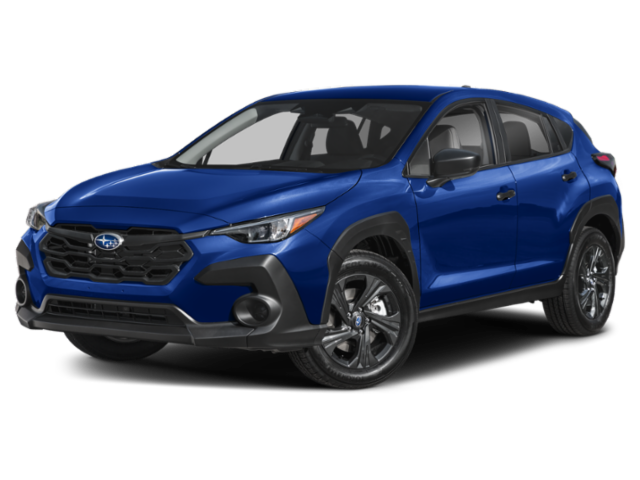
Other 2026 CX-30 competitors include the Chevrolet Trailblazer, Honda HR-V, and Subaru Crosstrek.
The 2026 Mazda CX-30 2.5 S Aire Edition delivers lively handling, attractive styling, an above-average interior, and fuel economy that exceeds its rating, at least based on my testing. It falls short on cabin space, makes some useful ADAS optional, and is a mite shy on power compared to its turbocharged stablemate. But with a modest base price, it is certainly a high-value small SUV.
Jim Resnick is an author specializing in automotive, mobility, technology, and related topics. He has lectured at universities about the auto industry's relationship with government legislation, drawing on his experience as Technical Editor and Editor-in-Chief. In addition to jdpower.com, his work has appeared in more than 30 media outlets, including Wired, The New York Times, Car and Driver, Kelley Blue Book, and the BBC.