See answers to common EV questions, tax incentives, charging maps & more.
Explore EV
17 - 108
261 - 576
1 speed, Automatic, 7 speed, Auto-Shift Manual w/OD
Electric, Intercooled Turbo Premium Unleaded I-4, Twin Turbo Premium Unleaded V-6
All Wheel Drive, Rear Wheel Drive
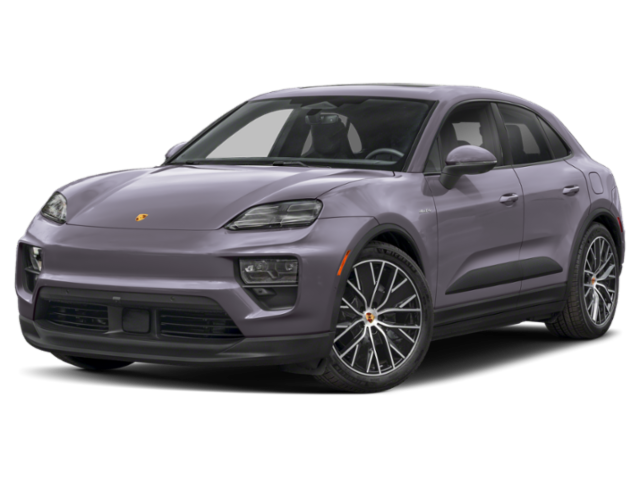
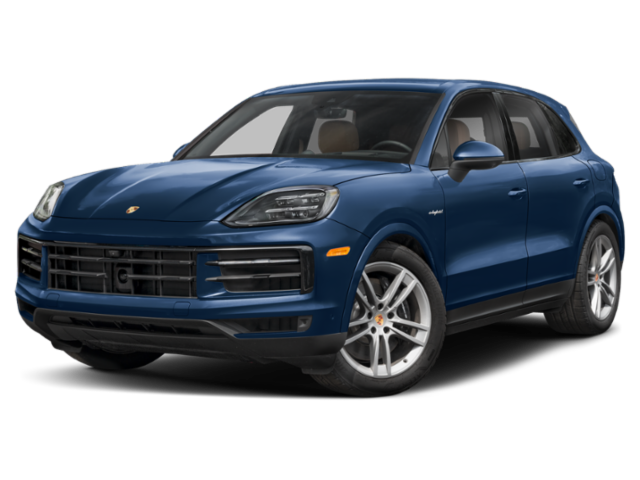
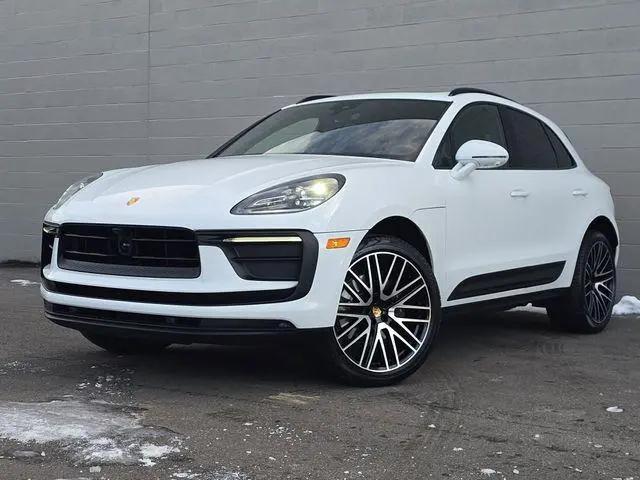
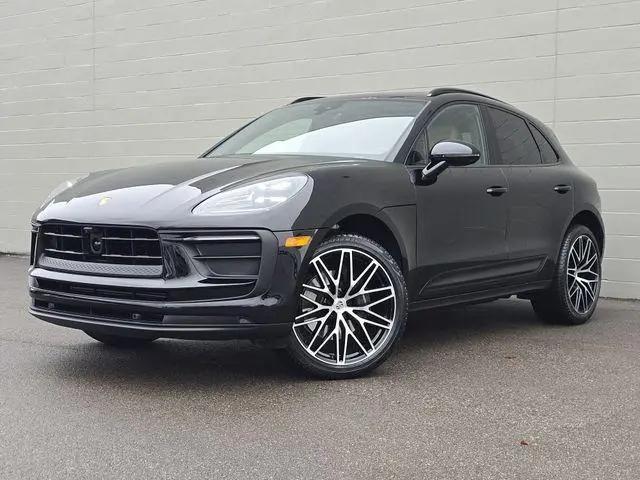
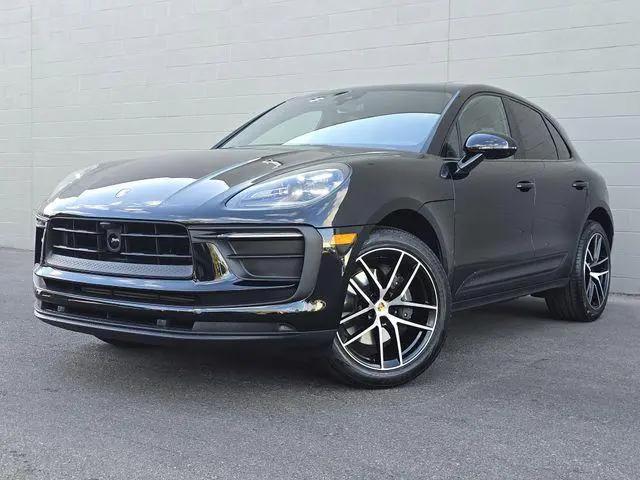
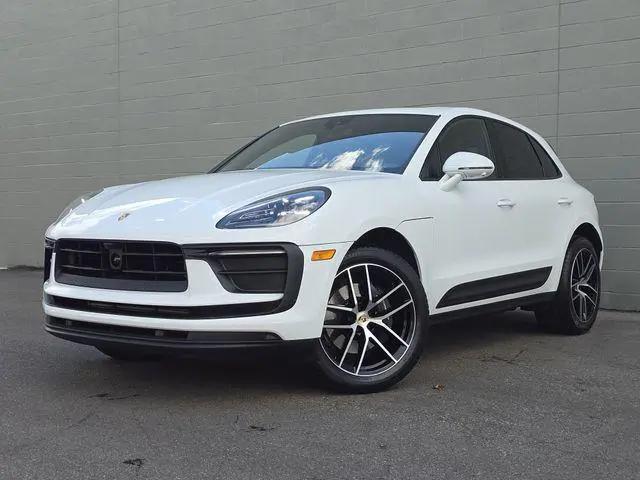
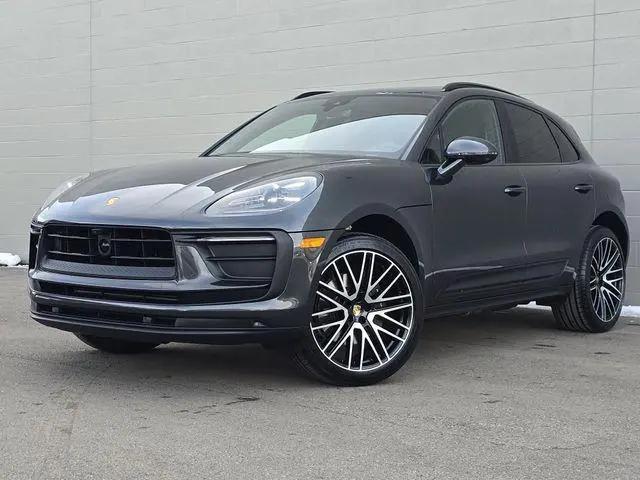
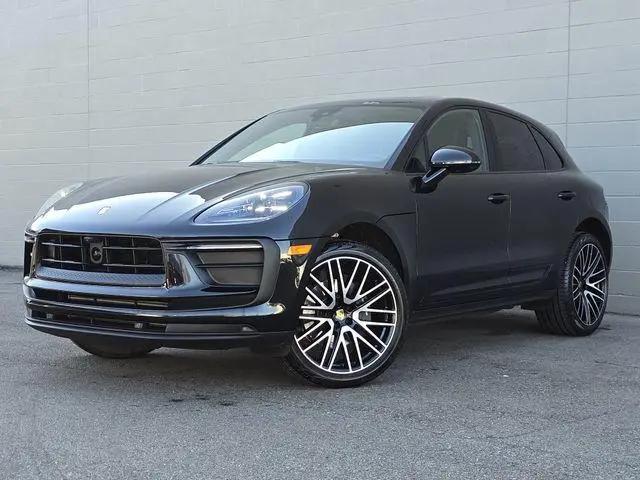
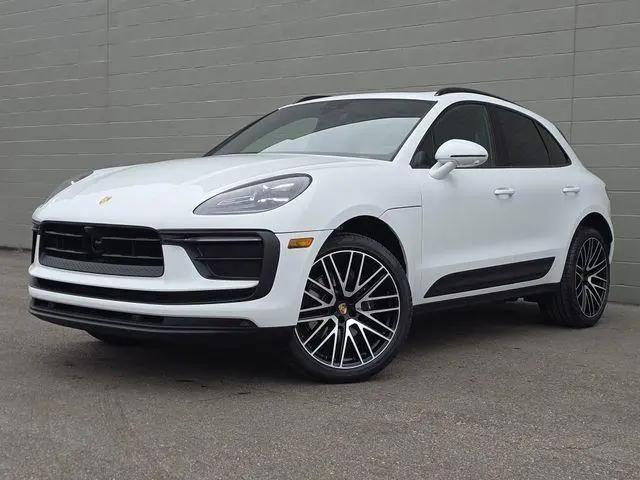
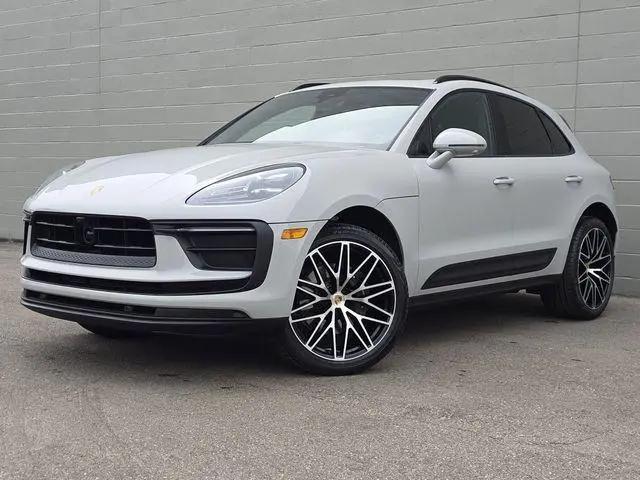
There are now two varieties of the Porsche Macan: the gas-powered version that’s been on sale for a decade and the new, battery-powered Porsche Macan Electric. Besides its profoundly different powertrain, the Macan Electric also gains the sort of updates typical of an all-new generation: fresh design, new features, and functional improvements. At its heart, though, the Macan Electric is consistent with its quasi-predecessor.

Photo: James Riswick
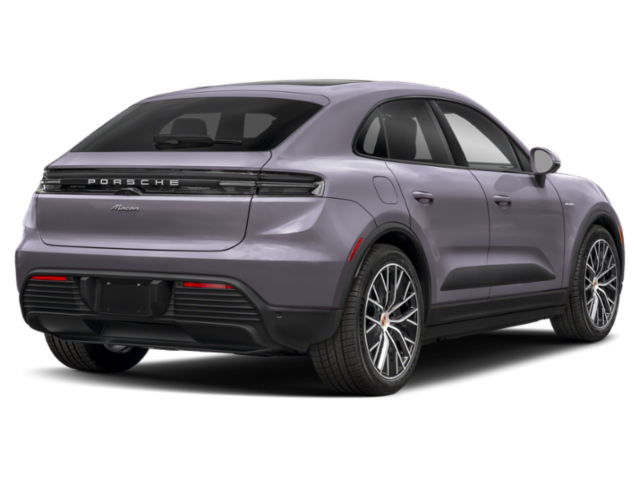
As the name suggests, the Macan Electric is 100-percent battery-powered. You cannot get it with an internal combustion engine (ICE)—now or ever. Dimensions are generally similar to the ICE version, but the Macan Electric’s weight is up by over 800 pounds. New mechanical features include a standard adaptive air suspension and available rear-wheel steering. At the same time, the interior inherits the latest Porsche infotainment features and improved storage to go with its updated design.
Putting aside the gas-powered Macans, the Macan Electric is available in one rear-wheel-drive/single-motor version (Macan) and three dual-motor/all-wheel-drive (AWD) versions (the Macan 4 I tested, as well as the more powerful 4S and Turbo). There is only one SUV coupe body style. Starting prices range from $77,295 for the base Macan Electric to $107,295 for the Macan Turbo Electric. (Prices include the $1,995 destination charge.)
For more background and details, read our full previews of the 2024 Porsche Macan Electric and the 2025 Porsche Macan 4S Electric.

Photo: James Riswick
Like the exterior, the Macan Electric’s interior design isn’t a significant departure from its quasi-predecessor. It is a Porsche, after all. Still, there are substantial functional differences and improvements, some of which directly result from the electric vehicle (EV) platform.
One such improvement is interior storage. The Macan Electric’s front center console is deeper and far more useful as there’s no transmission and driveshaft tunnel eating up space. The cupholders are almost shocking by Porsche standards: I could fit two wine-bottle-sized water bottles in its deep center console cupholders. Those in the door are useful too. A covered, easily accessed wireless phone charging bin didn’t roast my phone, although the open-sided storage compartment below it is hard to access.
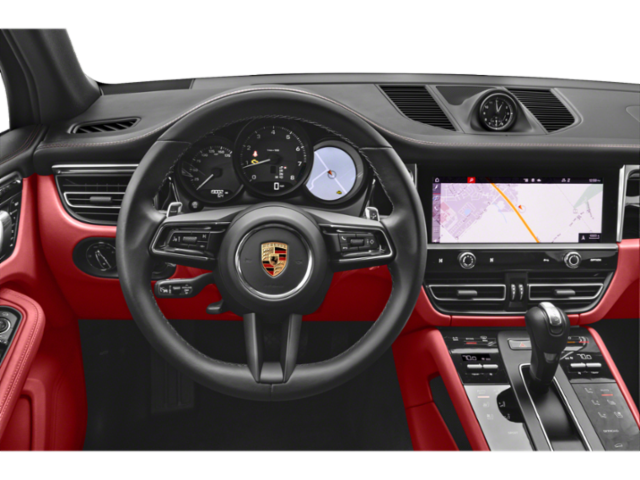
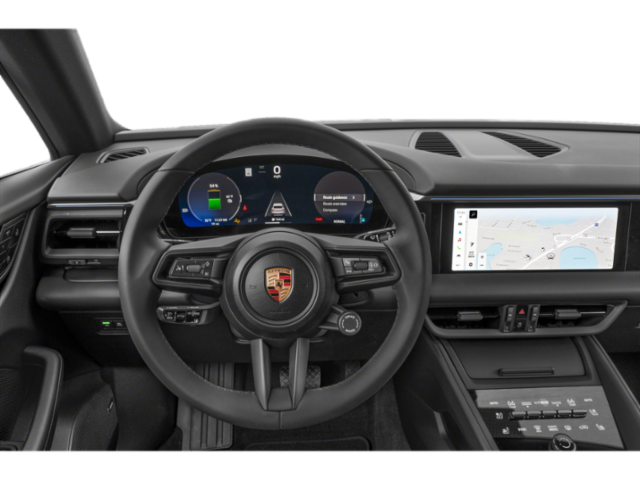
Now, part of this newfound center console real estate is also the result of relocating the shifter to the dashboard and reorganizing the oh-so-many climate controls into a neater arrangement like with the Cayenne and Panamera. All the above makes the Macan Electric easier to live with than the ICE version.
For many, though, the new Macan still won’t be easy to live with. The back seat remains cramped (good luck sitting behind a tall driver), and I had to scoot the passenger seat surprisingly far forward to give my young son enough legroom in his forward-facing child seat. The seats are incredibly comfortable (the test car’s 14-way Comfort Seats live up to their name), but, ultimately, this vehicle is better suited to singles, DINKs, or empty nesters.
The hatchback-like cargo area backs up that assertion. Even though I suspect its poor 19.1-cubic-foot official volume results from only measuring to the seatback top (versus the roof), I still couldn’t fit as much luggage back there as in other compact luxury SUVs or EVs. There is a frunk, but it’s only suitable for a small, soft-sided duffle bag or, more realistically, the charge cord case.

Photo: James Riswick
The Macan Electric gets Porsche’s latest infotainment system. While the touchscreen still measures 10.9 inches, there’s a new user interface with a more smartphone-like Home screen. It still has permanently docked menu shortcuts on the left side for easy navigation, and Apple CarPlay and Android Auto are wireless. I didn’t like that satellite radio now streams through the SiriusXM app, which requires a cell connection and has a convoluted interface.
Among the newly available features is an AR HUD. It’s pricey at $2,530, and its resolution seemed worse than many other HUDs. However, the driver can customize what and how much is presented. It also does the usual AR HUD trick of projecting animated arrows onto the windshield corresponding with turning points when using the car’s native navigation system. It’s clever, and it works. Programming the nav system was also easy, whether with the touchscreen or voice controls.
Directions also appear on the central touchscreen and the new, all-digital instrument panel. It features three zones (roughly similar to the old analog gauge cluster) that you can customize with the driver’s preferred information, including a nav map in the center.
My test vehicle also had the optional $1,570 passenger screen. This allows the passenger to futz about with infotainment elements without distracting the driver. Still, given the all-digital gauges, the HUD, and the fact that phones and tablets exist to entertain passengers, this seems like a rarely used gimmick.
Regarding driver-assistance technologies, every Macan Electric has adaptive cruise control, but my test vehicle had the InnoDrive upgrade that provides lane-centering assistance. The system did exactly what it was supposed to: the Macan didn’t wander in its lane, maintained a close distance to the car ahead, and accelerated smartly thereafter.
The standard lane-keeping assistance and blind-spot warning systems also worked as they should without excessive intervention, though parked cars on a curved road did set off a forward-collision warning false alarm.

Photo: James Riswick
The Macan 4 Electric has two electric motors—one powering each axle—providing standard AWD. Total output is 402 horsepower with Launch Control; Porsche says the SUV will accelerate from zero-to-60 mph in 4.9 seconds. That’s quick, but if you measure a vehicle’s performance by zero-to-60 times, there are quicker EVs for less money. It also doesn’t feel that quick, lacking the vicious snap off the line you’ll find elsewhere (including, potentially, in pricier Macan Electric variants).
Instead, the Macan sets itself apart like many other Porsches do: steering, handling, and general chassis wizardry. Even without the available rear-wheel-steering system, the Macan 4 Electric wowed me with its ability to slice through my winding mountain road evaluation route. I could flick it through tight, technical corners without the cumbersome reactions typical of heavy EVs (the Macan Electric weighs more than 5,000 pounds).
It also communicates more with the driver through the steering wheel and chassis. That sets it apart from, say, the Mercedes-AMG EQE SUV. It must be noted that the gas-powered Macan’s steering is even more communicative and benefits from a much lower curb weight. Something has been lost with the Macan 4 Electric, but it’s not that bad.
The ride quality is not bad, which is often the case with performance-oriented SUVs (see the old BMW X3 M Competition) and heavy EVs wearing big 21-inch wheels. In this case, the adaptive air suspension softens the blows of sharper bumps, and I experienced no head bobbing or nervousness on the choppy bits of the highway. As a performance SUV, the ride is still on the firmer end of the spectrum, so I’d steer clear of even bigger wheels to maintain comfort.
OK, now for the EV nitty-gritty. The Environmental Protection Agency (EPA) estimates the Macan 4 Electric can go 308 miles on a charge. Despite my time with the SUV, including many heavy-throttle acceleration and handling runs, my observed efficiency of 31.9 kWh/100 miles still worked out to 298 miles of range. Actual range tests have also shown Porsche doing much better than the EPA estimates would suggest.
I only charged at home, but had I gone further afield, the Macan Electric’s 270-kilowatt (kW) maximum rate would have been blazing fast. Porsche says it can go from a 10- to 80-percent charge in 21 minutes at a 350-kW charger. Unfortunately, as of this writing, Porsches cannot yet use Tesla Superchargers.

Photo: James Riswick
The 2025 Porsche Macan Electric is well made, better to drive than most, and balances performance and efficiency well. In other words, it’s a Porsche. Also indicative of the brand, though, is its high price tag. The Macan 4 Electric I tested is priced similarly to the roughly equivalent gas-powered Macan S, but you can also find faster EVs for less money or more spacious ones for the same amount.
Like other Porsches, you must value those elements of driver enjoyment, build quality, and customization possibilities that are impossible to quantify when weighing value. It’s more than just comparing specs and the number of standard features. Maybe it is overpriced, but you might say that of most Porsches, and the company has no problem finding eager owners.
James Riswick has tested and reviewed cars since 2007, serving as an editor at Edmunds.com and Autoblog. He has also contributed to Autoguide Magazine, Autotrader, Capital One Auto Navigator, Car and Driver, and Hagerty. He resides in Southern California and owns a 1998 BMW Z3, a 2013 Mercedes-Benz E350 Wagon, and a 2023 Kia Niro EV.