See answers to common EV questions, tax incentives, charging maps & more.
Explore EV
17 - 19
23 - 24
296 - 355
8 speed, Automatic w/OD
Intercooled Turbo Gas/Electric I-6, Intercooled Turbo Premium Gasoline I-4
All Wheel Drive
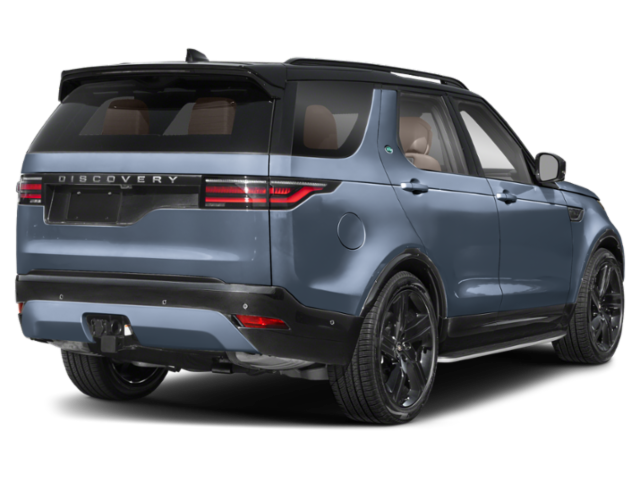
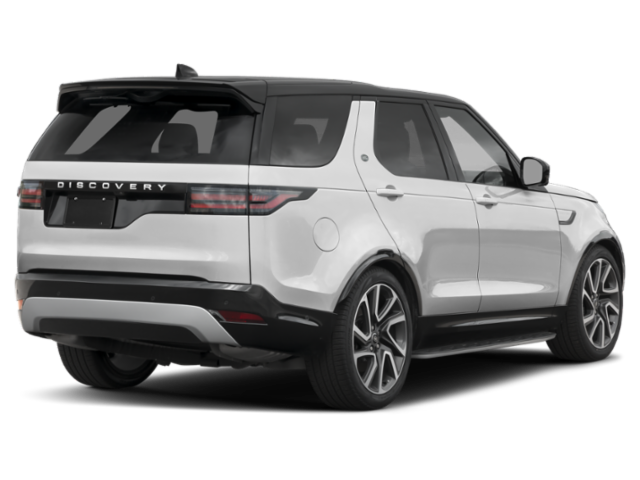
For more than 35 years, the Land Rover Discovery has been taking people way out there and keeping them comfortable while doing it. Initially intended as a new entry point to the brand, a comfortable all-rounder with stellar off-road capabilities, it's only become more refined in the intervening decades.

Photo: Tim Stevens
The 2025 edition of the Discovery changes nothing in this formula, reshuffling the option packages and adding a few new standard features.
The 2025 Discovery lineup includes three trim levels, starting with the base S at $60,200. Next is the Dynamic SE at $64,200 and the Metropolitan Edition at $79,800. Prices do not include the $1,625 destination charge.
For this review of the 2025 Discovery, Land Rover provided a test vehicle equipped with Metropolitan Edition trim and the following options:
The test vehicle's price was $87,208, including the $1,625 destination charge to ship the SUV to your local dealership from the Land Rover assembly plant in Nitra, Slovakia.

Photo: Tim Stevens
The Land Rover Discovery is reasonably easy to climb into for an SUV offering nearly a foot of ground clearance. That is, unless you have the standard air suspension dialed up to the maximum when attempting your ingress and egress. Otherwise, it's easy to slip into the driver's seat, providing a great view of the world. Even above, thanks to the pair of giant sunroofs, one directly above the driver and front-seat passenger, a second one above and behind the second row.
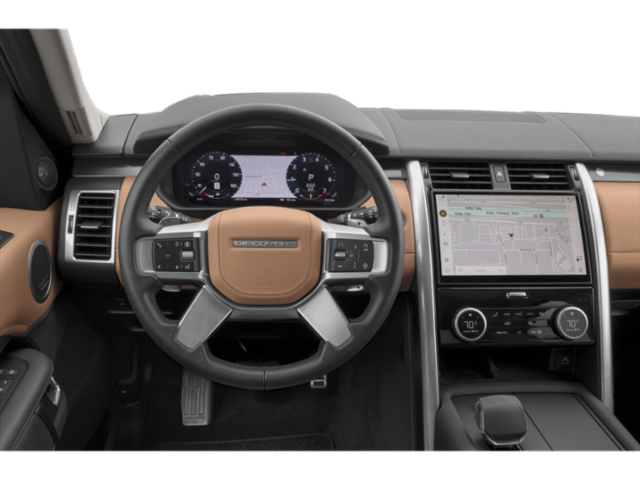
The front seats are comfortable and look great. The contrast stitching and horizontal strips embossed in the perforated leather give a simple, classy, throwback look. While they lack a massage function, they are comprehensively adjustable and feature ventilation and the genuinely prodigious heating that I was thankful for, given that much of my testing occurred during outside temperatures of -8 Fahrenheit.
Second-row seating is not far off. There's room for three back there, seven passengers across all three rows, but your occupants will be happier if you stick with just six. There's a wide armrest in the middle of the second row, or you can split the seat into three sections, meaning you can drop down the middle portion if you have some lengthy, narrow cargo.
That second row also has power-adjustable seatbacks, and you can fold or raise them remotely via a handy control panel integrated into the left side of the cargo compartment. You can raise or lower the SUV from that same panel for easier loading.
If you're looking to carry much cargo, you'll need to fold down at least one of those rows. There's a paltry 6.07 cubic feet of cargo space behind the third row—barely enough for a couple of backpacks. Fold that third row down, and the space expands to 35.03 cubic feet—70.5 cubic feet with both rows folded.
When upright, the seats in the third row don't look particularly inviting, but they're roomier than they seem. I had plenty of headroom and somewhere to put my feet—something that can't be said for other three-row SUVs like the Rivian R1S. However, there's a distinct lack of knee room when the second-row seats are in a comfortable position. Someone is going to have to compromise.
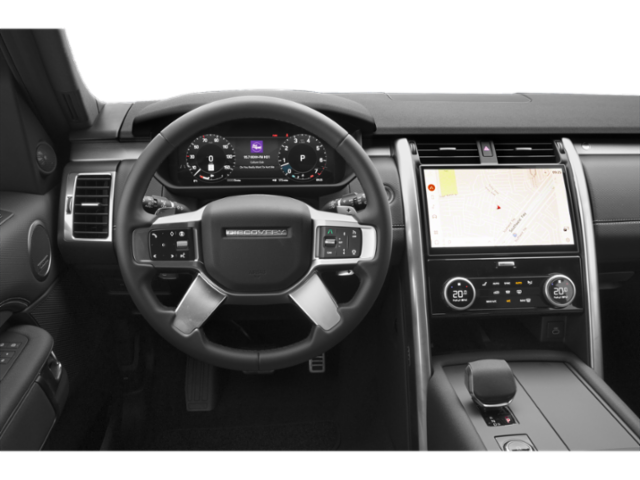
Whether in the front or the back, material quality is quite good, if monotone in this spec. Thankfully, Land Rover offers lighter options. The quality hides and high-end plastics create a series of uniform surfaces that blend well together, highlighted by the slashes of silver plastic that run horizontally and vertically across the dashboard. There's nothing particularly charming or heartwarming, but if you prefer stoic simplicity to your interior designs, you'll love it.

Photo: Tim Stevens
The 2025 Land Rover Discovery's Pivi Pro infotainment system runs on an 11.4-inch, landscape-oriented display that sits above the heating, ventilation, and cooling controls—a pair of knobs that let you crank up the seat heaters or the fan speed.
The rest of the vehicle's features are available through that touchscreen, which offers a simple but intuitive interface of overlapping panels and grids. Swipe left or right to expose more information about your vehicle, then tap on any of the panels to dig deeper into navigation, media, or other categories.
Everything has the same clean, simple look and responds well, but there's not much to get excited about here. Compared to the more visually striking experiences from Rivian or Mercedes-Benz, Land Rover's software is plain, but it has it where it counts. That includes the ability to get a virtual look through the SUV’s hood when off-roading or to display endless bits of data about the current suspension and differential settings.
The integrated navigation is basic but functional, which is also a good way to describe the voice assistant. It handled most nuanced commands well, punching in the route to the closest Starbucks when I said I wanted a coffee, but it struggled to parse complicated addresses. You can also enable Alexa in the dashboard if you want more power.
Additionally, there's support for Android Auto and Apple CarPlay smartphone mirroring, which will bring Google Assistant or Siri to the party. That also opens the media playback options beyond the integrated selection of inputs, which includes AM/FM/SiriusXM, TuneIn Radio, and Bluetooth. All those play through a crisp yet powerful 700-watt Meridian Surround system that's almost good enough on its own to warrant stepping up to the Metropolitan Edition.

Photo: Tim Stevens
The Land Rover Discovery is a machine of two personalities. Off-road, it's a monster. There are seven drive modes here, offering optimal grip and handling on everything from sand to snow, plus niceties like hill-descent control.
Not enough? Through the touchscreen, you can create four different bespoke terrain modes. Pick your power output, choose your steering weight, toggle your preferred differential locks, and save it under a custom name. This is something that most drivers will never need, but everyone can appreciate its presence.
With the suspension at its maximum height, the Land Rover Discovery offers 11.2 inches of ground clearance, with a 33.6-degree approach angle and 30-degree departure. Its wading depth is a healthy 35.43 inches, and while there is a dedicated drive mode for wading, the Discovery also features depth sensors should you hit the water in the wrong mode.
Deep snow on my local trails, plus all-season tires, meant I didn't push the Discovery too hard during my testing. Still, in open terrain, low-grip, and off-road, the locking differentials and low-speed transfer case meant I always had plenty of grip to get out of trouble despite the snow cover.
Yet despite that, the Discovery was as civilized as possible on the cruise home from off-roading. The suspension that works so well off-road is brilliant on the asphalt. The roads around me are in a lousy state at this point, months of plowing taking their toll, but you'd never know it from the second or third row of the Discovery.
However, those in the way back may not appreciate the body roll, especially those with sensitive stomachs. The Discovery tends to lean this way and that through the corners, which can be a bit disorienting for passengers. Aggressive driving will surely not be appreciated here.
But that softness means excellent ride quality regardless of terrain, and from the driver's seat, you'll also appreciate the power delivery. To be sure, 355 horsepower and 369 pound-feet of torque aren't exactly class-leading, but it's still plenty to get this SUV to 60 mph in 6.2 seconds.
There's a bit of turbo lag, but the throttle response is quite good once that's overcome. The eight-speed automatic transmission works hard even in Comfort mode to ensure that the Discovery always engages the right gear.
The 2025 Land Rover Discovery with the 3.0-liter six-cylinder engine is EPA-rated for 19 mpg combined. My mixed testing, conducted in freezing winter weather, netted 16.9 mpg.
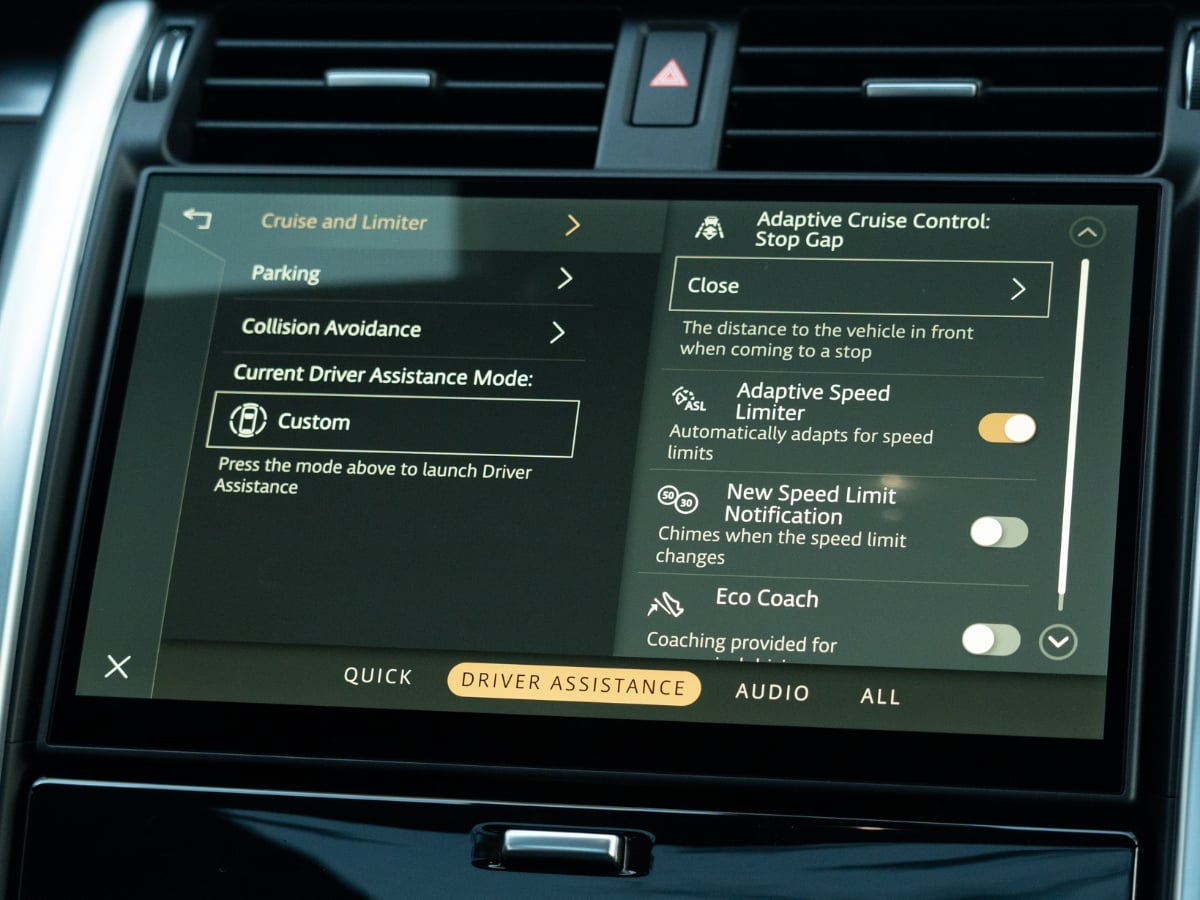
Photo: Tim Stevens
The 2025 Land Rover Discovery offers a suite of active safety features, including:
Much of that technology worked well in my testing. The 360-degree, 3D camera views made parking this big SUV a cinch, while the automated headlights not only succeeded in lighting up the night on rural roads but dimmed themselves quickly to keep from blinding my neighbors. The adaptive cruise control worked well to maintain the right speed on highways and secondary roads, bringing the Discovery smoothly to a stop behind traffic ahead.
What didn't work so well was the lane-keeping assistance. This is not a fully active system, so it'll only intervene when your wheels approach the edge of the lane. In my testing, the Discovery struggled to spot those lane edges unless the paint was fresh and well-defined. The SUV often corrected late and sometimes never corrected at all.
When something like a $45,000 Chevrolet Traverse offers advanced, hands-free driving on the highway with Super Cruise, that kind of performance is disappointing.
At the time of this writing, neither the National Highway Traffic Safety Administration (NHTSA) nor the Insurance Institute for Highway Safety (IIHS) has rated the crashworthiness of the 2025 Land Rover Discovery.
In the JD Power 2024 Initial Quality Study (IQS), the Cadillac XT6 ranks highest in the Upper Midsize Premium SUV segment. The Porsche Cayenne and the Genesis GV80 are the next highest-ranked models.
In the JD Power 2024 Automotive Performance, Execution and Layout (APEAL) Study, the BMW iX ranks highest in the Upper Midsize Premium SUV segment. The BMW X6 and Land Rover Range Rover Sport rank second (in a tie).
Other 2025 Discovery competitors include the Audi Q7, BMW X5, and Mercedes-Benz GLE.