See answers to common EV questions, tax incentives, charging maps & more.
Explore EV
21
268 - 285
6 speed, Automatic w/OD, 9 speed, Automatic w/OD
Intercooled Turbo Gas/Electric I-4, Intercooled Turbo Premium Gasoline I-4
All Wheel Drive
Driving in Europe is different than driving in America. The city streets are narrower and filled with scooters, cyclists, and pedestrians. The country roads are frequently half the width, often without a shoulder. The places to park are smaller and harder to access. Overall, the infrastructure is better maintained, with smoother road surfaces. And the efficiency standards are more stringent. In some areas of the larger cities, gas and diesel vehicles are banned, so you need electric propulsion.

Photo: Christian Wardlaw
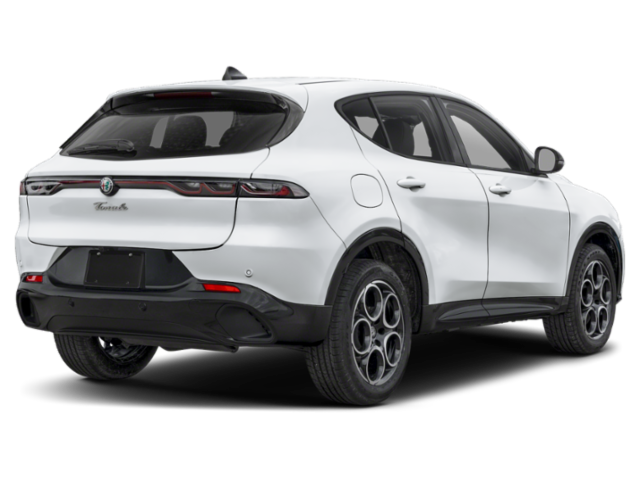
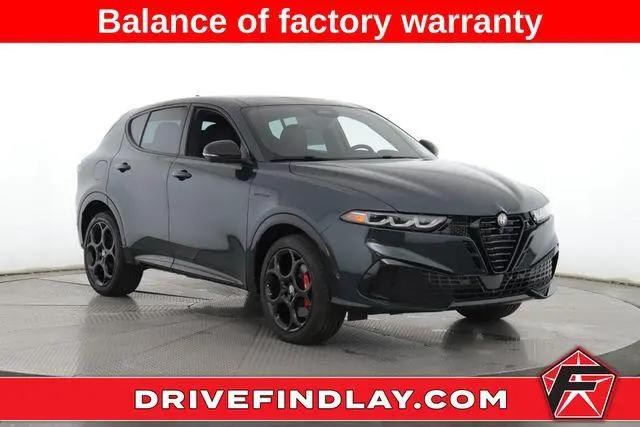
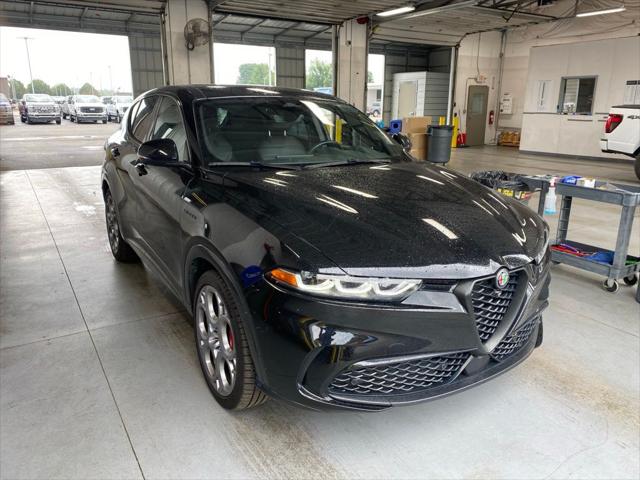
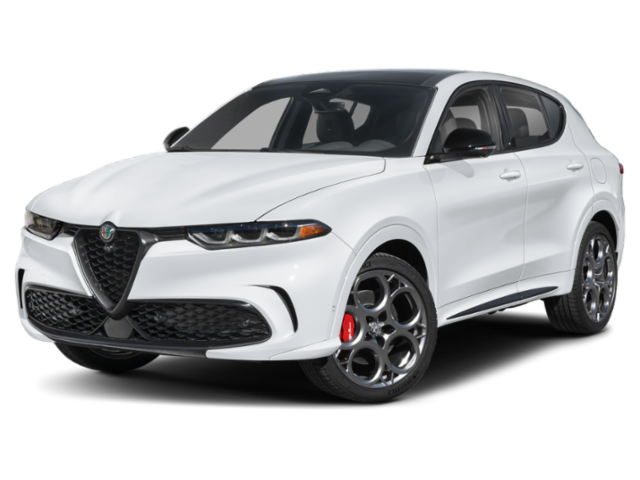
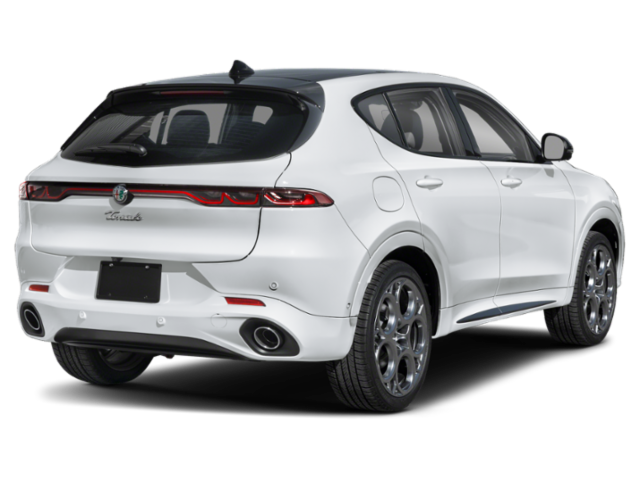
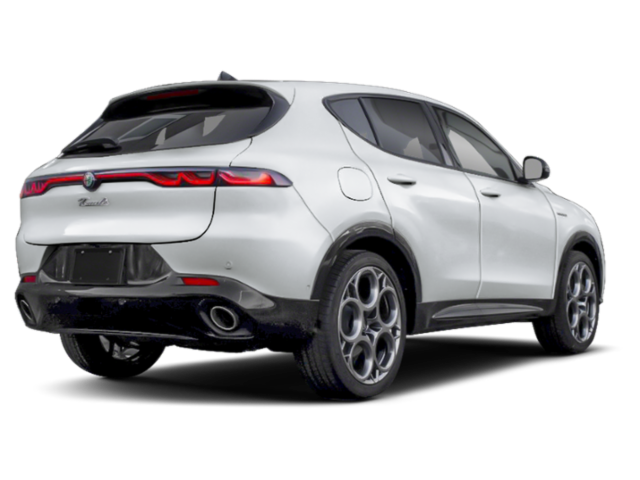
The 2025 Alfa Romeo Tonale and Tonale Hybrid are designed for that environment. Small in size, nimble in response, and efficiently packaged, they wear an attractive Italian suit while providing just enough interior room to make them suitable for daily living in their natural habitat. In the United States, however, the Tonale faces the same value-oriented challenge as other entry-level luxury crossover SUVs.
That value equation improves for the 2025 model year with a revised lineup and a new turbocharged gasoline engine. When the Tonale debuted for the 2024 model year, it came only with a plug-in hybrid electric vehicle (PHEV) powertrain and a base price of just over $45,000, including the destination charge. Now, for 2025, the Tonale starts at about $38,500, including destination.
Speaking of the destination charge, it jumps $400 in 2025 to $1,995. Alfa Romeo also drops the previous Sprint, Ti, Speciale, and Veloce trim levels in favor of two core models: Tonale and Tonale Hybrid. Premium, Veloce, and Active Assist option packages are available, and Alfa Romeo offers Intensa and Tributo Italiano special editions this year, the latter exclusive to the Tonale Hybrid.
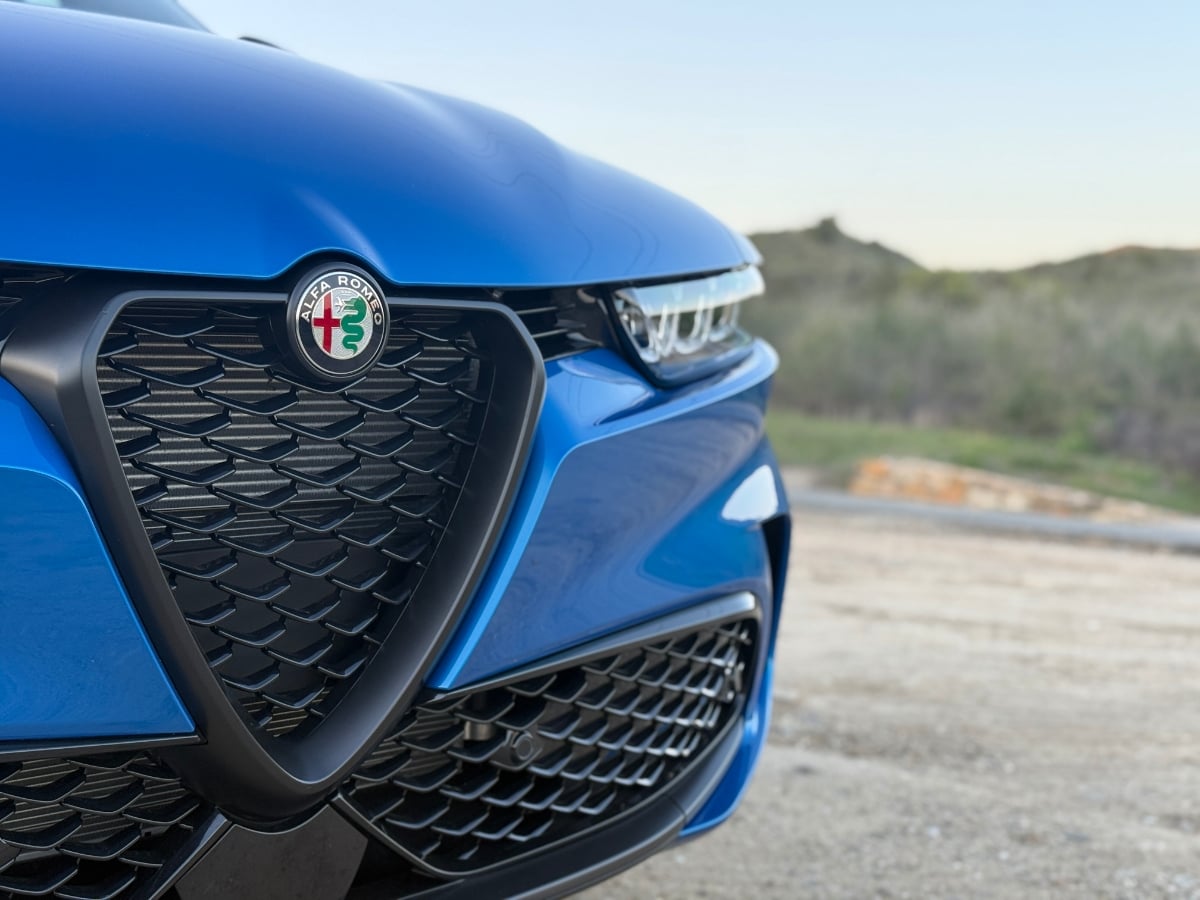
Photo: Christian Wardlaw
Previously, JD Power published a review of the 2024 Alfa Romeo Tonale with its PHEV powertrain. For this review of the 2025 Tonale, Alfa Romeo provided a test vehicle equipped with the new turbocharged four-cylinder engine, standard equipment, and the following options:
The Tonale Premium package includes leather upholstery, ambient interior lighting, ventilated front seats, a hands-free power liftgate, and extra gloss black exterior trim for a more upscale appearance. The test vehicle's manufacturer's suggested retail price (MSRP) was $44,125, including the $1,995 destination charge to ship the SUV to your local dealership from the Pomigliano, Italy, assembly plant.

Photo: Christian Wardlaw
Alfa Romeo equips the 2025 Tonale with a new turbocharged 2.0-liter four-cylinder engine, making 268 horsepower and 295 pound-feet of torque when burning premium gas. Compared to the Tonale Hybrid, the gas-only Tonale is down 17 hp and 52 pound-feet, but it weighs 418 pounds less than the PHEV.
A nine-speed automatic transmission is standard, feeding power to all four of the Tonale's wheels. Up to 50 percent of the power can flow to the SUV's rear axle, and Alfa Romeo employs a brake-based torque-vectoring technology to aid handling. According to Alfa Romeo, acceleration to 60 mph takes 6.5 seconds in the Tonale—about half a second slower than the PHEV, which benefits from immediate electric motor response when you step on the accelerator pedal.
According to the Environmental Protection Agency (EPA), the Tonale returns 24 mpg in combined driving, while the Tonale Hybrid gets 29 mpg after you've used its 33 miles of electric range. In my testing, the Tonale returned 23.6 mpg, which is close enough to the official estimate to call it accurate. I tested the SUV with the DNA drive-mode selector in Natural, using Dynamic only when driving in the mountains.

Photo: Christian Wardlaw
Thanks to its turbocharged engine, the Tonale delivers satisfying acceleration and never feels underpowered. The electric steering offers surprising feel too, telegraphing every little ripple in the road to your hands. However, this SUV's torque steer is an issue despite the standard all-wheel-drive system.
The Tonale has an unusual suspension design employing common MacPherson struts in front with a Chapman strut arrangement in the back. Named for Lotus founder Colin Chapman, the design is known for its use in sports cars, and in the Tonale, it provides balanced ride and handling while effortlessly soaking up the worst of the pavement scars.
The test vehicle's upsized 19-inch wheels and 235/45 all-season tires also contribute to the Tonale's impressive grip and poise on twisty roads. However, road noise is a near-constant companion.
That all tracks for an Italian vehicle. Unfortunately, the Tonale drives nothing like Alfa's larger Stelvio SUV, which is a ton of fun, rarely frustrating, and worth the additional money if you can afford it.
My primary issues with the Tonale's driving dynamics relate to the nine-speed automatic transmission. It's a traditional automatic, but it behaves like a dual-clutch automated manual transmission—and an unrefined one, at that.
Slow to engage and respond, it causes significant aggravation as the Tonale lurches into Reverse or Drive and surges with unexpected power in daily driving situations. Put the SUV in Park, and it will roll more than you expect if you haven't activated the automatic parking brake feature.

Photo: Christian Wardlaw
In addition, even when driving in Dynamic mode, the transmission seems more interested in conserving fuel than remaining in a lower gear for more lively responsiveness. On several occasions, after rounding a corner and stepping on the accelerator, I caught the drivetrain flat-footed while the transmission decided what it should be doing.
If a vehicle that deserves standard paddle shifters ever existed, the Tonale is it. They're available in the Veloce option package, which my test vehicle did not have, and while I typically do not use paddle shifters, I craved manual control over the transmission in the Tonale.
The heavily weighted steering is also dissatisfying, exhibiting vague on-center disconnectedness even though the wheel rim thrums to the beat of the road surface. Pair that with the rapid off-center response, and the Tonale can behave erratically.
For example, when traveling around curves with undulations at speed, the steering goes a little slack as the front suspension unloads. When that happens, and due to the quick off-center responsiveness, the driver mistakenly inputs unwanted mid-corner corrections as effort levels transition from heavy to light. The result is an unsettled driving character and plenty of wheel action to maintain a proper cornering line unless the pavement is glass-smooth.
Also, the test vehicle's brakes faded while sluicing the Tonale down Mulholland Highway near Malibu, kneecapping my confidence in the crossover SUV. Again, the Veloce upgrade likely solves that thanks to its Brembo front calipers, but the standard brakes are unsuitable for energetic driving. Incidentally, that Veloce package also adds a dual-mode suspension with Comfort and Sport settings.
With time, you can learn how to anticipate and moderate the Tonale's less appealing dynamic traits, reducing them to mere quirks that never fully fade into the background. Still, the Alfa's lack of dynamic refinement unnecessarily tarnishes its otherwise considerable appeal.

Photo: Christian Wardlaw
The Tonale's interior is small but well-packaged, and the quality of the materials, controls, and displays is mostly on par for the segment. When you add the Premium package, the SUV has leather upholstery (replacing the standard cloth), ventilated front seats, and a unique ambient lighting scheme that illuminates a panel in front of the passenger.
Seat comfort is good with heating and eight-way power adjustment for both front chairs. Hard plastic on the side of the center console digs painfully into the driver's right leg, though. Also, though the back seat is snug, it's nearly as accommodating as what you'll find in the larger Alfa Romeo Stelvio.
Surprisingly, the Tonale provides more cargo space than the Stelvio. Alfa says the former has 27 cubic feet of room behind the back seat, while the Stelvio offers just 18.5 cubic feet. The Stelvio's maximum volume of 56.5 cubes bests the Tonale's measurement of 54.7. Notably, the turbocharged Tonale has more cargo space than the Tonale Hybrid (22.9/50.5 cubic feet), so that's something else to keep in mind when deciding between the two.
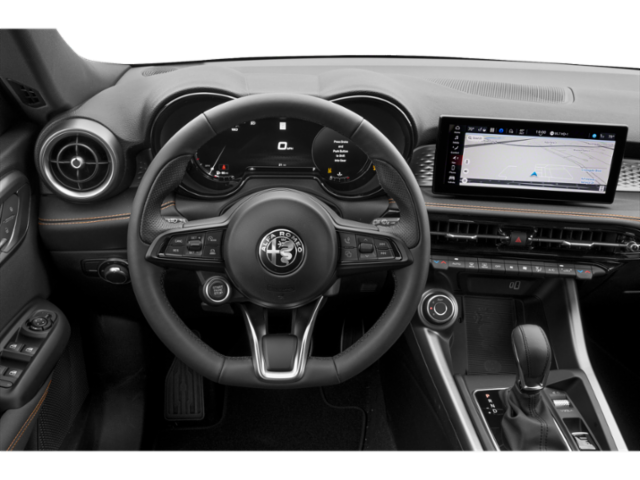
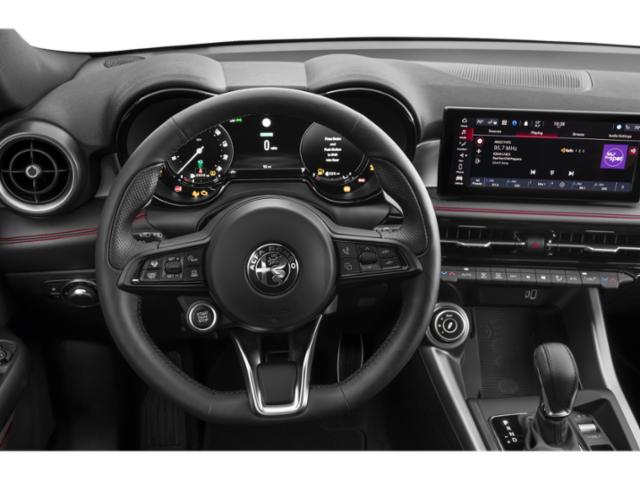
Control quirks include an engine start button on the steering wheel, meaning that it changes location unless you park with the front tires perfectly straight every time. The large knob on the lower part of the dashboard is not for adjusting stereo volume; that's the DNA drive-mode selector. A thumbwheel to the right of the shift lever controls speaker volume.

Photo: Christian Wardlaw
In a nod to the marque's past, Alfa Romeo houses the Tonale's 12.3-inch digital instrumentation display in a dual-binnacle design with retro-themed markings. A 10.25-inch touchscreen infotainment system resides in the center of the dashboard. It offers wireless Apple CarPlay and Android Auto, navigation, and a three-year subscription to Alfa Connect, the automaker’s connected services package.
The native voice-recognition technology is hit-and-miss. For example, when I said I needed to go to a hospital, the list of nearby choices included an endoscopy office and a ketamine clinic. Fortunately, pairing an iPhone, running Apple CarPlay, using Siri, and streaming Apple Music posed no problems. I missed out on testing the Harman Kardon premium sound system, but that company's speakers are typically impressive.
Compared to many modern vehicles, the Tonale's list of standard advanced driver assistance systems was skimpy. For example, the test car did not have lane-centering assistance with its standard adaptive cruise control (ACC). It also lacked parking sensors and a surround-view camera system. All those upgrades are part of the optional Active Driving Assist package, which the test vehicle did not have.
When using the ACC, the Tonale frequently brakes too hard when other vehicles cut into the gap ahead, suggesting its priority is gap maintenance and not smooth driving. Also, the response to a clear lane allowing a return to the set speed is sluggish. It is not a sophisticated technology and causes aggravation in fellow motorists, limiting its utility to open highways with little traffic.

Photo: Christian Wardlaw
Italy. You've gotta love it. And I do, which is one reason I had high hopes for the 2025 Alfa Romeo Tonale. But, just as a BMW X1 and X2 drive nothing like a BMW X3, the Tonale is missing a critical ingredient: the delightful dynamic essence of the Stelvio.
That's a common problem across the entry-level luxury SUV segment. But where people choosing the most affordable Audi, BMW, or Mercedes-Benz might not care in order to obtain the cachet of owning the brand on the cheap, Alfa Romeo customers are different.
There is more to an Alfa than a scudetto grille, seductive bodywork, and an intimate driving environment, and the Tonale doesn't have it. But it could, because Mazda has figured out the dynamic part of the small SUV equation with its turbocharged CX-30. Translate that into Italian, and the Tonale could sing like Tiziano.
Christian Wardlaw is a veteran automotive journalist with 30 years of experience in the field and has held automotive editorial leadership positions at Edmunds, JD Power, and The New York Daily News. Today, Chris owns a content agency called Speedy Daddy Media, and in addition to JDPower.com, his work appears on Capital One Auto Navigator, CarGurus, and Edmunds.