117
99
213 - 288
No data
Electric
All Wheel Drive, Front Wheel Drive
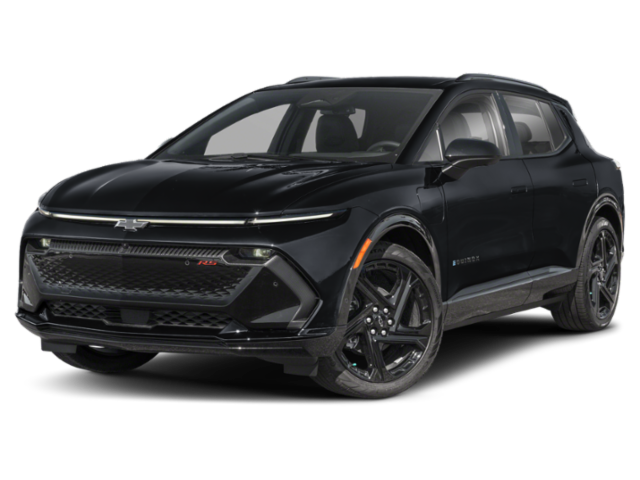
The 2024 Chevrolet Equinox EV is not surprisingly much more expensive than the gas-powered SUV that shares its name and virtually nothing else. Ditto other gas-powered compact SUVs. Compared to other electric SUVs, however, the Equinox EV boasts a strong value proposition of a relatively low price, lengthy standard battery range, and ample feature content. Because of this, it has the potential to be more appealing to more people, especially those skeptical of electric vehicles (EVs).
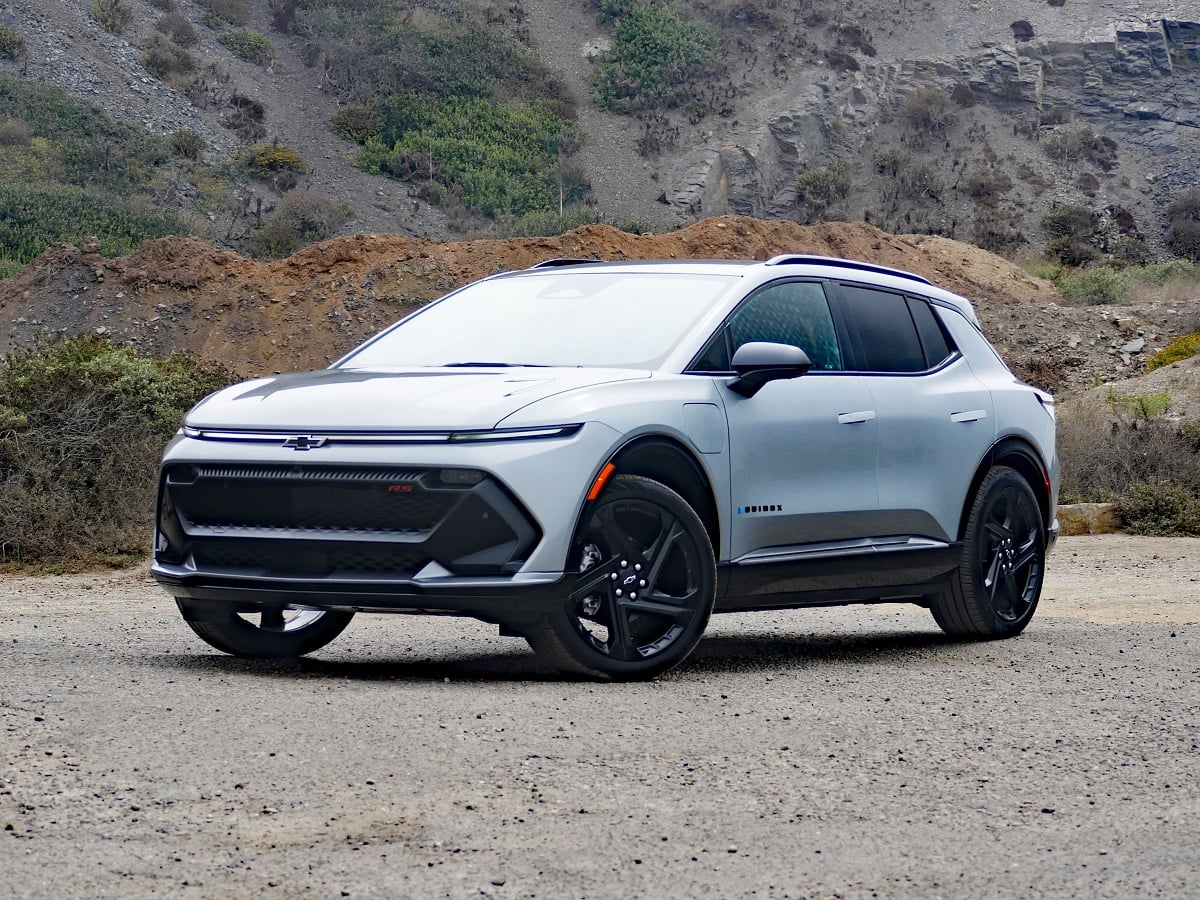 Photo: James Riswick
Rather than the gasoline-powered version of the same name, the Equinox EV shares more components with the more powerful and pricier Chevy Blazer EV, along with other models that utilize General Motors’ (GM) Ultium EV platform. Interestingly, the Equinox isn’t that much smaller than the one-size-larger Blazer EV. The Blazer may be wider, but its back seat has only 0.9 extra inches of legroom, and its cargo area is smaller.
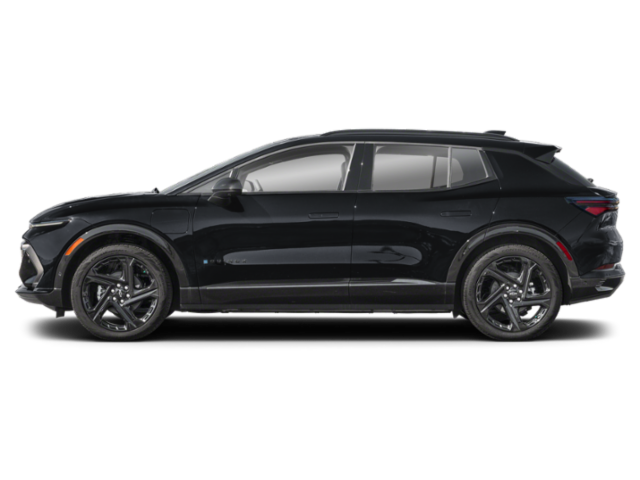
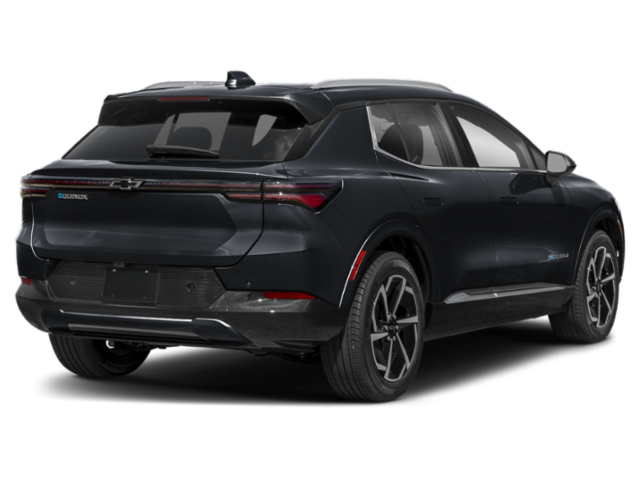
The 2024 Equinox EV lineup consists of 2LT, 3LT, 2RS, and 3RS trim levels. The difference between LT and RS is mainly aesthetic, with the numbers representing more feature content. Chevrolet offers each with a single-motor, front-wheel-drive (FWD) powertrain or a dual-motor, all-wheel-drive (AWD) powertrain. Besides providing superior all-weather traction, AWD increases power and decreases range. There are relatively few factory options, with GM’s Super Cruise hands-free driver-assistance technology being the big-ticket item.
For this review of the 2024 Equinox EV, Chevrolet provided a test vehicle equipped with 3RS trim, FWD, and the following option:
The test vehicle’s price was $49,495, including the $1,395 destination charge to ship the SUV from the Chevrolet assembly plant in Ramos Arizpe, Coahuila, Mexico, to your local dealership. This Equinox qualifies for the $7,500 federal tax credit.
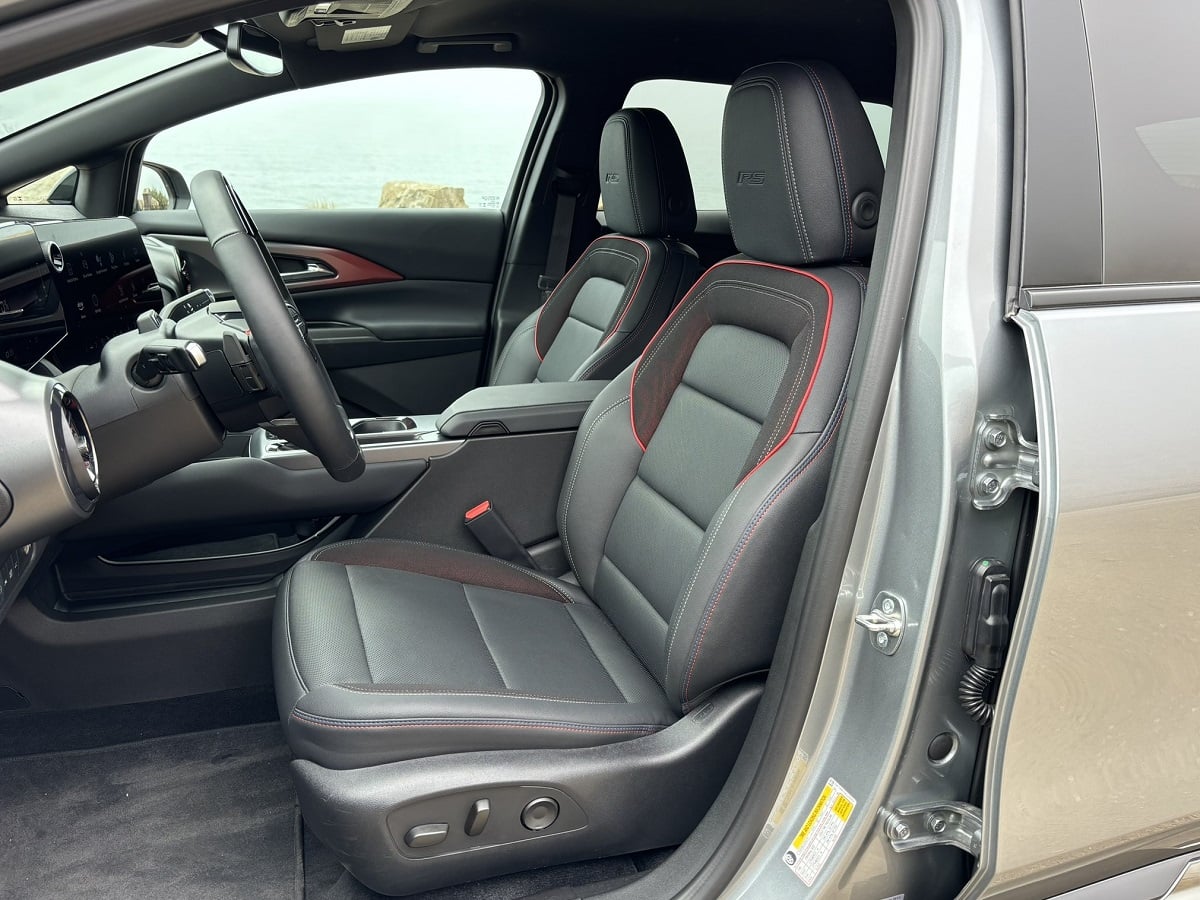 Photo: James Riswick
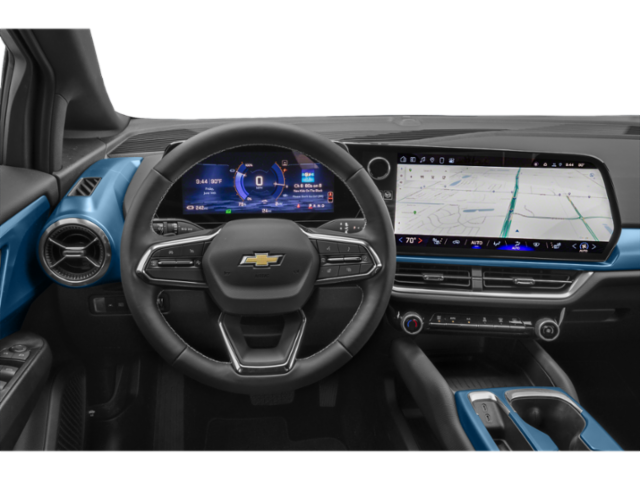
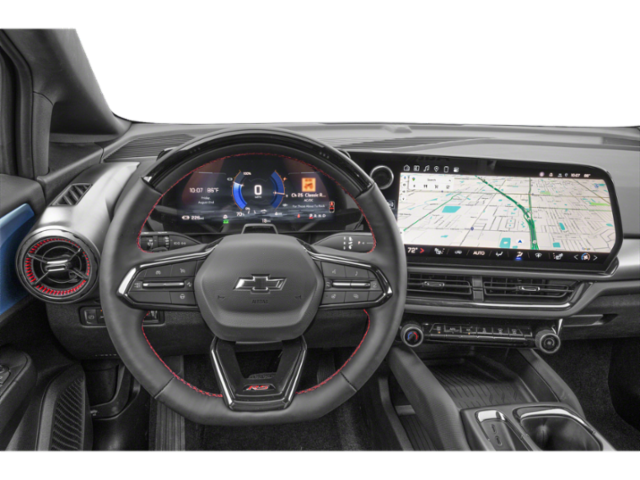
Climb into the Equinox EV and you’ll immediately notice the standard 11-inch digital instrument panel and massive 17.7-inch touchscreen angled toward you. They contribute to a colorful and modern appearance amplified by the styled dashboard and Camaro-inspired air vents. There is no iPad bolted to a plain, horizontal dashboard here.
Unfortunately, the top of the dashboard is a broad expanse with horizontal strakes that create nasty reflections in the steeply angled windshield when driving toward the sun. I had a hard time seeing pedestrians crossing at one point while driving through a grocery store parking lot. Wearing polarized sunglasses does reduce these reflections.
The eight-way power driver seat in my 3RS test vehicle provided sufficient legroom for my 6-foot-3 frame (though a little more front-of-seat tilt would be nice). Despite this, there was plenty of legroom left in the vast back seat to sit behind my own far-flung driving position. There was even enough space to put my son’s Britax car seat behind me, which is a rarity in any vehicle.
Convincing “Evotex” simulated leather upholstery covers the seats in most trim levels, and other materials up front are consistent with the compact SUV segment. There are soft-touch surfaces on the dashboard, doors, and center console intermixed with more rigid plastics on surfaces you don’t touch. The back seat doesn’t get the soft-touch stuff, which is also consistent.
The center console has big cupholders that can easily swallow a wine-bottle-sized container, and there’s a big rubber tray for securing a phone. Wireless charging is available. The center armrest bin is small.
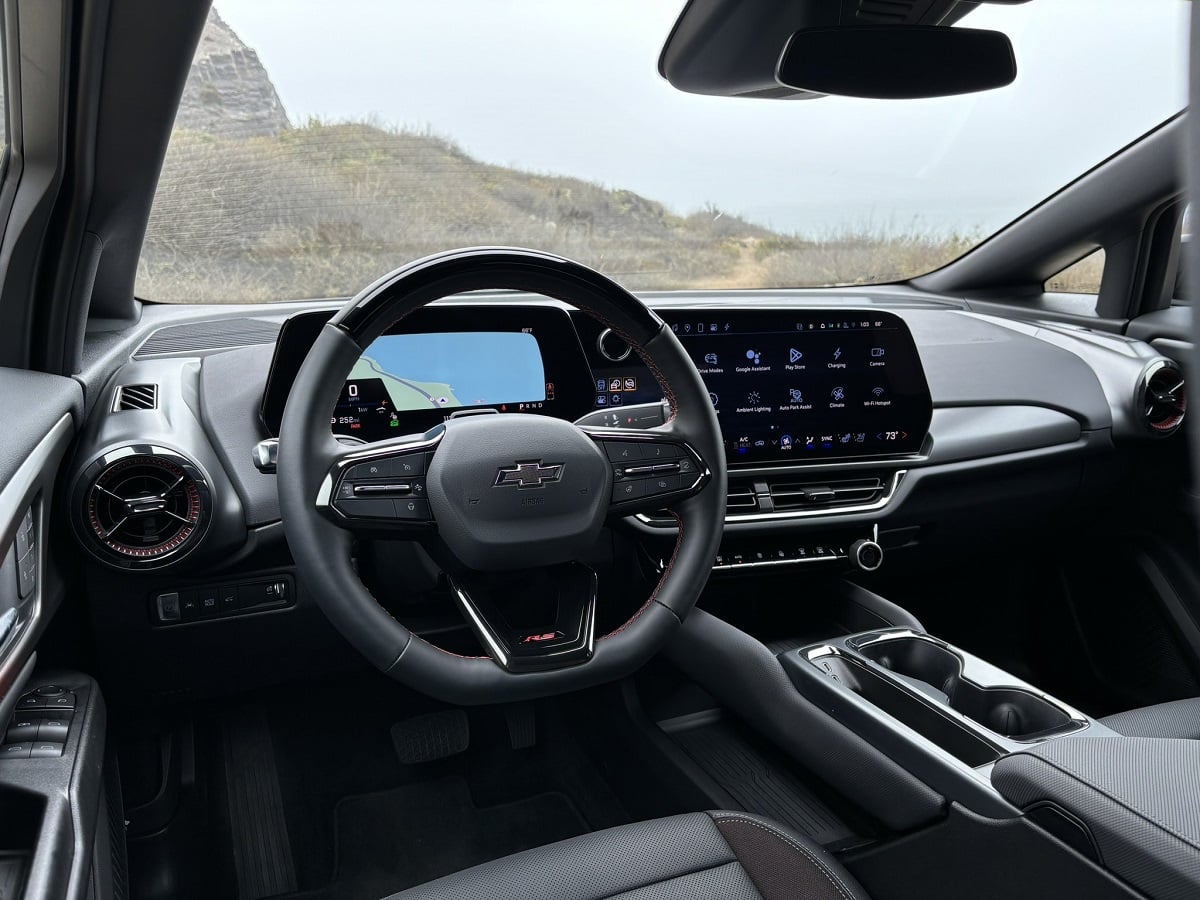 Photo: James Riswick
Every 2024 Chevy Equinox EV version comes with the same suite of infotainment features. This includes:
Two obvious things are missing: Apple CarPlay and Android Auto. While the presence of Google Built-in minimizes the loss of Android Auto, it’s a bigger deal for Apple users.
True, the car’s Google Maps has improved functionality. Using the touchscreen, I could also text using my voice and select a song off my Bluetooth-connected phone. Unfortunately, choosing a streaming podcast was impossible. While there are podcast apps within the integrated Google Play store, I couldn’t start a podcast on my iPhone’s app and continue it in the car as you can with CarPlay.
The Google Assistant voice controls have limitations too. It correctly responded to “find the nearest Dunkin” and provided directions to a specific address, but it could not select a SiriusXM channel or control other non-Google systems.
In general, this infotainment system is user-friendly. I appreciated having docked menu shortcuts at the top of the screen with the climate control display and the redundant physical climate controls below. GM also didn’t try to reinvent the radio interface; you can still see your channel favorites list and the current song's name simultaneously.
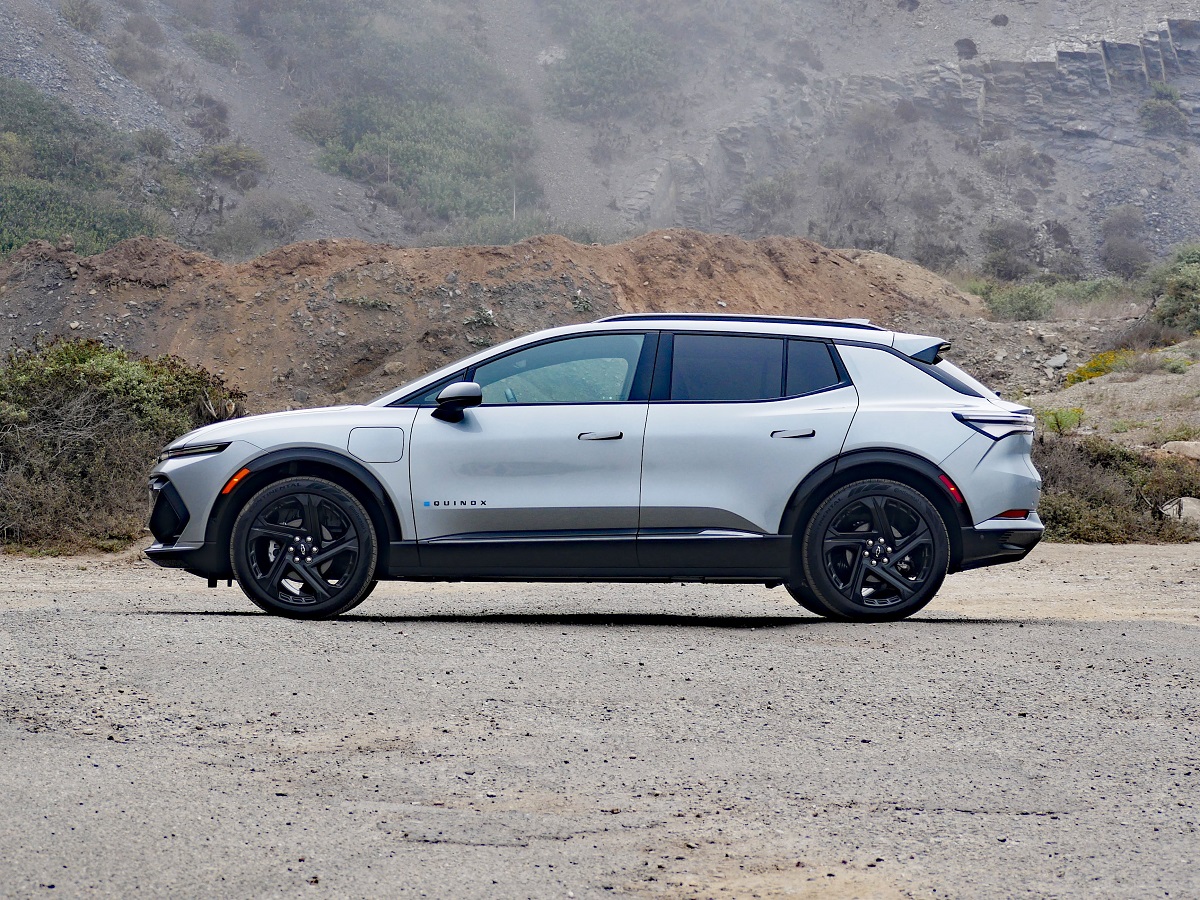 Photo: James Riswick
My Equinox EV 3RS test vehicle only had a single motor powering the front axle. Many competitors come standard with rear-wheel drive. Generally speaking, this difference is beneficial. Those in frostier climates don’t necessarily need to spend extra for AWD's added traction and additional performance they may not want.
On the other hand, its 213 horsepower and 236 pound-feet of torque is a lot to shunt through the front wheels only. The result is torque steer. Turn the wheel while accelerating and it feels locked in your initial turning angle, requiring extra effort to make corrections and return it to the center. It doesn’t saw back and forth when accelerating in a straight line like old high-powered front drivers did (Chevrolet seems to have damped motor response from a stop to keep things civil), but there is still some tugging.
Opting for AWD would alleviate this, at least in part, while also bumping output to 288 hp and 333 pound-feet of torque.
The Equinox EV has multiple levels of regenerative braking, including two one-pedal driving modes. I found the heavier of the two only appropriate for gridlock traffic, but I could easily modulate in Normal mode for smooth, natural driving everywhere. There is also a steering wheel paddle that engages/increases regenerative braking regardless of setting. There’s a permanently docked touchscreen button to activate one-pedal.
On the highway, the Equinox EV impressed with its instant passing power and quiet cabin. The ride is well-damped and generally comfortable, though the RS trim’s mammoth 21-inch wheels transmit sharper bumps into the cabin. The LT and its 19-inch wheels could be a better way to go.
The Equinox EV was less happy on my mountain evaluation route. Despite its sporty looks, the 3RS is awfully springy, bounding about after hitting mid-corner bumps and undulations. The Hyundai Ioniq 5, Kia Niro EV, and Volkswagen ID.4 all feel more agile, responsive, and composed on a winding road (among others). The numb steering doesn’t help, even in Sport mode.
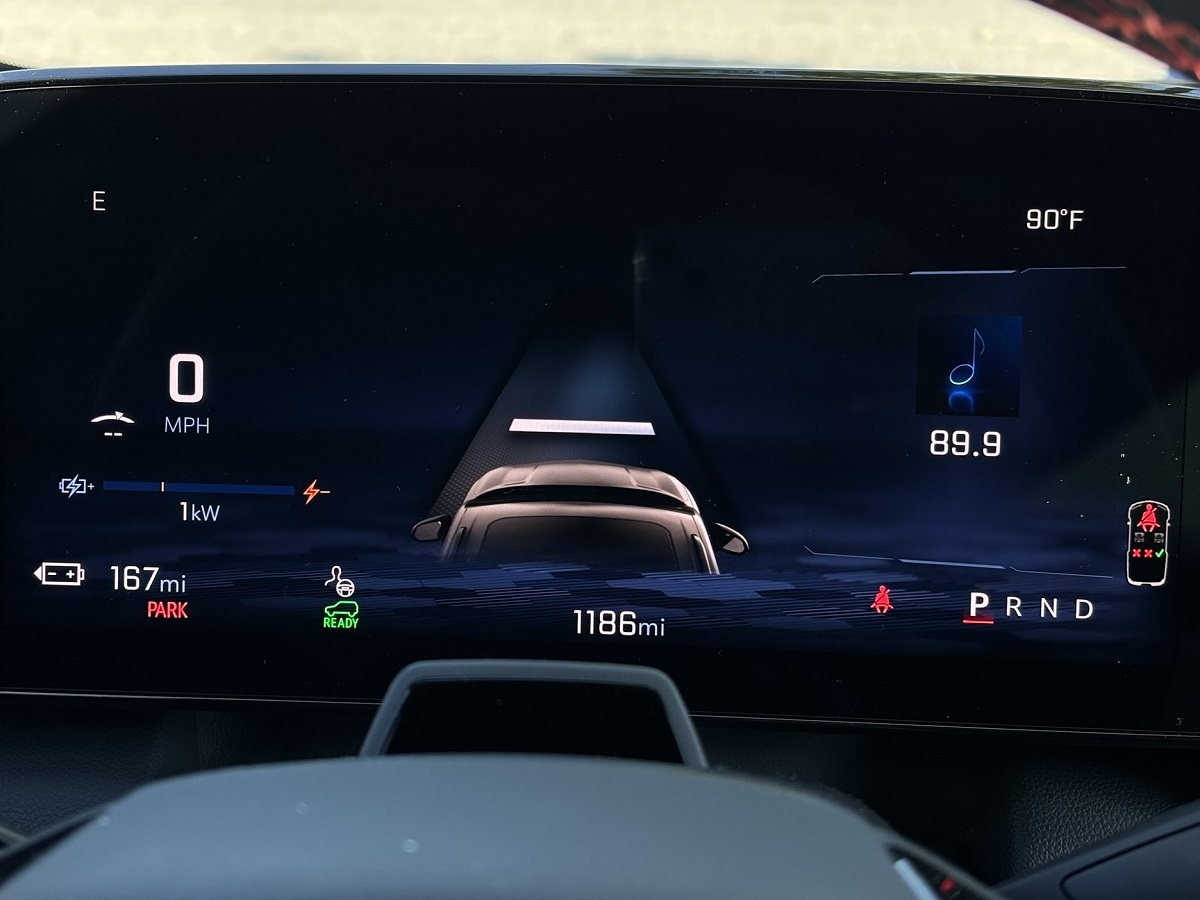 Photo: James Riswick
Every 2024 Chevrolet Equinox EV includes the Chevy Safety Assist suite of advanced driver assistance systems. These include:
The 3LT trim level includes a surround-view camera and traffic-sign recognition.
Generally, Chevrolet executed these systems well, especially the lane-keeping assistance that didn’t beep, buzz, or jerk the wheel whenever I came within a foot of a line. However, the rear automatic braking system twice slammed on the brakes while reversing into my driveway. Did it think the sloped driveway was a wall? Was I going too fast for its liking? Who knows.
Then there’s Super Cruise, a $2,700 option bundled with an automated parking system. This goes beyond the standard adaptive cruise control system by steering for you on an increasing number of highways, including rural ones with intersections and driveways. It can also make automated lane changes by pressing the turn signal (it waits for a safe opportunity to go). Or, should you select the function, it smartly changes lanes by itself. As always, the green steering wheel lights make it obvious when the system is active.
 Photo: James Riswick
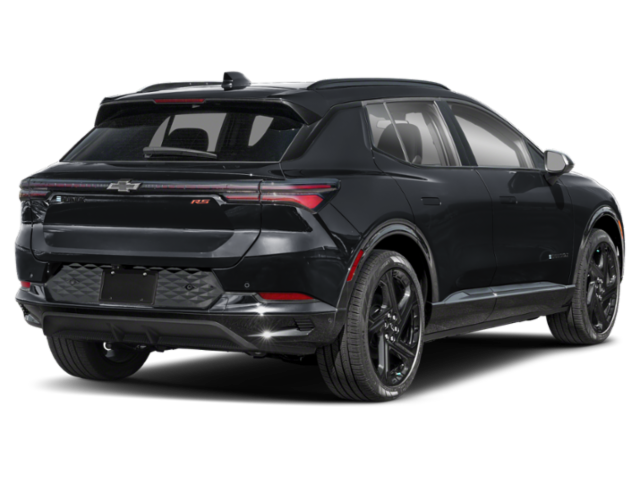
The Equinox EV’s specs say it has 26.4 cubic feet of space behind its back seat. That’s not much better than the subcompact Chevrolet Trailblazer, but in my testing, I found it could fit more baggage than its small, gas-powered sibling and multiple other models with greater on-paper specs. I also found it could hold more bags than the Blazer EV, which has an official figure of 25.5 cubic feet.
The reason could be some distinctive cargo features. The Equinox EV has a two-level cargo floor that increases space when you don’t need to match the height of the fold-flat back seat. The Blazer EV doesn’t have this. The Equinox also has a sizeable underfloor bin (I found it to be bigger than the Blazer’s) that’s big enough to store a duffel bag and the car’s charge cable. Unlike many EVs, there is no front trunk (or “frunk”).
The Environmental Protection Agency (EPA) estimates the FWD Equinox EV will travel 319 miles on a charge. That’s a very good range, especially for its price. Equally priced rivals like the Hyundai Ioniq 5, Nissan Ariya, and Volkswagen ID.4 provide at least 100 fewer miles for the same money. At the same time, costlier “long-range” versions of those same rivals still don’t match it (the Tesla Model Y is an exception).
The EPA rates the FWD Equinox EV’s efficiency at 31 kilowatt-hours (kWh) per 100 miles (kWh/100 miles) of driving. I averaged 32.3 kWh/100 miles despite most of my 425 miles coming on the highway (typically less efficient for EVs) and on my mountain road evaluation route.
Opting for the dual-motor AWD Equinox EV results in the range falling to a still-excellent 285 miles. Efficiency drops to 35 kWh/100 miles, as rated by the EPA.
The maximum DC fast charging rate is 150 kilowatts, which equals the maximum speed of many public charging stations. Faster-charging rivals can take advantage of 350-kW stations, though. The AC home charging speed is 11.5 kW, which is pretty standard.
As of this writing, neither the National Highway Traffic Safety Administration (NHTSA) nor the Insurance Institute for Highway Safety (IIHS) has rated the crashworthiness of the 2024 Chevrolet Equinox EV.
The 2024 Chevrolet Equinox EV prices range from $43,295 for the 2LT to $46,795 for the 3RS. Adding the dual-motor AWD system is a $3,300 option. You’ll need to add the $1,395 destination charge to those figures.
In the JD Power 2024 Initial Quality Study (IQS), the previous-generation Chevrolet Equinox ranks highest in the Compact SUV segment. The mechanically related GMC Terrain and unrelated Hyundai Tucson are the next highest-ranked models.
In the JD Power 2024 Automotive Performance, Execution and Layout (APEAL) Study, the Kia EV6 ranks highest in the Compact SUV segment. The Mitsubishi Outlander and Kia Sportage are the next highest-ranked models.
The 2024 Chevrolet Equinox EV’s price, feature content, range, and size align most closely to the Honda Prologue, Nissan Ariya, and Tesla Model Y, with the Hyundai Ioniq 5, Kia EV6, Kia Niro Electric, and Volkswagen ID.4 also similar.
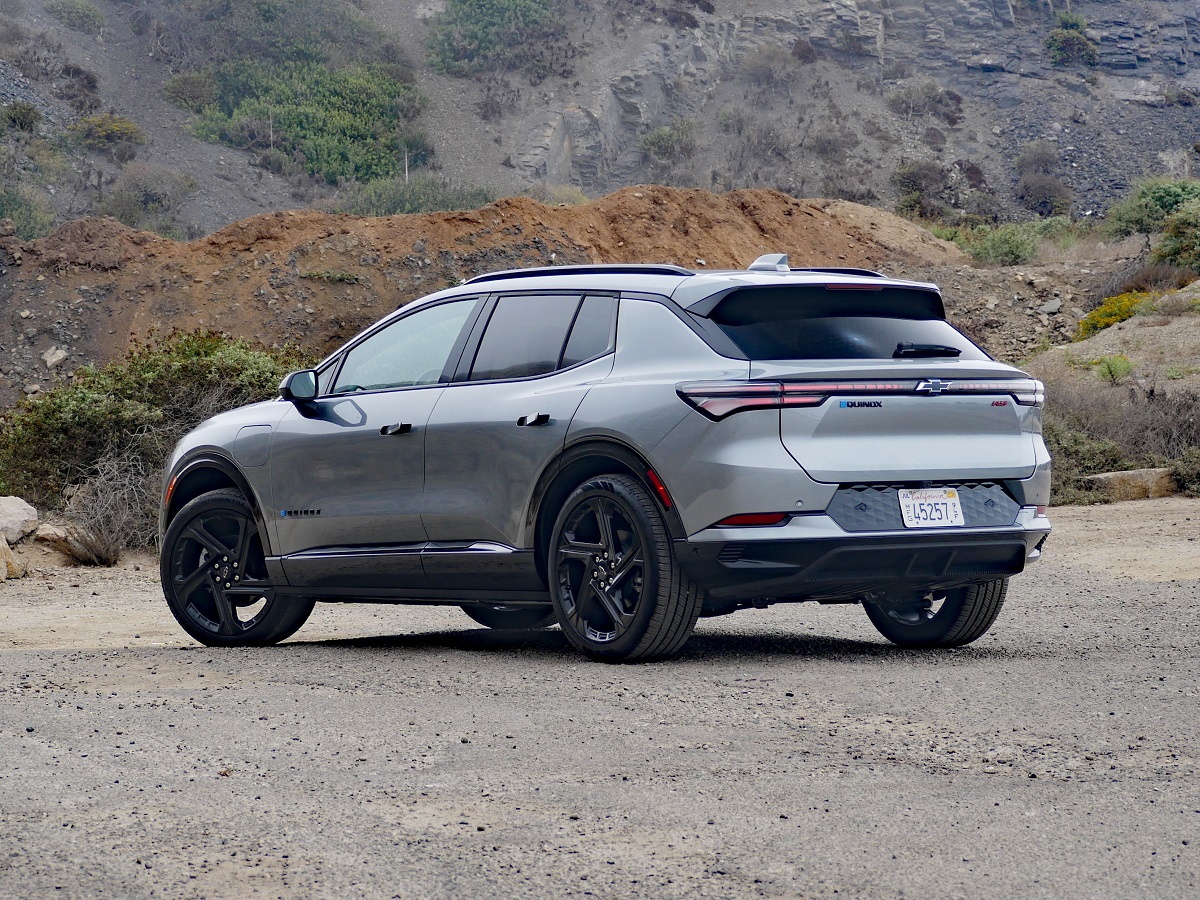 Photo: James Riswick
The 2024 Chevrolet Equinox EV’s combination of price, feature content, and range is hard to beat, and that’s before considering the $7,500 federal tax credit few competitors qualify for. Its eye-catching design, family-friendly interior, and modern, easy-to-use tech make it more than just a smart value buy.
James Riswick has tested and reviewed cars since 2007, serving as an editor at Edmunds.com and Autoblog. He has attended an auto show every year since he was two and wanted to be an automotive journalist since high school. He owns a 1998 BMW Z3 and a 2023 Kia Niro EV and is presently looking under couch cushions for enough change to buy an E39 BMW M5.