39
37
219
1 speed, CVT w/OD
Gas/Electric I-4
All Wheel Drive
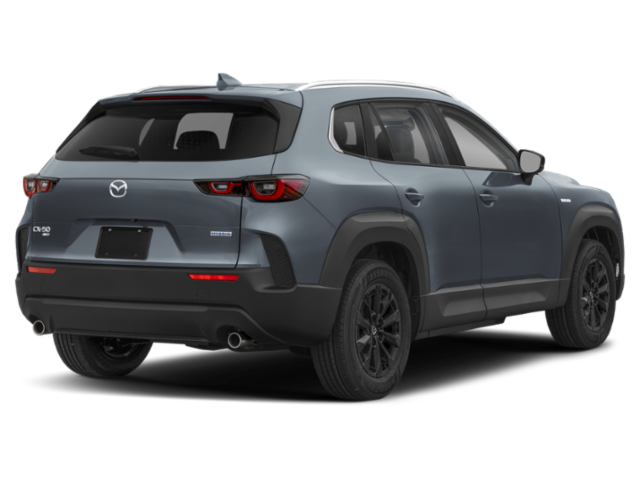
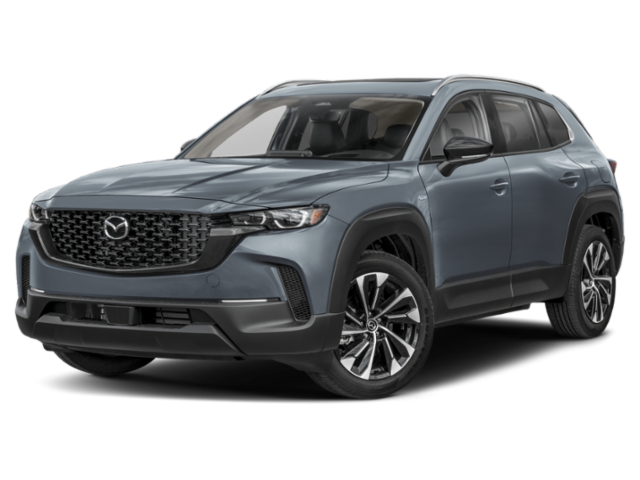
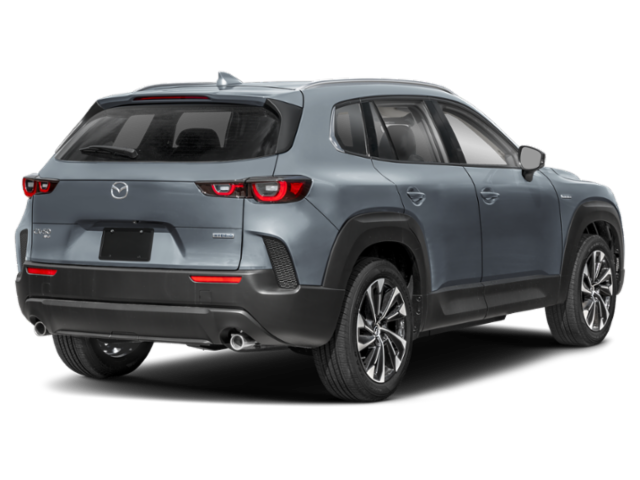
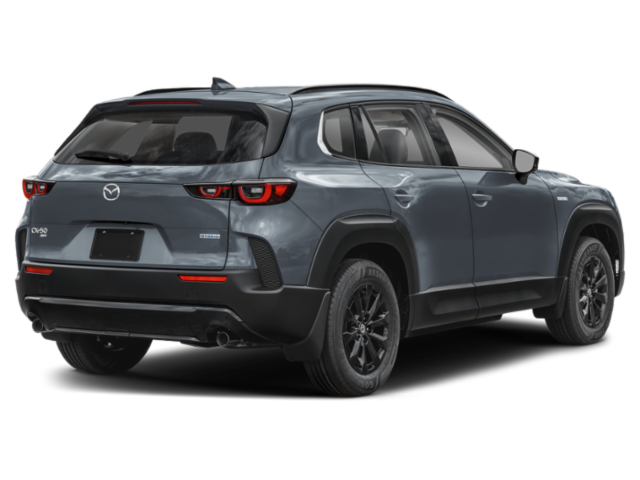
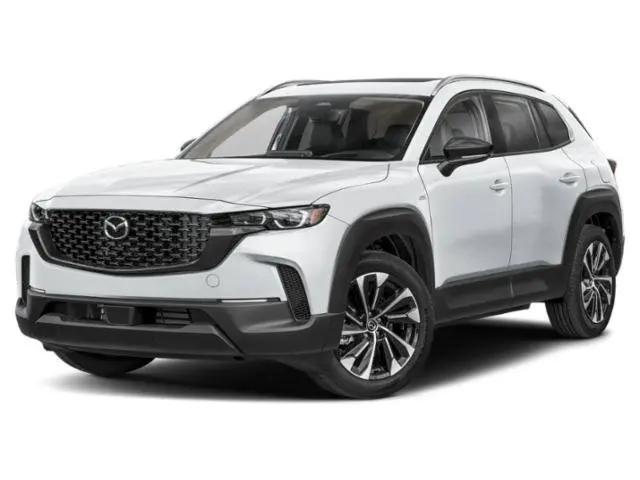
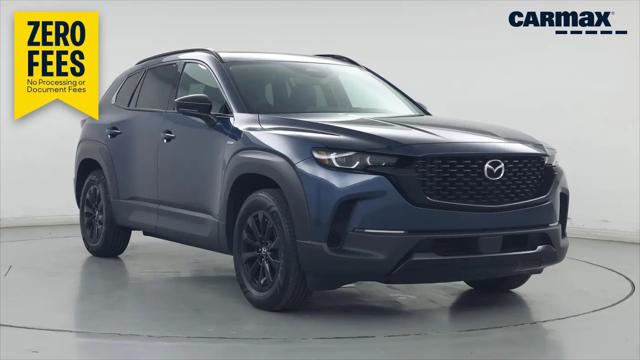
In the compact crossover SUV segment, electrified powertrains are increasingly available, and more automakers offer them than not. Mazda is the latest car company to add one to its lineup in the form of the 2025 CX-50 Hybrid. To create it, Mazda installs a Toyota-sourced hybrid powertrain providing 219 horsepower, all-wheel drive (AWD), and an estimated 38 mpg in combined driving.

Photo: Christian Wardlaw
In addition to adding a hybrid to the 2025 CX-50 lineup, Mazda makes several other changes to the model. They include:
Three 2025 CX-50 models are available: 2.5 S, Hybrid, and 2.5 S Turbo. Additionally, Select, Preferred, Premium, and Premium Plus trim levels are available. In addition, the 2.5 S Turbo comes in a more rugged-looking Meridian Edition, the subject of a previously published review. This review focuses on the CX-50 Hybrid's new drivetrain and how it potentially impacts this SUV's overall consumer appeal.
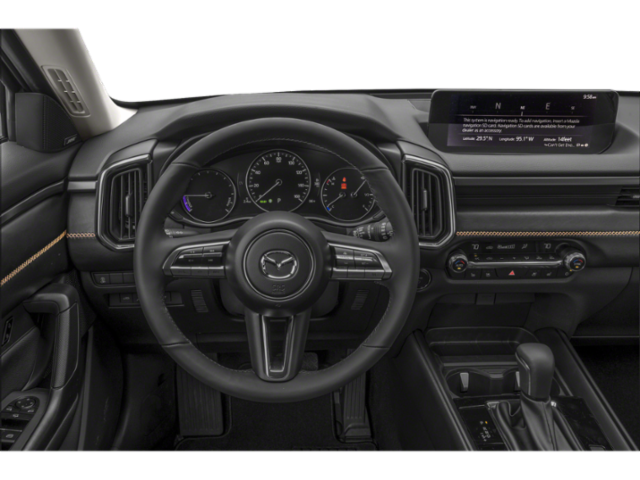
For this 2025 CX-50 Hybrid review, Mazda provided a test vehicle equipped with Premium Plus trim. The only option was a navigation system, which brought the test vehicle's price to $41,946. That includes the $1,420 destination charge to ship the SUV from the assembly plant in Huntsville, Alabama, to your local dealership.

Photo: Christian Wardlaw
Toyota donated the proven hybrid powertrain found in the Mazda CX-50 Hybrid. It consists of a 2.5-liter four-cylinder engine, front and rear electric motors creating an electronic AWD system, a continuously variable automatic transmission (CVT), and a nickel-metal hydride battery underneath the back seat. Mazda estimates the CX-50 Hybrid will get 38 mpg in combined driving.
During my evaluation, while driving a route including city streets, mountain roads, coastal highways, rural two-lane farm roads, and freeways, the CX-50 Hybrid averaged 30.2 mpg. In my experience, most hybrids fall short of fuel-economy estimates, but that result was unexpectedly low.
Viewed positively, compared to the 2024 model's turbocharged Meridian Edition test vehicle, which averaged 19.7 mpg when driven on the same loop, the CX-50 Hybrid improved fuel economy by better than 50 percent. Nevertheless, that 38-mpg estimate set my expectations, and the real-world result disappointed me.
Mazda claims it has tuned the CX-50 Hybrid to ensure responsive acceleration, lively handling, and what it characterizes as a "harmonious" driving experience. The company goes so far as to say the CX-50 Hybrid offers better off-the-line acceleration than the gas-only powertrains.
In everyday driving situations, the CX50 Hybrid feels like a Mazda and not a Toyota. It has a firm, connected ride and nimble handling, and I rarely took note of the CVT. However, when you need a squirt of acceleration, the CX-50 Hybrid struggles. I tried to beat other cars away from a traffic light to change lanes and enter a freeway on-ramp, and it was more challenging than I expected.
Nevertheless, the CX-50 Hybrid gets up to freeway speeds without any trouble, and the test vehicle climbed a mountain grade at a steady 75 mph with a minimum of grumbling from the four-cylinder engine and CVT. The regenerative brakes aren't much of a bother in typical driving situations, and though my overall fuel economy number wasn't impressive, the test vehicle did average 34.8 mpg in city driving.
On the undulating mountain roads near Los Angeles, the CX-50 Hybrid's suspension tuning did a great job of managing the added weight of the SUV's electric motors and battery. With a flat cornering attitude and masterfully controlled body motions, this Mazda feels secure and athletic on a winding road. However, the steering weight is too heavy, and the pedal of the regenerative braking system can feel artificial under your foot. The braking response is sometimes uneven too.

Photo: Christian Wardlaw
In addition to adding the CX-50 Hybrid to the lineup, Mazda improved the standard CX-50's fuel economy for 2025, bumping it to 28 mpg in combined driving, according to the Environmental Protection Agency (EPA).
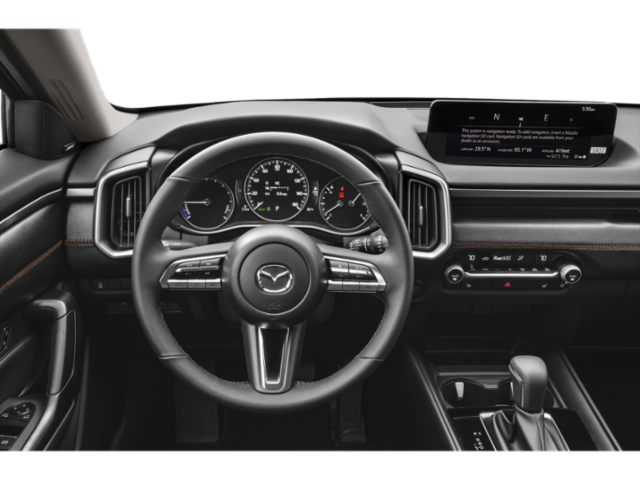
The Mazda Connect infotainment system also gets an update, adding Alexa Built-in. Log in with your Amazon account and the digital voice assistant offers an alternative to the wireless Apple CarPlay and Android Auto smartphone mirroring platforms. Anyone new to Mazda Connect will need some time to acclimate to the mix of physical, touchscreen, and voice controls, some of which are conditional. Once you're used to the technology it becomes easier to use.
New safety features debut for 2025, with all CX-50s gaining a rear-seat reminder, safe-exit assistance system, and head-on collision mitigation. Starting with Premium trim, a traffic-sign recognition system and speed-limit assist are standard. Turbos with Premium or Premium Plus trim add Mazda's Cruising and Traffic Support highway driving-assistance technology.
Choose the most expensive version of the SUV—the 2.5 S Turbo Premium Plus—and it gets a front cross-traffic warning system, intersection turn assistance, and a surround-view camera with a see-through view to improve maneuverability.
Unfortunately, my CX-50 Hybrid Premium Plus test vehicle did not have most of those new safety features, so I could not evaluate them. However, it did have a head-up display, and it's worth noting that this Mazda is one of the only vehicles in its segment that shows blind-spot warnings on the head-up display and the gauge cluster. I find that extremely helpful when battling L.A. traffic.
Choosing the CX-50 Hybrid over the standard CX-50 2.5 S costs an extra $2,320 to $3,400, depending on which trim level you select. Is the upcharge worth it? Let's take a look.
With the CX-50 Hybrid, you gain 32 hp, and the hybrid's front electric motor provides 17 more pound-feet of torque, but the hybrid weighs 267 more pounds and tows 500 pounds less weight. Cargo volume and ground clearance are a little less than with the 2.5 S.
Based on EPA fuel-economy estimates, the CX-50 Hybrid should travel 10 more miles for each gallon of gas consumed. So, if you drive 12,000 miles annually, the Hybrid burns 315.8 gallons of fuel while the 2.5 S uses 428.6 gallons. As of this writing, according to the American Automobile Association, the average cost of a gallon of gas in the United States is $3.12.
Those figures mean you would spend $985.30 per year to keep the CX-50 Hybrid on the road and $1,337.23 to feed the CX-50 2.5 S, producing an annual gasoline savings of $351.93 by selecting the Hybrid. But when you consider the Hybrid's price premium, you'll see it would take anywhere from 6.6 years to 9.7 years to break even.
Of course, there are other variables at play. In California, getting ahead with the CX-50 Hybrid takes less time because gas costs more. In Texas, it takes more time because gas costs less. Also, your real-world observed fuel economy with either powertrain affects the value equation, as does your planned ownership period. So, do the math based on your region and driving habits, and choose accordingly.
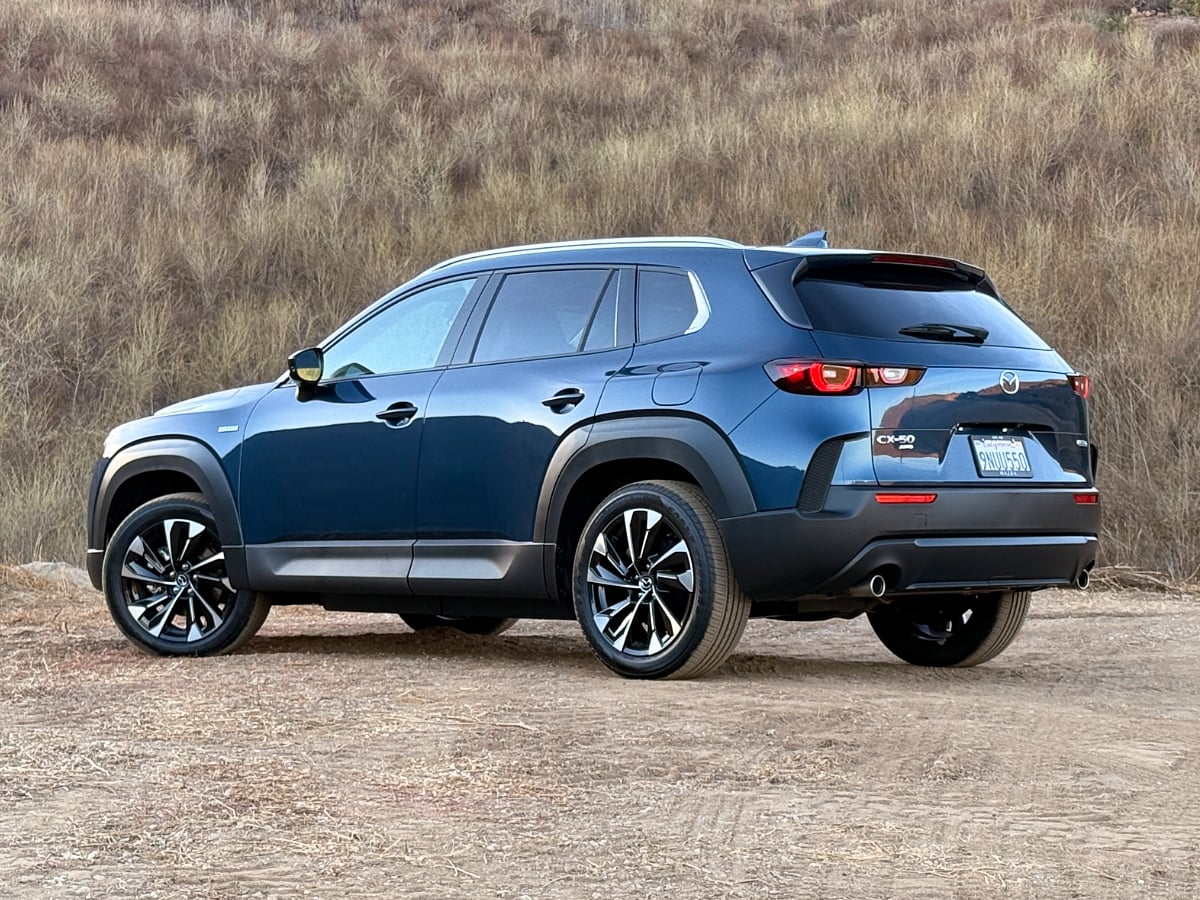
Photo: Christian Wardlaw
The CX-50 Hybrid's powertrain might not be homegrown, but Mazda is wise to leverage proven Toyota technology to fast-track this model into dealer showrooms. That decision gives it a ready-made alternative to models including the Honda CR-V Hybrid, Hyundai Tucson Hybrid, Kia Sportage Hybrid, and Toyota RAV4 Hybrid. Add the CX-50's good looks and Mazda-tuned driving dynamics, and all that's missing is a more impressive real-world fuel-economy number.
Christian Wardlaw is a veteran automotive journalist with 30 years of experience in the field and has held automotive editorial leadership positions at Edmunds, JD Power, and The New York Daily News. Today, Chris owns a content agency called Speedy Daddy Media, and in addition to JDPower.com, his work appears on Capital One Auto Navigator, CarGurus, and Edmunds.