
Adding to its successful lineup of electric Ioniq models, the 2026 Hyundai Ioniq 9 three-row SUV takes its place as the Korean brand's all-electric flagship.

Photo: Perry Stern
Hyundai continues to build on its line of Ioniq electric vehicles (EVs) with the all-new Ioniq 9. Joining the Ioniq 5 crossover and Ioniq 6 sedan, the Ioniq 9 brings a futuristic style based on the brand's Concept Seven that debuted at the 2021 Los Angeles Auto Show. Available with a single- or dual-motor electric powertrain, the new Ioniq 9 features a roomy cabin, high-tech features, and the latest advanced driver assistance systems (ADAS).

Photo: Perry Stern
The new Ioniq 9 will have no trouble standing out in the sea of seven-passenger SUVs. While it is a large crossover SUV with a wheelbase longer than any other Hyundai model, the Ioniq 9's short overhangs and sleek roofline give it a more svelte appearance. The pixel light treatment in front and back gives this newest Hyundai a futuristic look while tying it in with the designs of the previous Ioniq models. Available 21-inch wheels and distinct fenders add a bold design element to this streamlined SUV.
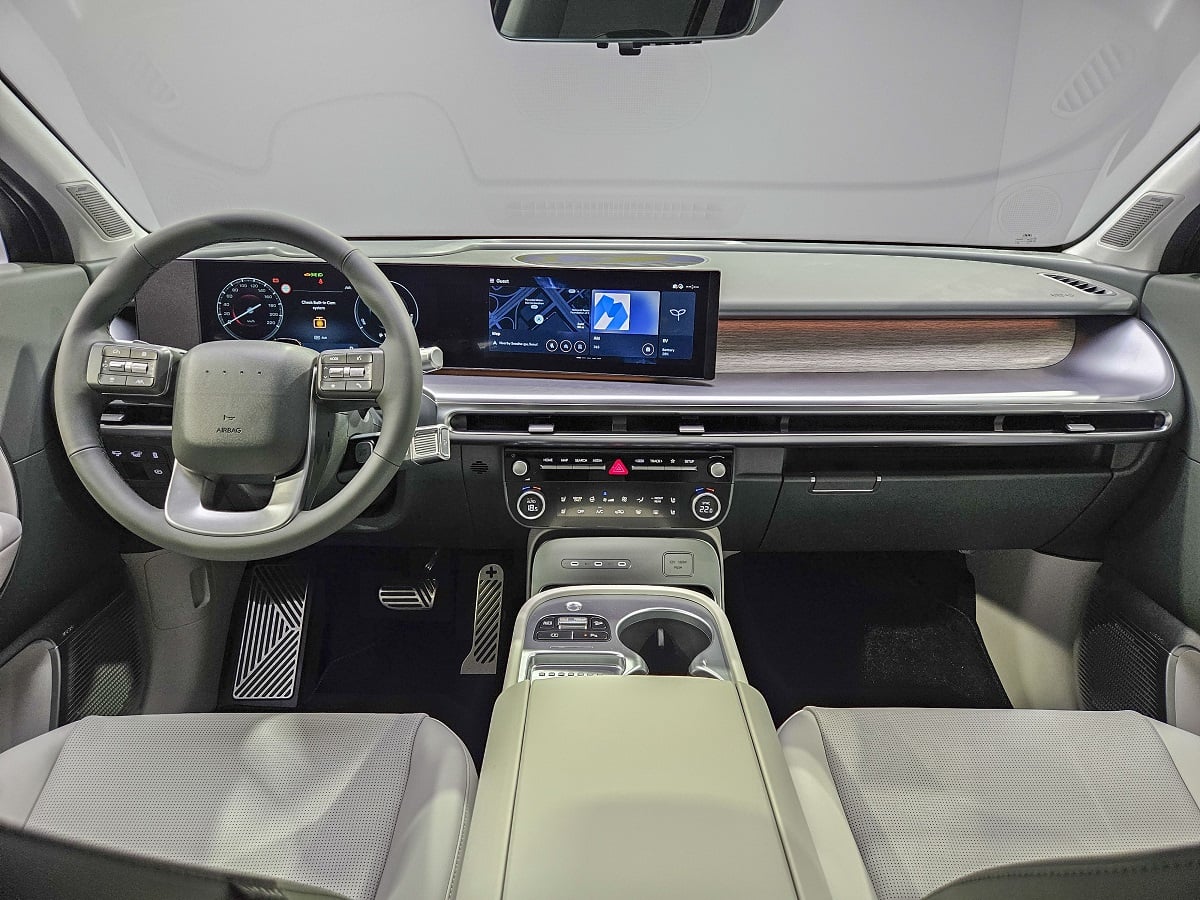
Photo: Perry Stern
For anyone who has been in one of Hyundai's latest new models like the Tucson or Sonata, the dashboard of the Ioniq 9 will look familiar. The large, curved screen incorporating the digital gauge cluster and infotainment display gives the Ioniq 9 a clean, high-tech look. At the same time, shortcuts to more popular features and full climate controls are easily accessible in a separate panel.
With a large center console and additional space between the front seats, there's plenty of storage for small items as well as large bags or purses. The large storage bin in the center console can slide forward or back. It opens from the front or the rear, giving access to its contents from the rear seats.
The Ioniq 9 features comfortable seating in all three rows, which is made possible by its long wheelbase and electric powertrain that allows for a flat floor to the third row. Second-row seats are available in a bench or bucket configuration with seven- or six-passenger seating, respectively. There's good legroom and headroom for all seating positions, and the large rear doors make access easy. Customers can also opt for the Relaxation Seats, which feature extending footrests and reclining backs for front- and second-row passengers.
Not only is the Ioniq 9 adept at carrying passengers, but the big SUV can handle plenty of cargo. The large rear hatch opens to reveal a sizeable space behind the rear seats that can easily hold a few suitcases or a week's worth of groceries. Folding the third row—easily done from the back of the vehicle—expands the space to almost 47 cubic feet. The frunk adds 3.1 cubic feet of space (1.8 cubic feet on dual-motor versions). A Vehicle-to-Load (V2L) outlet in the cargo area provides power for charging or running electric devices, using the EV's battery as a source.
Overall, the cabin and materials have a premium vibe appropriate to the Ioniq 9's position as the new flagship of Hyundai's EV lineup.
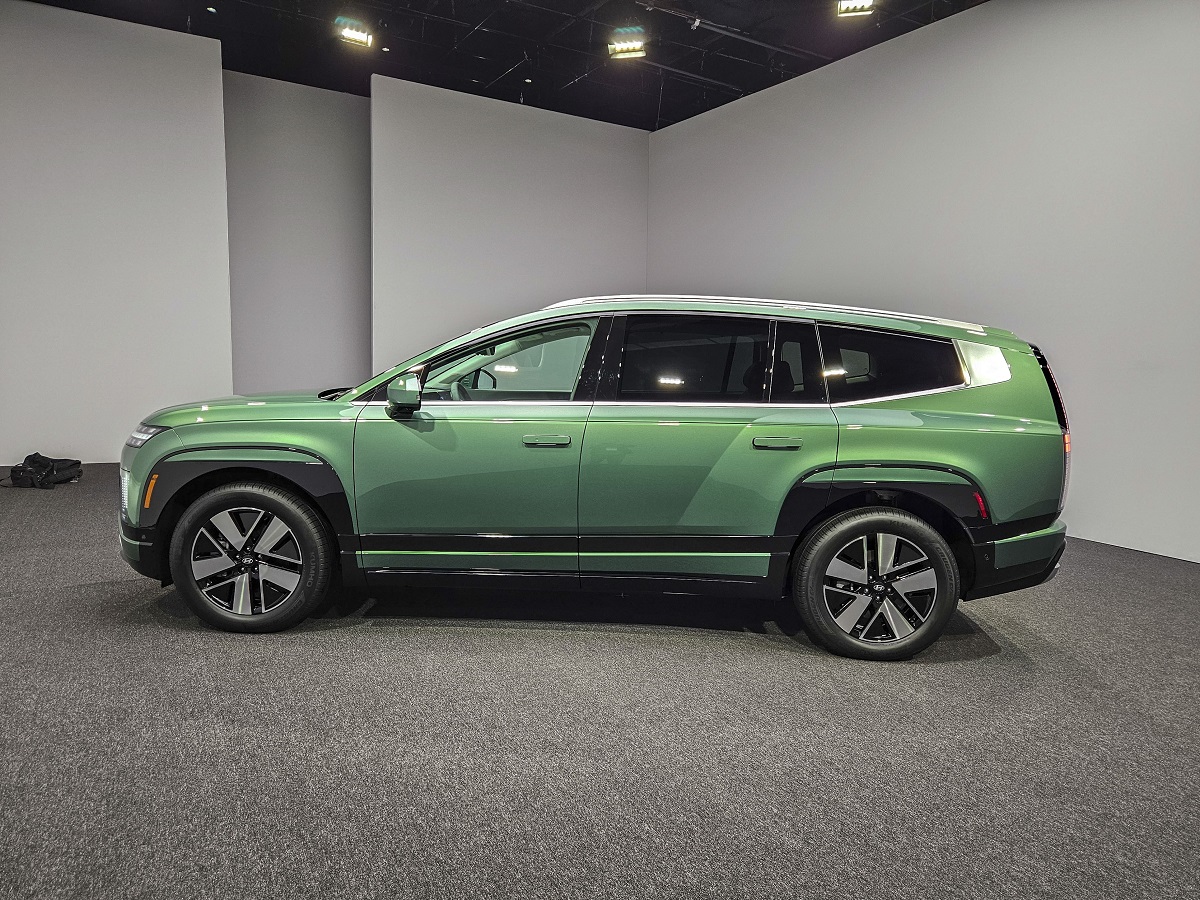
Photo: Perry Stern
Hyundai will offer the Ioniq 9 with a single- or dual-motor electric drivetrain. The rear-wheel-drive version gets a single, 215-horsepower electric motor, while the dual-motor adds a front motor for 303 hp. According to Hyundai, the Performance AWD variant bumps up to 422 hp and promises a zero-to-60-mph time of 4.9 seconds. Dual-motor versions of the Ioniq 9 can tow up to 5,000 pounds.
All Ioniq 9 SUVs source power from a 110.3-kilowatt-hour battery pack, which Hyundai says should deliver a maximum range of 335 miles on a charge. While the figure is likely less in the Ioniq 9 Performance, Hyundai says all versions will boast a range of at least 300 miles.
The Ioniq 9 uses the new NACS charge port, allowing customers to charge at more than 17,000 Tesla superchargers. A Combined Charging System (CCS) adapter will be available, further increasing the number of public charging options for owners. With its 800-volt architecture, Hyundai says the Ioniq 9 can charge from 10 to 80 percent in about 24 minutes when plugged into a 350-kilowatt DC fast charger.
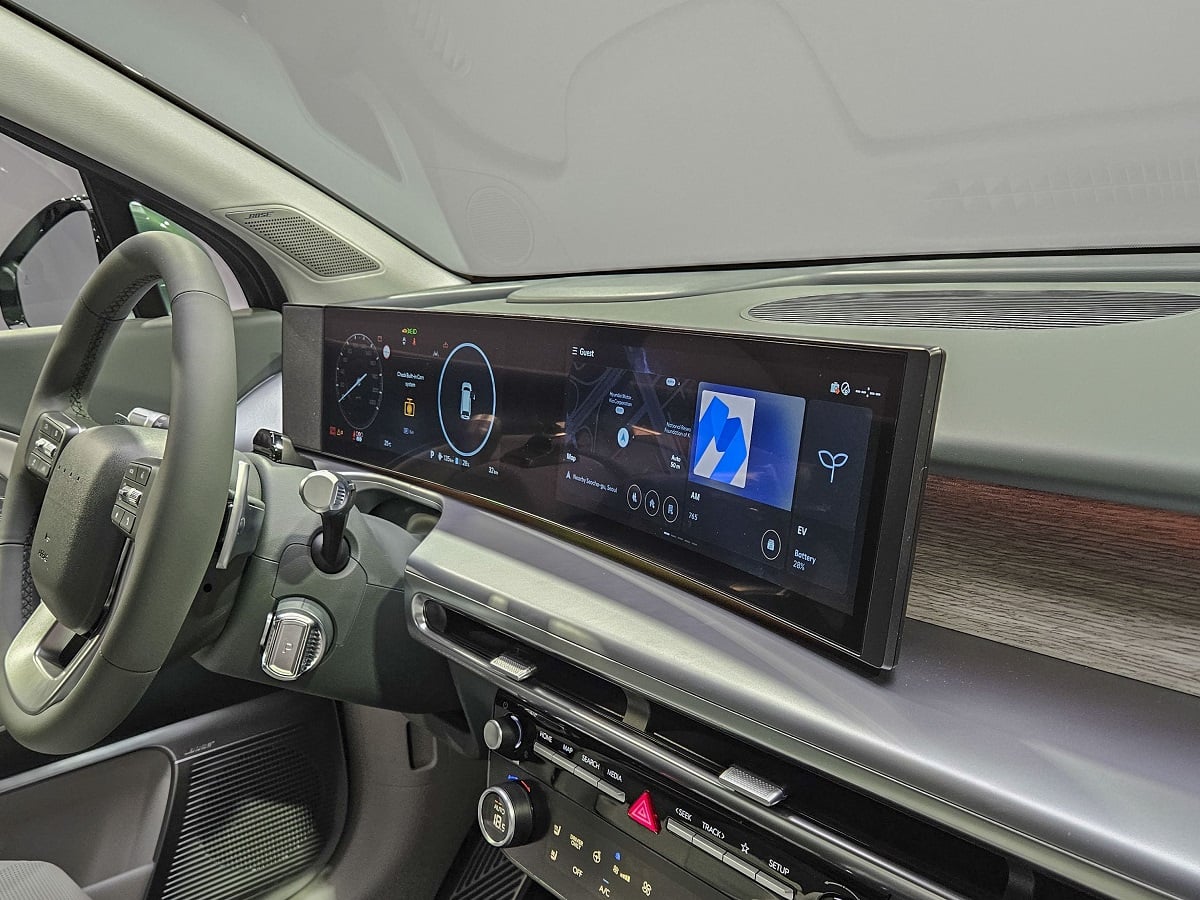
Photo: Perry Stern
The Ioniq 9's advanced curved screen incorporates the 12-inch digital gauge cluster and 12-inch infotainment display, both clear and easy to read. I’m happy to report that Hyundai hasn't deleted all the physical controls from the new EV; there are volume and tuning knobs as well as dials to adjust driver and passenger cabin temperature. You can easily access all climate functions outside of the main infotainment screen.
An eight-speaker audio system is standard, with the option of upgrading to a premium Bose 14-speaker system with 5.1-channel surround sound. Also available is Hyundai's latest digital key version, which allows customers to operate the vehicle via NFC communications on their smartphone.
Hyundai equips every new Ioniq 9 with an extensive list of ADAS. In addition to automatic emergency braking and rear cross-traffic warning with automatic rear braking, the Ioniq 9 gets a safe-exit assistance system and rear-seat reminder system.
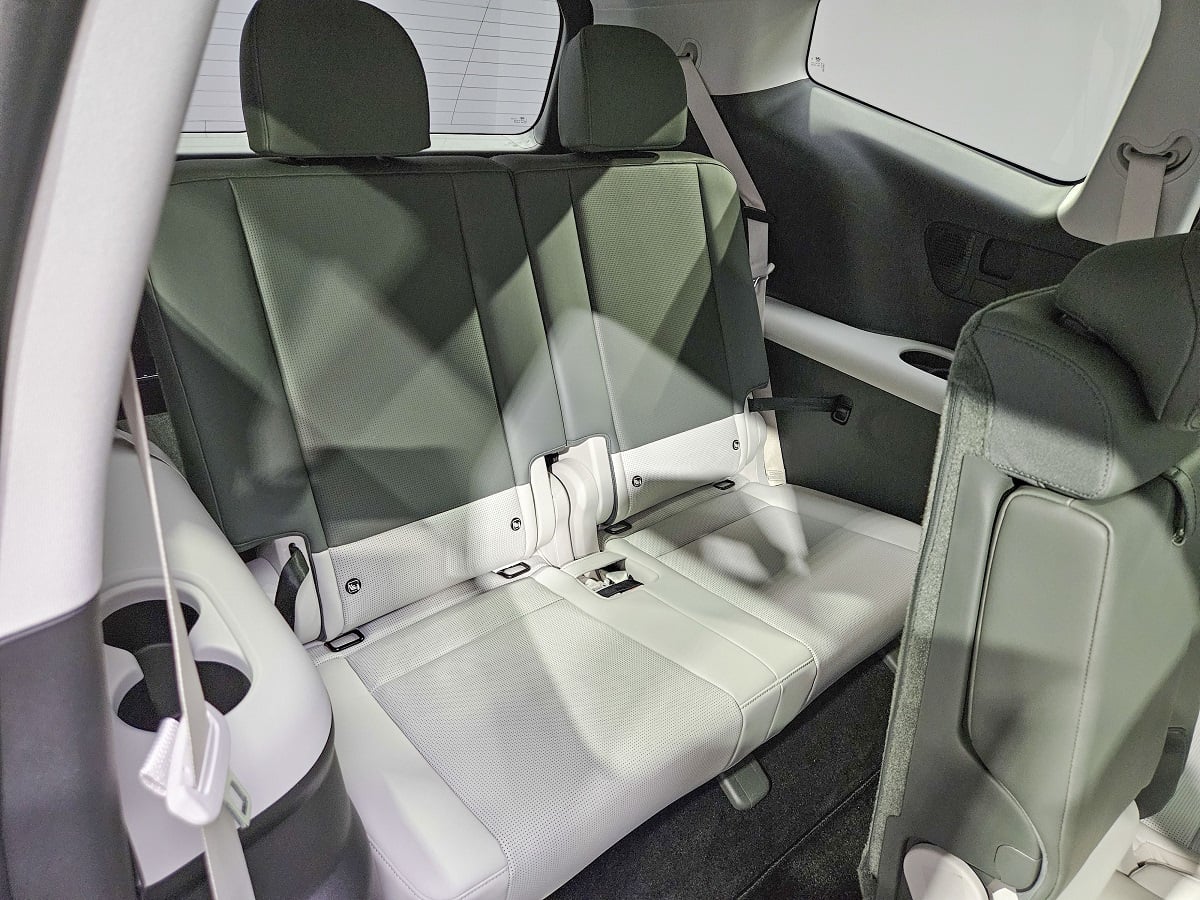
Photo: Perry Stern
While the three-row crossover is an ideal platform for electrification, there aren't many options in this category. When the new Hyundai Ioniq 9 arrives, its primary rival will be its corporate cousin, the Kia EV9 (the Hyundai Group owns Kia and Hyundai). Other options include the Rivian R1S and the popular Volkswagen ID. Buzz. But with its stylish design, extended driving range, and high-tech cabin, the new Ioniq 9 should be a front-runner in this small group.
The 2026 Hyundai Ioniq 9 production begins early in 2025 at the automaker's new assembly plant in Bryan County, Georgia. Pricing and trim details will be available closer to the on-sale date.
Hyundai is the source of information in this article. It was accurate as of November 20, 2024, but it may have changed since that date. Always confirm product details and availability with the automaker's website or your local dealership.
Perry Stern has worked in the automotive industry for over 30 years and has always been a car enthusiast. Driving almost every new car on the market, Perry has written for multiple publications in addition to his work for JDPower.com. Recently relocated to southeast Michigan, Perry is still crazy about cars, especially his 2006 Mazda MX-5 Miata.


With Labor Day in the rearview mirror, fall is just around the corner. That also means the 2026 model year is drawing to a close, and automakers and dealers are clearing out 2026 inventory to make ...See More
Read the Full Article
Are you looking for the best deals on the hottest new cars in September 2026? Look no further. We researched the latest car incentives and offers for America’s 10 top-selling cars. Here, listed ...See More
Read the Full Article
If you are searching for the best deals on the hottest new SUVs in September 2026, your search ends here. We researched the latest car incentives and offers for the 20 top-selling SUV models in ...See More
Read the Full Article
If you are searching for the best deals on the most popular new trucks in September 2026, your search ends here. We researched the latest incentives and offers for America's 10 top-selling trucks. ...See More
Read the Full Article