
Volkswagen has teased the idea of bringing back its iconic microbus for more than 20 years, and in 2017, the electric ID. Buzz concept debuted at the Detroit Auto Show. It took a few more years, but the ID. Buzz is finally here and is a fine tribute to that original microbus.
A new halo vehicle for the brand, the 2025 Volkswagen ID. Buzz stands out with unique styling reminiscent of the original microbus but offers much more than eye-catching looks. Designers created a surprisingly spacious and versatile cabin thanks to its electric powertrain. With good power and a low center of gravity, the ID. Buzz is also very nice to drive. Volkswagen isn't calling it a minivan, but the ID. Buzz is easily one of the best people movers available.
Volkswagen invited me to San Francisco, California, to experience the new ID. Buzz firsthand, covering my airfare, food, and lodging.
 Photo: Perry Stern
For its initial 2025 model year, Volkswagen offers the new ID. Buzz in three trim levels: Pro S, Pro S Plus, and 1st Edition. Rear-wheel drive (RWD) is standard, while the Pro S Plus and 1st Edition are also available with a dual-motor all-wheel drive (AWD) system. Prices range from around $61,000 to just over $70,000. The ID. Buzz will arrive in showrooms in the fall of 2024.
For this review, VW provided me with a 2025 Volkswagen ID. Buzz Pro S Plus 4Motion (the automaker’s term for its AWD system). The only option was the Energetic Orange and Candy White two-tone paint for a total manufacturer's suggested retail price of $70,540. Volkswagen builds the ID. Buzz in Hannover, Germany.
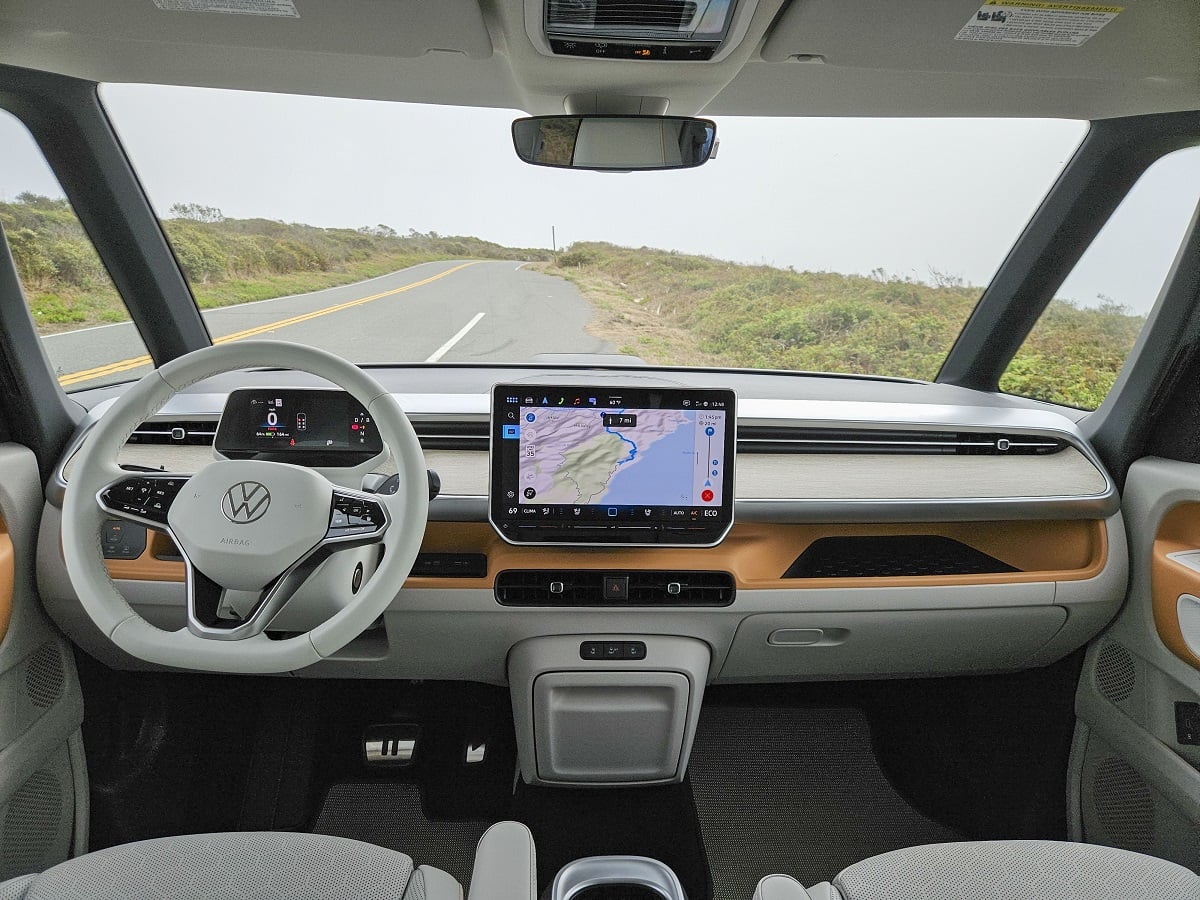 Photo: Perry Stern
Volkswagen did a fantastic job with the design of the new ID. Buzz, as there will be no mistaking it for anything else on the road. The oversized VW logo and V-shaped hood are clear connections to the original Type 2 microbus, while the stylish LED headlights and distinctive front fascia give the Buzz a happy face.
Simulated vents at the rear harken back to the original, which needed airflow for its rear engine. There's still a rear motor in this one, but it's electric and doesn't need cooling vents. The standard 20-inch wheels, squared-off silhouette, and large sliding doors complete the look.
While it possesses many minivan attributes, the ID. Buzz has a longer wheelbase yet shorter overall length than rivals like the Chrysler Pacifica and Toyota Sienna. At the same time, the VW is considerably taller, which gives it a more spacious feel than the typical minivan.
It may have classic roots, but the ID. Buzz is thoroughly modern inside, with a 5.3-inch digital driver's display and a 12.9-inch infotainment touchscreen. Aside from the haptic switches and sliders on the steering wheel, the only physical buttons on the dashboard operate the power sliding doors.
Storage spaces in the cabin are extensive, with cubbies and shelves in the dashboard, doors, and center console. There are multiple USB ports throughout the cabin, including one in the front passenger door, which is ideal for keeping a phone charged while it rests in the door.
Adding to the versatility of the ID. Buzz is the movable center console. With good storage space on top and an additional pull-out drawer to the rear, you can release the console between the two front seats and latch it between or behind the second-row seats to provide useful storage for rear-seat passengers. Conversely, the console is removable if you don’t need it.
After sampling every seating position in the ID. Buzz, I found excellent head- and legroom, even in the third row, which boasts 42 inches of legroom—considerably more than any other full-size SUV or minivan. Entry and exit through the large power-operated sliding doors are easy, and the second-row seats easily move forward to allow unobstructed access to the third row. There are USB ports in each row to keep everyone's devices charged.
With the third row in use, cargo space is somewhat limited. However, it will still fit a few small bags. When folded, a flat Flexboard at the base lines up with the third row, creating a large, flat loading space. Additionally, two Buzz Boxes are below the Flexboard, providing more storage options. If cargo carrying is the priority, the third-row seats are removable, and the second row folds flat for 145.5 cubic feet of storage.
If you need more hauling options, the ID. Buzz can tow up to 3,500 pounds. When not in use, the hitch receiver is retractable, hiding behind the rear bumper.
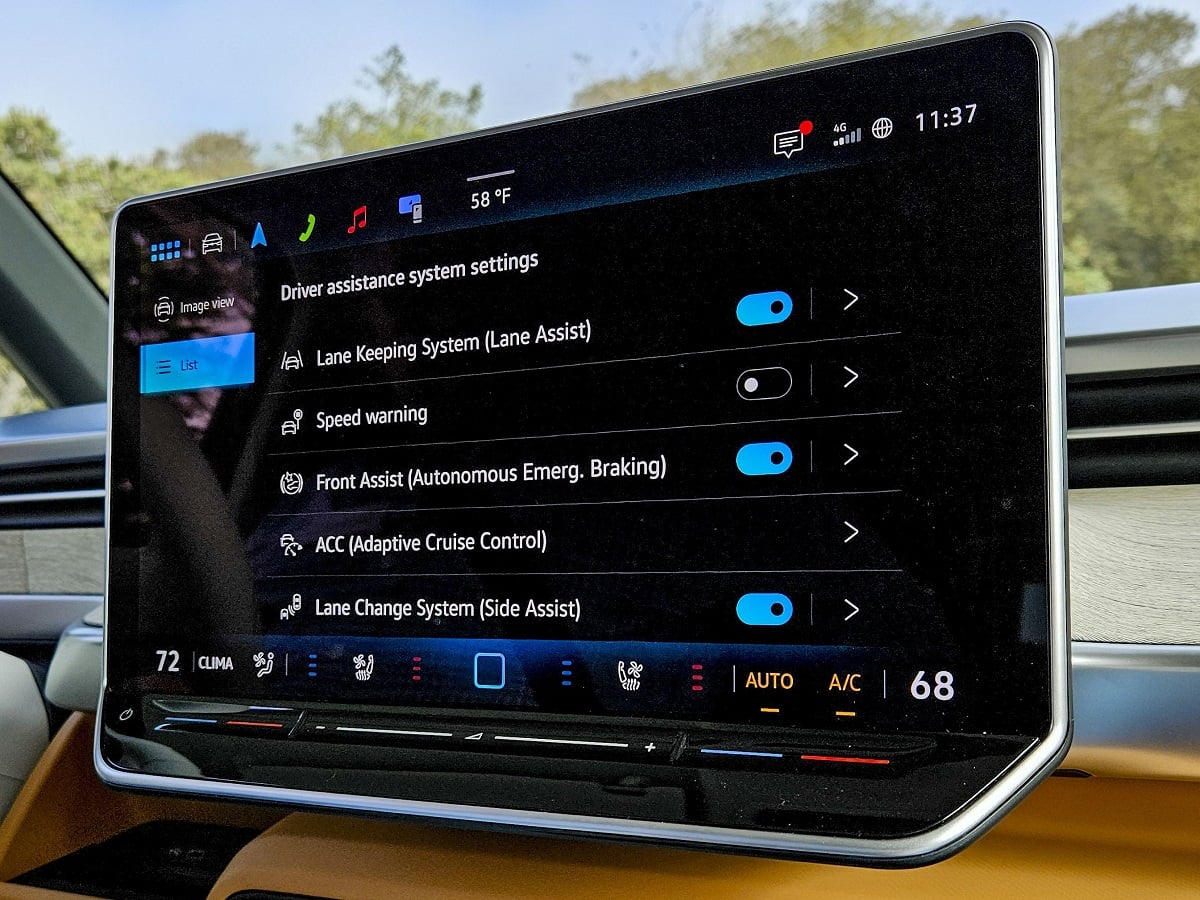 Photo: Perry Stern
The ID. Buzz gets Volkswagen's latest infotainment system, displayed on a clear, easy-to-read touchscreen. Large icons make navigation simple, and shortcuts to vehicle settings, navigation, audio, and communications remain static at the top of the screen. Climate functions are always accessible in the lower display.
Apple CarPlay and Android Auto connect wirelessly, and the setup for either of these phone integration systems was seamless and quick.
With the elimination of virtually all knobs and buttons, the volume and temperature adjustment are via haptic slide controls at the bottom of the display. While it does create a cleaner look overall, these sliders are challenging to use with any precision, especially while driving. I found that hitting the voice-control button on the steering wheel and asking the system to adjust the temperature had better results.
All versions of the ID. Buzz come standard with IQ.Drive, VW's suite of advanced driver assistance systems. Features include adaptive cruise control with stop-and-go capability, automatic emergency braking with pedestrian and cyclist detection, and rear cross-traffic warning.
Also standard is Travel Assist, which uses adaptive cruise control and lane-centering assistance to provide a semi-autonomous hands-on driving experience. Driving up Highway 1 toward the Golden Gate Bridge in heavy traffic, the system provided a confident ride, maintaining speed and position with little input needed.
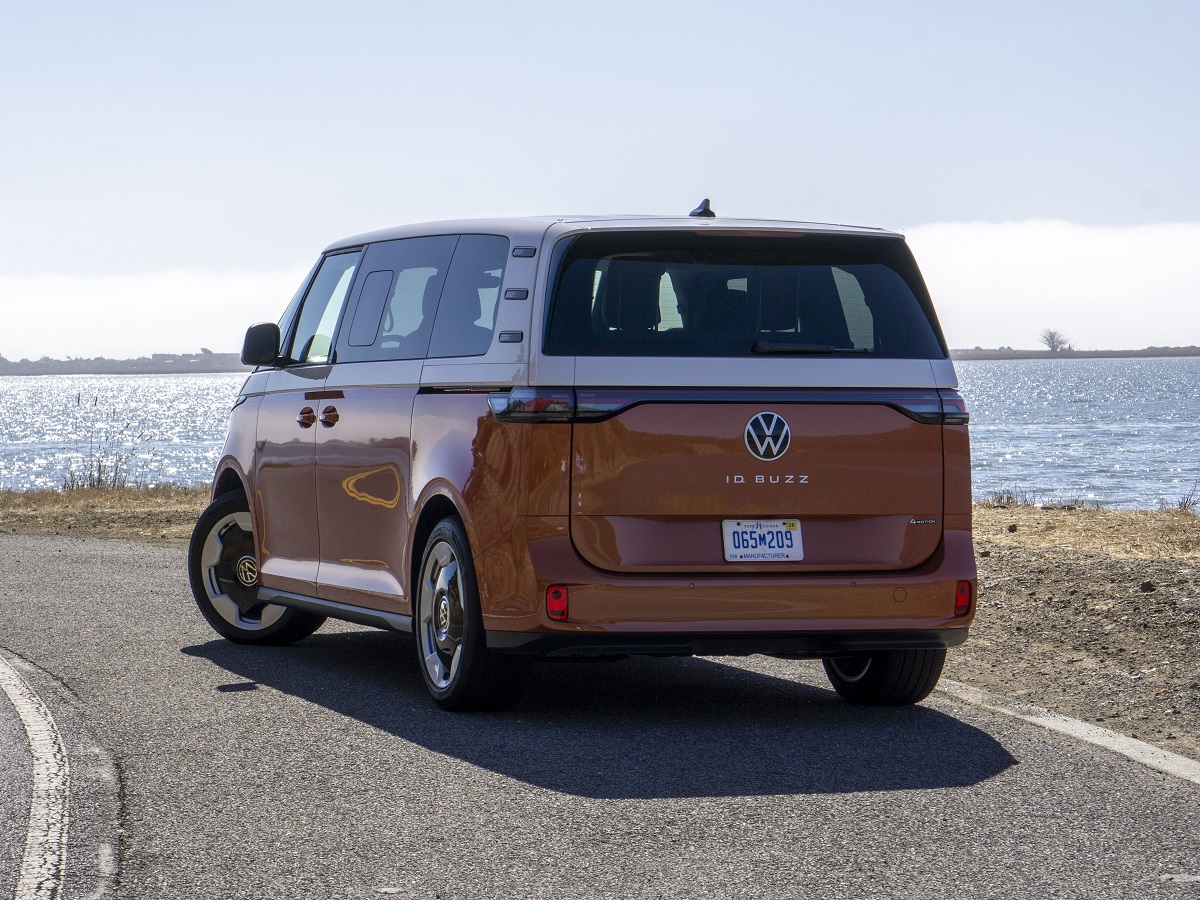 Photo: Perry Stern
The 2025 Volkswagen ID. Buzz that I drove featured the dual-motor powertrain, delivering 335 horsepower. Rear-wheel-drive versions have a single motor, putting out 282 hp. Both variants use a 91-kilowatt-hour battery, which can accept a 200-kilowatt DC fast charge, bringing the level from 10 to 80 percent in 26 minutes.
Upon climbing into the ID. Buzz, the first thing I noticed was the commanding driving position. With its relatively flat front end, the windshield is right at the front of the vehicle, and the large side windows ahead of the doors provide an almost panoramic view.
The ID. Buzz is quite large, but its size is less noticeable from behind the wheel. With the instant torque of the AWD electric powertrain, the ID. Buzz gets moving quickly. Volkswagen says the dual-motor ID. Buzz will reach 60 mph in about six seconds. After experiencing full throttle from a stop, that number seems about right.
While it is quick off the line, acceleration diminishes at higher speeds. When passing a slower vehicle on a two-lane road, the VW didn't accelerate as quickly as I expected, putting me in the oncoming traffic lane longer than I was comfortable with.
With its tall, boxy design, I expected the ID. Buzz to feel cumbersome on the road, but that was not the case. Handling is quite good, with very little body lean in the corners, primarily due to the weighty batteries positioned beneath the floor that lower the center of gravity. That said, I wouldn't call the ID. Buzz sporty, and the three tons of mass becomes quite noticeable when the road gets very twisty.
Volkswagen doesn't offer the ID. Buzz with one-pedal driving like some other electric vehicles (Evs) on the market, but you can select increased brake regeneration, which slows the vehicle when lifting off the throttle. However, you still need to apply the brakes to come to a complete stop.
Overall, the new ID. Buzz delivers a quiet, smooth ride—something I've become accustomed to when driving EVs.
After spending a day with the new Volkswagen ID. Buzz, there's no question that this van will be a hit. Besides the unique styling that inspired passersby to wave, smile, and give thumbs up, the ID. Buzz combines an impressive use of interior space with advanced technology and excellent drivability.
While the closest competitors to the VW ID. Buzz would be minivans like the Chrysler Pacifica or Toyota Sienna, the Kia EV9 is also similar in that it is currently the only other three-row EV on the market. But ultimately, nothing else on the road has the presence of the 2025 VW ID. Buzz, and I expect it will be a hot commodity when it arrives later this year.
Perry Stern has worked in the automotive industry for over 30 years and has always been a car enthusiast. Driving almost every new car on the market, Perry has written for multiple publications in addition to his work for JDPower.com. Recently relocated to southeast Michigan, Perry is still crazy about cars, especially his 2006 Mazda MX-5 Miata.


Nissan is about to introduce an innovative new SUV. The 2027 Nissan Rogue Hybrid has a gasoline engine, but it does not power the wheels. Instead, electric motors at each axle provide propulsion, ...See More
Read the Full Article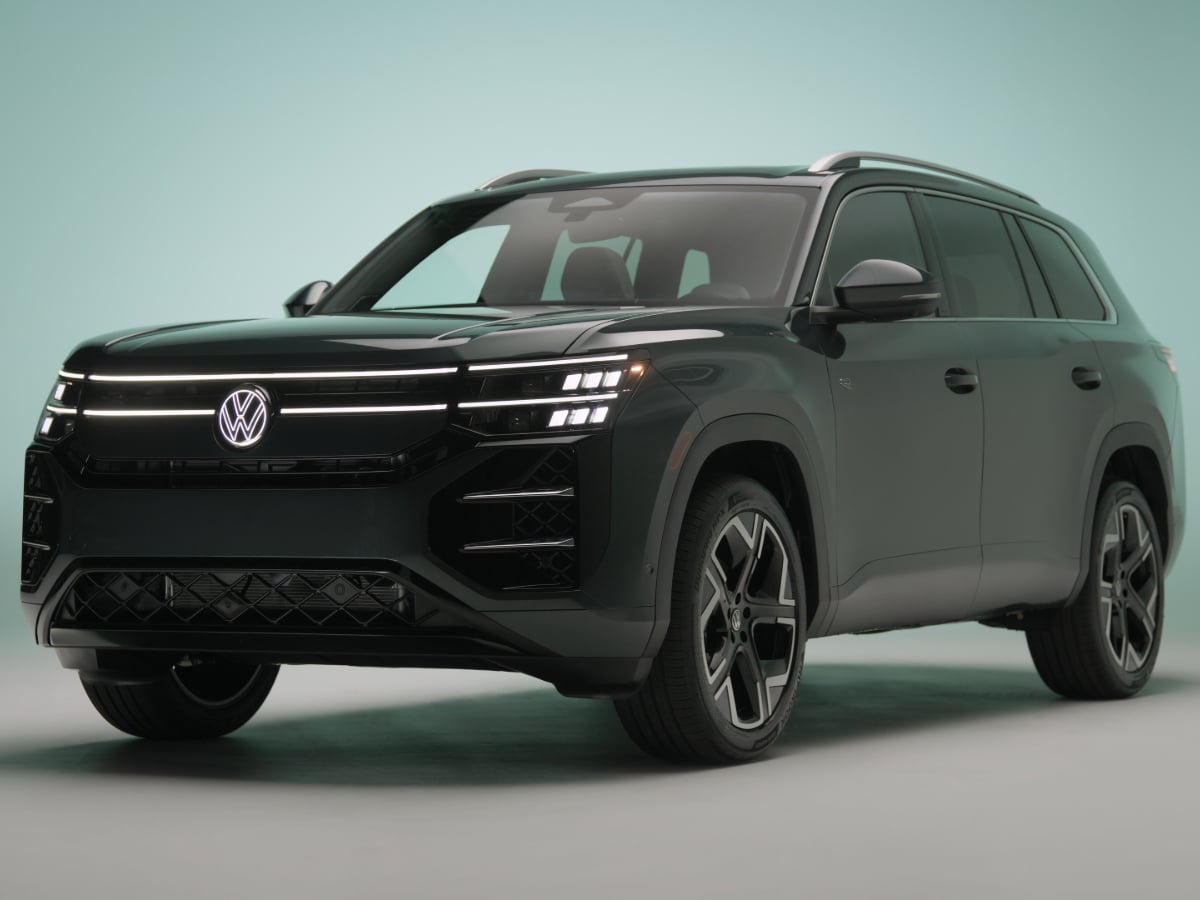
Adding European flair to the otherwise vanilla midsize three-row family SUV market, the redesigned 2027 Volkswagen Atlas debuts with a sharper exterior, an upgraded cabin, more power, and new ...See More
Read the Full Article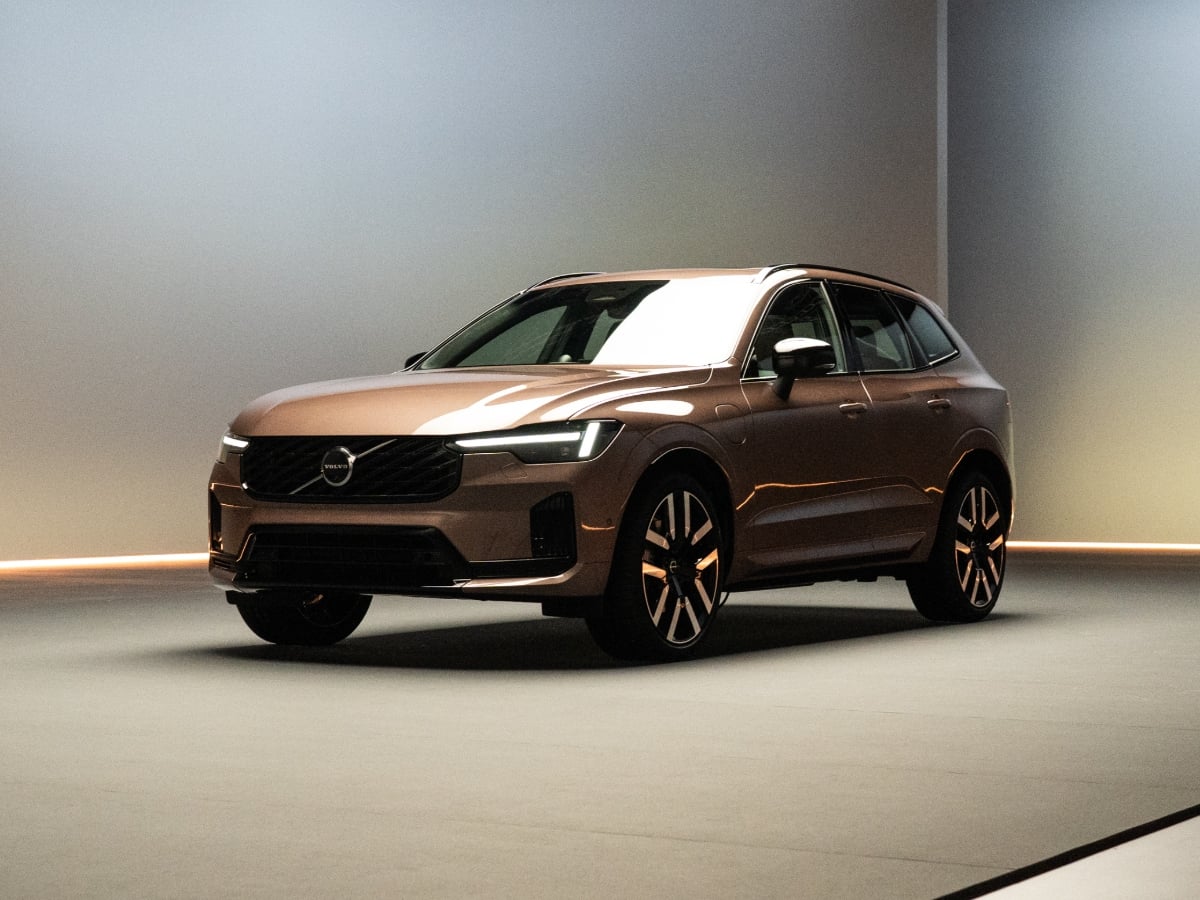
Though the styling stays largely the same, a massive boost in electric range for the plug-in hybrid (PHEV), plus a refined design, helps the 2028 Volvo XC60 stay current and desirable.
Read the Full Article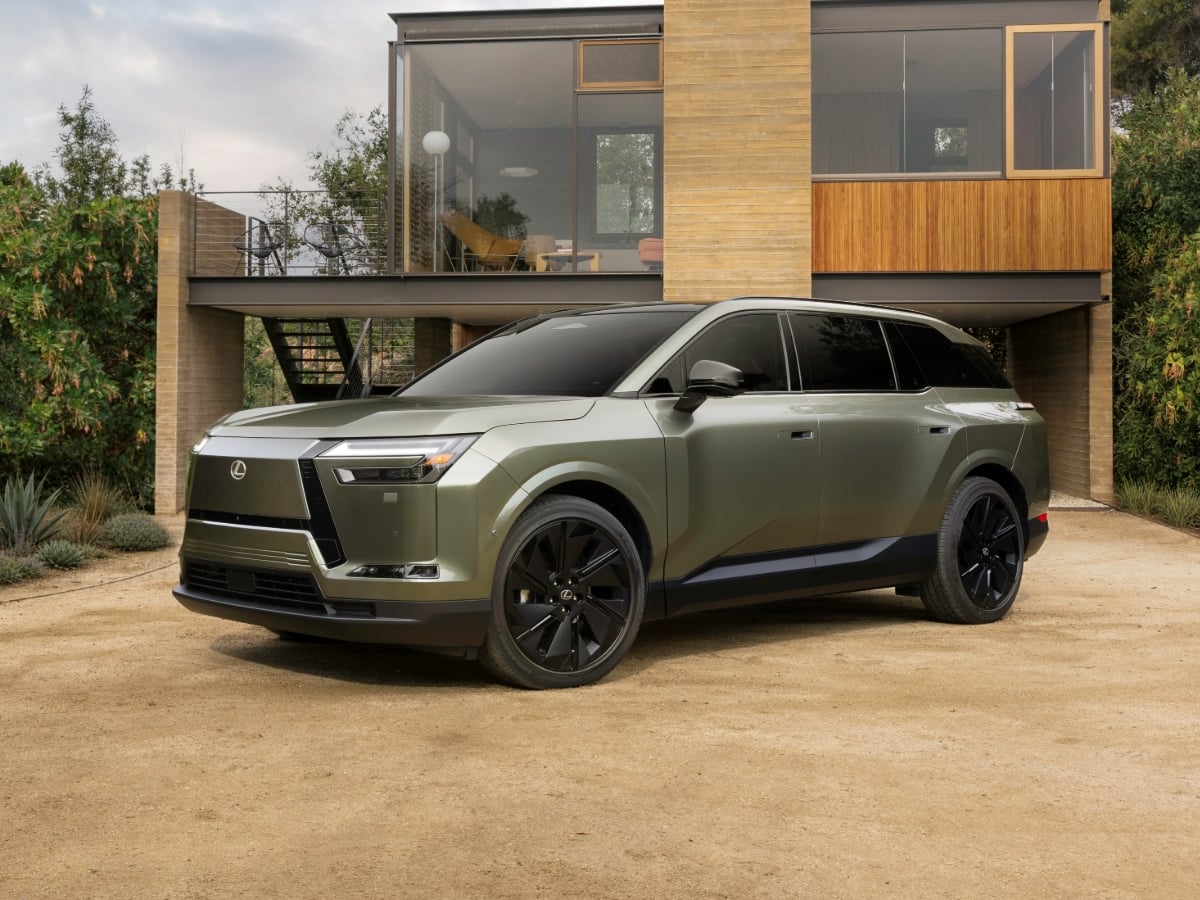
With the 2027 Lexus TZ, Toyota Motor’s luxury division introduces its first three-row all-electric SUV, featuring a lounge-inspired interior, an enhanced all-wheel drive (AWD) system, and up to 300 ...See More
Read the Full Article