See answers to common EV questions, tax incentives, charging maps & more.
Explore EV24 - 29
29 - 34
147 - 190
1 speed, CVT w/OD, 8 speed, Automatic w/OD
Intercooled Turbo Regular Gasoline I-4, Regular Gasoline I-4
All Wheel Drive, Front Wheel Drive
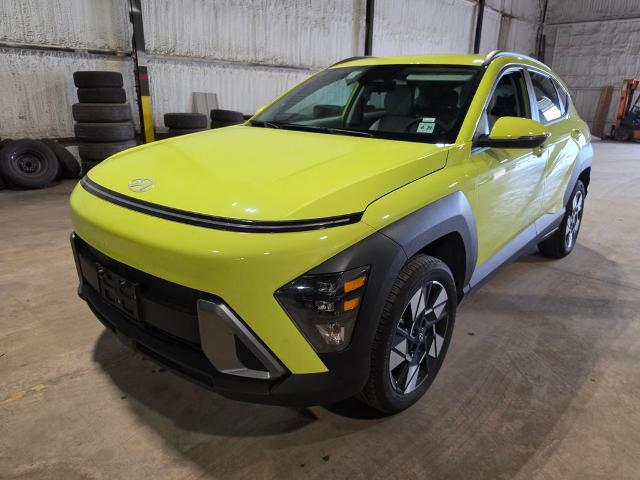
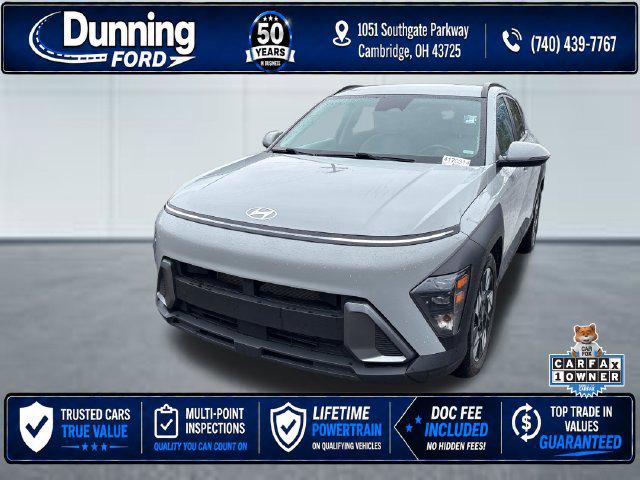
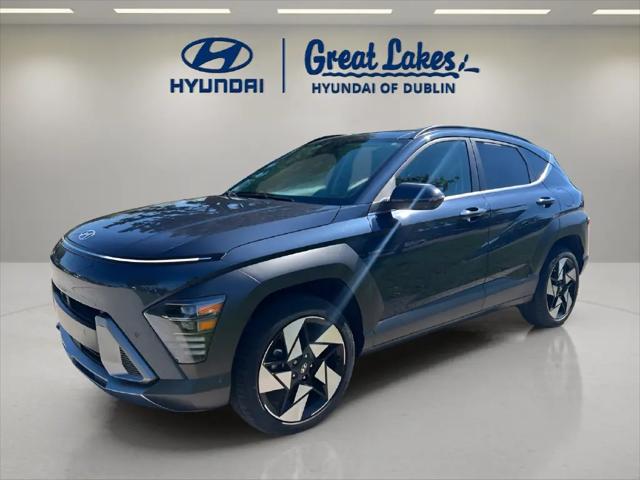
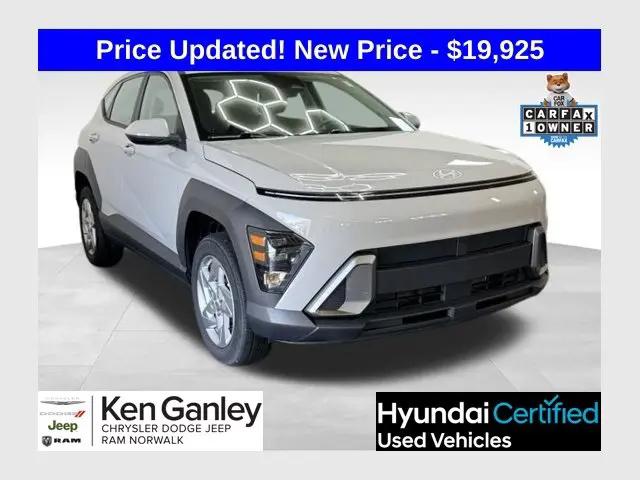
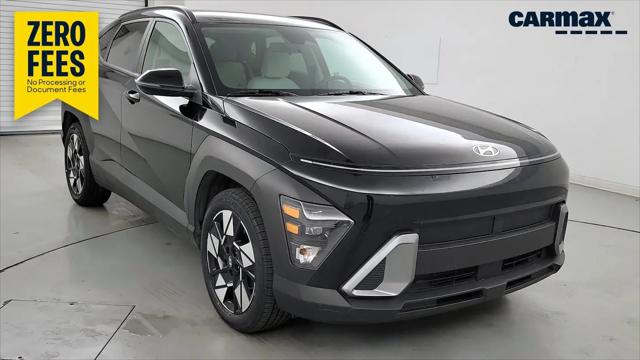
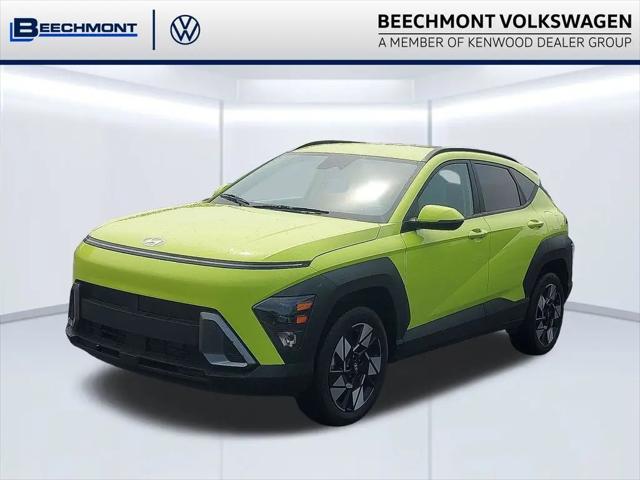
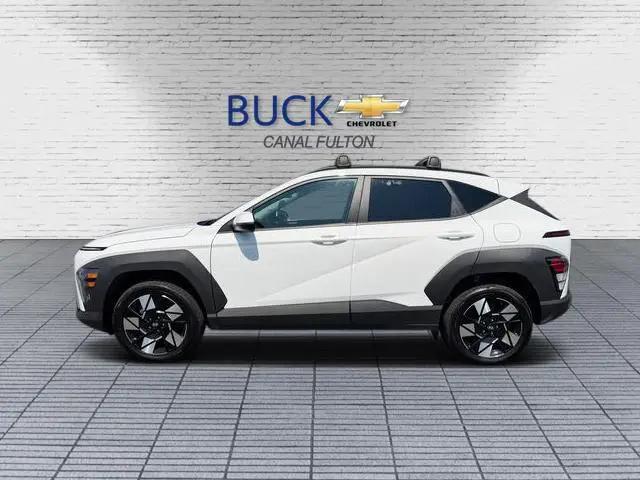
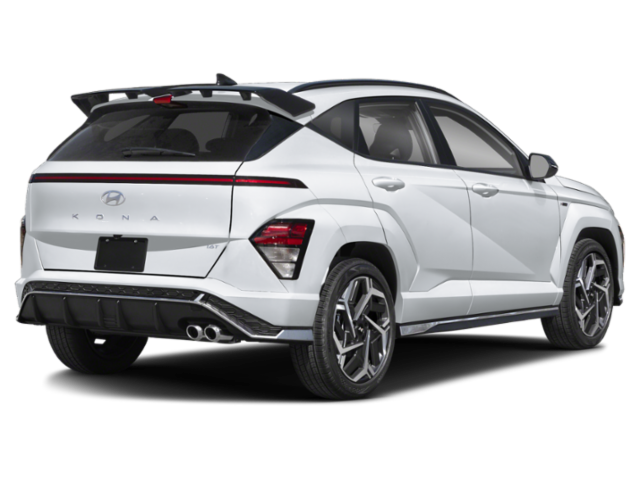
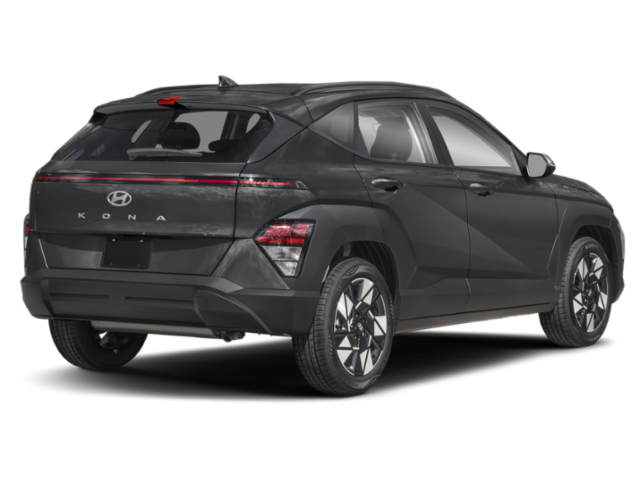
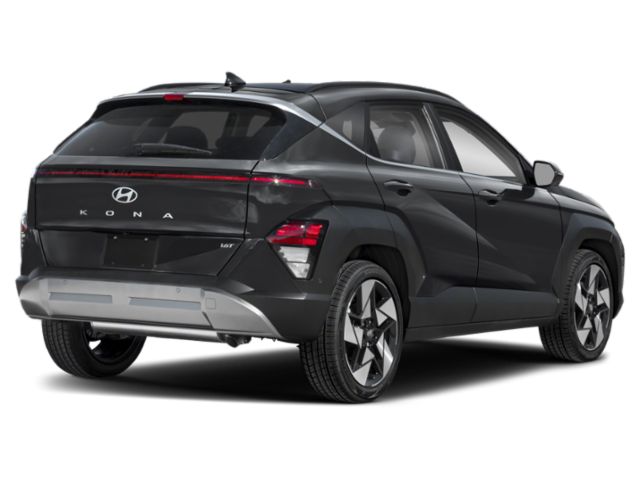
Something has happened to the Hyundai Kona. The small crossover SUV with the scrappy personality and zippy turbocharged driving character is all grown up now thanks to a redesign, but whether you'll find the new 2024 Hyundai Kona appealing depends on what you value most in this type of vehicle.

Photo: Christian Wardlaw
Colder and more technical in appearance, the 2024 Kona is roomier inside for people, pets, and cargo. It leaps forward technologically, providing potentially class-leading infotainment and safety features. And it remains an exceptional value loaded with practicality. But driving one is no longer enjoyable, so all this progress comes at the expense of the Kona's perky personality.
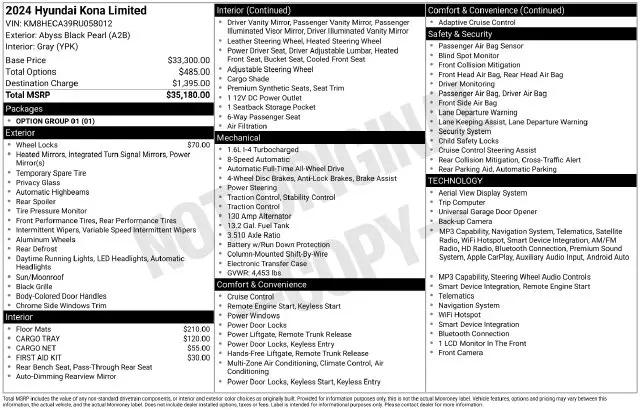
Hyundai engineered the new Kona around the electric version of the SUV, but two gas-fueled powertrains are available. The base engine, never a bright light in the previous Kona, remains underpowered and is standard with SE and SEL trim. The turbocharged engine, which turned the old Kona into something of a Korean Volkswagen GTI, is standard in the N Line and Limited. Prices range from $24,250 to $31,800, plus a destination charge of $1,375.
In the sections that follow, our independent expert analyzes a 2024 Hyundai Kona N Line equipped with the following options:
The test vehicle's price was $34,355, including the $1,375 destination charge to ship the SUV from the Ulsan, South Korea, assembly plant to your local dealership.

Photo: Christian Wardlaw
Equipped with wider doors and seeming to sit higher off the ground than the previous model, the new 2024 Kona is easier to get into and out of than before. Slide inside, and it feels roomier too. Every Kona has a height-adjustable driver's seat, and if you raise it high enough, the front fender creases are visible, giving you an excellent idea of where the SUV's front corners are.
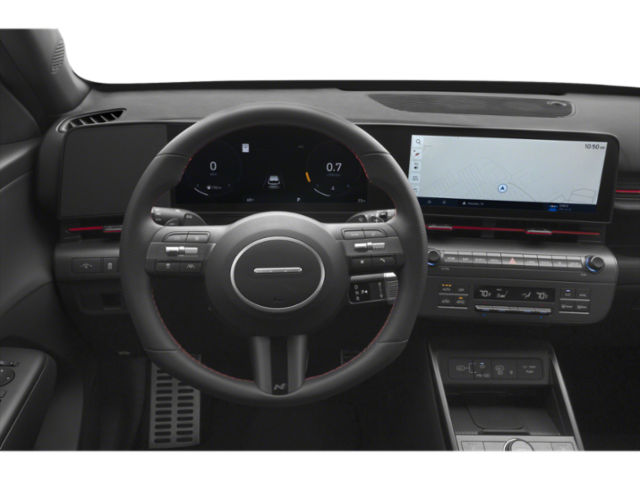
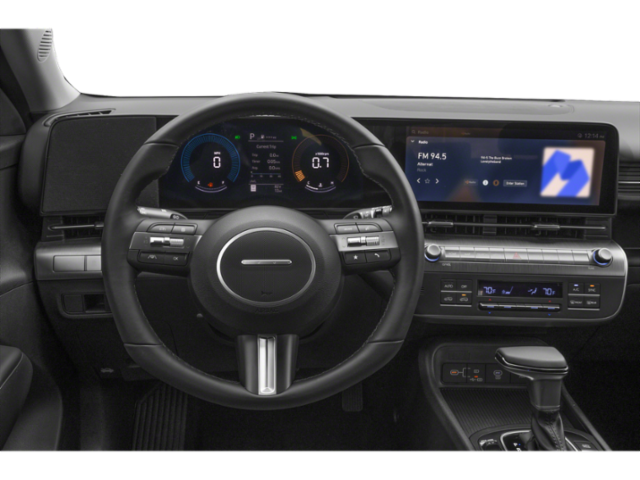
Hyundai must have taken owner criticism of the old Kona’s interior to heart, because the new one offers a more stylish, high-tech, and higher quality look and feel.
With N Line trim, the seats feature Alcantara artificial suede with simulated leather bolsters. Both heated front seats are comfortable, though it would be nice if the front passenger's seat offered a seat height adjuster. Upgrade to the Kona Limited and you'll enjoy full simulated leather with ventilated front seat cushions.
In the previous-generation Kona, the back seat was cramped and uncomfortable. That's no longer a problem. However, though the rear cushion is mounted high off the Kona's floor, it is also shaped like a park bench, so it lacks proper leg and back support.
There is plenty of storage space inside the new Kona, including a new shelf on the dashboard in front of the passenger. Unfortunately, most places where you'll stash things are unlined, so items may slide, scrape, vibrate, and rattle on hard plastic surfaces.
Also, under the center armrest is a roomy storage compartment with an upper tray, but it is not entirely enclosed. That means it will collect plenty of dust and debris over time, and if you accidentally spill a drink that's sitting in the cupholder, you’ll have quite a mess on your hands.

Photo: Christian Wardlaw
Most 2024 Kona models have a 12.3-inch digital instrumentation panel, and all versions of the SUV feature a 12.3-inch touchscreen infotainment system. The N Line test vehicle had both larger displays paired under a single piece of glass. It is a remarkably sophisticated presentation for the Kona's competitive segment and will likely raise consumer expectations at the price point.
Standard infotainment features include:
Starting with the Kona SEL equipped with the Convenience Package, the infotainment system adds:
Bluelink+ Basic connected services are complimentary for the vehicle's lifetime (original owner only) and include two important safety features: SOS emergency assistance and automatic collision notification.
Bluelink+ Advanced is complimentary for three years and then requires a paid subscription. It equips the Kona with remote access features via smartphone or smartwatch, a car finder function, safe teen driver settings, stolen vehicle recovery, and access to a Wi-Fi hotspot. In addition, it offers Hyundai Pay, which the automaker says will allow you to pay for parking, gas, and other items without using your credit card or smartphone.
In addition to an impressive list of standard and available features, the Kona's infotainment system comes with volume and tuning knobs, actual buttons for the climate system and quick access to the main infotainment menus, and low-gloss finishes that make everything easy to find and use. In addition, the on-screen graphics are sophisticated and pleasing, and the voice recognition technology is excellent, responding quickly and accurately to most of my test commands.
Overall, the Kona's infotainment system is nothing short of outstanding.

Photo: Christian Wardlaw
Unfortunately, I cannot say the same for the driving experience. New Konas with turbocharged engines have lost their zest, zeal, and zippiness when the traffic clears and the road ahead contains kinks and curves. Also, you should know the "sporty" N Line trim level does nothing to resolve this SUV's newly sloppy road manners.
But let's start with what's under the hood. With SE and SEL trim, you'll get a 2.0-liter four-cylinder engine whipping up a wholly unimpressive 147 horsepower at 6,200 rpm and 132 pound-feet of torque at 4,500 rpm. A continuously variable transmission (CVT) delivers the power to the front or all four wheels.
That's not much in the way of motive force, especially if you get the optional AWD system, which bumps the Kona's base curb weight to 3,203 pounds. Add a few friends and pack for a road trip, and you'll be lucky if this version of the Kona can accelerate out of its own way, especially when the SUV is wheezing along at elevation.
So, I recommend getting the Kona N Line or Limited trim. They have a standard turbocharged 1.6-liter four-cylinder engine good for 190 hp at 6,000 rpm and 195 lb-ft of torque between 1,700 rpm and 4,500 rpm. An eight-speed automatic transmission powers the front wheels unless you get AWD.
That automatic replaces the Kona turbo's former seven-speed dual-clutch automatic transmission (DCT) this year. That change, coupled with less maximum horsepower and a slightly higher minimum engine rpm to access all the torque, alters the driving character enough that you might need a jolt of caffeine to stay awake. Is the 2024 Kona turbo smoother and more refined to drive? Yes, but it's not nearly as interesting.
In addition, the N Line's suspension tuning is a disappointment. This version of the Kona looks speedy, but it rides and handles poorly, bouncing over pavement undulations and rolling to either side in curves and corners. Anyone who suffers from motion sickness ought to stay away from a Kona.
On the freeway, plenty of road noise enters the cabin. In addition, for a vehicle boasting a coefficient of drag measuring 0.27, the amount of wind noise is surprising.
Meanwhile, the eight-speed automatic regularly allows revs to drop below the peak torque curve in the city and on the highway. Ask for passing power to squirt through a hole in traffic, and it takes a moment for the Kona to collect itself and deliver. Switching to Sport mode solves that problem but creates another because it holds lower gears for too long. You can take manual control and use the steering wheel paddle shifters, but then what's the point of an automatic transmission?
The new Kona hinted at its former tossability on a mountain road, but its P235/45R19 Kumho Majesty Solus tires proved too squishy for a rousing drive. In addition, the Kona feels nose-heavy from the driver's seat, the steering isn't rewarding, and the soft suspension loses composure when you encounter rough patches of pavement.
After my 2024 Kona N Line test drive, I couldn't help but think of that classic hit from the 1960s, "You've Lost That Lovin' Feeling" by The Righteous Brothers. I adored the first-generation Kona turbo (read my review of it). It was a ton of fun and had even more personality. That's all gone now, replaced by a more mature vehicle with a broader appeal to the typical consumer.

Photo: Christian Wardlaw
Unquestionably, the 2024 Kona's SmartSense collection of advanced driving assistance systems (ADAS) is a win for anyone seeking a new small SUV. Not only that, but the new Kona also scores the highest possible safety rating issued by the Insurance Institute for Highway Safety (IIHS): Top Safety Pick+.
Every new Kona comes with the following:
Starting with the SEL Convenience Package, the Kona adds:
I extensively used the Kona's Highway Driving Assist (HDA) during my testing. It pairs the adaptive cruise control with the lane-centering assistance system to create a hands-on semi-autonomous Level 2 driving aid. The SEL Convenience Package, N Line, and Limited have this technology.
Overall, HDA is impressive. It handled the curves of Pacific Coast Highway near Malibu, California, better than most similar systems, though the curve-speed control feature reduces speed too much. The tech also had no trouble on the rural two-lane farm roads crisscrossing Ventura County farmland, where other systems find it hard to discern the frequently obscured lane markings.
Sure, there were minor missteps during the evaluation, but nothing dramatic. That made it easy to let down my guard and trust HDA as the Kona cruised east on the 101 freeway in the far right lane.
Then, for no apparent reason, the Kona suddenly braked hard as I entered the first curve to climb the Conejo Grade into the Thousand Oaks region. It took me by surprise, and by the time I realized it wasn't a momentary glitch and I stepped on the accelerator pedal, the car had scrubbed its cruising speed down to 60 mph.
Fortunately, there wasn't any traffic behind the Kona, which could have proved disastrous. Anyone who has traveled this stretch of road knows how easy it would be to cause a multi-vehicle crash across several lanes of traffic due to a sudden emergency stop for no apparent reason. In addition, I've never experienced a similar problem in any Genesis, Hyundai, or Kia equipped with HDA, and the tech is usually excellent, so the behavior was even more unsettling.
Regrettably, the unexplained sudden braking event instantly erased my trust in HDA. So, I turned it off and didn't use it again.

Photo: Christian Wardlaw
One of the most significant improvements with the 2024 Kona is the increase in cargo space. The new model offers 25.5 cubic feet behind the back seat and 63.7 cu-ft with the back seat folded down. The previous Kona offered no more than 19.2 cu-ft and 45.8 cu-ft.
In addition to the added volume, the new Kona's cargo area features a height-adjustable load floor, grocery bag hooks, a light, a tray to the left, and a large grab handle to swing it shut. A hands-free power liftgate is available.
According to the EPA, the turbocharged 2024 Kona N Line AWD should get 26 mpg in combined driving. That's less than last year's Kona turbo with AWD, which earned a rating of 29 mpg.
During my testing, the 2024 Kona returned 25 mpg. With its 13.2-gallon fuel tank, you can travel 330 miles on a full tank, though you'll want to stop to refuel before you reach the 300-mile mark to be on the safe side.
Based on crash-test ratings from the Insurance Institute for Highway Safety (IIHS), the 2024 Kona is safe in a collision. It received a Top Safety Pick+ rating from the IIHS.
As of this writing, the National Highway Traffic Safety Administration (NHTSA) hasn't published crash-test ratings for the all-new Kona.
This year, 2024 Hyundai Kona prices range from $24,250 for the Kona SE to $31,800 for the Kona Limited. Don't forget to add the $1,375 destination charge to those numbers.
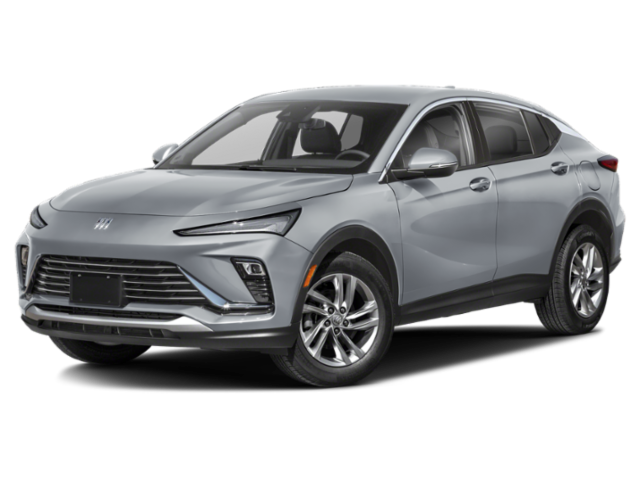
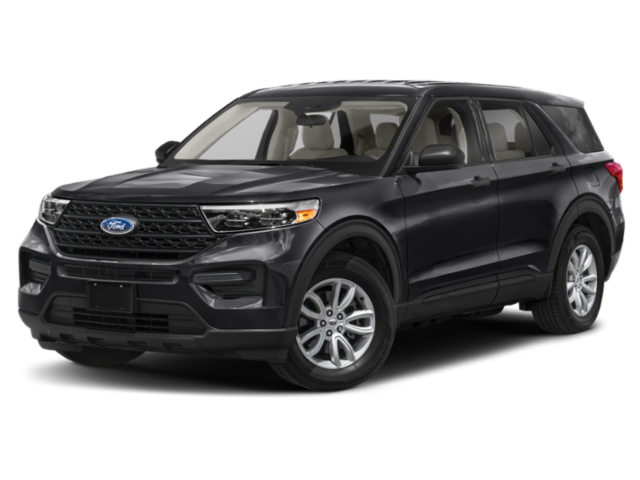
In the JD Power 2023 Initial Quality Study (IQS), the Buick Encore GX ranks highest in the Small SUV segment. The Kia Soul and the Ford Bronco Sport are the next highest-ranked models.
In the 2023 APEAL Study, the Mini Countryman ranks highest in the Small SUV segment. The Chevrolet Trailblazer and the Ford Bronco Sport are the next highest-ranked models (in a tie).
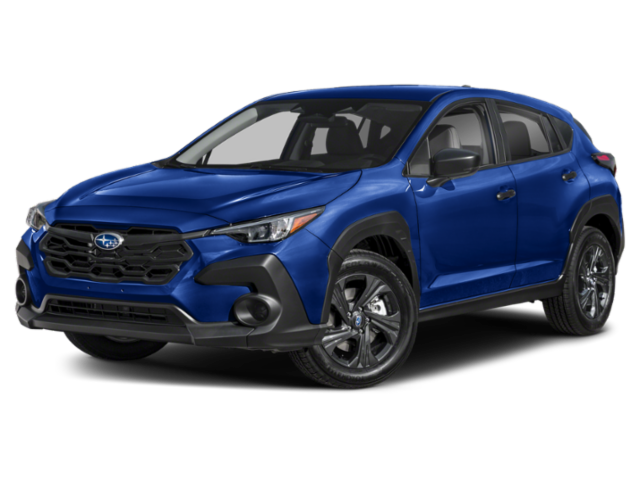
Other competitors to the 2024 Kona include the Honda HR-V, Mazda CX-30, Subaru Crosstrek, Toyota Corolla Cross, and Volkswagen Taos.

Photo: Christian Wardlaw
With the redesigned 2024 Kona, Hyundai has resolved all the practical limitations with the first-generation model, making it genuinely roomy enough for up to five people while carrying a commendable amount of cargo.
In addition, Hyundai infuses the new Kona with what is likely class-leading technology and dramatically improves the interior. Furthermore, the Kona remains an excellent value. The prices are competitive, the warranty is outstanding, and the complimentary Bluelink services and scheduled maintenance are surprise-and-delight extras anyone can appreciate.
Unfortunately, on its way to excellence in those areas, the Kona's dynamic soul faded away like the last rays of a sunset viewed from the sands of Kauna'oa Beach.
Christian Wardlaw is a veteran automotive journalist with nearly 30 years of experience in test-driving vehicles. In addition to JDPower.com, his work has appeared in numerous new and used-car buying guides, newspapers, and automotive industry trade journals.