See answers to common EV questions, tax incentives, charging maps & more.
Explore EV
19 - 20
260
8 speed, CVT w/OD
Intercooled Turbo Regular Unleaded H-4
All Wheel Drive
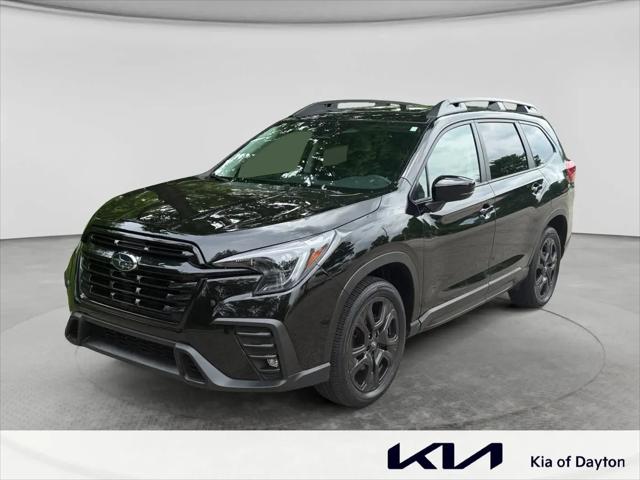
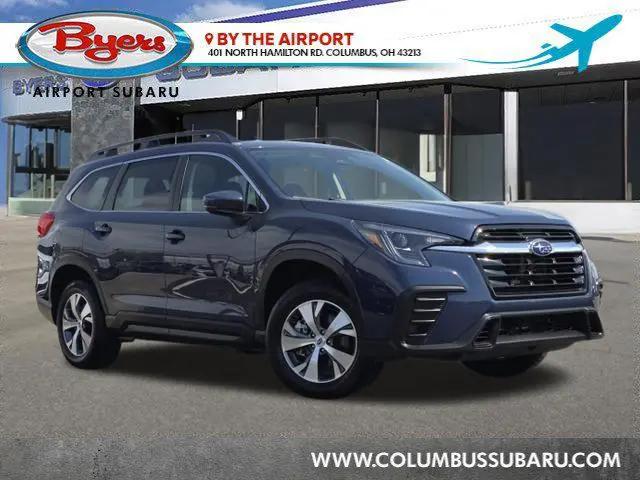
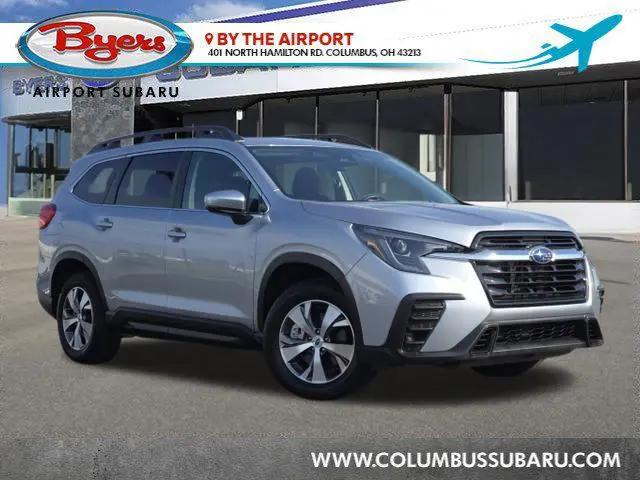
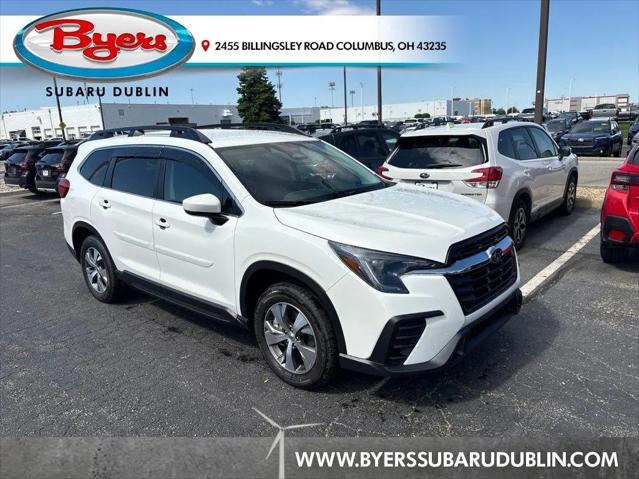
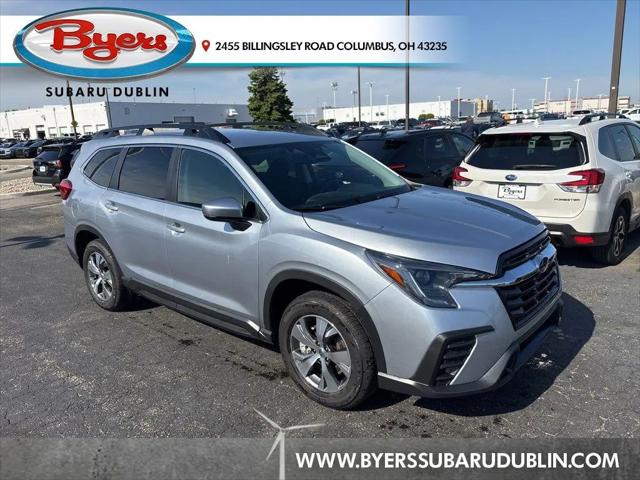
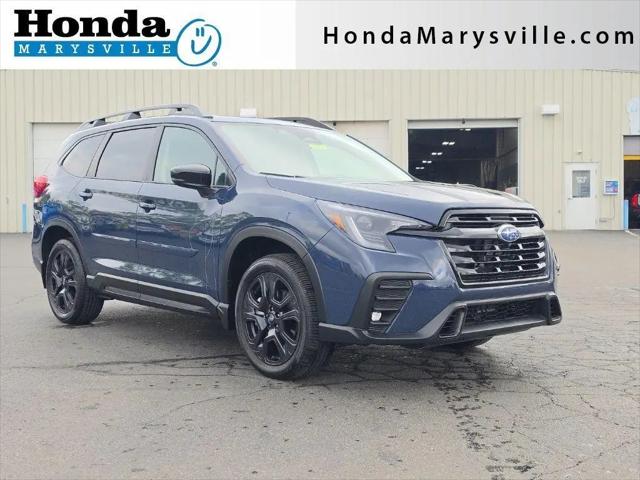
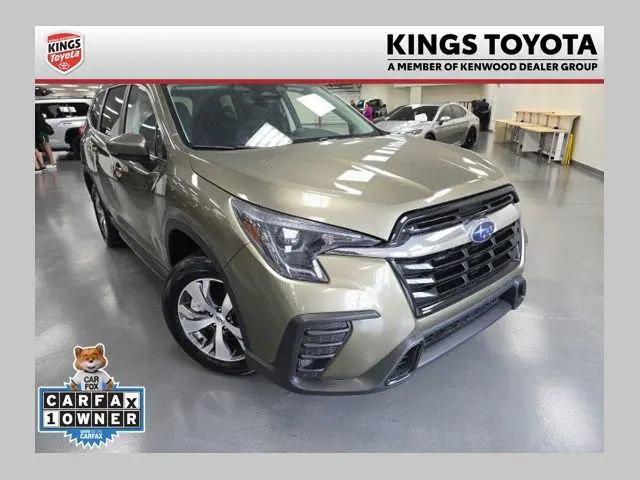
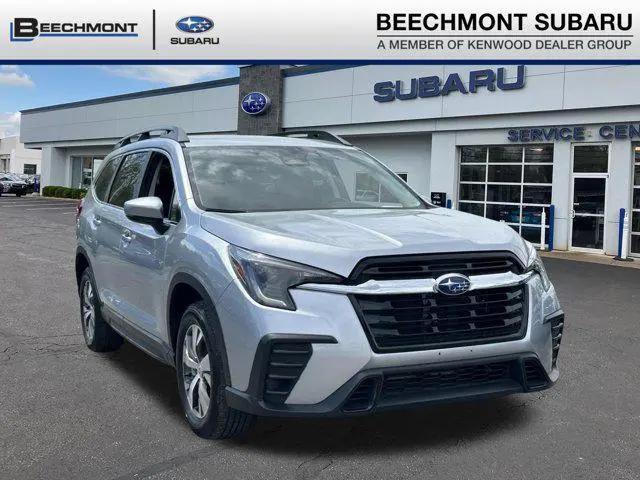
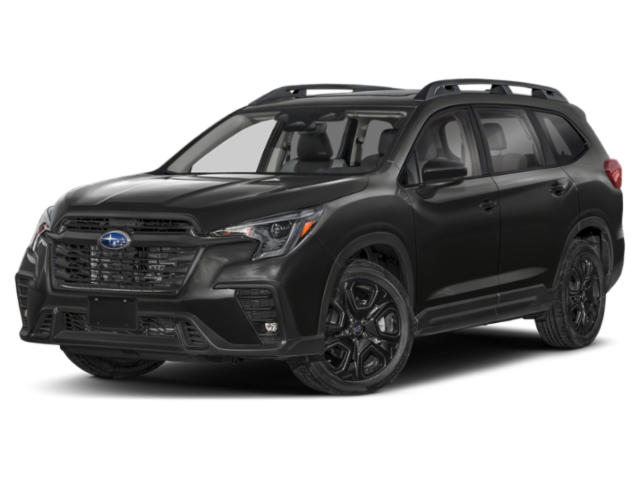
The Ascent is Subaru’s largest model—a three-row, midsize crossover SUV with enough room for up to eight passengers, the family dog, and all their gear. With standard all-wheel drive (AWD), strong safety ratings, a high level of standard equipment, and a starting price of around $40,000, the 2025 Subaru Ascent represents a substantial value in the midsize SUV category.

Photo: Christian Wardlaw
First introduced for the 2019 model year, Subaru gave the Ascent a mid-cycle refresh for the 2023 model year. Highlights of that refresh include updated exterior styling, new-and-improved safety and infotainment technology, and several new convenience features. Subaru made no changes to the Ascent for the 2024 model year.
For 2025, Subaru drops the base model, making the Premium trim level your new gateway to Ascent ownership. Additionally, new Bronze Edition and Onyx Edition Touring trims join the lineup, the latter version now topping the model line.
The 2025 Ascent also gains additional standard safety equipment. Now, automatic emergency stop assistance, blind-spot warning with lane-changing assistance, rear cross-traffic warning, reverse automatic braking, and automatic emergency steering are standard across the board.
The 2025 Subaru Ascent has six trim levels: Premium, Onyx Edition, Limited, new Bronze Edition, Touring, and the new Onyx Edition Touring. The midsize crossover seats seven or eight passengers, depending on the trim. A turbocharged, four-cylinder boxer engine powers every 2025 Ascent, working with a continuously variable automatic transmission (CVT) that sends power to all four wheels. Pricing starts at $40,215 and peaks at $51,415, including the $1,420 destination charge.
JD Power previously published a review of the 2022 Subaru Ascent. This review focuses on the Ascent’s updates since then and how they potentially impact its overall consumer appeal.
For this 2025 Ascent review, Subaru provided a test vehicle equipped with Touring trim and all-weather floor liners. The test vehicle’s price was $50,256, including the $1,420 destination charge to ship the SUV from the Subaru assembly plant in Lafayette, Indiana, to your local dealership.

Photo: Jeff Youngs
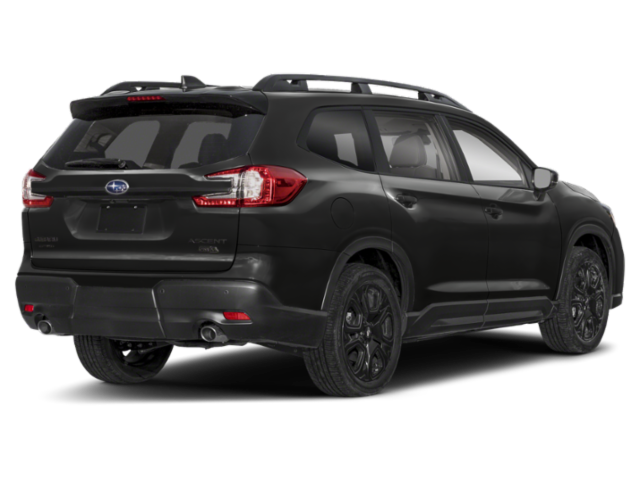
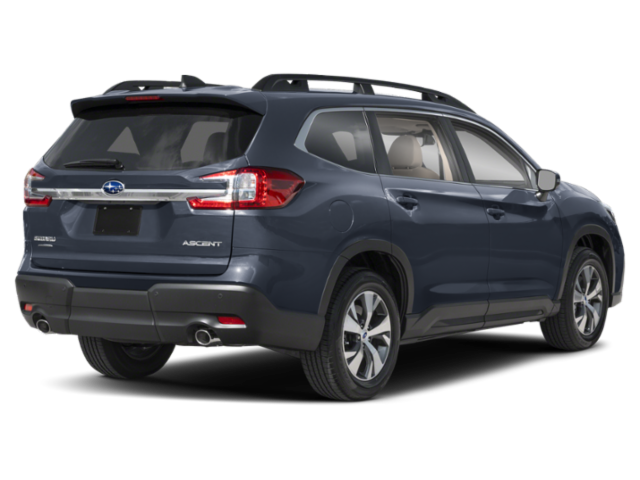
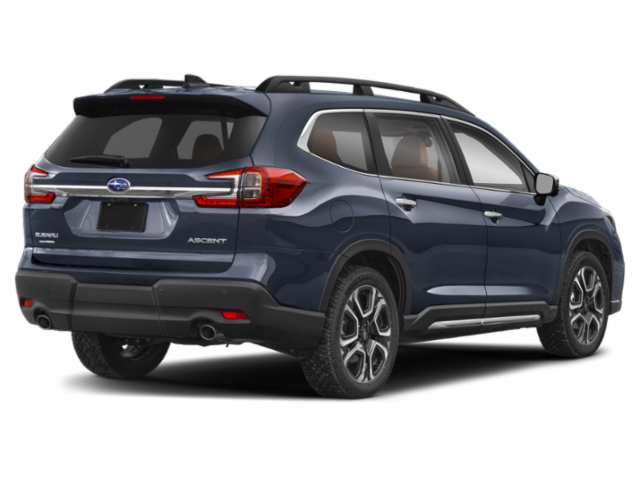
As with most mid-cycle refreshes, the Ascent received revised exterior styling as part of its 2023 update. A more prominent grille sits atop a new front fascia and bumper cover, the latter featuring air ducts along the lower edge, which Subaru claims improves airflow under the Ascent. Redesigned LED headlights and new C-shaped taillights bookend the SUV’s updated look.
While the Ascent’s design is clean and attractive, nothing about it is particularly notable. The revised front bodywork and updated lighting are nice touches, but they don’t make the Ascent stand out in a crowded midsize SUV segment.
If Subaru’s goal was not to offend, mission accomplished. However, buyers looking for more style will likely gravitate toward the Hyundai Palisade, Kia Telluride, or Mazda CX-90.

Photo: Jeff Youngs
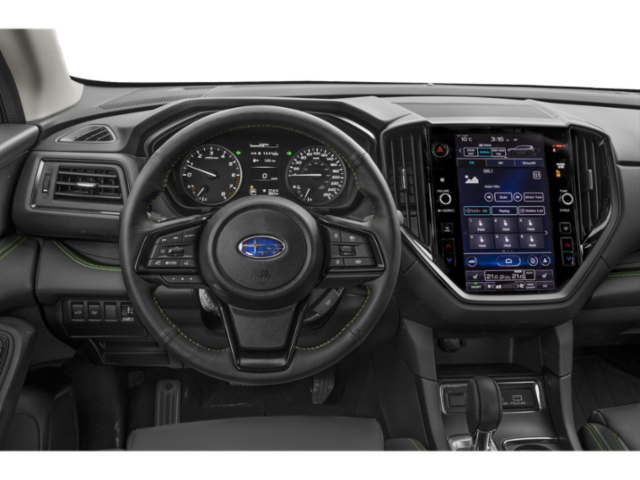
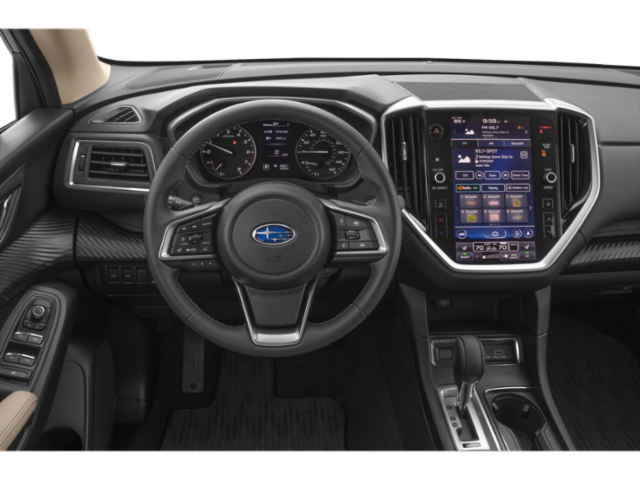
Subaru largely left the interior alone when it updated the 2023 Ascent. Still, the automaker did give some love to the infotainment system, significantly increasing the standard touchscreen’s size from 6.5 to 11.6 inches in the process.
The new screen is large enough to incorporate multimedia, climate, drive mode, and vehicle settings. Rotary knobs for volume and tuning flank either side of the screen, as do temperature toggle switches. Apps are neatly arranged on clearly marked tiles with a Home button at the bottom of the screen.
While the touchscreen controls are intuitive and easy to use, the voice-activated commands are a mixed bag. The system successfully located a popular coffee shop and offered to provide directions. Likewise, a request for directions to a popular Mexican restaurant provided the desired result.
However, other commands—like asking to go to a hospital or saying a specific address—required a particular phrase for the system to work. When I asked the system to navigate to a local meat and produce market, it didn’t understand. It cooperated only after I told it to navigate to a specific address.
While finding a particular radio station using the touchscreen was effortless, using voice controls to accomplish the same task was less straightforward. When I asked to hear a particular genre of music, the system responded by turning the audio on but stopped short of selecting exactly what I wanted. However, the system worked as expected when I requested a specific station.
Fortunately, the voice controls worked much better when I requested a specific cabin temperature or to activate the driver’s seat heating or cooling. The bottom line is that the Ascent’s voice controls are reasonably capable, provided you say the right thing.
The Ascent also comes with standard wireless Apple CarPlay and Android Auto smartphone mirroring, providing a familiar interface that can ease frustration with native infotainment systems when it comes to playing music, getting directions, sending text messages, or performing a number of other tasks.

Photo: Jeff Youngs
As part of its 2023 refresh, all versions of the Ascent received the latest generation of EyeSight—Subaru’s advanced driver assistance systems (ADAS) package. Additionally, all now include automatic emergency steering. More responsive braking and a new surround-view camera enhance drivability and visibility, while a new driver monitoring system is standard on Limited and above.
While offering the latest safety features is important to family SUV buyers, crash-test scores are equally critical. This is an area in which the Ascent excels. Indeed, the National Highway Traffic Safety Administration (NHTSA) gave the 2025 Ascent the maximum five-star overall rating.
At the time of writing, the Insurance Institute for Highway Safety (IIHS) has yet to rate the crashworthiness of the 2025 Ascent. However, the Institute named the structurally identical 2024 Ascent a Top Safety Pick+ for the 2024 calendar year.
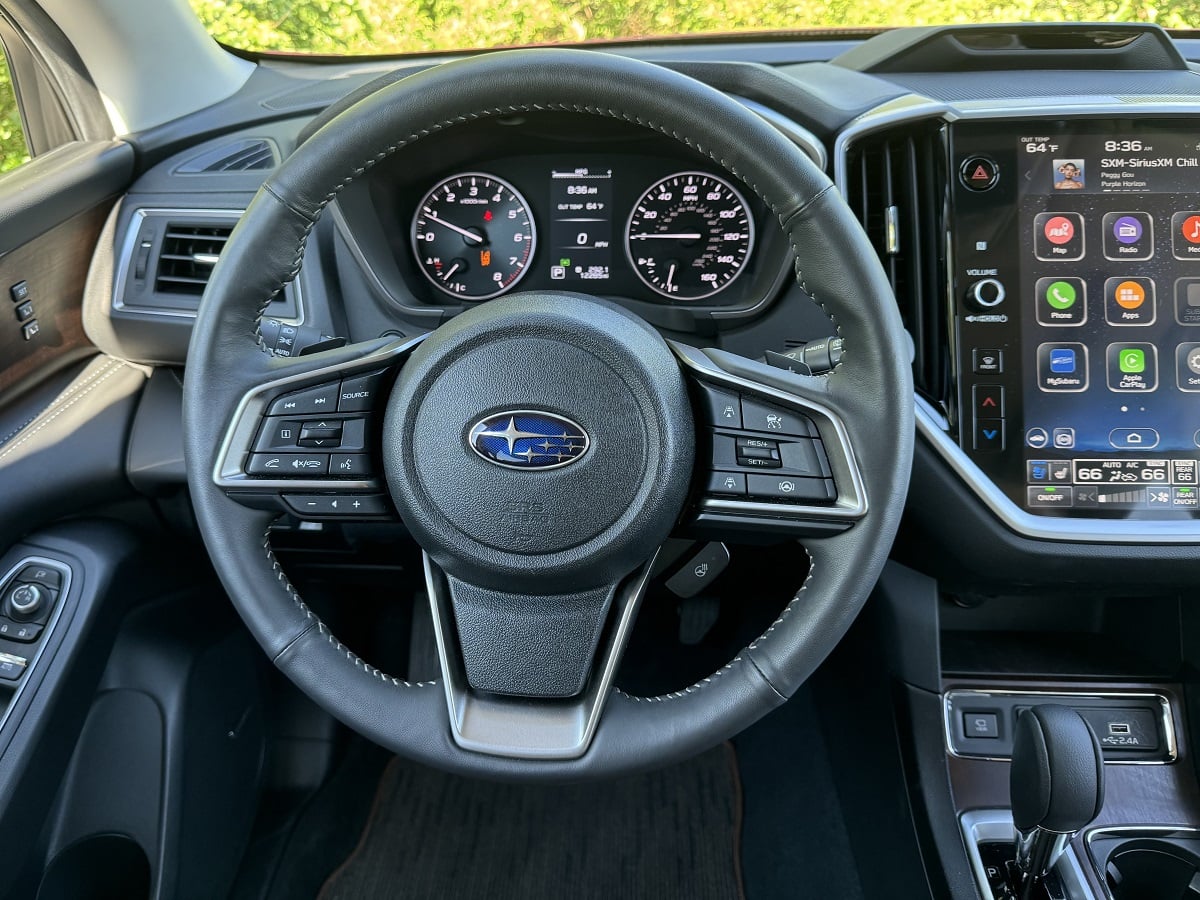
Photo: Jeff Youngs
As someone who grew up in the ‘70s and early ‘80s, I remember when Subarus weren’t so refined. I wasn’t driving then, but I vividly remember our family test-driving a new Subaru Brat—the small pickup with rear-facing jump seats in the bed—when I was about 10 years old. While my brother and I loved the truck— and it was a hoot to ride in those jump seats and wave to the cars following us—I was glad we did not buy it because the truck was very unrefined and, frankly, a bit sketchy.
Modern Subarus are nothing like the Brat, of course. They feature robust powertrains, plentiful creature comforts, smooth suspensions, and advanced safety technology.
Some, like the Ascent Touring test vehicle with its heated leather steering wheel, heated and cooled Nappa leather seats, triple-zone climate control, and Harman Kardon surround-sound audio system, are downright bougie compared to that old Brat. It’s amazing what 40 years of engineering advancements and continuous improvement can do.
The Ascent offers a commanding view and excellent visibility thanks to its ride height and expansive glass. Driver information displays and controls are clearly marked and easy to use, and the large central touchscreen provides a user-friendly gateway to the vehicle’s infotainment and climate controls. The seats are comfortable, though the third row best suits children.
Cargo space behind the third row in the Touring trim measures a respectable 17.6 cubic feet. Space expands to 42.1 cubic feet with the third row folded and 72.8 with the second and third rows folded.
Although the Ascent has a relatively small 2.4-liter four-cylinder engine, Subaru manages to squeeze 260 horsepower and 277 pound-feet of torque out of it, thanks to the standard turbocharger.
While the CVT deftly handles “gear changes,” acceleration is adequate, if not brisk. An eight-speed manual shift mode and paddle shifters give the impression of sportiness, but there’s little substance behind them. Remember, the Ascent is a three-row family SUV, and its zero-to-60-mph time is unimportant.
More important is surefooted handling—something the Ascent possesses thanks to its standard AWD system. The roughly 4,500-pound Ascent provides a smooth ride on pavement. While I didn’t take the Ascent off-road, 8.7 inches of ground clearance, AWD, X-mode (drive modes), and hill-descent control promise competent ability when encountering dirt, mud, sand, or snow. That said, if off-road rallying is your bag, try the Subaru WRX tS.
The Environmental Protection Agency (EPA) estimates the 2025 Ascent Touring’s fuel economy at 21 mpg in combined driving. According to the test vehicle’s trip computer, I averaged 19.5 mpg over 292 miles of mixed driving—below the EPA’s estimate but not alarmingly so.

Photo: Christian Wardlaw
The Subaru Ascent represents a fair value in the midsize SUV segment, delivering three-row seating, a spacious cabin, a healthy dose of standard equipment, a large infotainment touchscreen, excellent safety scores, and AWD capability, all for around $40,000. Sure, its styling doesn’t stand out, its performance is merely adequate, and the third row is a little tight, but the Ascent delivers everything families need and a little bit more at a reasonable price. After all, value never goes out of style.
The Ascent’s list of competitors is long and robust. The Chevrolet Traverse, Ford Explorer, Honda Pilot, Hyundai Palisade, Jeep Grand Cherokee L, Kia Telluride, Mazda CX-90, Nissan Pathfinder, and Toyota Highlander each bring something to the table. Some are more rugged-looking, while others offer more performance, better fuel economy, or a longer warranty. Still, when you consider the Ascent’s AWD capability, safety, and value proposition, it’s every bit as worthy as those competitors.
Jeff Youngs has 30 years of experience in the auto industry, including 19 years with JD Power in marketing and editorial management roles. He also spent nearly six years with General Motors as a media relations professional. More recently, as a freelance automotive journalist, his work has appeared on JDPower.com, CarGurus, Kelley Blue Book, Autotrader, Autolist, and iSeeCars.