71 - 94
71 - 92
402 - 777
2 speed, Automatic
Electric
All Wheel Drive, Rear Wheel Drive
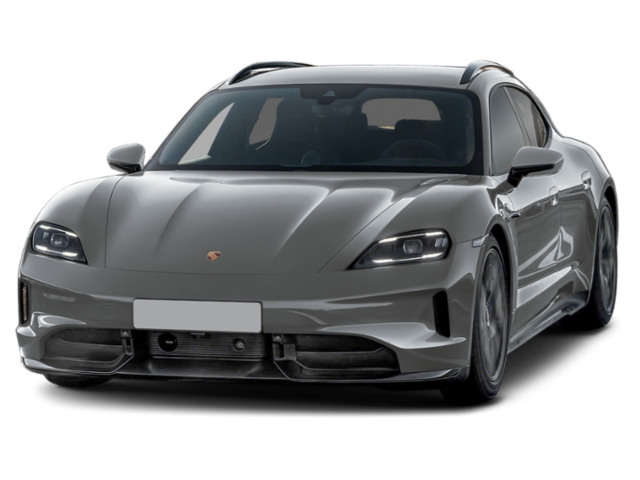
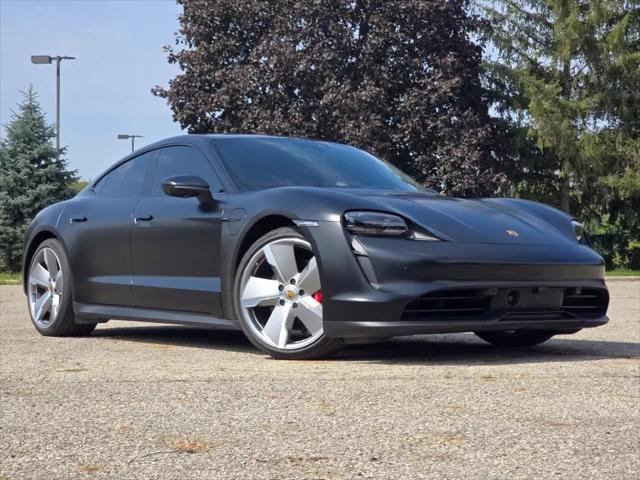
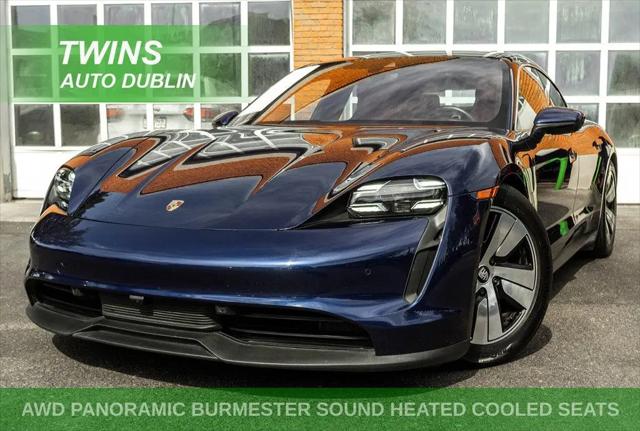
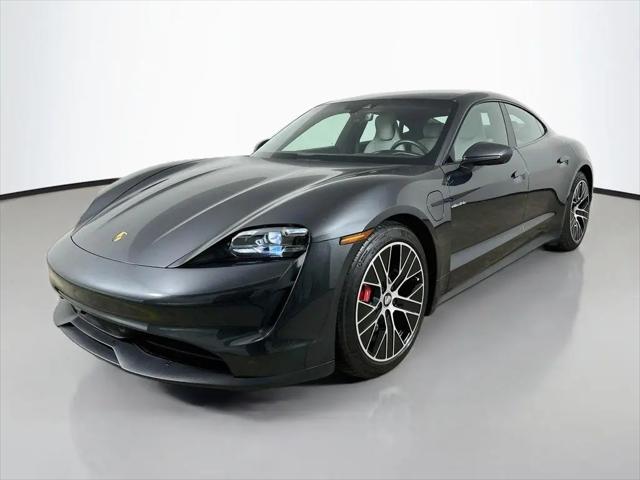
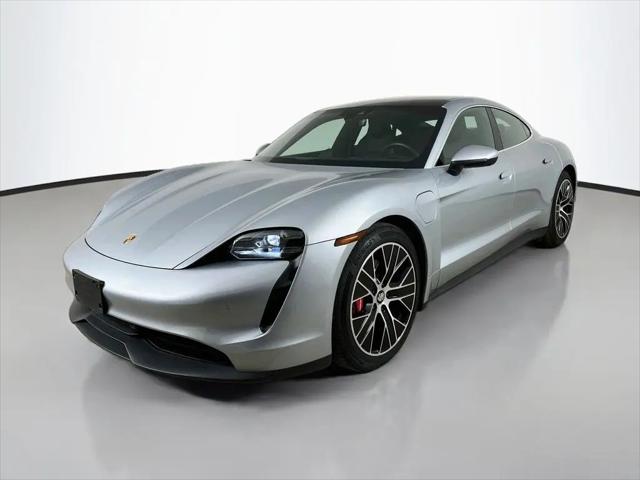
After navigating my favorite mountain road, the 2025 Porsche Taycan 4S made me pause and ponder: “Is this the best car I’ve ever driven?” I do not write that lightly (I’ve reviewed a lot of cars in two decades). The Taycan’s combination of acceleration, road holding, and driver communication is best represented by a chef’s kiss or a post-home run bat flip.
The fact that the Taycan is a four-door electric vehicle (EV) makes it even more appealing, promising greater practicality and fewer emissions than the exotic sports cars it can keep up with. And yet, after a week with the Taycan 4S, I found it can be a bit too exotic to live with.

Photo: James Riswick
But first, let’s chat about the many changes made to the Taycan for 2025. Besides Porsche’s typical “wait, they actually changed it?” styling tweaks, the interior also sees new controls and updated infotainment.
There’s a new, more powerful and efficient rear motor. Porsche also increased the capacity of the Performance Plus battery found on most trim levels from 93 kilowatt-hours (kWh) to 105. The vehicle’s range has therefore improved, but so has charging, with its 320-kilowatt (kW) maximum speed being among the fastest in the industry. It also now has a 150-kW converter on board, allowing the car to better utilize 400-volt charging networks such as Tesla Superchargers.
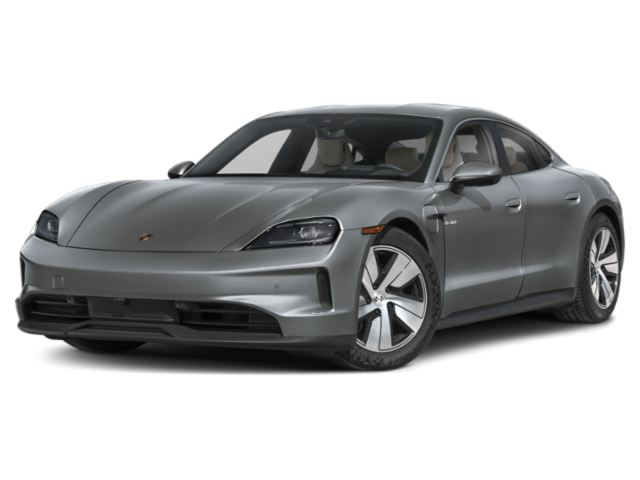
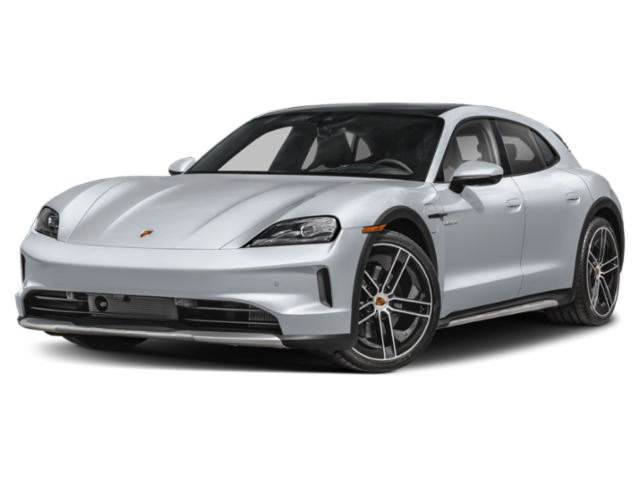
As before, the 2025 Taycan lineup starts with the rear-motor-only base model, but it now climbs even higher thanks to the new 1,019-horsepower Taycan GT variant. All versions, except the GT, are also available in the wagon-like Cross Turismo body style (the GTS is known as Sport Turismo). Starting prices range from around $100,000 to $230,000, but as these are Porsches we’re talking about, hundreds of options can skyrocket the price.
For this review of the 2025 Taycan, Porsche provided a test vehicle equipped with 4S trim and many options. The most significant ones (non-design variety) included:
The test vehicle’s price was $154,315, including the $1,995 destination charge to ship the sedan from the Porsche assembly plant in Stuttgart, Germany, to your local dealership.

Photo: James Riswick
Getting comfortable in the Taycan is incredibly easy. My test car's 18-way adaptive sport seats were snugly comfortable and adjusted in many ways. At 6 feet, 3 inches, my driving position in the Taycan is better than in most cars. Porsche also nicely sculpted the rear bucket seats. While legroom may be tight if someone tall is seated up front, headroom is fine, and there’s even enough space for a giant forward-facing car seat.
However, getting in is an entirely different story. The Taycan sits very low, and those deeply sculpted buckets make it even more challenging to drop yourself in or hoist yourself out. Making it worse, the front doors are quite small. Anyone approaching above-average height will find themselves maneuvering around the B-pillar to climb inside (my exits were the opposite of graceful).
The back seat is a challenge too, with a narrow footwell opening and a severely raked roofline. Clonking your head is likely. It’s easier to get into the Taycan’s Cross/Sport Turismo wagon body style.
Storage is challenging too. There’s a lack of small-item bins throughout (especially compared to other electric sedans), and the 911-shaped trunk is far less useful than its 14.3-cubic-foot spec would indicate. More on that below.
Again, though, once inside and situated, the Taycan largely impresses. Material and build quality are exceptional, with my test car’s full leather interior and matte carbon trim elevating it further.
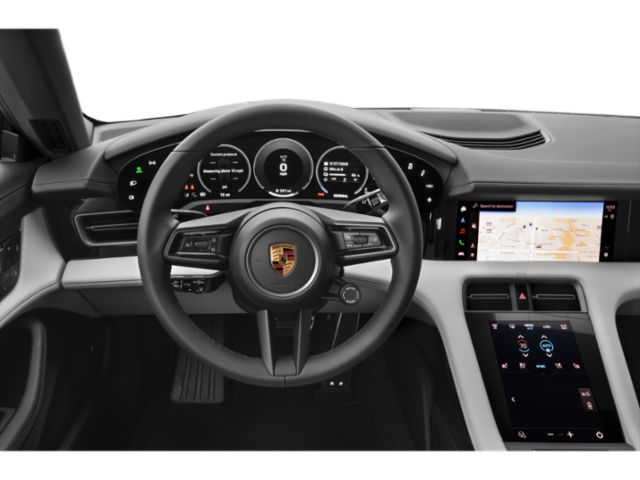
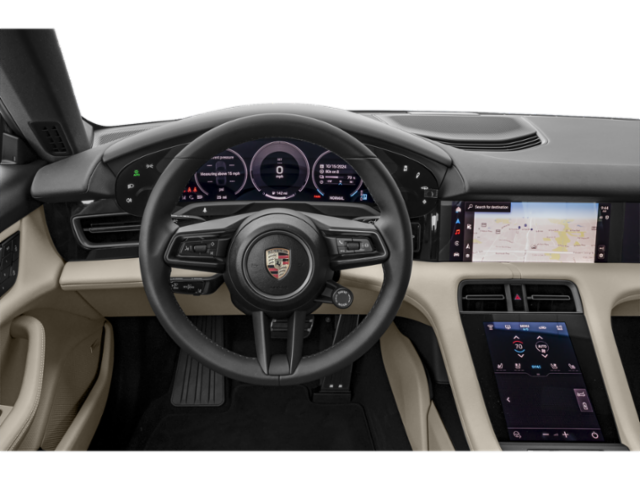
A separate screen for the climate controls with haptic feedback is better than the one-screen-to-rule-them-all format of Tesla or the BMW i5. However, you could operate Porsche’s old physical buttons and toggles without looking. Now, you can’t. Much worse, however, are the air vents being exclusively controlled by the touchscreen—a truly awful and needlessly complicated feature.

Photo: James Riswick
The Taycan comes standard with the expected array of infotainment features, including multiple displays. This includes:
My test vehicle also included an additional 10.9-inch touchscreen for the passenger, providing redundant infotainment system controls and video-playing capability. It features a polarized film that prevents the driver from seeing it. It doesn’t seem like the best use of $1,490. You could probably say the same for the Burmester 3D High-End Surround Sound audio system that goes for $5,810 when you’ve already selected the Premium package (as my car had) or $7,000 by itself. Quite simply, I’ve heard better for less money.
Beyond these unnecessary extras, the Taycan’s infotainment system is well laid out with clean, easy-to-read graphics. Menu shortcut icons are permanently docked on the main touchscreen and the secondary screen below. Finding deep-dive vehicle controls for things like the advanced driver assistance systems (ADAS) is easy, but so is selecting an old-fashioned radio station. Apple CarPlay worked as expected, and I appreciated that it didn’t take over the entire screen.
You can easily configure the instrument panel with a button and roller on the steering wheel. I also appreciated that it maintains the traditional Porsche aesthetic despite offering modern functionality like a large navigation map or ADAS animation.
Voice commands are on board, summoned by pressing a steering wheel button or saying, “Hey, Porsche.” It’s not too picky about how you pronounce that wake-up phrase, but its understanding of what comes after that could be better. It failed to understand multiple attempts at “Find the nearest Dunkin’ Donuts” and brought up a list of FM stations when I asked to find the nearest “Electrify America station.” That said, it successfully found specific addresses, the closest hospital, and a Starbucks. It could also dial in a specific satellite radio channel.

Photo: James Riswick
All of the statements above explain why I found the Taycan to be a bit of a pain to live with. But then I’d drive it with some vigor, and all those pain points would be brushed aside. The 4S has 536 hp and will hit 60 mph in an estimated 3.5 seconds (keep in mind, there are five versions of the Taycan quicker than this!). In most EVs, the dynamic story stops with the zero-to-60-mph time. In the Taycan, it’s just the beginning.
As fun as it was to be flattened into the back of my seat, the Taycan’s ability to fling me into the ample side bolsters was even more impressive. The Taycan’s adaptive air suspension, low center of gravity, available rear-axle steering, and Porsche’s general chassis wizardry result in a car that dispensed with every tight, technical mountain road like it was a lightly meandering suburban lane. The speed and flatness with which it can take corners is extraordinary.
Best of all, it makes you feel connected to the car through its steering and overall chassis communication. You never feel like you’re just along for the ride. Of course, this attribute is impossible to quantify, but it’s ultimately what separates the Taycan from other ultra-performance EVs and why I consider it so exceptional.
The brake pedal is reassuringly firm and responsive, and unlike other EVs, it is completely necessary to slow the car. Porsche doesn’t believe in maximizing the Taycan’s regenerative braking capability to allow for one-pedal driving or even some extra off-throttle slowing. If you already have an EV, chances are this will be annoying, especially in stop-and-go traffic.

Photo: James Riswick
Every 2025 Taycan includes the following:
Porsche equipped my test car with adaptive cruise control, which you can get as a stand-alone option or within the Premium package. It only maintains a distance from the vehicle ahead and does a good job doing so, slowing and accelerating naturally. It does not, however, provide lane-centering steering assistance. You need to get the pricier Porsche InnoDrive system for that.
In general, Porsche’s ADAS performed as they should. The forward-collision warning system wasn’t tripped up by my parked-cars-on-curving-road test that frequently causes false alarms. It also wasn’t overly quick to buzz the wheel and beep when nearing lines on a mountain road. These systems trust the driver more than most.

Photo: James Riswick
The trunk’s 911-like shape makes it hard to fully utilize its 14.3 cubic feet unless you exclusively pack small, soft-sided duffel bags. I found it very difficult to load my standard selection of test luggage (rectangles don’t fit into triangles). The frunk provides enough space for a small roller bag, but relying on a bifurcated trunk is hardly convenient. The Taycan Cross Turismo’s longer, boxier rear end is better for cargo hauling and getting into the back seat.
For the money? Not really. A base Taycan with its optional Performance Battery Plus can manage an EPA-estimated 318 miles. A 4S, which comes standard with the same battery, can go 315 miles with 19-inch wheels. When equipped with the 21-inch wheels of my test car, that figure plummets to 252 miles. A Lucid Air Grand Touring doubles that; a Tesla Model S Plaid trumps it by 107.
I nearly matched the EPA’s efficiency estimate of 38 kWh per 100 miles, but much of my 145 miles were done accelerating hard and driving quickly on mountain roads. I would anticipate the car doing better than 252 at a steady cruise.
Charging speed is exceptional, with a maximum rate of 320 kW (better than the Lucid and Tesla). There are also charge ports on each front fender (only the passenger side can manage DC fast charging), which is very convenient, but the power-operated doors can be stubborn.
At the time of writing, neither the National Highway Traffic Safety Administration (NHTSA) nor the Insurance Institute for Highway Safety (IIHS) has rated the crashworthiness of the 2025 Porsche Taycan.
Starting prices range from $99,400 for the base Taycan with the standard battery to $230,000 for the Taycan GT. The destination charge is $1,995.
In the JD Power 2024 Initial Quality Study (IQS), the Genesis G80 ranks highest in the Upper Midsize Premium Car segment. The BMW 5 Series is the next highest-ranked model.
In the JD Power 2024 Automotive Performance, Execution and Layout (APEAL) Study, the Porsche Taycan ranks highest in the Upper Midsize Premium Car segment.
Other 2025 Taycan competitors include the BMW i5 M60, Lucid Air Grand Touring, and Tesla Model S Plaid.

Photo: James Riswick
The Porsche Taycan 4S is one of the more enjoyable cars to drive, but it’s more like a four-door sports car than a luxury sedan in terms of day-to-day practicality.
James Riswick has tested and reviewed cars since 2007, serving as an editor at Edmunds.com and Autoblog. He has attended an auto show every year since he was two and wanted to be an automotive journalist since high school. He owns a 1998 BMW Z3 and a 2023 Kia Niro EV and is presently looking under couch cushions for enough change to buy an E39 BMW M5.