
Tires are your connection to the road and are in many ways a key safety feature. Thus, improper tire maintenance makes the vehicle a risk to not only its driver and occupants but to others as well. Following tire replacement protocol is essential to maintaining the safe operation of your vehicle.
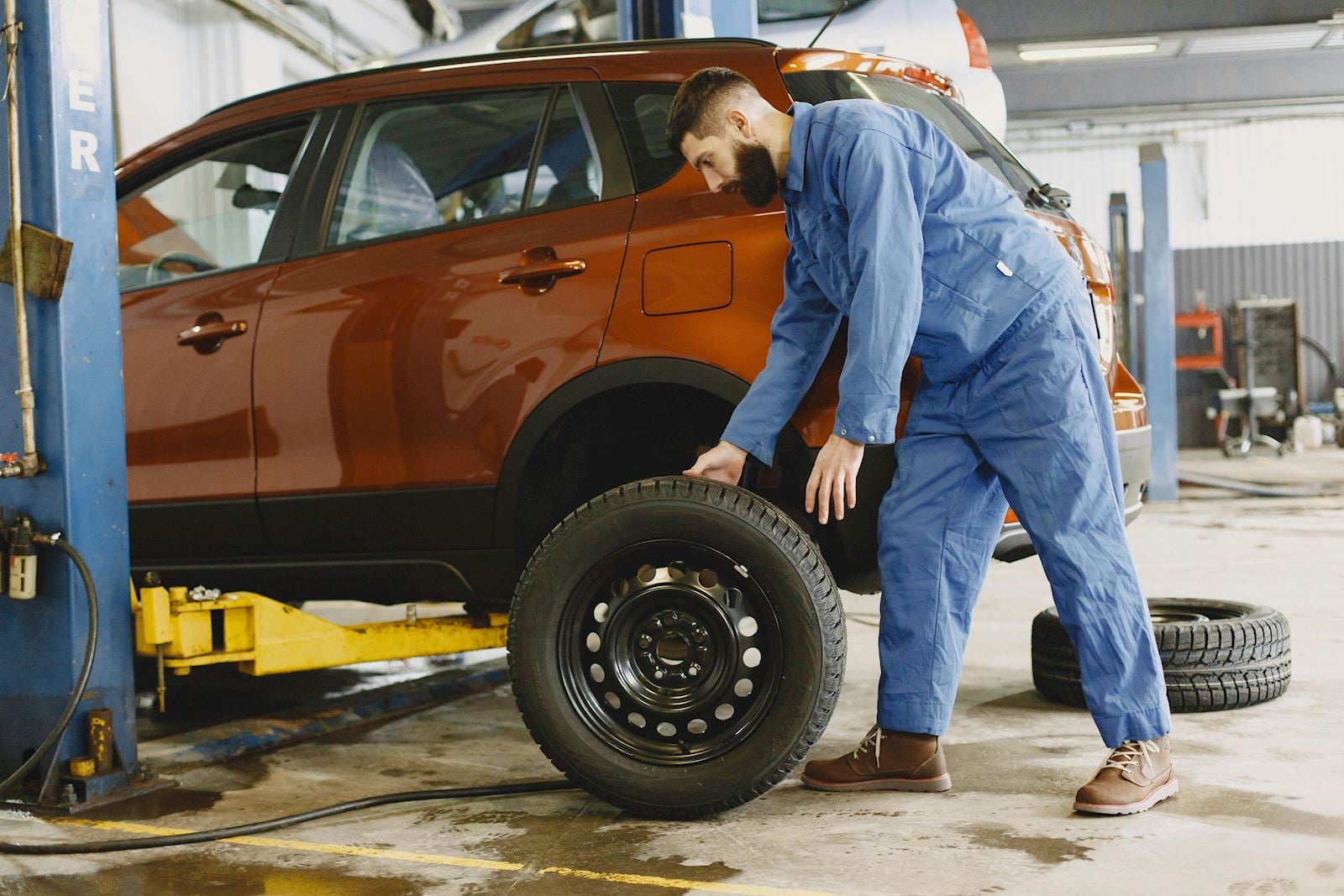
Because tires are expensive, getting as much use as possible from each single tire is tempting. However, often a single tire will merit the replacement of all four tires simultaneously. This article covers tire replacement recommendations, actions to take to prolong the life of your tires, and the risks of ignoring proper tire maintenance.
When it comes to replacing one or multiple tires at a time, the drivetrain of the vehicle plays a role in determining the plan of action. Thus, if you have a flat tire in a two-wheel drive (2WD) vehicle instead of an all-wheel drive (AWD) vehicle, the recommendation changes.
For a FWD or RWD vehicle, the recommendation is to replace the impacted tire as well as the other tire on the same axle. So, if your left rear tire is flat, both rear tires are replaced. Likewise, if the front right tire fails, both front tires are replaced. This can be a sizable cost savings as owners save half the labor and material cost during replacement by replacing two tires instead of four.
The recommendation adjusts for AWD vehicles. Given that all four wheels are drive wheels and torque can be sent to any of them, you should consider replacing all four tires at once. This can certainly add to the repair cost of only a single flat tire.
Fortunately, there are some exceptions to these protocols. For instance, if your tires are quite new and have an estimated 70% or more tire life remaining, it may be logical to only replace the one impacted tire regardless of whether the vehicle is 2WD or AWD.
As with everything else, consult your owner’s manual as it may stipulate a tire replacement protocol for your particular vehicle. Given the nuance of each situation, it may be worthwhile to have an expert assess the tires in question. If you are still not confident about the decision to replace, a second opinion may be valuable as well.
As tires wear, their tread depths decrease which reduces traction and increases the risk of a vehicle skidding, especially on wet roads. Making matters worse, tire deterioration also leads to longer stopping distances which makes avoiding a collision more challenging. Since these factors combine to create a huge danger to yourself and others on the road, it is imperative to follow the proper safety protocols for your tires.
Replacing one, two, or all four tires can be intimidating and costly. Luckily, there are several actions drivers can take to ensure they get the most out of their tires. Most of these strategies entail alleviating the burden on a single tire.
Tire rotation is the process of changing your tires to different wheels to spread out the wear given to each tire. For instance, the front right tire might be swapped with the back left tire. For FWD and RWD vehicles, rotations should be conducted every 5,000 to 7,500 miles. AWD vehicles merit more frequent tire rotations, typically every 3,000 to 5,000 miles.
Not rotating the tires increases irregular deterioration which means that some parts of the tires will be worn down significantly more than others. This can lead to hydroplaning, loss of traction in winter conditions, and blowouts.
Another maintenance measure that can prolong the life of your tires is a wheel alignment. Wheel alignments are intended to ensure the wheels make perpendicular contact with the ground and are parallel with one another. Misaligned wheels lead to inconsistent tire wear which limits performance, handling, and fuel economy. It can also result in braking and handling issues that are exacerbated in inclement conditions. Aligned wheels save you money by slowing down the speed of wear, giving you the most time and miles out of the current tires you have mounted on your vehicle. An alignment should be conducted every 10,000 to 12,000 miles.
Depending on the drivetrain of your vehicle as well as the current age, mileage, and wear of your existing tires, you may need to replace all four tires at the same time. To extend the life of your tires, schedule regular tire rotations and alignments. Refer to your owner’s manual for tire maintenance and timeline recommendations for your particular vehicle.
Matt Yantakosol is a lifelong automotive enthusiast and former consultant focused on the consumer aspect of the industry. He has traveled to New York, Detroit, Chicago, L.A., Paris, Geneva, Frankfurt, and Tokyo Auto Shows to track and observe the newest industry innovations. In addition to JDPower.com, Matt's writing has appeared on Pcarmarket.com.



The new 2027 BMW i3 boasts an estimated range of up to 440 miles, 400-kilowatt DC fast charging capability, bidirectional charging to a home or the grid, and next-generation technology.
Read the Full Article
Facing renewed competition in the full-size, light duty pickup truck segment, the 2027 Ford F-150 receives subtle styling updates, a new standard engine, broader availability of its 5.0-liter V8, and ...See More
Read the Full Article
The 2027 Civic Type R goes on sale in October 2026, and it starts at $49,990, including the $1,295 destination charge.
Read the Full Article
Part of BMW’s Neue Klasse (new class) rollout of redesigned models, the 2027 BMW 3 Series is all-new and goes on sale in the first quarter of 2027.
Read the Full Article