
Tire alignment is a not-so-complicated procedure that simply involves adjusting the wheel angles to ensure they’re perpendicular to the ground or parallel. While the process can be challenging to pull off yourself, car services can easily take care of that for you. But if you’re unaware of what this procedure entails and how it helps your car perform optimally, read on to find out more.

There are several reasons why it’s essential, and the primary one is even tire wear. If the wheels aren’t aligned properly, the tires wear unevenly and result in irregular tread patterns, which affects the car’s handling, decreased fuel efficiency, and reduces rolling resistance.
Another benefit of a proper wheel alignment is improving the vehicle's handling and stability. Misaligned wheels can cause the vehicle to pull to one side or the other, making it challenging to control. This can be especially dangerous on wet or icy roads, where the vehicle's handling is already compromised. Proper wheel alignment ensures the vehicle tracks straight and true, providing better control and stability in all driving conditions.
Proper wheel alignment can also extend the life of the tires, reducing the need for frequent replacements. Misaligned wheels cause the tires to wear out more quickly, which can be costly, especially if the tires are expensive. Ensuring that the wheels are aligned correctly, the tires wear evenly, extending their lifespan and reducing the need for costly replacements.
In addition to the safety and cost benefits, proper wheel alignment can also improve the vehicle's performance. Correctly aligned wheels provide better traction, improving acceleration, braking, and cornering. This can be especially important for performance vehicles, where handling and performance are critical.
Wheel alignment is measured by adjusting the angles of the wheels relative to each other and the vehicle's centerline. The three main angles measured during a wheel alignment are the camber, caster, and toe.
Camber refers to the inward or outward tilt of the top of the wheel when viewed from the front of the vehicle. Positive camber means that the top of the wheel tilts outward, while negative camber means that the top of the wheel tilts inward. Too much positive or negative camber can cause uneven tire wear and negatively affect the vehicle's handling.
Proper caster adjustment helps to provide stability at high speeds and maintain straight-line tracking. Caster refers to the angle of the steering pivot when viewed from the side of the vehicle. Positive caster means that the pivot is tilted toward the vehicle's rear, while negative caster means that the pivot is tilted toward the front.
Improper toe adjustment can cause tire wear, poor handling, and vehicle instability. Toe refers to the angle of the wheels when viewed from above. Toe-in means that the front edges of the wheels are closer together than the rear edges, while toe-out means that the front edges are farther apart than the rear edges.
To measure wheel alignment, technicians use special alignment equipment that includes sensors, cameras, and software to measure the angles of the wheels. The equipment is attached to the wheels and provides readings that indicate whether the wheels are within the manufacturer's recommended specifications.
If adjustments are needed, the technician will use specialized tools to adjust the angles of the wheels. It typically involves loosening and tightening bolts that hold the suspension components in place. Once the adjustments are made, the technician will re-measure the alignment to ensure the wheels are appropriately aligned.
Getting a wheel alignment done periodically, usually, once a year or every 10,000 to 12,000 miles, is essential to ensure your car drives safely and efficiently. However, some signs may indicate you need to get a wheel alignment sooner than your regularly scheduled maintenance appointment.
If you notice your car pulling to one side while driving or the steering wheel isn't centered when driving straight, these are signs that your wheels may be out of alignment. Uneven or rapid tire wear can indicate that your wheels must be aligned. Additionally, getting your wheels checked for alignment is a good idea if you've been in an accident or hit a large pothole.
Remember that aligning your wheels can also help improve fuel efficiency, as misaligned wheels can cause extra drag on the tires, reducing fuel economy. It's also important to note that getting a wheel alignment done can be more expensive than other routine maintenance tasks.
Proper wheel alignment is essential for maintaining optimal vehicle performance and handling and maximizing tire life. By getting a wheel alignment regularly and promptly addressing any signs of misalignment, you can ensure that your vehicle remains safe and reliable for years.



The new 2027 BMW i3 boasts an estimated range of up to 440 miles, 400-kilowatt DC fast charging capability, bidirectional charging to a home or the grid, and next-generation technology.
Read the Full Article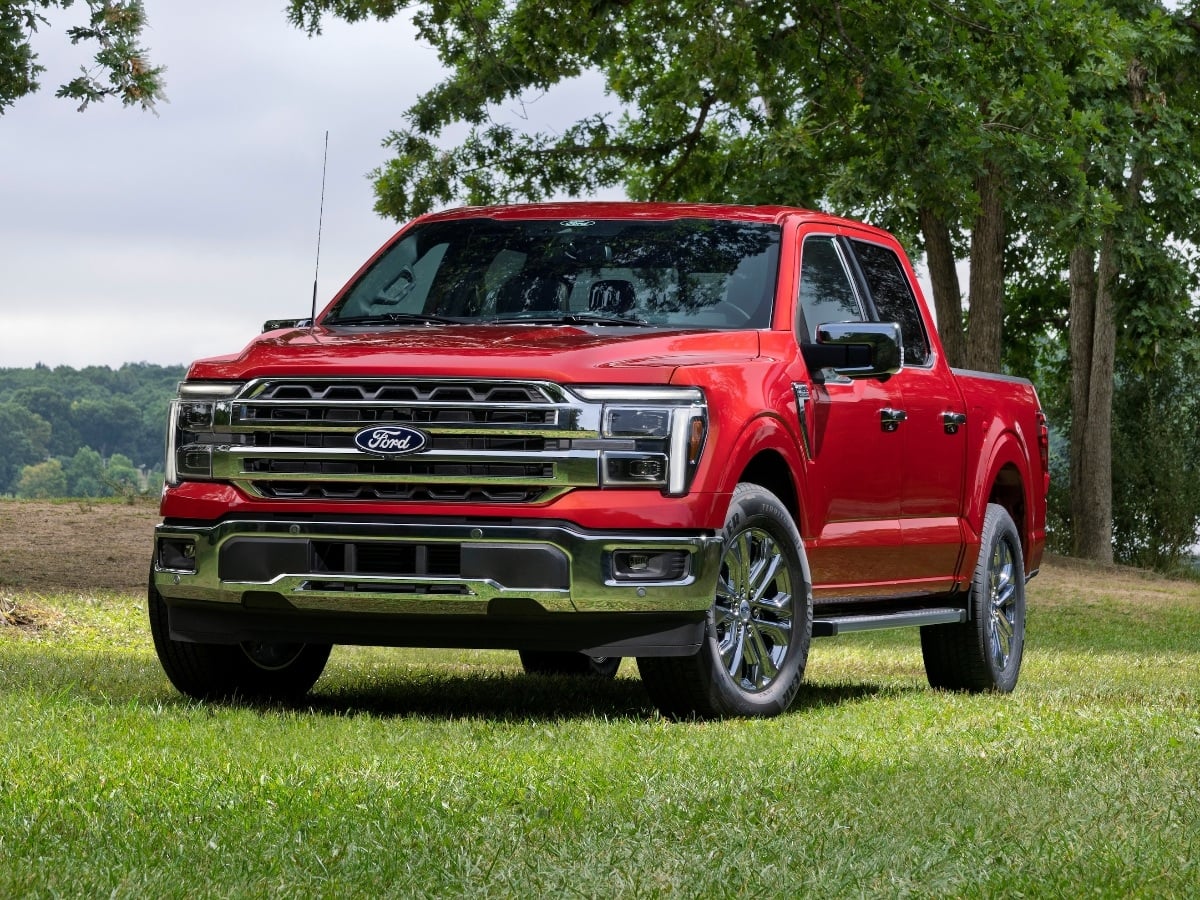
Facing renewed competition in the full-size, light duty pickup truck segment, the 2027 Ford F-150 receives subtle styling updates, a new standard engine, broader availability of its 5.0-liter V8, and ...See More
Read the Full Article
The 2027 Civic Type R goes on sale in October 2026, and it starts at $49,990, including the $1,295 destination charge.
Read the Full Article
Part of BMW’s Neue Klasse (new class) rollout of redesigned models, the 2027 BMW 3 Series is all-new and goes on sale in the first quarter of 2027.
Read the Full Article