
As a car owner, some maintenance tasks need to be performed on schedule every time they’re due. Tire rotations are one of those tasks. At the same time, they’re easy to overlook. If you’re not paying attention, you might not even notice any downsides to skipping a rotation – at least not in the short term.

So, why should you rotate your tires, and how often does it need to be done? Let’s take a closer look!
Tire rotation is switching your tires from one wheel to another – in other words, rotating them. By changing the tires around, you compensate for the uneven wear and tear from being used in one position. For example, the front left tire might get moved to the back right, reversing the wear pattern.
As a result, your tread wears more evenly across the tire's surface, which keeps them better balanced. It also prevents you from prematurely wearing bald spots towards one edge of the tire or the other.
Tires are often rotated from front to back and left to right. A typical rotation pattern might move the front right tire to the back left, the rear left tire to the front left, the front left tire to the back right, and the back right tire to the front right.
In some cases, you can’t use these kinds of patterns. For example, certain tires have a directional tread, meaning you can only mount the tread in one direction, so you can't swap tires from left to right. You would only rotate these tires from front to back.
Some performance cars have different-sized tires on the front and rear axles along the same lines. The tires can only be rotated from left to right for these vehicles. If the tires are also directional, you cannot rotate them.
How often you need to rotate your tires depends on whether your vehicle is a front-wheel drive, rear-wheel drive, or all-wheel drive.
You should perform a rotation every 5,000 to 7,500 miles for both front- and rear-wheel drive vehicles. The exact number will vary from model to model, and it’s wise to check your owner’s manual for a precise figure.
If you’re doing your tire rotation yourself, the pattern is different for front- versus rear-wheel drives. The front tires swap sides when moving to the back, and the rear tires stay on the same side when moving forward. The rear tires switch sides when moving to the front with a front-wheel-drive car, and the front tires remain on the same sides when moving to the back. With a rear-wheel drive, you do the opposite.
The different tires have more uneven wear on an all-wheel-drive vehicle, so you need to rotate more frequently – usually every 3,000 to 5,000 miles. Again, this will vary depending on the model, and you should always refer to your manual. Also, off-roading can put extra wear on your tires, so you may need to rotate even more frequently.
If you’ve purchased a used vehicle, you may not know when the previous owner last rotated the tires. In that case, you should have the car inspected. A mechanic will tell you whether you need a rotation right away or whether you can wait for a few thousand more miles.
After a rotation, you may need to adjust your tire pressure since vehicles often have different pressure recommendations for front and rear tires. A mechanic will do this for you, but it’s important to remember if you’re doing the job yourself.
What happens when you skip a maintenance cycle? The treads will wear unevenly and become partially bald, creating an irregular, uneven driving surface. More than a quarter of all tire-related crashes are caused by insufficient tread.
Here are a few significant concerns when you fail to rotate your tires.
Tire tread is designed with deep grooves to help channel away water. If you’re going through a puddle, the grooves continue to shoot water away from your tires, ensuring that the tread remains in contact with the road. Badly-worn tires will instead glide across the surface, making it difficult and sometimes impossible to steer or control your vehicle.
Treads aren’t just important when it’s wet out. If you’re driving in snow, you need them just as much; that’s why people in snowy areas use special winter tires with extra-deep treads. Bald or partially-bald tires are hazardous in these conditions, and you may also have issues on gravel roads, dirt, and even ordinary asphalt.
As your tires spin, they generate friction through contact with the road. Tires are engineered to resist this friction, but part of this engineering is in the treads themselves. Just as the channels wick water away from the tires, they also draw air through the treads, creating a cooling effect. The more worn your tread is, the less cooling it will provide, increasing the risk of tire failure.
When your tire gets worn down, it can become so thin that the tire blows out. Even in the absence of a blowout, a badly-worn tire is at higher risk of being punctured.
As you can see, tire rotation is essential not just for your car’s efficiency but also for your handling and safety. Thankfully, it’s an affordable service that doesn’t take very long. By having your tires rotated on the proper schedule, you’ll ensure that they perform as well as possible for as long as possible.



The 2027 Civic Type R goes on sale in October 2026, and it starts at $49,990, including the $1,295 destination charge.
Read the Full Article
Part of BMW’s Neue Klasse (new class) rollout of redesigned models, the 2027 BMW 3 Series is all-new and goes on sale in the first quarter of 2027.
Read the Full Article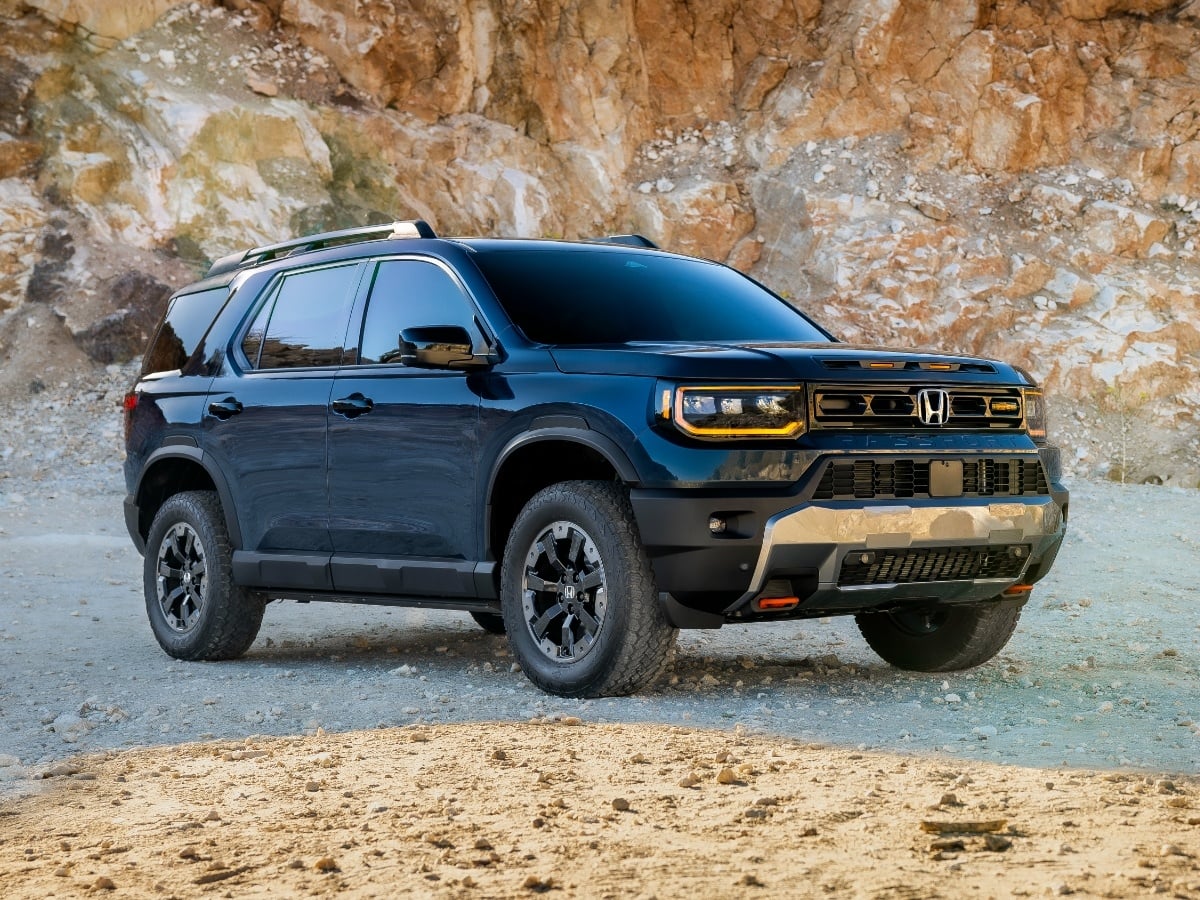
Updates to the 2027 Honda Passport TrailSport include a reworked suspension, improved steering, subtle styling enhancements, and added standard equipment.
Read the Full Article
The midsize 2027 Mercedes GLE remains available in original and spicy Coupe recipes, now with standard 4Matic all-wheel drive (AWD), MBUX Superscreen technology, and a panoramic glass sunroof for ...See More
Read the Full Article