
Many drivers who are otherwise cautious stewards of their vehicles can sometimes neglect the importance of their tires.

Like any other part of your car, tires require monitoring and care. Good tires make your driving experience safe and pleasurable, whereas bad tires can land you in trouble. What makes a good tire? Apart from the tire's grip (visible), the most crucial aspect is air pressure. Having the correct pressure is key to safe, functional tires, so it’s critical to know how much is too low when it comes to tire pressure.
Tire pressure between 32 to 35 PSI is suitable for most vehicles. However, one can go as low as 20 PSI (although that is not recommended). Anything below 20 PSI is considered a flat tire.
PSI stands for pounds per square inch. Since many governments have made the tire pressure monitoring system (TPMS) mandatory, you don’t need to bend your back every day to check the tire pressure; rather, vehicle sensors raise alarms whenever there is a drop in pressure. To summarize, 32- 35 PSI is recommended; as a rule of thumb, make 28 PSI a minimum, and if your tire pressure dips below 20 PSI, refill your tire(s) immediately.
Tires lose air every day which eventually affects performance. Here are some factors that expedite decreased tire pressure:
There are several other causes of low tire pressure, such as premature wearing, valve system failure, wheel bead corrosion, and poor roads and potholes.
While tire pressure is expected to drop over time, it is vital to monitor it to keep the tires inflated at the correct pressure. Allowing the tires to drop below the recommended PSI puts your vehicle at risk for the following issues.
Under-inflated tires deteriorate more rapidly, reducing traction. Decreased traction can be exacerbated in snow and rain causing the driver to lose grip, prompting sliding and skidding. Since temperature drops cause reduced tire pressure, you want to be more judicious in monitoring your tire pressure during winter months.
Fuel economy is hindered by low tire pressure because lower tire inflation means higher resistance to rolling. In other words, underinflated tires force your engine to work harder to propel your vehicle, resulting in more fuel to power the engine.
Beyond the safety issues and increased fuel costs, low tire pressure can impact your long-term budget. Unchecked low tire pressure alters how the tire makes contact with the road, increasing deterioration of the tire shoulders. Considering it’s recommended to replace all four tires at the same time, should you ignore low tire pressure in one tire, it could cause you to pay for four new tires sooner than you would have had you kept the tires properly inflated. Since purchasing and mounting a new set for 4 all-season tires can easily cost over $1,000, the more mileage you get out of your existing tires, the lower your costs. A minor inconvenience of checking your tire pressure will pay dividends over time.
Given the issues above, it is imperative to incorporate monitoring tire pressure as part of your regular automotive maintenance. A biweekly inspection of both your running tires and spare tires is good enough to consistently detect and address low pressure. You can also buy a tire pressure gauge, widely available for less than $10 at automobile stores.
The two primary methods for checking your tire pressure include using a manual tire pressure gauge and your car’s TPMS.
Most modern vehicles come with a TPMS. These systems typically last about 80,000 miles before requiring replacement, with a single sensor costing about $40 to $100 to replace.
Since the TPMS may not be 100% accurate, it does not hurt to perform a manual check using a tire pressure gauge. To manually check your tire pressure:
Not only does manually testing your tire pressure confirm the TPMS is working properly, it also informs you which tire(s) has incorrect pressure. For many vehicles, the TPMS light does not indicate which tire(s) has low pressure; it simply alerts that at least one tire is not in the correct PSI range. Thus, while the TPMS light prompts you to dig deeper into the issue, a manual test will confirm exactly where it occurred.
Tire pressure has a significant impact on your vehicle's performance. If it gets too low, your safety—and the safety of others on the road—is impacted. Hence, maintaining the correct tire pressure (between 32 to 35 PSI is a good idea. Remember, anything lower than 20 PSI is considered a flat tire. Consistently monitor your tire pressure and make sure to regularly fill your tires with air to keep them in that ideal 32 to 35 PSI sweet spot, for better safety and mileage. Beyond tire pressure, keep an eye on your tire treads, schedule regular wheel alignments, tire rotations, and replace your tires when needed to stay prepared for the road ahead.
Matt Yantakosol is a lifelong automotive enthusiast and former consultant focused on the consumer aspect of the industry. He has traveled to New York, Detroit, Chicago, L.A., Paris, Geneva, Frankfurt, and Tokyo Auto Shows to track and observe the newest industry innovations. In addition to JDPower.com, Matt's writing has appeared on Pcarmarket.com.


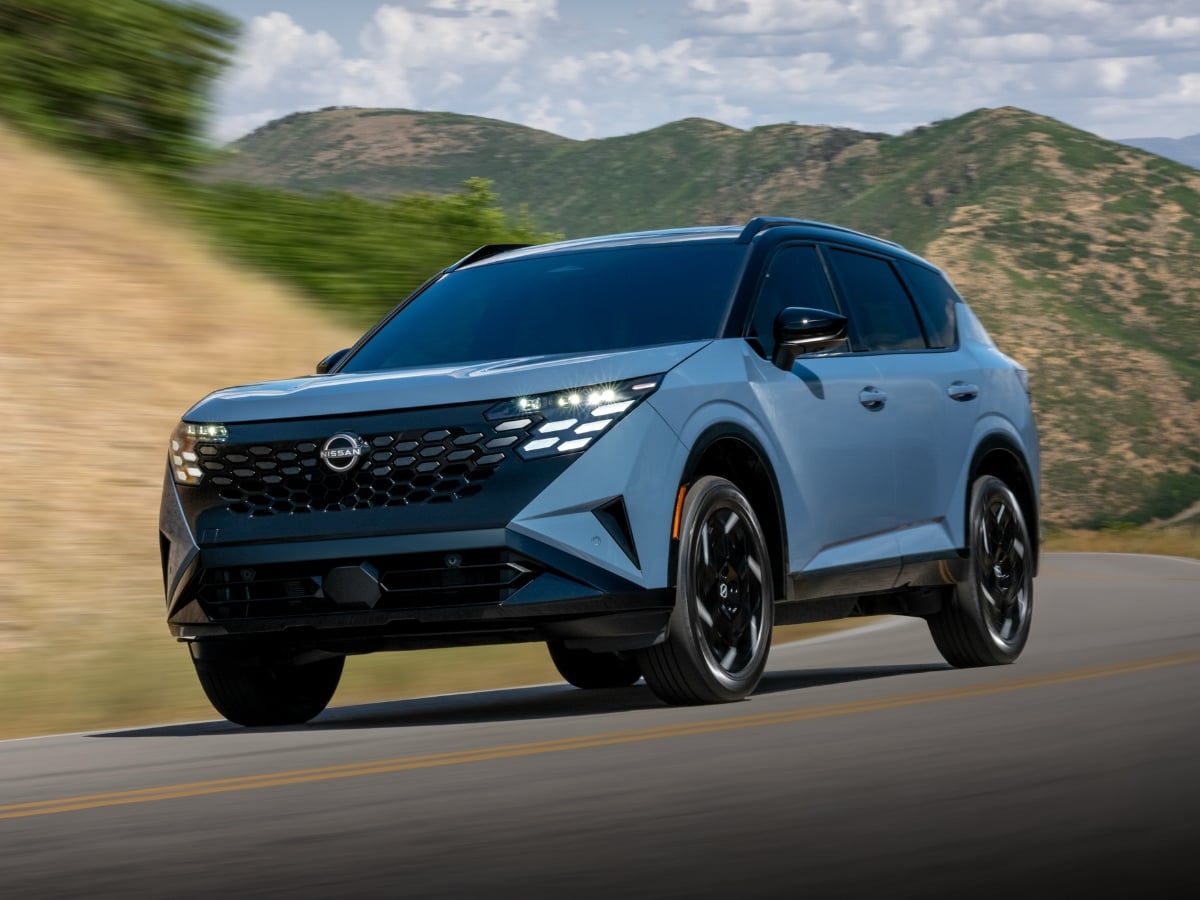
Nissan is about to introduce an innovative new SUV. The 2027 Nissan Rogue Hybrid has a gasoline engine, but it does not power the wheels. Instead, electric motors at each axle provide propulsion, ...See More
Read the Full Article
Adding European flair to the otherwise vanilla midsize three-row family SUV market, the redesigned 2027 Volkswagen Atlas debuts with a sharper exterior, an upgraded cabin, more power, and new ...See More
Read the Full Article
Though the styling stays largely the same, a massive boost in electric range for the plug-in hybrid (PHEV), plus a refined design, helps the 2028 Volvo XC60 stay current and desirable.
Read the Full Article
With the 2027 Lexus TZ, Toyota Motor’s luxury division introduces its first three-row all-electric SUV, featuring a lounge-inspired interior, an enhanced all-wheel drive (AWD) system, and up to 300 ...See More
Read the Full Article