
There’s a horseshoe-shaped warning light on your car's dashboard with an exclamation point in the middle. This is your tire pressure light, also known as the TPMS light.

TPMS is short for Tire Pressure Monitoring System. You can find this system on all modern passenger vehicles, and it consists of a set of sensors on each tire, connected to a central computer. When the pressure on one or more tires drops too low, the computer will register the drop, and the warning light will come on.
But what does this mean for you, the driver? Let’s talk about what the tire pressure light means and what you should do when it lights up.
Before we talk about the TPMS light, let’s discuss tire inflation.
Even properly-functioning tires bleed a small amount of air every day. Over time, that tiny amount adds up, and your tire pressure drops. Your tire pressure also changes with temperature. For every 10 degrees Fahrenheit of temperature drop, the pressure will drop by 1 pound per square inch. For every 10 degrees of temperature increase, the pressure will rise.
You fill your tires on a beautiful, 80-degree summer day. Two months later, when it’s 60 degrees out, you’ll be underinflated by 2 PSI. A few months after that, when it’s 30 degrees out, you’ll be short by 5 PSI.
Why does this matter? Here are a few reasons:
Incidentally, overinflated tires also pose some serious safety risks. The point isn’t always to have as much pressure as possible. The point is to have the correct pressure for your tires and vehicle.
In its most basic sense, the TPMS light indicates that your tire pressure is too low or too high. But there are a few other things to be aware of. For one thing, it’s normal for most or all of the lights on your dashboard to illuminate when you start the engine. If the TPMS light turns on alongside other lights and then turns off, there’s nothing wrong.
Here are some of the things you might encounter when the TPMS light is illuminated:
A TPMS warning light is a helpful tool, but it’s still just a tool. You’ll always want to verify your tire pressure manually before making any adjustments. Along the same lines, it’s wise to check your pressure regularly, even if the warning light is not illuminated. There are a few good reasons for this:
In other words, it’s still important to know how to check your tire pressure manually.
To check your tire pressure, you’ll need a tire pressure gauge, which you can find for a few dollars at any automotive shop. You’ll also need to know what the correct pressure is. This figure is typically located on a decal inside the driver’s side door jamb. Alternatively, you can find it in your owner’s manual.
Check the pressure, and add or drain air as necessary until it’s correct. And don’t panic if the TPMS light stays on. The computer can take up to 200 miles to reset and shut the light off.
Your car’s tire pressure light is far from foolproof, so it’s always important to follow up. By performing manual checks and regularly topping off your tires, you’ll have a safer, more fuel-efficient driving experience.



The new 2027 BMW i3 boasts an estimated range of up to 440 miles, 400-kilowatt DC fast charging capability, bidirectional charging to a home or the grid, and next-generation technology.
Read the Full Article
Facing renewed competition in the full-size, light duty pickup truck segment, the 2027 Ford F-150 receives subtle styling updates, a new standard engine, broader availability of its 5.0-liter V8, and ...See More
Read the Full Article
The 2027 Civic Type R goes on sale in October 2026, and it starts at $49,990, including the $1,295 destination charge.
Read the Full Article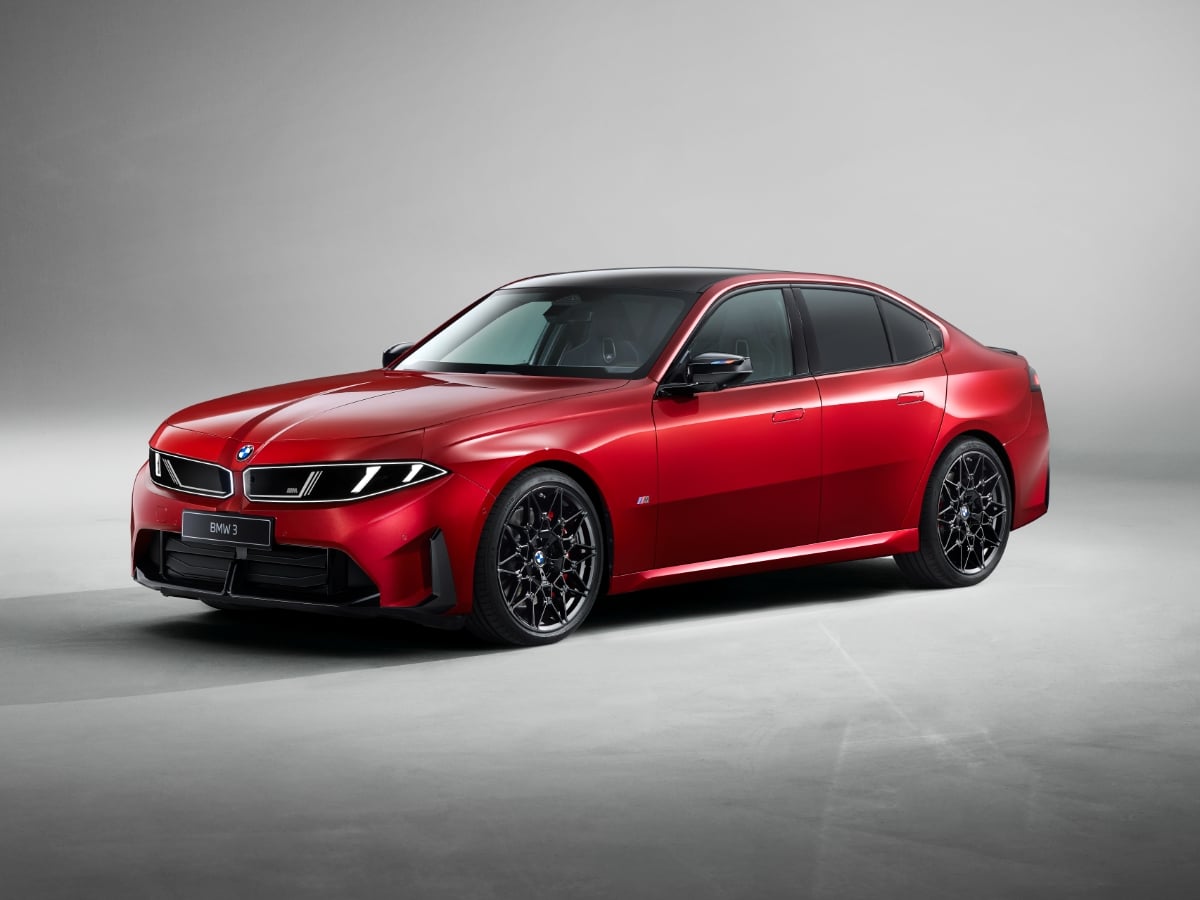
Part of BMW’s Neue Klasse (new class) rollout of redesigned models, the 2027 BMW 3 Series is all-new and goes on sale in the first quarter of 2027.
Read the Full Article